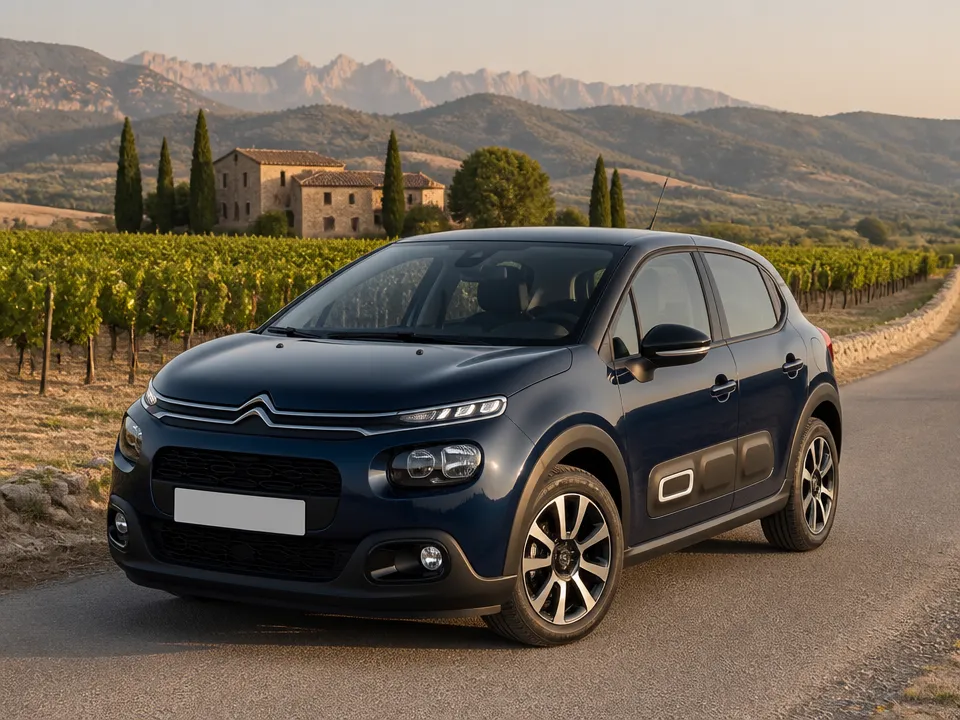
Citroen C3
★4.9· 57Manual1.2 L83 hpFront-wheel5 seats
€24per day
Book now







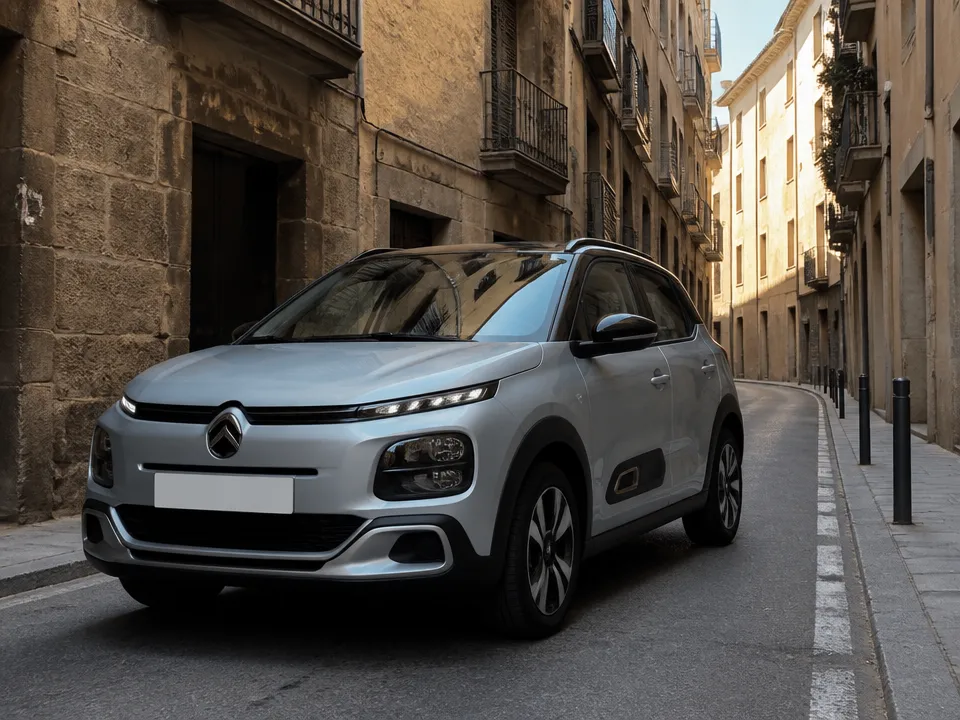
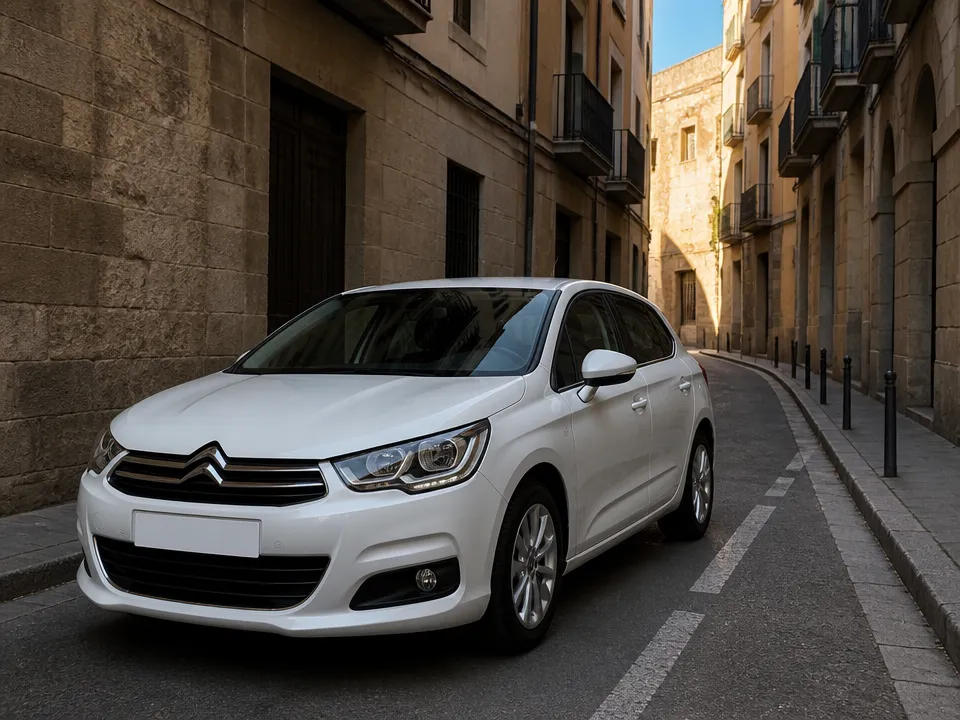
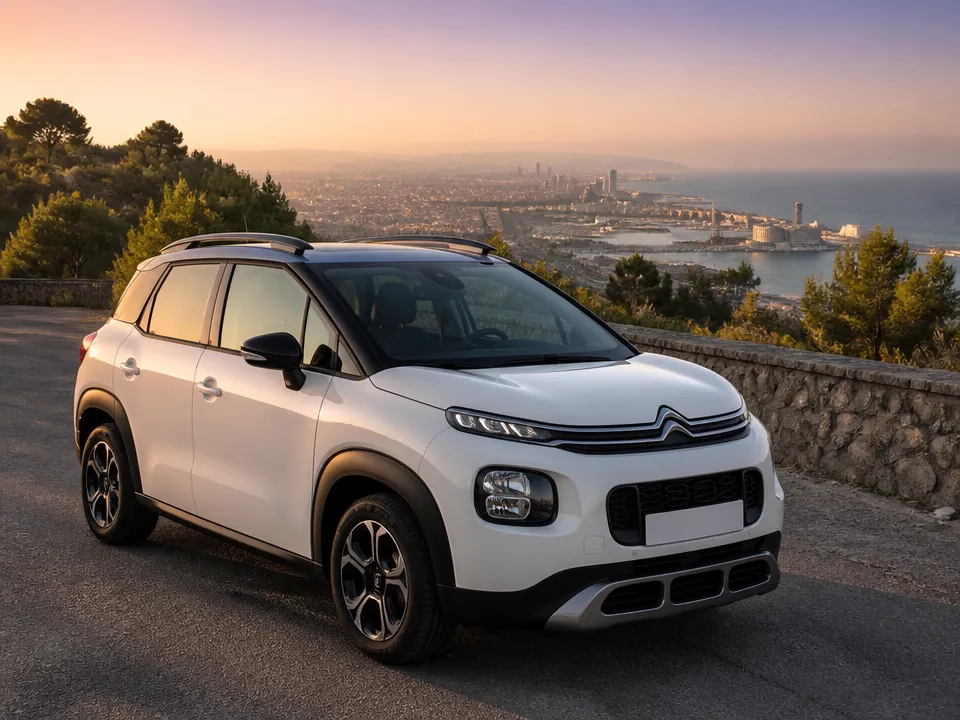
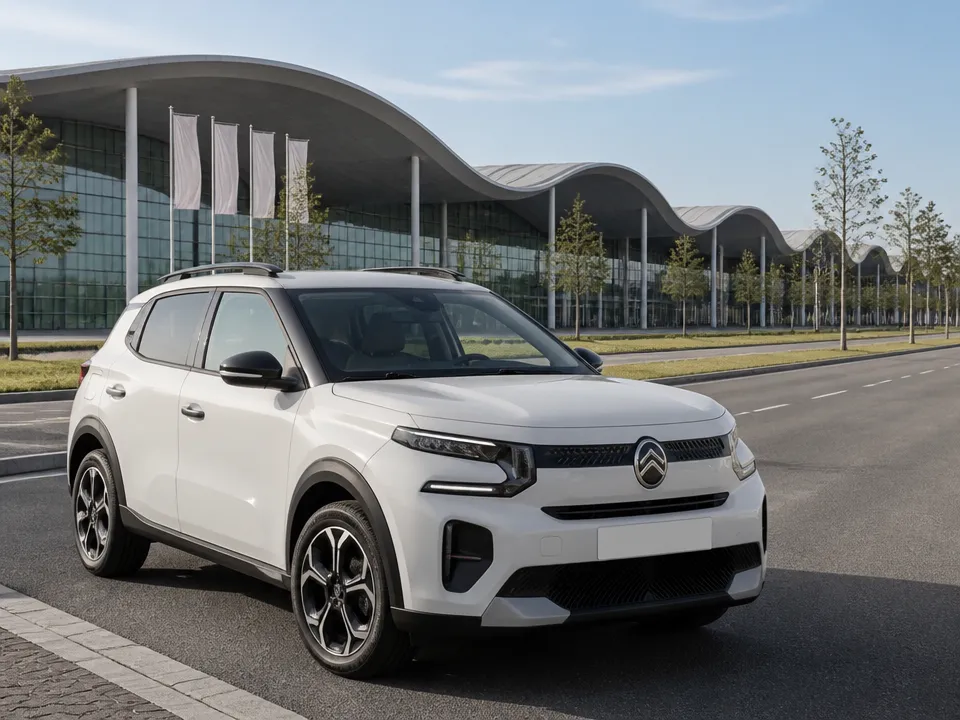
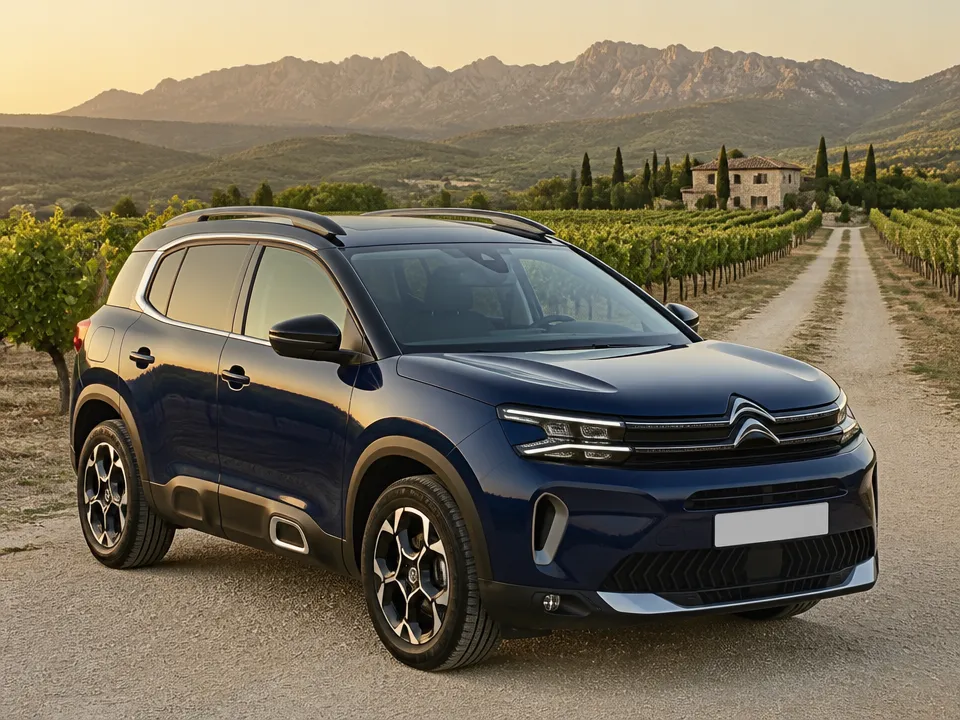
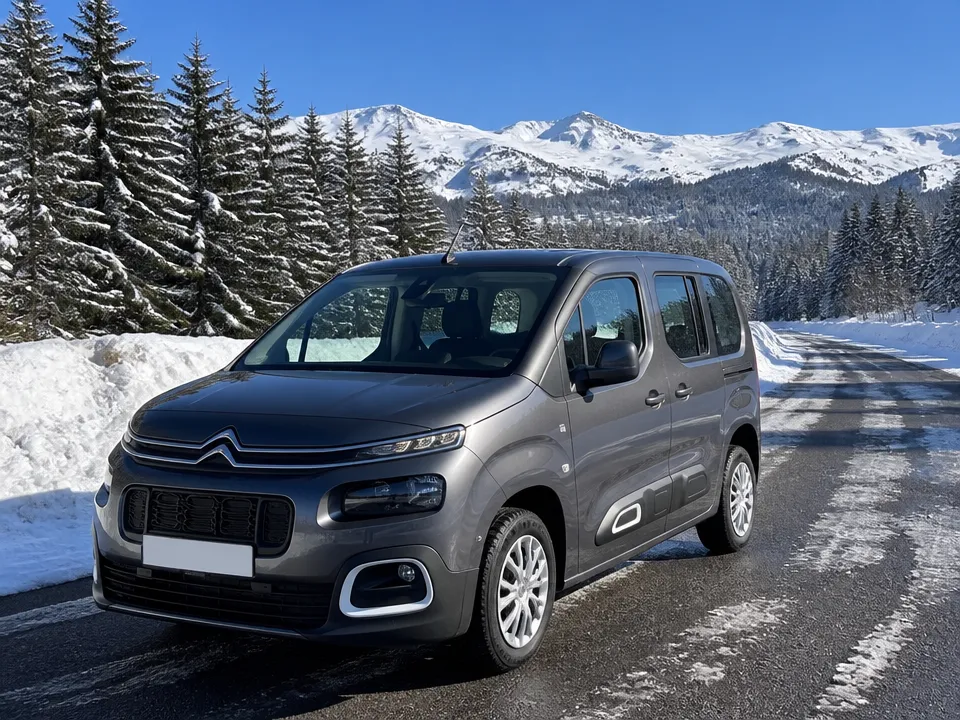
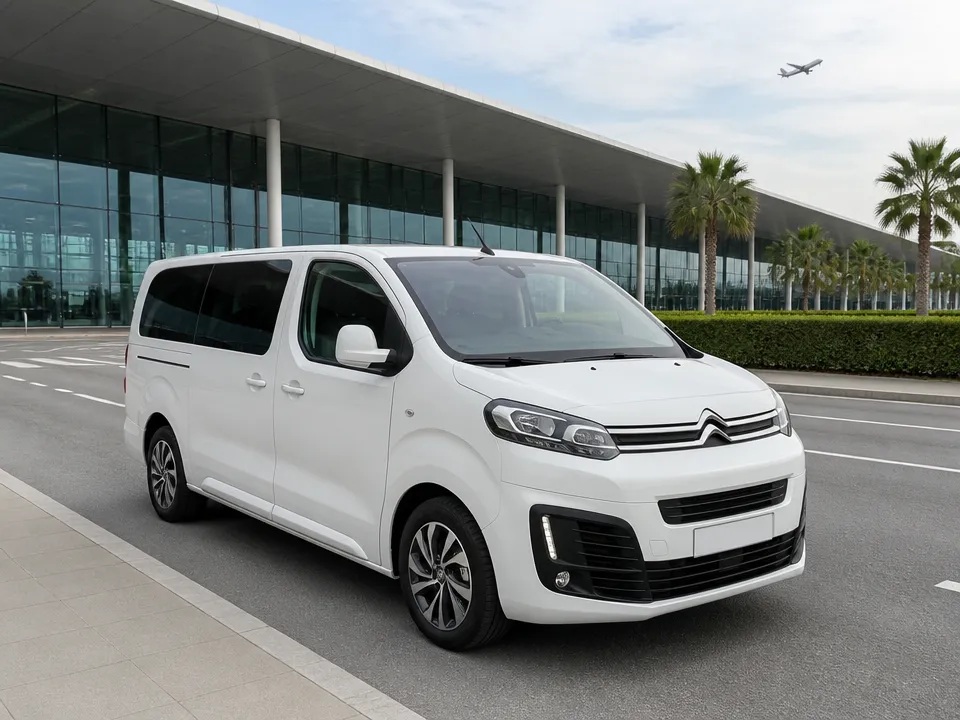




Eight Citroën cars are available to book in Barcelona, from €24 to €92 per day, with weekly rates from €144 and monthly from €504. We deliver the car to you anywhere in the city, and every booking is agreed with a manager before it is confirmed.
Eight Citroëns sit on this page, spread across seven classes, and the right one for you is decided by seat count and gearbox rather than by badge. Below is the full line-up, then what actually separates the C3 from the C4 and the C5 Aircross, and which vans take five or nine people.
| Model | Class | Seats | Fuel | Gearbox | €/day |
|---|---|---|---|---|---|
| Citroen C3 | Economy | 5 | Petrol | Manual | €24 |
| Citroen e-C3 | Electric | 5 | Electric | Automatic | €34 |
| Citroen C3 Aircross | Crossover | 5 | Petrol | Manual | €38 |
| Citroen C4 | Comfort | 5 | Petrol | Manual | €40 |
| Citroen e-C3 Aircross | Electric | 5 | Electric | Automatic | €40 |
| Citroen C5 Aircross | SUV | 5 | Hybrid | Automatic | €50 |
| Citroen Berlingo | Minivans | 5 | Diesel | Manual | €52 |
| Citroen SpaceTourer | Passenger vans | 9 | Diesel | Automatic | €92 |
The Citroen C3 is the cheapest petrol hatchback at €24 a day, the Citroen C4 adds power and comfort at €40, and the Citroen C5 Aircross is the only hybrid Citroën on this page at €50. Under the bonnet the gap is plain: 1.2 L and 83 hp in the C3, 1.2 L and 130 hp in the C4, 1.2 L and 136 hp in the hybrid C5 Aircross. All three are five-seat front-wheel drive, so the difference you pay for is acceleration, cabin height and boot volume — not passenger capacity. For two people with hand luggage, the C3 does the same job as the C5 Aircross for half the daily rate.
The Citroen Berlingo seats 5 with a 1.5 L diesel engine at €52 a day, while the Citroen SpaceTourer seats 9 with a 2.0 L diesel and automatic gearbox at €92. Both are front-wheel drive, and the Berlingo's manual box keeps it the simpler of the two on narrow streets. A nine-seat van needs no special licence in Spain, but the SpaceTourer is a long van — check the parking before you book it, because blue-zone bays in Ciutat Vella and L'Eixample rarely fit a vehicle that size.
In our practice, drivers who book the Berlingo for a family week rarely regret the manual — the diesel pulls cleanly from low revs in the 30 km/h zones.
Two of the eight Citroëns in our fleet run on electricity: the e-C3 hatchback at €34 a day and the e-C3 Aircross crossover at €40. Both are automatic, front-wheel drive and rated at 113 hp, and both are covered by the same booking terms as the rest of the cars — the details are agreed with a manager before the vehicle is confirmed.
The e-C3 is the cheaper of the pair at €34 a day, an Electric-class hatchback with 5 seats and a single-speed automatic transmission. The e-C3 Aircross costs €40 for the same 113 hp drivetrain and the same 5 seats, but sits higher and carries a larger boot. The €6 daily difference between them buys body height and luggage volume, not range or power — on paper the two are mechanically identical. In our experience the Aircross is the one people keep when they arrive with two large suitcases and a pushchair, because the taller tailgate swallows both without folding the rear bench. Range figures are not quoted here: they depend on load, gradient and how hard the air conditioning works, and the fastest way to settle the question is to drive the route you have in mind.
| Charging point | Billing | Rate |
|---|---|---|
| EcoOne public points | Pay as you go, no subscription | €0.49 per kWh |
| Endolla Barcelona network | Municipal charge points | Tariff shown at the post |
| Hotel and car park posts | Set by the operator | Tariff shown at the post |
EcoOne tourist charging is billed at €0.49 per kWh with no subscription, which is the simplest arrangement for a short hire — you pay for the electricity you take and nothing else. The municipal Endolla network is the other option, with the tariff displayed at the post itself. Because both bill by the kilowatt-hour rather than by the session, a long charge costs less per kilometre than several short top-ups, and the practical advice is to plan one proper charge instead of plugging in whenever you park. Charging costs are settled directly with the network operator, not added to the booking.
Both electric Citroëns cover a return run to Sitges or Montserrat comfortably, with charging available at the far end of each route. The out-of-town roads climb, though — the C-16 heads inland toward the Pyrenees, and the Túnels de Vallvidrera carry a €4.7 toll for cars leaving the city toward Sant Cugat and the Vallès — and a gradient drains a battery noticeably faster than flat urban driving. Traffic in the city centre moves at 20 km/h on single-platform streets and 30 km/h on one-lane-each-way roads, which is close to ideal for an electric car: the motor recovers energy every time you lift off. If your day involves a mountain pass rather than the coast, take one of the petrol or hybrid Citroëns instead.
Daily rates for Citroën car hire in Barcelona run from €24 to €92, a week starts at €144 and a month at €504 — the weekly figure is the daily rate times six, the monthly rate times twenty-one.
A week of Citroën hire starts at €144 and a month at €504, both built from the daily rate of the car you choose — €24 multiplied by six, €24 multiplied by twenty-one. The multiplier applies to every model in the line-up, so the C5 Aircross at €50 a day becomes €300 for a week and €1,050 for a month, and the nine-seat SpaceTourer at €92 becomes €552 and €1,932 respectively. What the longer rate buys is not a discount on the car itself but a lower cost per day: the same seven days billed one at a time come to €168 on the cheapest Citroën. The longer rate only pays off if you keep the car for the whole period — splitting a month into separate short bookings costs more, because each new booking starts the daily rate again. In our practice, travellers who book three or four separate weekends over a month almost always spend more than one continuous booking would have cost them.
The Citroen C3 is the cheapest Citroën on this page at €24 a day — Economy class, 5 seats, petrol, manual, 83 hp. That rate buys a 1.2 L hatchback with front-wheel drive, and it is the same car we hand over on a one-day city booking and on a three-week stay. What you give up at €24 is the automatic gearbox and the hybrid economy of the C5 Aircross, not seats or luggage room: the C3 still takes five people and their bags. The deposit, the insurance excess and any delivery fee are not part of the daily rate — they are set out in the rental agreement, and the manager confirms them when the booking is agreed. Two travellers with hand luggage get the same job done by the C3 as by a €50 SUV, at half the daily rate.
Barcelona's streets reward a small car. The C3 is 4.0 m long, the e-C3 the same, and both slip into the blue-zone bays along L'Eixample that a C5 Aircross has to pass by. Traffic drives on the right, every car on this page is left-hand drive, and the city speed limit is 30 km/h on a single lane in each direction — 20 km/h on streets built as one platform with the pavement.
Four of the eight Citroëns are automatic — both electric models, the C5 Aircross and the SpaceTourer — and the other four are manual. In the stop-start traffic the automatic takes the clutch work out of the Rondes B-10 and B-20, where the general limit inside the built-up area is 80 km/h. The manual C3 at €24 a day drives the same streets for less, and the 1.2 L 83 hp engine is light enough that the gear changes never feel like work. On the C4 and C3 Aircross the manual suits the 130 hp and 110 hp engines better than an automatic would at this price.
Parking is where a Citroën earns its keep in this city. The C3 and e-C3 fit bays the C5 Aircross and SpaceTourer do not, and the nine-seat van is the one model to think about twice before booking for a city-only trip. Fuel is Gasolina 95 E5 at a municipal average of €1.953 a litre across 74 filling stations in the last survey, so a petrol C3 covers a day of city errands on very little. Electric drivers charge on the Endolla Barcelona network or at EcoOne points billed at €0.49 per kWh with no subscription — charging by the kWh rather than by the session means one long charge costs less than several short top-ups. Whichever Citroën you take, the terms of the rental are set out in the rental agreement.
Catalonia rewards a car more than almost anywhere in Spain: the coast road south to Sitges, the monastery at Montserrat, the wine country of Penedès and the medieval centre of Girona all sit within an easy return drive of the city. We hand over the keys with a full tank and a route suggestion, and the rest is yours.
Two charges catch most visitors out. The C-16 toward the Pyrenees and the Túnels de Vallvidrera, the tunnel that carries you out of the city toward Sant Cugat and the Vallès, cost €4.7 for a car. The rest of the network is largely toll-free, so a day trip to Sitges or Montserrat costs you nothing in road fees. Mountain roads into La Cerdanya and the Pyrenees climb steadily; in winter, restrictions on winter tyres are introduced point by point by signs and overhead panels when snow affects traffic, so check the panels before you commit to a high pass. The e-C3 and e-C3 Aircross will take a return run to Sitges or Montserrat without a top-up, but gradients drain a battery faster than flat city driving does.
Petrol 95 E5 averages €1.953 a litre across the municipality, with a median of €1.987 and a spread from €1.758 to €2.059 across the 74 stations surveyed, so where you fill up matters more than when. Our cars leave with a full tank and come back full. On the two electric Citroëns, public charging runs through the Endolla Barcelona network, and EcoOne tourist charging is billed at €0.49 per kWh with no subscription — paid by consumption, not by session. Charging by the kWh means one long charge costs less than several short top-ups, so plan a single stop rather than topping up at every point you pass.
Return to the city and the AREA Blava zones apply: tariff A costs €2.5 an hour, tariff B €2.25. Both run on working days, and resident zones relax at weekends. Park in the blue zone, take the ticket from the parquímetre and keep the comprovant d'estacionament — the plate number on it has to match the car. A SpaceTourer needs a moment's thought before you commit to an underground car park; check the height barrier and the bay length before you drive in.
Every Rent-Trip booking is agreed with a manager before it is confirmed — the car, the dates, the hand-over point and the return are all settled in that conversation, not by an automated checkout.
A self-drive hire has no counter queue and no shuttle bus — the car comes to the address you give us, and the person who brings it is the person who walks the car through with you. That is the whole point of how Rent-Trip works: the car meets you where your trip actually starts, whether that is a five-seat C3, a nine-seat SpaceTourer or one of the electric e-C3 models. The walk-around at hand-over is where the condition of the bodywork, the tyres and the interior is recorded, and both sides keep a copy of that record. If the model you booked is not available, the agreement sets out what happens next, and the manager will talk you through the options rather than leave you guessing at the kerb.
Minimum rental age, the young-driver surcharge, which cards are accepted, the fuel policy and where the car may be driven are all agreed when booking.
The eight cars on this page run on petrol, diesel, hybrid and electric power, with automatic or manual gearboxes, and all of them are front-wheel drive — so the first few minutes behind the wheel feel familiar whichever one you take. Speed limits in Spain are 120 km/h on autopista and autovía, 90 km/h on an ordinary out-of-town road, and 30 km/h on a city street with one lane in each direction, which is most of what you will meet in the centre. Fines for speeding run from €100 to €600 with two to six points, and a 50% discount applies if you pay within 20 calendar days. Ask the manager at hand-over which of the Citroëns suits the roads you have planned — it takes a minute and saves a wrong turn later.
Every Spanish rental car carries compulsory third-party cover by law, and the amounts are fixed nationally rather than by us: 70,000,000 EUR per incident for personal injury and 15,000,000 EUR for property damage. That cover is included in any agreement and applies even when the person driving was not named in it. It pays third parties — not the driver, and not the car itself.
The excess figure depends on the company and the car class, and there is no single official tariff for it. We set ours out in the agreement, so you see the number before anything is confirmed.
Minimum age, the young-driver surcharge, the card accepted for the deposit and the fuel policy are not fixed by Spanish law — they are agreed when you book with us, and the deposit itself is set out in the agreement.
The consumer authority requires that every scratch and dent be written into the agreement or the inspection sheet before you drive away, with both sides signing and a copy staying with you — damage noted afterwards lands on the renter. If the model you booked is not available, you may ask for another car at no extra charge, even a class above; if you are given a lower class, the price must come down. Keep that signed sheet with you for the whole rental, and photograph nothing beyond what the hand-over record already lists.
Rates on this page start at €24 a day for the Citroen C3. The Citroen e-C3 is €34 a day and the Citroen C3 Aircross is €38 a day.
This page lists 8 cars, all Citroën. They include the Citroen C3, Citroen e-C3 and Citroen C3 Aircross, with daily prices from €24 to €92.
EU and EEA licences, including Iceland, Liechtenstein and Norway, are fully valid in Spain while unexpired. For third-country licences, DGT recommends obtaining an international permit before the trip.