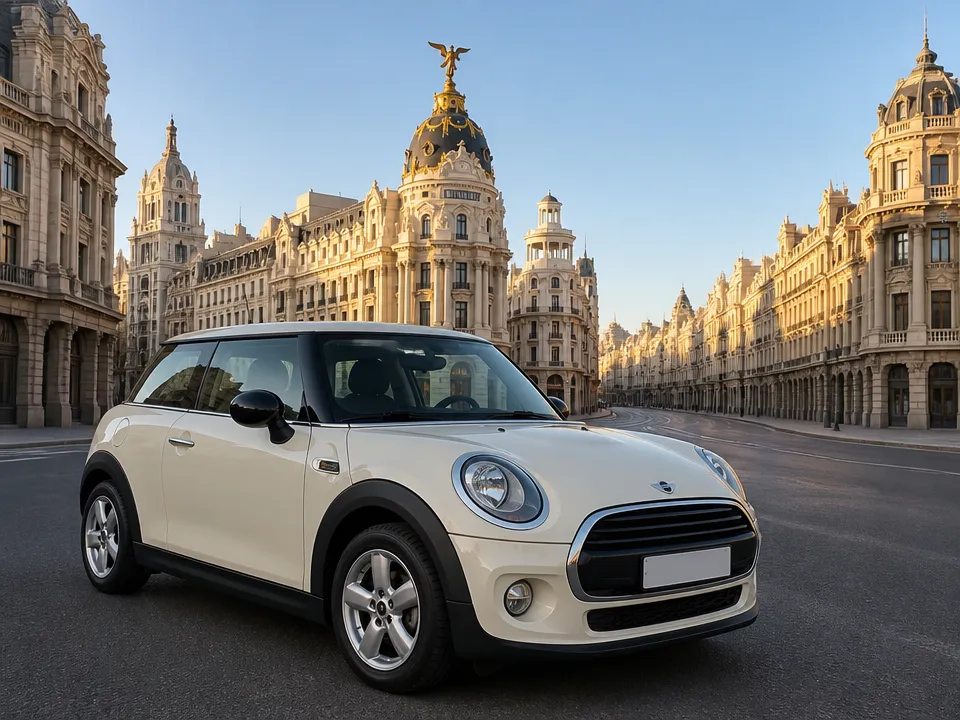
Mini One
★4.6· 70Manual1.5 L102 hpFront-wheel4 seats
€41per day
Book now






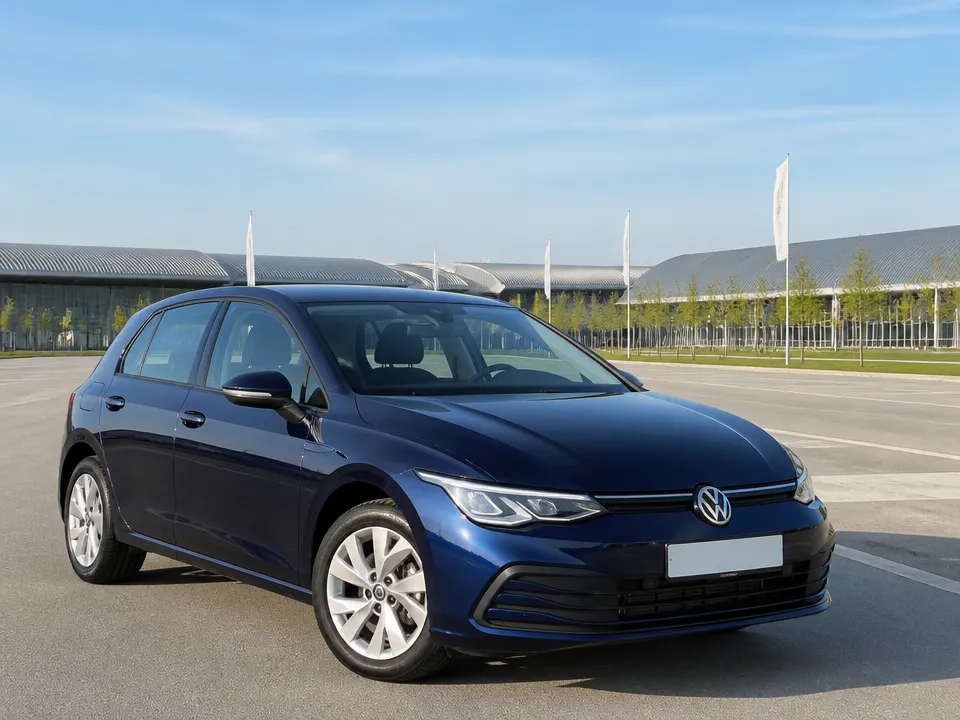
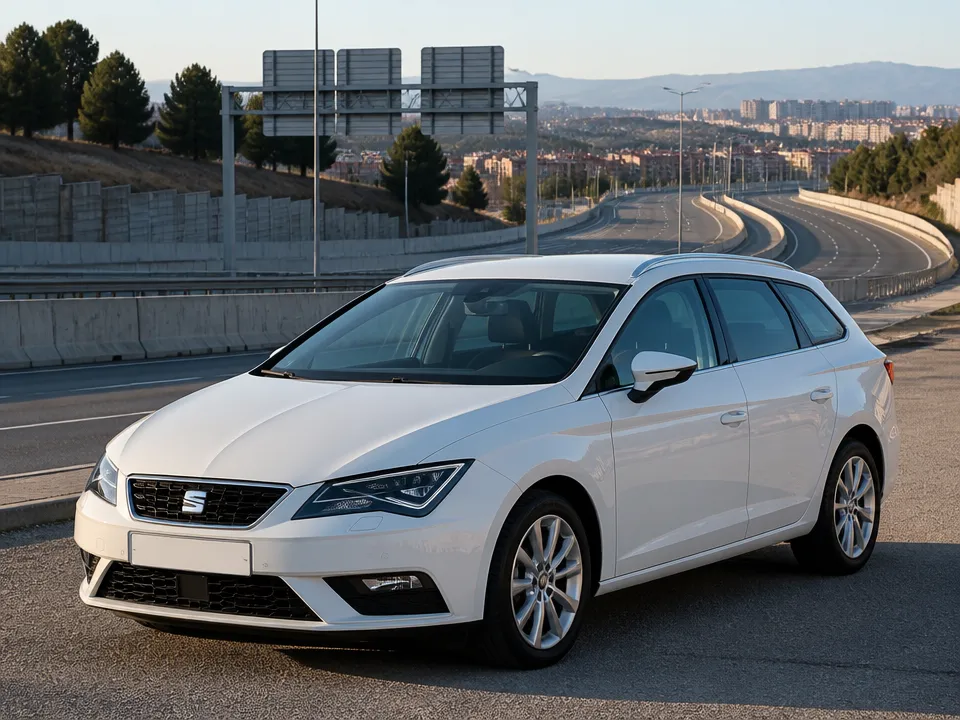
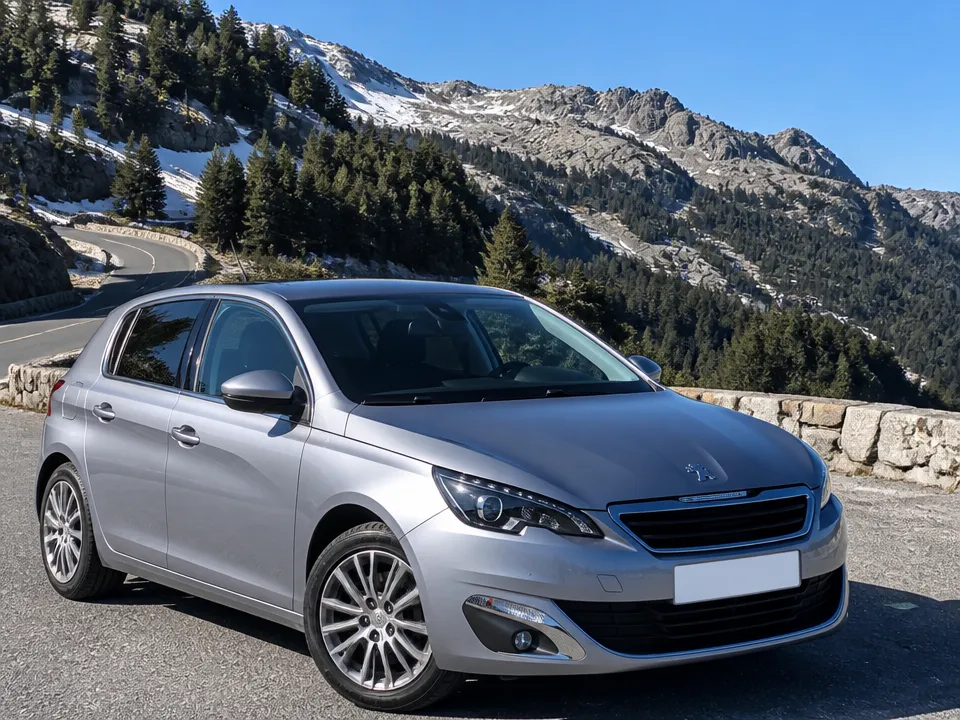
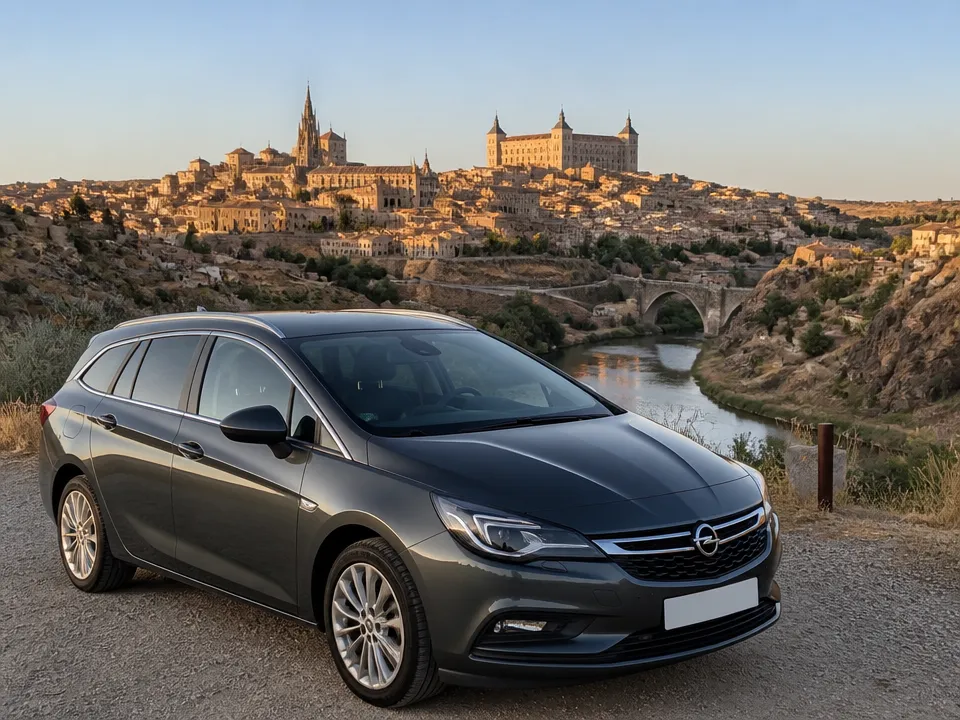
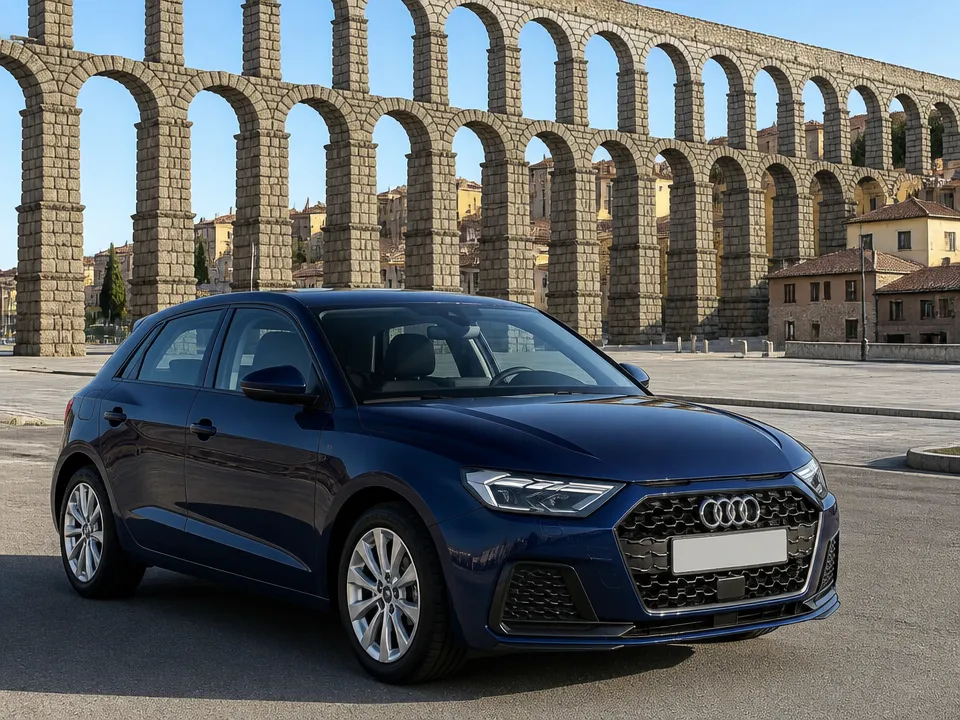
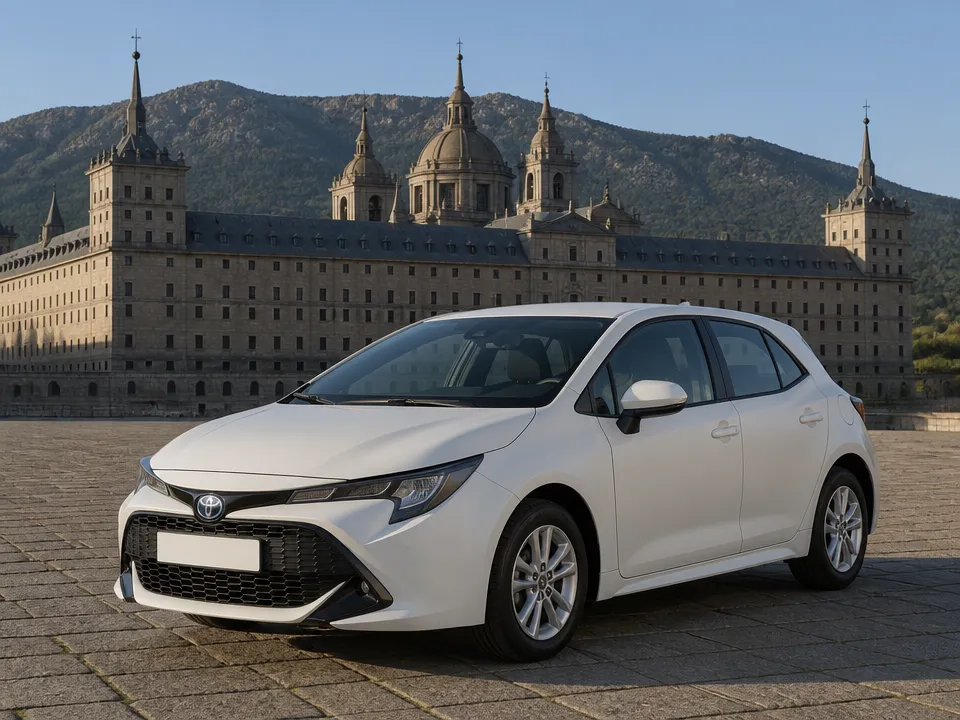
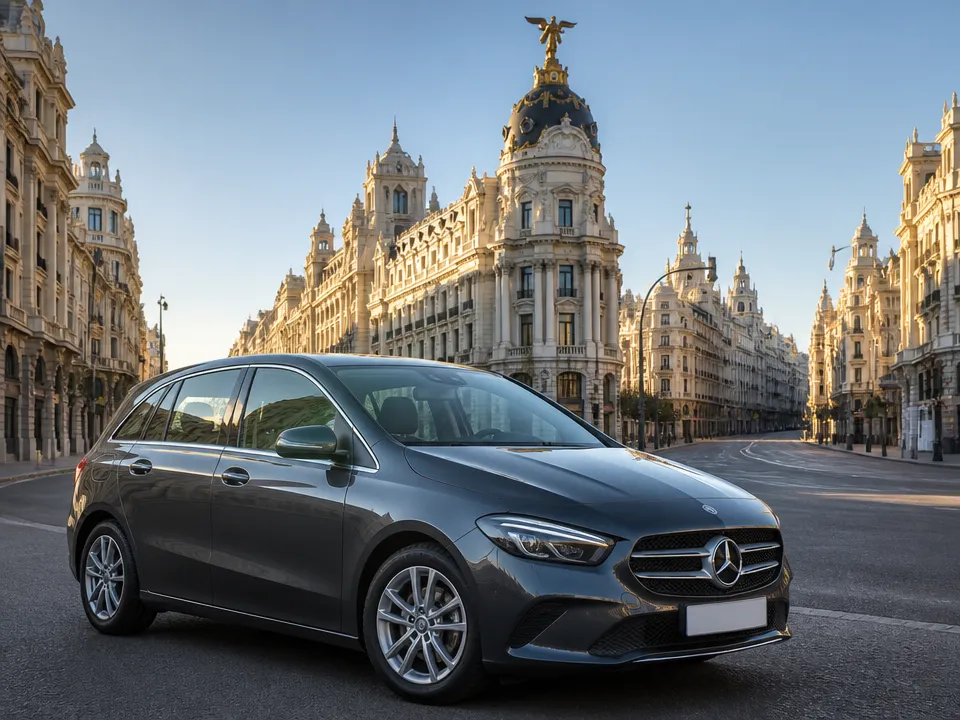
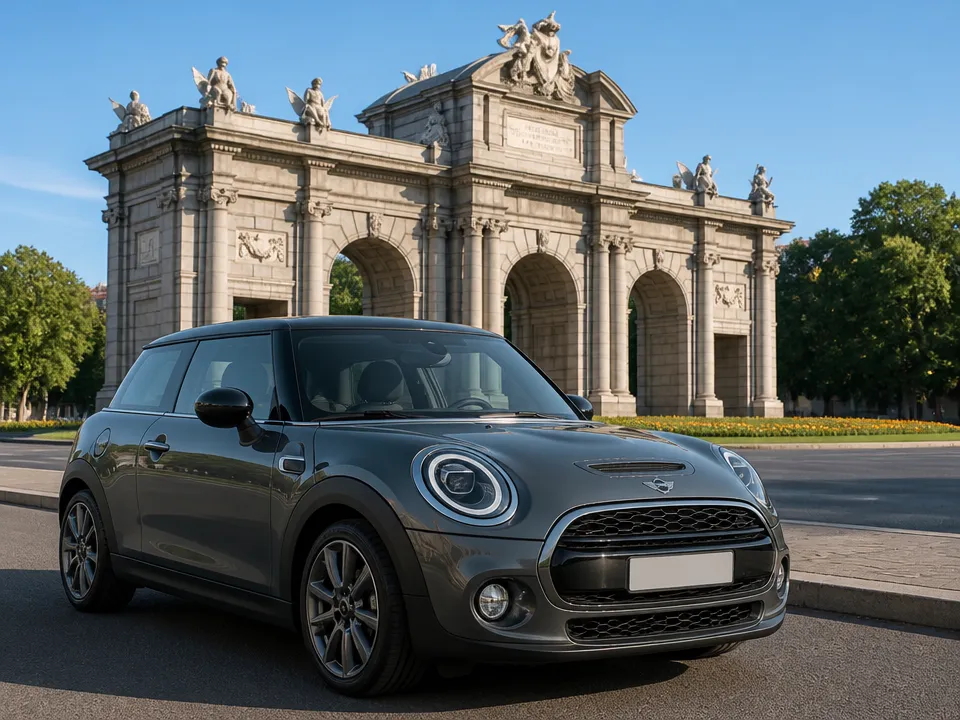
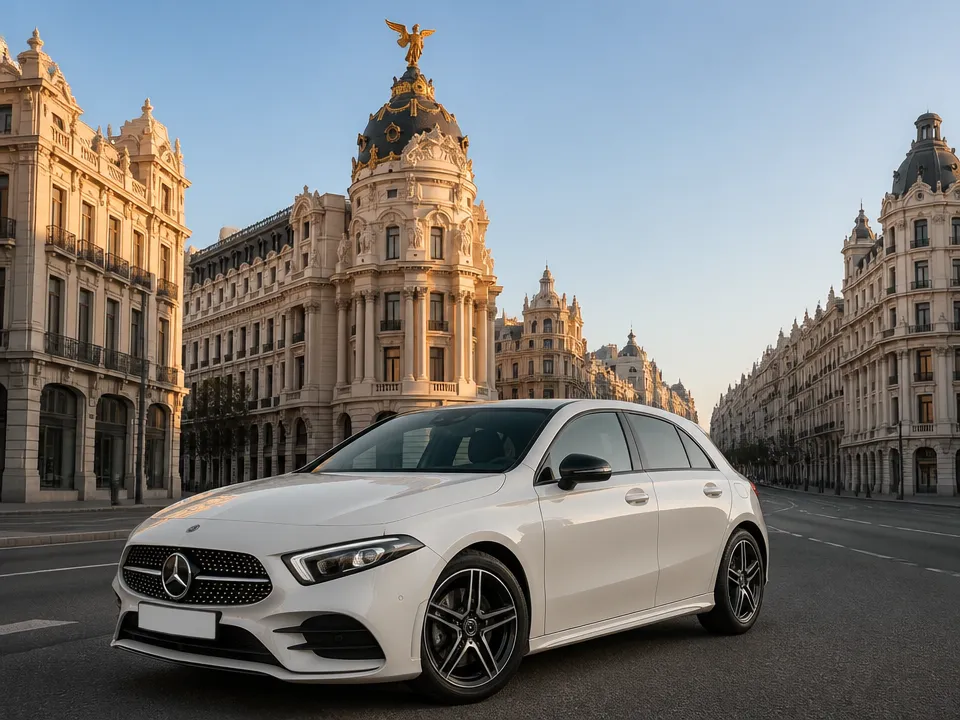
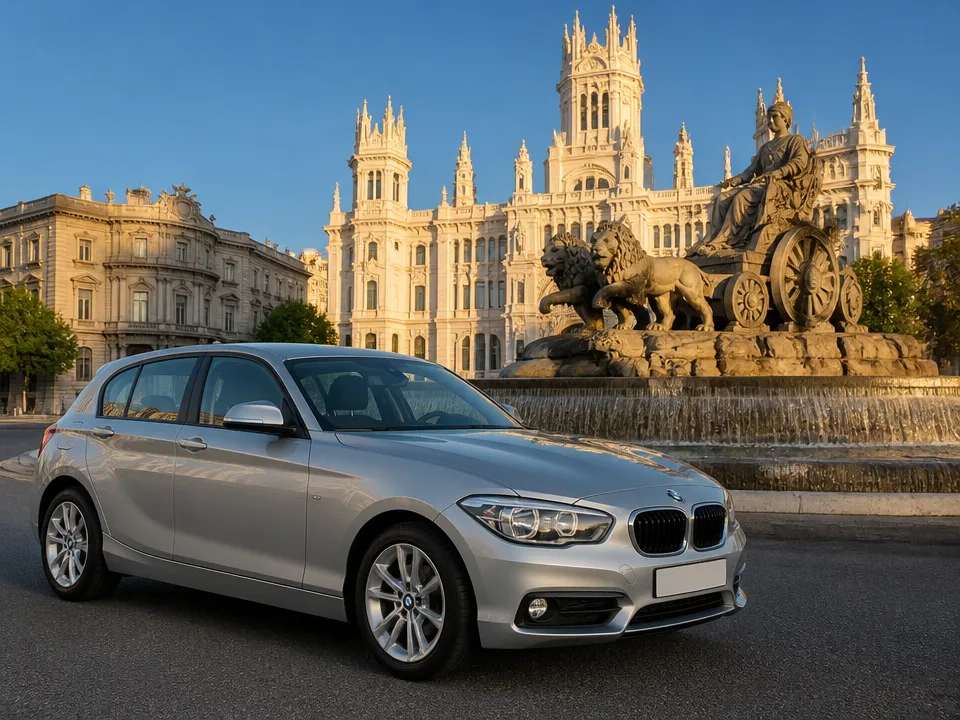
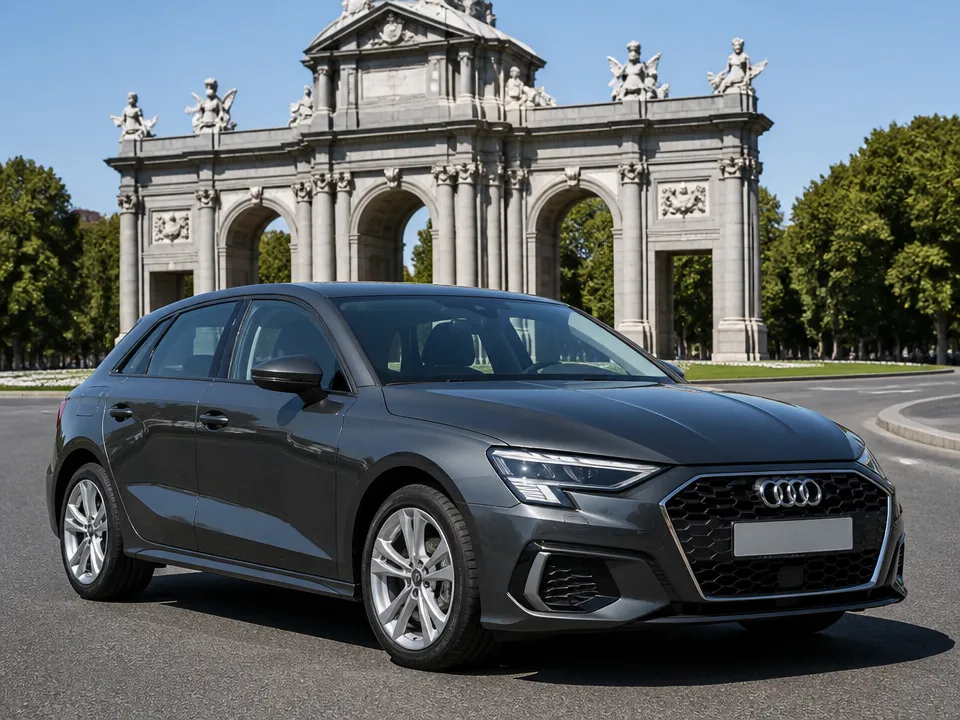
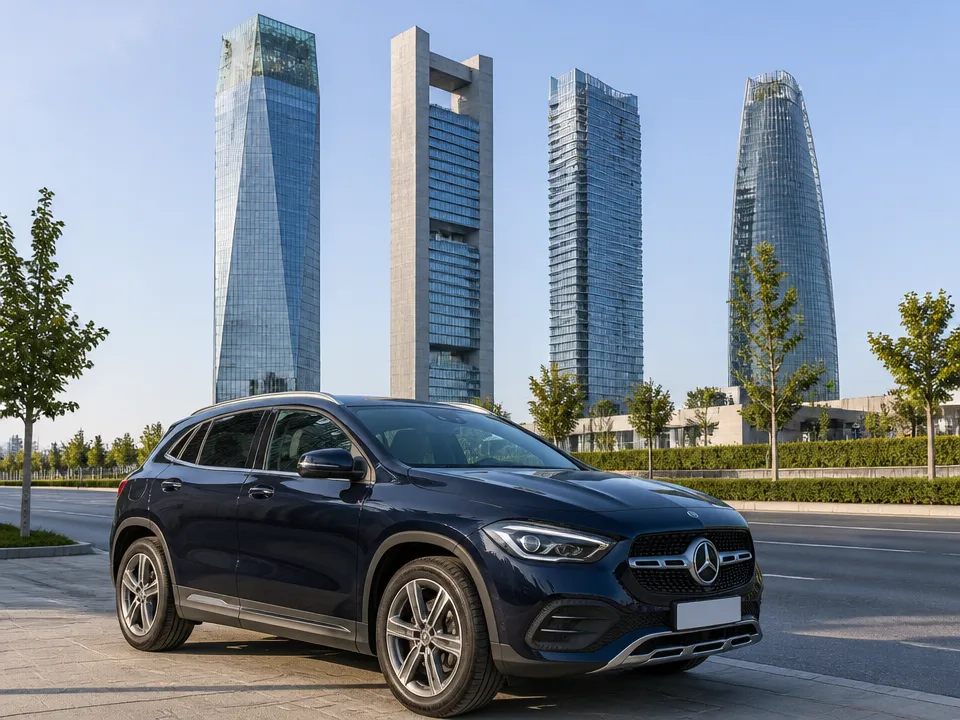
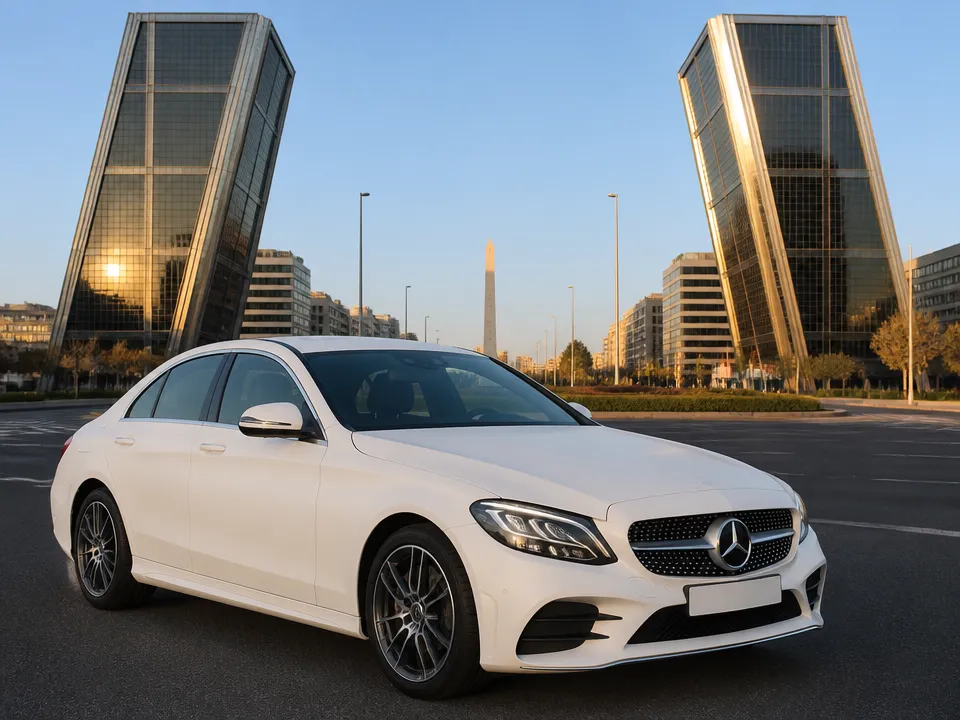
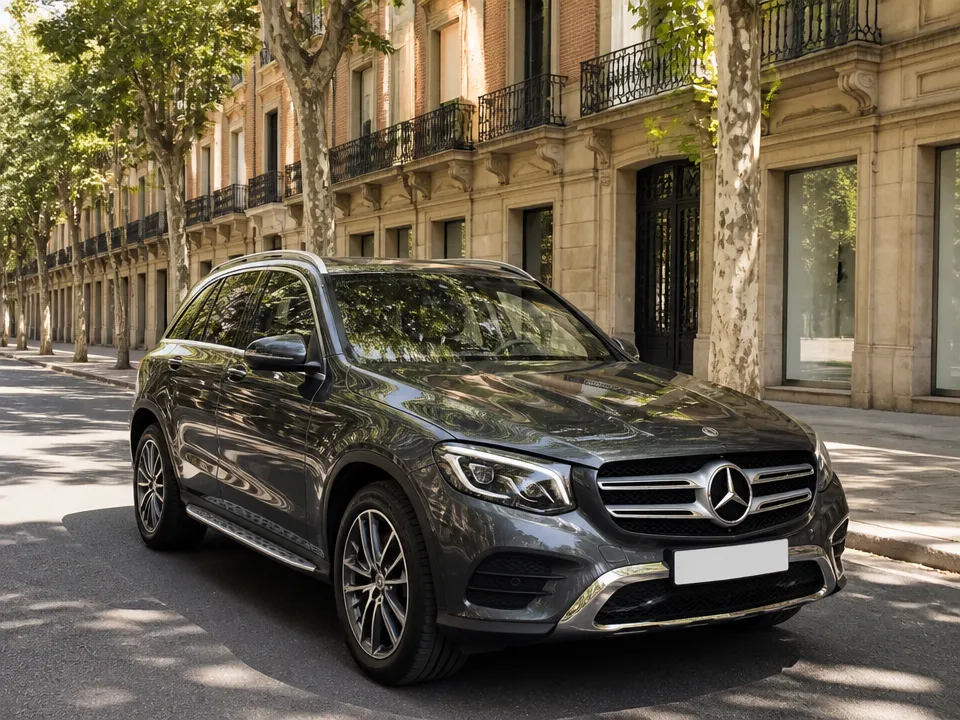
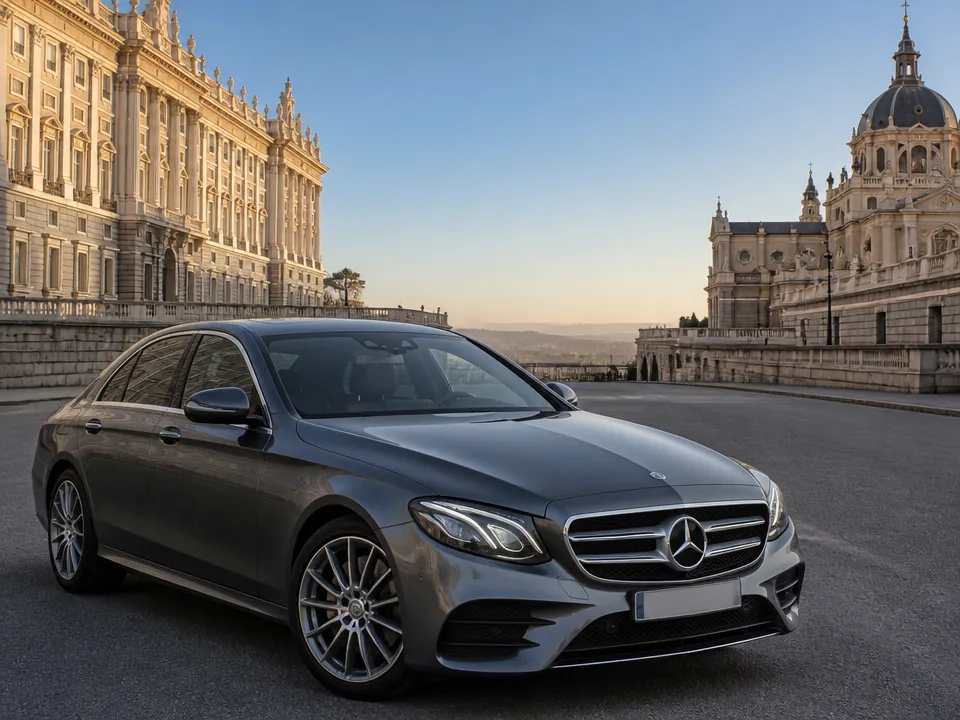
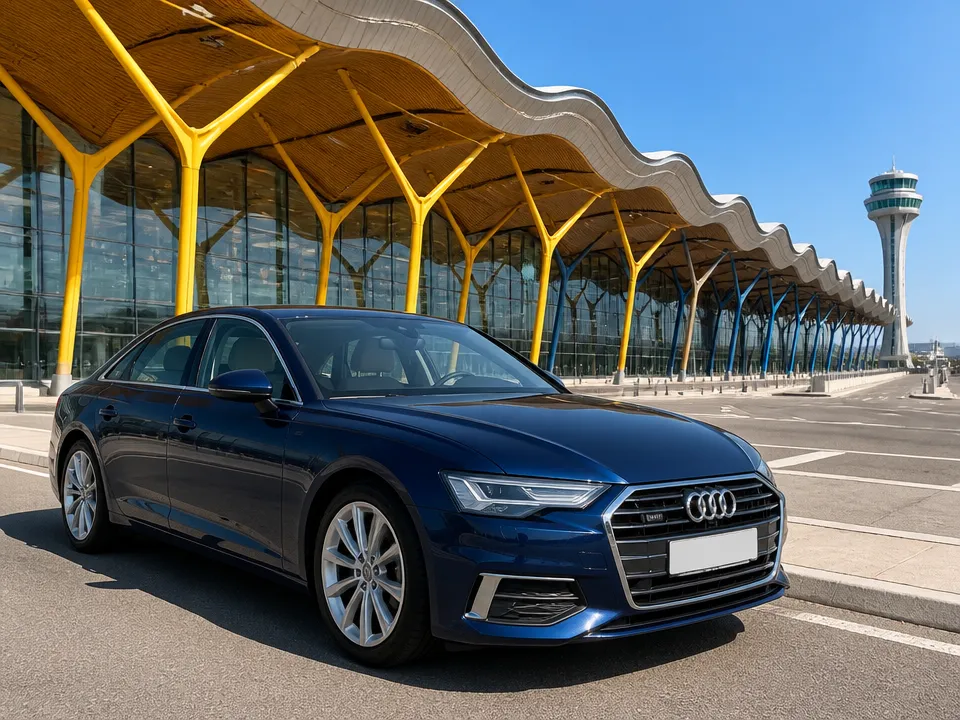
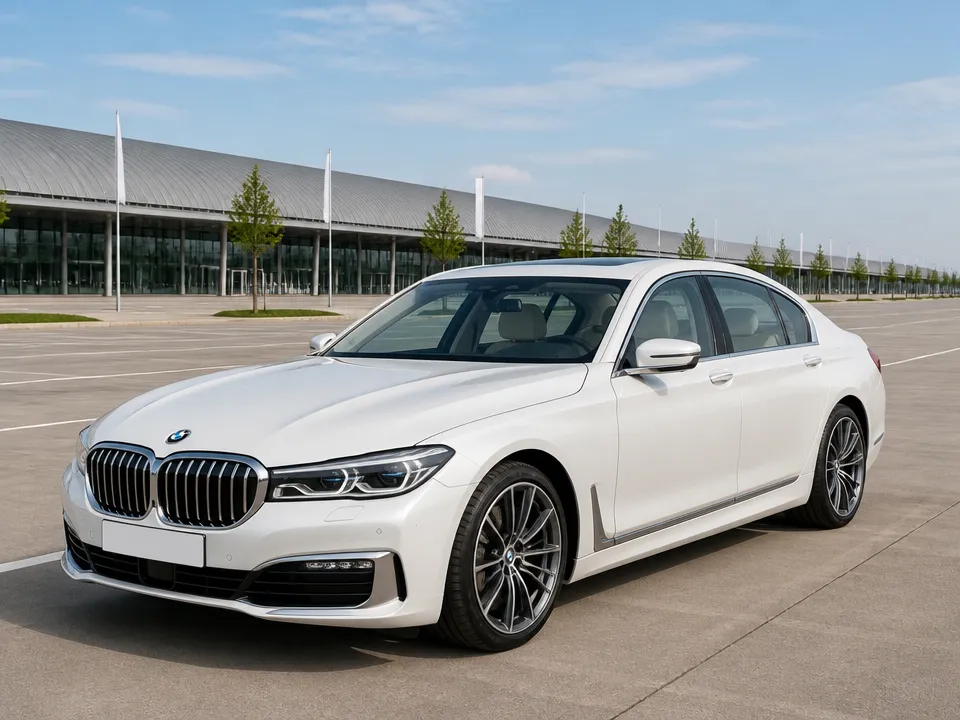
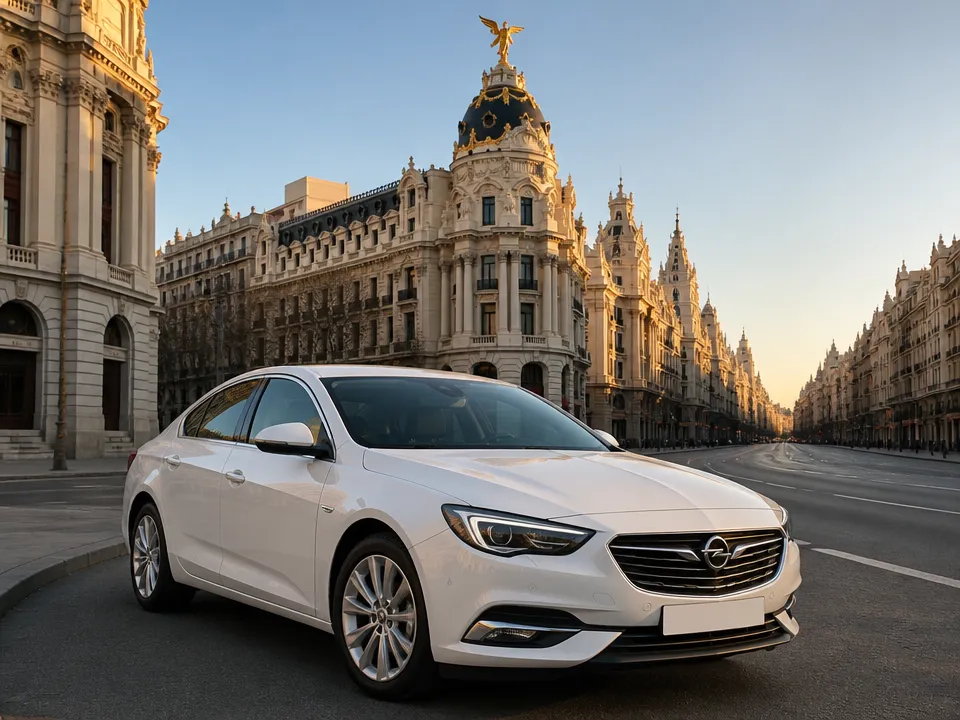
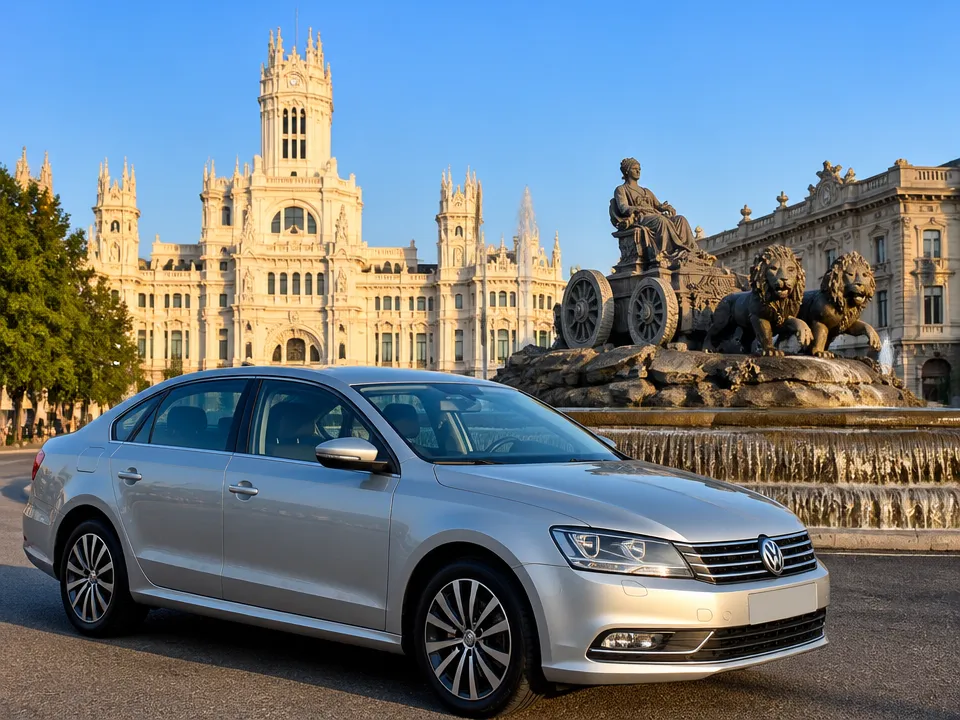
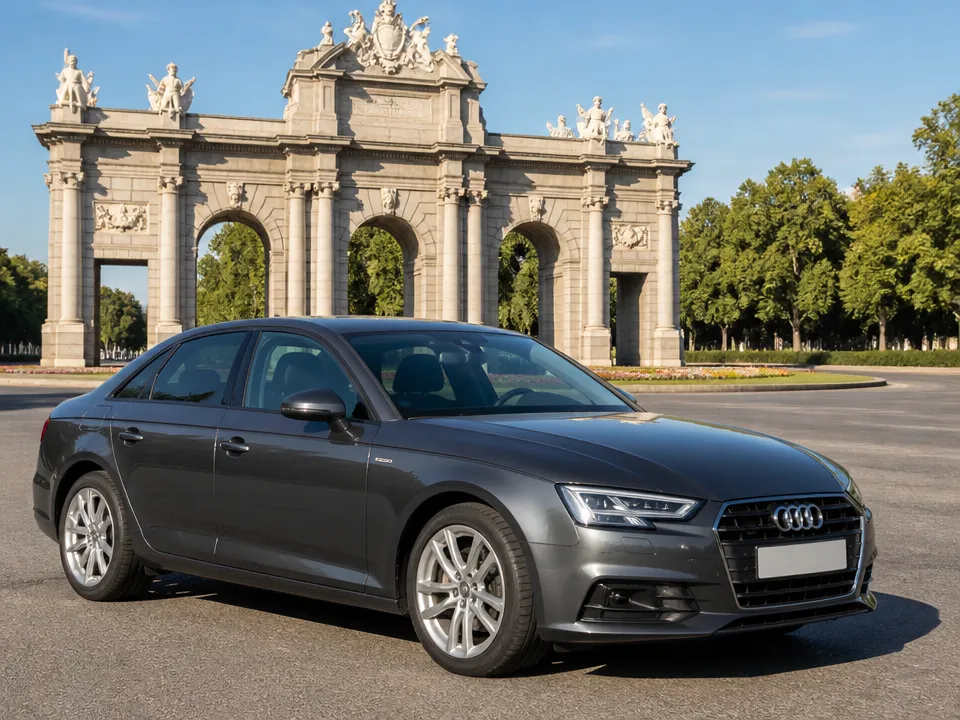




Our fleet for corporate car rental in Madrid holds 27 cars, from €41 to €110 per day, with weekly rates from €246 and monthly from €861. Every booking is agreed with a manager before it is confirmed, and the terms of hand-over are set out in the rental agreement. Comfort, Premium and Sedan classes cover 15, 9 and 3 cars respectively, so a team of any size can be kitted out from one place.
Corporate car rental with us is a self-drive service: the car is delivered to your team, and every booking is agreed with a manager rather than pushed through an instant checkout. The account is built around one company, one invoice and as many drivers as the job needs.
Rent-Trip runs corporate bookings as a self-drive service — the car is delivered to the client and every booking is agreed with a manager. The company holds the booking; the person behind the wheel is whoever the team puts there that week. That is the practical difference from a retail hire, where one named driver keeps the same car for the whole term. On a company account the vehicle follows the task: a site visit in Las Tablas on Monday, a client meeting in Barrio de Salamanca on Wednesday, a run out to Pozuelo de Alarcón on Friday. Our fleet on this page counts 27 cars, from a Mini One at €41 a day to a BMW 7 Series at €110. In our practice the corporate bookings that run smoothest are the ones where the manager knows the weekly pattern up front, because the class can then be matched to the mileage instead of to the driver's preference.
Only drivers named on the rental agreement may drive the car — that is standard rental practice rather than a separate rule of Spanish law. Name the second driver before the car is delivered, otherwise responsibility for whoever is at the wheel falls on the main renter.
Rent-Trip issues an invoice for the company, and the deposit, excess, delivery fees and discounts are set out in the rental agreement. Nothing on that list is a figure we quote over the phone — the agreement is where it lives, and the manager walks the company contact through it when the booking is confirmed. Ask for the invoice to be made out to the legal entity at the moment of booking rather than after the car comes back: retrofitting a company name onto a closed rental means the paperwork has to be reopened, and that costs the finance team a week it did not plan for.
The paperwork is what usually slows down a hand-over, not the car. For corporate car rental in Madrid we check the driver's documents before the booking is confirmed, so the delivery slot is not wasted on a licence that does not qualify.
We ask for the driver's details at the booking stage — that way a licence that needs an official translation is flagged before the car leaves the lot, not at the kerb.
Driving in Spain starts at 18 for category B; the minimum rental age, the required length of driving experience and any young-driver surcharge are agreed when booking. In practice rental companies in this market set the floor at 21, some at 23, and ask for at least a year of holding a licence — but that is how the trade works, not a rule of Spanish law, so we confirm it for your booking rather than quote a blanket number. Tell the manager the age and the year the licence was issued when you request the car, and the answer comes back with the confirmed vehicle.
An additional driver from the company is named on the rental agreement, and the documents for that driver are agreed when booking. Only drivers written into the agreement may take the wheel — that is industry practice, not a separate rule of law, and it matters most when a colleague takes over mid-week. Send the second driver's licence details together with the first, so both names go onto one agreement instead of a second booking.
| Class | Models in the fleet | Seats | From, per day |
|---|---|---|---|
| Comfort | Mini One, Hyundai i30, Ford Focus, Volkswagen Golf | 4–5 | €41 |
| Sedan | Opel Insignia, Volkswagen Passat, Audi A4 | 5 | €64 |
| Premium | Mercedes-Benz A-Class, BMW 1 Series, Audi A3 Sportback | 5 | €58 |
Longer engagements run from €246 a week and from €861 a month, and every booking is agreed with a manager.
Delivery is the part of corporate car rental that decides how quickly a team gets moving: we bring the car to the address you name when booking, and the hand-over is arranged around your working day rather than ours.
The exact time and the exact kerb are fixed with the manager before the car leaves, and the same applies to collection at the end of the booking.
We agree the delivery time, the address and the return moment with the manager when the booking is confirmed, so the hand-over fits the team's schedule instead of the other way round. For a fleet of two or three cars going to the same office, we stagger the drop-offs — a morning slot for the car that leaves first, a later one for the backup. In our experience, the delay that costs a company most is not traffic but a licence or a card that turns out not to be in the main driver's name. Both are checked while the booking is being agreed, not at the kerb, which is why we ask for the driver details early. If a model in the plan is unavailable, the replacement is agreed before delivery, and the price of the confirmed class stands.
The deposit, the excess, any delivery fee and any discount are set out in the rental agreement, never quoted over the phone as a figure.
Collection works like delivery in reverse: the manager agrees a time window and an address, and the car goes back to us there. A car returned to a different point than the one agreed is settled under the terms of the rental agreement. For long bookings we keep the same driver details on file, so renewing a monthly arrangement does not mean repeating the paperwork.
We keep 27 cars on this page, split into three classes: Comfort, Premium and Sedan. The whole Rent-Trip fleet runs to 754 vehicles, but corporate bookings in Madrid are drawn from these 27, and the class you pick decides both the daily rate and the kind of driving your team does.
A sales team doing short hops between meetings is usually best served by the smaller Comfort hatchbacks — the Mini One at €41, the Hyundai i30 at €44 or the Ford Focus at €46 — because they park easily in the city centre and the low daily rate keeps a month of use affordable. Estates such as the Ford Focus Estate at €48 and the Seat Leon ST at €54 carry sample cases, stands and luggage for four or five passengers without stepping up a class. Where the car is part of how the company presents itself, the Premium saloons and SUVs do that work: the Mercedes-Benz C-Class at €78, the Audi A6 at €93 and the BMW 7 Series at €110. Automatic gearboxes are worth flagging early — the Peugeot 308 at €55 is the cheapest automatic on the page, and most of the Premium line-up is automatic as standard.
Every model on this page carries its full specification, so the choice is rarely a guess. The Toyota Corolla is the only hybrid on this page, at €60 a day with a 1.8 L engine and an automatic gearbox. The Mercedes-Benz C-Class and Mercedes-Benz E-Class are rear-wheel drive, as is the BMW 7 Series, while the Mercedes-Benz GLC is the one all-wheel-drive car here. Engines run from 1.0 L in the Hyundai i30 and Audi A1 Sportback up to 3.0 L in the BMW 7 Series, and power from 102 hp in the Mini One to 286 hp in the 7 Series. If two colleagues will share the driving on a long assignment, tell the manager which car you want at the booking stage — the specification and the agreed driver list are settled together, and swapping a manual for an automatic after the fact is harder than choosing it up front.
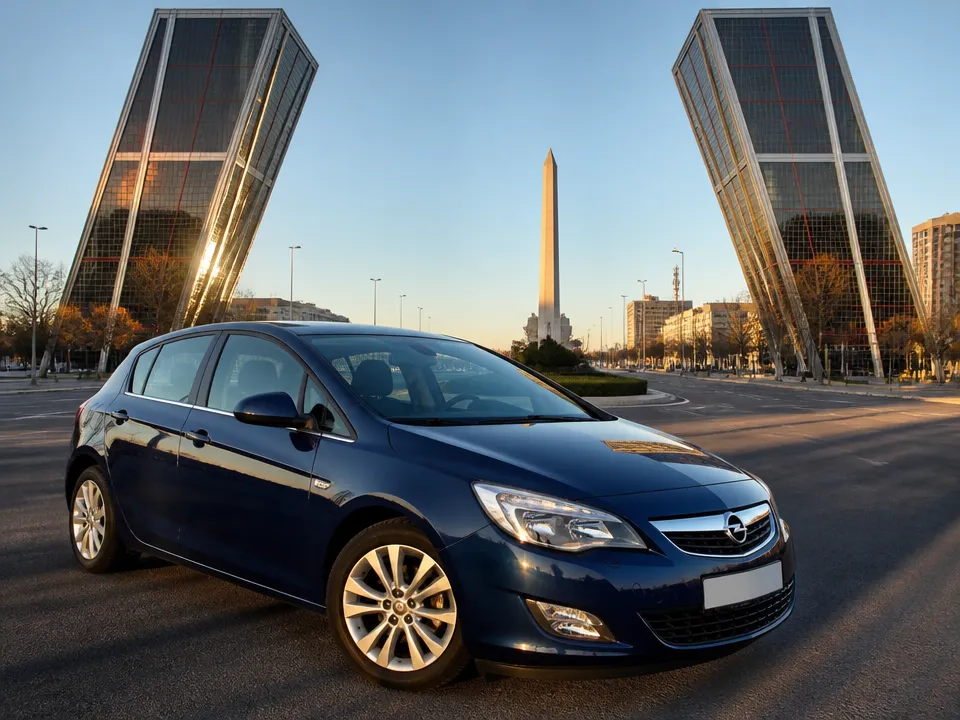
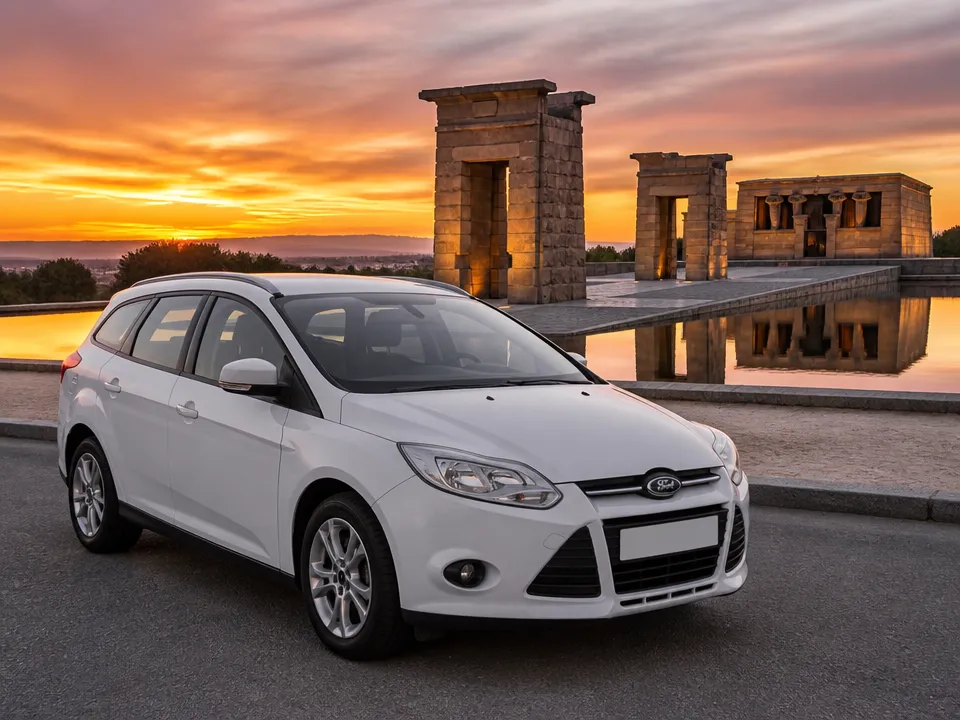
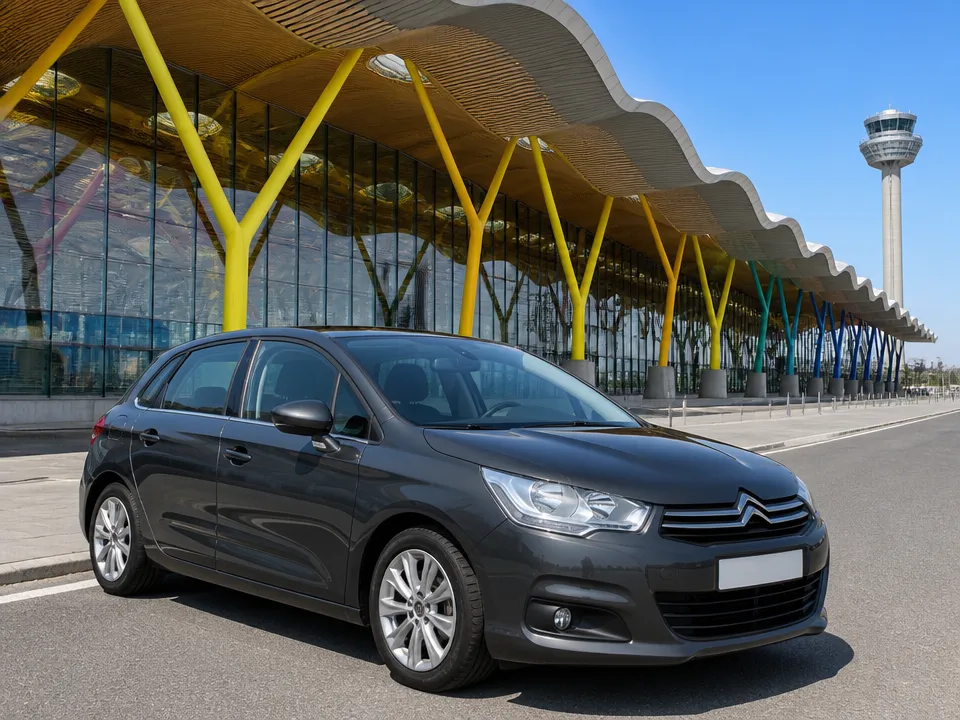
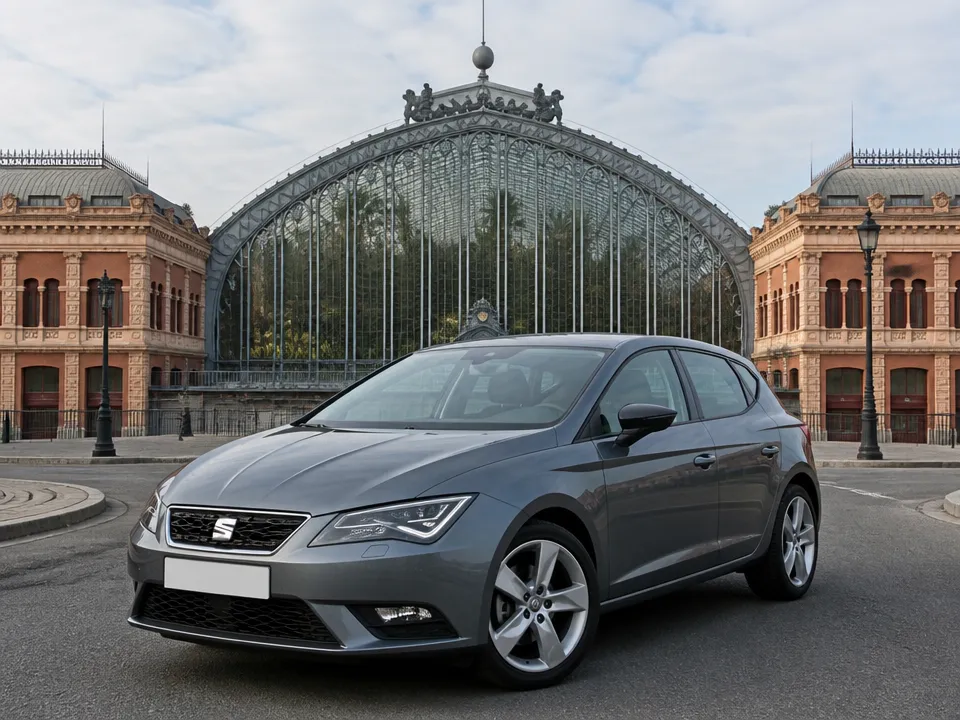
Corporate car rental in Madrid at Rent-Trip starts at €41 a day for Comfort, €58 for Premium and €64 for Sedan. The range across the 27 cars on this page runs to €110 a day, and the class you pick is the main thing that moves the number. Comfort covers 15 cars, Premium 9 and Sedan 3, so most company bookings land in the first group: Mini One at €41, Hyundai i30 at €44, Ford Focus at €46, Opel Astra at €47, Ford Focus Estate at €48, Citroen C4 at €49, Seat Leon at €50, Volkswagen Golf at €52, Seat Leon ST at €54, Peugeot 308 at €55, Opel Astra Sports Tourer at €57, Audi A1 Sportback at €58 and Toyota Corolla at €60. Premium opens with the Mercedes-Benz A-Class at €58 and climbs through the BMW 1 Series at €62, Audi A3 Sportback at €68, Mercedes-Benz GLA at €72, Mercedes-Benz C-Class at €78, Mercedes-Benz GLC at €84, Mercedes-Benz E-Class at €88 and Audi A6 at €93 to the BMW 7 Series at €110. Sedan sits between the two with the Opel Insignia at €64, Volkswagen Passat at €74 and Audi A4 at €84. In our experience, teams that book by task rather than by rank save the most: a Comfort estate covers site visits, and a single Premium sedan is enough for the client-facing leg of the same week.
Weekly corporate car rental in Madrid is charged at the daily rate times six, so the cheapest car on this page comes to €246 a week and the BMW 7 Series to €660. Monthly runs at the daily rate times 21: €861 for the Mini One and €2,310 for the BMW 7 Series. Both multipliers apply to every one of the 27 cars, which makes the arithmetic simple when you build a budget: pick the model, take its daily figure from the list above, and multiply by six or by 21. The longer the booking, the more the choice of class matters in absolute terms: a week in a Comfort hatchback such as the Volkswagen Golf at €52 a day comes to €312, while the same week in the Mercedes-Benz E-Class at €88 a day comes to €528, and a month stretches that difference further. For a team that needs two or three cars at once, dropping one class on the pool car and keeping Premium for the one that meets clients usually pays for the rest of the booking.
The class and the length of the booking set most of the price, and the rest is agreed with a manager when you book. Deposit, excess, delivery fees and any discount are set out in the rental agreement, so the daily, weekly and monthly figures above are the part you can plan against before the conversation starts. A company that books three cars for a month is not choosing between €41 and €110 a day in the abstract — it is choosing a mix, and the mix is what the manager prices. Tell us the models you want, the dates and how many drivers from the company go on the agreement, and we confirm the total.
Madrid’s low-emission rules catch out more corporate drivers than anything else on this page, so the section below sets out what a company car may and may not do once it leaves the delivery point. Speed limits, the ZBE Madrid sticker requirement and the parking rules of the SER zones are the three things worth knowing before a team member takes the wheel.
ZBE Madrid (Zona de Bajas Emisiones de Madrid) covers every street of the municipality — all 21 districts — and vehicles without a DGT environmental sticker (category A: petrol registered before 2000 and diesel before 2005) are barred from entering. Under Ordenanza 2/2026 of 24.03.2026 (new transitional provision seven), enforcement begins at 00:00 on 07.04.2026. Cars with foreign plates hold no DGT sticker at all and must be registered in advance. The practical consequence for a company booking is simple: our cars carry Spanish plates and their DGT sticker, so nothing has to be arranged before the trip — but if your team drives a vehicle brought in from abroad, the registration is on you, not on the rental.
These figures come from Article 50 of the Reglamento General de Circulación (RD 1428/2003 as amended by RD 970/2020), and the fine table behind them is built on the pair of permitted limit and actual speed, not on the size of the excess.
SER zona azul (blue) allows a maximum of 4 hours and SER zona verde (green) a maximum of 2 hours; both operate 09:00–21:00 on weekdays and 09:00–15:00 on Saturday. A 0 emisiones sticker or an ECO sticker cuts the resident permit charge by 75%. The ring roads M-30, M-40, M-45 and M-50 and the radial A-1 to A-6 motorways cost nothing, while the R-2, R-3 and R-4 radials are tolled. In our experience the fine that hurts a company account is not the parking ticket but the speed camera: 31–50 km/h on a 30 km/h street is €100 with no points, but 51–60 km/h jumps to €300 and 2 points, and above 81 km/h it reaches €600 and 6 points. Keep the fuel card topped up too — Gasolina 95 E5 averaged €1.971 a litre across 231 stations in the sample, with a median of €2.009.
Insurance is not a line you negotiate at the counter — in Spain the obligatory cover sits inside every agreement by law, and everything above it is a choice written into your contract. For a company account the useful question is not «what does cover cost» but «who carries the risk while our colleague is driving», and that answer lives in the paperwork, not in a brochure.
Above the obligatory policy, damage cover follows the practice of the market rather than a rule of Spain. CDW reduces your liability for bodywork damage and leaves you carrying the excess — the franquicia — while the company pays the rest. The excess itself is not a single national figure: it depends on the provider and the car class, and it is printed in the agreement whether or not you have bought an excess waiver. The same logic applies to theft protection and to the separate options for glass and tyres. Buyers sometimes assume the deposit is a payment — it is not. It is a preautorización, a hold placed on a credit card against possible damage and extras, and the amount is confirmed before anything is signed. The size of that hold and the excess on your chosen class are set out in the contract, and we confirm both when the booking is agreed.
For a company account, the agreement is where the commercial side lives, and we keep it in one document rather than three. The invoice for the company is issued on the details you give us, and the deposit, the excess, the delivery fees and any discounts are set out in the same contract — so finance sees one set of numbers, not a price plus a stack of extras. In our practice, the detail that causes the most back-and-forth is the split between who pays and who drives: the company can pay while a colleague sits behind the wheel, but that colleague has to be named on the agreement as an additional driver from the company. Only drivers written into the contract may drive the car — that is industry practice, not a clause of Spanish law, and it is worth settling before the car is handed over rather than after.
The practical sequence is short: we agree the booking with you, confirm the class, the dates and the driver details, and the car is delivered to the client at the location you give us. The paperwork side — what is signed, where, and what is checked — belongs to the hand-over and is arranged with the manager in the same conversation, because it depends on the booking rather than on a fixed script. If your team is collecting a car for a run to Toledo or Segovia, say so when booking: the trip territory and any conditions attached to it are agreed with the manager and recorded in the agreement, not assumed.
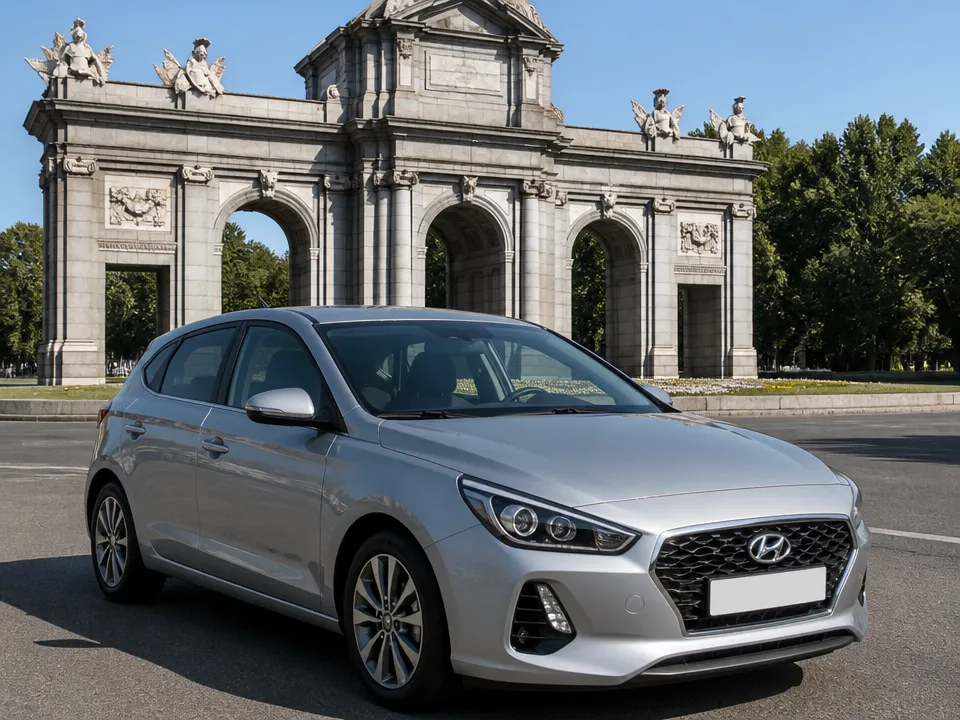
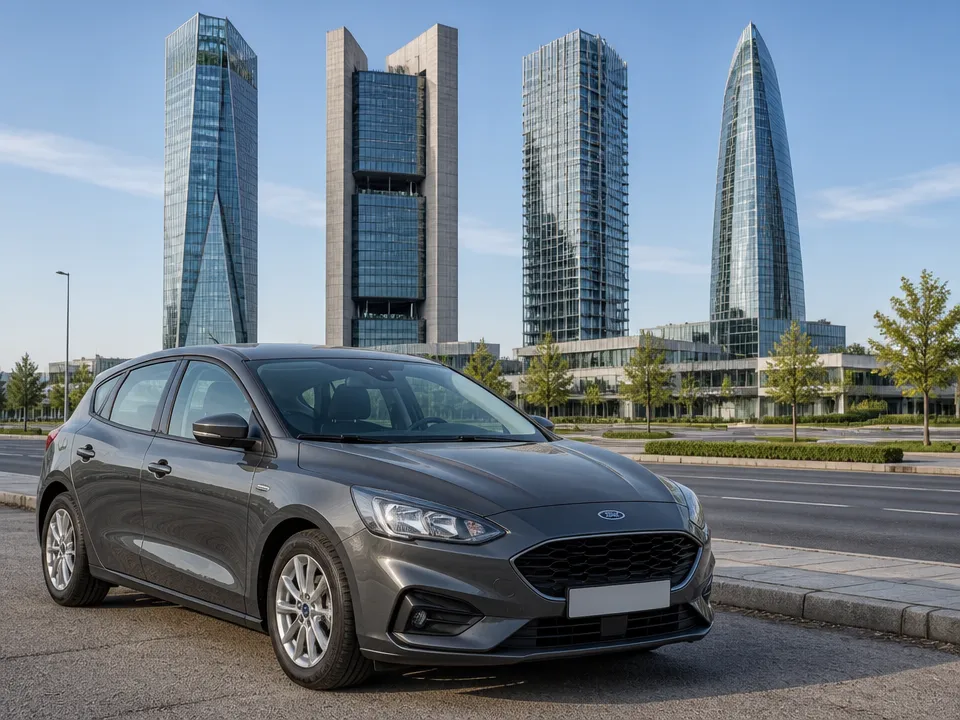
Daily prices on this corporate page run from €41 to €110. Examples are the Mini One at €41 per day, the Hyundai i30 at €44 per day and the Ford Focus at €46 per day.
This page lists 27 cars in Madrid. Classes are Comfort, Premium and Sedan, with 4 or 5 seats, automatic or manual transmission, and body types including Crossover, Estate, Hatchback, MPV, SUV and Sedan.
Madrid has SER zones. In zona azul (blue) anyone may park for up to 4 hours; in zona verde (green) non-residents may park for up to 2 hours. Prices are not confirmed by an official source.