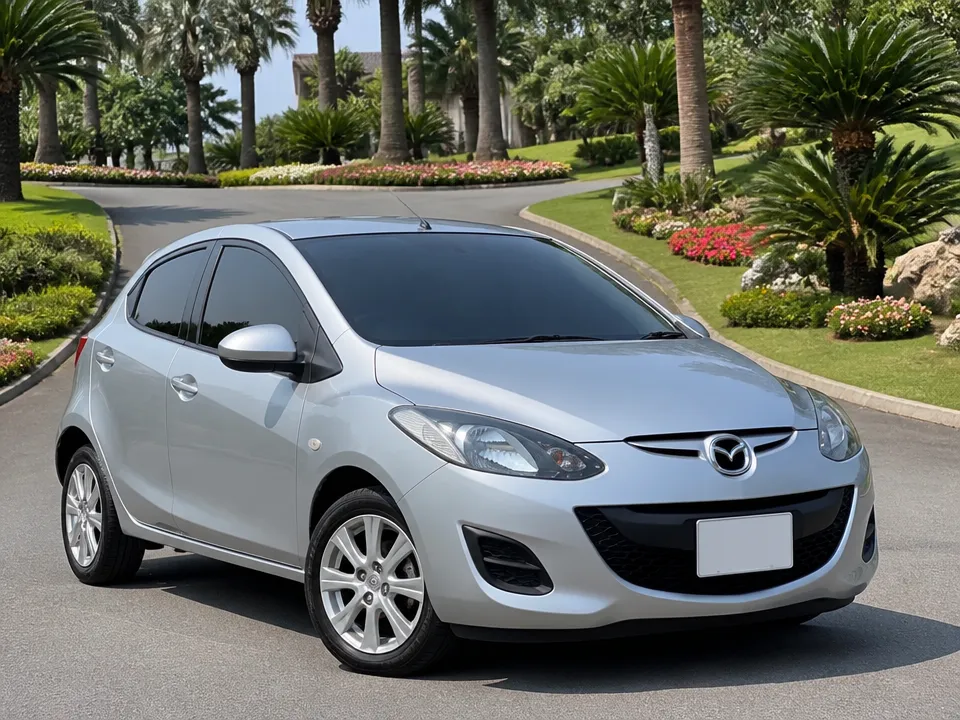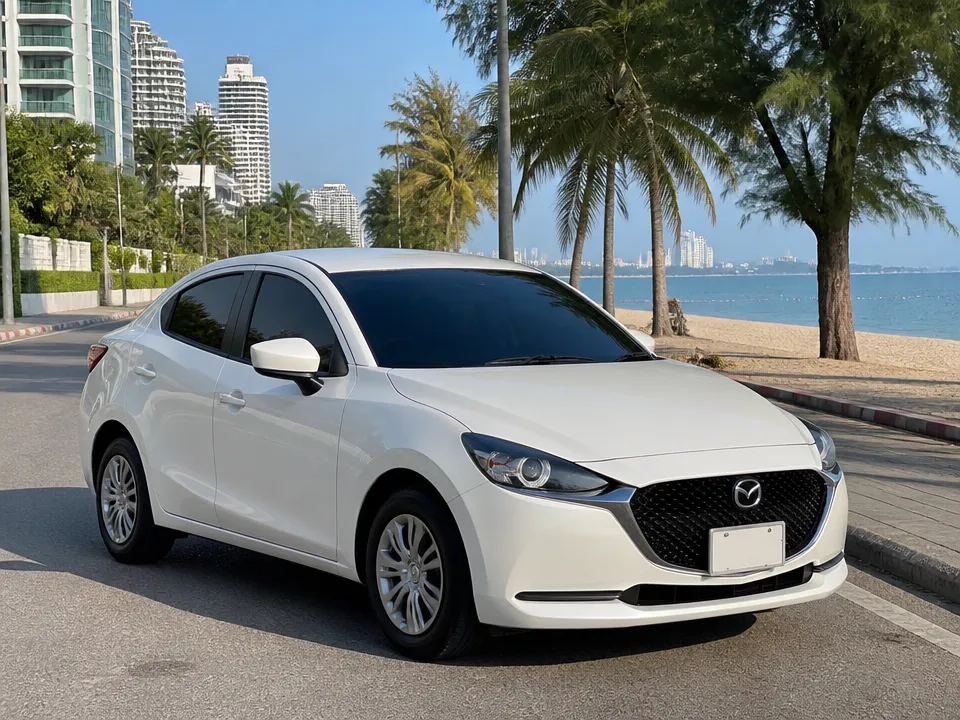
Mazda 2 Sedan, Economy
★4.7· 88Automatic1.3 LFront-wheel5 seats
฿950per day
Book nowVAT included




VAT included
VAT included
No cars match the selected filters. Remove some of the conditions.


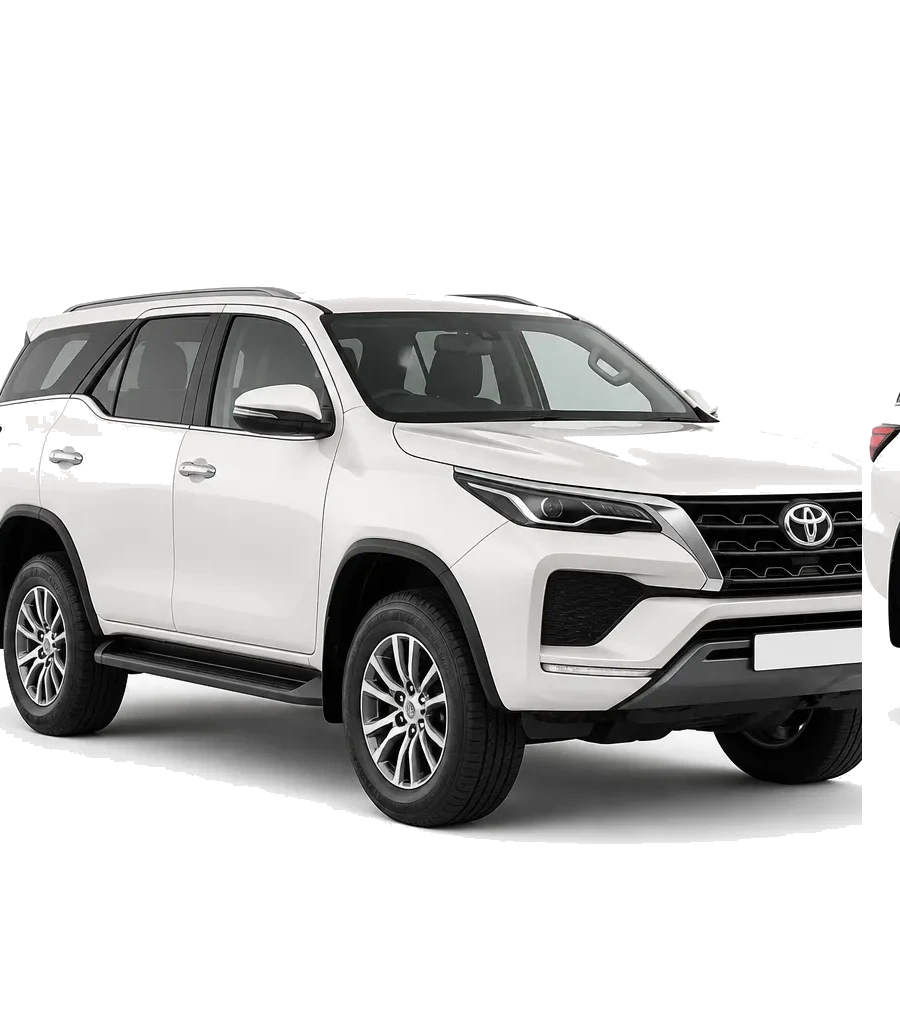

This page lists 2 cars: the Mazda 2 Hatchback and the Mazda 2 Sedan. Both are Economy class with 5 seats and Automatic transmission.
Daily prices on this page run from ฿950 to ฿950. The Mazda 2 Hatchback and Mazda 2 Sedan are both ฿950 per day.
In Thailand, traffic drives on the left and the steering wheel is on the right. This applies in Pattaya.
A week of temple runs, Jomtien beach mornings and evening drives up to Naklua is easier when the car is already waiting for you. Rent-Trip offers Mazda car rental in Pattaya with two economy models — the Mazda 2 Hatchback and Mazda 2 Sedan — from ฿950 per day, both automatic, petrol, five seats.
Mazda car rental in Pattaya on this page comes down to one number: ฿950 per day for either Mazda 2, with weekly and monthly rates built from it. VAT 7% is already inside the prices shown, and what else applies to your dates is agreed when booking.
| Booking length | Rate | Per day |
|---|---|---|
| 1 day | ฿950 | ฿950 |
| 1 week | ฿5,700 | ฿950 × 6 |
| 1 month | ฿19,950 | ฿950 × 21 |
Both Mazda 2 cars we rent here — the Hatchback and the Sedan — sit in Economy class at ฿950 per day, so the rate never depends on which body you pick. A week is ฿5,700, which is the daily rate multiplied by six, and a month is ฿19,950, the daily rate multiplied by twenty-one.
Ask the manager at booking which extras apply to your dates before you compare the total against anything else — the headline rate is only the start of the sum.
A foreign visitor needs a home driving licence plus an International Driving Permit — Thailand recognises the 1949 Geneva Convention model. Car rental agreements in Thailand are contracts controlled by the OCPB since 30 December 2025: they are written in Thai, and every fee and penalty is disclosed inside them.
A foreign visitor needs a home driving licence plus an International Driving Permit (1949 Geneva Convention; section 42 bis of the Motor Vehicle Act). Citizens of ASEAN countries may drive on their national licence without an IDP or conversion. The police fine for driving without the permit is ฿500–1,000, and an insurer may refuse a claim. Bring your passport, your home driving licence, the International Driving Permit unless you hold an ASEAN licence, and a bank card in the main driver's name. Without it, a minor stop can turn into a claim your insurer declines.
| Item | What applies to a Mazda 2 | Where the detail sits |
|---|---|---|
| Agreement language | Thai, as required for OCPB-controlled contracts | Rental agreement |
| Fees and penalties | Disclosed inside the contract | Rental agreement |
| Security hold | Taken on a bank card in the main driver's name | Rental agreement |
| Insurance excess | Applies to damage to the car | Rental agreement |
| Delivery address and time | Agreed with a manager before the booking is fixed | Agreed when booking |
| Delivery fee, if any | Agreed with a manager | Agreed when booking |
Compulsory motor insurance (Por Ror Bor) covers injury to third parties and is attached to every registered car; first-class insurance covers damage to the car itself, and its terms and the excess are set out in the agreement. Ask the manager at booking which extras apply to your dates — that single question saves a re-invoice later, because traffic-camera fines are issued to the car owner, which is the company, and then re-invoiced to the renter.
Choose the body shape and the rest of the specification follows: Economy class, 5 seats, petrol, automatic, front-wheel drive, 1.3 L, ฿950 per day. The Hatchback and the Sedan differ in how the load area is arranged, and that single difference decides which one suits a given trip better.
| Model | Body | Seats | Fuel | Gearbox | Drive | Engine | Price |
|---|---|---|---|---|---|---|---|
| Mazda 2 Hatchback | Hatchback | 5 | Petrol | Automatic | Front-wheel | 1.3 L | ฿950/day |
| Mazda 2 Sedan | Sedan | 5 | Petrol | Automatic | Front-wheel | 1.3 L | ฿950/day |
Both cars seat 5, so a family of four fits with room for bags — two adults in front, two children in the back, and the luggage in whatever space the body shape gives you. On an airport run with large hard cases the Sedan's separate boot keeps the luggage apart from the cabin. If you are unsure, tell the manager at booking how many people and how many bags you have, and we will confirm which of the two is available for your dates.
Ask at booking whether the Hatchback or the Sedan is free on your dates — with two cars on this page, availability is agreed with a manager rather than picked from a live list. The delivery address, the date and the time are agreed the same way, and the car comes to you clean with a full tank. The security hold and the conditions that apply to your booking are set out in the rental agreement, so read them before you drive away. Both bodies take the same petrol — the body shape is the only thing you are choosing between.
Thailand drives on the left, and every car here — including both Mazda 2s in our local fleet — is right-hand drive. That single fact reshapes your first ten minutes behind the wheel more than anything else about the car.
The pedals are in the same order as any left-hand-drive car, so your feet adapt faster than your hands. Beach Road and Second Road run one-way anticlockwise through the centre, so a wrong turn costs you a full loop rather than a U-turn.
Speed limits are 80 km/h in built-up areas — Pattaya City is named as a built-up area in the 1969 law — 90 km/h outside them and 120 km/h on Motorway 7. Signs can lower the limit below these figures, so read them rather than trusting the default. The 120 km/h limit on Motorway 7 is enforced primarily by speed cameras.
Give yourself the first few kilometres on quiet streets before you join Sukhumvit or Motorway 7.
We deliver the car to any address in the city and to U-Tapao Airport (UTP), Suvarnabhumi Airport (BKK) and Don Mueang Airport (DMK) for Pattaya. The delivery address, the date and the time are agreed with a manager before the booking is fixed, and a delivery fee, if any, is agreed when booking. Nothing about the hand-over is left to guesswork: you tell us where you will be, we confirm the slot, and the Mazda 2 arrives there.
The U-Tapao run avoids the Bangkok end of the motorway entirely.
We do not name a desk, a counter or an office — the car comes to you, and the paperwork follows the booking you already agreed. The car arrives clean and with a full tank, and the car is available from one day. The security hold is taken on a bank card in the main driver's name, with the amount set out in the rental agreement, and the deposit, the insurance excess and any conditions for drivers under 25 are likewise set out in that agreement rather than quoted here.
Longer bookings change the arithmetic, not the delivery. A week is ฿5,700 (daily × 6) and a month is ฿19,950 (daily × 21), both at the same ฿950 per day base — and both include VAT 7% in the price shown. If you are staying long enough to want the car for the whole trip, say so when you book and the manager will set the delivery slot and the rate together.
Every car we rent carries compulsory motor insurance, and first-class cover for the vehicle itself is arranged with the booking. What sits in the agreement — the excess, the terms, the exclusions — is where the real detail lives, so read it before you drive away.
The rental agreement is the document that decides what happens if the car comes back damaged. Since 30 December 2025 a car rental agreement in Thailand is a contract controlled by the OCPB: it is written in Thai, and all fees and penalties are disclosed in it. That matters for a Mazda 2 because the two cars on this page are identical in class, engine and price — ฿950 per day, ฿5,700 per week, ฿19,950 per month — so the only variable left to check is the cover, not the model. Ask the manager at booking which excess applies to your dates and what the policy excludes; that answer belongs in writing, not in a verbal handshake.
Traffic-camera fines are issued to the car owner and re-invoiced to the renter. On Motorway 7 the 120 km/h limit is enforced primarily by speed cameras, and the notice arrives with us as the registered owner before it reaches you — so if you have been driving on the motorway towards Bangkok or down to Map Ta Phut, expect the paperwork to follow. In built-up areas of Pattaya the limit is 80 km/h and outside them 90 km/h, and a speeding fine runs up to ฿1,000.
A foreign visitor needs a home driving licence plus an International Driving Permit (1949 Geneva Convention; section 42 bis of the Motor Vehicle Act). Without the permit the police fine is ฿500–1,000, and an insurer may refuse a claim. Citizens of ASEAN countries may drive on their national licence. Our advice is simple — carry both documents, and keep the originals in the car.
What matters more is planning the route around the way traffic works here.
Bangkok is 145.7 km by road, about 102 minutes without traffic, and Motorway 7 covers most of it. Motorway 9 links to M7 at Thap Chang Interchange and uses M-Flow, camera-based with no barrier. Hua Hin is further than it looks — 321.1 km, around 229 minutes — so it is a full day rather than a morning out.