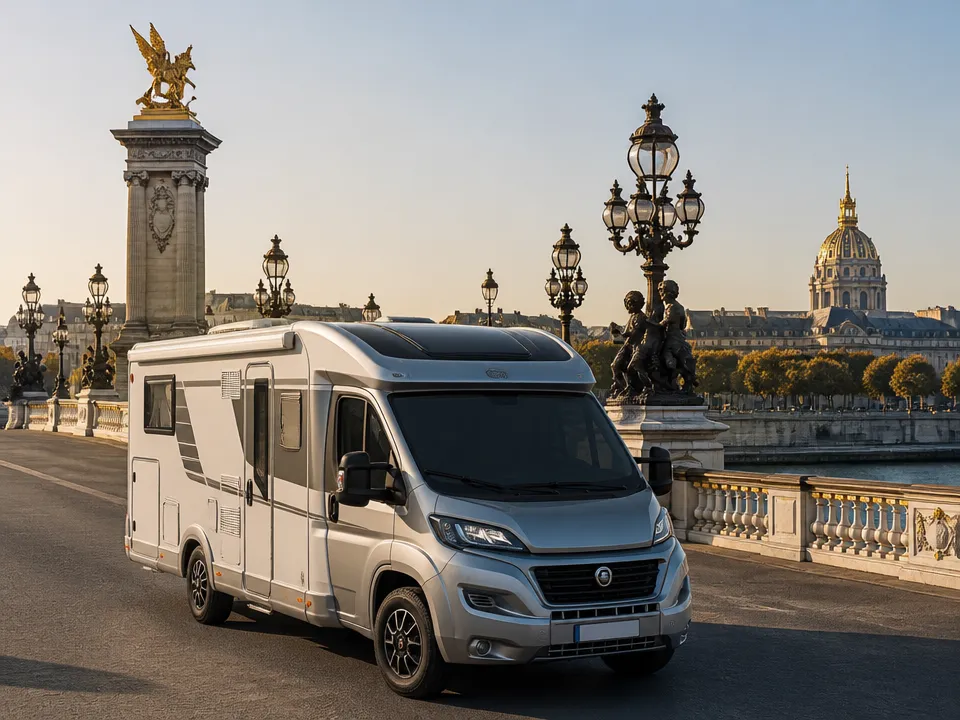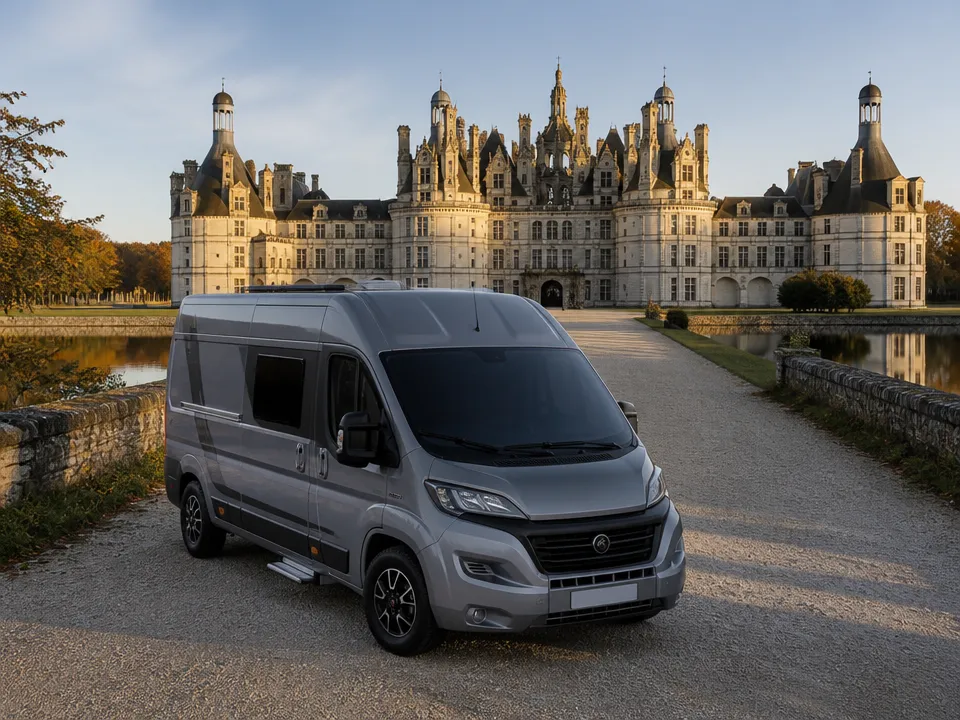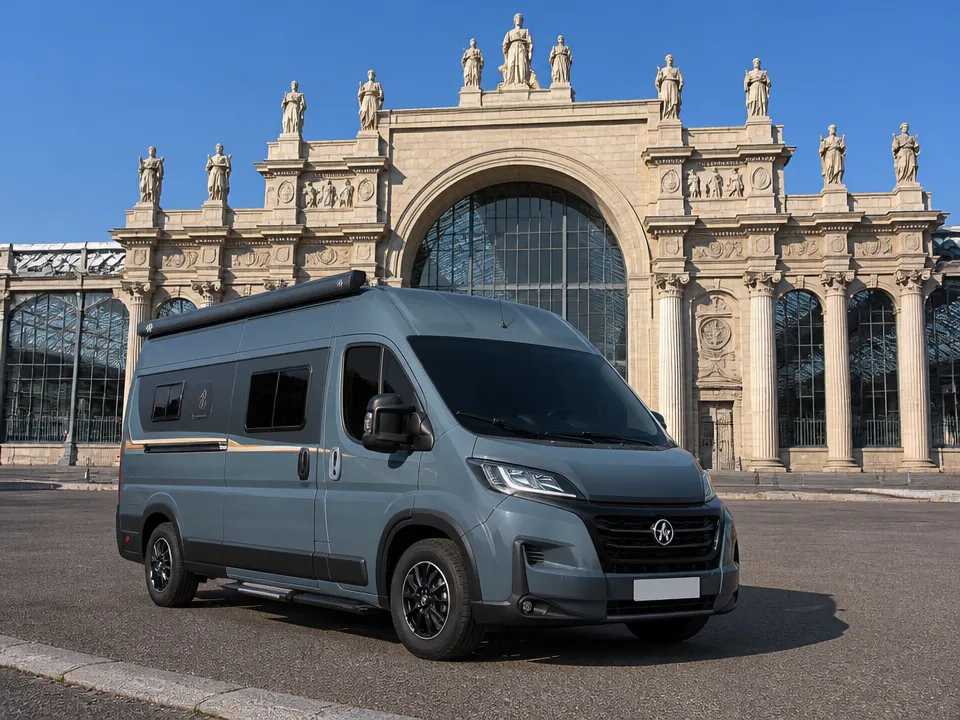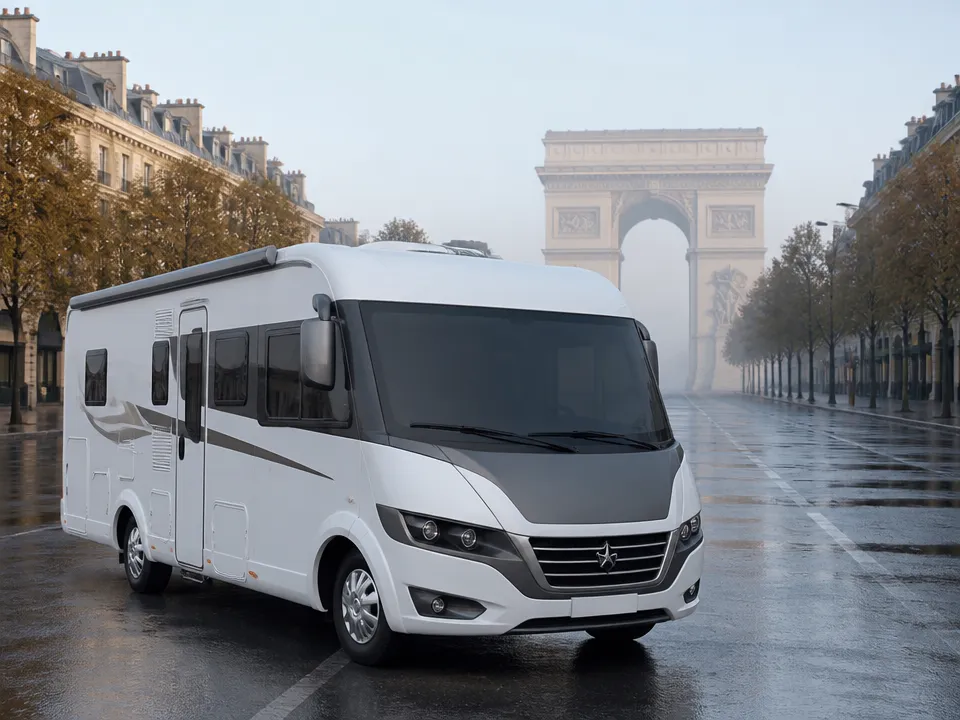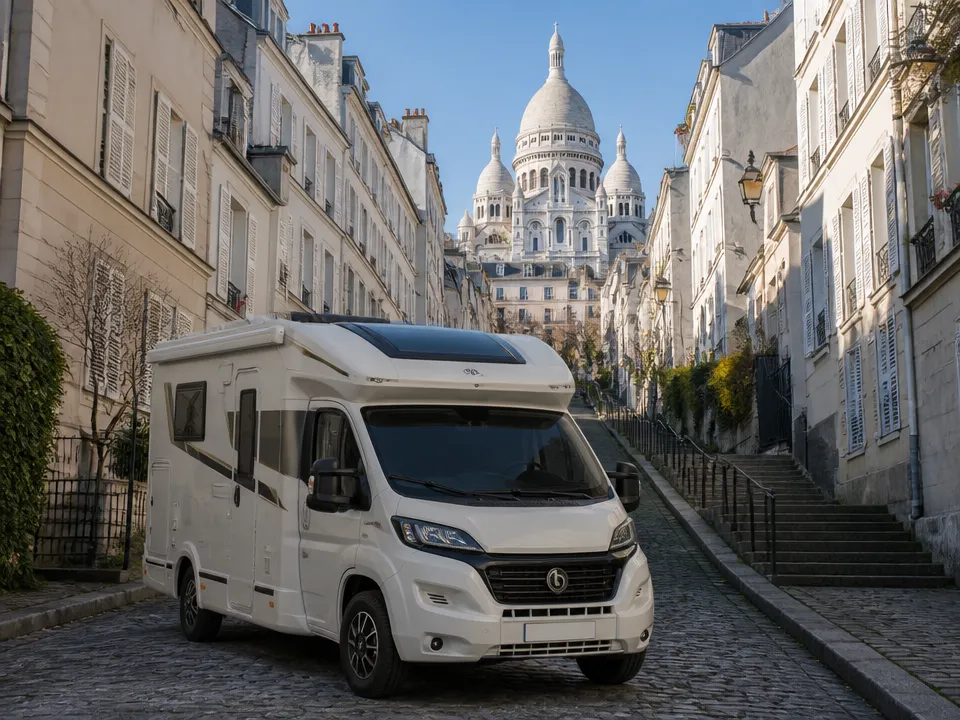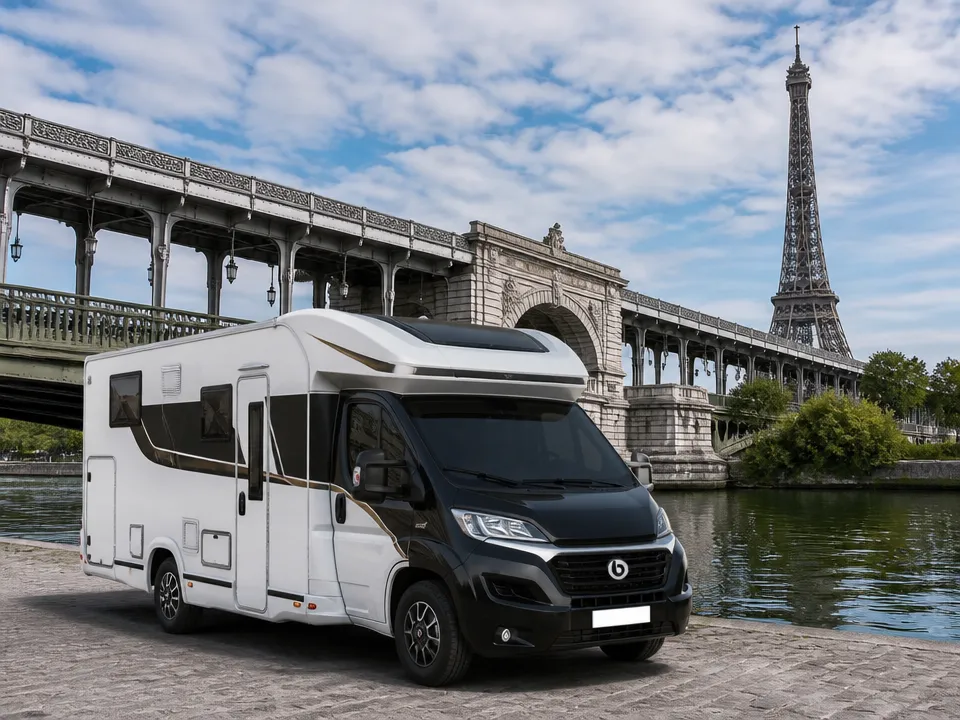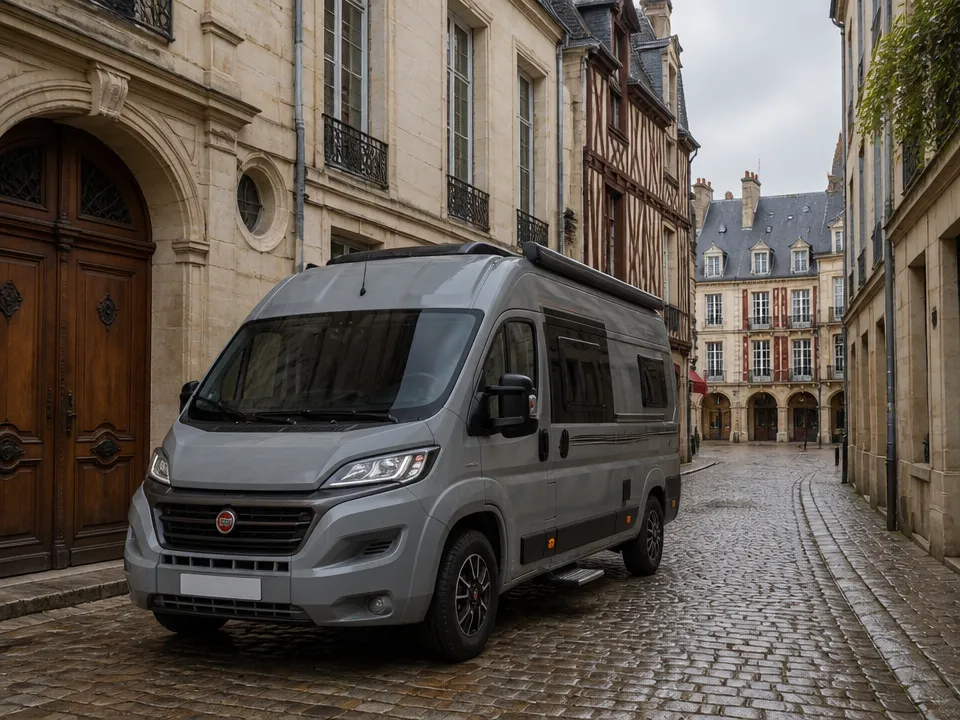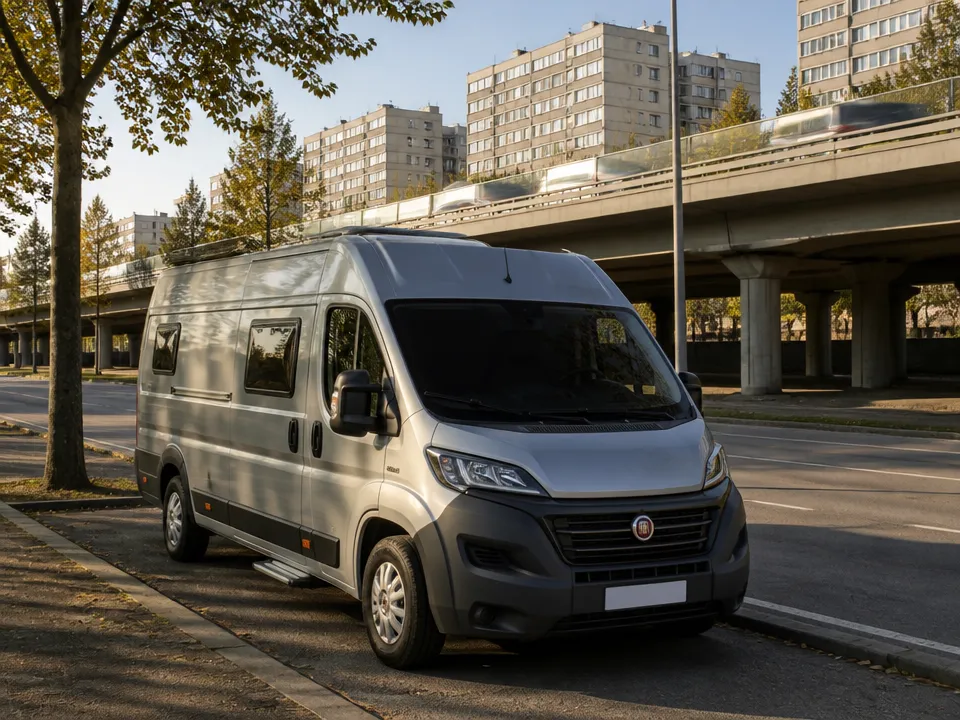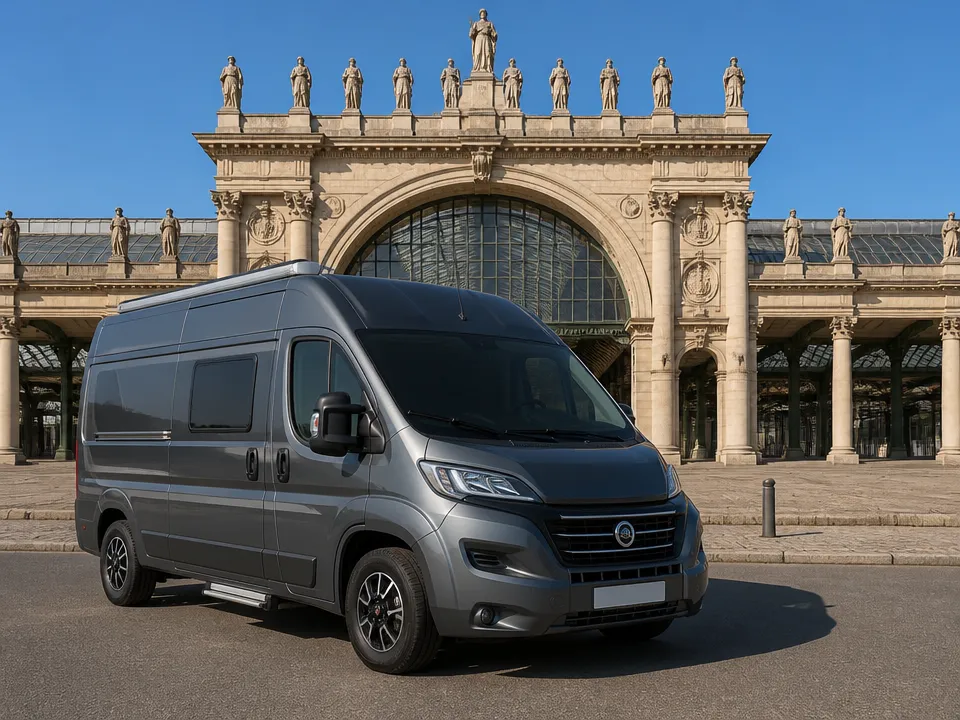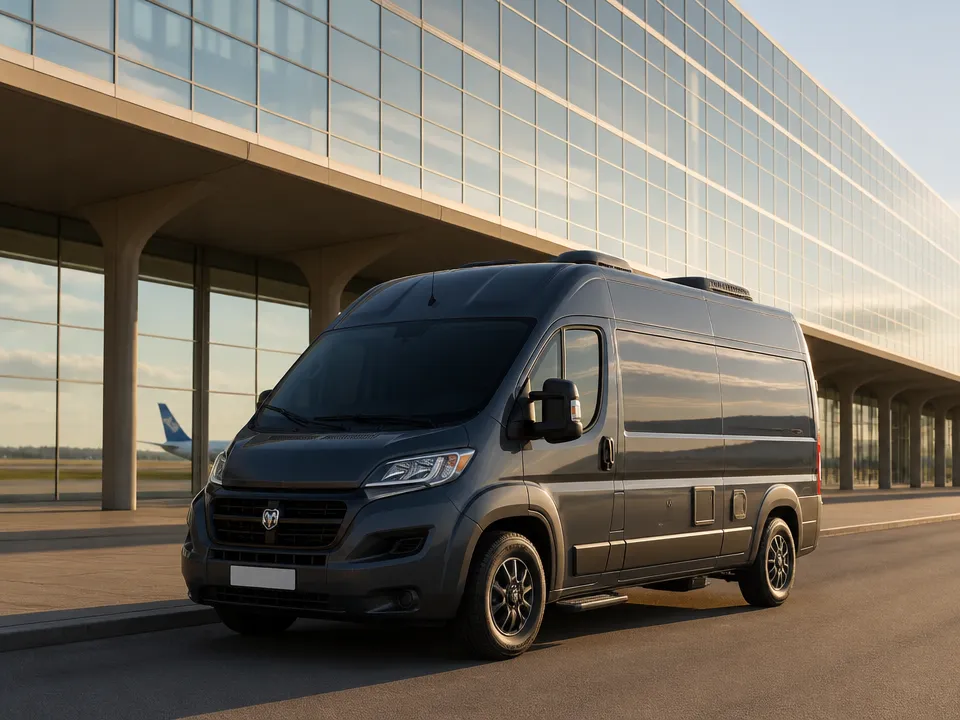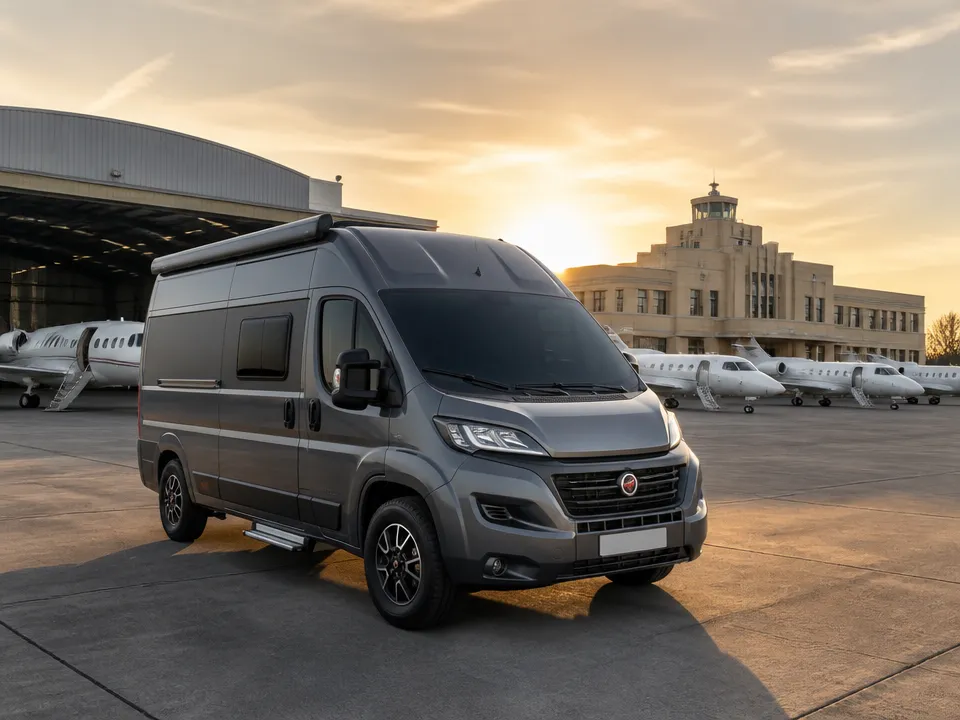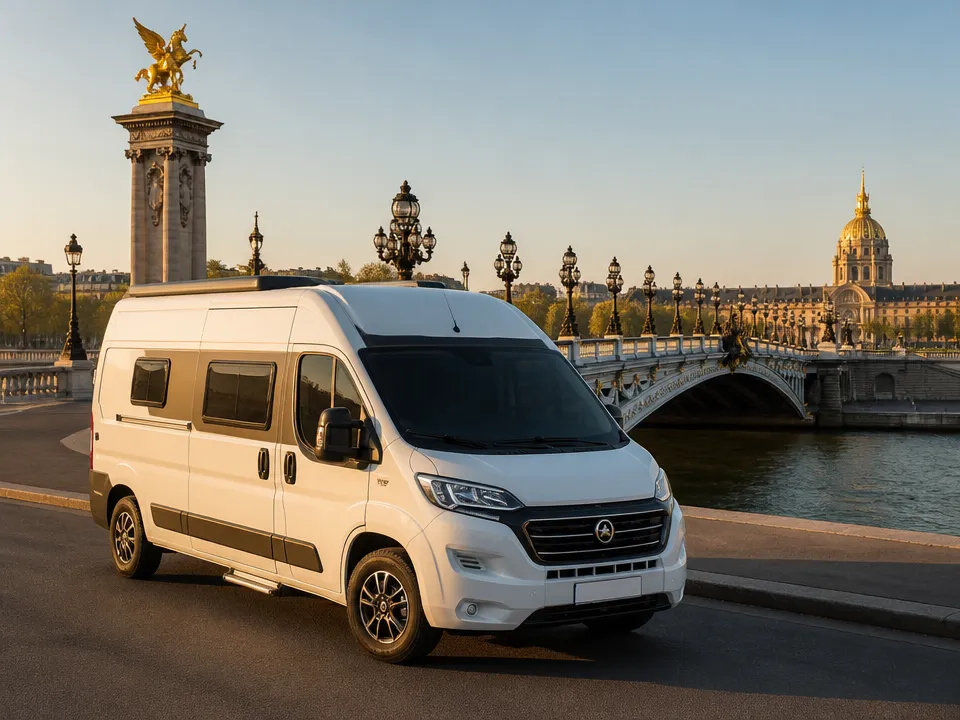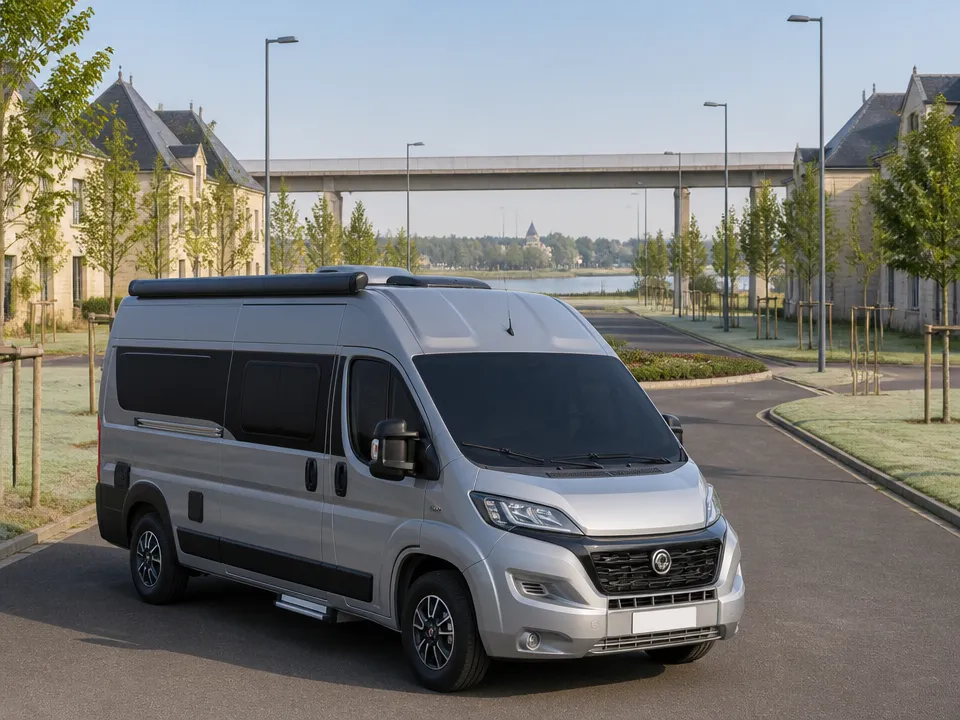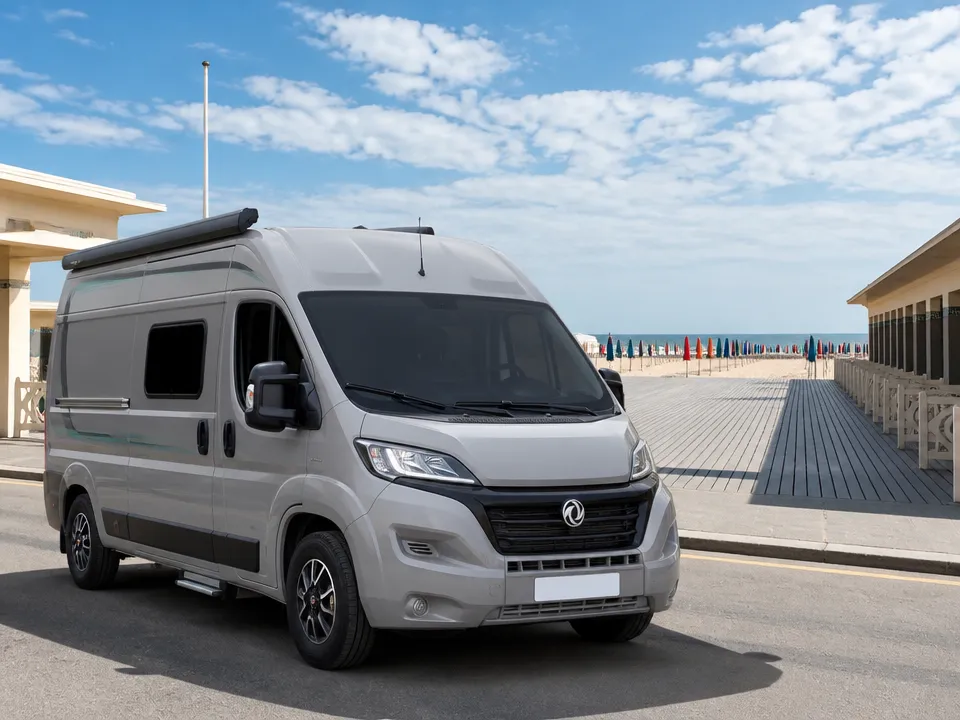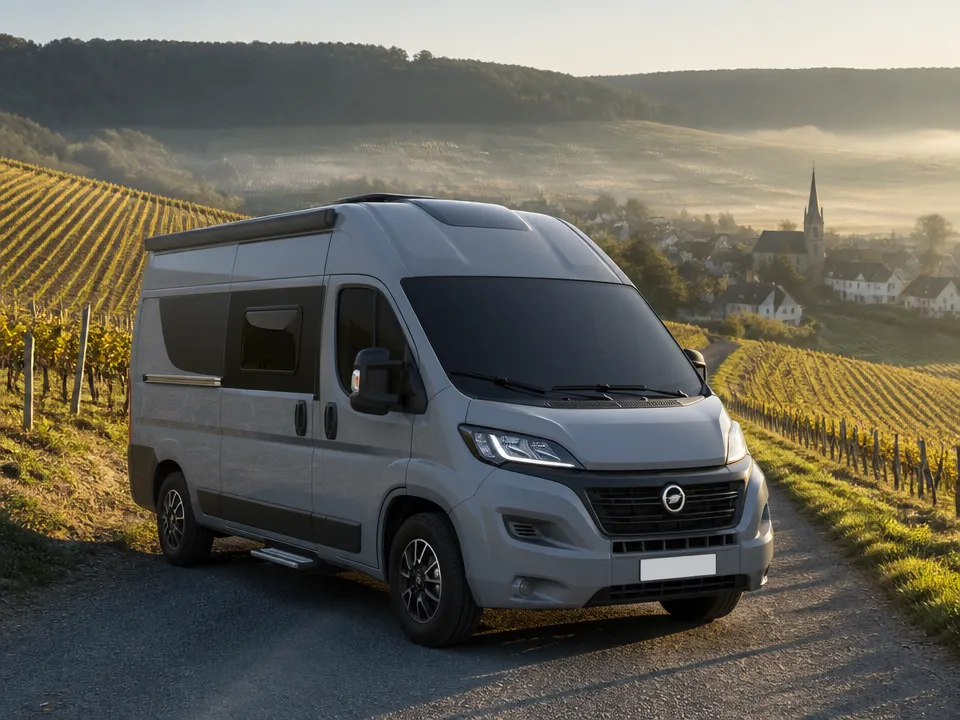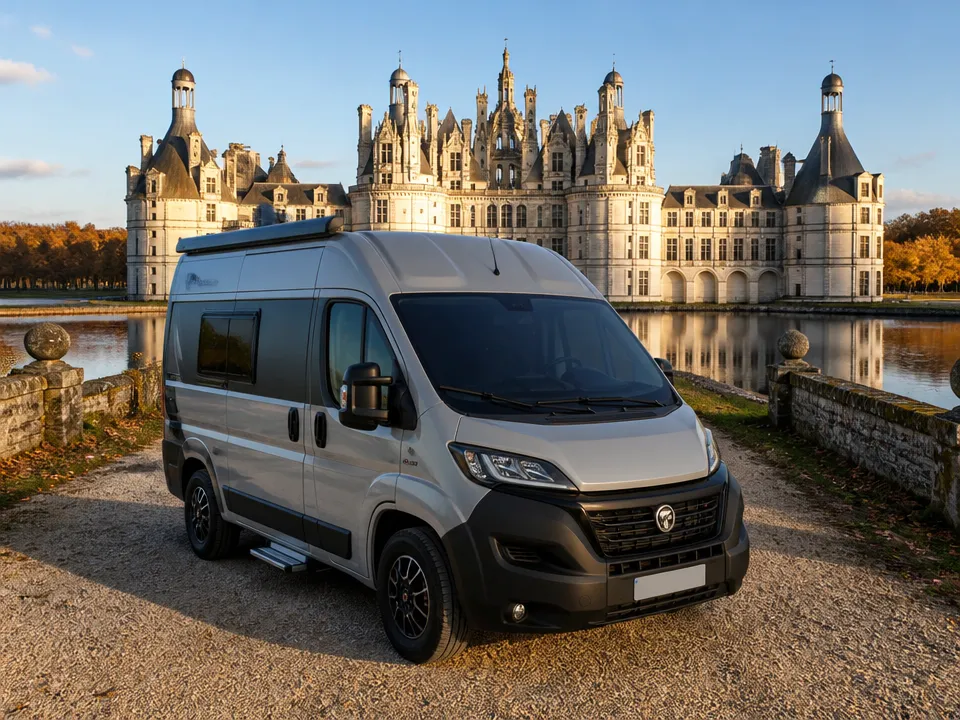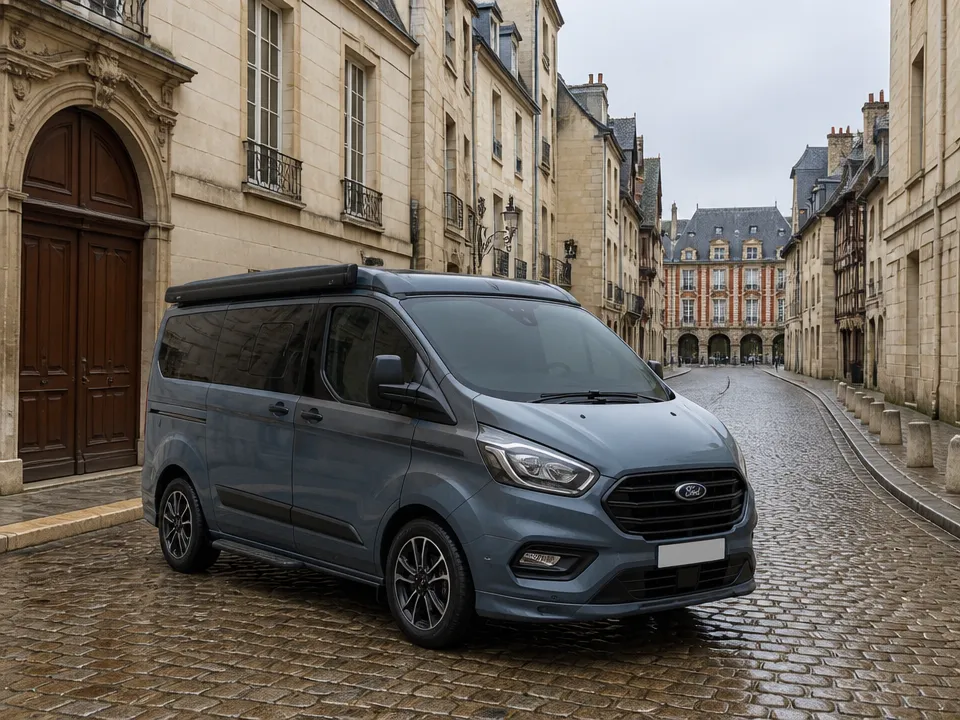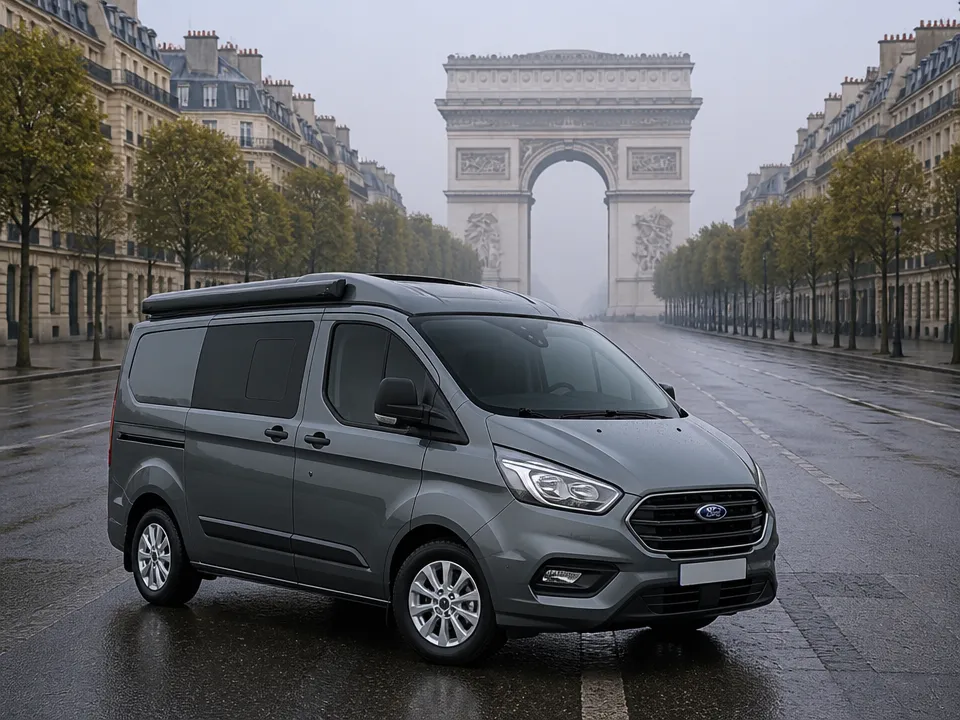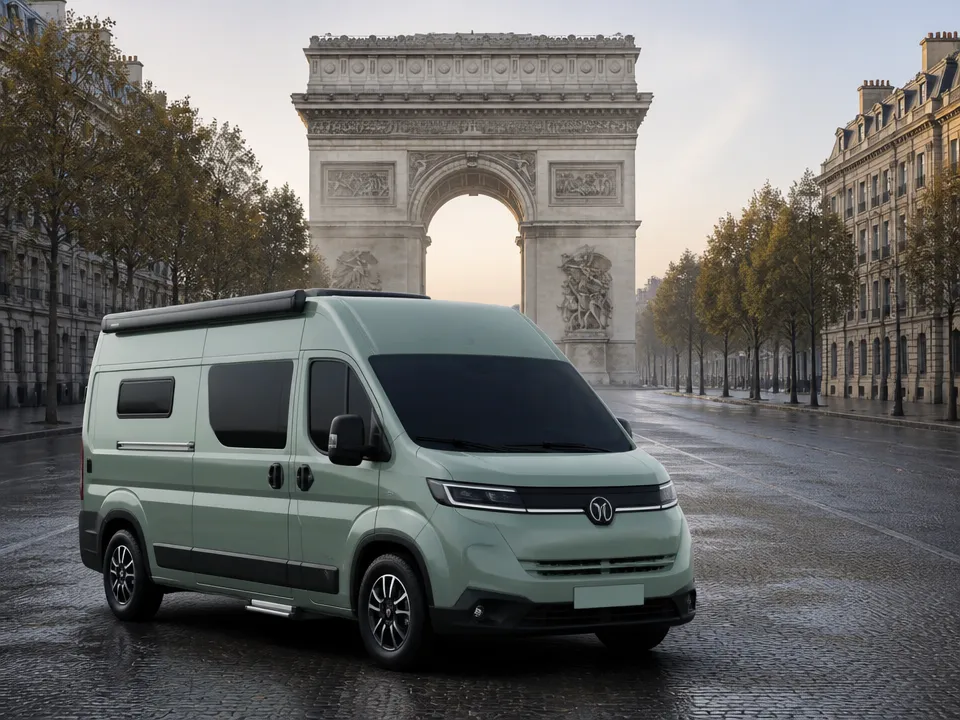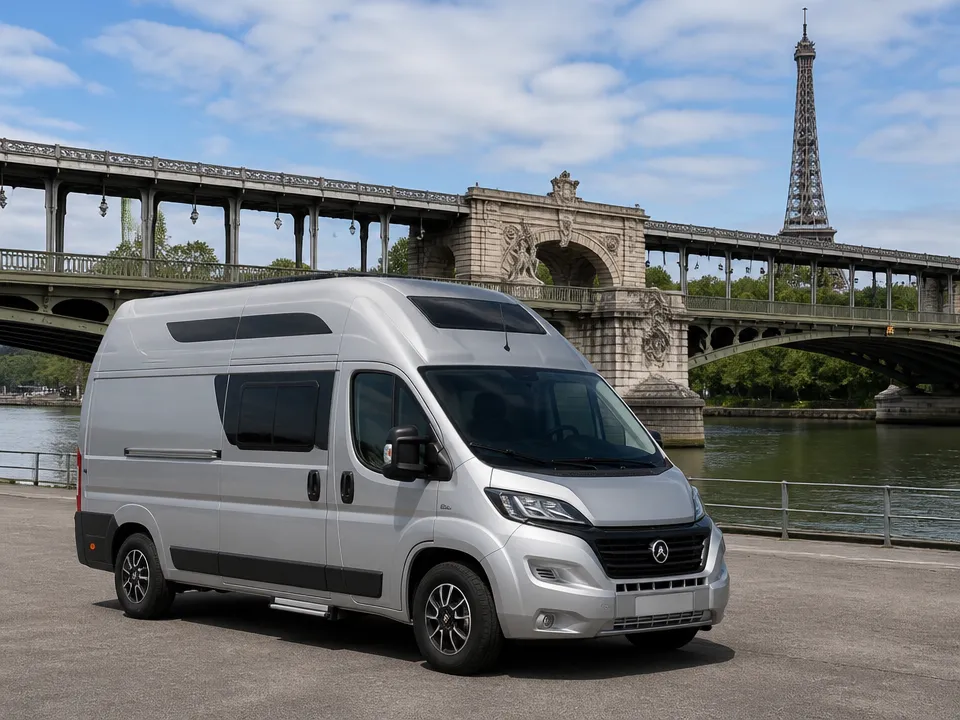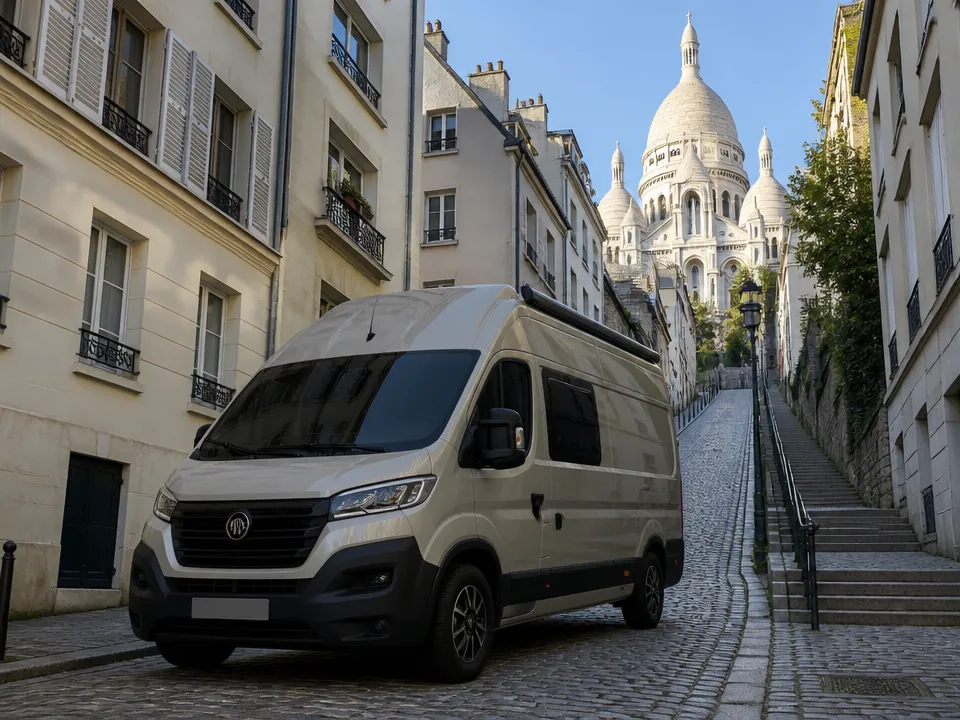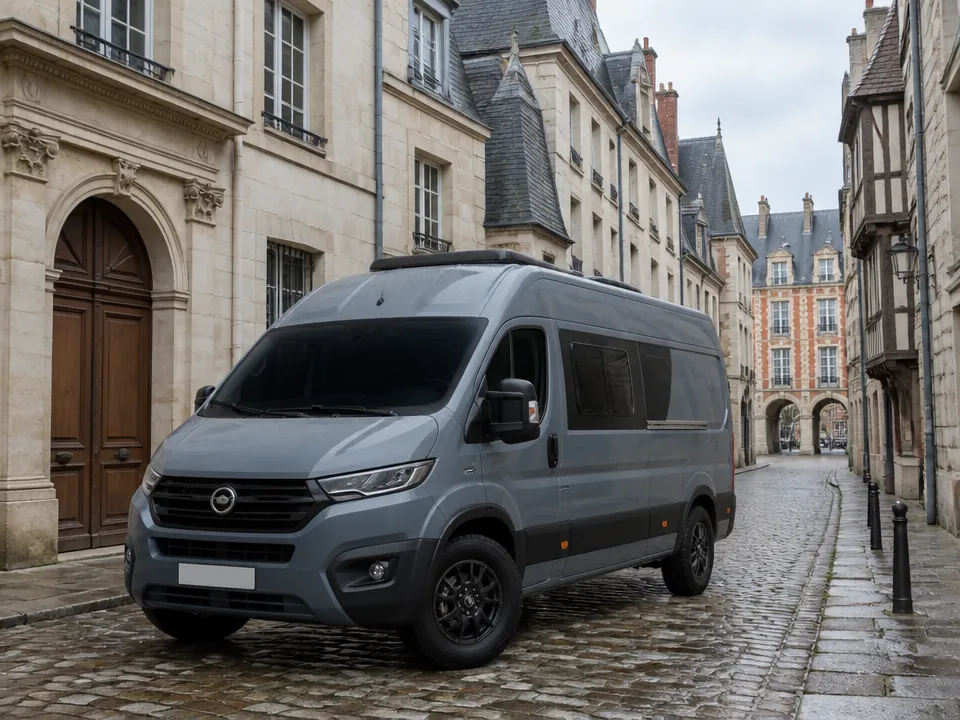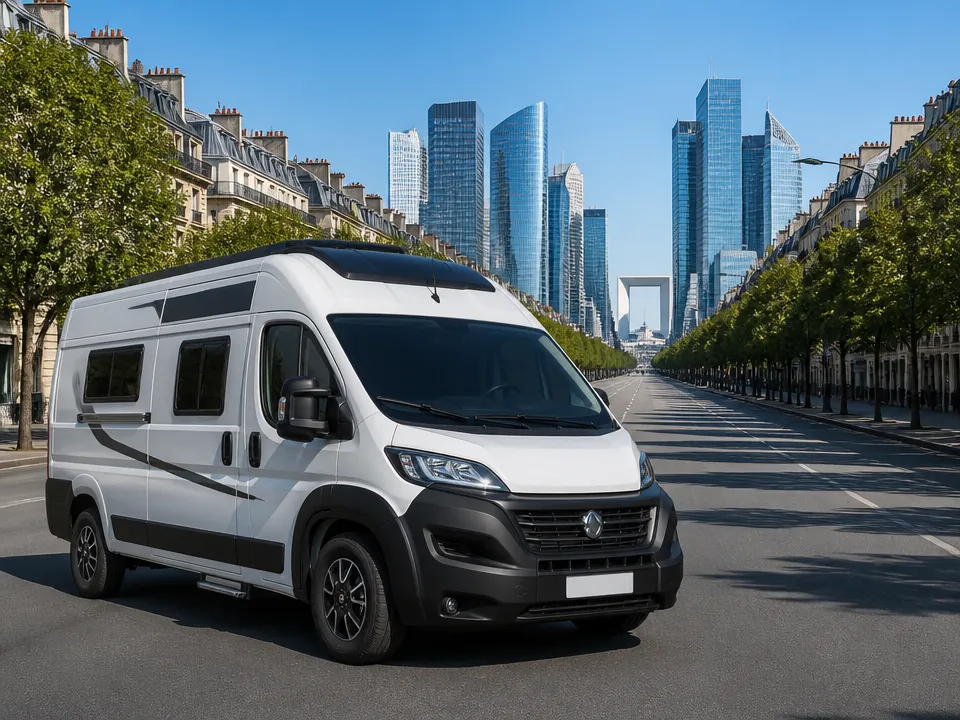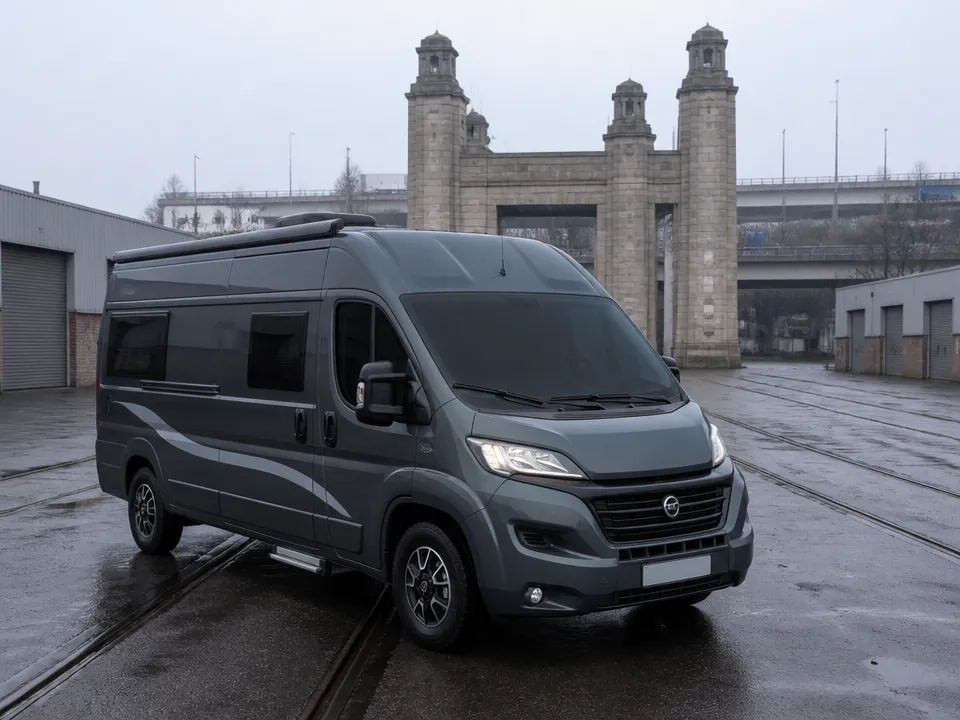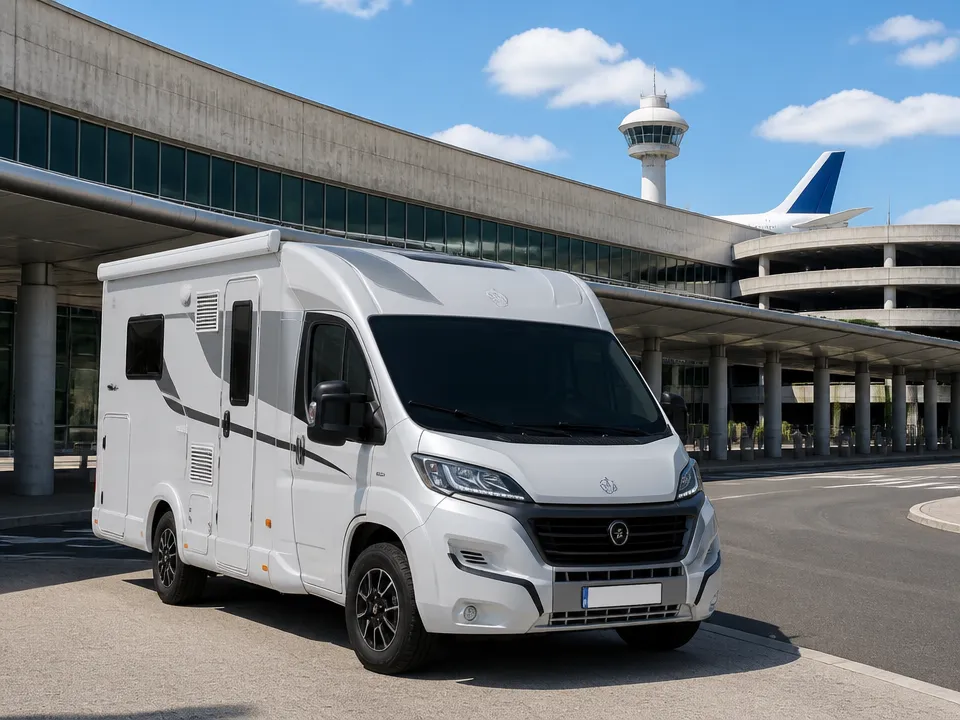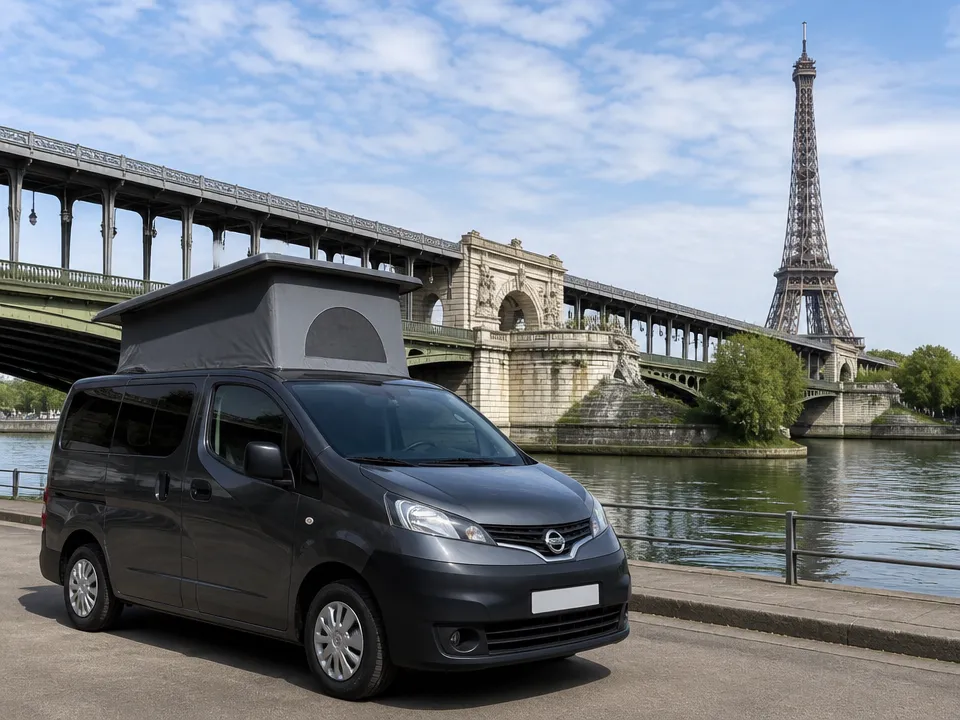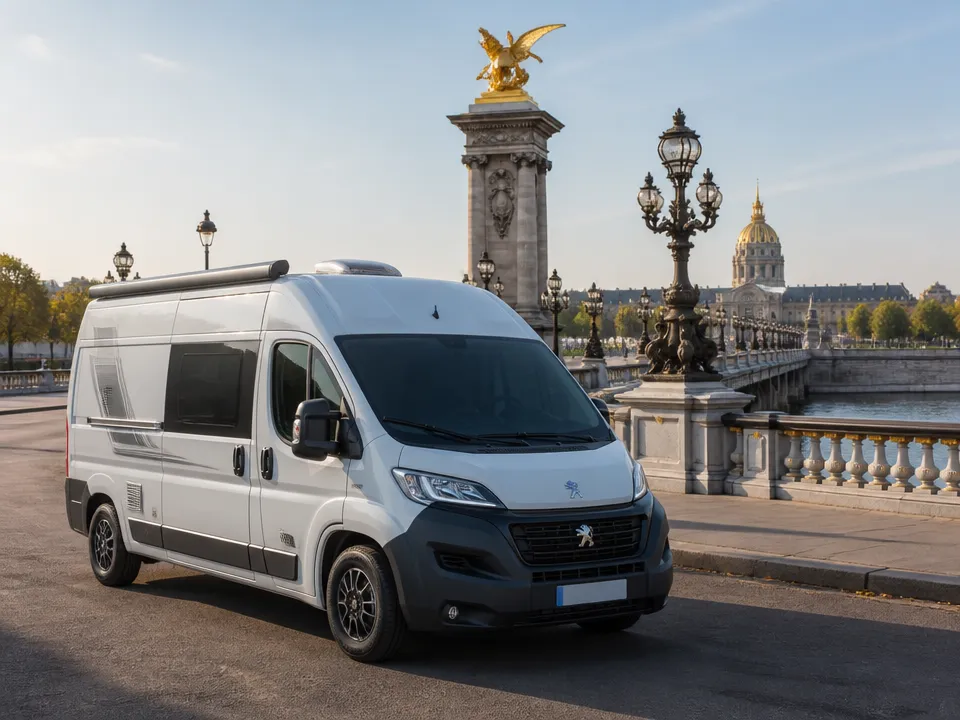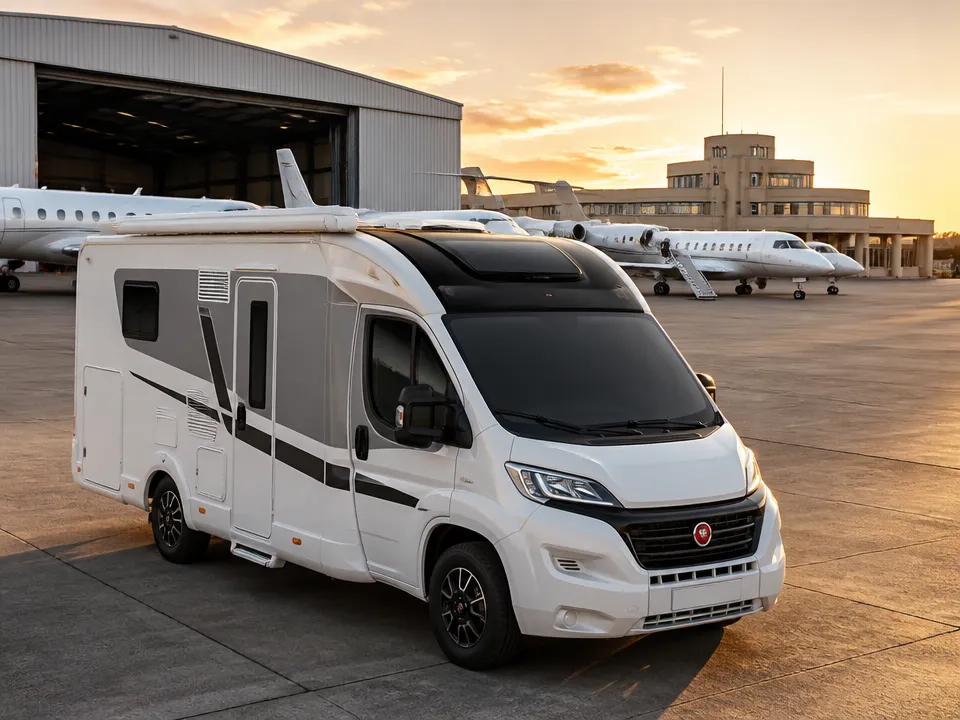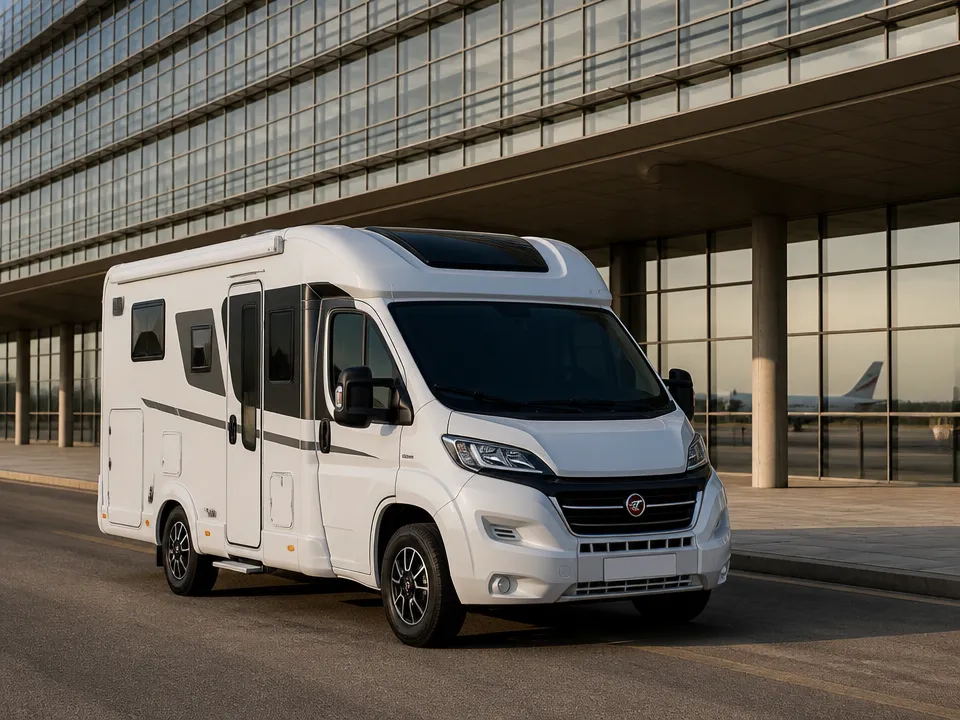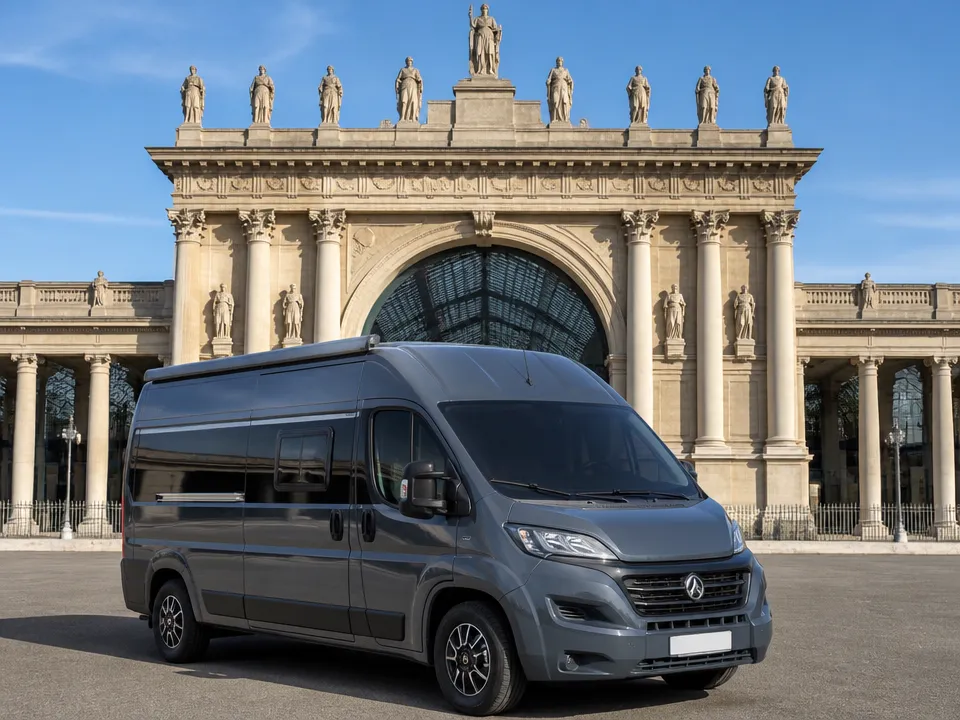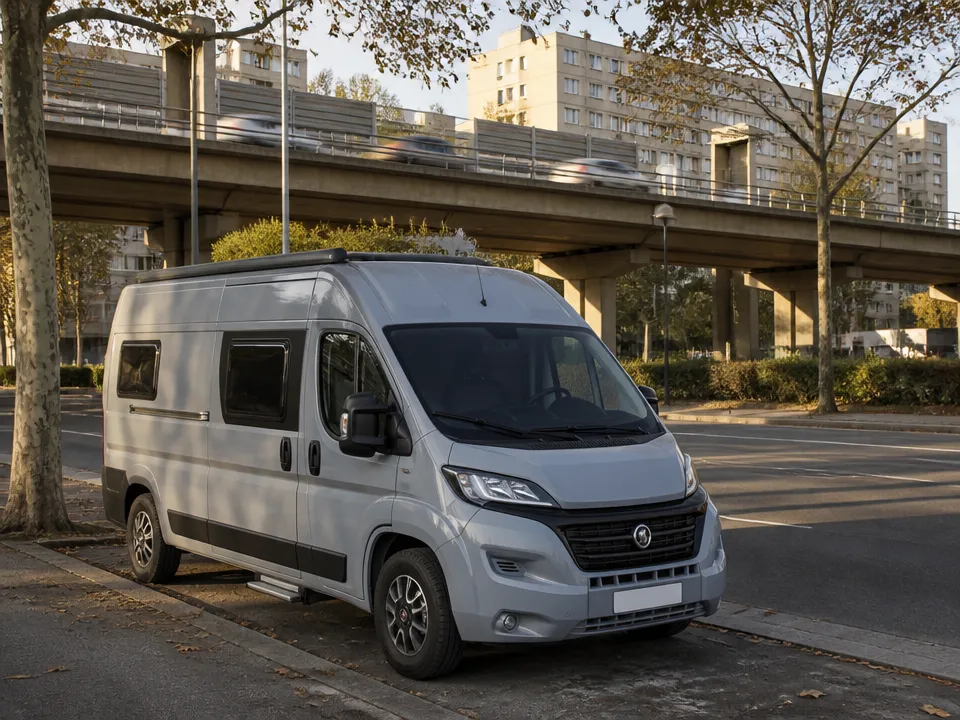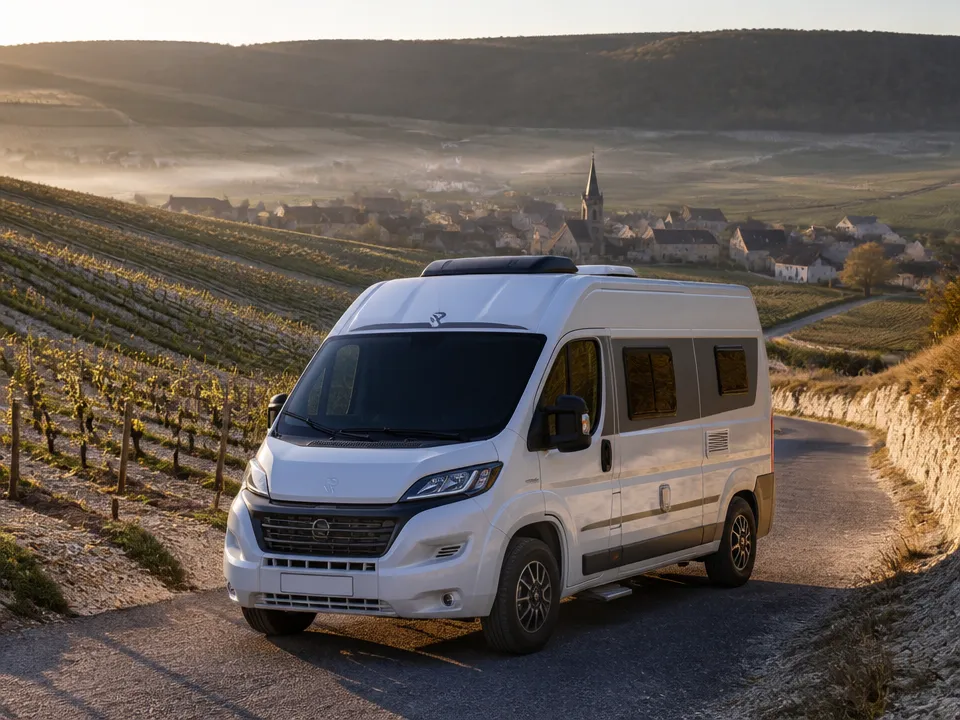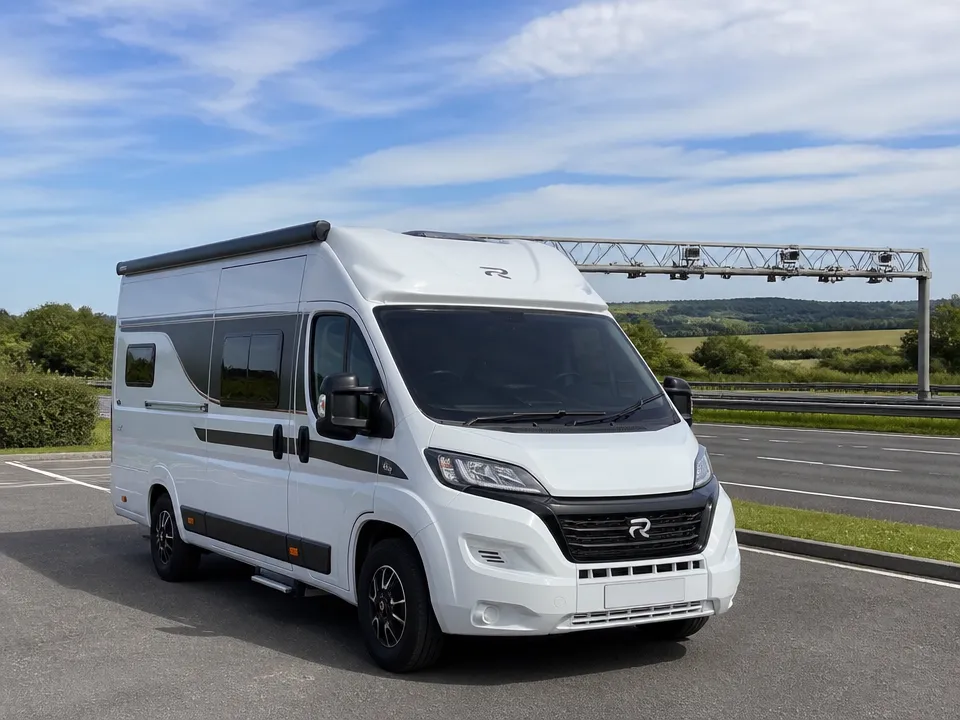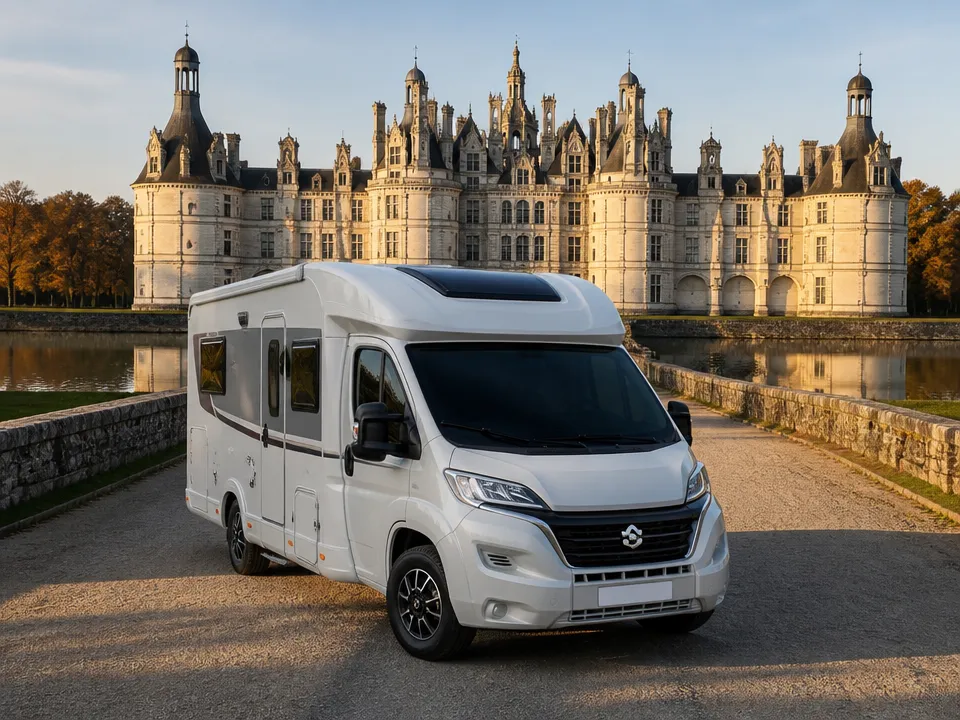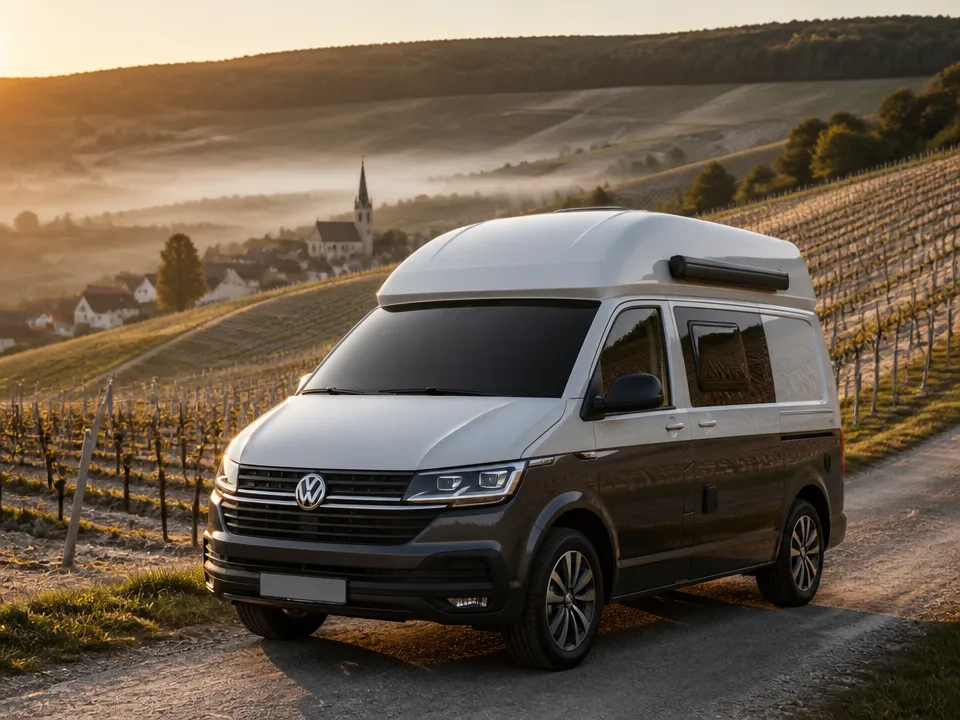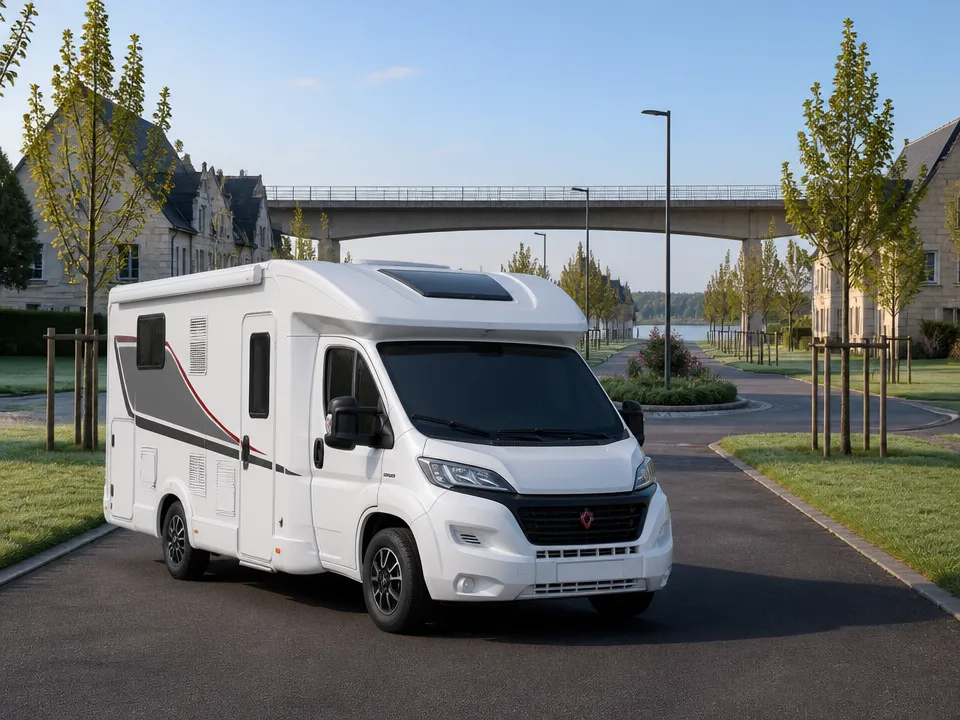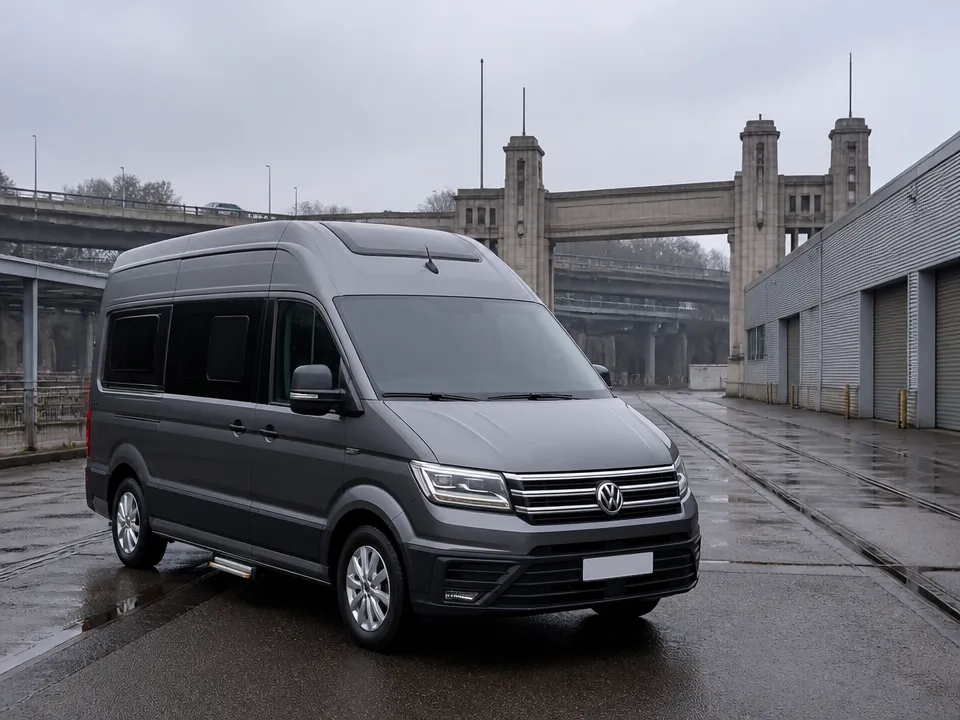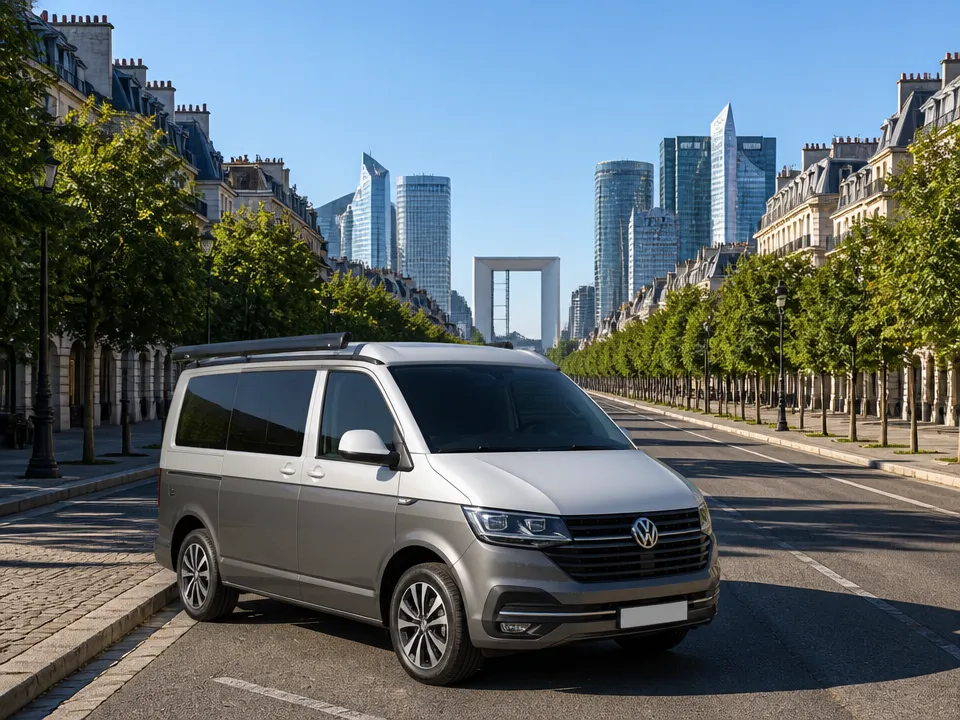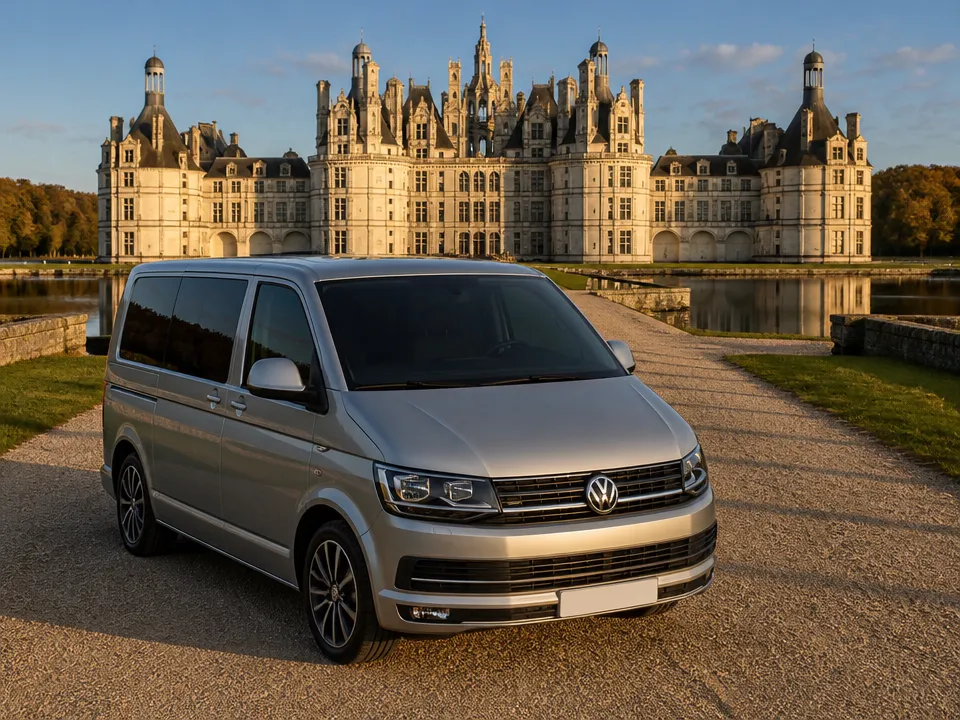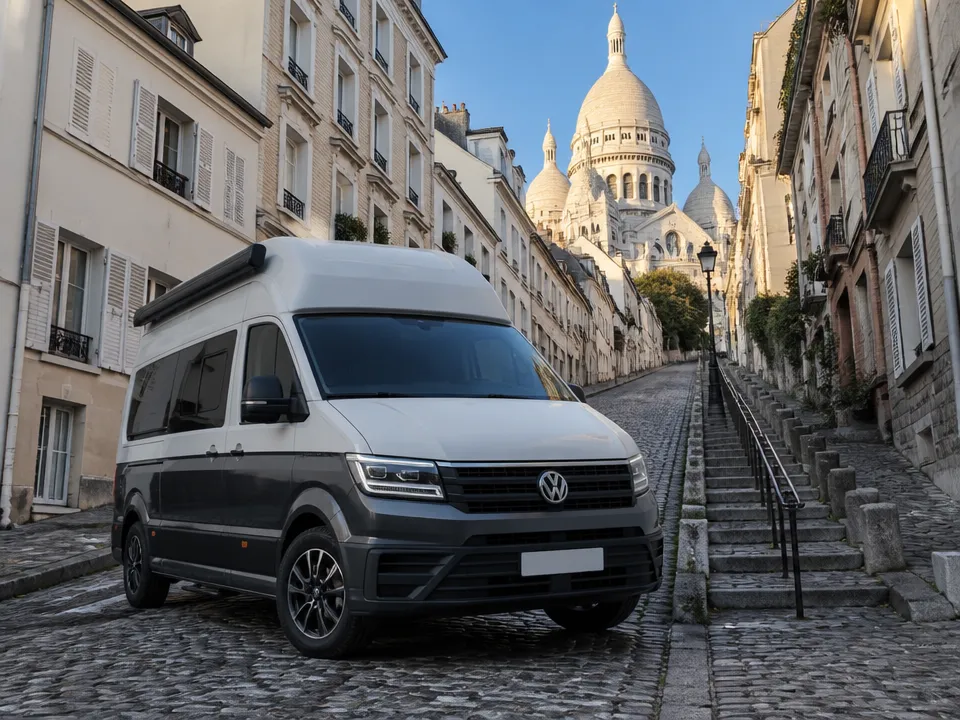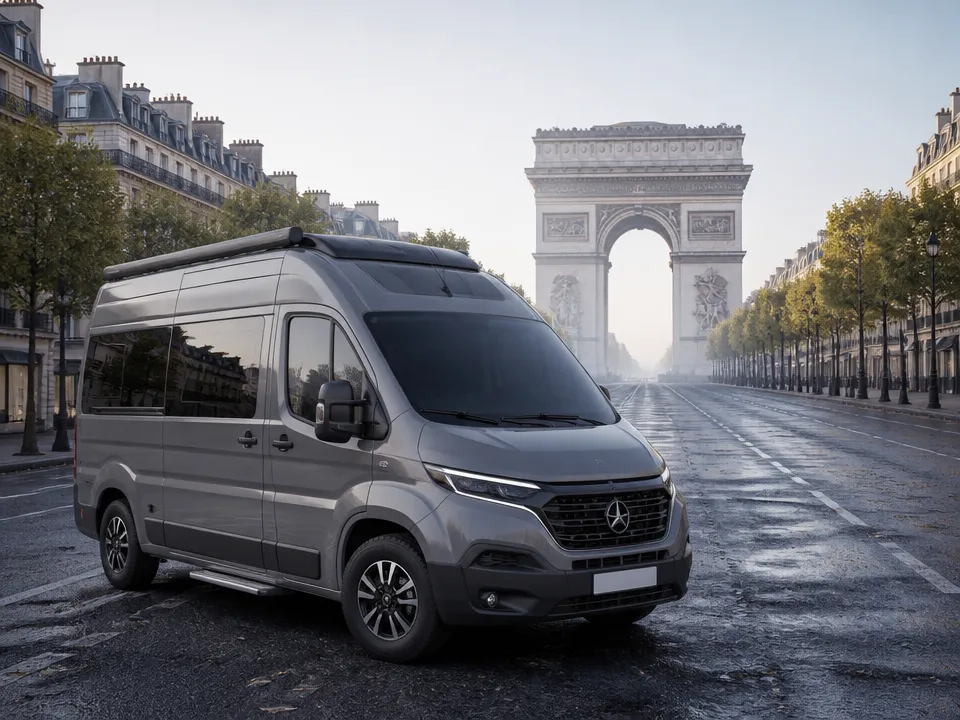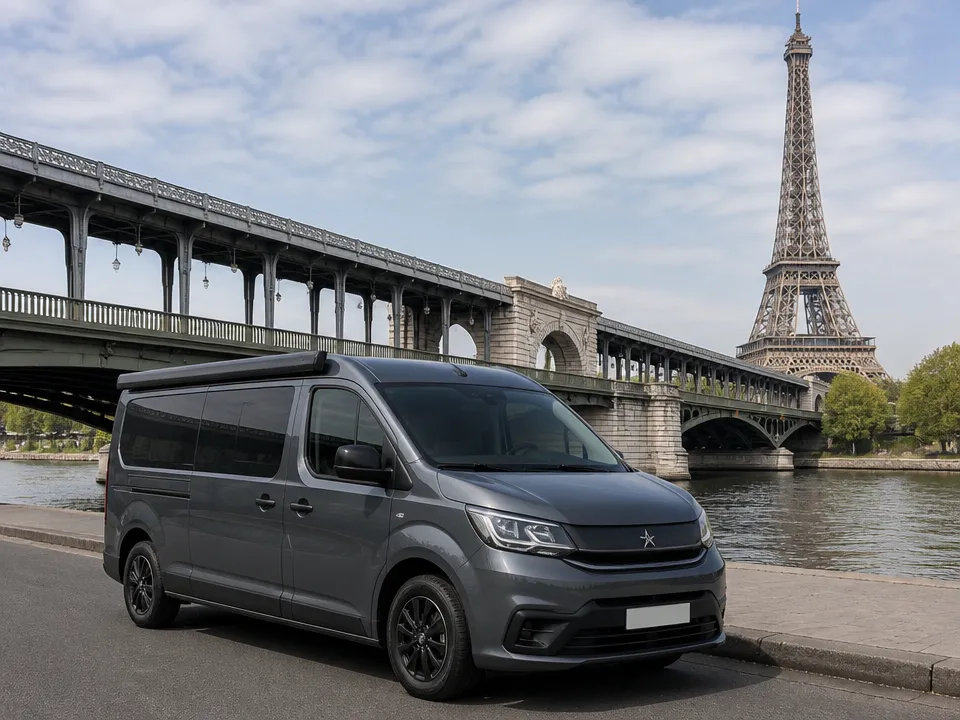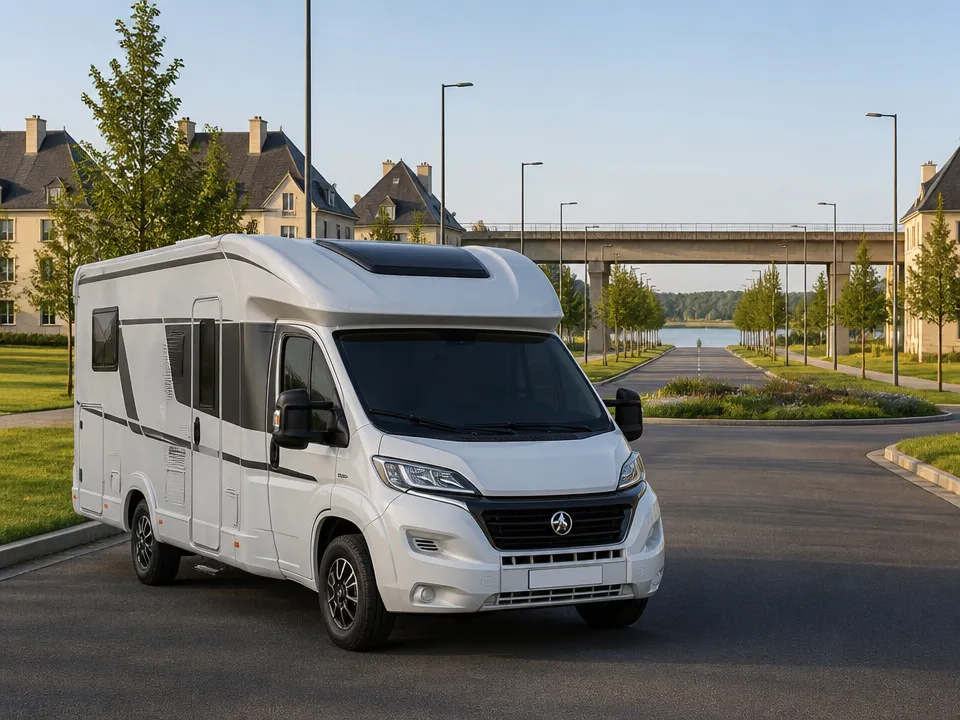
5 seatsYear 2006
€130per day
Book now






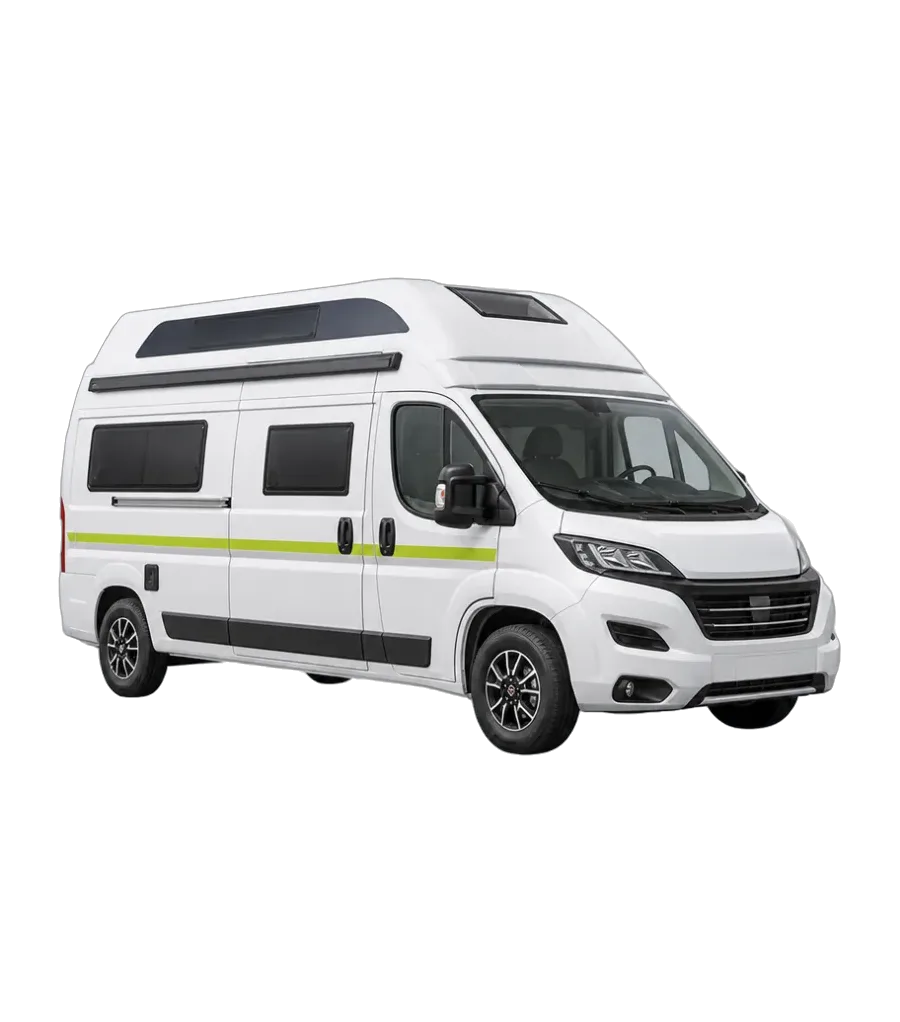

Campervan rental in Paris starts from €34 a day for a 2013 Renault Master conversion, and the middle of 60 models sits at €90 a day. Below: what separates a van from a motorhome, how berths and height change the choice, what the city does to a vehicle that tall, and how to turn day rates into a week's budget.
For campervan and motorhome rental in Paris, the 60 models gathered in the Rent-Trip section on this page fall into five body types, and the type decides more about the trip than the brand does. All of them are offered for self-drive, by the day or for a week or a month.
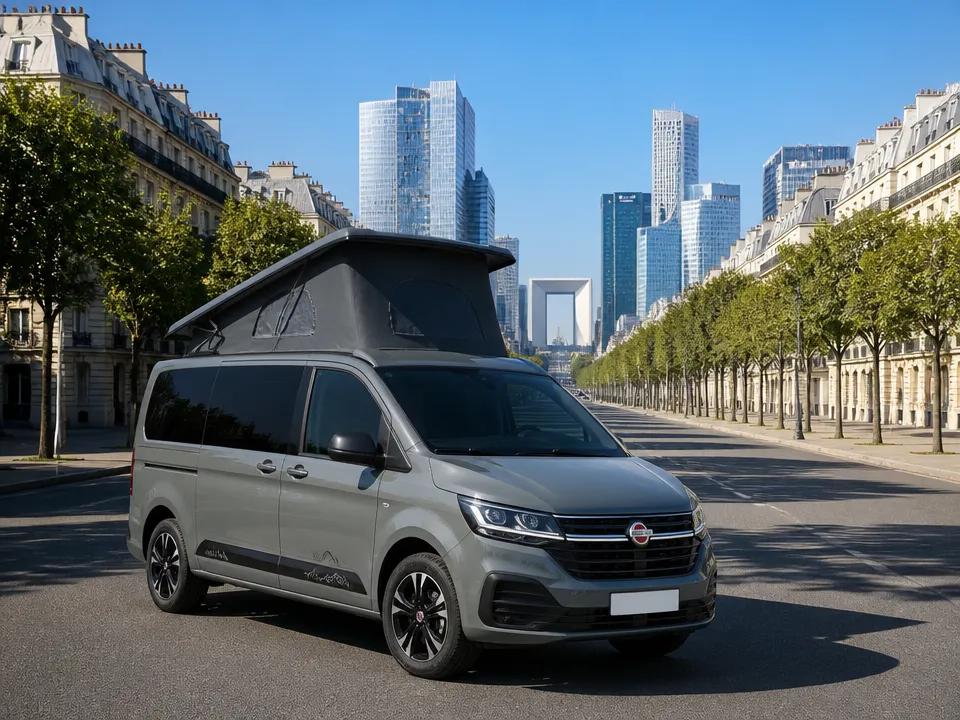
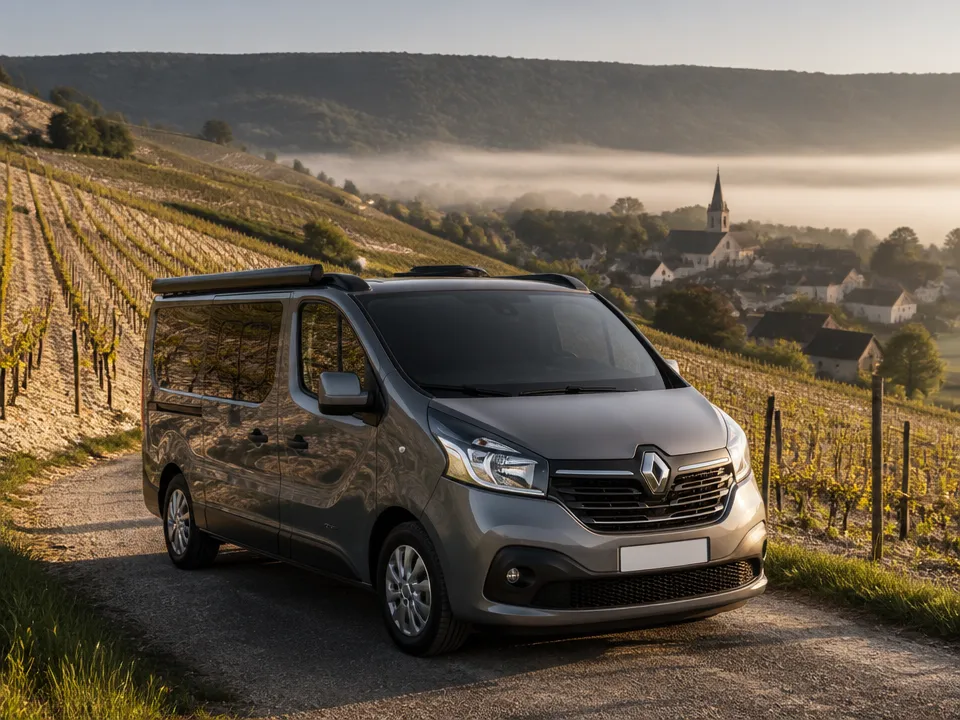
Twenty-one models are compact campervans built on van bodies such as the Volkswagen T6.1 California Coast, the Ford Nugget Trail, the Westfalia Kepler One or the Renault Trafic III. Twenty of them stand between 1.9 and 2.1 metres tall; the only exception is the Font Vendôme Mastervan XS at 2.6 metres. Day rates run from €53 to €125, with the middle at €88. A compact van is the body type most likely to fit under a car-park barrier, and in this section it sleeps two to four people: 13 of the 21 have four berths.
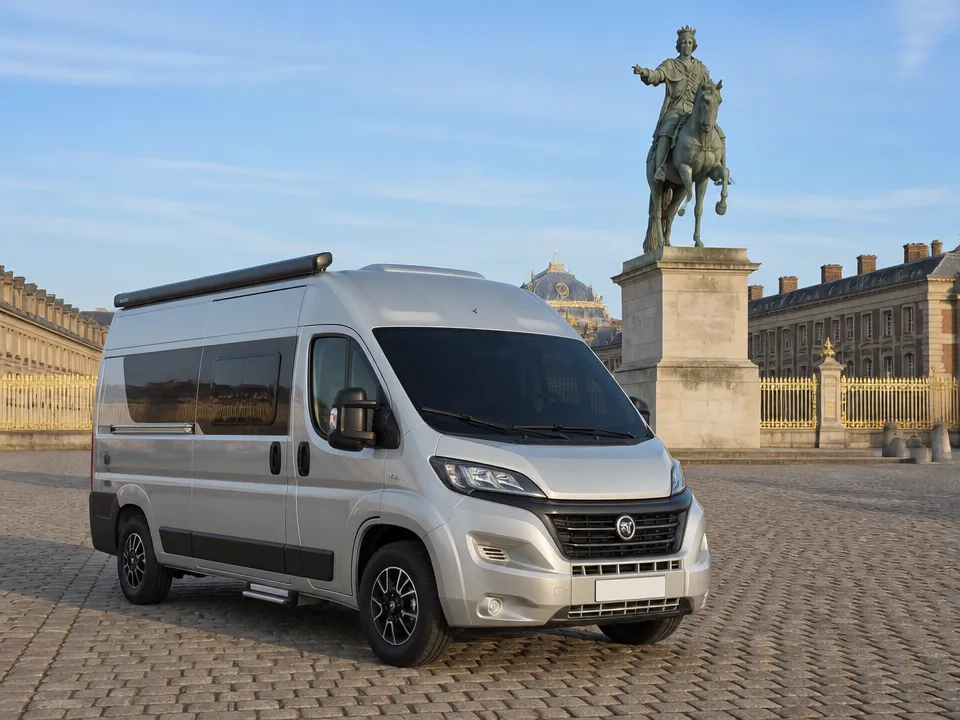
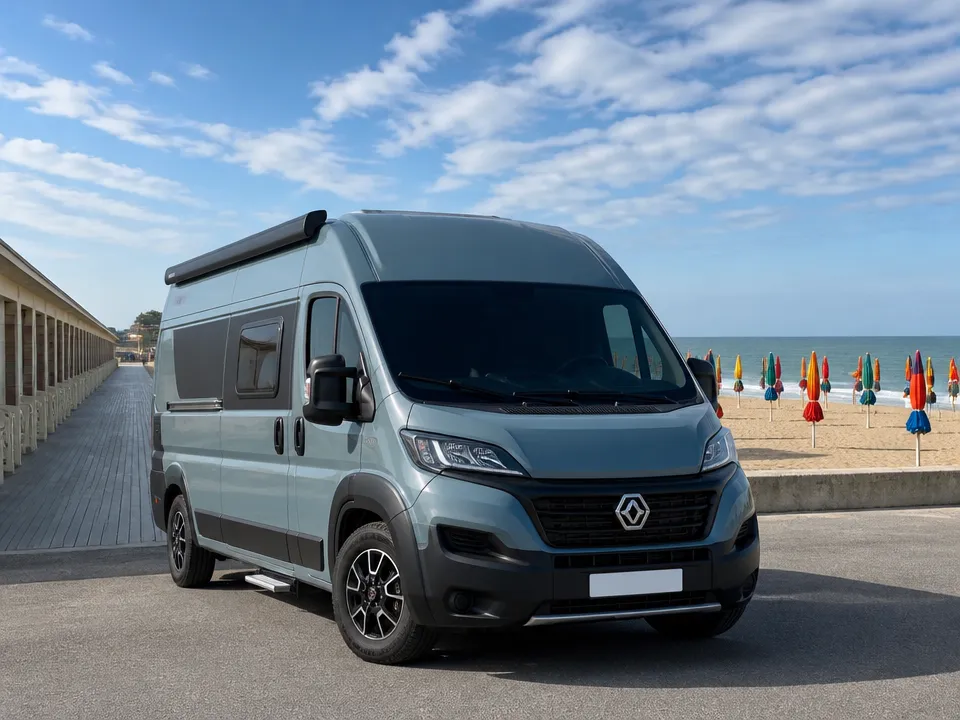
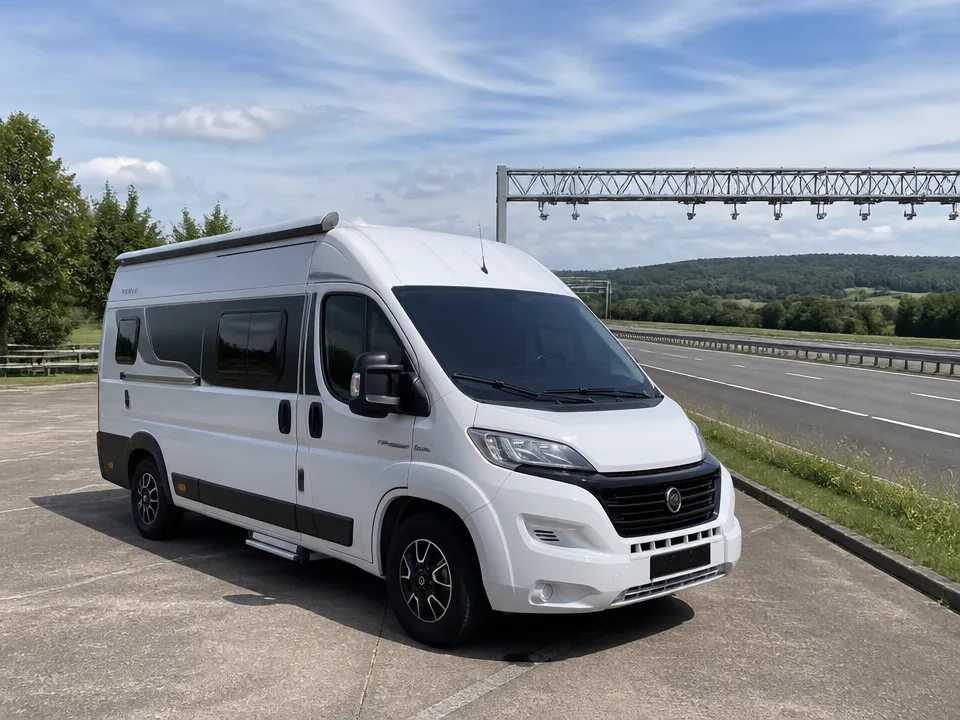
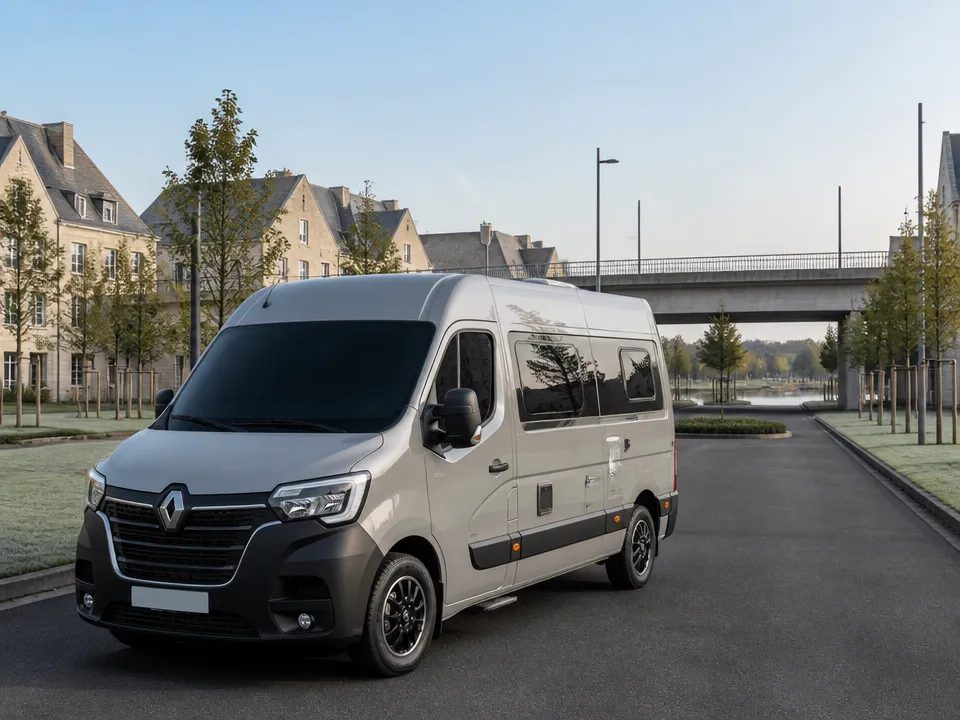
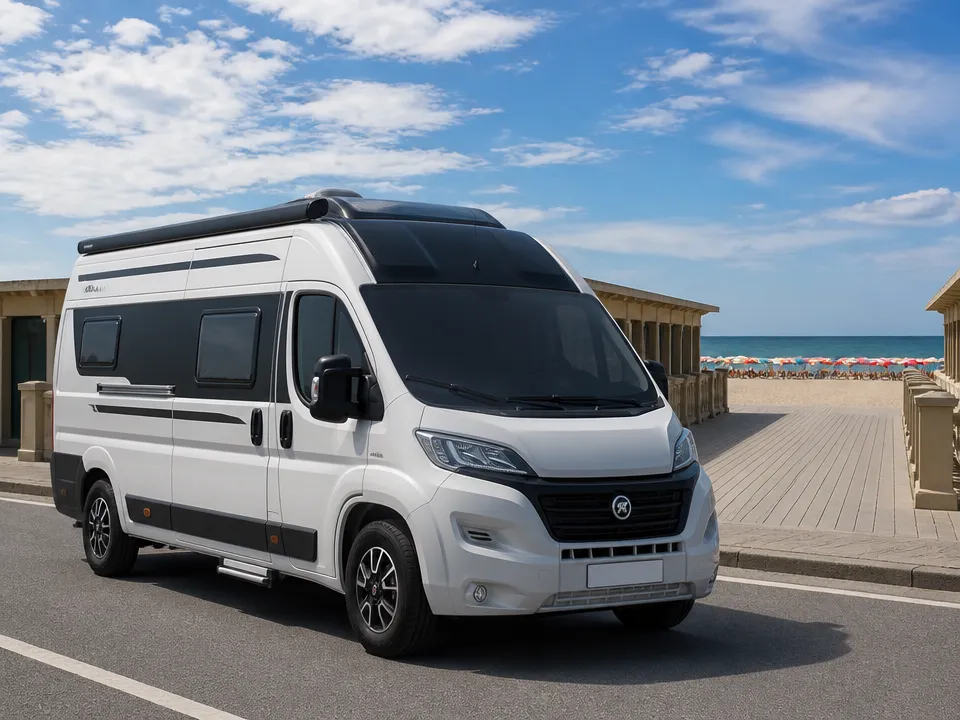
Another 21 models are high-roof van conversions, called fourgons aménagés in France: a panel van with a standing-height interior. Examples include the Adria Twin Sport 600 SPB, the Pössl Summit Shine 600, the Bürstner Campeo C600 and the Volkswagen Grand California 600. They stand 2.6 to 3.1 metres tall and start from €34 to €110 a day, with the middle at €85. That makes them, on paper, slightly cheaper than compact vans while offering more room — the trade-off is height, which matters in Paris more than anywhere else on a typical route.
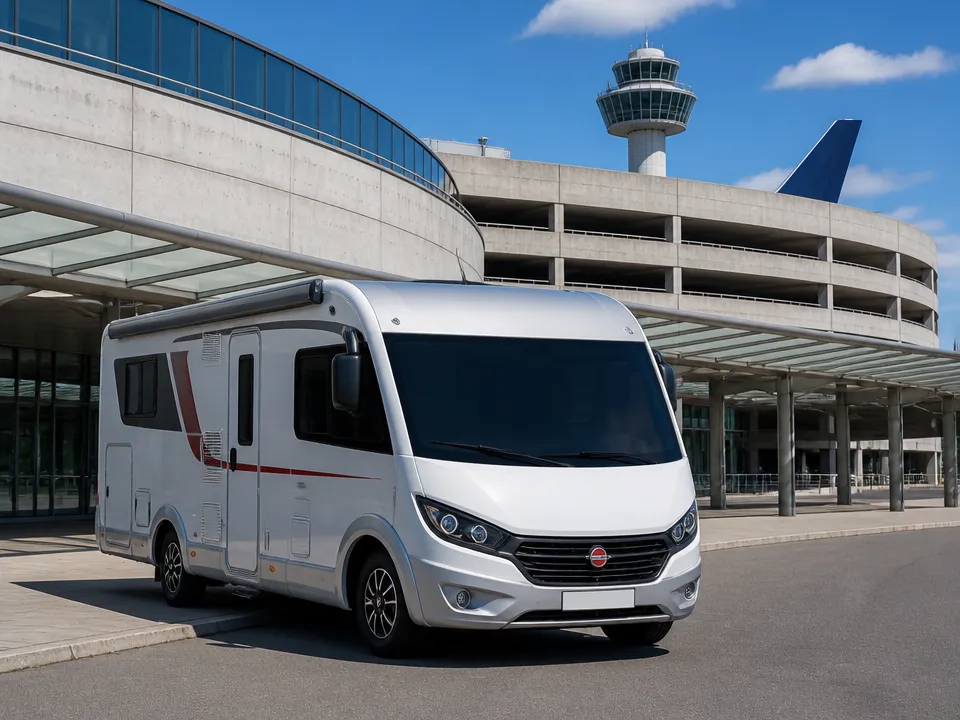
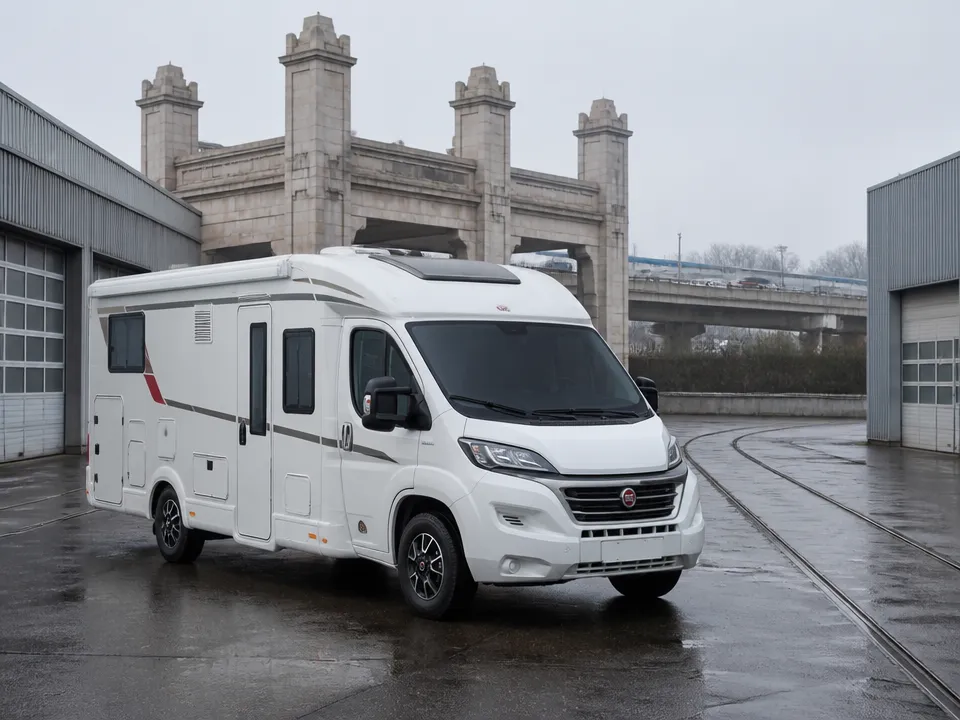
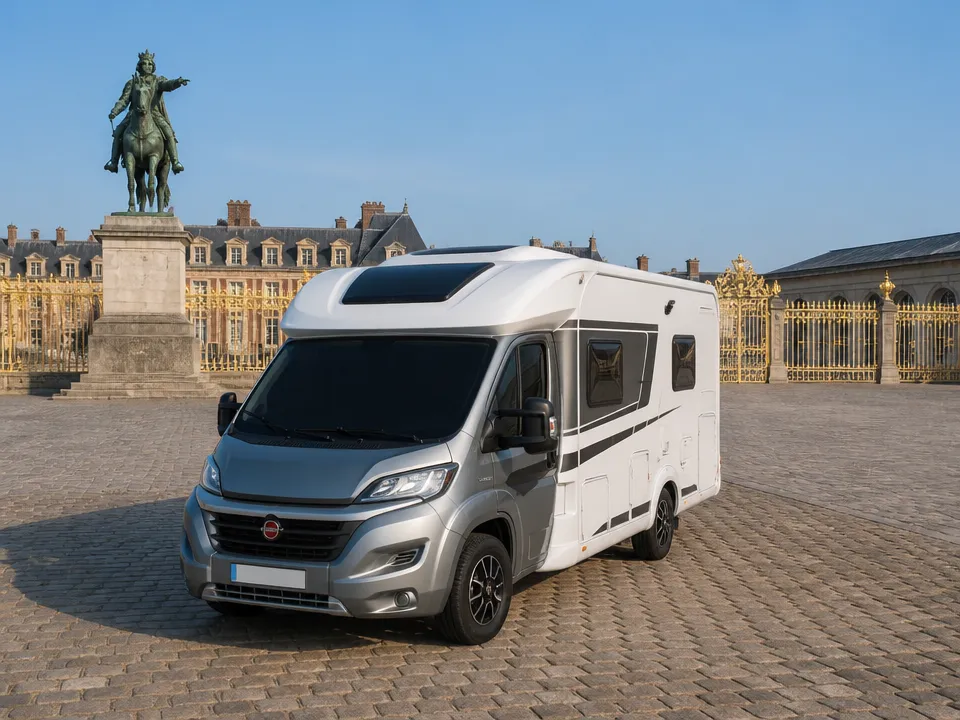
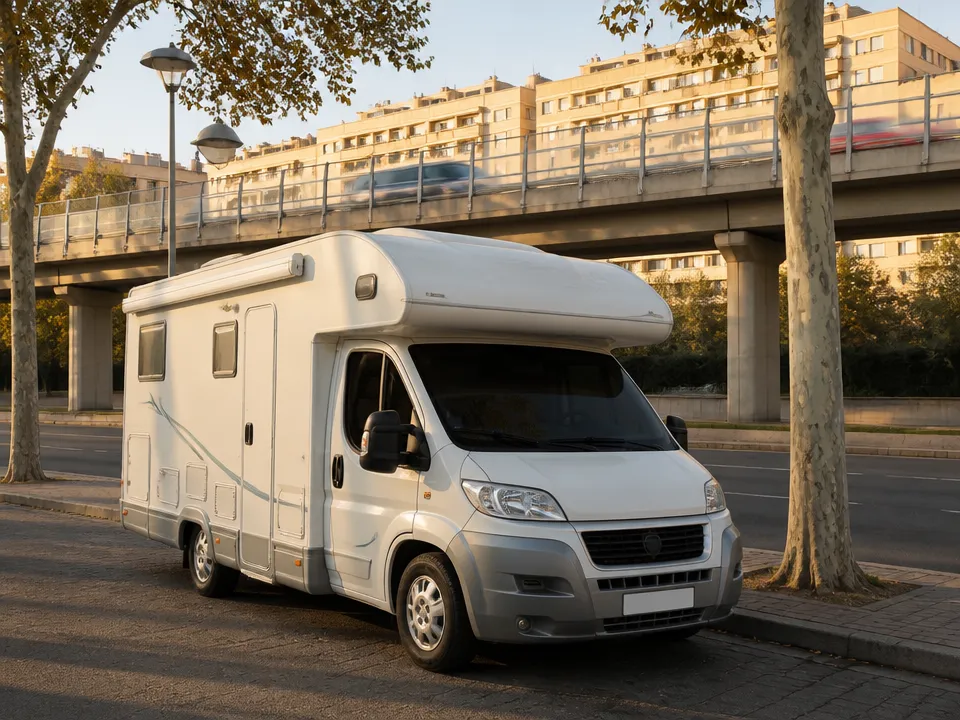
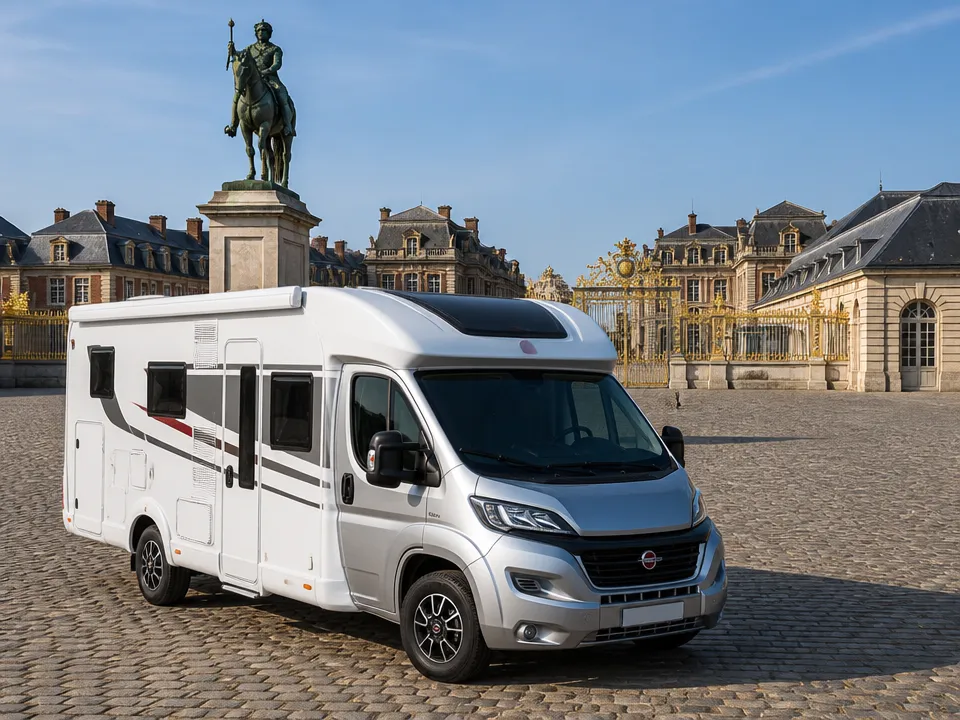
The remaining 18 models are coachbuilt motorhomes with a wider living box. Twelve are profilés, with a low aerodynamic roof over the cab: the Benimar Tessoro 463, the Chausson Flash 06, the Roller Team Kronos GO 274 TL and others, from €70 to €179 a day, middle €110. Four are alcove models, or capucines, with a bed over the cab — the Challenger Genesis 43, the Rimor Katamarano, the Rimor XGO Dynamic 23 and the Rimor Seal 50 — from €96 to €180, middle €137.50. Two are integrated motorhomes, where the cab is part of the living area: the Autostar Passion I720 LMS Lift at €125 and the Rapido 8096 DF at €170. Every coachbuilt model with a stated height measures 2.85 to 3.2 metres.
| Body type | Models | Height | Day rate | Median |
|---|---|---|---|---|
| Compact van | 21 | 1.9–2.6 m | €53–125 | €88 |
| High-roof van conversion | 21 | 2.6–3.1 m | €34–110 | €85 |
| Profilé motorhome | 12 | 2.85–3.2 m | €70–179 | €110 |
| Alcove motorhome | 4 | 2.9–3.05 m | €96–180 | €137.50 |
| Integrated motorhome | 2 | 3.0–3.2 m | €125–170 | €147.50 |
In my view, the body type is the first decision and the model the second: a family of six has to look at alcoves and the larger profilés whatever the brand, while a couple who wants to park in the city will be happiest in a compact van.
Across all 60 models the starting price runs from €34 to €180 a day, and the median is €90. The spread is wide, but most of the market sits in a narrow band.
| Day rate | Models | Examples |
|---|---|---|
| Up to €70 | 15 | Renault Master €34, Peugeot Boxer €38, Volkswagen Grand California 600 €40, Renault Trafic III €53 |
| €71–100 | 28 | Volkswagen ID. Buzz €79, Ford Nugget Trail €88, Volkswagen T6.1 California Coast €95 |
| €101–130 | 12 | Westfalia Kepler One €110, Pilote P696 S €122, Rimor XGO Dynamic 23 €125 |
| Over €130 | 5 | Challenger Genesis 43 €150, Pilote P690 GJ €157, Rapido 8096 DF €170, Bürstner Lyseo Time IT 690 G €179, Rimor Seal 50 €180 |
Almost half the models, 28 of 60, start between €71 and €100. Below €70 you find older vans such as the 2008 Peugeot Boxer and the 2013 Renault Master, but also recent vehicles: the 2023 Volkswagen Grand California 600 at €40, the 2026 Bürstner Campeo C600 at €69 and the 2024 Benimar Tessoro 463 profilé at €70. Above €130 there are only five models, all of them full motorhomes. The Road House is the one model in the section priced per night rather than per day, from €69 for four seats and four berths.
Less than you might expect. Fifty-nine models state a build year, and when they are grouped by age, the middle price barely moves: €95.50 for 12 models built 2006–2015, €87.50 for 10 built 2016–2020, €95 for 21 built 2021–2023 and €87.50 for 16 built 2024–2026. A 2006 Adria Coral S650 profilé starts at €130, while a 2024 Benimar Tessoro 463 of the same body type starts at €70. Body type and size explain the price far better than age. A newer vehicle still has its own value — newer equipment, a fresher interior — but it is not automatically more expensive.
One model name does not mean one price. Sixteen Renault Trafic III campers on the market start anywhere from €53 to €100 a day; four Peugeot Boxer conversions range from €38 to €130; two Pilote P696 S motorhomes start at €122 and €204. Behind those gaps are different interiors, different build years, different equipment and a different owner's pricing. When a card on this page shows "from", read it as the lowest starting point for that model, not a fixed rate for every vehicle of that name.
Two numbers decide how many people a camper really carries: the seats with belts, which limit who can travel, and the berths, which limit who can sleep. They are not always the same.
| Berths | Models | Day rate | Median |
|---|---|---|---|
| 2 | 11 | €38–100 | €64 |
| 3 | 5 | €34–115 | €84 |
| 4 | 27 | €40–179 | €90 |
| 5 | 9 | €69–130 | €85 |
| 6 | 6 | €95–150 | €110 |
| 7 | 2 | €125–180 | €152.50 |
Four berths is the market's standard: 27 of 60 models sleep four, and their middle price, €90, equals the median of the whole section. Two-berth vans are clearly cheaper at a median of €64. Above five berths the price rises, because those beds come in alcove and larger profilé bodies: six berths has a median of €110 and only two models, the Rimor XGO Dynamic 23 and the Rimor Seal 50, sleep seven.
Several models carry more people by day than they sleep at night. The Chausson V690 and the Pössl Summit Prime 540 each have four belted seats but two berths; the Volkswagen ID. Buzz has five seats and two berths. The reverse also happens: the Autostar Passion I720 LMS Lift has four belted seats and five berths, the Rimor Seal 50 six seats and seven berths. For a family, the binding number is the smaller of the two. A child who cannot travel in a belted seat cannot travel in the vehicle at all, however many beds it has.
For a couple, the choice is wide: 11 models sleep exactly two, from €38 to €100 with a middle of €64, and most four-berth vans work just as well with the extra beds left folded. For a family of four, 27 four-berth models give the largest selection in the section, from the €40 Volkswagen Grand California 600 to the €179 Bürstner Lyseo Time IT 690 G. Five travellers narrow the field to models with five belted seats and five beds, such as the Adria Coral S650, the Benimar Tessoro 463, the Dreamer Camper Five, the Font Vendôme Terra Van and the McLouis Yearling 89G. Groups of six or seven are the hardest to place: only six models have six or more belted seats — the Challenger Genesis 43, the Pilote P696 S, the Roller Team Kronos GO 274 TL, the Rimor Katamarano, the Rimor Seal 50 and the seven-seat Rimor XGO Dynamic 23. The Chausson Flash 06 and the Challenger 380 Graphite sleep six but carry fewer people on the road, four and five respectively. For a large group, it pays to shortlist by belted seats first and only then compare prices.
Dividing the day rate by the berths changes the ranking. The Volkswagen Grand California 600 at €40 for four berths works out at €10 per sleeper per day, and the Renault Master at €34 for three at about €11. The seven-berth Rimor XGO Dynamic 23 at €125 comes to about €18 per sleeper, the Rimor Seal 50 at €180 to about €26. A two-berth Nissan NV200 at €55 is €27.50 per sleeper — more per person than a seven-berth motorhome. For groups of five and more, a large motorhome is often the cheaper option per head, even though its day rate looks high.
Two physical figures matter more in Paris than the brand on the bonnet: how tall the vehicle is and how much it may weigh fully loaded.
Fifty-nine models state a height. The lowest is the Westfalia Kepler One at 1.9 metres; the tallest are the Autostar Passion I720 LMS Lift and the McLouis Yearling 89G at 3.2 metres. Fifteen models are 2.0 metres or lower, with day rates from €53 to €120 and a middle of €90. Twenty are 2.2 metres or lower, middle €86. The other 39 are taller than 2.2 metres: every high-roof conversion and motorhome with a stated height, plus one compact van, the 2.6-metre Font Vendôme Mastervan XS. Low vehicles do not cost more: the 2.2-metre group is in fact a little cheaper in the middle than the section as a whole.
All 59 models with a stated gross vehicle weight sit at or under 3,500 kg, from 2,000 kg for the Nissan NV200 to the 3,500 kg of most motorhomes. That is the weight limit covered by a standard car licence, category B, in France. In practice, none of the models in this section needs a heavy-vehicle licence, but the 3,500 kg figure is a ceiling for the loaded vehicle, so passengers, water and luggage all count towards it.
Paris is a starting point for a campervan trip rather than a place to tour in one. Three facts about the city shape every plan.
Many underpasses and parking structures in the city have barriers of 2.0 to 2.2 metres. Only the 15 models at 2.0 metres or lower clear the lowest of them, and 20 clear 2.2 metres. A high-roof conversion at 2.7 metres or a profilé at 2.9 metres will not enter most underground car parks and has to avoid some road underpasses entirely. If your plan includes nights in a city hotel with an underground garage, a compact van is the only realistic choice; if you are heading straight out to the countryside, the height matters only for the first and last hour.
On-street parking in Paris is paid from 9:00 to 20:00, except on Sundays and public holidays. The practical approach is to pick the vehicle up, load it and leave the city the same day, or to collect it on a Sunday when on-street parking is free.
There is no legal overnight parking provision for campervans within the Périphérique, the ring road that encircles central Paris. Spending a night inside the ring in the vehicle is not an option. Anyone who wants to see the city before or after the road trip should plan a night on a campsite and travel into the centre by public transport, leaving the vehicle where it is allowed to stay. For a trip that starts in Paris, this means the first night's stop should be chosen before pick-up, not after.
Most campervan trips last several days, and the market offers vehicles by the day as well as for a week or a month. The figures on this page are day rates, so a week's budget starts with simple arithmetic.
| Vehicle | Day rate | 7 days at the day rate |
|---|---|---|
| Renault Master (3 berths) | €34 | €238 |
| Volkswagen Grand California 600 (4 berths) | €40 | €280 |
| Middle of the section | €90 | €630 |
| Rimor XGO Dynamic 23 (7 berths) | €125 | €875 |
| Rimor Seal 50 (7 berths) | €180 | €1,260 |
These totals simply multiply the starting day rate by seven. They are a frame for comparison, not a quote: a dated price can differ from the starting rate, and a weekly or monthly booking is priced separately. What the table does show is the scale of the choice — a week in the middle of the range costs more than two and a half weeks in the cheapest conversion.
Two quotes are only comparable when they cover the same unit — day or night — the same number of days, the same body type and the same number of berths. If one quote is for a 2-metre van and the other for a 3-metre profilé, the price difference reflects a different vehicle, not a better deal. The Renault Trafic III is a good test case: with starting rates from €53 to €100 for the same model, line up build year, berths and equipment for each vehicle before deciding which one is the cheaper choice.
Pick the body type for your group and your route first, check height and berths on the card, and plan the first night at a campsite outside the ring road — the rest of the choice is the model you like best within your budget.
Starting day rates for 60 campervan and motorhome models run from €34 for a 2013 Renault Master conversion to €180 for the seven-berth Rimor Seal 50. The middle of the range is €90 a day, and 28 models start between €71 and €100. These are starting prices without dates, so a dated quote can differ.
The lowest starting rates are the Renault Master at €34, the Peugeot Boxer at €38 and the Volkswagen Grand California 600 at €40 a day. Per sleeper, the Grand California is the best value at €10 per berth per day, since it sleeps four.
At the starting day rate, seven days cost €238 in the Renault Master, €630 at the €90 middle of the range and €1,260 in the Rimor Seal 50. Weekly and monthly bookings are priced separately, so ask for a weekly price for your dates.
All 59 models in this section with a stated gross weight are at or under 3,500 kg, the limit covered by a standard category B car licence in France. Check the gross weight on the card and keep the loaded vehicle within it.
Many underpasses and parking structures in Paris have barriers of 2.0 to 2.2 metres. Fifteen models are 2.0 metres or lower and 20 are 2.2 metres or lower, almost all of them compact vans; high-roof conversions and motorhomes stand 2.6 to 3.2 metres tall.
No. There is no legal overnight parking provision for campervans within the Périphérique ring road, so the vehicle stays on a campsite for the night. On-street parking in the city is paid from 9:00 to 20:00, except on Sundays and public holidays.
Most models sleep four: 27 of 60. Eleven sleep two, nine sleep five, six sleep six, and two, the Rimor XGO Dynamic 23 and the Rimor Seal 50, sleep seven. Check belted seats too, because some models carry more people by day than they sleep at night, and the reverse.
A compact campervan, at 1.9 to 2.6 metres and a median of €88 a day, is easier in the city and fits under more barriers. A coachbuilt motorhome — profilé, alcove or integrated — costs more, with medians of €110 to €147.50, but is the only way to carry six or seven people.