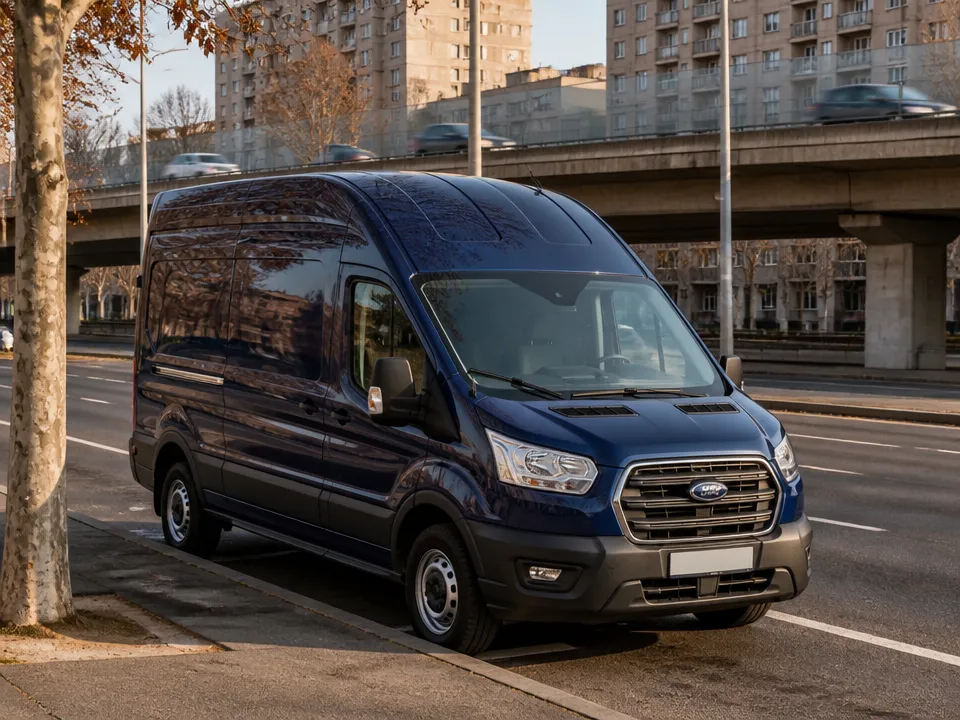
Ford Transit
★5.0· 51Manual2.0 L130 hpRear-wheel3 seats
€79per day
Book now








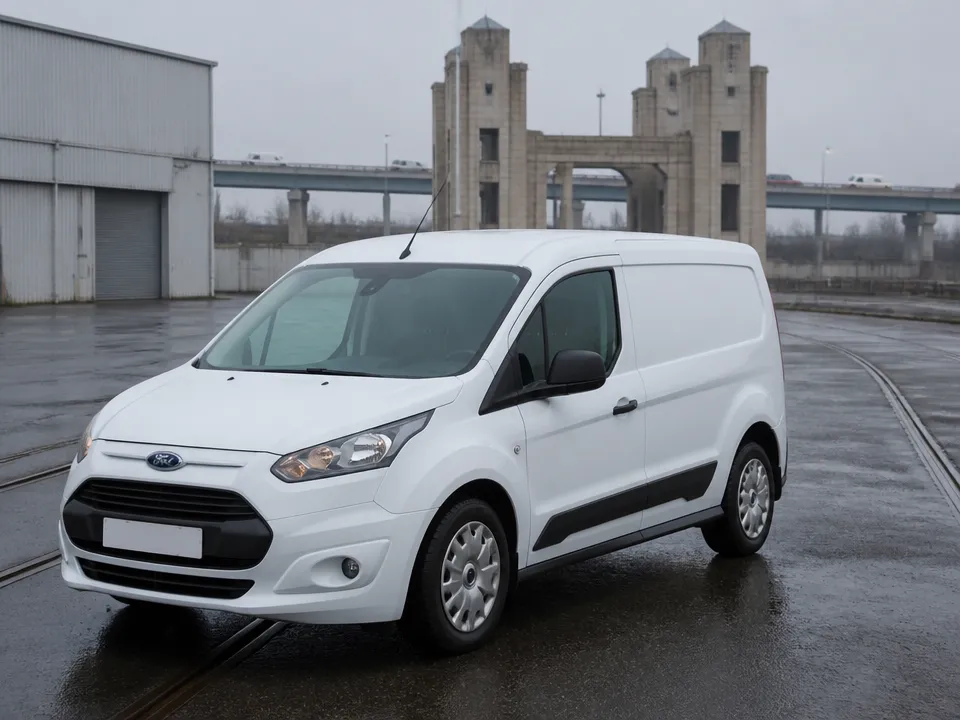
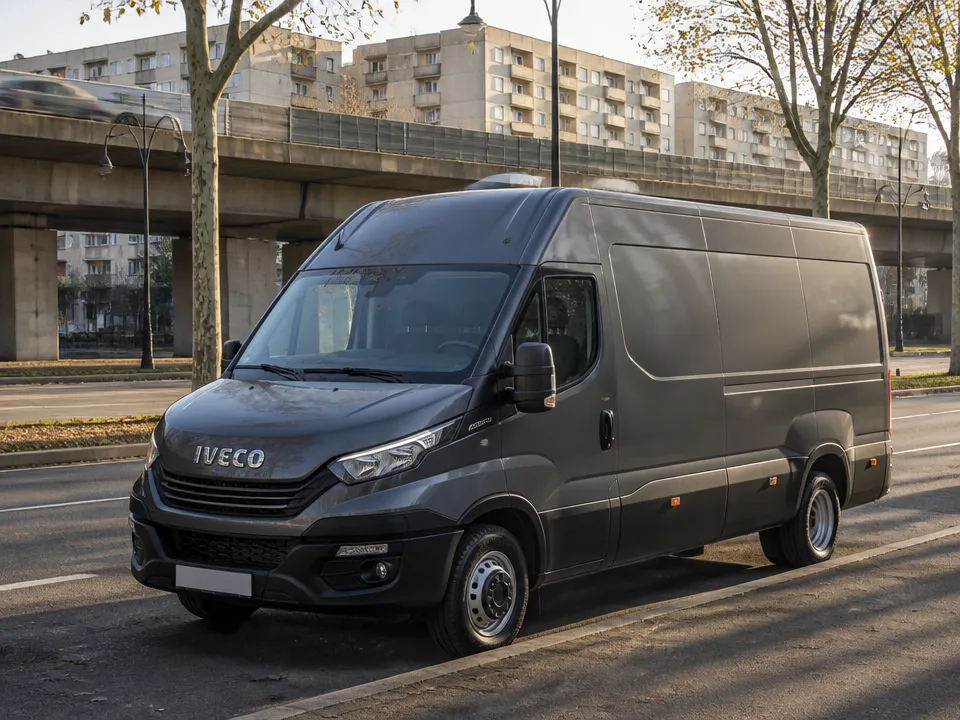
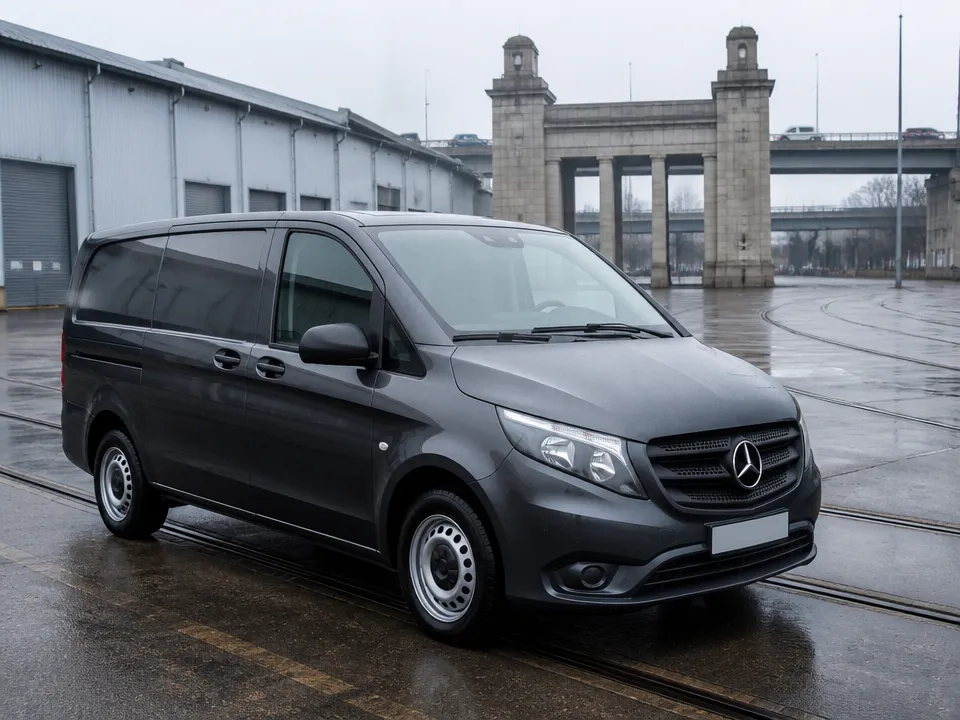
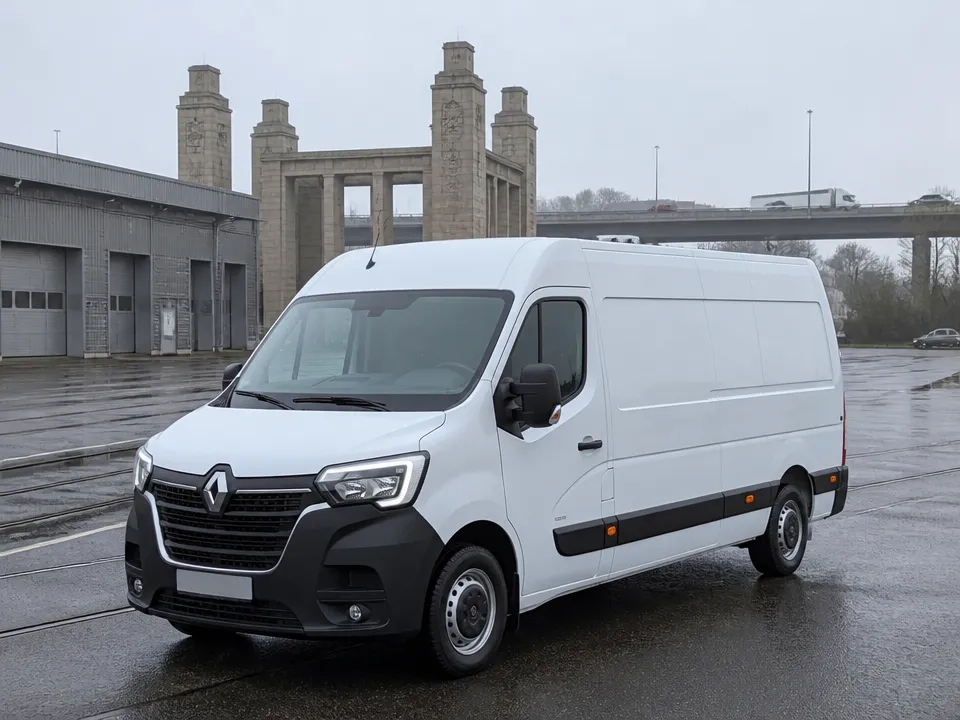
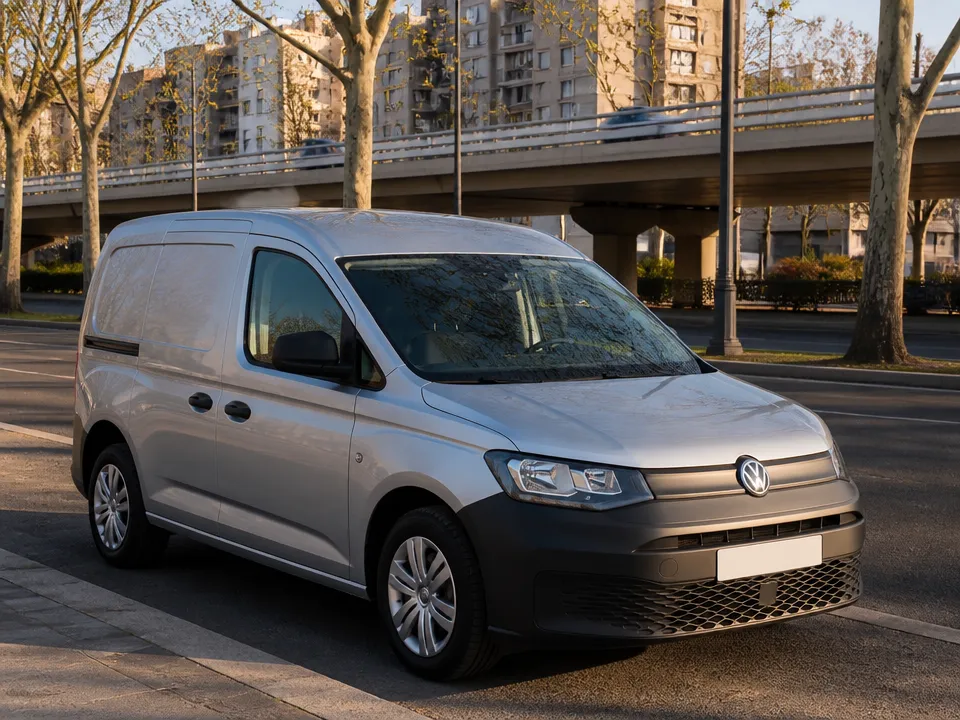




Insurance, delivery and the rental agreement are arranged when you book commercial car rental in Paris with Rent-Trip, and we bring the van to the address you agree with our manager. Six commercial vehicles are available on this page, from €47 per day, with weekly bookings from €282 and monthly from €987.
Commercial vehicle hire through Rent-Trip means self-drive panel vans delivered to an address agreed when booking, with every reservation arranged with a manager rather than through an automated checkout. Six diesel vans make up the commercial class here, priced from €47 to €99 per day.
All six vehicles in our commercial fleet are panel vans running on diesel, with 2 or 3 seats and no rear windows. The bodies are closed, the load bay is separated from the cab, and nothing about the specification is borrowed from a passenger car. Volkswagen Caddy Cargo and Ford Transit Connect each seat two; Renault Master, Ford Transit, Mercedes-Benz Vito and Iveco Daily 20 m3 each seat three. Every van in the class burns diesel, and five of the six use a manual gearbox. Payload sits behind a solid bulkhead rather than on folded rear seats, so the vehicle is registered and built for goods, not passengers. A panel van's closed body keeps cargo out of sight, which matters on multi-stop delivery rounds where the vehicle is left unattended between drops.
We serve two main groups — households moving flat and businesses running deliveries or equipment moves across the city. Booking the van for the full working day rather than by the hour avoids the return leg colliding with the evening périphérique peak.
Six commercial vans sit in this class, and the choice comes down to three things: how much volume you are moving, how many people ride along, and whether you can work a clutch in traffic. Match those to the load before you look at the price — the cheapest van that fits is almost always the right answer.
A studio or one-bedroom move fits the Renault Master at €75 per day, while a full house move needs the Iveco Daily 20 m3 at €99. The Master carries a 2.3 L, 150 hp diesel engine with front-wheel drive and a three-seat cab; the Iveco Daily adds roughly 20 m3 of load volume on a 2.3 L, 140 hp rear-wheel-drive chassis, which is the difference between a few dozen boxes and a whole flat. For business deliveries the Ford Transit Connect at €55 per day handles parcel rounds and small equipment, and the Caddy Cargo at €47 covers single-stop drops. Measure the tallest item before booking — a wardrobe or fridge decides the class more often than the number of boxes does.
| Load | Van | Seats | Price/day |
|---|---|---|---|
| Single-stop drops, small parts | Volkswagen Caddy Cargo | 2 | €47 |
| Parcel rounds, small equipment | Ford Transit Connect | 2 | €55 |
| Studio or one-bedroom move | Renault Master | 3 | €75 |
| Pallets, heavier equipment | Ford Transit | 3 | €79 |
| Multi-drop with automatic gearbox | Mercedes-Benz Vito | 3 | €89 |
| Full house move, bulky items | Iveco Daily 20 m3 | 3 | €99 |
The Mercedes-Benz Vito at €89 per day is the only commercial van in our Paris fleet with an automatic gearbox. Everything else — the Caddy Cargo, Transit Connect, Master, Transit and Iveco Daily — is manual, and Renault Master, Ford Transit and Iveco Daily drive the rear wheels while the two smaller vans are front-wheel drive. In stop-start city traffic an automatic removes clutch work on repeated short hops, which is why it is worth the premium on multi-drop delivery days. If your round is mostly loading bays and short distances, take the Vito; if you are covering motorway kilometres to a depot outside the city, the manual Master at €75 keeps the daily rate lower and costs you nothing in comfort.
Rates run from €47 for the Volkswagen Caddy Cargo to €99 for the Iveco Daily 20 m3, all diesel, all panel-bodied, all booked through a manager.
| Model | Seats | Transmission | Drive | Engine | Price/day |
|---|---|---|---|---|---|
| Volkswagen Caddy Cargo | 2 | Manual | Front-wheel | 2.0 L, 102 hp | €47 |
| Ford Transit Connect | 2 | Manual | Front-wheel | 1.5 L, 100 hp | €55 |
| Renault Master | 3 | Manual | Front-wheel | 2.3 L, 150 hp | €75 |
| Ford Transit | 3 | Manual | Rear-wheel | 2.0 L, 130 hp | €79 |
| Mercedes-Benz Vito | 3 | Automatic | Rear-wheel | 2.0 L, 163 hp | €89 |
| Iveco Daily 20 m3 | 3 | Manual | Rear-wheel | 2.3 L, 140 hp | €99 |
The Mercedes-Benz Vito at €89 per day is the only van in our commercial fleet with an automatic gearbox; the other five are manual. Automatic matters more here than on a passenger car, because a delivery round inside the city means a clutch pedal every few hundred metres — boulevard périphérique queues, the lights along the quays, the tight turns into courtyards off Le Marais. The Vito pairs that gearbox with a 2.0 L, 163 hp engine and rear-wheel drive, the highest output of the six. Its three-seat cab also means a second person can ride along and hop out to unload while the driver stays with the vehicle. On a multi-drop day the automatic gearbox buys back the fatigue of the last two hours, when a tired driver is likeliest to clip a wing mirror on a narrow street.
Booking a day rather than a few hours is the habit worth keeping — the return leg then falls outside the evening périphérique peak instead of inside it.
Longer bookings change the arithmetic. A commercial van at €47 a day costs €282 for a week and €987 for a month, so the rate you pay depends on how long you keep the vehicle rather than on which model you pick.
Weekly and monthly rates at Rent-Trip are priced as the daily rate multiplied out: weekly from €282, monthly from €987. The multiplier is fixed, so the same van that runs at €47 a day comes to €282 across a week and €987 across a month, and the Iveco Daily 20 m3 at €99 a day scales to the same structure at the top of the class. What does not change is the vehicle itself — six diesel panel vans, 2 or 3 seats, manual or automatic, delivered to the address agreed when booking. Our manager confirms the length, the model and the hand-over point in one conversation, and the rest of the arrangement is set out in the rental agreement.
A month suits anyone whose work runs in cycles rather than days — a fit-out crew on a fixed contract, a courier covering a seasonal peak, a production company shooting across several arrondissements. At €987 the van stays with you, so there is no daily hand-over and no re-booking between jobs. The Renault Master at €75 a day is the usual pick for this length: three seats, front-wheel drive and a 2.3 L, 150 hp diesel that handles the boulevard périphérique and the inner arrondissements without strain. On a month-long booking the automatic Mercedes-Benz Vito at €89 a day is worth considering if your route is stop-start — repeated clutch work over weeks adds up in a way a single day never shows.
Decide the length first, then the model. Ask the manager to confirm the return date and the hand-over point in the same conversation, because a longer booking is the one where a mis-set end date costs the most.
The paperwork for a commercial van is the same as for any car hired in France, with one practical difference: the licence must have been issued more than a year ago, and digital licences are not accepted by rental companies. Everything else is agreed with a manager when you book, including the exact hand-over point.
Minimum age, the young-driver surcharge, and which card and passport you bring are not set by a single national rule — each company sets its own condition, and ours is agreed when booking. What the law does fix is the licence itself: it must be more than 1 year old, and a digital copy on your phone will not do, because French practice requires the physical document. For a commercial van this matters more than for a city car: the vehicle is handed over with a load space, and the driver named in the agreement is the only one insured to move it. If a second person will drive, say so when you book — the terms of that arrangement are set out in the rental agreement, not something added at the kerb.
The documents do not change because the body is a panel van, but the way you use it does. French speed limits drop the moment you are outside town, and a probationary driver — less than 3 years since passing — is held to lower limits again: 110 km/h on a motorway, 100 km/h on a divided road, 80 km/h elsewhere. Alcohol limits are tighter too, 0.2 g/l of blood for a probationary driver against 0.5 g/l generally. A child under 10 or shorter than 135 cm needs a child seat, and the fine for going without runs up to €750. Winter tyres are compulsory from 1 November to 31 March in roughly 34 mountain departments, but Paris and Île-de-France are not among them — the rule only bites if the job takes the van into the Alps, the Pyrenees, the Massif Central, the Jura, the Vosges or Corsica.
Every commercial booking with Rent-Trip ends with an agreement, and that document — not this page — carries the deposit, the excess and any delivery fee. We agree the hand-over time and place with a manager when you book, and the same conversation settles the paperwork.
Third-party liability cover, known in France as responsabilité civile, is compulsory by law and comes with any booking automatically. It pays for injury and property damage caused to other people within the country's legal limits, but it does not cover the driver's own injuries. Collision damage protection (CDW) and theft protection (TW) sit in the base package of French companies: both limit what you owe to a fixed excess rather than to the full repair or replacement bill. The excess itself is a set sum that the driver pays personally after damage or theft — it is not a deductible that shrinks with time, and it is fixed by the level of protection chosen. That level, and the exact excess figure, are set out in the agreement for your booking.
The deposit and the terms of the caution are set out in the rental agreement for your booking. Fuel works on a plein-plein basis: the van leaves with a full tank and returns full. The agreement also states the mileage policy — unlimited or with an included kilometre allowance — plus the daily rate for your chosen model, from €47 for the Volkswagen Caddy Cargo to €99 for the Iveco Daily 20 m3.
Minimum age, a young-driver surcharge and the card and passport check are not fixed by any single national rule — each company sets its own, so we confirm ours when you book.
The rules that catch out commercial drivers here are the low-emission zone, the paid tunnel under the western suburbs and the progressive on-street parking tariff. None of them is exotic, but all three behave differently from what a driver expects on a first delivery round.
The ZFE de la Métropole du Grand Paris (Zone à Faibles Émissions) covers the area inside the A86 motorway — the A86 itself is excluded — including the boulevard périphérique and the Bois de Boulogne and Bois de Vincennes. Entry requires a Crit'Air sticker on the windscreen, and Crit'Air 5, Crit'Air 4, Crit'Air 3 and «Non classé» vehicles are banned; the Crit'Air 3 restriction has applied since 1 January 2025. Driving without the vignette into the zone is formally prohibited. Check the Crit'Air class of any van before you plan a route through the city centre — the sticker is ordered separately from the booking and takes time to arrive by post.
A van left on a single space past the six-hour mark collects a forfait rather than a simple extension, so on a full-day job the practical answer is a dedicated loading bay or a car park with a daily rate, agreed before the day starts.
This page lists 6 cars in the Commercial class: Ford, Iveco, Mercedes-Benz, Renault and Volkswagen. Volkswagen Caddy Cargo is €47 per day, Ford Transit Connect €55 per day, Renault Master €75 per day. All are Panel Van, with 2 or 3 seats, and Automatic or Manual gearboxes.
Daily prices on this page run from €47 to €99. Volkswagen Caddy Cargo is €47 per day, Ford Transit Connect €55 per day and Renault Master €75 per day. This page lists 6 Commercial vans in Paris.
The ZFE de la Métropole du Grand Paris requires a Crit'Air sticker inside the A86, including the boulevard périphérique. For vans, Crit'Air 5, 4, 3 and Non classé are banned 7 days a week, 8:00–20:00. Stickers cost €3.85.