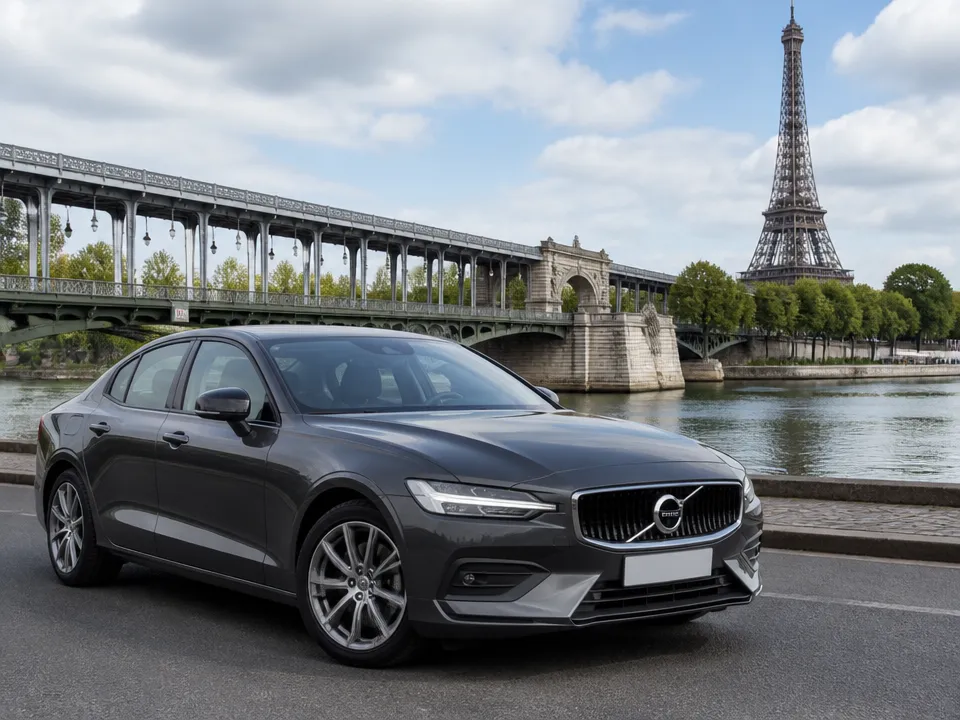
Volvo S60
★4.7· 39Automatic2.0 L197 hpFront-wheel5 seats
€135per day
Book now








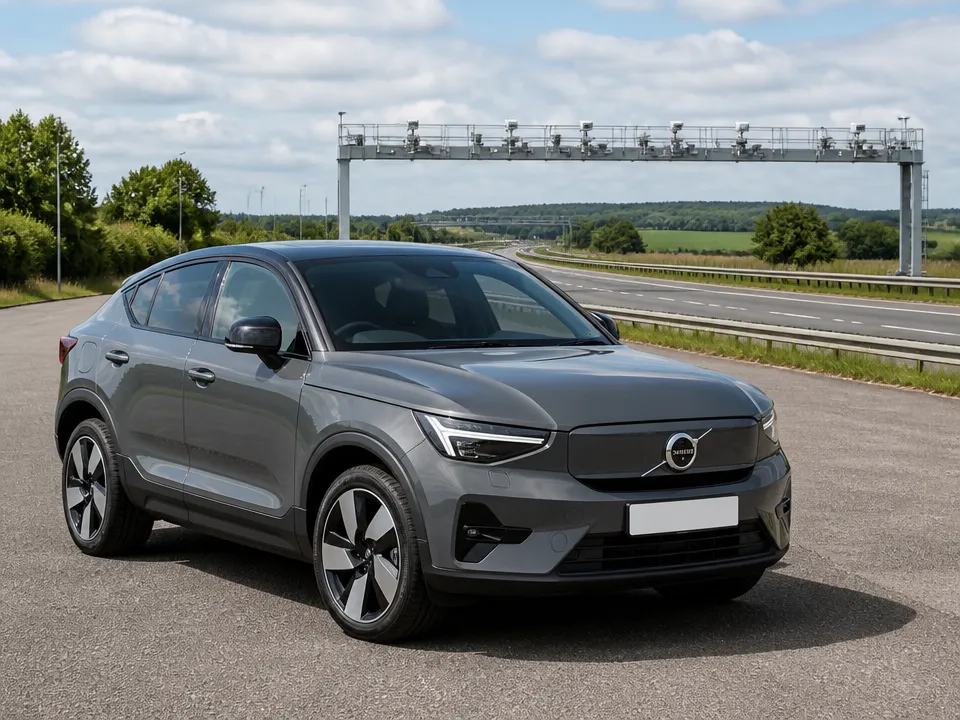




One step above the electric C40 Recharge, the Volvo XC90 Hybrid seats seven and runs on a 455 hp hybrid drivetrain — yet both sit in the same four-car Volvo line-up we deliver across Paris, from €129 to €230 per day. That line-up covers four classes: Electric, Sedan, Premium and Luxury, with weekly rates from €774 and monthly from €2,709.
Four Volvos, four classes, from an electric crossover to a seven-seat luxury SUV — the choice comes down to how many people you carry and how far you drive.
| Model | Class | Seats | Fuel | Drive | Power | From per day |
|---|---|---|---|---|---|---|
| Volvo C40 Recharge | Electric | 5 | Electric | Rear-wheel | 238 hp | €129 |
| Volvo S60 | Sedan | 5 | Hybrid | Front-wheel | 197 hp | €135 |
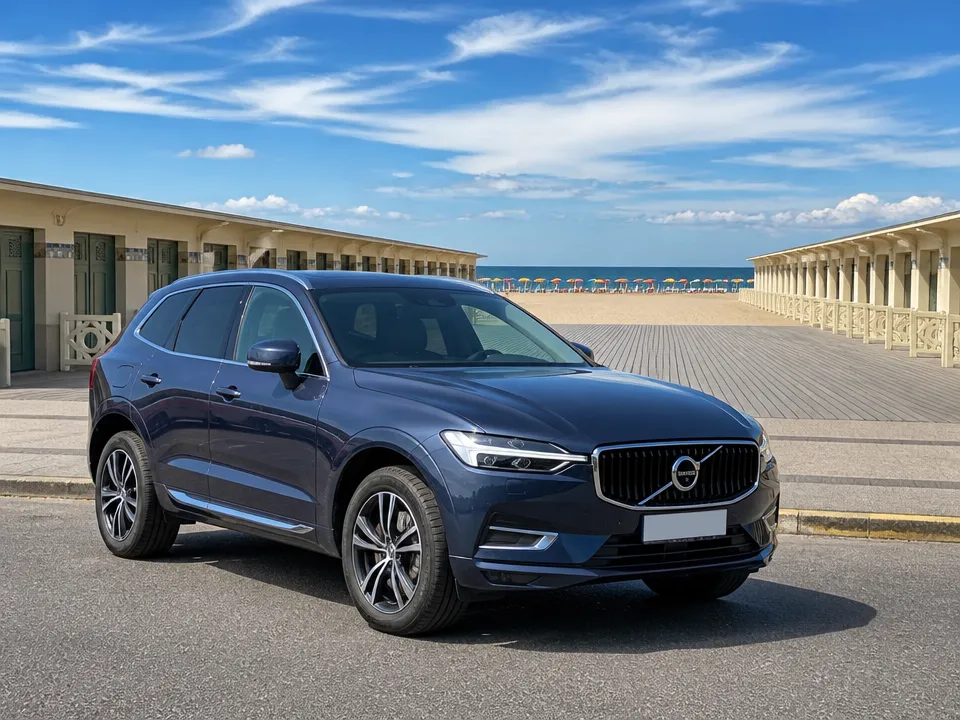
| Volvo XC60 | Premium | 5 | Hybrid | All-wheel | 250 hp | €145 |
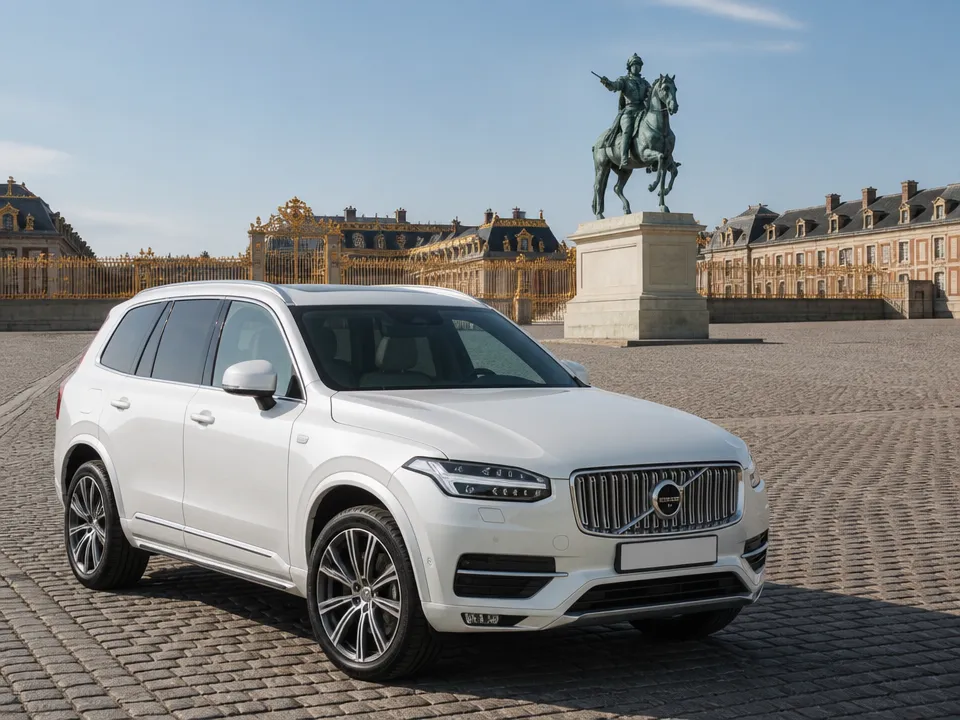
| Volvo XC90 Hybrid | Luxury | 7 | Hybrid | All-wheel | 455 hp | €230 |
The XC60 and XC90 Hybrid both drive all-wheel, so they suit wet motorway runs out of the city better than the front-wheel S60.
The C40 Recharge is the entry electric Volvo at €129 per day, with 82 kWh and 238 hp on rear-wheel drive. Its 82 kWh battery and rear-mounted motor make it the lightest-handling car in our line-up, and the 5-seat crossover body fits the narrow kerbside spaces along the boulevard périphérique and inside the arrondissements without the parking shuffle a longer SUV demands. Charging is the one thing to plan: the car leaves us with a charge, and the rest is your route. An electric car still needs its Crit'Air sticker for the ZFE, so sort the windscreen paperwork before the first drive.
The XC60 is the five-seat premium SUV at €145 per day; the XC90 Hybrid is the seven-seat luxury SUV at €230 per day with 455 hp. Both run a 2.0 L hybrid drivetrain and all-wheel drive, but they answer different trips. The XC60 at 250 hp is the quieter motorway car for two adults and luggage; the XC90 Hybrid at 455 hp is the one that carries a family of seven with the third row up. The XC90's third row is the deciding factor for a family — the XC60 has more boot space once that row is folded away.
The XC60 and XC90 Hybrid are the two to weigh against each other — same drivetrain layout, different seat count, and the gap between them is the price of that third row.
Daily rates for a Volvo run from €129 to €230 depending on the model, and the weekly and monthly totals follow two fixed multipliers: a week is charged at the daily rate × 6 and a month at the daily rate × 21.
| Class | Model | From per day |
|---|---|---|
| Electric | Volvo C40 Recharge | €129 |
| Sedan | Volvo S60 | €135 |
| Premium | Volvo XC60 | €145 |
| Luxury | Volvo XC90 Hybrid | €230 |
The S60 at €135 sits €6 above the electric entry model, so the sedan is often the cheaper pick for longer motorway days — the hybrid drivetrain takes the load off the 2.0 L engine once you are up to cruising speed, while the C40 Recharge has to be charged on the road.
A week behind the wheel is charged at the daily rate × 6, from €774, and a month at the daily rate × 21, from €2,709. Those totals are not estimates or rounded averages — they are the daily rate of the model you pick, multiplied by a fixed factor, so the C40 Recharge lands at the bottom of the range and the XC90 Hybrid at the top of it.
Because the multiplier is fixed, the model you choose moves the total far more than the length of the booking does. The €101 gap between the cheapest and the most expensive Volvo per day is usually the difference between an electric crossover and a seven-seat luxury SUV rather than anything to do with how long you keep the car.
The arithmetic cuts the other way too. Stretching a three-day booking to a full week adds four more charged days, so if your dates are still loose, the model choice is the lever worth pulling first and the calendar second. We set the rate for your exact dates when the booking is agreed with a manager, and the daily, weekly or monthly figure that applies is the one written into the rental agreement.
Every booking for a Volvo car rental in Paris is agreed with a manager, and the details of the arrangement are settled before anything is confirmed. That single rule shapes the whole process: dates, the model, the delivery point and the hand-over are agreed in conversation before anything is confirmed.
We agree each Volvo car rental in Paris with a manager, and the arrangement is confirmed before the rental begins. You tell us the dates, the model you want from the four on this page, and where in the city you will be; the manager confirms what is available and what the rental agreement will contain. The deposit, the excess and any delivery fee are set out in that agreement, so read the figures there before the hand-over is arranged. What the agreement does not cover is agreed when booking — nothing about your booking is left to a conversation on the day.
The details that most often cause friction at a rental desk — an unclear excess, a delivery point nobody can find, a return time that does not match a train — are the ones a manager-agreed booking exists to remove. We confirm the model, the price class and the delivery address in writing before the car moves, so the hand-over itself is a short hand-over of keys rather than a negotiation. If your plans shift, say so before the delivery is arranged: changing a date is a conversation, and moving a car that is already on its way is not.
Licence rules in France split by where yours was issued, and the paperwork for a Volvo hire follows the same split. Bring the right combination and the hand-over is arranged without a delay.
Minimum age, the young-driver surcharge, the card and the passport are a measured gap: no single state norm exists in France and the condition sits with each company, so we agree it when booking. What we can state plainly is that the licence itself must have been issued more than 1 year ago, that a digital licence will not be accepted, and that an IDP older than 3 years fails the same check. If your national licence is not in Latin script, sort the official translation or the IDP before you travel — a phone photo of a translation is not the document. For a Volvo car rental in Paris, we confirm the rest of the document set with you by message, so nothing is left to the counter.
The rental agreement sets out the deposit, the excess and any delivery fee, and we ask you to read those lines before the hand-over is arranged. French rentals carry responsabilité civile by law, included automatically, covering injury and property damage to third parties within the country's legal limits — it does not cover injuries to the driver. Collision damage protection and theft protection sit in the base package on the French market, each limited by the excess, with rachat de franchise available as a paid option: Medium reduces the excess, Premium removes or substantially reduces it. Base protection excludes tyres under abnormal use, glass outside a collision, the sunroof and panoramic roof, the underside, wrong-fuel damage to the engine, lost or stolen keys, and damage from negligence or intent. The exact excess figure stands in the agreement for your specific booking.
The ZFE de la Métropole du Grand Paris (Zone à Faibles Émissions) applies to every car on the road inside the A86 motorway, and that includes a hired Volvo. The perimeter runs inside the A86 — the motorway itself is excluded — and takes in the boulevard périphérique, the Bois de Boulogne and the Bois de Vincennes. Crit'Air 5, Crit'Air 4, Crit'Air 3 and «Non classé» vehicles are barred from it. A Crit'Air sticker on the windscreen is what the rule is enforced by, and an electric car needs one exactly as a hybrid does.
Our four Volvos are automatic and none of them is a manual, which matters here because a manual gearbox is still an ordinary sight in French hire fleets. The C40 Recharge is electric, with 82 kWh and 238 hp on rear-wheel drive. The S60 is a hybrid sedan, front-wheel drive, 2.0 L and 197 hp. The XC60 is a hybrid SUV, all-wheel drive, 2.0 L and 250 hp. The XC90 Hybrid is the seven-seat luxury SUV, all-wheel drive, 2.0 L and 455 hp. Every one of them is a hybrid or an electric, so none of them sits in a banned class — but the sticker still has to be on the glass.
Ask us about the Crit'Air vignette when the booking is agreed, and we will tell you what we can arrange and what you handle yourself. The rule is enforced by the sticker, not by the paperwork in the glovebox, so a car without one on the windscreen is the problem — not a car whose class happens to be clean.
The boulevard périphérique is capped at 50 km/h since 1 October 2024, a decision of the Paris city hall brought in stage by stage: the inner ring from porte des Lilas to porte d'Orléans on 1 October, and the whole ring by 10 October. The Code de la route would allow up to 70 km/h there, so the lower limit is the one that applies. Speed limits elsewhere follow the Code de la route: 50 km/h in built-up areas under art. R413-3, 80 km/h on an ordinary road outside them under art. R413-2, 110 km/h on a divided road, 130 km/h on a motorway. In rain the motorway drops to 110 km/h, a divided road to 100 km/h and other roads to 80 km/h. Below 50 m of visibility, 50 km/h everywhere.
The left lane of the périphérique between the quai d'Issy and porte de Bercy, in both directions, is reserved for cars carrying two or more people, Monday to Friday 7:00–10:30 and 16:00–20:00. The experiment began on 3 March 2025 and the fine has been issued since 2 May 2025: 135 €, a contravention of the fourth class. On a first run out of the city, stay out of that lane until you know the hours — an unfamiliar ring road is the wrong place to learn them.
French law makes responsabilité civile compulsory on every hire, and it is already inside the price of a Volvo car rental in Paris — no separate policy to buy at the counter, because there is no counter. It covers injury and property damage you cause to third parties up to the legal limits of the country. What it never covers is you: your own injuries are outside it, which is why the protection package matters more than the headline rate.
Read the excess as a running cost, not a footnote: on an XC90 Hybrid at €230 per day it is the single line that decides whether a week feels cheap or expensive, and it is set out in the rental agreement before anything is arranged.
Tyre damage from abnormal use, glass unless it comes from a collision, the sunroof and panoramic roof, the underside, misfuelling and the engine damage that follows, lost or stolen keys, and any damage caused by negligence or intent all stay with you. Those are the claims that turn up most often in our own hand-overs — kerbed alloys on the périphérique and a roof left open under a Paris shower.
The deposit, the excess itself, any delivery fee and any discount are written into the rental agreement for your specific booking, and a manager confirms them with you when the booking is agreed. One market detail worth knowing: Visa Premier and Gold Mastercard often cover the CDW/TW excess when the booking is paid with that card and the holder is the main driver on the agreement — worth checking with your bank before you decide on rachat de franchise.
Long-distance driving is where the Volvo range earns its keep — the XC60 and XC90 Hybrid both run all-wheel drive, which matters on wet autoroute and on the climb out of the Île-de-France. Everything below is reachable in a day, and every route starts with the same question: which model suits the load and the road.
Speed limits change the moment you leave the capital: 130 km/h on the autoroute, 110 km/h on roads with a central divider, and 80 km/h on ordinary roads, dropping to 110, 100 and 80 km/h respectively in rain. Visibility under 50 m means 50 km/h everywhere. Winter tyres are compulsory from 1 November to 31 March in around 34 mountain départements — the Alps, Pyrenees, Massif Central, Jura, Vosges and Corsica — where the rule is either four winter tyres or chains or socks on two driven wheels. Paris and Île-de-France are not covered, so a car taken here is not affected, but a ski trip is: the fine is €135 and the vehicle can be immobilised. If your licence was issued more than 1 year ago you are fine to hire; under 3 years of experience puts you under permis probatoire rules — 110 km/h on the autoroute, 100 km/h on divided roads, 80 km/h elsewhere, and a 0.2 g/l blood alcohol limit.
On my last Champagne run the XC90 Hybrid carried four adults in comfort — the third row stayed folded and swallowed the luggage instead.
Daily prices on this page run from €129 to €230. The Volvo C40 Recharge is €129 per day, the Volvo S60 is €135 per day and the Volvo XC60 is €145 per day.
This page lists 4 cars, all Volvo, in the Electric, Luxury, Premium and Sedan classes. Body types are Crossover, SUV and Sedan, with 5 or 7 seats and Automatic transmission.
The ZFE de la Métropole du Grand Paris covers the area inside the A86, including the boulevard périphérique. A Crit'Air sticker is required; Crit'Air 5, 4, 3 and Non classé are banned for cars Monday to Friday, 8:00 to 20:00, except holidays.