
















Electric car rental in United Kingdom
Looking for electric car rental in United Kingdom? Rent-Trip offers 10 electric cars, from £71 a day, delivered to any address in London and to Heathrow, Gatwick, Stansted, Luton, London City and Southend airports, with the delivery address, date and time agreed with a manager before the booking is fixed.
Electric Car Rental in United Kingdom and the 10 Models We Deliver
Our electric car rental in United Kingdom covers 10 cars from six brands, priced from £71 to £500 a day. Every one is fully electric and automatic, so there is no gearbox to think about and no fuel stop on the way out. Below is what each model is, which end of the range it sits at, and how the weekly and monthly rates work.
Which electric models can you hire and what each one is
| Model | Body | Seats | Power | From, per day |
|---|---|---|---|---|
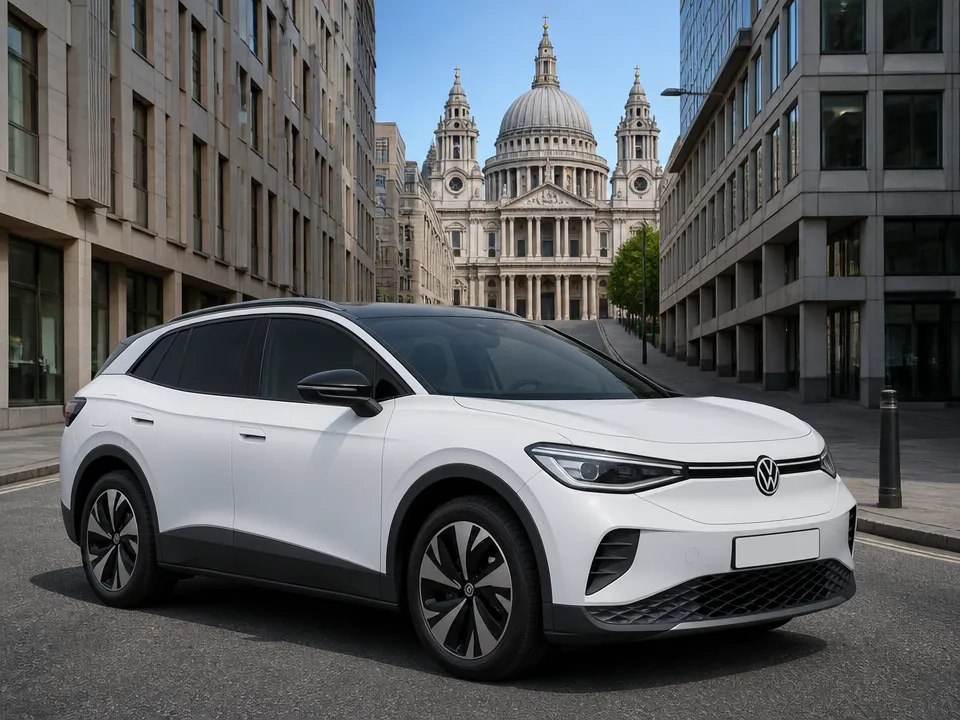
| Volkswagen ID.4 | SUV | 5 | 204 hp | £171 |
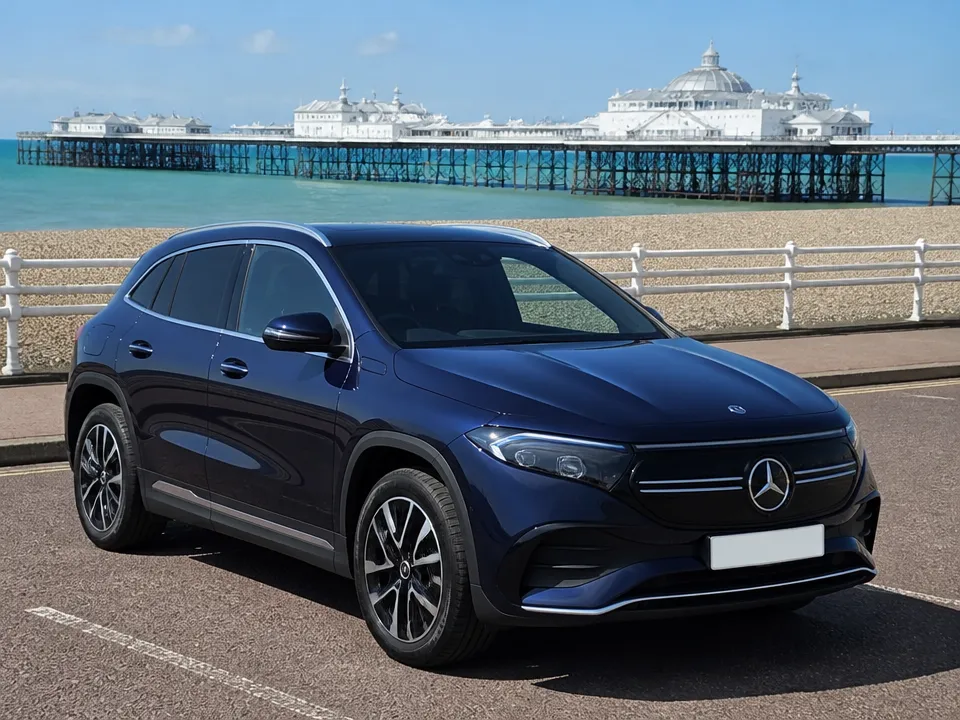
| Mercedes-Benz EQA | Crossover | 5 | 190 hp | £171 |
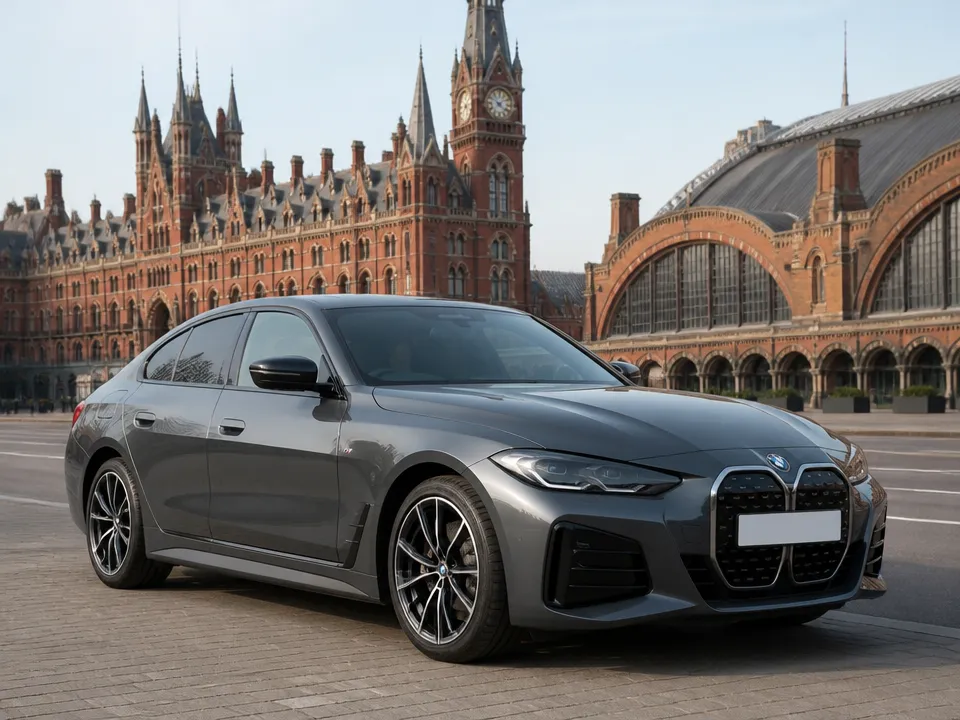
| BMW i4 | Sedan | 5 | 340 hp | £309 |
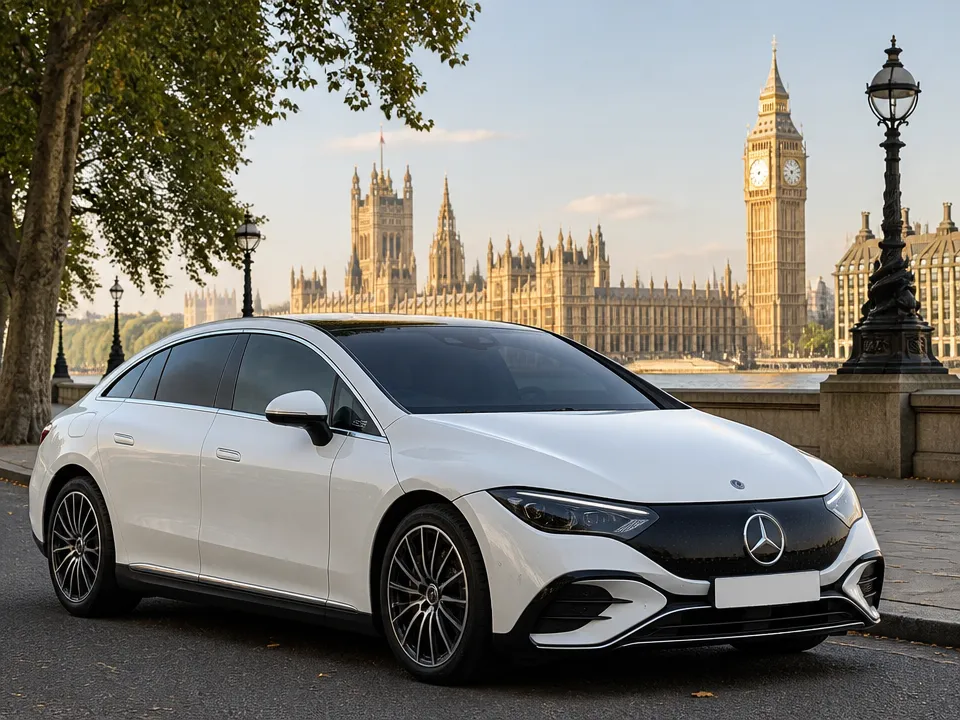
| Mercedes-Benz EQE | Sedan | 5 | 292 hp | £309 |
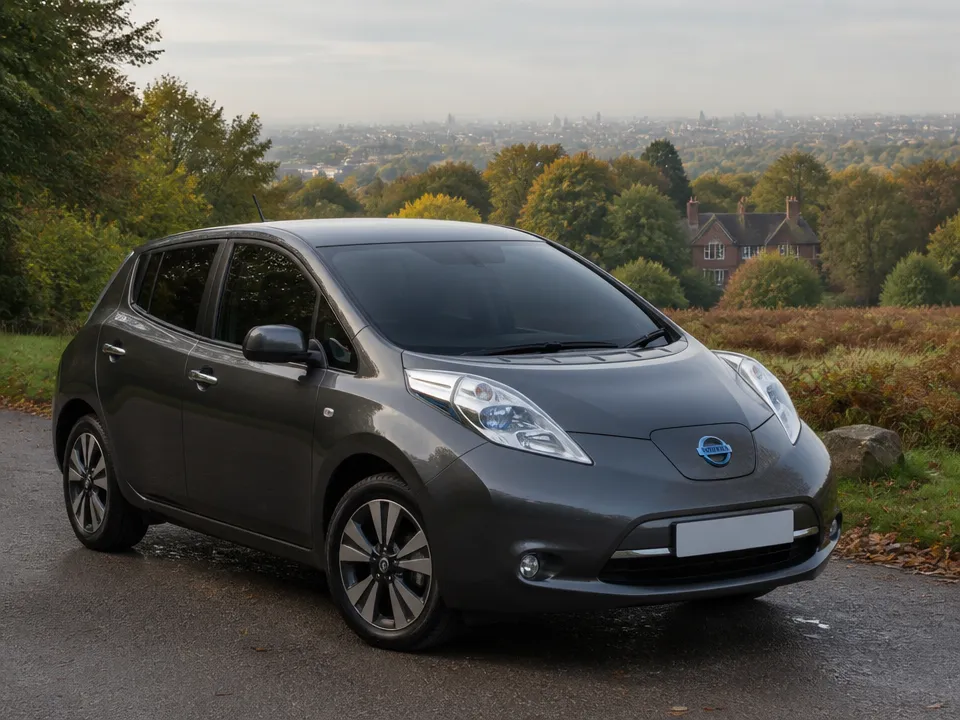
| Nissan Leaf | Hatchback | 5 | 150 hp | £71 |
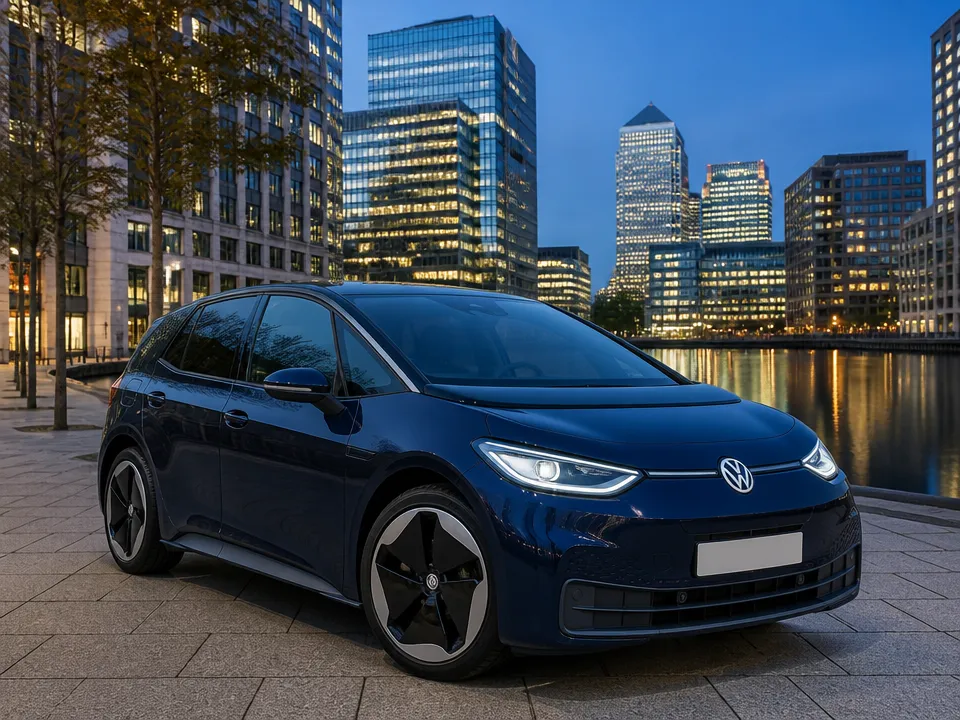
| Volkswagen ID.3 | Hatchback | 5 | 204 hp | £171 |
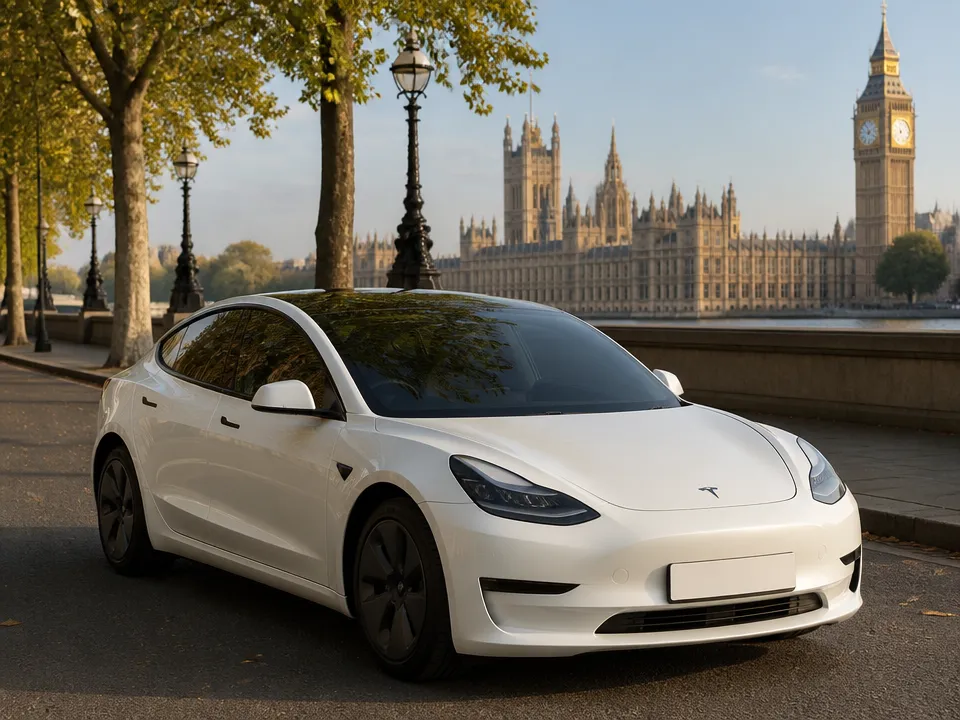
| Tesla Model 3 | Sedan | 5 | 283 hp | £309 |
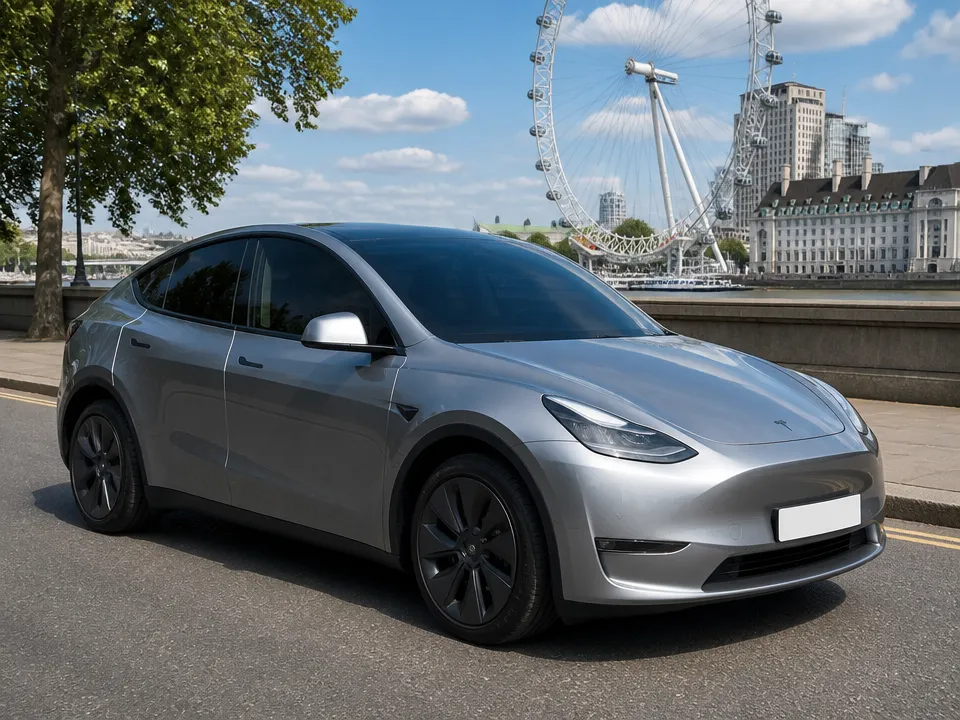
| Tesla Model Y | Crossover | 5 | 299 hp | £322 |
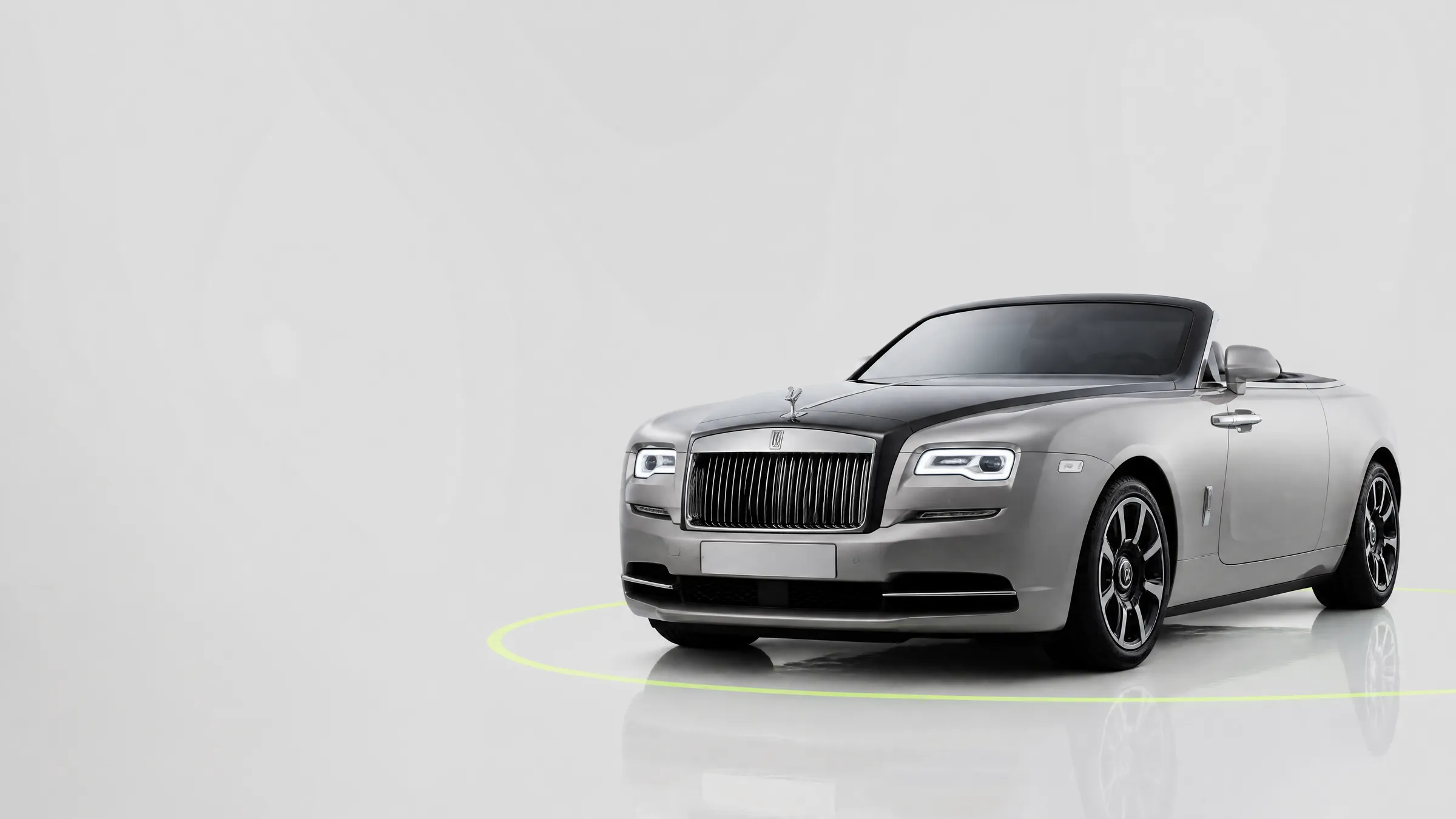
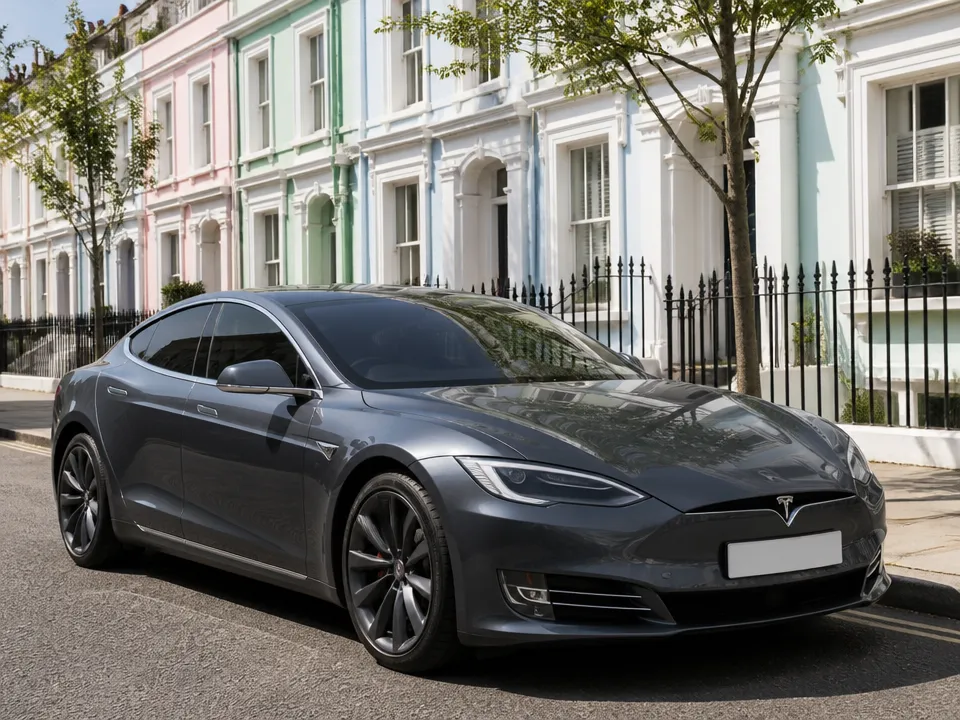
| Tesla Model S | Sedan | 5 | 670 hp | £309 |
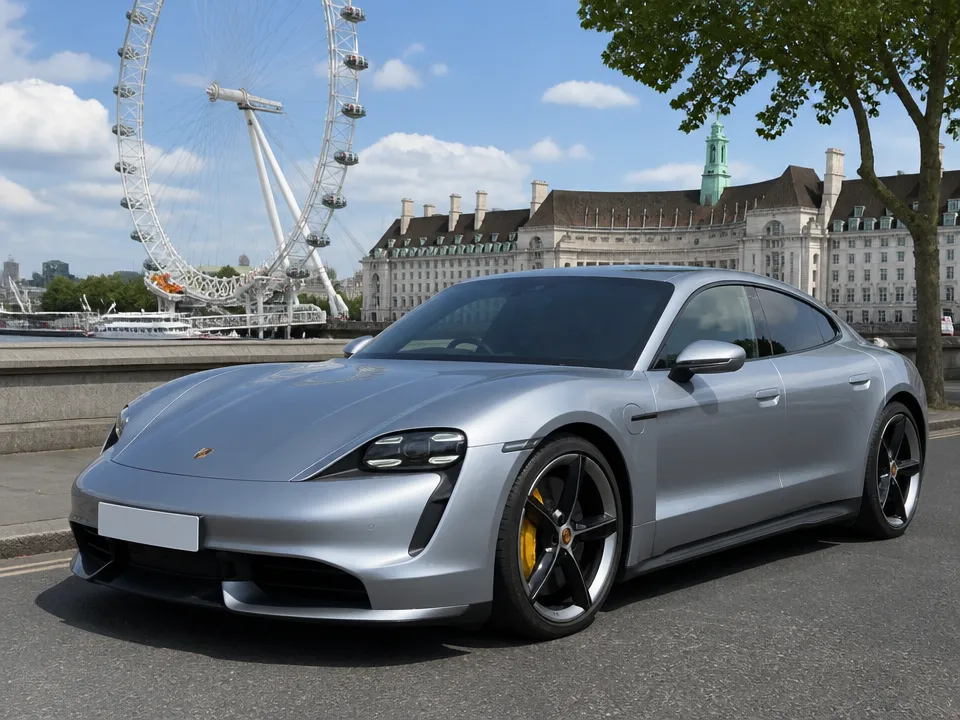
| Porsche Taycan Turbo S | Sedan | 4 | 761 hp | £500 |
The cheapest and the most expensive car on the page
The Nissan Leaf is the cheapest car on this page at £71 a day, and the Porsche Taycan Turbo S is the most expensive at £500. Between them sit four sedans, two crossovers, one hatchback and one SUV, with power running from 150 hp in the Nissan Leaf to 761 hp in the Taycan. Rear-wheel drive is standard across most of the fleet; the Tesla Model S and the Taycan Turbo S are the two all-wheel-drive cars on this page. The £429 gap between the Nissan Leaf and the Taycan buys power and all-wheel drive, not space — the Taycan seats 4, while every other model here takes 5. In our experience the body type decides more of a trip than the badge does: the SUV and the crossovers swallow luggage a low sedan cannot.
Weekly and monthly electric car rental in United Kingdom
A week of electric car rental in United Kingdom is charged at the daily rate × 6, which starts at £426; a month is the daily rate × 21, from £1,491. Six brands are represented in the fleet, and the spread from £71 to £500 means the same seven-day booking can land anywhere between £426 and £3,000 depending on which car you take. The multiplier is fixed, so the arithmetic is the same on the Nissan Leaf at £71 a day as on the Tesla Model Y at £322. On a long booking the multiplier, not the model, decides the bill — check the daily rate first, then multiply, because a cheaper car over 21 days can outrun a dearer one over six. The delivery address, the date and the time are agreed with a manager before the booking is fixed.
Charging an Electric Hire Car, the Cable and a Flat Battery
Every car in our electric fleet is automatic and fully electric, and charging is part of driving one — not an extra service. The details below are what we tell customers before they set off.
Do you charge it yourself and what cable comes with the car
- You charge it yourself: topping up the battery on the road is the driver's job, exactly as refuelling a petrol car would be.
- Cable included: whether a charging cable comes with the car is agreed with the manager when booking, so you are not buying one at a service station.
- Connector types: public points nationwide use CCS or Type 2 — check which one the post offers before you rely on a stop.
- Plan the stop, not the hope: motorway services and town car parks both carry rapid chargers, but availability varies by hour, so have a second point in mind.
- Return level: an electric car has no fuel tank, so the full-to-full rule does not apply to it; the return conditions are set out in the rental agreement.
What happens if the battery runs out on the road
What to do if the car stops, and the number to call, are agreed at reservation. A flat battery is the most avoidable call-out on an electric vehicle: the dash figure drops faster than the brochure claim once you add motorway speed, heating and a full boot. In our experience the drivers who run out are the ones who treated the estimated range as a promise rather than a guide. Plan the charging stop around the return leg, not the outbound one — arriving back with a low battery is the part of the trip that can cost you, so check the return conditions in the rental agreement before the last leg. If a charge point is out of order, move to the next one on your route rather than waiting; a twenty-minute detour beats an hour at a dead post.
How far an electric hire car goes on a charge
Range depends on the model and the weather, so treat the dash figure as a guide rather than a guarantee. A compact hatchback and a large sedan sit at very different ends of the scale, and cold mornings, air conditioning and a loaded car all pull the real figure down. Motorway speeds cut range faster than town driving, which is why a long run needs a charging stop built into it from the start. Match the car to the trip: a shorter city booking rarely needs the longest-range model, while a cross-country run does.
The table below groups the fleet by body type so you can see what each shape is built for.
| Body type | Models in the fleet | Seats | Best suited to |
|---|---|---|---|
| Hatchback | Nissan Leaf, Volkswagen ID.3 | 5 | City driving, short trips |
| Sedan | BMW i4, Mercedes-Benz EQE, Tesla Model 3, Tesla Model S, Porsche Taycan Turbo S | 4–5 | Longer runs, motorway miles |
| Crossover | Mercedes-Benz EQA, Tesla Model Y | 5 | Families, mixed routes |
| SUV | Volkswagen ID.4 | 5 | Luggage, uneven roads |
The Porsche Taycan Turbo S is the only four-seat car on the page; every other model takes five.
Delivery, Airports and How an Electric Car Rental Booking Is Agreed
Rent-Trip delivers every electric car on this page to your door, and the address, date and time are agreed with a manager before the reservation is fixed. That single conversation is what turns a model choice into a confirmed reservation.
Where we deliver an electric car in United Kingdom
- Any address in London: home, hotel or office inside the delivery area, arranged before the booking is fixed.
- Heathrow (LHR): 84,481,178 passengers in 2025, 30.3 km by road from the centre, about 45 minutes without traffic.
- Gatwick (LGW): 42,775,241 passengers in 2025, 48.6 km by road, roughly 70 minutes without traffic.
- Stansted (STN): 29,758,490 passengers in 2025, 57.9 km by road, about 63 minutes without traffic.
- Luton (LTN), City (LCY), Southend (SEN): the remaining three airports in our delivery area, each confirmed individually when booking.
- Outside these places: arranged case by case; the site does not promise delivery beyond the area above.
What a manager fixes before the booking is confirmed
The delivery address, the date and the time are agreed with a manager before the booking is fixed, and nothing is locked in until that exchange happens. In the same conversation we settle how the car is handed over and what the rental agreement sets out — the deposit, the insurance excess, delivery fees and any discount live in that document, not on this page. Age and licence questions belong to the same call rather than the kerb, because a mismatch discovered at hand-over costs you the day. In our practice the bookings that run smoothly are the ones where the customer named the exact terminal, door number or hotel entrance at the start. Tell the manager the full address once, and the car arrives where you are standing, not at the nearest main road.
Picking the car up at the airport
Airport delivery is agreed when booking, so the car is waiting at the time you land rather than the time you hoped to land. Flight delays change that time, so call the manager with the new arrival rather than leaving the car parked and waiting. Heathrow alone moved 84,481,178 passengers in 2025, and its 30.3 km run into the centre takes about 45 minutes without traffic — a gap wide enough that a fixed hand-over time matters more than the model you chose. Build the delay into the booking, not into the argument at arrivals.
London Charges That Apply to Electric Car Rental in United Kingdom
Electric car rental in United Kingdom still comes with two local charges in the capital to know about: the Congestion Charge, which is not waived for a battery car, and the ULEZ. We set both out below, because a driver who plans the daily total before booking avoids a surprise after the trip.
Is an electric car exempt from the Congestion Charge
The 100% Cleaner Vehicle Discount ended on 25.12.2025. From 02.01.2026 electric cars pay £18 a day, or £13.50 with Auto Pay — a 25% reduction that applies only to registered accounts. Without Auto Pay there is no discount at all, so registering the car before the trip is the whole saving — and the Blackwall and Silvertown tunnels give no reduction on top. The charge runs 07:00–18:00 Monday to Friday and 12:00–18:00 at weekends and on bank holidays, inside the Inner Ring Road bounded by Pentonville Road, City Road, Old Street, Commercial Street, Mansell Street, Tower Bridge Road, New Kent Road, Elephant & Castle, Kennington Lane, Vauxhall Bridge Road, Park Lane, Edgware Road, Marylebone Road and Euston Road. It is not collected from 25 December to the New Year bank holiday inclusive.
ULEZ charges £12.50 a day for non-compliant vehicles, and an electric car complies, so the daily charge does not apply to it. The zone covers all 32 boroughs of the capital and more than 1,500 km², operates 24 hours a day, seven days a week, except on 25 December, and the M25 sits outside it. Petrol cars need Euro 4 or better and diesels Euro 6, which is why a battery model clears the standard by default. The zone is wide enough that almost any London trip enters it, which is why compliance matters — for a non-compliant car the day counts whether or not you noticed the signs.
Who pays charges, tolls and penalties
- Congestion Charge and ULEZ: who covers the daily charge is agreed when booking, before the car is handed over.
- Dartford Crossing (Dart Charge): cars pay £3.50 per crossing, or £2.80 when prepaid, usually 06:00–22:00 every day; who settles it is agreed when booking.
- Penalty charge notices: under TfL rules a Congestion Charge or ULEZ PCN is £180, reduced to £90 if paid within 14 days; who pays it on a rental car is agreed when booking.
In our practice the charge question comes up on nearly every London booking, and it is settled in one conversation rather than at the kerb. Raise it with the manager alongside the delivery address — a charge discovered after the trip cannot be unpicked.
Driving an Electric Car Rental in United Kingdom on the Left
Driving here means one thing above all: you keep to the left.
Left-Hand Traffic and a Right-Hand-Drive Car
Every car in our electric fleet is right-hand drive, so the gear selector, the indicator stalk and your own position in the lane all sit where a left-hand-drive driver does not expect them. The first ten minutes are the ones that matter. The Highway Code, rule 160, says hold to the left unless signs or markings tell you otherwise, and rule 183 puts you nearer the left edge when turning. Roundabouts follow the same logic: you give way to traffic approaching from the right (rule 185) and travel clockwise. In our experience the roundabout is where a newly arrived driver slips first — after a junction the instinct to drift right is strong. Watch the lane markings rather than the car in front.
Speed Limits and the Signs That Override Them
- Built-up areas: 30 mph (48 km/h) in England, Scotland and Northern Ireland unless a sign says otherwise.
- Single carriageway: 60 mph (96 km/h); dual carriageway and motorway: 70 mph (112 km/h).
- Lit roads: 30 mph by default where no sign tells you a different limit.
- London zones: many are signed at 20 mph — the sign is the rule, not the default.
Phones, Seatbelts and the Drink-Drive Limit
Holding and using a phone, satnav or tablet is banned, even while stopped at a light — £200 and 6 penalty points, and a driver within 2 years of passing loses the licence outright. Hands-free is allowed if the device does not block your view. Seatbelts are compulsory where fitted; children need a child seat until they reach 135 cm or turn 12, whichever comes first, with a fine up to £500. The alcohol limit is 80 mg per 100 ml of blood in England, Wales and Northern Ireland, but 50 mg in Scotland — if a route crosses that border, the stricter figure is the one to plan around.
Long Motorway Runs in an Electric Car Rental in United Kingdom
Rent-Trip electric cars handle long runs on the British motorway network, and the trip that catches most drivers out is the one planned around the outbound leg only. Range figures on the dash are a guide, not a promise — wind, load, heating and speed all move the number, and motorway cruising moves it fastest.
- Charge before you leave: start a long run at a high state of charge rather than topping up on the way out of town, when public points are busiest.
- Match the connector: public points use CCS or Type 2, so check what the post offers before you commit to a stop.
- Build in a buffer: treat the remaining range as roughly two-thirds of the dash figure on a motorway run and you will not be caught short.
- Check the return leg first: the charge you need to reach the hand-back point matters more than the one you need at the destination.
The cars we deliver are automatic, and the fleet spans hatchbacks, sedans, crossovers and one SUV — a body type that swallows luggage a low sedan cannot. For a run with four adults and cases, the SUV and crossover models are the practical pick; for two people on a motorway slog, a sedan is the quieter, more efficient choice.
- Tyre pressures and lights: a five-minute check at the kerb saves a roadside stop.
- Charge cable: whether one comes with the car is agreed when booking — confirm it is there before you drive away.
- Breakdown number: agreed when booking, so keep it to hand rather than hunting for it at the roadside.
What to do if the car stops, and the number to call, are agreed at reservation. If the battery does run flat, that is a call, not a repair — but it costs you time you had planned to spend elsewhere, so plan the charging around the return, not the outbound leg.
Rent-Trip delivers to any address in London and to the six London airports, so a long run can start from your hotel door or from the terminal. Where you are heading and how far you plan to go is worth mentioning to the manager when the booking is agreed — it shapes the car we suggest and the charging advice we give you.
Fuel, Condition and What the Rental Agreement Covers
Every car Rent-Trip hands over comes clean, and it must go back the same way. For petrol and diesel cars the full-to-full rule is the only fuel option we offer — there is no pre-paid tank and no full-to-empty arrangement on the site; an electric car has no tank, so its return conditions are set out in the rental agreement. Anything else you want to know about the paperwork, the deposit or the excess sits in the rental agreement, and a manager walks you through it before the booking is fixed.
What the return rules mean in practice
- At pick-up: the car is clean, so you start with a known quantity rather than a guess.
- At return: the return conditions for an electric car are set out in the rental agreement — check them before you plan the last charging stop.
- If it comes back short: the missing-fuel and refuelling-fee rule is for cars with a fuel tank; for an electric car, what applies is set out in the rental agreement.
- No alternatives: a pre-paid tank and full-to-empty are not offered on the site; with an electric car, plan the last charging stop into your route.
The agreement, not the website, holds the numbers
Deposit, insurance excess, delivery fees and any discount are set out in the rental agreement — we do not print them here, because they depend on the car and the booking rather than on the page. The same goes for the minimum age, a young-driver surcharge, which cards are accepted and any territory limit: those are agreed when booking, in the same conversation that fixes your delivery address, date and time. Ask about them then, while everything can still be changed, rather than at the kerb with the car already outside.
Where the car is delivered and returned
We deliver to any address in London and to Heathrow, Gatwick, Stansted, Luton, London City and Southend. Delivery outside those places is arranged case by case and is not promised on the site, so raise it early if your trip starts somewhere else. On a return, allow for a charging stop and for traffic — a car handed back late is a conversation nobody enjoys. In our experience the hand-over takes longest at the airports, where the meeting point takes longest to find, so build ten minutes of slack into the plan.
What to Check Before You Book Electric Car Rental in United Kingdom
A reservation for electric car rental in United Kingdom is fixed only after a manager has agreed the delivery address, the date and the time with you. Everything that decides whether the trip runs smoothly — the model, the charging plan, the London charges — is worth settling in that same conversation.
- Model and body type: the fleet runs from the Nissan Leaf at £71 a day to the Porsche Taycan Turbo S at £500, and the SUV and crossovers carry luggage a sedan cannot.
- Battery and charging: you charge the car yourself, whether a cable comes with the car is agreed when booking, and public points use CCS or Type 2 — match the connector before you rely on a stop.
- Charges on the route: the Congestion Charge is £18 a day, or £13.50 with Auto Pay from 02.01.2026, and who pays road charges, tolls and penalty notices is agreed when booking.
- Documents and payment: age, licence and payment questions are settled with the manager before the booking is fixed, not at the kerb.
- Return condition: the car comes clean and must go back the same way; the return conditions for an electric car are set out in the rental agreement.
- Long bookings follow one rule and no other: a week is the daily rate × 6, from £426, and a month is the daily rate × 21, from £1,491.
On a long hire the multiplier, not the model, decides the bill — check the daily rate of the car you actually want first, because a cheaper model over 21 days can still land above a dearer one over six. Range is the other thing to plan around. It depends on the model and the weather, so treat the dash figure as a guide, and remember that motorway speeds cut range faster than town driving — build a charging stop into long runs rather than trusting the estimate. Plan the charging around the return, not the outbound leg: a flat battery on the way to hand-back costs you time, and the number to call for a car that stops is agreed at reservation.
In our practice the bookings that go wrong are the ones where the delivery time was never confirmed. Tell the manager your flight number and landing time, and say so again if the flight slips — a car waiting at the wrong hour is a car you cannot collect.