













Luxury car rental in France
Need a hand with what exactly?
What luxury car rental in France costs with Rent-Trip
Luxury car rental in France with Rent-Trip runs from €195 to €350 per day across 10 cars. Weekly bookings are priced at daily x 6, from €1,170, and monthly bookings at daily x 21, from €4,095.
Daily, weekly and monthly rates for luxury car rental in France
Our luxury car rental in France starts at €195 per day and runs to €350 per day; a week is priced at daily x 6, from €1,170, and a month at daily x 21, from €4,095. The 10 cars in the class sit inside that band, from the Audi A6 at the bottom to the Mercedes-Benz S-Class at the top. Longer bookings change the arithmetic rather than the car: at daily x 6 for a week and daily x 21 for a month, the effective cost per day falls the longer you keep the keys. In our practice, most travellers comparing a four-day city stay against a ten-day run through the Loire Valley assume the second trip costs proportionally more — it does not. The multiplier is what changes the maths, so the longer the booking the lower the effective daily cost.
Price by model in the luxury class
| Model | Body | Seats | Fuel | Power | € per day |
|---|---|---|---|---|---|
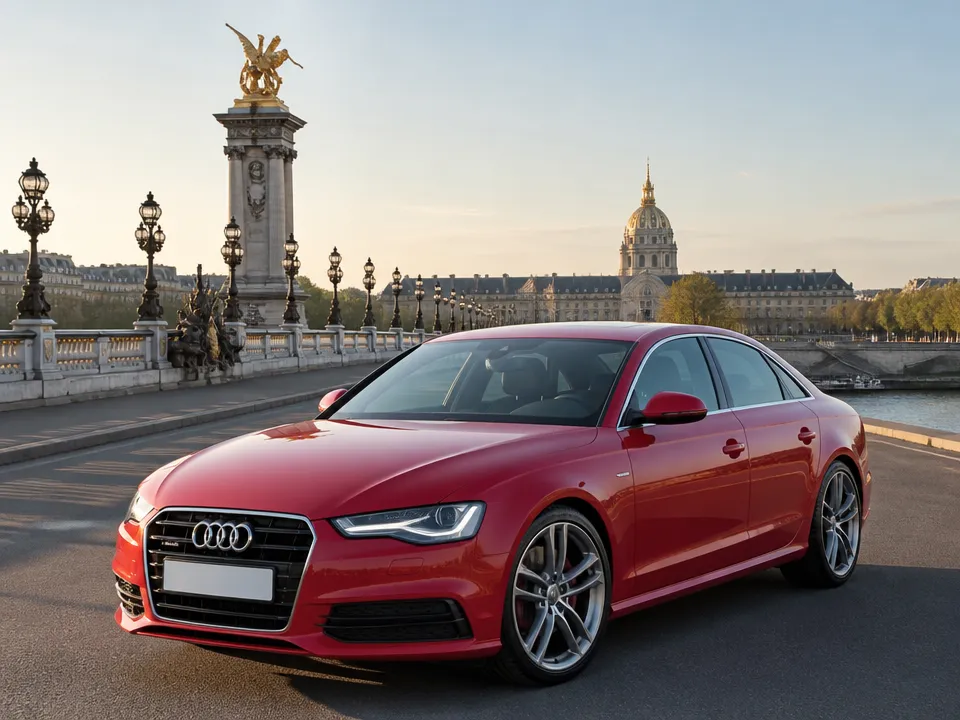
| Audi A6 | Sedan | 5 | Diesel | 204 hp | €195 |
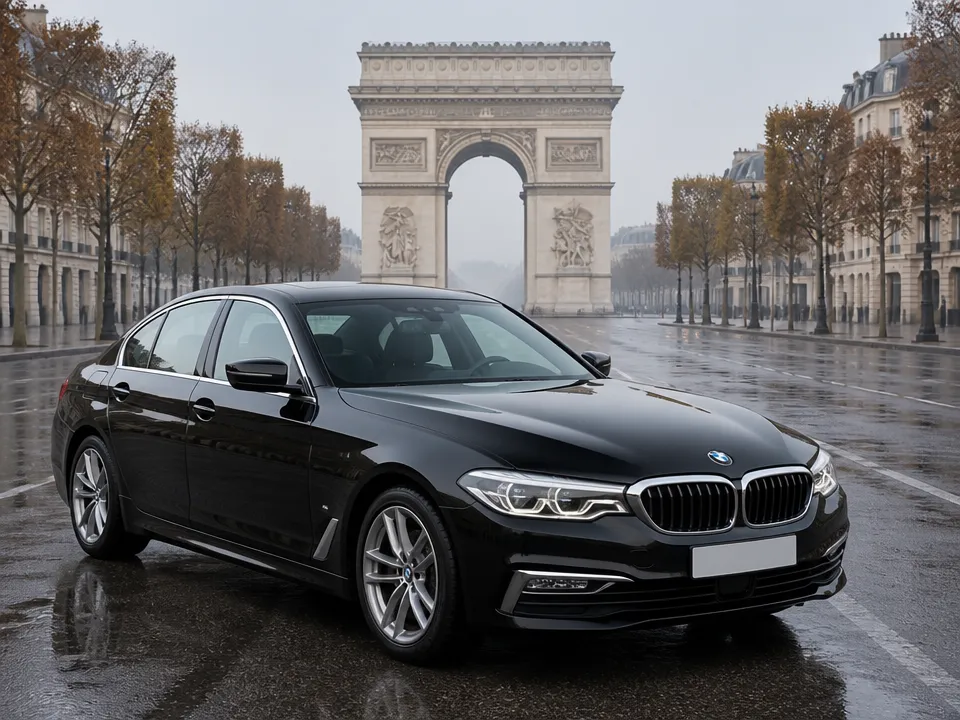
| BMW 5 Series | Sedan | 5 | Diesel | 197 hp | €205 |
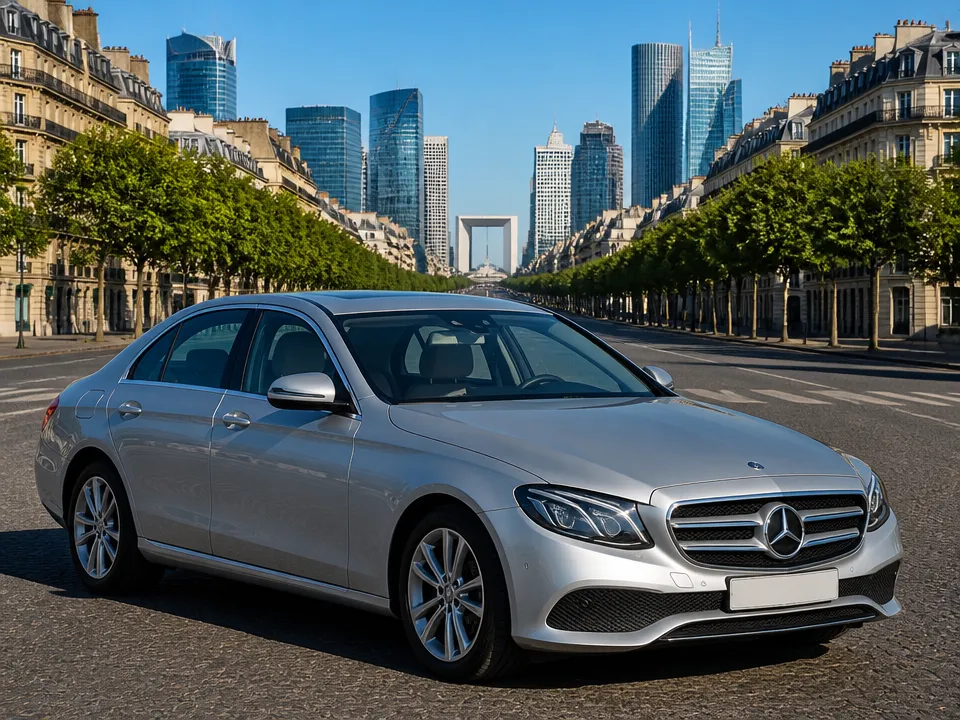
| Mercedes-Benz E-Class | Sedan | 5 | Diesel | 197 hp | €210 |
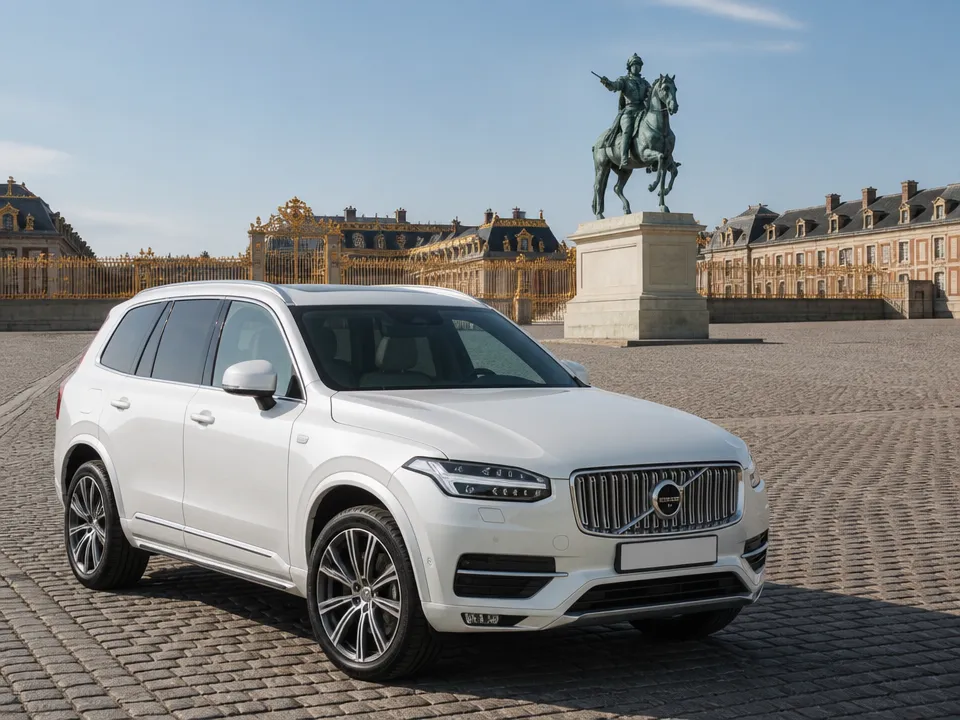
| Volvo XC90 Hybrid | SUV | 7 | Hybrid | 455 hp | €230 |
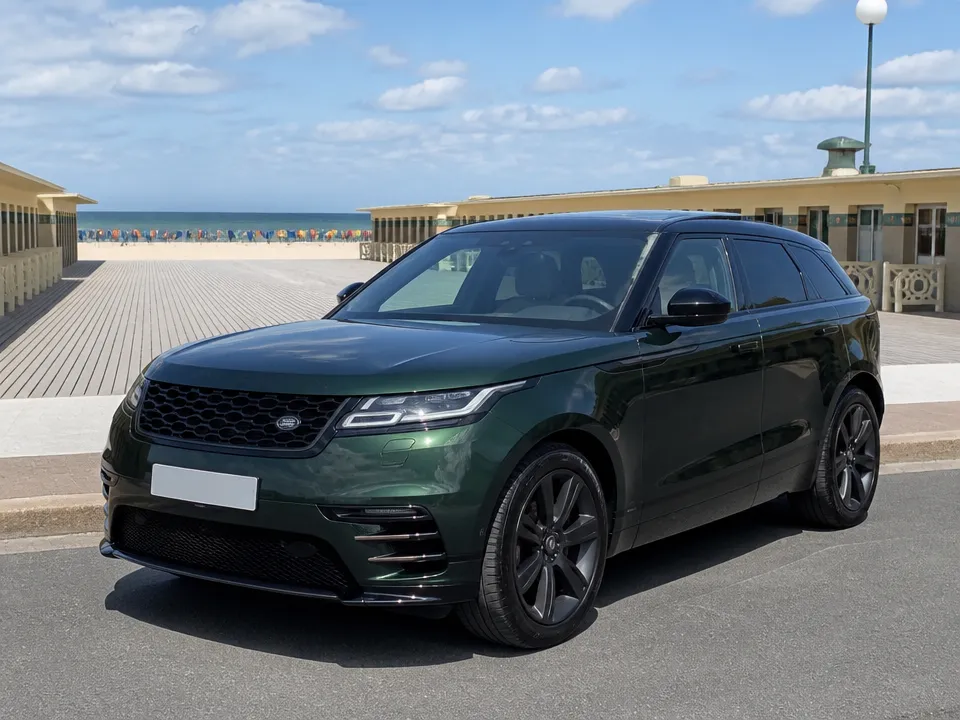
| Land Rover Range Rover Velar | SUV | 5 | Diesel | 204 hp | €240 |
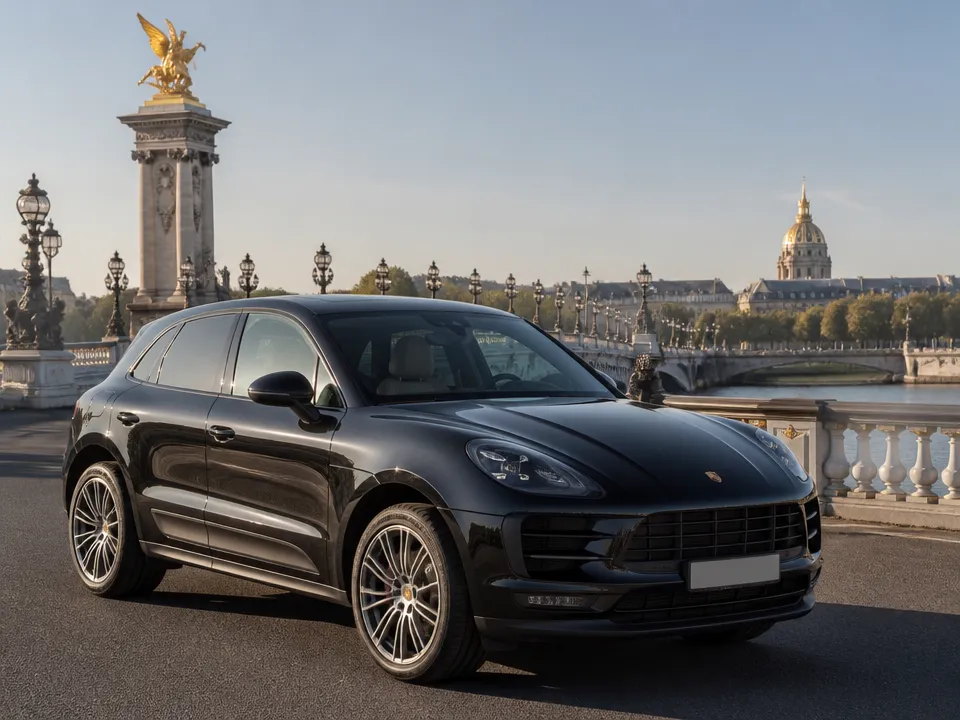
| Porsche Macan | SUV | 5 | Gasoline | 265 hp | €245 |
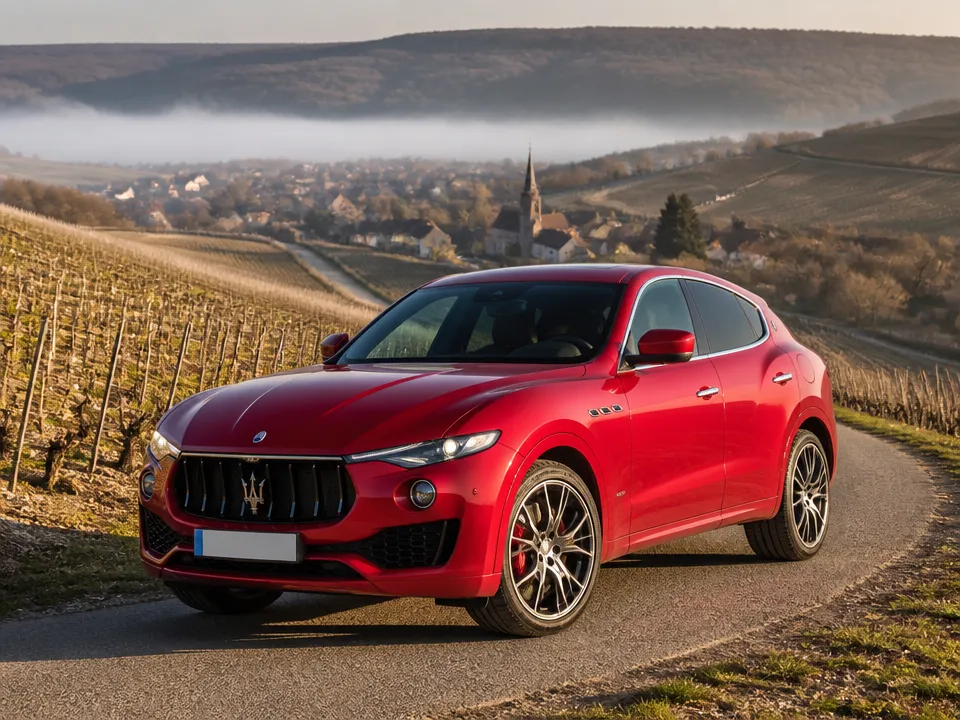
| Maserati Levante | SUV | 5 | Gasoline | 350 hp | €290 |
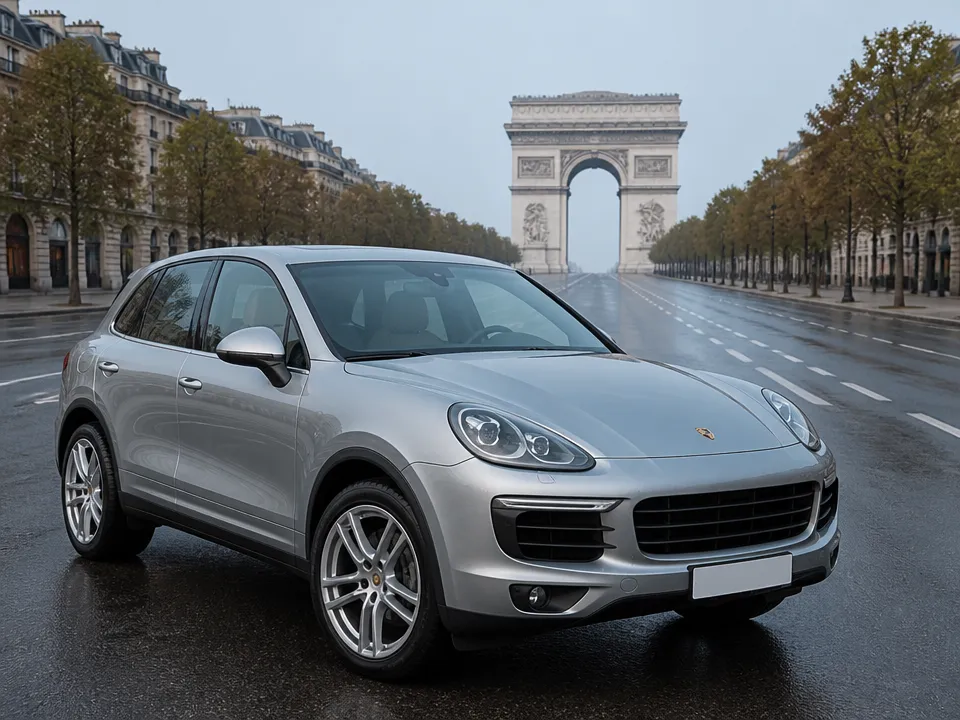
| Porsche Cayenne | SUV | 5 | Gasoline | 353 hp | €310 |
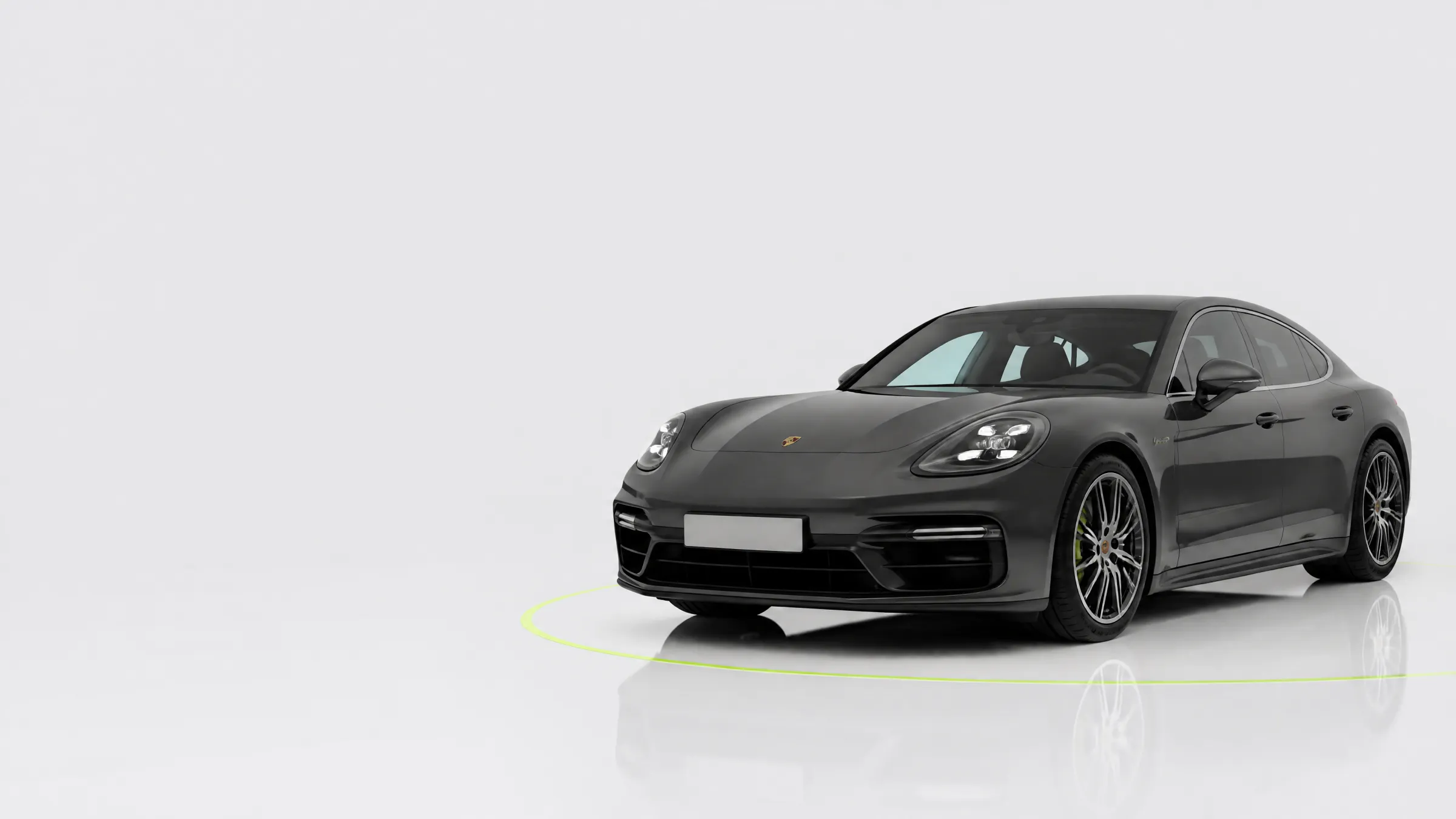
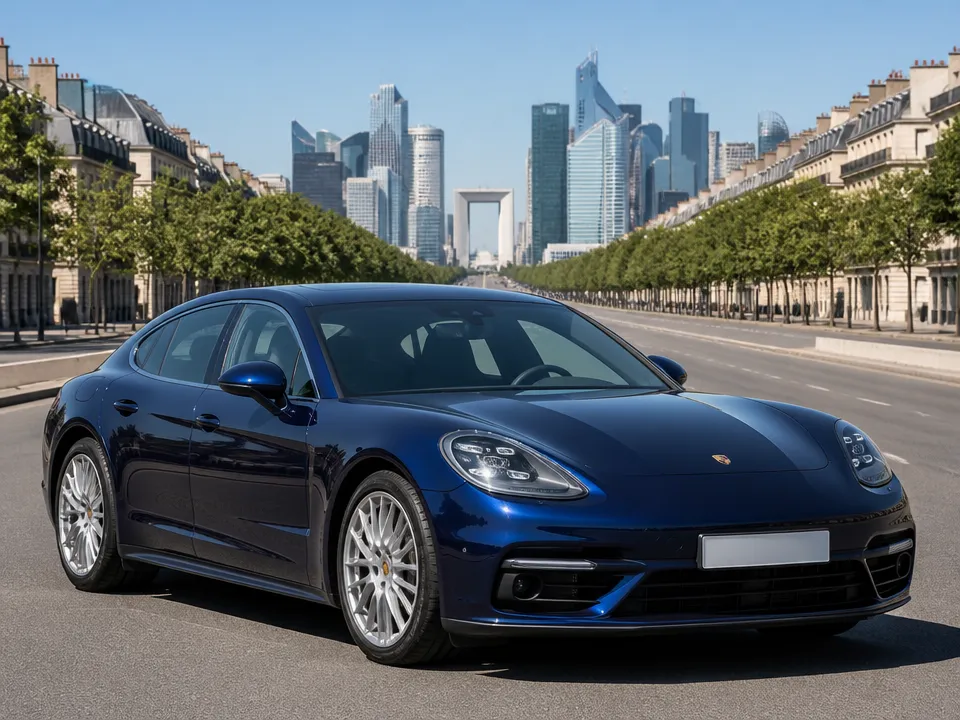
| Porsche Panamera | Sedan | 5 | Gasoline | 353 hp | €330 |
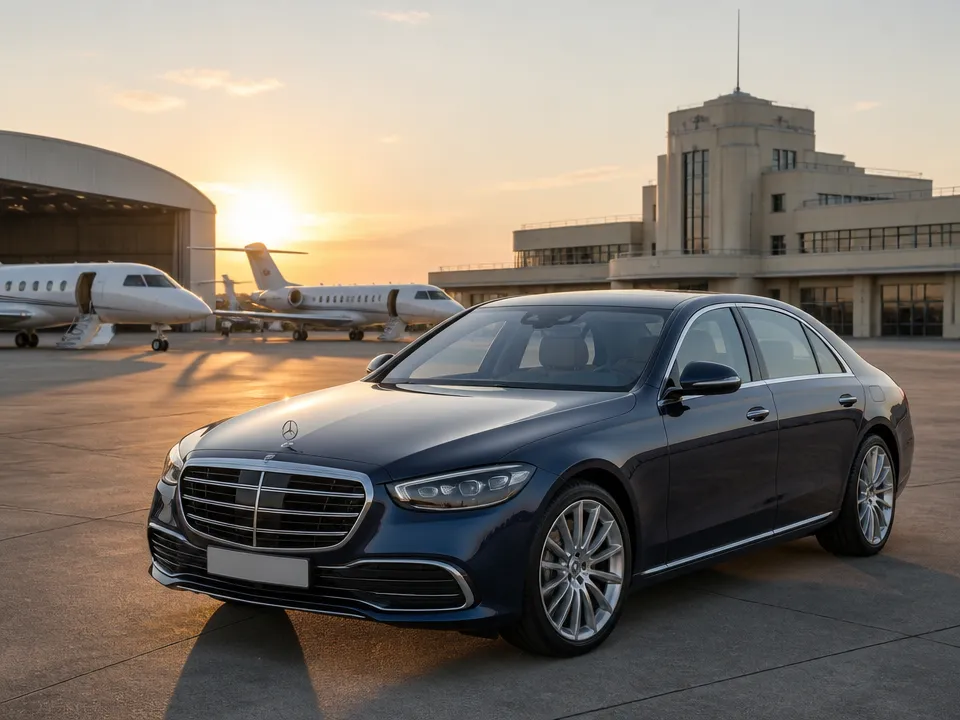
| Mercedes-Benz S-Class | Sedan | 5 | Gasoline | 381 hp | €350 |
Each of the 10 cars carries its own daily rate, from the Audi A6 at €195 to the Mercedes-Benz S-Class at €350. The spread between the cheapest and the flagship sedan is €155 per day — enough to change which model suits a week-long booking.
The luxury models available for rental in France
Ten cars make up our luxury class, all with automatic transmission and all-wheel drive on eight of them. Every model is a current-generation car, and the Volvo XC90 Hybrid is the only one that seats seven.
Sedans and SUVs in our luxury fleet
- Audi A6: the entry point to the class — a 204 hp diesel sedan with all-wheel drive at €195 per day.
- BMW 5 Series: rear-wheel drive, 197 hp, 2.0 L diesel, €205 per day for long motorway runs.
- Mercedes-Benz E-Class: the same 197 hp diesel layout as the BMW, at €210 per day.
- Porsche Panamera: a 353 hp 2.9 L gasoline sedan with all-wheel drive, €330 per day.
- Mercedes-Benz S-Class: the flagship — 381 hp, 3.0 L gasoline, €350 per day.
- Volvo XC90 Hybrid: the only 7-seat car in the class and the only hybrid, 455 hp, €230 per day.
- Land Rover Range Rover Velar: a 204 hp diesel SUV with all-wheel drive at €240 per day.
- Porsche Macan: 265 hp gasoline, all-wheel drive, €245 per day.
- Maserati Levante: a 3.0 L gasoline SUV with 350 hp at €290 per day.
- Porsche Cayenne: 353 hp, 3.0 L gasoline, all-wheel drive, €310 per day.
Engines, drivetrains and power across the class
| Model | Body | Seats | Fuel | Power | Drivetrain | € per day |
|---|---|---|---|---|---|---|
| Audi A6 | Sedan | 5 | Diesel | 204 hp | All-wheel | €195 |
| BMW 5 Series | Sedan | 5 | Diesel | 197 hp | Rear-wheel | €205 |
| Volvo XC90 Hybrid | SUV | 7 | Hybrid | 455 hp | All-wheel | €230 |
| Porsche Macan | SUV | 5 | Gasoline | 265 hp | All-wheel | €245 |
| Maserati Levante | SUV | 5 | Gasoline | 350 hp | All-wheel | €290 |
| Porsche Cayenne | SUV | 5 | Gasoline | 353 hp | All-wheel | €310 |
| Porsche Panamera | Sedan | 5 | Gasoline | 353 hp | All-wheel | €330 |
| Mercedes-Benz S-Class | Sedan | 5 | Gasoline | 381 hp | All-wheel | €350 |
Choosing between a sedan and an SUV
A sedan is the better tool for a long day on the autoroute: the S-Class and the Panamera sit lower, use less fuel at 130 km/h and take two large cases in the boot. An SUV earns its place on a different trip — the Velar and the Cayenne swallow four cases plus hand luggage, and the XC90 Hybrid carries seven people without a roof box. On wet autumn roads, all-wheel drive matters more than horsepower: eight of the ten cars have it, and the two rear-wheel-drive diesels — the BMW 5 Series and the Mercedes-Benz E-Class — are the ones to think about if your route runs through the Alps in November. In our experience, groups of five who book the Macan for a week usually come back asking for the Cayenne, purely for the luggage space.
If you are collecting in Paris, the same ten models are available; delivery is agreed with a manager when you book.
Documents and age rules for luxury car rental in France
One set of licence rules applies across the country, so the paperwork for a luxury car is the same whether you collect in Paris or drive south. What changes is the licence you hold and how long you have held it.
Which driving licence works for the luxury class
EU/EEA licences are valid here with no time limit, and there is no need to exchange them for a French one while they remain valid. Visitors from outside the EU/EEA may drive on their national licence; if that licence is not in Latin script, an official translation or an international driving permit (IDP) must accompany it. An IDP never replaces the national licence — it is only a translation and is presented together with the original. Non-EU/EEA residents living here may drive for 1 year from the entry date shown in their visa, after which the licence has to be exchanged. To book with us, the licence must have been issued more than 1 year ago, and digital licences are not accepted. An IDP used at pick-up must be no older than 3 years.
Minimum age and driving experience for the luxury class
There is no single state age rule for the luxury class — the minimum age, the young-driver surcharge and the card and passport check are set by each company, so the exact condition is agreed when booking. We do state one requirement of our own: a licence held for more than 1 year. Drivers still within the permis probatoire period, the first 3 years after passing the test, face lower speed limits and a tighter alcohol limit, and those limits apply to the car whoever rented it. Because the age threshold differs by company and by class, confirm it with the manager before the booking is fixed.
What to have ready before the car is delivered
- National driving licence: the physical card, valid and issued more than 1 year ago — digital licences are not accepted.
- IDP or official translation: needed if your licence is not in Latin script, and the permit must be no older than 3 years.
- Passport or ID: the identity document is checked as part of the booking, with the exact requirement agreed when booking.
- Payment card: the card used for the booking, with the exact requirement agreed when booking.
- Second driver: an additional driver is added at booking, and we confirm the conditions with you then.
The licence category matters as much as the class: our 10 luxury cars are all automatic, so an automatic-only licence covers the whole fleet, while the terms of the rental are set out in the rental agreement rather than quoted in advance.
Insurance and excess on a luxury car rental in France
Every luxury car rental in France carries compulsory third-party cover, and the collision and theft protection in the base package limits what you pay rather than removing it. The gap you carry is the excess, and the level of protection you choose decides its size.
What the base package covers
- Responsabilité civile: compulsory under French law and included automatically in any hire, covering injury and property damage caused to third parties within the country's legal limits — it does not cover the driver's own injuries.
- CDW / collision damage protection: part of the base package with French companies, covering bodywork repair and the days the car sits off the road, but only up to the excess.
- TW / theft protection: also in the base package, covering theft, attempted theft and vandalism in a car park, again within the excess.
- Franchise (excess): a fixed sum you pay yourself after damage or theft; it is not reducible by arguing, and it follows the protection level you picked.
Raising the protection level
The excess can be bought down. Medium lowers it, Premium removes or substantially reduces it, and both are paid options taken at booking. On a Porsche Cayenne at €310 per day or a Maserati Levante at €290, the cost of the buy-down is a small share of the rental — but the terms of the buy-down are set out in the rental agreement, so ask about them before you decide.
Some cardholders already hold cover: Visa Premier and Gold Mastercard frequently cover the CDW and TW excess when the booking is paid with that card and the holder is the main driver on the agreement. That is industry practice rather than a bank guarantee, so check the terms of your own card.
What basic protection leaves out
- Tyres and glass: tyres damaged through abnormal use and glass, unless the damage came from a collision.
- Roof and underbody: sunroof, panoramic roof and the underside of the car.
- Wrong fuel: misfuelling and the engine damage that follows.
- Keys: lost or stolen keys.
- Negligence: damage caused by careless handling, and any deliberate damage.
Our fleet in Paris runs on Diesel, Gasoline and Hybrid, so a misfuel is easy to avoid — but on the 455 hp Volvo XC90 Hybrid it is also expensive to put right. In our practice, the single question worth settling at booking is the level of protection you want for the model you chose, since it is agreed with a manager and stated in the rental agreement rather than published anywhere.
Luxury car rental in France and its driving rules, low-emission zones and tolls
Speed limits, the Crit'Air sticker and a handful of paid tunnels shape how a luxury rental car is driven here. We hand over the keys with the essentials already explained, so nothing on the road comes as a surprise.
Speed limits under the Code de la route
Limits are set by road type, and they drop in the rain. Built-up areas run at 50 km/h under Code de la route, art. R413-3, though individual sections may be raised to 70 km/h. Ordinary two-way roads sit at 80 km/h (art. R413-2), and departments may lift certain stretches with two lanes each way to 90 km/h. Roads with a central divider run at 110 km/h, motorways at 130 km/h. In rain the figures fall to 110 km/h on a motorway, 100 km/h on a divided road and 80 km/h elsewhere, and visibility under 50 m means 50 km/h everywhere (art. R413-4). Drivers with a permis probatoire — less than 3 years since issue — are capped lower still: 110 km/h on motorways, 100 km/h on divided roads, 80 km/h elsewhere (art. R413-5). The alcohol limit is 0.5 g/l of blood, or 0.2 g/l for permis probatoire holders since 1 July 2015. On the boulevard périphérique the limit has been 50 km/h since 1 October 2024 by decision of the Paris city hall, even though the Code de la route allows up to 70 km/h there.
Crit'Air, the ZFE and the tolls worth knowing
- ZFE de la Métropole du Grand Paris (Zone à Faibles Émissions): the low-emission zone inside the A86 motorway, which is itself excluded, covering the boulevard périphérique and the Bois de Boulogne and Bois de Vincennes.
- Crit'Air sticker: the windscreen vignette that every car needs to enter a ZFE; without it, entry is formally prohibited.
- Banned classes: Crit'Air 5, 4, 3 and «Non classé» — Crit'Air 3 has been restricted since 1 January 2025.
- Duplex A86: the roughly 10 km underground tunnel from Rueil-Malmaison through Vaucresson to Vélizy, run by Cofiroute/Vinci; class 1 tolls from Rueil to Vélizy run €8.30–€13.70 depending on the hour Monday to Thursday, up to €14.90 on Fridays and the eve of public holidays.
- Péage en flux libre: barrier-free tolling where payment is due within 72 hours, used on the A13 and A14.
- Carpool lane: the left lane of the périphérique from the Issy embankment to Porte de Bercy, both directions, Monday to Friday 7:00–10:30 and 16:00–20:00, for cars carrying 2 or more passengers — a 135 € fine, contravention 4th class, has been issued since 2 May 2025.
Winter tyres and where they apply
Winter tyres are compulsory from 1 November to 31 March in around 34 mountain departments — the Alps, the Pyrenees, the Massif Central, the Jura, the Vosges and Corsica — covering more than 4,000 communes by prefectural decision. The rule under loi Montagne II means either four winter tyres or chains and socks on two driven wheels. Paris and the Île-de-France are not in the zone, so a car collected in the capital needs nothing extra for city driving, but a winter trip to the Alps does. The penalty is 135 € and the vehicle can be immobilised. Tell us at booking if the itinerary heads for the mountains and we will agree the equipment in advance.
Picking up and returning your luxury rental car in France
We deliver every luxury car to you: the hand-over point and the return point are agreed with a manager when you book, along with the time window that suits your itinerary.
How delivery and collection work on a luxury hire
The car comes to the address you name, and the same address — or a different one — is confirmed for the return. Because the booking is agreed with a manager rather than dropped into a checkout, we can line up delivery with a flight landing at Paris-Charles de Gaulle Airport or a train arriving at Gare de Lyon, and set the collection for the morning you leave. Timing, the exact meeting point and any change to it are settled in that same conversation. What matters here is the buffer: the Mercedes-Benz S-Class at €350 per day and the Audi A6 at €195 per day are handed over on the same terms, so plan the return slot with time to spare before a flight rather than the twenty minutes most travellers leave. Traffic on the boulevard périphérique and inside the ZFE de la Métropole du Grand Paris is the usual reason a tight hand-over slips.
Documents at hand-over
- Driving licence: a licence issued more than 1 year ago; digital licences are not accepted for rental.
- IDP, where needed: non-EU/EEA visitors driving on a national licence in a non-Latin script carry an official translation or an IDP, no older than 3 years.
- Both together: the IDP never replaces the national licence — it is only a translation and is shown alongside it.
- Card and passport: the minimum age, the young-driver surcharge and the card and passport check are set by each rental company in France, so the exact condition is agreed when booking.
- Deposit and excess: the amount is set out in the rental agreement.
Fuel, cleanliness and the return inspection
Bring the car back with the fuel level it left with — that is the plein-plein policy French rentals work on — and the état des lieux at return is what closes the contract. Refuelling before you hand back is the cheaper route: Gazole in Paris averaged €2.44 per litre against a French average of €2.414, and SP95-E10 €2.183 nationally, so a tank filled away from the city centre costs less. Leave the interior as you found it and photograph nothing you cannot describe — the inspection is done together at the car. If the return runs past the agreed time, tell the manager before the slot ends rather than after; a booked extension is always simpler than an unexplained late return.
Longer bookings and one-way luxury car rental in France
Weekly and monthly rates are the two levers that change what a luxury car rental in France costs over a long stay. A week is charged at daily x 6, from €1,170 on the Audi A6, and a month at daily x 21, from €4,095 on the same car. On an S-Class at €350 per day the monthly rate reaches €7,350. Two multipliers, one rule: the longer the booking, the lower the effective daily cost.
What a longer booking changes for you
- A week instead of seven separate days: at daily x 6 you pay for six days and drive for seven, so the saving grows with the daily rate of the model you pick.
- A month instead of four weeks: at daily x 21 a 30-day stay is billed as 21 days, which suits a long holiday or a work assignment better than stacking weekly blocks.
- Model choice matters more, not less: the €155 daily spread between the Audi A6 at €195 and the Mercedes-Benz S-Class at €350 becomes a four-figure difference across a month.
- Availability: our luxury fleet is 10 cars in total, so a long booking on one specific model is agreed with a manager rather than picked from a live counter.
- The rental agreement: the deposit, the excess, delivery fees and any discount are set out in the rental agreement, never fixed in advance on this page.
Returning the car somewhere else
One-way rental — location aller simple — means collecting the car in one place and leaving it in another. Whether it is possible on your dates, and what it costs, is agreed when booking: the fee is set out in the rental agreement and is never a figure we quote here. For a luxury model the answer often depends on whether another client is already travelling the other way, so the earlier you ask, the more room a manager has to arrange it. If your trip is a loop — Paris out, Paris back — the standard return is the simpler option and keeps the booking on the model you chose.
What to check before booking luxury car rental in France
Before you confirm anything, run through four checks: the model and its daily rate, the licence and age condition, the protection level and excess, and how the car reaches you. Each one is settled with a manager when you book, so nothing is left to the day of hand-over.
The four checks that matter most
- Model and rate: confirm which of the 10 cars you are getting and its daily figure — the range runs from €195 for the Audi A6 to €350 for the Mercedes-Benz S-Class.
- Licence and experience: your licence must have been issued more than 1 year ago, and digital licences are not accepted for rental in France.
- Protection level: ask what the excess is on your chosen car and whether the Medium or Premium option changes it — the exact sum stands in the rental agreement.
- Delivery: tell the manager where you want the car brought and when, since it is delivered to you rather than collected from a desk.
What travellers most often overlook
Longer bookings are where the arithmetic quietly works in your favour. A week is charged at daily x 6, so a Porsche Macan at €245 per day comes to €1,470 for seven days, and a month at daily x 21 brings the same car to €5,145. The gap between the cheapest and the flagship sedan is €155 per day, which is enough to change which model makes sense across a three-week stay.
Fuel policy is the second thing people miss. You collect the car with a full tank and return it full — the plein-plein arrangement — and diesel across the country averaged €2.414 per litre at the last reading, against €2.183 for SP95-E10. On a 455 hp Volvo XC90 Hybrid that difference is real money over a long drive.
Before you drive away
Check the Crit'Air sticker on the windscreen. The ZFE de la Métropole du Grand Paris excludes Crit'Air 5, 4, 3 and «Non classé» vehicles inside the A86, and a missing vignette is treated as a formal breach. If your route runs beyond the city, the péage and the winter-tyre rule for mountain departments from 1 November to 31 March both need planning before you set off.