










Jet Skis on Orlando's Lakes: Hourly Rates, Seats and the Boater ID Rule
Jet ski rental in Orlando runs from $80 to $150 an hour, and two of the three market rates sit at exactly $100 for a machine that carries up to two riders. Below: how the hour is priced, which machines take one, two or three people, which lakes they launch on, and what the Florida boater ID rule asks of anyone born on or after January 1, 1988.
How the hour is sold: per machine, per rider, self-drive or guided
Around Orlando a jet ski is sold in two different ways — as a machine you drive yourself by the hour, or as a seat on a guided lesson — and the two prices are not comparable at face value.
Self-drive by the hour, priced per machine
The standard offer around the city is a self-drive jet ski rented by the hour, and the price is for the machine, not for each person on it. All three market rates collected for this Rent-Trip section are hourly: $80 at the lower end, $100 for a Yamaha that takes up to two riders with fuel included, and $100 for a machine on a private lake, again with a maximum of two riders. Nobody rides with you: you take the controls, and the hour is yours to spend on the water. That matters more than it seems: when two friends share one machine, the $100 hour costs each of them $50, while a solo rider pays the full figure alone. So the first question to settle before comparing anything is simple — how many people will actually sit on each jet ski?
A guided lesson is priced per person
A guided ride on Lake Bryan costs $129 per person for 60 minutes, and that price covers a private lesson, the Sea-Doo itself and access to a private beach. It is built for people who have never ridden: no experience is necessary, though you must be able to swim. One machine can carry two adults and one child, and the driver must be at least 17 with a valid driver's license. Here is where the units bite. Two adults on a guided hour pay $258 between them, while two adults sharing a self-drive machine at $100 pay $158 less for the same 60 minutes on the water. Is the lesson worth that gap? For first-timers who want an instructor beside them, it can be — but for anyone already confident on a jet ski, the hourly machine rate is the cheaper way onto the lake.
Booking slots on small lakes
Hourly jet ski rental around Orlando is a reservation business, not a walk-up one. The private lake on the Orlando–Kissimmee side states it plainly: reservation required, ID required, and only 4 bookings per day. Four slots a day means that a weekend afternoon can be gone well before you arrive in the city — and a group that turns up without a booking may simply find no machine free. Elsewhere the pattern is the same: the hour is booked to a time, and the machine is prepared for that time. In my experience the practical move is to fix the date and the start time first, then pick between lakes and models. Book the slot before the theme-park days fill your calendar, because a jet ski hour is easier to plan around a fixed park ticket than the other way round.
What an hour costs: $80 to $150 and what sits behind each figure
The hourly range looks wide, but most of it is explained by three things: how many seats the machine has, how new it is and whether it launches in the city at all.
Market prices per hour
| Offer | Riders | Per hour | Per rider, full machine |
|---|---|---|---|
| Lowest market rate, Sea-Doo | 1–3 | from $80 | from under $27 |
| Yamaha, fuel included | up to 2 | from $100 | $50 |
| Private lake | up to 2 | $100 | $50 |
| Newest model, coastal launch | 3 | $150 | $50 |
Why $100 is the figure to plan around
Two of the three hourly rates on the market start at exactly $100, which makes it the most useful single number for a first budget. Both of those offers carry up to two riders, and one of them includes fuel in the price. That is a real difference: on an hourly machine, fuel is the cost most likely to appear on top of the rate if nobody mentions it in advance. The $80 figure below it is genuine, but it belongs to specific machines — the one-seat Sea-Doo GTI 170 SE and the three-seat Sea-Doo GT — rather than to a typical two-seater on a staffed dock. On the $100 offers you pay $50 per person when two ride together. My advice: plan the budget on $100 per machine per hour, and treat anything lower as a pleasant surprise that needs a check on seats and fuel.
Where the $150 top end comes from
The $150 top of the hourly range belongs to a brand-new Yamaha VX Cruiser launched at Daytona Beach, on the Atlantic coast, not to a machine on Orlando's lakes. That is why the price table on this page notes that some of the machines in its range launch outside the city. Inside the Orlando area the figures run from $80 to $100 — the Sea-Doo GTI 155 Limited in St. Cloud starts at $99, for example — and the coast adds both newer machines and the drive to reach them. For waverunner rental in Orlando the top figure is therefore a ceiling for the newest three-seat Yamaha, not the going rate. If a quote comes in near $150, ask where the machine is launched — a coastal pickup adds the drive to the Atlantic and back on top of the hour you pay for.
Two hours, three riders: simple arithmetic
Every price on the market is per hour, so a longer ride is simple multiplication: two hours on a $100 machine cost $200, three hours $300. None of the market rates inside the city is daily or half-day, which means there is no built-in discount for staying out longer. The seat count changes the picture far more than the clock does. A three-seat Sea-Doo GT from $80 an hour works out at under $27 per person when three ride together, while a one-seat GTI 170 SE at the same $80 is for one rider only. What does that mean for a family of three? One three-seat machine at $80 costs less than one two-seater at $100 plus a solo machine on top. Count riders first, hours second, and the cheapest combination usually becomes obvious before you look at a single brand name.
One, two or three seats: the machines on the water
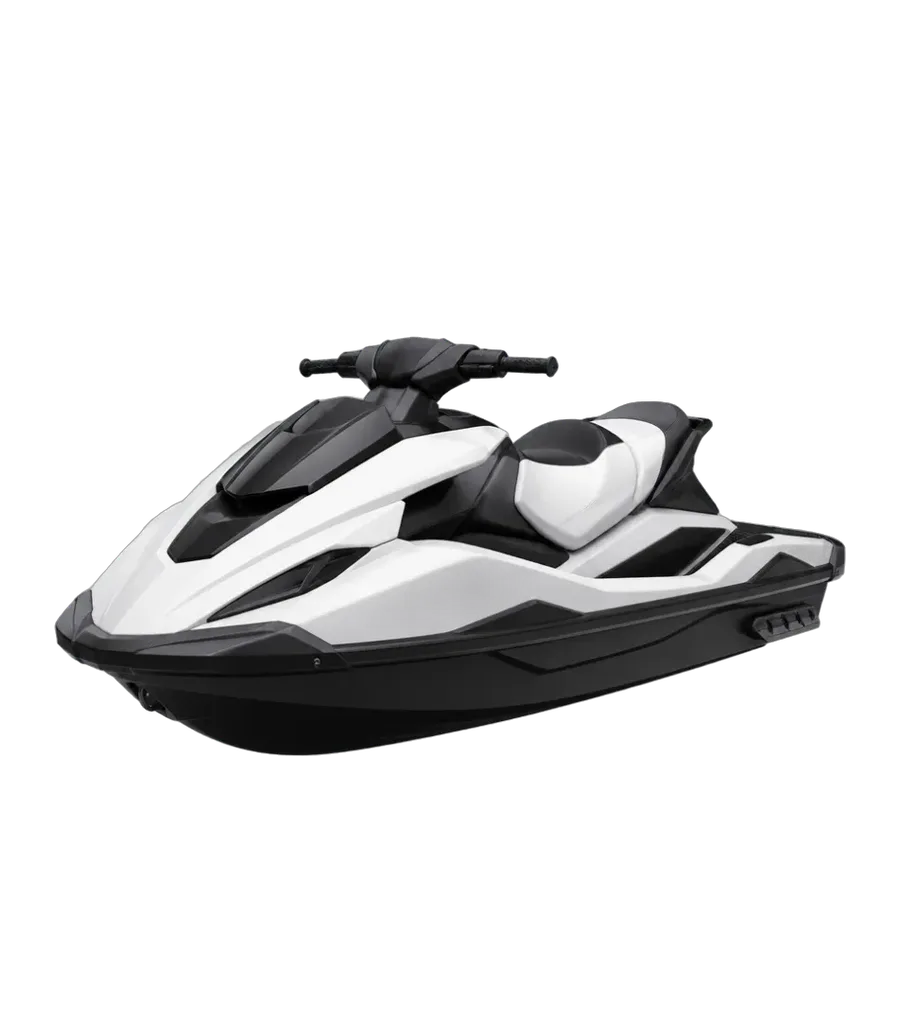
The models in the area span every common layout, from a single-seat sport machine to a three-seat cruiser, and the seat count decides who can ride together.
Models available around the city
| Model | Seats | Power | From per hour |
|---|---|---|---|
| Sea-Doo GTI 170 SE | 1 | 170 hp | $80 |
| Sea-Doo GTI 155 Limited | 2 | 155 hp | $99 |
| Sea-Doo GT | 3 | not stated | $80 |
| Yamaha (Harris Chain) | up to 2 | not stated | $100 |
Solo riders and the GTI 170 SE
The Sea-Doo GTI 170 SE is the solo option: one seat, 170 hp and a price from $80 an hour, rented in Orlando itself. It has the highest stated output on the city's list and, at the same time, one of the two cheapest — because the price is spread over one rider instead of two or three. For a single adult who wants an hour of riding rather than sightseeing with a passenger, that is a good match. For a couple it is the wrong machine: two people would need two of them, and two GTI 170 SE hours at $80 each cost $160, against $99 for one two-seat GTI 155 Limited. Power also asks something of the rider. A 170 hp machine accelerates hard (that is the point of it), so a first-timer is better off starting on a two-seater with an instructor or a calmer partner before taking a solo sport machine out alone.
Couples and families: GTI 155 Limited, GT and Yamaha
Two riders fit on the Sea-Doo GTI 155 Limited, rented at St. Cloud from $99 an hour, and on the Yamaha two-seaters offered at $100 on the Harris Chain of Lakes. The private lake on the Orlando–Kissimmee side also caps each machine at two riders. For three, the Sea-Doo GT is the machine with three seats, from $80 an hour. Families need to look beyond seats, though. The private lake rents to adults only — 21 and over, no kids — so a child cannot come along there at all. The guided lesson on Lake Bryan, by contrast, puts two adults and one child on one machine with an instructor. So a family with a child has two realistic routes: a guided hour with the child on board, or a self-drive three-seater where the operator confirms that children may ride as passengers.
Lakes and launch points around Orlando
Jet skis around Orlando launch on freshwater lakes rather than at the sea, and the four launch areas differ in distance from the parks, in rules and in who they suit.
Lake Bryan, five minutes from Disney
Lake Bryan is the launch point for anyone looking for a jet ski near Disney: the lake sits about 5 minutes from the Disney entrance and less than 10 minutes from Universal. It is a natural, spring-fed lake of 450 acres, large enough for open riding rather than tight loops around a buoy. Both a rental operator and the guided lesson work from its shore — the lesson includes private beach access. For visitors staying around the parks, the short drive is the real advantage: an hour on the water fits between a morning in a park and an evening out, without a long transfer. Planning a park day and a ride on the same date? Book the jet ski slot for the time when the park is at its busiest — you lose less on the park side, and the lake hour is fixed by reservation anyway.
Lake Toho at St. Cloud and the Harris Chain at Tavares
Two other lake areas round out the map: Lake Toho at St. Cloud, south-east of the city, and the Harris Chain of Lakes at Tavares, north-west of Orlando. St. Cloud is where the two-seat Sea-Doo GTI 155 Limited is rented from $99 an hour, and the three-seat Sea-Doo GT is offered in the same area. At Tavares, on the Harris Chain, a dock rents Yamaha jet skis from $100 an hour for up to two riders, with fuel and safety gear included. Both areas suit visitors who are not tied to the parks — and both mean a drive from International Drive. The Harris Chain is a chain of connected lakes, so the hour can cover more varied water than a single basin. When comparing the two, weigh the drive against the inclusions: the Tavares price already contains fuel, which a cheaper hour elsewhere may not.
A private lake for adults
The fourth option is a private lake on the Orlando–Kissimmee side, rented at $100 an hour per jet ski with a maximum of two riders per machine. Its rules are the strictest on the list: 21 and over only, no kids, an ID and a reservation in advance. It also takes only 4 bookings per day. What does that buy you? Four bookings a day keep the number of machines on the water low, which suits couples and adult groups who want space rather than a busy public shoreline. The trade-off is flexibility — with four slots a day, there is little room to move a booking at short notice. If your group includes anyone under 21, cross this lake off at the start, because the age rule applies to every rider, not just the driver.
Choosing a lake by who is coming
- Park visitors: Lake Bryan is 5 minutes from the Disney entrance, so a Lake Bryan jet ski hour fits between park visits without a long drive.
- First-timers: the guided Lake Bryan lesson includes an instructor, the machine and private beach access at $129 per person.
- Families with a child: the guided hour takes two adults and one child per machine; the private lake accepts no kids.
- Adult couples: the private lake on the Orlando–Kissimmee side offers $100 an hour, two riders and only 4 bookings per day.
- Value seekers: Tavares on the Harris Chain includes fuel and safety gear in its $100 hour, so compare totals, not headline rates.
The boater ID card, the temporary certificate and age limits
Florida's boating education rule covers every jet ski on the city's list, and visitors can meet it before they arrive — but only if they plan for it.
Who needs the Florida boater ID
Anyone born on or after January 1, 1988, who operates a boat with an engine of 10 horsepower or more in Florida waters must complete an approved boating safety course and hold a Florida Boating Safety Education ID Card. A jet ski is a boat for this rule, and every machine with a stated output on the city's list is far above the threshold — 155 hp on the GTI 155 Limited, 170 hp on the GTI 170 SE. The card is issued by the Florida Fish and Wildlife Conservation Commission (FWC), it does not expire, and FWC itself notes that it is not a boating license — it certifies that you finished the course. Rental docks repeat the rule in their own words: one states that anyone born after that date needs "a boating license". The practical reading is simple: check the birth year of everyone who will drive, not only the person who books.
Temporary certificate for visitors
Visitors who do not hold the card have a faster route: an online exam that issues a temporary certificate valid for up to 90 days. The temporary certificate meets Florida's requirement for a trip, but it cannot be exchanged later for the permanent ID card. Non-residents covered by the rule can also qualify with a boating education course approved by the National Association of State Boating Law Administrators (NASBLA), so a card from another state's NASBLA-approved course works too. Whichever document you use, it has to be on you while you ride, together with a photo ID. Timing is the trap. The permanent card arrives in about two to three weeks after the course provider submits the request, which is too slow for a trip booked last minute — so a visitor without a card should take the online exam before the vacation, not on the dock.
Age and documents at the dock
- Private lake: riders must be 21 or older, an ID is required, and no kids are allowed on the water.
- Guided lesson: the driver must be at least 17 with a valid driver's license; a child can ride as a passenger.
- Boater ID: drivers covered by the birth-date rule carry the FWC card, a NASBLA-approved course card or a temporary certificate.
- Photo ID: the boating document is valid only together with a photo ID, carried while you operate the jet ski.
- Before booking: match each driver's age and documents to the dock's rules, because each dock applies its own rule to every rider.
Deposit, what the hour includes and how to ask for a quote
The hourly rate is only part of what a rental asks of you: there is a hold on your card, inclusions that vary by dock, and details that decide whether two quotes compare.
The $600 hold and the $500 deposit
Expect a card hold on top of the hourly price: the Yamaha rental on the Harris Chain places a $600 pre-authorization hold when you arrive to take the jet ski out, and releases it as soon as the machine is returned. The guided lesson on Lake Bryan asks for a $500 refundable security deposit at check-in. Neither is a charge if the machine comes back undamaged, but both reduce the spending limit on your card for the time they are held. Why does that matter on vacation? Because a $600 hold during a week of park tickets, hotel incidentals and a car rental can push a card closer to its limit than you planned. Use a card with enough headroom — or ask the dock in advance how long the release takes, so the hold does not collide with the next day's bookings.
Fuel, safety gear and what is not stated
The Yamaha rental at Tavares includes fuel and safety gear in its from-$100 hour, and that is the only offer on the list that says so outright. The private lake lists its price, rider limit, age rule and booking limit, but says nothing about fuel or equipment — which does not mean they are missing, only that you need to ask. The guided lesson includes the Sea-Doo, the instructor and private beach access. Booking and processing fees may also be added to the hourly price, as the Tavares dock notes next to its rate. None of this is hidden; it is simply spread across the fine print. The cleanest comparison is a total: hourly rate, plus fees, plus fuel if it is extra — and only then decide which $100 is really the lower one.
What to put in a jet ski request
- Date and start time: give the exact slot, since small lakes take as few as 4 bookings per day and fill early.
- Riders per machine: state how many people ride on each jet ski, so the operator offers a one-, two- or three-seat model.
- Ages and documents: list every driver's date of birth and whether they hold the FWC card, a NASBLA card or a temporary certificate.
- Lake: name the lake you prefer — Lake Bryan, Lake Toho, the Harris Chain or a private lake — or ask where the machine launches.
- Inclusions and hold: ask whether fuel and safety gear are included, which fees apply and how large the card hold is.
Reading two quotes side by side
A quote for jet ski rental in Orlando is complete only when it answers four things: the unit, the riders, the launch point and the extras. The unit tells you whether $129 is per person or $100 is per machine. The riders tell you whether the figure covers one seat or three. The launch point tells you whether the machine is on a lake near your hotel or at the coast near Daytona Beach. The extras — fuel, fees, the hold — tell you what leaves your card besides the rate. Line the quotes up on those four points and the comparison is usually settled in minutes. And if a quote cannot answer one of them, treat it as unfinished: ask again before you pay, rather than discovering the missing piece at the dock.
Key points before you book
Six figures to keep in mind
- Hourly rate: the market runs from $80 to $150 an hour, and two of three rates sit at exactly $100 per machine.
- Per rider: two riders on a $100 machine pay $50 each; three on an $80 Sea-Doo GT pay under $27 each.
- Guided hour: a lesson costs $129 per person for 60 minutes, so two adults pay $258 against $100 self-drive.
- Disney distance: Lake Bryan is about 5 minutes from the Disney entrance and under 10 from Universal.
- Boater ID: drivers born on or after January 1, 1988 need the FWC card or a 90-day temporary certificate, plus photo ID.
- Card hold: plan for a $600 pre-authorization or a $500 deposit on top of the hourly price.