













Luxury car rental in Spain
Luxury car rental in Spain with Rent-Trip puts 15 high-end cars on the road, from €302 to €1,248 per day, with weekly bookings from €1,812 and monthly from €6,342. We deliver the car to you in Madrid or Barcelona, and every booking is agreed with a manager before the keys change hands.
What luxury car rental in Spain costs
Prices for luxury car rental in Spain run from €302 to €1,248 per day across our 15 models. What separates a €302 Mercedes-Benz V-Class from a €1,248 Lamborghini Urus is the class and the model — engine size, body and trim move the number, not the length of your trip.
Daily rates across the luxury fleet
| Model | Body | Seats | Fuel | Power | Per day |
|---|---|---|---|---|---|
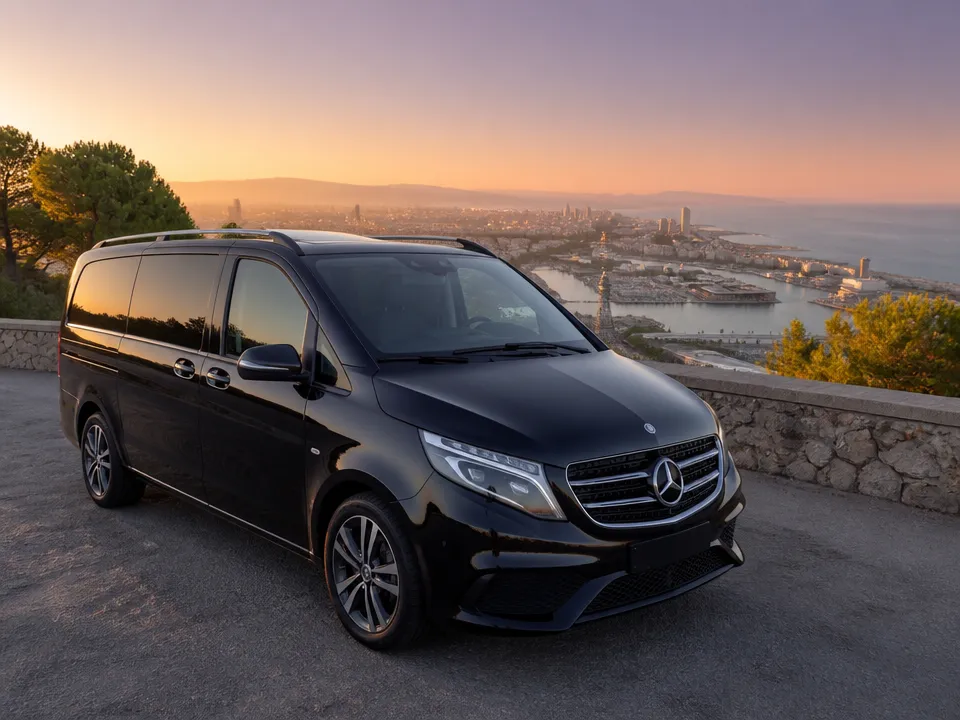
| Mercedes-Benz V-Class | Van | 7 | Diesel | 239 hp | €302 |
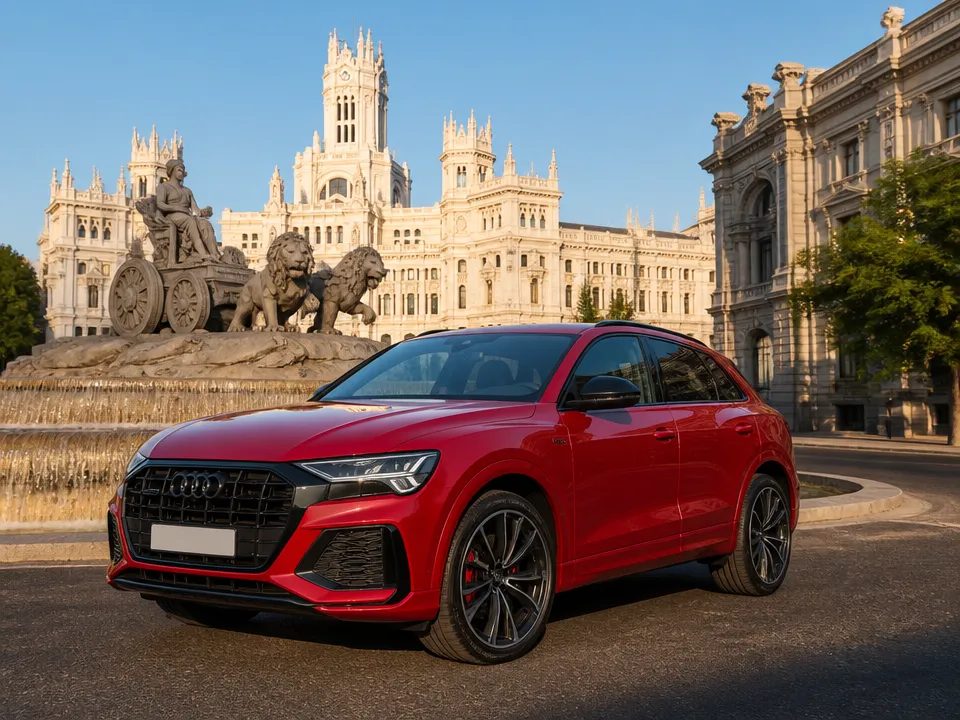
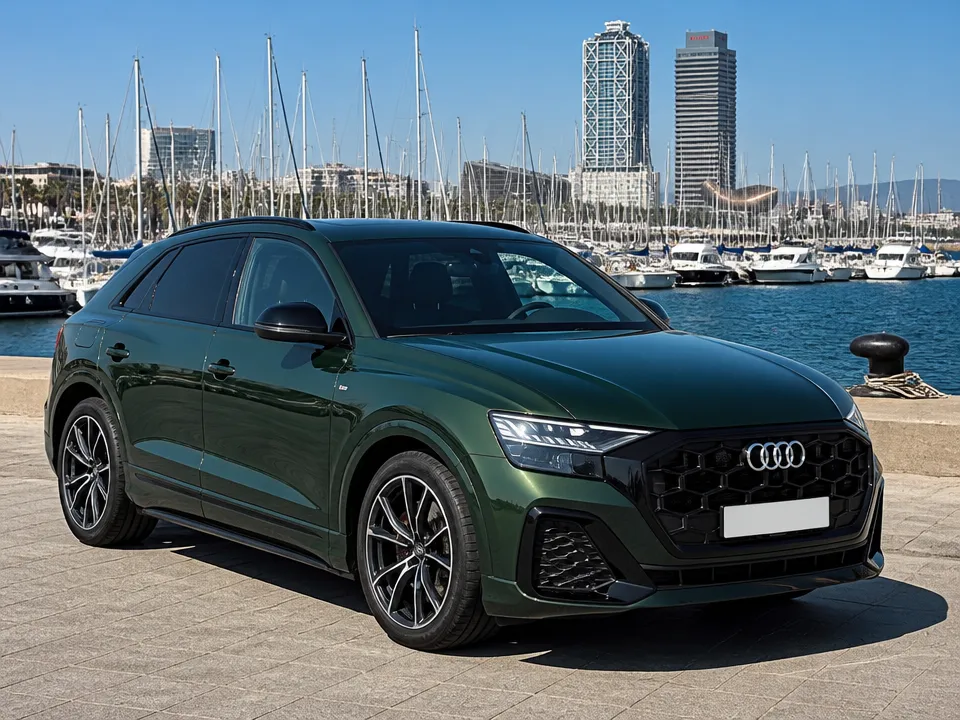
| Audi Q8 | SUV | 5 | Diesel | 286 hp | €336 |
| Audi Q8 S Line | SUV | 5 | Diesel | 286 hp | €336 |
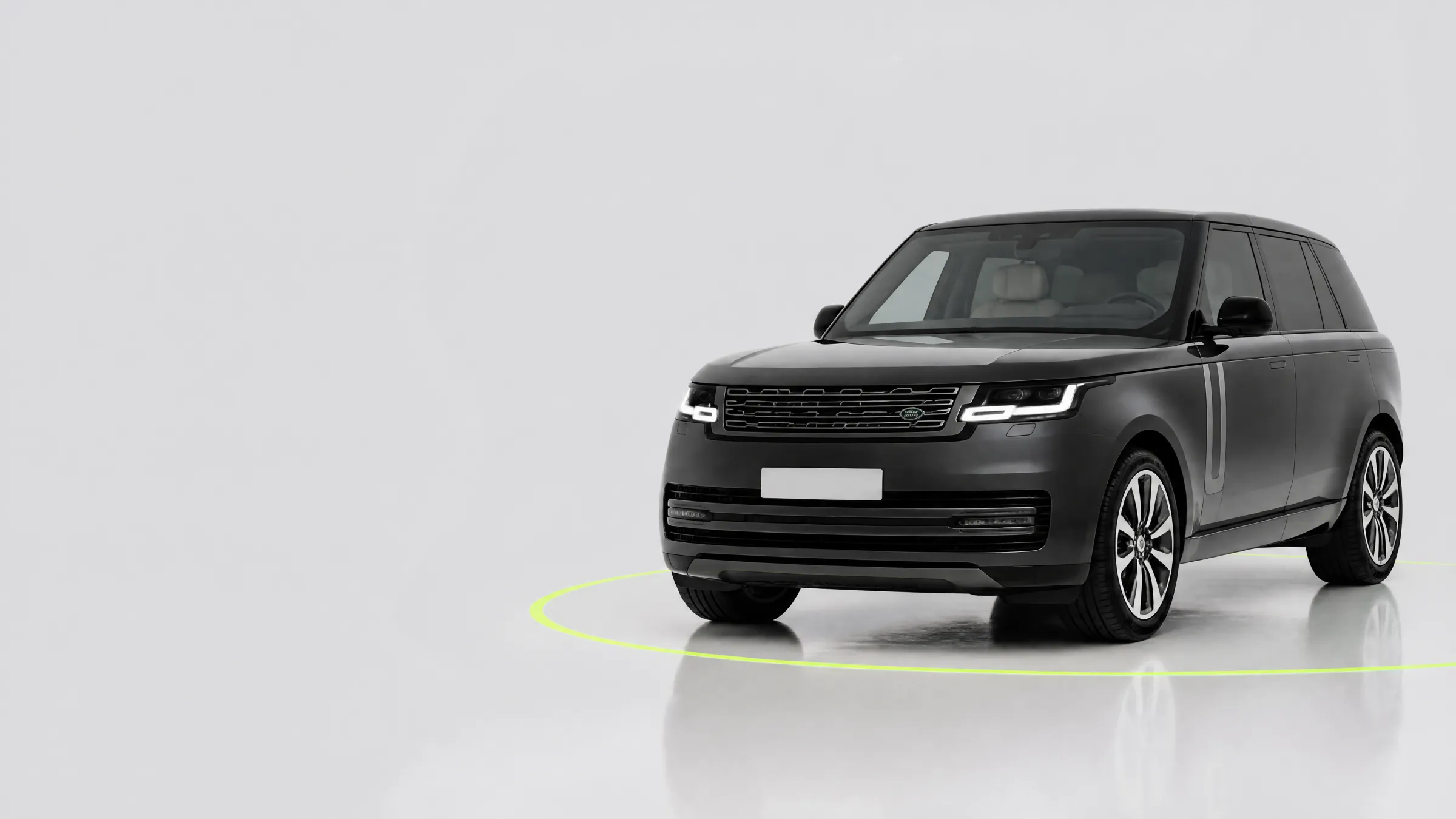
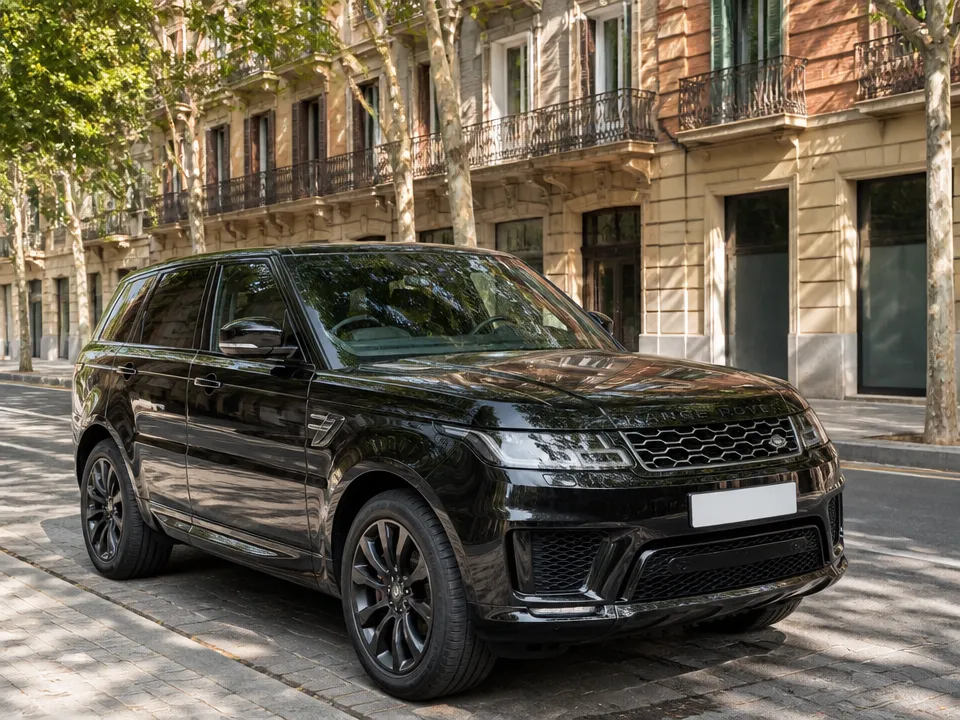
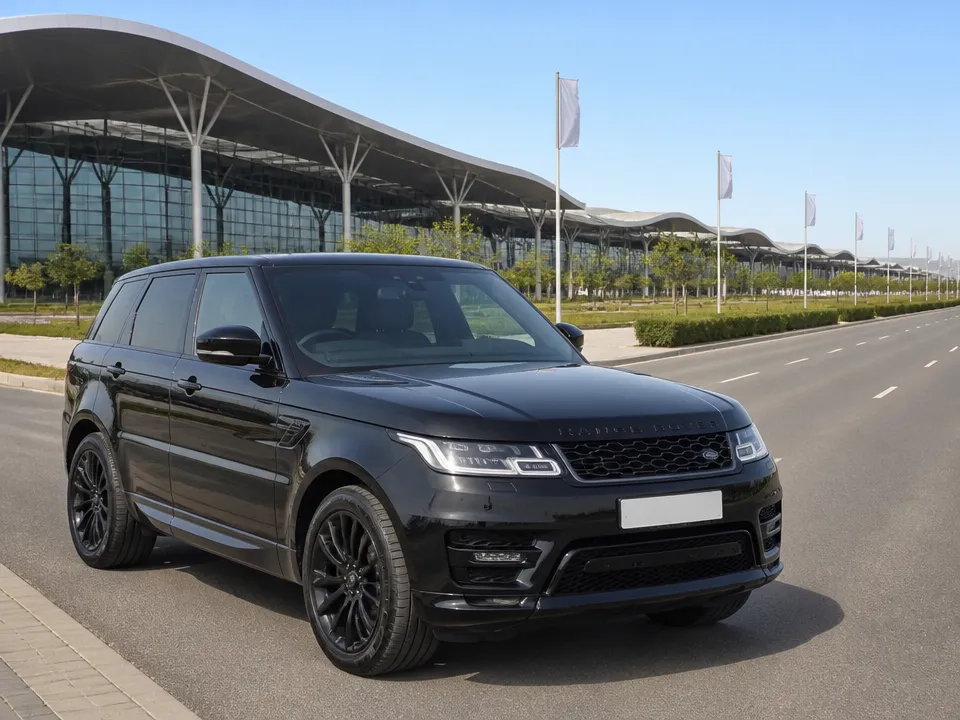
| Land Rover Range Rover Sport | SUV | 5 | Diesel | 300 hp | €352 |
| Land Rover Range Rover Sport HSE | SUV | 5 | Diesel | 300 hp | €352 |
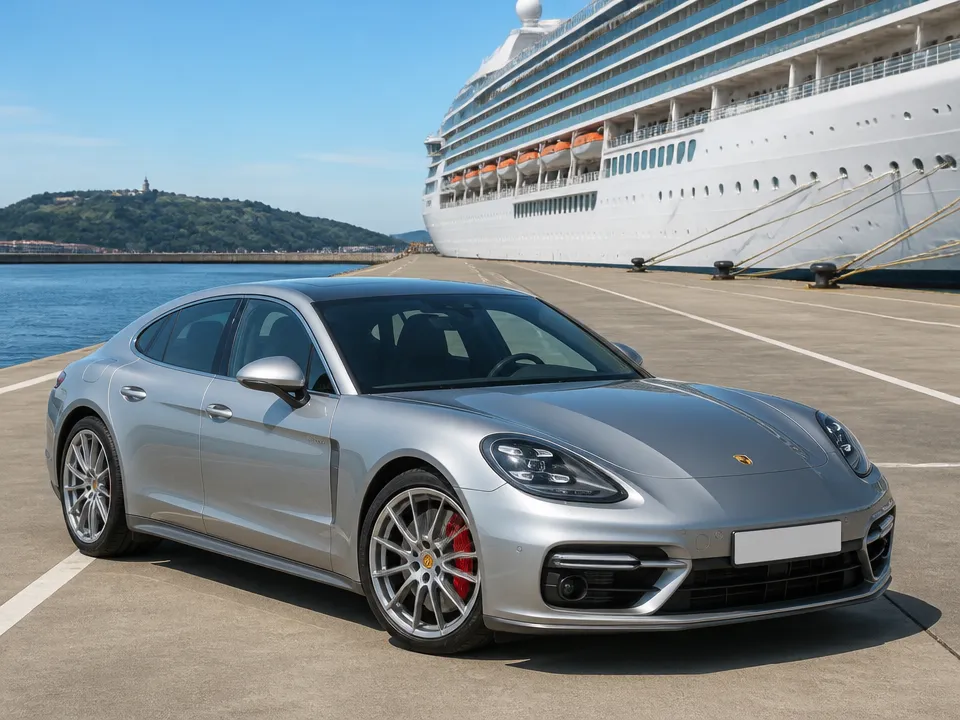
| Porsche Panamera Turbo | Sedan | 4 | Petrol | 550 hp | €549 |
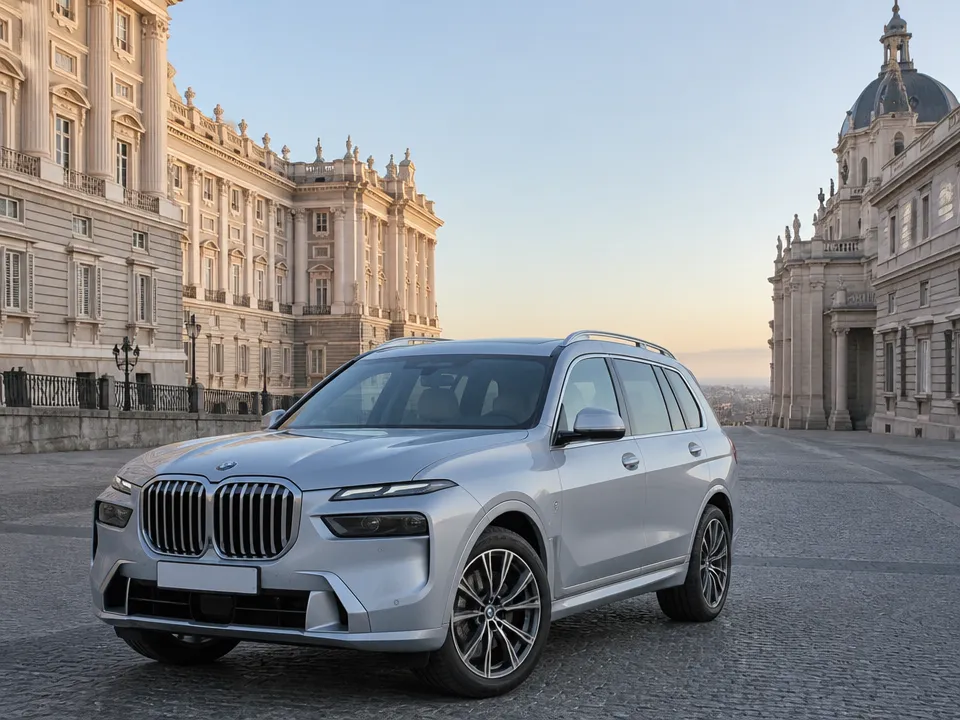
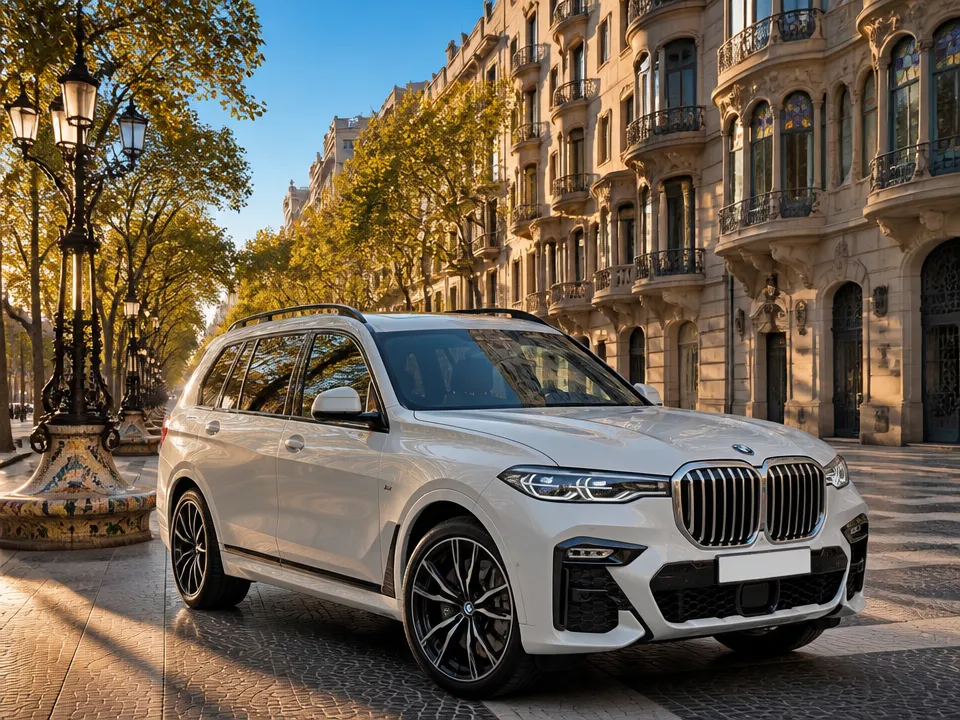
| BMW X7 | SUV | 7 | Diesel | 340 hp | €576 |
| BMW X7 40d Pack M | SUV | 7 | Diesel | 340 hp | €576 |
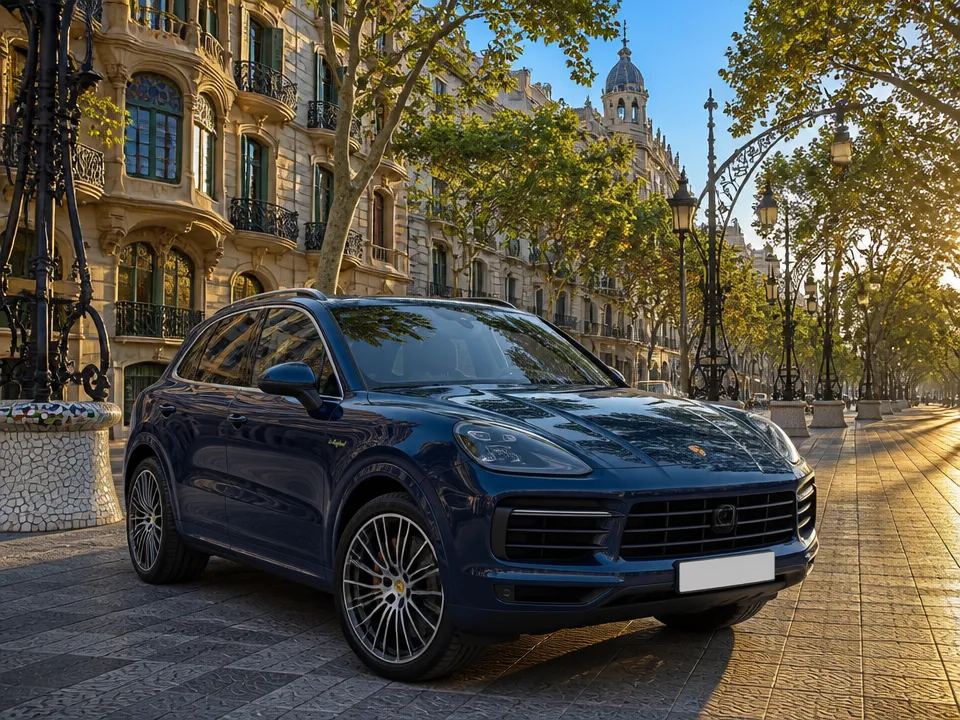
| Porsche Cayenne E-Hybrid | SUV | 5 | Plug-in Hybrid | 470 hp | €576 |
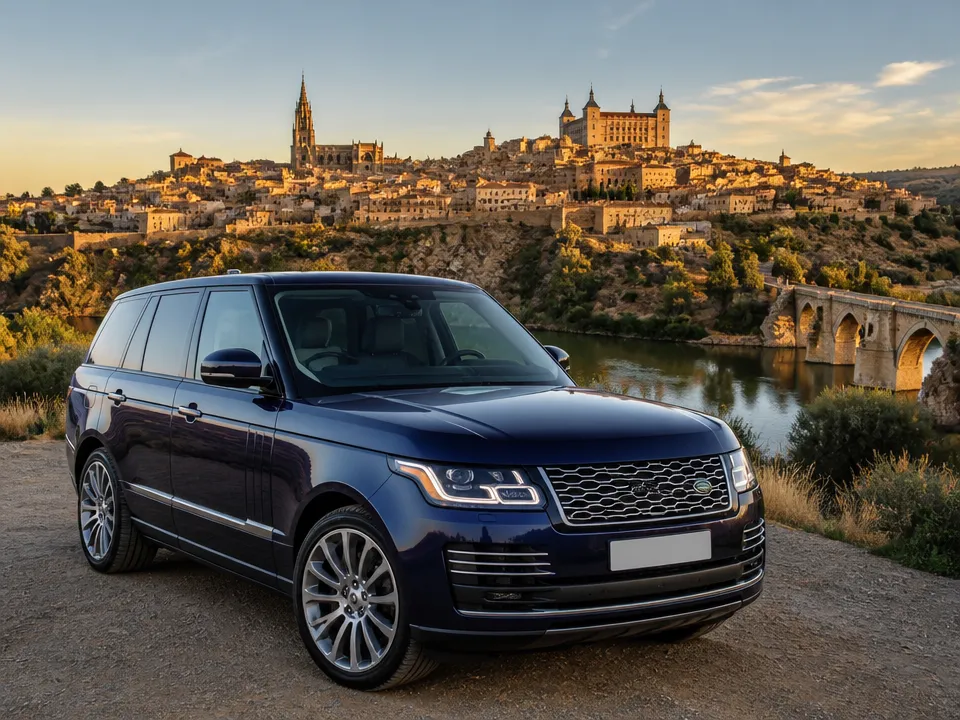
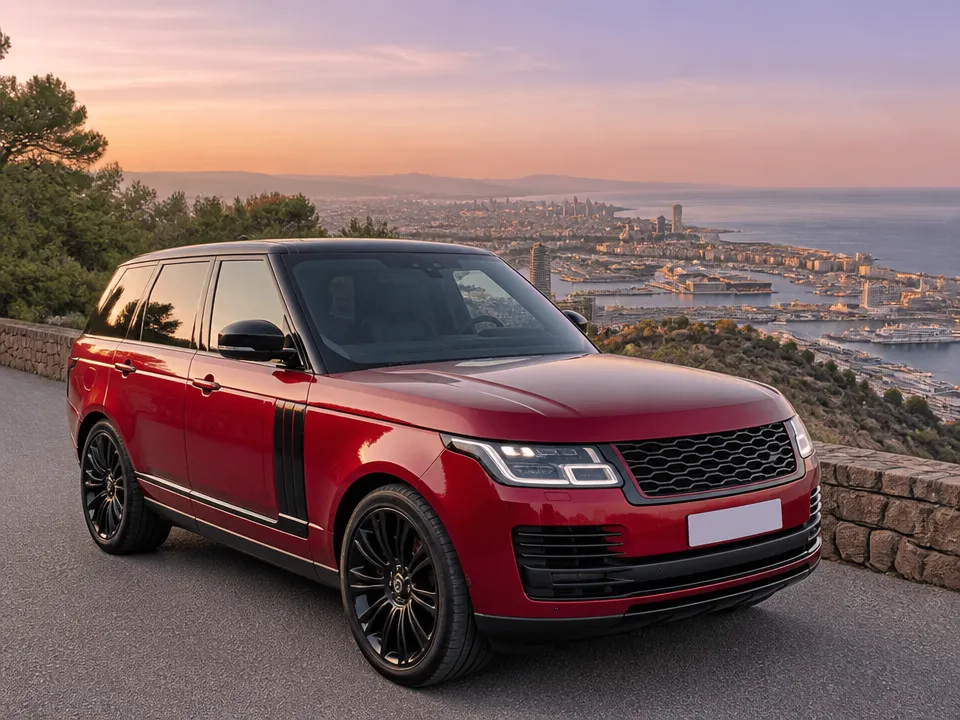
| Land Rover Range Rover Vogue Autobiography | SUV | 5 | Diesel | 350 hp | €624 |
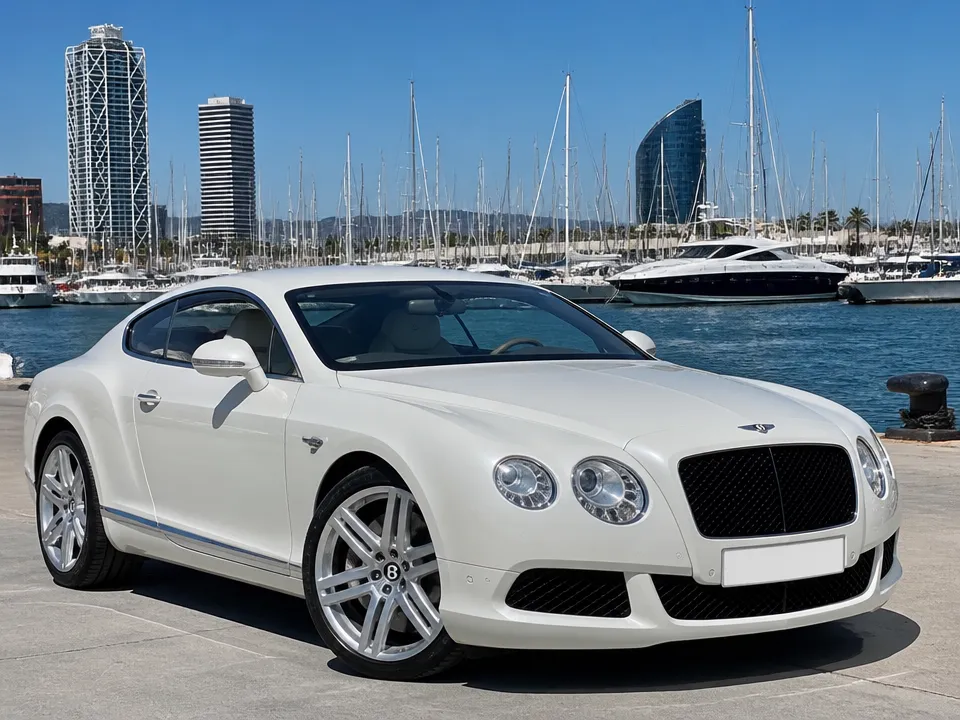
| Bentley Continental GT | Coupé | 4 | Petrol | 550 hp | €627 |
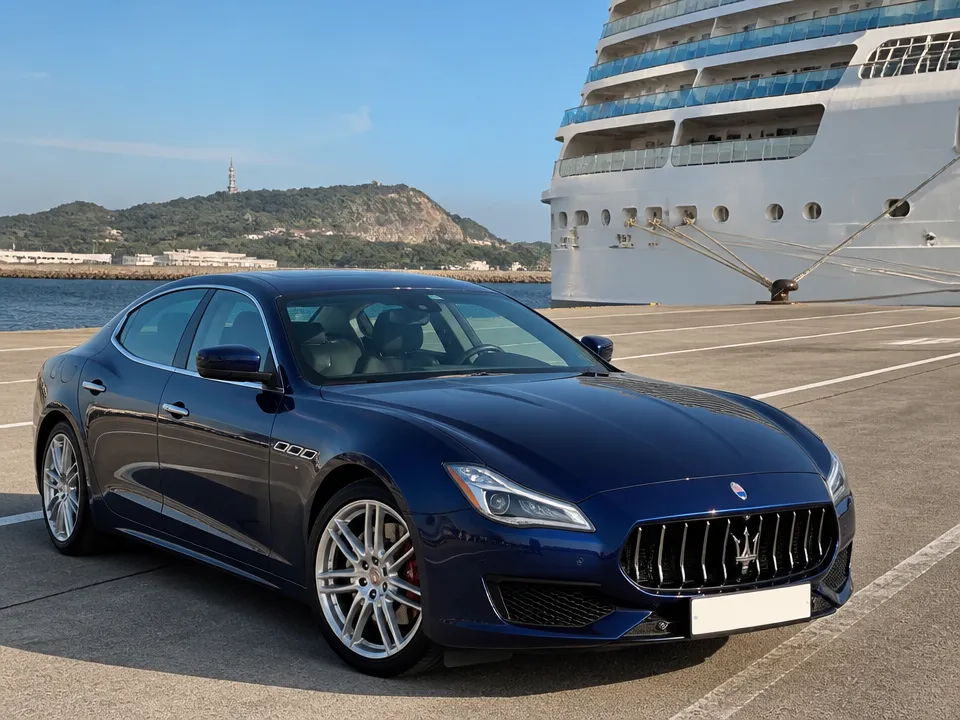
| Maserati Quattroporte SQ4 | Sedan | 5 | Petrol | 430 hp | €706 |
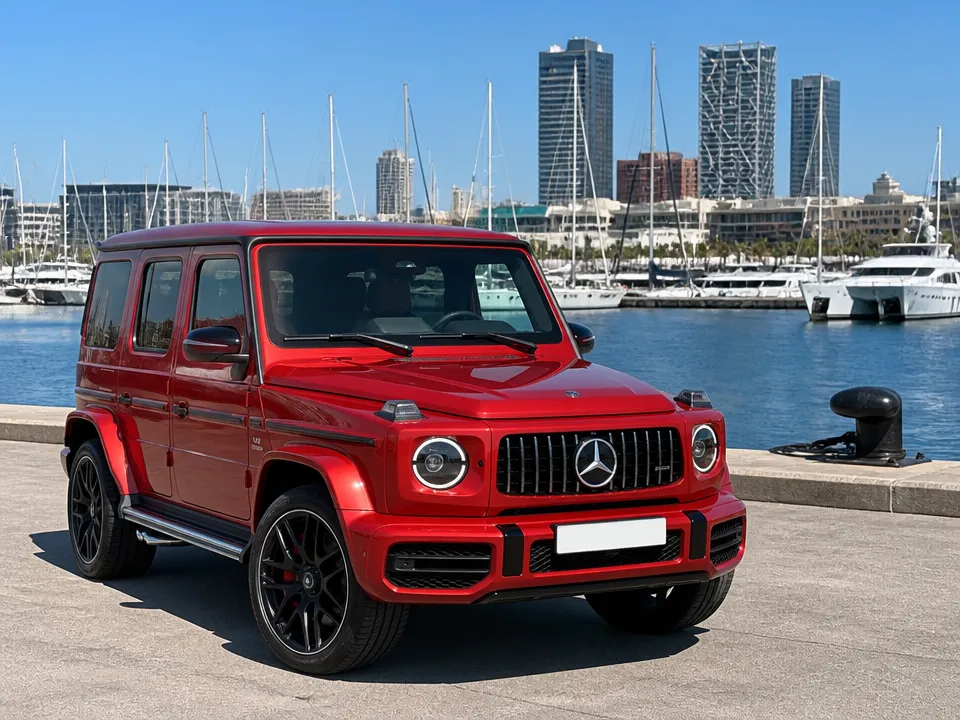
| Mercedes-Benz G63 AMG | SUV | 5 | Petrol | 585 hp | €800 |
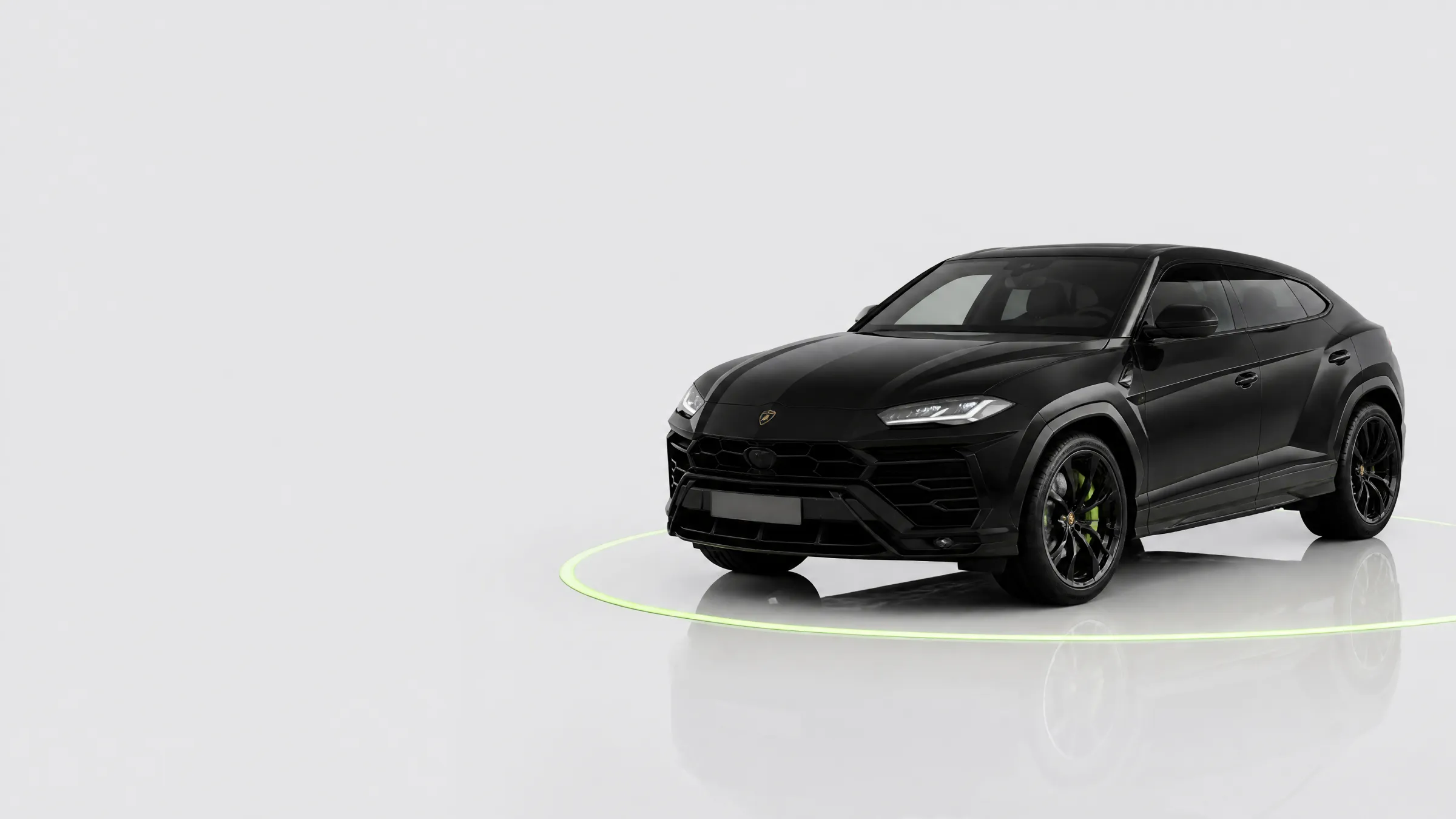
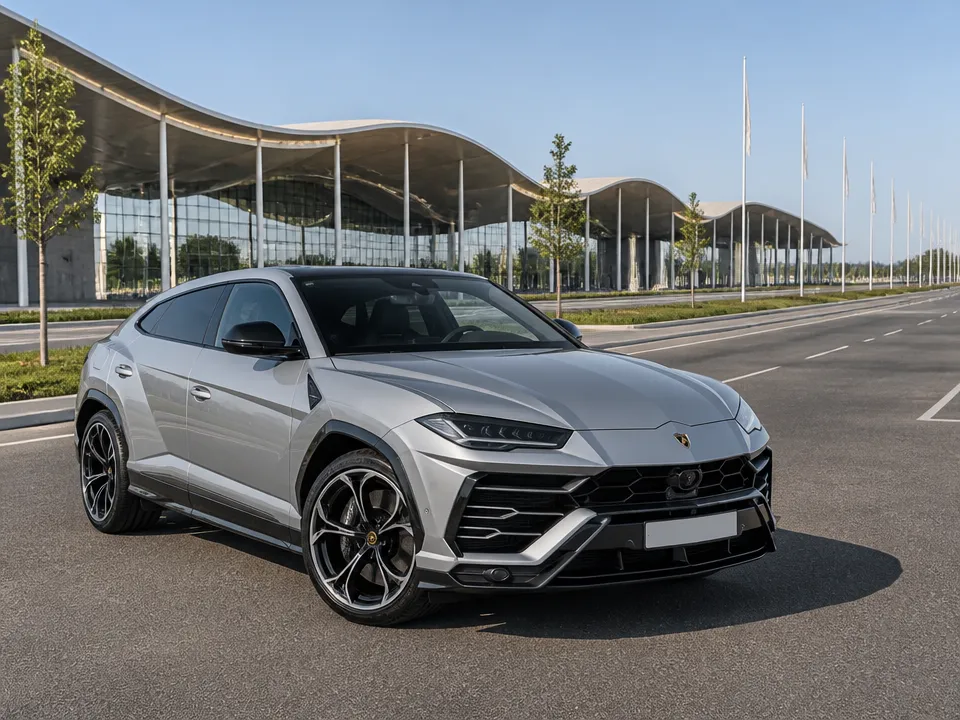
| Lamborghini Urus | SUV | 5 | Petrol | 650 hp | €1,248 |
The jump between €576 and €624 buys a different trim, not a different class — check horsepower before paying more. Two Range Rover Sport listings sit at the same €352, and the S Line Q8 costs exactly what the standard Q8 does, so on those pairs you are choosing looks, not capability. In our experience, the Porsche Cayenne E-Hybrid at €576 is the one model where the plug-in hybrid drivetrain changes what you spend on fuel rather than on the hire itself.
Weekly and monthly rates
A week of luxury car rental in Spain costs the daily rate × 6, from €1,812, and a month costs the daily rate × 21, from €6,342. The multiplier is fixed across the fleet: take the Lamborghini Urus at €1,248 per day, and seven days come to €7,488, while twenty-one days come to €26,208. Rent-Trip applies the same arithmetic to the Mercedes-Benz V-Class at €302 and to every model in between, so you can work out any combination yourself before the booking is agreed with a manager.
On a 30-day booking the multiplier is the same 21, so the saving comes from the rate, not from the length. That is worth knowing if you are weighing a fortnight against a full month: the daily figure does not shrink further with time, so the honest comparison is between the models, not between the durations.
Choosing your luxury car rental in Spain by body, seats and power
Three axes decide the car: body, seats and power. Our 15 luxury models cover vans, SUVs, sedans and coupés, with 4, 5 or 7 seats, Diesel, Petrol or Plug-in Hybrid under the bonnet, and automatic transmission throughout.
Which body type suits your trip
Our fleet covers vans, SUVs, sedans and coupés, so the body type follows the trip, not the budget. The Mercedes-Benz V-Class is the only van — 7 seats, 2.0 L, 239 hp, rear-wheel drive, €302 per day, and the cheapest way into the luxury segment here. SUVs make up nine of the 15 cars: Audi Q8 and Q8 S Line at €336, Land Rover Range Rover Sport and its HSE trim at €352, BMW X7 at €576, Porsche Cayenne E-Hybrid at €576, Range Rover Vogue Autobiography at €624, Mercedes-Benz G63 AMG at €800 and Lamborghini Urus at €1,248. Sedans are the Porsche Panamera Turbo at €549 and the Maserati Quattroporte SQ4 at €706, and the Bentley Continental GT coupé at €627 is the only two-door. A 7-seat SUV carries the same people as a van but parks like a car — worth it if you mix city driving with longer coastal runs.
Seats, fuel and power across the fleet
- Seats: 4 in the Porsche Panamera Turbo and Bentley Continental GT, 5 in the SUVs and sedans, 7 in the Mercedes-Benz V-Class and BMW X7.
- Fuel: Diesel in the V-Class, Audi Q8, Range Rover Sport, BMW X7 and Range Rover Vogue; Petrol in the Panamera Turbo, Bentley Continental GT, Maserati Quattroporte SQ4, G63 AMG and Lamborghini Urus.
- Power: from 239 hp in the V-Class to 650 hp in the Lamborghini Urus, with the G63 AMG at 585 hp and the Panamera Turbo at 550 hp.
- Transmission: every car in the fleet is automatic, so there is no manual option to weigh up.
- Plug-in hybrid: the Porsche Cayenne E-Hybrid is the only one — 470 hp, €576 per day, and the one model where fuel choice changes your running cost.
- Drive: all-wheel drive on every SUV, sedan and coupé; the V-Class is rear-wheel drive.
Matching the car to the trip
| Trip | Best fit | Seats | Fuel | From |
|---|---|---|---|---|
| Family or group with luggage | Mercedes-Benz V-Class | 7 | Diesel | €302/day |
| City plus coast, mixed roads | Audi Q8 | 5 | Diesel | €336/day |
| Long motorway days | BMW X7 | 7 | Diesel | €576/day |
| Lower fuel cost per kilometre | Porsche Cayenne E-Hybrid | 5 | Plug-in Hybrid | €576/day |
| Two people, formal arrival | Bentley Continental GT | 4 | Petrol | €627/day |
| Maximum presence | Lamborghini Urus | 5 | Petrol | €1,248/day |
In our practice, the V-Class and the X7 are booked for airport-to-hotel runs in Madrid and Barcelona, while the coupé and the Urus go to clients who want the car to be part of the trip itself. The jump between €576 and €624 buys a different trim, not a different class — check horsepower before paying more.
Documents for luxury car rental in Spain with a non-EU licence
The paperwork for luxury car rental in Spain depends on where your licence was issued, not on the car you choose. A European Union or European Economic Area licence — Iceland, Liechtenstein and Norway included — is fully valid here until its expiry date, and nothing extra is needed alongside it. Everything below concerns drivers holding a licence from outside that group.
Non-EU licences and the International Driving Permit
A non-EU licence is valid for driving here if it is in force and you meet the Spanish age rule for that category; the DGT advises getting an International Driving Permit before the trip. The Spanish traffic authority also expects a third-country licence to be used within six months of the holder taking up ordinary residence in the country — after that the licence is exchanged rather than used as it stands, which matters if you are staying longer than a holiday. The International Driving Permit, known in Spanish as the Permiso Internacional de Conducción, is a supplementary document: it runs for one year and is shown only together with your passport and your national licence. In our experience the permit is the single item travellers forget, and it is the one no booking can work around — order it before you fly, not on arrival.
Licences not in Spanish and what you show at hand-over
- Certified translation: a licence that is not in Spanish is accepted with an official translation into Spanish, arranged before the rental begins.
- Convention models: alternatively, the licence itself may qualify if it follows the model of Annex 9 of the Geneva Convention or Annex 6 of the Vienna Convention.
- Cyrillic, Arabic and character-based licences: in practice these need an International Driving Permit or a certified translation — the DGT treats the permit as the working alternative.
- Passport or identity document: the original in the name of the main driver, presented with the licence rather than instead of it.
For a first-time visitor to Madrid or Barcelona, that list is the whole of it: licence, permit or translation, passport, card. Rent-Trip agrees each booking with a manager, so send scans of your documents when you reserve and we confirm what is needed for your licence before the car is delivered — it is cheaper than discovering a missing translation on the day.
How luxury car rental in Spain works with delivery and a manager
Our delivery model is simple: the car comes to you, and every booking is agreed with a manager before it is confirmed. That is how the luxury service works with Rent-Trip — you choose the model, we bring it to the address you give us, and the terms of the hand-over are settled in advance.
The car comes to you
When you book a luxury car with us, you do not collect it from a depot — we bring it to the address you agree with the manager. That address can sit in Madrid, in Barcelona, or anywhere else along the route you have planned, and the exact meeting point is confirmed when the booking is agreed rather than assumed in advance. The same manager stays with your booking from the first message to the hand-over, so there is one person to talk to about the model, the timing and the return. Every figure that applies to your booking is set out in the rental agreement.
What the manager agrees with you before the car arrives
- Model and dates: the exact car from our 15-strong luxury fleet — Mercedes-Benz V-Class, Audi Q8, Porsche Panamera Turbo, Bentley Continental GT, Lamborghini Urus — with the days you need it.
- Meeting point: the address where we hand the car over, agreed when you book, whether that is a hotel, a private address or another point on your route.
- Driver details: who will be driving, and what documents that driver presents at hand-over.
Keys, paperwork and the return
Hand-over takes a few minutes: you get the keys, the car is yours, and the return follows the same arrangement in reverse. If your plans shift mid-trip — a later flight, an extra day on the coast — message the manager and we adjust the booking rather than leaving you to sort it out at the roadside. In our experience the trips that go smoothly are the ones where the client flags a change early, not the ones where everything is left to the last morning. All 15 cars are automatic, so there is no gearbox to get used to before you pull away from the kerb.
Insurance and excess in luxury car rental in Spain
Every legally registered car on Spanish roads carries compulsory third-party cover, and it is already inside the price you see. What changes between a €302 van and a €1,248 Lamborghini Urus is not the law but the optional layers a company sells on top — and the excess that stays with you if something happens.
What is always included
Seguro Obligatorio de Responsabilidad Civil is compulsory cover under Spanish law and comes with every hire, whether you asked for it or not. It pays third parties, not you and not the car: the legal limits are 70,000,000 EUR per incident for personal injury, however many people are hurt, and 15,000,000 EUR per incident for property damage, under Real Decreto Legislativo 8/2004, article 4.2 as amended by Ley 5/2025, in force since 26.07.2025. Driving without it carries a fine of 601–3005 EUR depending on the circumstances. This cover stays valid even if the person at the wheel was not named on the agreement — so the compulsory layer never depends on who is driving.
Optional protection, layer by layer
- CDW (Collision Damage Waiver): reduces your liability for damage to the car itself after a collision with another vehicle or an object, but never to zero — you still pay the excess. Vandalism is excluded unless it happened while the car was in use.
- THW (Theft Protection): covers full or partial theft and vandalism damage, again above the excess.
- SCDW and SPCDW: partial and full buy-out of the excess that CDW leaves with you. Neither works if CDW was not taken, or if a CDW exclusion applies.
- STHW and SPTHW: the same partial and full buy-out, applied to the theft excess instead of the collision one.
- WWI (Glass and Tyres Protection): a separate option for windscreen, windows and tyres, which the basic CDW normally does not cover.
- Franquicia (excess): the amount you pay yourself when there is damage. It is printed on the agreement whether or not you bought a buy-out.
Where the numbers come from
The excess figure depends on the company and the class of car, and there is no single official norm for it. For our 15 luxury models, the excess is set out in the rental agreement, and the manager confirms it when your booking is agreed. Our advice from practice: on a car at €576–€800 per day, price the buy-out against the excess before you decide — a full buy-out often costs less than one kerbed 21-inch alloy on a Range Rover or a BMW X7.
What the agreement has to show you
Spanish consumer rules give you two protections worth knowing before you drive off. The advertised price must include every mandatory charge you cannot legally drive without — compulsory third-party cover and the like. And at hand-over, every scratch and dent must be written into the agreement or the inspection sheet before you leave, signed by both sides, with a copy left with you; otherwise the damage gets attributed to you. Ask for the excess in writing at that moment, not afterwards.
Rules and costs for luxury car rental in Spain
Speed limits are set per road type, and the same table applies whether you drive a compact or a Bentley Continental GT. On autopista and autovía the limit is 120 km/h for passenger cars. On an ordinary two-way road outside town it is 90 km/h, and a road owner may raise that to 100 km/h. Urban limits are lower and split by street layout: 20 km/h on a single-platform street, 30 km/h where there is one lane in each direction, and 50 km/h on streets with two or more lanes each way. Bus and transit lanes are not counted when you work out how many lanes a street has.
Fines follow the DGT scale, and knowing the bands matters more than knowing the limit. Speeding runs from 100 EUR with no points up to 600 EUR with 6 points, and the bands are read off the pair of posted limit and actual speed. Going more than 60 km/h over the limit in town, or more than 80 km/h over it outside town, stops being an administrative fine and becomes a criminal offence. Holding a phone while driving costs 200 EUR and 6 points; a seatbelt or child-seat offence is 200 EUR and 4 points. Child restraints are required for children up to 135 cm tall. Alcohol limits are 0.25 mg per litre of breath for most drivers and 0.15 mg for drivers in their first two years and for professionals. There is a 50% reduction if you pay within 20 calendar days, which we mention at booking because it is easy to miss in a busy week.
Parking and tolls work differently from fines, and this is where drivers get caught out. In regulated parking you pay at the parquímetro and keep the receipt — the plate number on it has to match the car. On toll roads you pay at the barrier, or with a VIA-T tag. For parking and unpaid tolls, responsibility falls on the owner or the renter of the car. For moving offences, alcohol and drugs, it falls on whoever was driving. If an offence is not handed to you at the roadside, it goes to the owner or the renter until it is established who was behind the wheel.
- Speed limits: 120 km/h on autopista and autovía, 90 km/h on ordinary roads, 20–50 km/h in town.
- Speeding fines: 100 EUR without points up to 600 EUR with 6 points, read off limit and actual speed.
- Phone: 200 EUR and 6 points if the phone was in your hand.
- Seatbelt and child seats: 200 EUR and 4 points; restraints required up to 135 cm.
- Alcohol: 0.25 mg/l breath, 0.15 mg/l for new and professional drivers.
- Early payment: 50% off if paid within 20 calendar days.
Booking luxury car rental in Spain for longer trips
A longer booking changes the arithmetic more than the car. Weekly rates start at €1,812 and monthly rates at €6,342, so the same 15 luxury models cost less per day the longer you keep them. For a route that crosses the country — Madrid to the coast, Barcelona into the Pyrenees and back — the saving on the vehicle itself is what pays for the extra days.
Weekly and monthly multipliers on our luxury fleet
- Weekly rate: the daily rate × 6, so a week in the Mercedes-Benz V-Class starts at €1,812 rather than seven separate daily charges.
- Monthly rate: the daily rate × 21, which puts a month in the same van from €6,342.
- Applies across the fleet: the same multipliers run from the cheapest model to the Lamborghini Urus at €1,248 per day.
- Two cities, one booking: we deliver in Madrid and Barcelona, and a longer hire can start in one and be agreed to end differently when you book.
- Manager-agreed terms: the length, the hand-over point and the return are fixed with a manager before the car is delivered.
What a long rental actually asks of you
The car matters less over three weeks than the practical details around it. Our luxury fleet is automatic throughout, with 4, 5 or 7 seats, and fuel is Diesel, Petrol or Plug-in Hybrid — on a month-long booking the plug-in Porsche Cayenne E-Hybrid is the one model where the fuel choice visibly changes what you spend, because charging is cheaper than filling a 3.0 L tank. Seats decide more than power on a long trip: the 7-seat Mercedes-Benz V-Class and BMW X7 carry a full group plus luggage, while the 4-seat Porsche Panamera Turbo and Bentley Continental GT are built for two people and a light load. Everything beyond the car itself is set out in the rental agreement and confirmed when booking rather than on the day.
Booking a long luxury rental in Spain
- Dates and length: tell the manager the first and last day, and whether the trip is one week, one month or something in between.
- Model and body: a 7-seat SUV or van for a group, a sedan or coupé for two — the fleet covers all four body types.
- Hand-over point: the car is delivered to you, so the address is agreed when booking.
- Documents: the papers the driver needs are set out in the rental agreement and agreed when booking.
- Return: the drop-off point and time are fixed in the same conversation, including a one-way finish.
One thing worth planning around: a long trip is where a mid-range model beats a flagship on comfort per euro — over three weeks, the €576 BMW X7 and the €1,248 Lamborghini Urus are the same car for the same journey, and only one of them leaves budget for the hotels.