














Sedan car rental in Canada
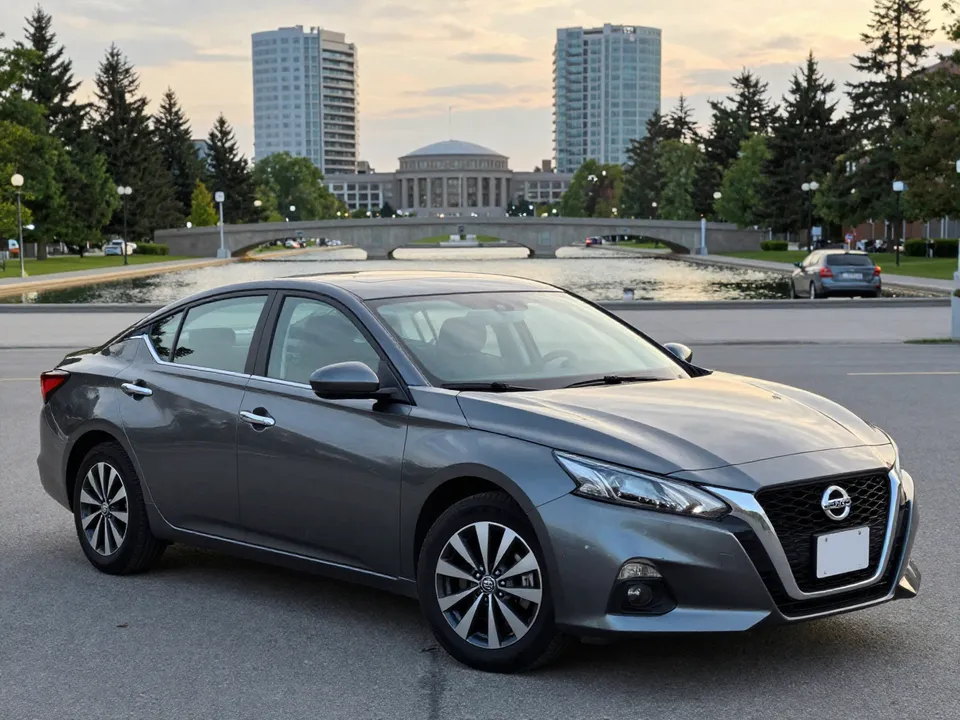
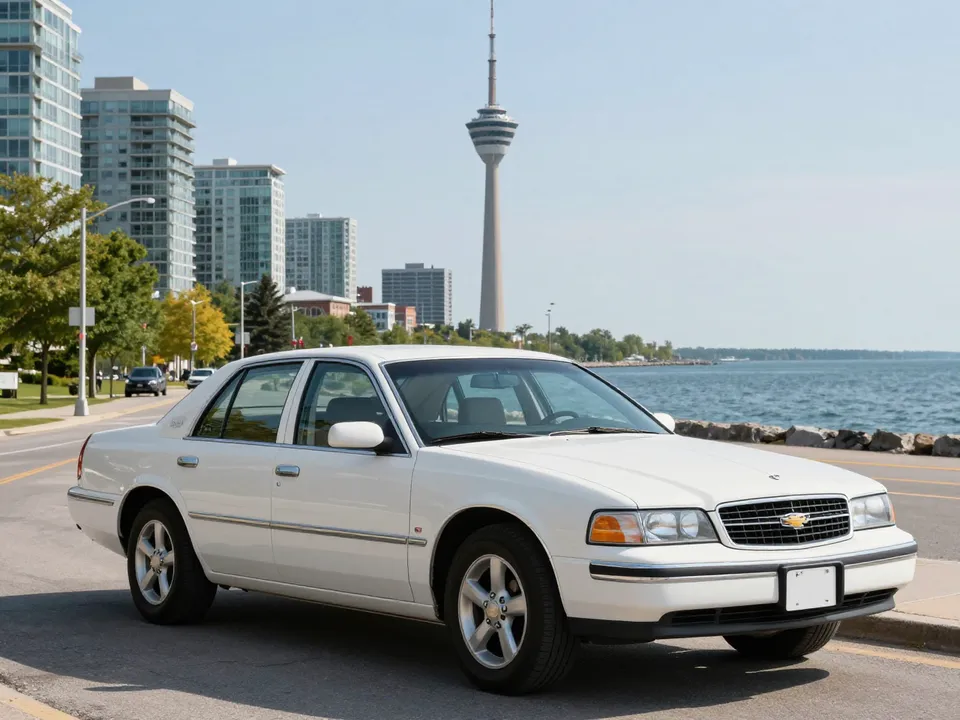
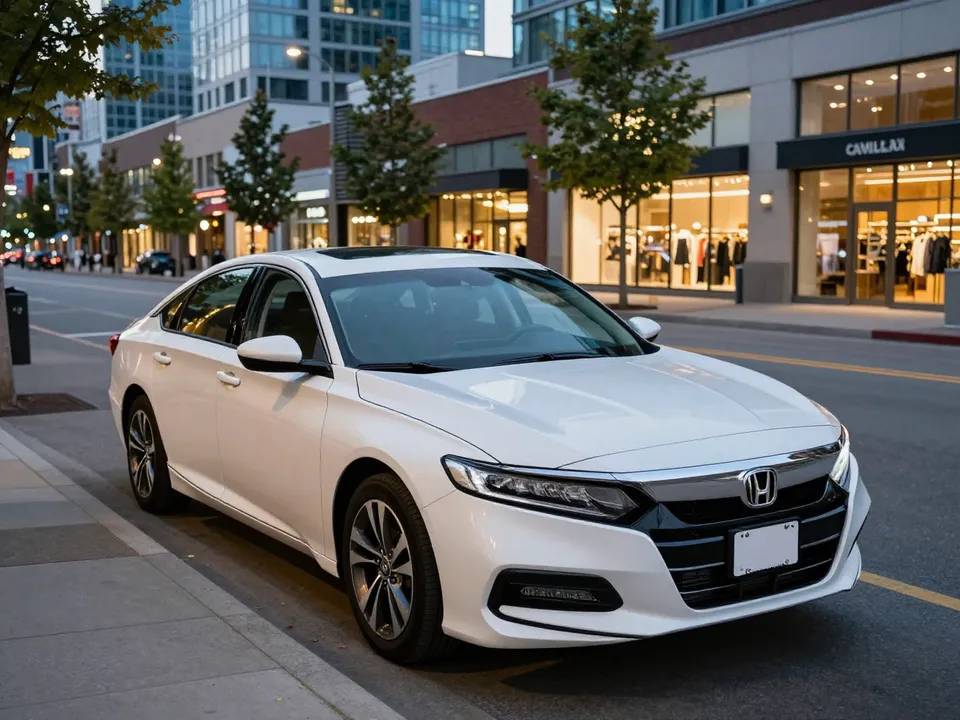
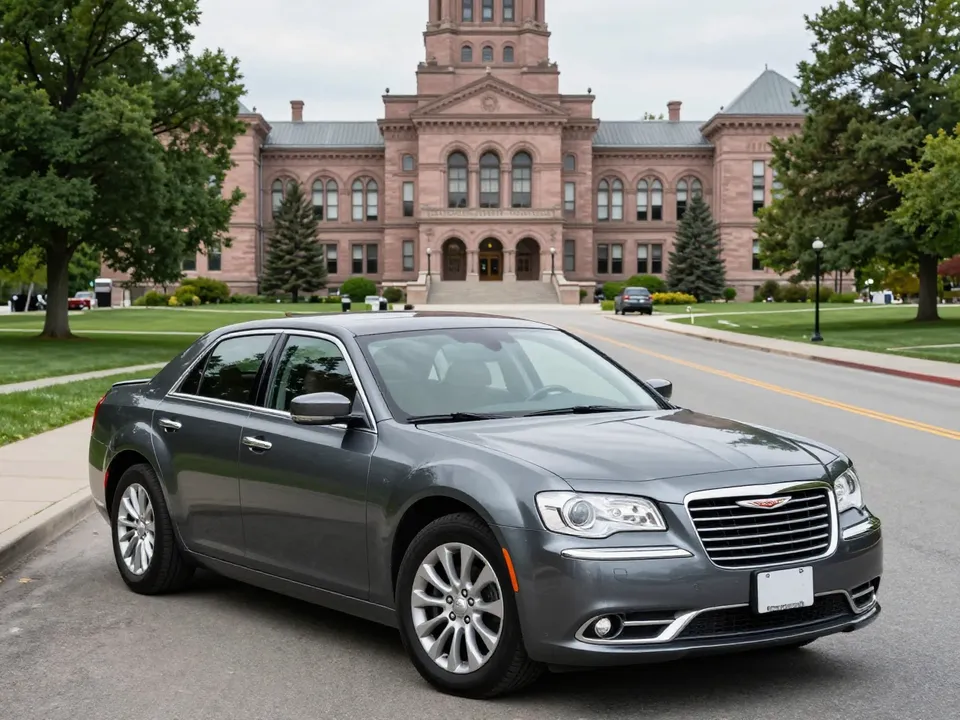
Looking for sedan car rental in Canada with the keys handed over at your own address? Rent-Trip has 9 sedans — Toyota Camry, Hyundai Sonata, Nissan Maxima, Chevrolet Malibu, Nissan Altima, Chevrolet Impala, Honda Accord, Chrysler 300 and Toyota Crown — from C$ 62 a day, weekly from C$ 372 and monthly from C$ 1,302.
What sedan car rental in Canada includes and who it suits
Rent-Trip's sedan class covers one tier: 9 cars, every one a five-seat saloon with an automatic gearbox. Three run on hybrid power, six on petrol. The tier suits a couple with luggage, a family of five on a short break, or a business traveller who wants a quiet automatic rather than a compact.
The class at a glance
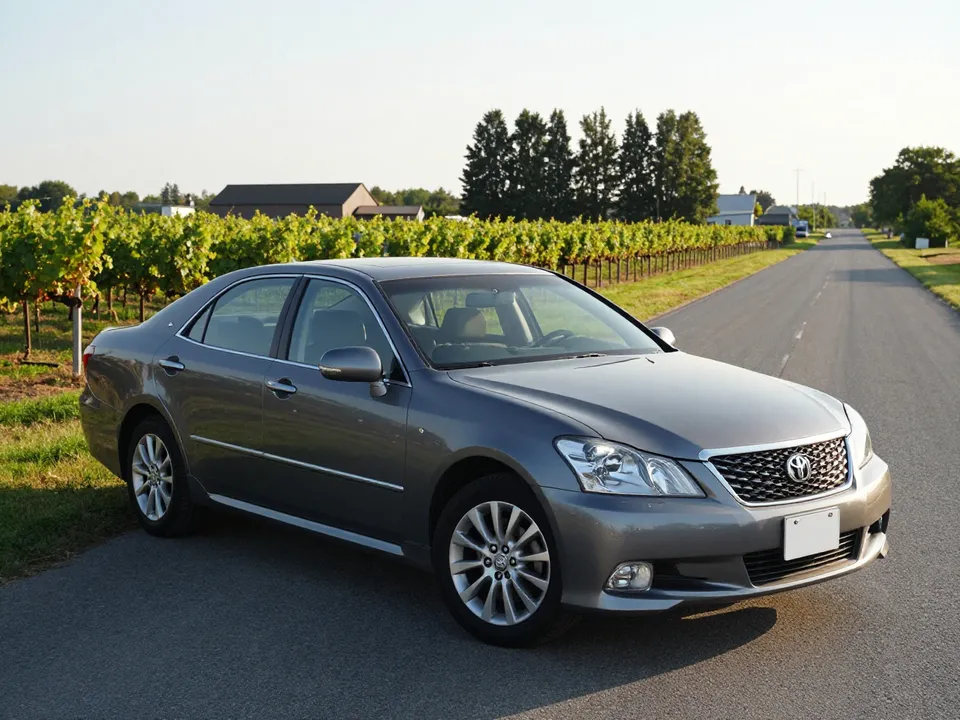
Rent-Trip runs 9 sedans in this tier — Toyota Camry, Hyundai Sonata, Nissan Maxima, Chevrolet Malibu, Nissan Altima, Chevrolet Impala, Honda Accord, Chrysler 300 and Toyota Crown — and every one seats 5 with an automatic gearbox. Engine size spans 1.5 L in the Chevrolet Malibu to 3.6 L in the Chevrolet Impala and Chrysler 300, and output runs from 160 hp to 305 hp. All 9 are four-door saloons, so a family of five fits with a boot for the week's luggage. Six brands appear across the nine cars, which matters if you have a preference for how a car steers and rides. In our practice, groups of four and five book the tier for airport runs and multi-day trips rather than single days. Sit in the driver's seat before you leave the kerb: seat height and mirror position differ noticeably between the 1.5 L Malibu and the 3.6 L Impala.
Hybrid or petrol
- Hybrid cars: 3 of the 9 — the Toyota Camry, Honda Accord and Toyota Crown — pair a petrol engine with electric assistance and return the lowest fuel use in stop-start traffic.
- Petrol cars: the remaining 6, from the 160 hp Chevrolet Malibu to the 305 hp Chevrolet Impala, suit long highway days where a larger engine holds speed without working hard.
- Camry at the bottom: the Toyota Camry is the cheapest car in the tier at C$ 62 a day and also one of the three hybrids.
- Crown at the top: the Toyota Crown is the most expensive at C$ 110 a day, hybrid and all-wheel drive together.
- Fuel cost: regular petrol sat at about C$1.75 a litre in October 2026, so the hybrid premium shows up on city routes, not on a flat highway run.
Pick by the route you have planned, not by the badge — a hybrid pays back in downtown traffic and gains little on a steady 400-series drive.
Picking the right sedan car rental in Canada for your trip
Nine sedans sit in the class, and the spread between them is real: 160 hp in the Chevrolet Malibu against 305 hp in the Chevrolet Impala, front-wheel drive on seven cars, rear-wheel on the Chrysler 300 and all-wheel on the Toyota Crown. The right pick depends on the route, the load and the season, not on which badge looks better in a photograph.
Models and what each one gives you
| Model | Engine | Power | Drive | Fuel | Per day |
|---|---|---|---|---|---|
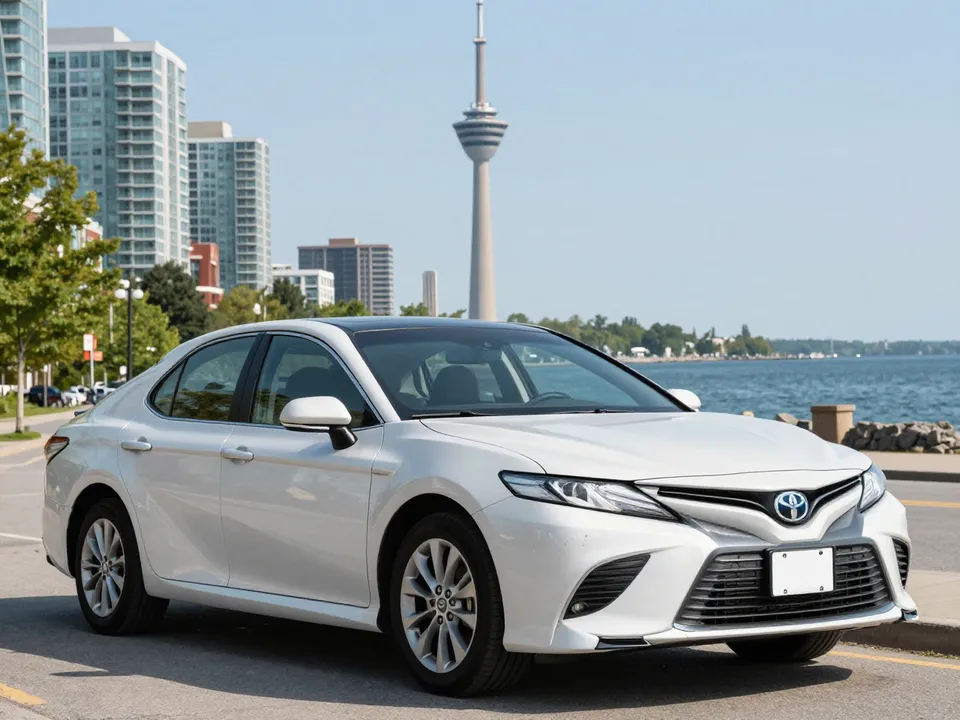
| Toyota Camry | 2.5 L | 225 hp | Front-wheel | Hybrid | C$ 62 |
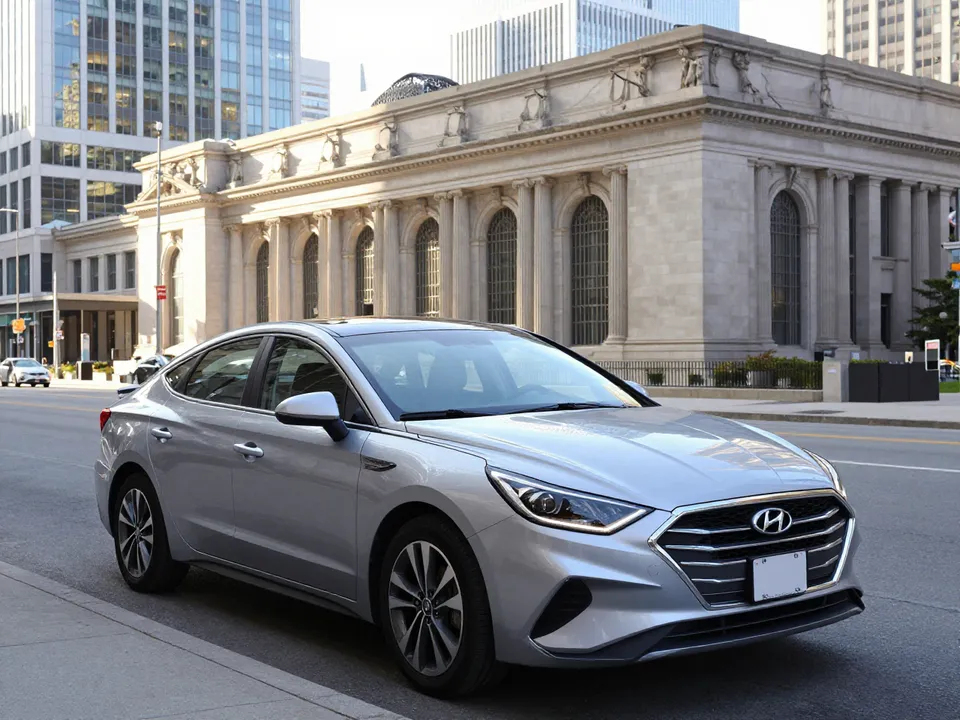
| Hyundai Sonata | 2.5 L | 191 hp | Front-wheel | Petrol | C$ 76 |
| Nissan Maxima | 3.5 L | 300 hp | Front-wheel | Petrol | C$ 82 |
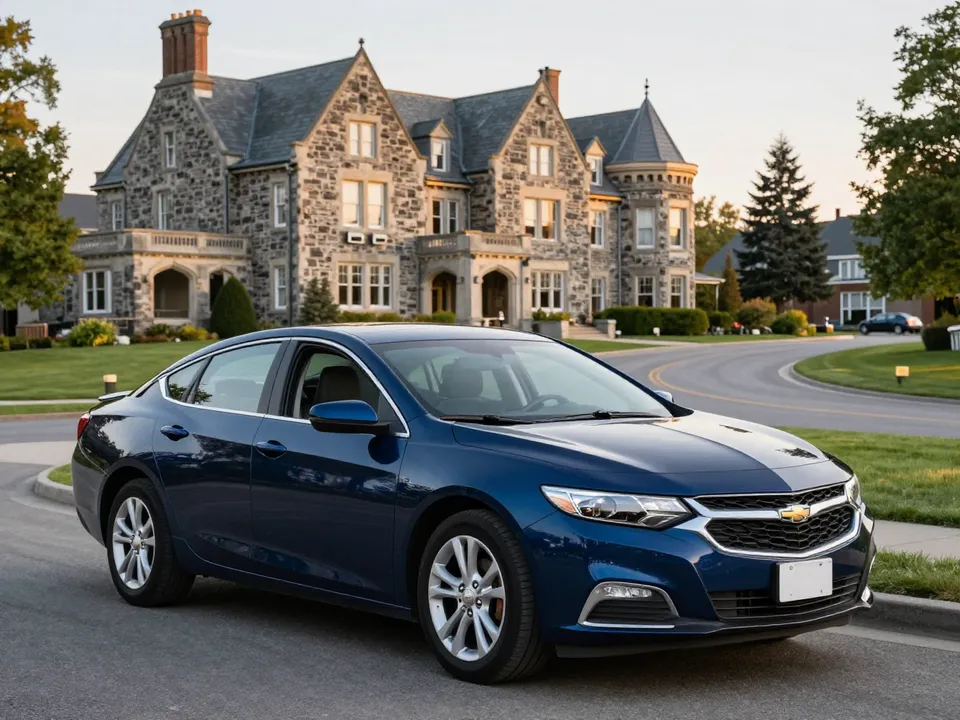
| Chevrolet Malibu | 1.5 L | 160 hp | Front-wheel | Petrol | C$ 87 |
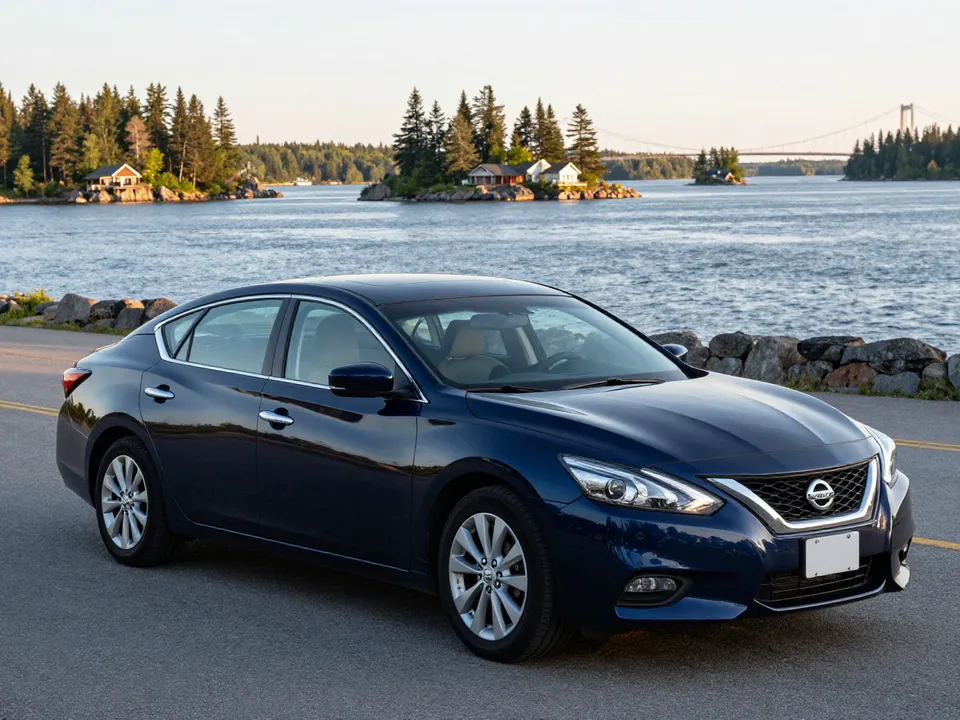
| Nissan Altima | 2.5 L | 188 hp | Front-wheel | Petrol | C$ 93 |
| Chevrolet Impala | 3.6 L | 305 hp | Front-wheel | Petrol | C$ 94 |
| Honda Accord | 2.0 L | 204 hp | Front-wheel | Hybrid | C$ 100 |
| Chrysler 300 | 3.6 L | 292 hp | Rear-wheel | Petrol | C$ 108 |
| Toyota Crown | 2.5 L | 236 hp | All-wheel | Hybrid | C$ 110 |
Horsepower and drivetrain, not the daily figure, decide which car suits a long highway run or a winter drive — the Camry's 225 hp hybrid and the Impala's 305 hp petrol pull very differently once you are merging onto a 400-series highway.
Rear-wheel drive in an Ontario winter
The Chrysler 300 is our only rear-wheel-drive sedan; the Toyota Crown is the only all-wheel-drive one, and the remaining seven send power to the front wheels. On packed snow and freezing rain the difference is not academic: an all-wheel Crown puts torque on four contact patches, while the rear-drive 300 asks more of the driver on a slick on-ramp. Ontario does not require winter tyres, but Quebec does from 1 December to 15 March for vehicles registered there, with a fine of C$ 200–300 — a rule that does not touch a car on out-of-province plates. Check the tyre situation before a cross-province run, and if the route heads east into Quebec in winter, ask the manager about the car's tyres when the booking is agreed.
Matching the car to the trip
A five-seat sedan covers the ordinary cases well — a family of five, a business week, a weekend run out of the city — and every car in the class has an automatic gearbox. For a longer stay the multipliers keep the arithmetic simple: weekly is daily × 6 and monthly is daily × 21, so the Camry at C$ 62 a day works out at C$ 372 for a week and C$ 1,302 for a month. Pick the cheapest hybrid for stop-start city driving, and a bigger petrol engine for a loaded highway trip; the Crown's all-wheel drive earns its place only if the forecast turns.
What a sedan car rental in Canada costs day by day
Our sedan car rental in Canada runs from C$ 62 to C$ 110 a day, and every longer booking is built from that daily figure with a fixed multiplier rather than a fresh quote.
Daily, weekly and monthly
A week of the rental starts at C$ 372 and a month at C$ 1,302. Those two numbers are not separate tariffs: the weekly rate is the daily rate times six, and the monthly rate is the daily rate times twenty-one. The cheapest car in the class, the Toyota Camry, therefore lands at C$ 62 a day, C$ 372 for a week and C$ 1,302 for a month, while the most expensive, the Toyota Crown, sits at C$ 110 a day and scales up by the same two multipliers. Nothing in that arithmetic depends on the season, the model or the length of the conversation — take the daily rate of the car you want and multiply. In our practice most travellers work backwards from the total they can spend, then pick the model that fits inside it. Because the multipliers are fixed, a longer booking is arithmetic, not a negotiation: if a month at C$ 1,302 fits your budget, the question left is which of the nine cars you want for it, not what the price will be.
What the rate covers and what the agreement sets out
- Deposit: the amount is set out in the rental agreement and is agreed when booking, not quoted on this page.
- Insurance excess: the excess that applies to your booking is set out in the rental agreement.
- Delivery fees: delivery to an address in Toronto and to the three Toronto-area airports is arranged with a manager; any fee is set out in the rental agreement.
- Discounts: any reduction on the daily rate is set out in the rental agreement and agreed when booking.
- Fuel: the car is supplied with a full tank and must be returned with a full tank — full-to-full is the only fuel option we offer.
- Missing fuel: if the tank comes back short, the missing fuel and a refuelling service fee are charged as set out in the rental agreement.
Read the fuel line first. Full-to-full is the only option on the site — there is no pre-paid tank and no full-to-empty arrangement — so the tank you collect is the tank you owe back, and the refuelling charge only appears if it comes back short. The deposit, the excess, the delivery fee and any discount all live in one document, and the figures there are the ones that apply to your booking. Ask the manager to walk you through that document before the booking is fixed; it is the only place where the numbers behind your rate are written down.
Where we deliver a sedan car rental in Canada
Delivery is the part of the booking people ask about most, because a car that arrives at the right address at the right hour removes the whole airport-counter routine. The address, the date and the time are agreed with a manager before the booking is fixed.
Airports and city addresses
Rent-Trip brings the vehicle to any address in the city where you collect the car and to Pearson (YYZ), Billy Bishop (YTZ) and John C. Munro Hamilton International Airport (YHM). Pearson handles 47,300,000 passengers a year and sits 36 km by road from downtown — 38 minutes without traffic — while Billy Bishop is 6 km and 12 minutes from the same core, and Hamilton airport is 86.7 km out and 73 minutes away. That spread decides which hand-over point saves you a drive: a flight into YTZ puts you downtown in minutes, whereas a YHM arrival means a longer transfer before you ever touch the car. Agree the hand-over time, not just the date, and leave room for traffic on the way in.
Fixing the address, date and time
- Hotel or home address: we deliver to any address in the city where you collect the car, including hotels, private homes and the districts we cover around the core.
- Airport meeting point: YYZ, YTZ and YHM are all served; tell the manager your terminal and arrival time so the car is waiting when you clear the baggage hall.
- Outside the city: delivery beyond these places is arranged case by case and is not promised on the site, so ask before you book.
- Timing: the date and the time are fixed with a manager before the booking is confirmed — a late change is a new agreement, not a given.
What happens at hand-over
The car comes clean with a full tank, and it must go back with a full tank — full-to-full is the only fuel option we offer. Missing fuel and a refuelling service fee are charged as set out in the rental agreement. Everything else that shapes the hand-over — the deposit, the insurance excess, the delivery fee and any discount — is set out in the rental agreement rather than quoted here, and the minimum rental age, the young-driver surcharge, the cards accepted and the territory limit are agreed when booking.
One practical note from our own runs: a sedan booked for a Pearson pickup on a Friday afternoon is the booking most likely to slide, so build a margin into the hand-over time. If your flight lands after 15:00, set the hand-over for an hour later than you think you need and use the wait for coffee rather than for a phone call. Delivery outside the places named above is arranged case by case — worth a question at booking if your stay sits at the edge of the map.
Driving a sedan car rental in Canada on local roads
A sedan handles Canadian roads well: all nine cars are left-hand drive, traffic keeps to the right, and every model in the class has an automatic gearbox — so the first hour behind the wheel is about learning the signs, not the car. Fuel is sold in litres and distance in kilometres, and the pump price around Toronto sat near C$ 1.75 a litre in October 2026.
Speed limits and the 400-series highways
Ontario posted 110 km/h on selected stretches of provincial highway instead of the old 100 km/h — nearly 89 per cent of the highway that used to run at 100 km/h, some 1,811 km, mostly the 400-series. The pilot began on 26 September 2019 on the QEW between Hamilton and St. Catharines, on Highway 402 and on Highway 417; everywhere else the limit is whatever the sign says. Read the signs rather than the satnav: the 110 km/h posting appears in blocks, and a stretch that was 100 km/h last season may not be the same one now.
Tolls, fuel and the border
- Highway 407 ETR: a cashless toll road; 2026 light-vehicle rates run from 49.93¢ to 119.21¢ a kilometre depending on zone and time of entry, plus a C$1 trip toll charge.
- No transponder: the camera charge is C$5.30 a trip and C$5 a month in account fees.
- Fuel policy: the car comes with a full tank and goes back full — full-to-full is the only option we offer, and missing fuel plus a refuelling fee are charged as set out in the rental agreement.
- US border: most cars rented in Canada may cross into the United States with permission from the rental location, and without written permission the trip breaks the agreement and the insurance; carry a passport.
Winter tyres and a cross-province run
Ontario does not require winter tyres. Quebec does — from 1 December to 15 March, for cars registered in Quebec, rental cars included, with a fine of C$200–300; vehicles plated in other provinces fall outside that rule. In our practice the question comes up most from drivers heading east in January, and the honest answer is that the legal duty follows the plate, not the road. Agree the route with a manager at booking, because a crossing into the United States or a run through another province changes what the agreement has to say.
Alcohol and the warn range
Ontario treats alcohol at 0.08 and above as a criminal matter. Between 0.05 and 0.079 — the warn range — a first occurrence brings an immediate 7-day licence suspension, an 8-hour course and a C$250 fine. Drivers 21 and under, and holders of G1 or G2 licences, are held to zero. A sedan seats five, and the driver is the one the limits apply to — hand the keys over before the first drink, not after.
Documents for a sedan car rental in Canada
The paperwork for a sedan car rental in Canada depends on how long you are staying and where your licence was issued. Ontario's own rules are the clearest benchmark: a visitor from another province, state or country may drive on a valid licence for less than three months, and after that an International Driver's Permit from their own country is required. That permit cannot be issued here, so it has to be arranged before you fly.
What to bring to the hand-over
- Driving licence: your valid licence from your own province, state or country, held for the whole hire period.
- International Driver's Permit: needed if you are visiting from another country for more than 3 months; apply in your own country, as it cannot be obtained here.
- Insurance and registration: Ontario requires the driver to carry insurance for the car and the original or an exact copy of the ownership permit — the permit travels with the vehicle and the insurance terms are set out in the rental agreement.
- Passport: asked for at the border if your route crosses into another country, and worth carrying on any long trip.
- Booking details: the delivery address, date and time you agreed with a manager, so the hand-over matches the reservation.
Age, payment and territory
The minimum age, the young-driver surcharge, the cards accepted and the territory limit are not fixed by law and are not printed on this page — each is agreed when booking, together with the deposit, the insurance excess and any delivery fee. Those four items live in the rental agreement, not in a headline figure. If your route leaves Ontario, raise it before the booking is fixed: winter tyre law differs by province, and Quebec requires them from 1 December to 15 March for cars registered there, with a C$200–300 fine, while Ontario does not require them at all. Cars plated outside Quebec are not caught by that rule, but a cross-province run is still worth flagging to the manager in advance.
If the route crosses a border
Most cars hired here can be taken into the United States, but only with permission from the specific rental point, and the restriction usually falls on exotic classes and large vans rather than sedans. Driving across without written permission breaks both the agreement and the insurance, so ask before you commit. The paperwork itself is short: licence, permit where required, and the booking confirmation. In our experience the delay is never the documents — it is the permit ordered too late, so start that application the week you book the car, not the week you fly.
Trip scenarios for sedan car rental in Canada
Sedan car rental in Canada earns its keep on the trips that start at an airport and end three days later somewhere outside the city. The class fits the ordinary Canadian run: a family of five out of Pearson International Airport (YYZ) with four suitcases, a business week between Downtown and Mississauga, or a weekend loop north to Muskoka and back. Nine cars cover all three without a change of vehicle.
Airport arrival and the first drive
- Pearson (YYZ) arrival: the largest of the three airports we serve, 36 km by road from downtown and 38 minutes without traffic — the hand-over point most bookings use.
- Billy Bishop (YTZ): 6 km and 12 minutes from the core, the shortest transfer of the three if your flight lands there.
- Hamilton (YHM): 86.7 km out and 73 minutes away, the longest run before you reach the car.
- Late landings: an evening arrival at Pearson puts you on the road after dark, so set the hand-over time with the manager for the hour you actually need rather than at the gate.
- Luggage: all nine sedans are four-door with a separate boot, which is the reason groups of four and five pick this tier over a compact.
Book the hand-over for the hour you actually expect to clear baggage claim, not the hour on the ticket — a 38-minute drive from Pearson becomes a good deal longer between 15:00 and 18:00.
City week versus a highway loop
A week based in the city and a week spent on the road ask different things of the same class. Urban driving rewards the three hybrids — Toyota Camry, Honda Accord and Toyota Crown — because stop-start traffic is where electric assistance earns its place, and regular petrol sat at about C$ 1.75 a litre in October 2026. A highway loop rewards the larger petrol engines: the 3.5 L Nissan Maxima at 300 hp and the 3.6 L Chevrolet Impala at 305 hp hold speed on a long grade without working hard. The Chrysler 300 is the only rear-wheel-drive car in the tier and the Toyota Crown the only all-wheel-drive one, which matters if the loop runs into a January forecast. Match the car to the week you have planned, not to the badge you like — a hybrid driven mostly at 110 km/h gains little over a well-geared petrol saloon.
Long stays and monthly bookings
A stay of a month or more changes the arithmetic rather than the car: monthly is daily × 21, so the cheapest sedan in the class, the Toyota Camry, comes to C$ 1,302 for a month at C$ 62 a day, and the most expensive, the Toyota Crown, scales by the same multiplier from C$ 110 a day. Long stays also make the fuel question worth thinking through in advance — full-to-full is the only option we offer, so a month of driving means a full tank at collection and a full tank at return, with missing fuel and a refuelling service fee charged as set out in the rental agreement if the tank comes back short. For a month-long booking, pick the car by the driving you will actually do: a hybrid for a stay spent inside the city, a bigger petrol saloon if the month includes repeated highway runs.
How sedan car rental in Canada compares with other classes
This page carries one class and nine cars, so the honest comparison is not sedan against sedan but sedan against what a traveller might otherwise book: a smaller car for two people, or a larger vehicle for a group with serious luggage. The sedan sits in the middle — five seats, a separate boot, an automatic gearbox and front-wheel drive on seven of the nine cars.
What the sedan gives up and what it gains
- Against a compact: the sedan adds a boot separated from the cabin and a fifth seat that an adult can use for a long drive, at the cost of a longer car to park in a downtown garage.
- Against a larger vehicle: the sedan keeps five seats but gives up the cargo volume of a van or an SUV, so a family with a pram and four large cases should look past this class.
- Engine choice: the tier spans 1.5 L and 160 hp in the Chevrolet Malibu up to 3.6 L and 305 hp in the Chevrolet Impala, so the class is not one car repeated nine times.
- Drivetrain: seven sedans are front-wheel drive, the Chrysler 300 is rear-wheel drive and the Toyota Crown is all-wheel drive — the only all-wheel-drive option in the tier.
- Fuel: three hybrids against six petrol cars, which is the widest choice inside the class.
The practical rule from our own bookings: two travellers with two cases are over-served by a sedan, and five travellers with a pram are under-served by one — the class is right for the middle case.
Picking within the nine
| If your priority is | Take | Why |
|---|---|---|
| Lowest daily rate | Toyota Camry | C$ 62 a day, hybrid, 225 hp |
| Winter traction | Toyota Crown | All-wheel drive, hybrid, 236 hp |
| Highway power | Chevrolet Impala | 305 hp, 3.6 L petrol |
| Rear-wheel feel | Chrysler 300 | The only rear-drive car in the tier |
| Smallest engine | Chevrolet Malibu | 1.5 L, 160 hp, easiest to park |
Every car in the table seats 5 with an automatic gearbox, so the choice comes down to drivetrain, engine and fuel rather than to size.
What the rental agreement settles before you drive
The rental contract is the document that carries every number this page deliberately leaves out: the deposit, the insurance excess, the delivery charge and any discount. Those four are agreed at reservation and written into the agreement, and the figures there are the ones that apply to your rental — not a headline rate and not a figure quoted from another company's price list.
The four figures the paperwork holds
- Deposit: the sum is fixed in the rental agreement and settled at the time of booking.
- Insurance excess: whichever excess attaches to your booking appears in the rental agreement.
- Delivery charge: bringing the car to an address in Toronto and to the three airports we serve is arranged with a manager, and the charge, if any, appears in the rental agreement.
- Discount: any reduction on the daily rate is settled at booking and appears in the rental agreement.
Read those four lines before the booking is fixed rather than at the hand-over. They are the only place where the money behind your daily rate is written down, and a question asked at booking costs nothing while the same question asked at the kerb costs time.
Conditions settled at reservation, not printed here
- Minimum rental age: settled at reservation, together with the young-driver surcharge if one applies to your booking.
- Cards accepted: settled at reservation — no payment method is promised on this page.
- Territory limit: settled at reservation, which is the point to raise a route that leaves Ontario or crosses into the United States.
- Tolls and penalties: who pays road charges, tolls and penalty notices is settled at reservation, not stated here.
- Fuel: full-to-full is the only option we offer; a short fill and a refuelling service fee are charged as set out in the rental agreement.
Raise the territory question first if your route leaves the province. Most cars hired in Canada may cross into the United States with permission from the rental point, and without written permission the trip breaks both the agreement and the insurance — so the permission has to be arranged before you drive, not discovered at the border.
Returning a sedan car rental in Canada
Return is the half of the booking people plan least and pay for most often. Two things decide how smoothly it goes: the tank and the clock. The car comes clean with a full tank and must go back with a full tank — full-to-full is the only fuel option we offer, and if the tank comes back short the missing fuel and a refuelling service fee are charged as set out in the rental agreement.
The return checklist
- Fuel: fill the tank before the hand-back; a short tank means the missing petrol plus a refuelling service fee, both as set out in the rental agreement.
- Time and place: the return address, date and time are the ones agreed with a manager when the booking was fixed — a later return is a new agreement, not a given.
- Cleanliness: the car goes out clean and should come back in the condition it left in.
- Belongings: check the boot and the rear footwells — a five-seat saloon swallows small items under the seats.
- Tolls and penalties: who pays road charges, tolls and penalty notices is agreed when booking, so settle that question before the keys change hands.
Timing the last drive
Build the return into the last day rather than bolting it onto the end of it. A car due back at a Toronto address after a highway run from Muskoka or Algonquin Park needs the 400-series traffic counted in, and a flight out of Pearson the same afternoon needs more slack still — the 36 km from downtown runs in 38 minutes without traffic and considerably longer in the afternoon peak. Fill the tank close to the return point rather than at the last station before the highway, and leave the refuelling receipt in the car. In our practice the returns that run late are almost always the ones where the fuel stop was left to the final twenty minutes.
Common mistakes with sedan car rental in Canada
Most of the problems we see at hand-over are not mechanical. They are paperwork and planning: a permit that could not be issued here, a route that was never cleared, a licence held for the right period but from the wrong place. Each one is cheap to fix a week before the trip and expensive to fix at the kerb.
Paperwork mistakes
- Leaving the IDP to the last minute: a visitor from another country staying more than 3 months needs an International Driver's Permit from their own country, and it cannot be issued in Canada — apply before you fly.
- Assuming the three-month rule is longer: a guest in Ontario for less than 3 months may drive on a valid licence from their own province, state or country, and the clock starts on arrival.
- No ownership permit in the car: Ontario requires the driver to carry insurance for the car and the original or an exact copy of the ownership permit — the permit comes with the vehicle and the insurance terms are set out in the rental agreement, so check the glovebox.
- Booking a border crossing after the fact: permission to take the car south of the border comes from the rental point and must be in writing before you drive.
- Forgetting the minimum age is a booking matter: the legal floor for a driver in Ontario is 16, but what a rental company will actually hand a car to — and any young-driver surcharge — is settled with a manager when the booking is fixed, not read off a website.
Planning mistakes
- Skipping the winter tyre question: Ontario sets no winter-tyre rule of its own, but Quebec's applies from 1 December to 15 March to cars registered there, with a fine of C$200–300 — a rule that follows the plate, not the road.
- Drinking on a warn-range reading: Ontario treats 0.08 and above as a criminal matter, and 0.05–0.079 brings an immediate 7-day licence suspension, an 8-hour course and a C$250 fine on a first occurrence; drivers 21 and under and holders of G1 or G2 licences are held to zero.
- Treating the daily rate as a quote: weekly is daily × 6 and monthly is daily × 21, so the arithmetic is fixed — the variables are the car and the length of the booking, not the multiplier.
- Assuming the tank comes back any way you like: full-to-full is the only option we offer — the car leaves clean with a full tank and returns full, and missing fuel plus a refuelling fee are charged as set out in the rental agreement. No pre-paid tank, no full-to-empty.
The single most useful habit is to settle the route with a manager when the booking is agreed. A run east into Quebec in winter, a trip across the southern border, a stay longer than three months — each changes what the agreement has to say, and each is a two-minute conversation at booking against a roadside problem later.