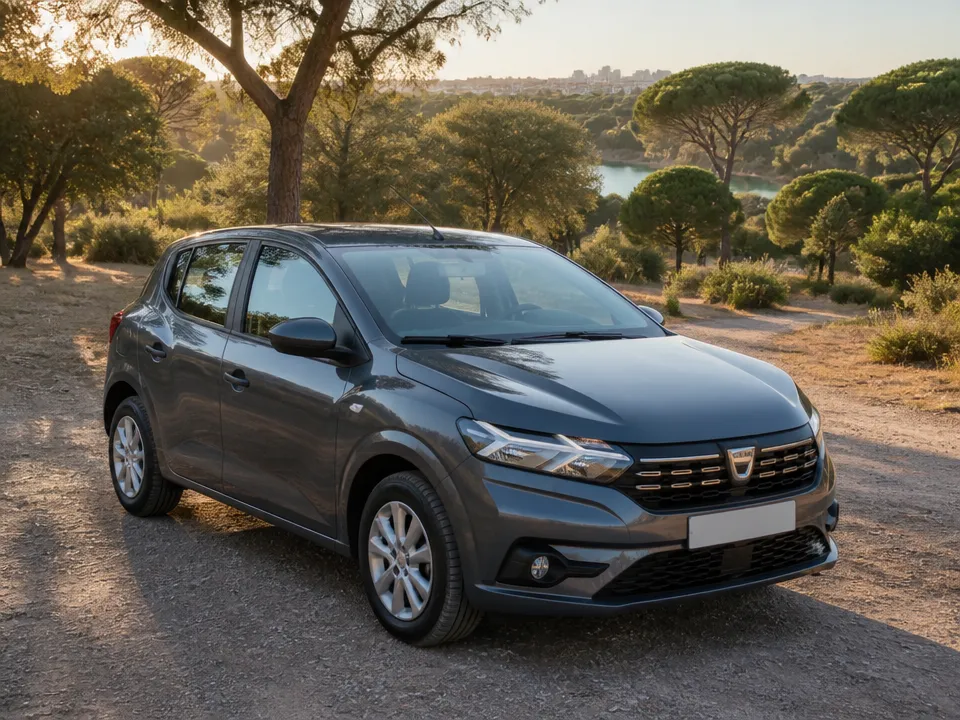
Dacia Sandero
★5.0· 92Manual1.0 L91 hpFront-wheel5 seats
€24per day
Book now







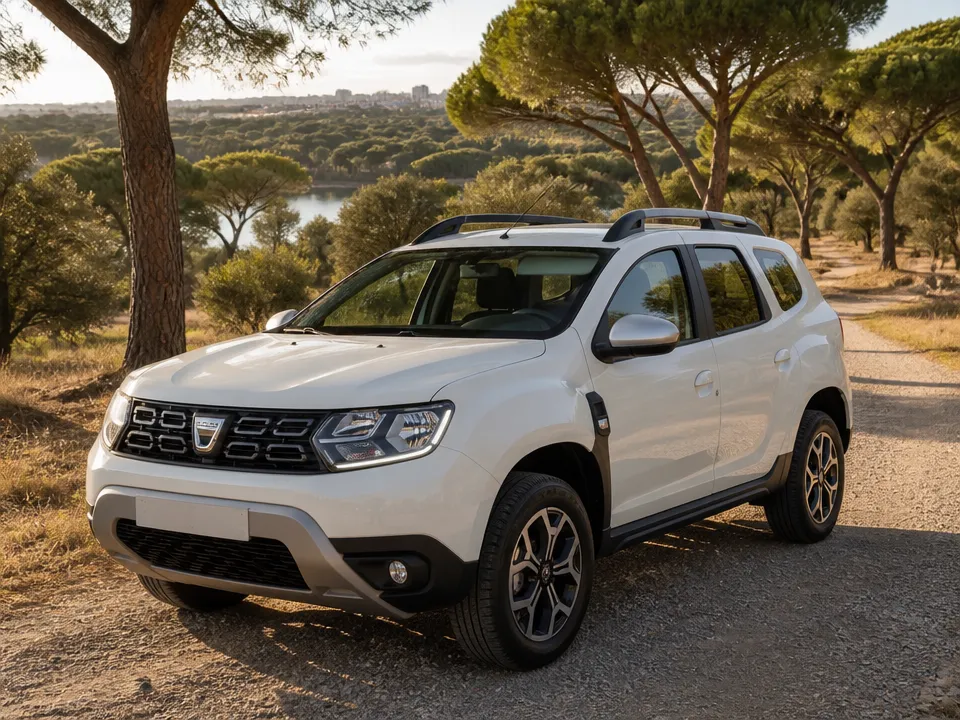


If you need Dacia car rental in Madrid, we deliver the car to you — three Dacias are on this page, from €24 per day. The range runs from the Sandero hatchback to the seven-seat Lodgy and the Duster SUV, with the booking agreed with a manager.
Three Dacias sit in our line-up, and each one answers a different question. The Sandero is the small petrol hatchback for two people and city errands, the Lodgy is the seven-seat diesel for a group, and the Duster is the SUV for the climbs towards the Sierra de Guadarrama.
Our Dacia Sandero seats 5 and runs on petrol — 1.0 L, 91 hp, the Economy pick at €24 per day. A hatchback body of this size is the easiest thing in the fleet to slot into a SER zona azul bay, and the 1.0 L engine is light enough that stop-start traffic on Gran Vía costs you little. Three adults and a weekend of bags fit without a struggle; four adults plus luggage is where the rear bench starts to feel tight. Front-wheel drive and a manual gearbox are what you get, so plan on working the clutch in the Centro. If your trip is mostly two people and short hops between the centre and Barrio de Salamanca, the Sandero is the one to book — the extra money you would spend on a bigger Dacia buys fuel instead.
Our Duster is the SUV of the line — 1.3 L, 130 hp, 5 seats, €58 per day. Those 130 hp matter on the climb out of the city towards the passes: the A-6 and the mountain roads beyond it rise steadily, and the Duster holds its pace where a smaller engine would be downshifting. It is front-wheel drive, which is enough for the paved routes to the Sierra de Guadarrama in normal conditions. Winter is the exception — when snow affects driving, DGT posts restrictions for cars without winter tyres or chains, and those signs and gantries are the authority on the day, not the forecast. In our experience the Duster is the model people come back for once they have driven one mountain road in a Sandero and want more power.
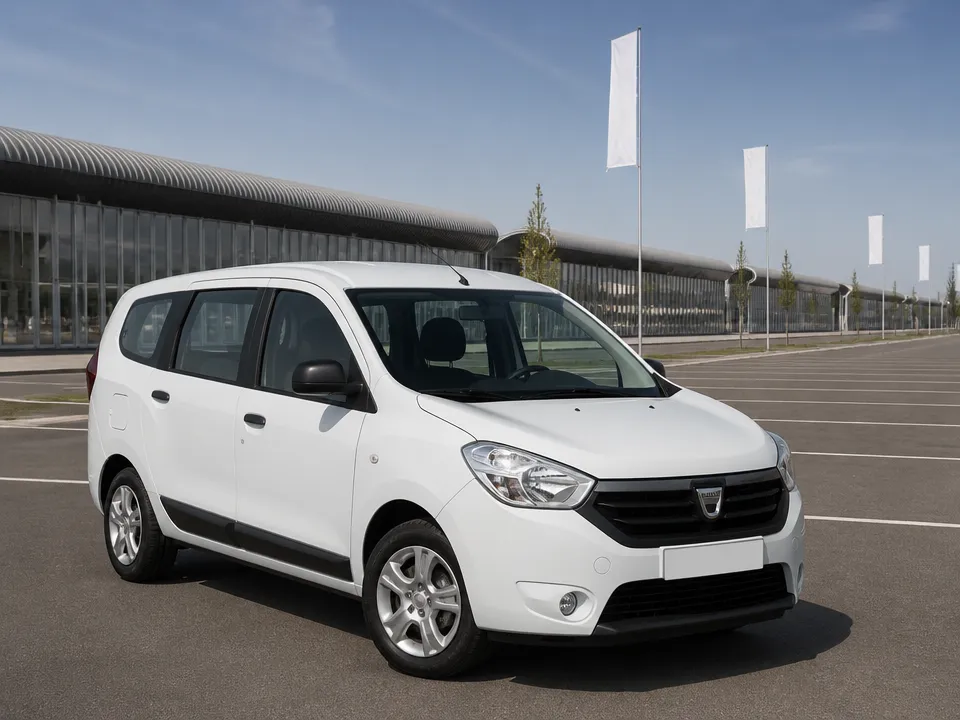
The Lodgy is our 7-seat Dacia — diesel, 1.5 L, 115 hp, from €50 per day. Two extra seats change what a day trip can be: six or seven people in one car instead of two, which is why groups heading to Segovia or Toledo tend to take it. The MPV body is longer than the Sandero, so check the bay before you commit in a SER zone, and remember that a full seven seats leaves little room for bags — fold the third row when luggage matters more than passengers. Diesel also suits the longer runs out of the city better than petrol.
Dacia car rental in Madrid runs from €24 to €58 per day across our three models, with every price set before you book and agreed with a manager. Longer bookings work off the same daily rate: weekly from €144, monthly from €504.
Dacia car rental in Madrid starts at €24 per day for the Sandero and tops out at €58 for the Duster, with the seven-seat Lodgy in between at €50. Those three figures cover the whole Dacia line we keep — there is no hidden class above them and no cheaper model below. The daily rate is the same whether you take the car for a single afternoon in the city or hand it back at the end of a longer run, and it does not change with the model you pick beyond the price of that model itself. What does change with length is the effective cost: a week is charged as six days, a month as twenty-one, so the longer you keep the car the less each day works out. Rent-Trip sets the deposit, the insurance excess and any delivery fee in the rental agreement, and we confirm all of it with you when booking.
| Model | Class | Seats | Fuel | Gearbox | From |
|---|---|---|---|---|---|
| Dacia Sandero | Economy | 5 | Petrol | Manual | €24/day |
| Dacia Lodgy | Minivans | 7 | Diesel | Manual | €50/day |
| Dacia Duster | SUV | 5 | Petrol | Manual | €58/day |
A week of Dacia car rental in Madrid starts at €144 and a month at €504, both calculated from the daily rate of the model you choose — daily multiplied by six for a week, by twenty-one for a month. On the Sandero that keeps the cheapest option cheapest at every length; on the Duster the same multipliers apply to €58, so a month in the SUV starts at €1,218. The Lodgy sits between them and is the only one of the three that carries seven people, which matters when the alternative is two cars for the same group. In our experience the split is straightforward: parties of five or fewer take the Sandero or Duster, and anything needing a third row goes to the Lodgy. If your dates are fixed, book early — the Dacia line is three cars on this page, and the Lodgy is the one that goes first when a group is travelling.
The Sandero at €24 per day is the entry point of the Dacia range we run, and the Duster at €58 is the most expensive of the three — a spread of €34 per day that comes down to size, seats and engine rather than to any seasonal surcharge we add. Fuel is the other running cost you control: petrol and diesel are both sold at Spanish filling stations, and the diesel Lodgy stretches further on a long motorway run than the two petrol models. Parking in the city is metered in the SER zones, so a shorter hatchback body is easier to leave in a bay than the longer MPV. Our advice is to pick the model by the trip, not by the price alone: the €24 Sandero and the €58 Duster differ by more than money when you are loading luggage or climbing towards the Sierra de Guadarrama.
Three Dacias, one shared platform philosophy: each is built for a different job rather than a different budget. The Sandero is a 1.0 L petrol hatchback for city work, the Lodgy a 1.5 L diesel seven-seater for groups, and the Duster a 1.3 L petrol SUV for the mountains. What they share is a manual gearbox, front-wheel drive and a straightforward, light body — the reasons we keep them in the fleet.
All three Dacias on our Spanish fleet have a manual gearbox and front-wheel drive. The Sandero runs a 1.0 L petrol engine at 91 hp, the Lodgy a 1.5 L diesel at 115 hp, and the Duster a 1.3 L petrol at 130 hp. Front-wheel drive covers the city, the M-30 ring and the motorway network to Toledo or Segovia without compromise; the Duster's extra 15 hp over the Lodgy shows most on the climbs towards the Sierra de Guadarrama. A manual is the base transmission in Spain, and on these three it is the only option we offer — worth knowing if you normally drive an automatic. In our experience the 1.0 L Sandero is the easiest of the three to place in tight underground car parks around Gran Vía, where a lighter clutch and a short body matter more than power.
Sandero and Duster run on petrol; the Lodgy is the only diesel in the line. Gasolina 95 E5 averages €1.971 per litre across forecourts in the capital, with a median of €2.009 and a spread from €1.789 to €2.086, so the diesel Lodgy pays off on longer runs rather than short city hops. Which engine suits you depends on distance, not on preference: a diesel needs a sustained run to stay healthy, and repeated two-kilometre trips to the shops do it no favours. If your week is mostly urban, take the petrol Sandero; if you are heading to Ávila or Aranjuez and back, the Lodgy's 1.5 L will drink less over the same distance.
The step from Sandero to Lodgy buys seats, not comfort; the step from Lodgy to Duster buys power and ground clearance, not space. Match the car to the trip rather than to the price and you will not pay for capacity you never use.
Three things decide how easy a Dacia is to live with in the Spanish capital: the low-emission zone, the parking meters, and what you put in the tank. All three are easy to plan for once you know the rules.
ZBE Madrid (Zona de Bajas Emisiones de Madrid) covers every street of the municipality — all 21 districts — and cars without a DGT environmental sticker (category A: petrol registered before 2000, diesel before 2005) cannot enter. Your Dacia carries the sticker it was registered with, and we tell you what that sticker is before the car reaches you. Since 00:00 on 07.04.2026, Ordenanza 2/2026 of 24.03.2026 (new transitional provision seven) has governed the current arrangements, so the category matters more than the model. Cars on foreign plates have no DGT sticker at all and must be registered in advance. Ask about the sticker when you book — it costs nothing to check and it decides whether the centre is open to you.
The MPV body of the Lodgy is longer than a hatchback, so check the painted bay before you commit to a tight space.
Sandero and Duster run on petrol; the Lodgy is the only diesel in the line. Gasolina 95 E5 averages €1.971 per litre across the 231 filling stations in the sample, with a median of €2.009, a low of €1.789 and a high of €2.086 — so where you fill up moves the bill more than the model does. The ring roads M-30, M-40, M-45 and M-50 and the radial motorways A-1 to A-6 carry no toll; the paid radials R-2, R-3 and R-4 do. In our experience the diesel Lodgy pays off on the longer runs, while the petrol Sandero at 1.0 L and 91 hp is the lighter car in stop-start traffic. Fuel policy is agreed when booking.
Urban speed limits in Spain are set by the Reglamento General de Circulación (RD 1428/2003, as amended by RD 970/2020): 30 km/h on a street with one lane in each direction, 20 km/h where carriageway and pavement form a single platform, and 50 km/h with two or more lanes each way. Bus lanes are not counted when you work out how many lanes a street has. Motorways allow 120 km/h, conventional roads 90 km/h. On a 30 km/h street, 31–50 km/h costs €100 with no points, while 71–80 km/h costs €500 and 6 points — which is why the 30 km/h sign matters more than the traffic around you.
A Dacia from our fleet covers the classic day trips from the capital: Toledo and Segovia to the south-west and north-west, Ávila and San Lorenzo de El Escorial in the Sierra, Aranjuez and Chinchón in the south, Alcalá de Henares to the east. Each one is a single tank of fuel and a return the same evening.
The ring roads — M-30, M-40, M-45, M-50 — and the radial motorways A-1 to A-6 carry no toll, so a day trip costs you fuel and nothing else on the road. The paid radials R-2, R-3 and R-4 are the alternative when you want to skip the queues on the way out. The speed limit on autopista and autovía is 120 km/h, on a conventional road outside town 90 km/h, and inside the city it is 30 km/h on a street with one lane in each direction, 20 km/h where the carriageway and pavement form a single platform, and 50 km/h where there are two or more lanes each way. Winter tyres are not a permanent requirement in Spain; DGT posts restrictions for cars without winter tyres or chains only when snow affects traffic, and in this region that means the mountain roads of the Sierra de Guadarrama. If your route crosses that range in the cold months, check the signs and the overhead boards before you leave — a front-wheel-drive Duster on summer tyres is fine on a dry road and useless on a snowed-in pass.
Fuel is the one figure worth planning around. Gasolina 95 E5 averages €1.971 per litre here, with a median of €2.009, a low of €1.789 and a high of €2.086 across a sample of 231 filling stations. Our diesel Lodgy is the economical choice for the longer runs to Ávila or Segovia, while the petrol Sandero and Duster suit the shorter hops. Fill up before you leave the city rather than on the motorway, where the price sits at the top of that range.
Tell the manager which route you have in mind when you book. The car is delivered to you, and the booking is agreed with a manager — so the model, the dates and the return are agreed when booking, not at a counter. Whether you take the Sandero, the Lodgy or the Duster, allow for the return leg in the evening: the SER zona azul allows a maximum of 4 hours and the zona verde 2 hours, and both run from 09:00 to 21:00 on weekdays and from 09:00 to 15:00 on Saturday. A day trip that ends after 21:00 means parking in a garage or on a private spot rather than on the street.
We deliver the car to you, and every booking is agreed with a manager before it is confirmed. That is the whole process: you choose a model, we agree the details, the car comes to you. Nothing is charged or promised until a manager has gone through the booking with you.
The three Dacias cover three different jobs: the Sandero is the Economy hatchback with 5 seats and a 1.0 L petrol engine, the Lodgy is the Minivans MPV with 7 seats and a 1.5 L diesel, and the Duster is the SUV with 5 seats and a 1.3 L petrol engine. If the Dacia you picked is not free for your window, we say so at that point rather than after payment.
Spain requires the original identity document in the main driver's name, and rental companies work with a credit card in that same name for the deposit — debit cards are often not accepted. A driving licence from the EU or EEA is valid in Spain as it stands until it expires, and no international permit is needed. Licences from outside the EU or EEA are valid for driving as a visitor; residents may use them for no more than six months from the date they take up ordinary residence in Spain, after which they have to be exchanged. If your licence is not in Latin script — Cyrillic, Arabic or characters — you need either an official translation or an International Driving Permit, which the DGT recommends getting before you travel. The minimum rental age, the young-driver surcharge and the cards accepted are agreed when booking.
We do not name a delivery point on this page because the hand-over location is agreed with the manager when you book — tell us where you land or arrive and we work from there. Adolfo Suárez Madrid–Barajas Airport, Madrid Puerta de Atocha–Almudena Grandes and Madrid-Chamartín Clara Campoamor are the three main arrival points, and a booking made in advance is what keeps the model you want available on the day. In our experience the Duster goes first on weekends, so if the Sierra de Guadarrama is on your list, book earlier rather than later.
Every Dacia booking with Rent-Trip is confirmed with a manager, and the paperwork is agreed when booking. What you bring, how the deposit is taken and how the agreement itself is signed are settled at the booking stage — not assumed at the counter.
Spanish consumer rules require the declared price to include every mandatory charge you cannot legally drive without. Compulsory third-party cover, the young-driver surcharge where it applies, and similar items belong inside the quoted figure, not on top of it. At hand-over, the inspection sheet matters more than any conversation: every scratch and dent must be written into the contract or the inspection record before the car leaves, both sides sign it, and you keep a copy. Without that document, damage found later is charged to the driver.
Driving in Spain is allowed from 18 for category B. EU and EEA licences, including Iceland, Liechtenstein and Norway, are valid as they stand until they expire, and no international permit is needed alongside them. Licences from outside the EEA are valid for driving as a visitor; residents may use them for no more than six months from the date they take up ordinary residence in Spain, after which the licence must be exchanged — canje. A licence not written in Latin script, such as Cyrillic, Arabic or Chinese characters, is accepted only if it is in Spanish, carries an official translation, or was issued on the Appendix 9 Geneva or Appendix 6 Vienna model; in practice that means an international driving permit or a certified translation. The Permiso Internacional de Conducción is a supplementary document, shown only together with your passport and national licence, and valid for one year.
Minimum age, the young-driver surcharge, which cards are accepted and the size of the deposit are not fixed by Spanish law and are not our standing terms — they are agreed when booking. The same applies to the fuel policy on return, the excess amount and any delivery arrangement. Bring the original identity document in the main driver's name.
For parking and unpaid tolls, the owner or the renter of the car is liable; for moving offences, alcohol and drugs, the person who was actually driving is. Where an offence is not handed over at the roadside, the registered owner or renter answers until it is established who was at the wheel. Speeding penalties in Spain follow the DGT table, which is built on the pair of the posted limit and your actual speed rather than on the margin alone.
Daily prices on this page run from €24 to €58. The Dacia Sandero is €24 per day, the Dacia Lodgy €50 per day and the Dacia Duster €58 per day.
This page lists 3 cars with seat counts of 5 and 7. The classes are Economy, Minivans and SUV, all with Manual transmission and body types Hatchback, MPV and SUV.
EU and EEA licences are valid in Spain as they are while unexpired, and an IDP is not needed. For third-country licences, DGT recommends obtaining an international driving permit before the trip.