



















Crossover car rental in United Kingdom
From £22 per day, Rent-Trip offers crossover car rental in United Kingdom with 14 crossovers available — five-seat petrol and hybrid models from 11 brands, including Citroen, Peugeot, MG, Hyundai, Kia, Volkswagen, Toyota, Ford and Vauxhall.
What a Crossover Is and Why It Suits United Kingdom Roads
A crossover is a five-seat body that sits between a hatchback and an SUV: taller than a hatchback, shorter and lighter than a full SUV, with front-wheel drive and a raised driving position. On this page the class runs from the Citroen C3 Aircross at £22 a day to the Ford Puma at £58 a day, and all 14 cars share that same shape.
A crossover is smaller and lighter than an SUV, with the same five seats and a higher driving position. Where an SUV carries extra bulk and weight for off-road hardware most drivers never use, a crossover keeps the upright view over traffic and the easy entry of a taller car in a footprint closer to a hatchback. The Peugeot 2008, Vauxhall Mokka and Nissan Juke all park in the space a family hatchback would take, and their 1.0 to 1.5 litre petrol engines return sensible economy on a motorway run. On narrow urban streets and in multi-storey car parks the shorter body is the practical difference, not the badge — measure your usual parking spot against the car you pick, not against the class name.
All 14 crossovers in our fleet seat 5 people, with front-wheel drive and a boot sized for a family trip. The 5-seat layout is fixed across the whole class — there is no seven-seat option here — so the choice comes down to engine, gearbox and trim rather than passenger count. Front-wheel drive suits British roads: it is the layout that handles a wet roundabout predictably, and it keeps the boot floor low enough to load a pushchair or two large cases without lifting them high. Five adults plus luggage is the real test — check boot volume against your cases before choosing the smallest model, because the Kona and the Stonic carry four people comfortably and five only with soft bags.
Where the Class Fits on a British Trip
- Town and city driving: the compact footprint of a crossover threads London's Congestion Charge zone and the multi-storey car parks around it without the width penalty of an SUV.
- Motorway runs: 95 to 130 hp petrol engines in the class cruise at the 70 mph motorway limit comfortably, and the hybrid Toyota C-HR is the quietest of the 14 at steady speed.
- Left-hand traffic: every car we supply is right-hand drive, matching the left-side rule of British roads, so the driver sits next to the centre line — allow the first few junctions after delivery to adjust.
- Country lanes: the raised seating position gives a clearer view over hedgerows on single-carriageway roads, which matters more than four-wheel drive on tarmac.
If your trip is mostly motorway and you want the two-pedal option, the Kia Stonic is the automatic to ask about when you book. In our experience the crossover is the class most renters settle on after a first booking in something smaller — the extra height and boot space cost little in fuel and nothing in parking.
Crossover Car Rental in United Kingdom Fleet and Model Guide
For crossover car rental in United Kingdom, our fleet holds 14 cars across 11 brands, all five-seat, all front-wheel drive, with petrol and hybrid engines and both manual and automatic gearboxes. The class runs from £22 to £58 per day, and every car is delivered by Rent-Trip to your address or airport once the details are agreed with a manager.
Every Crossover on This Page, Model by Model
| Model | Engine | Power | Gearbox | Fuel | From per day |
|---|---|---|---|---|---|
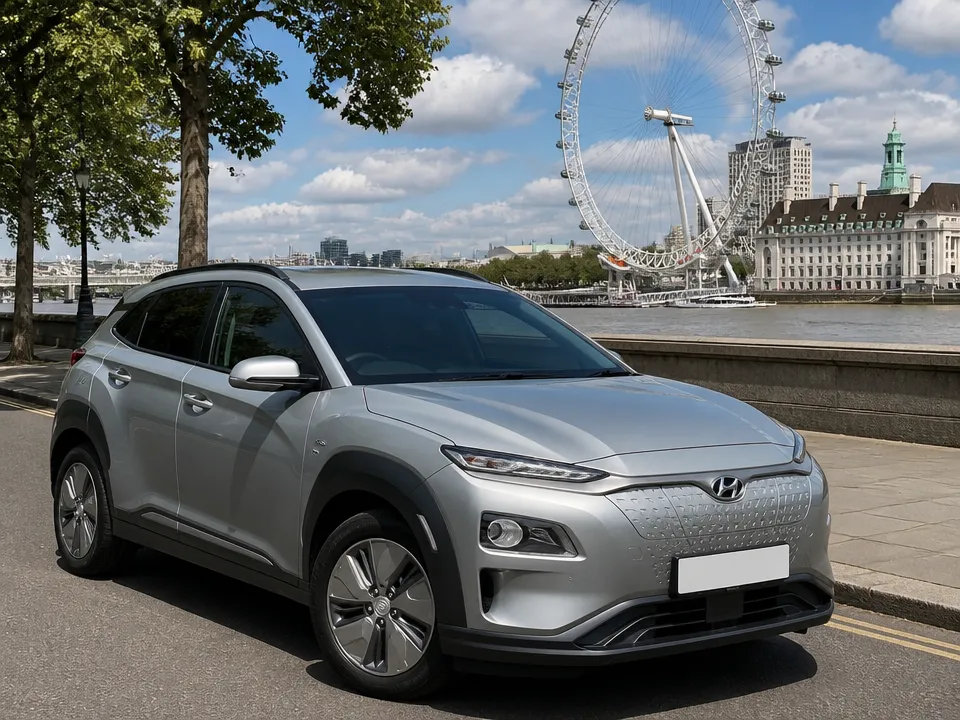
| Hyundai Kona | 1.0 L | 120 hp | Manual | Petrol | £36 |
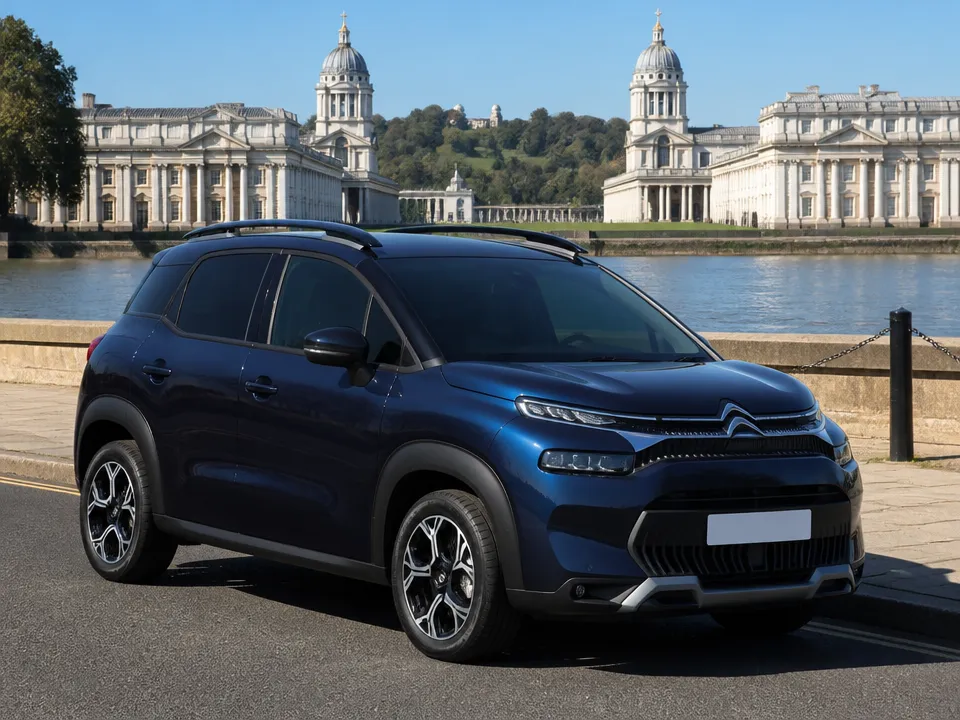
| Citroen C3 Aircross | 1.2 L | 110 hp | Manual | Petrol | £22 |
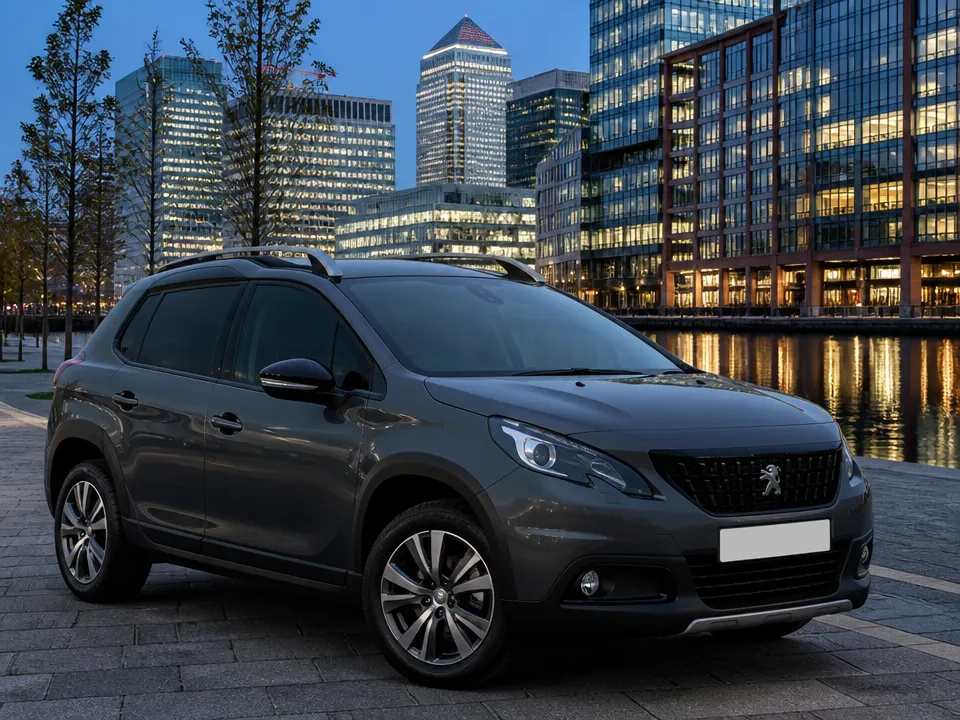
| Peugeot 2008 | 1.2 L | 100 hp | Manual | Petrol | £25 |
| MG ZS | 1.5 L | 106 hp | Manual | Petrol | £29 |
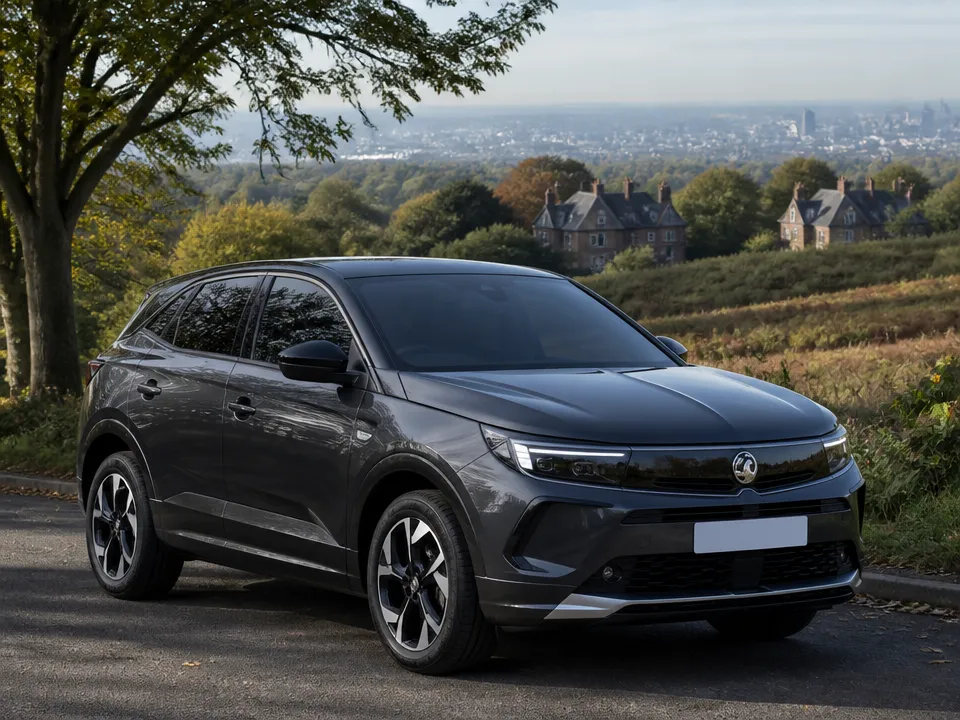
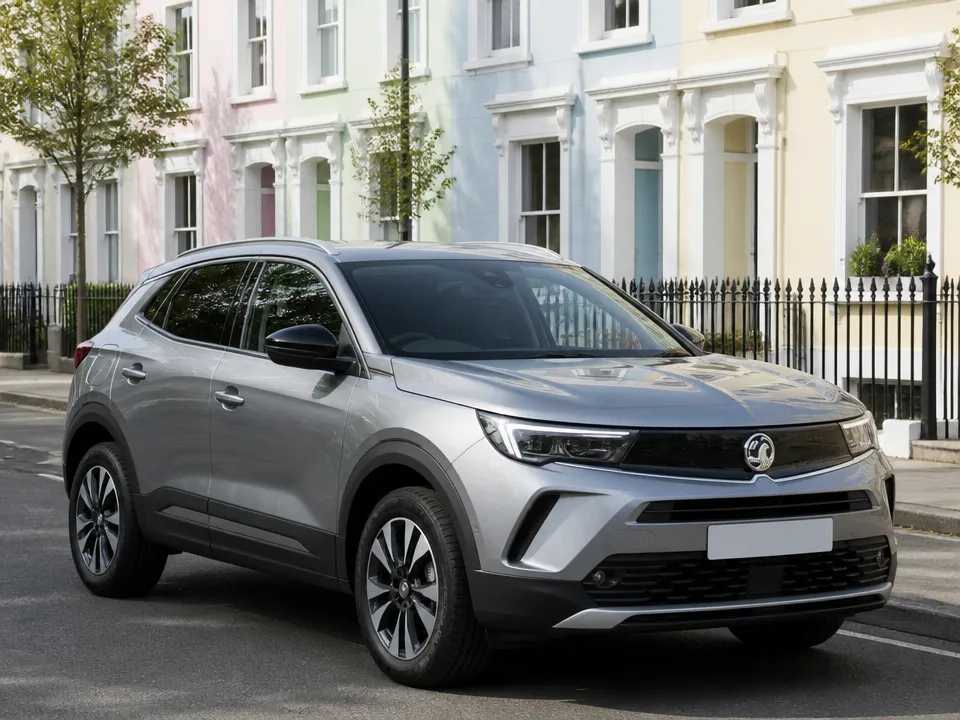
| Vauxhall Grandland | 1.2 L | 130 hp | Manual | Petrol | £29 |
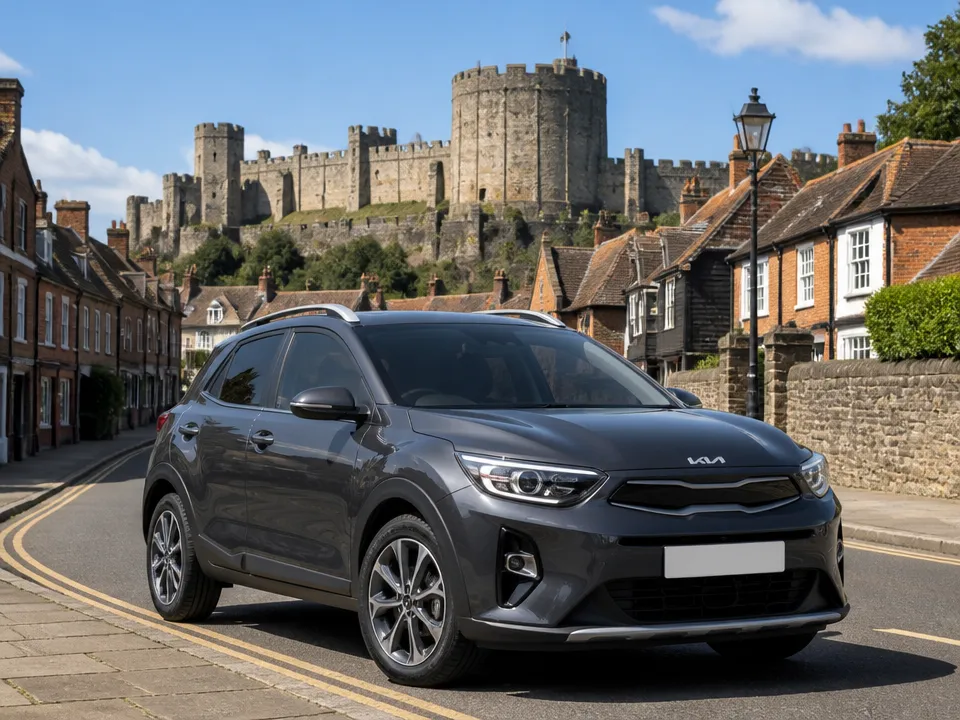
| Kia Stonic | 1.0 L | 99 hp | Automatic | Petrol | £30 |
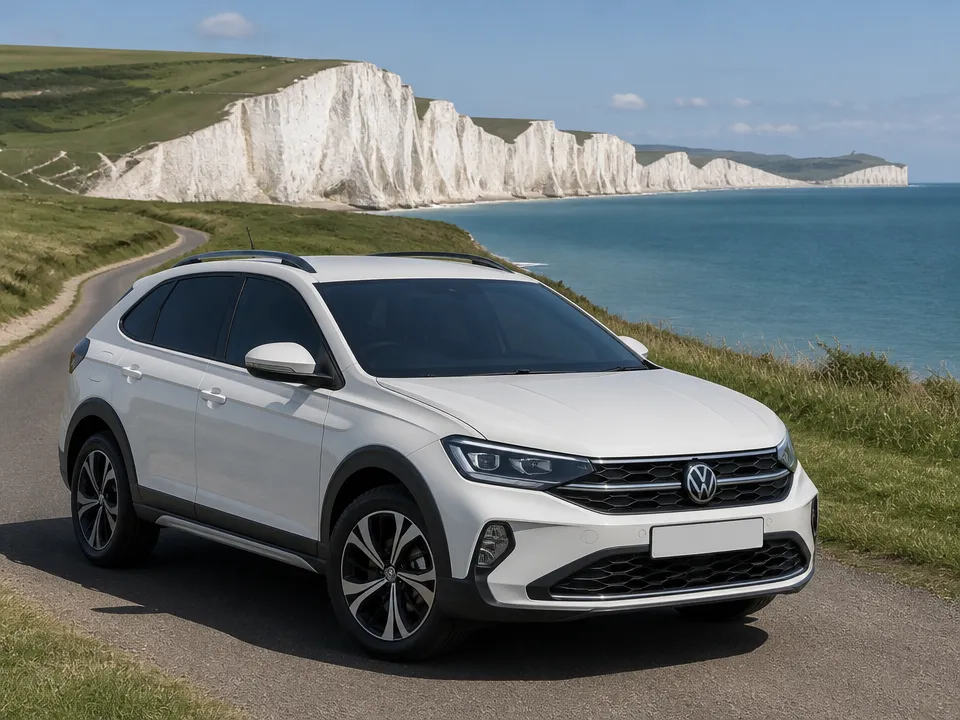
| Volkswagen Taigo | 1.0 L | 95 hp | Manual | Petrol | £33 |
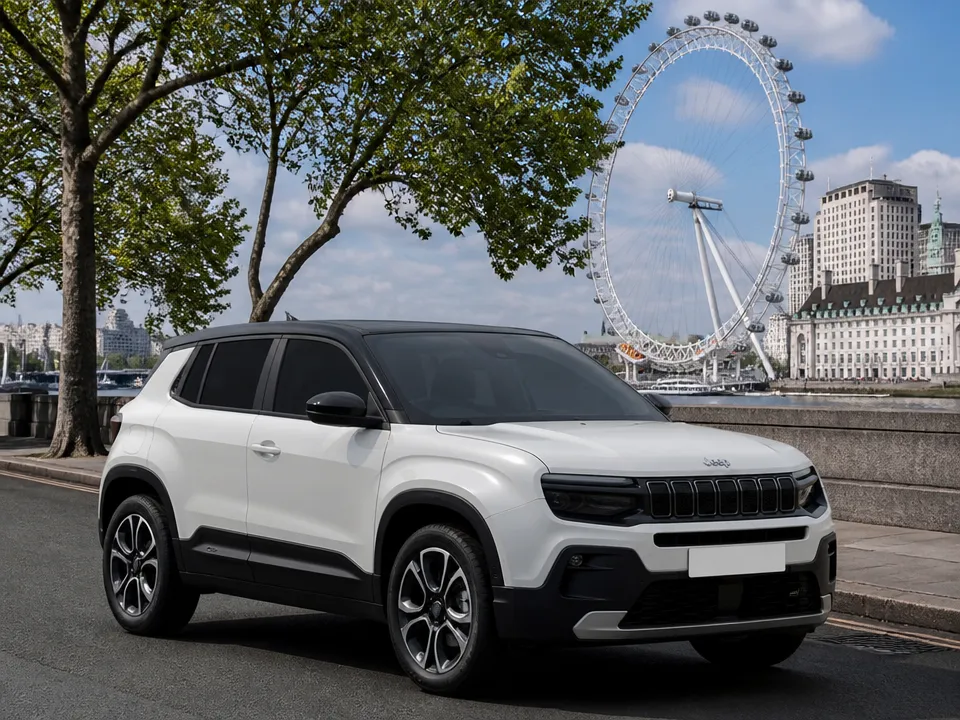
| Jeep Avenger | 1.2 L | 100 hp | Manual | Petrol | £35 |
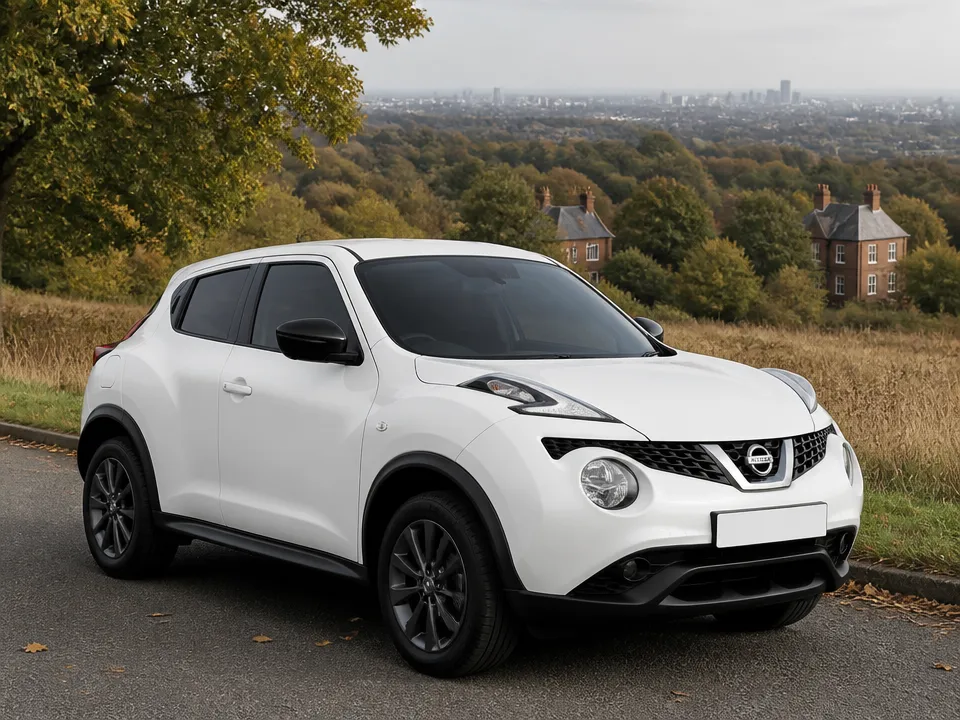
| Nissan Juke | 1.0 L | 114 hp | Manual | Petrol | £38 |
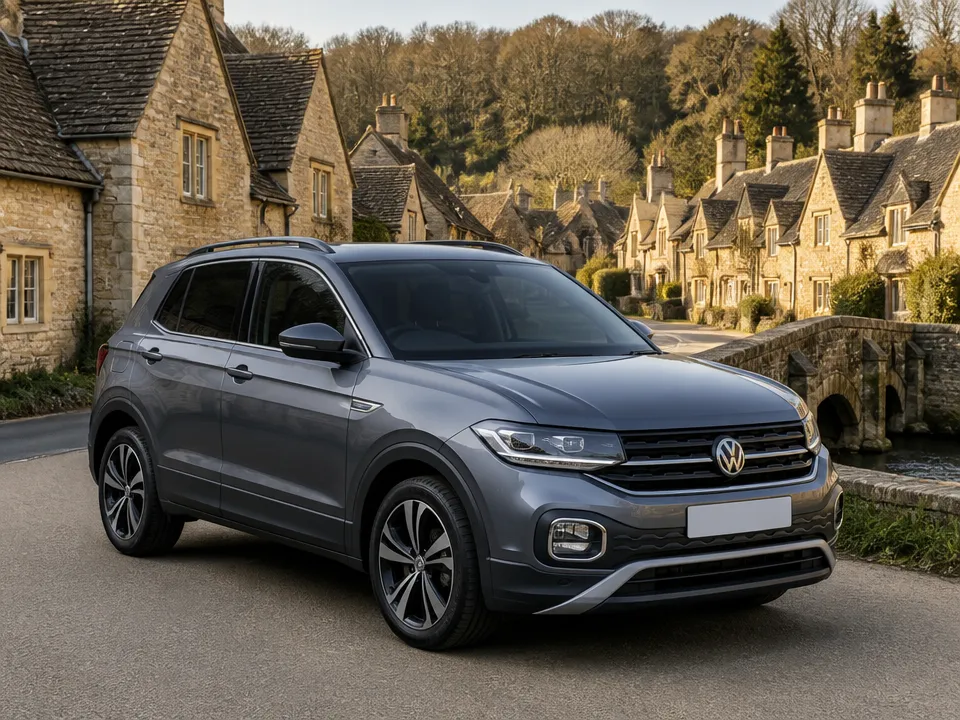
| Volkswagen T-Cross | 1.0 L | 95 hp | Manual | Petrol | £38 |
| Volkswagen T-Roc | 1.0 L | 110 hp | Manual | Petrol | £39 |
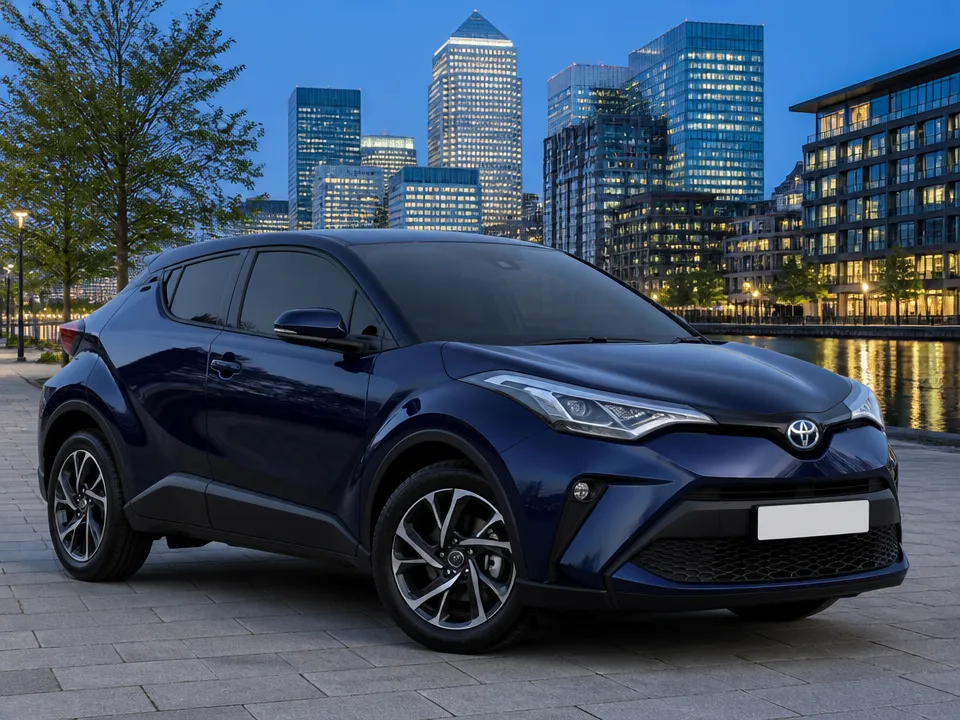
| Toyota C-HR | 1.8 L | 122 hp | Automatic | Hybrid | £41 |
| Vauxhall Mokka | 1.2 L | 100 hp | Manual | Petrol | £49 |
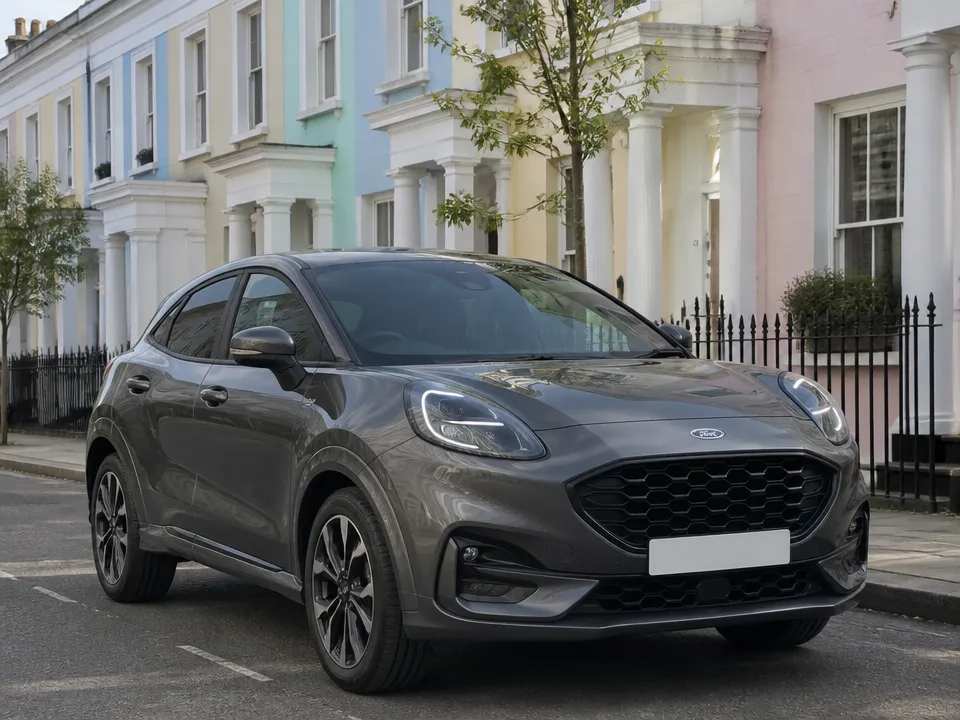
| Ford Puma | 1.0 L | 125 hp | Manual | Petrol | £58 |
Petrol or Hybrid, Manual or Automatic
- Petrol dominates: 13 of the 14 crossovers run on petrol, so refuelling is straightforward at any forecourt on a longer trip.
- One hybrid: the Toyota C-HR pairs a 1.8 L engine with a hybrid system and 122 hp, the only electrified car in the class.
- Manual by default: 12 cars have a manual gearbox, which suits drivers used to changing gear on motorway slips and country lanes.
- Two automatics: the Toyota C-HR and the Kia Stonic are the only two-pedal options, and the Stonic at £30 a day is the cheaper way in.
- Power spread: outputs run from 95 hp on the Volkswagen Taigo and T-Cross to 130 hp on the Vauxhall Grandland.
The Kia Stonic is the second automatic and the cheaper way into a two-pedal crossover — worth checking first if you have never driven on the left before.
The Cheapest and the Most Expensive Crossover Side by Side
The Citroen C3 Aircross at £22 a day and the Ford Puma at £58 a day sit at opposite ends of the same class, and both seat five with front-wheel drive. The C3 Aircross runs a 1.2 L engine with 110 hp through a manual gearbox; the Puma pairs a 1.0 L unit of 125 hp with the same transmission. The Puma's 125 hp and the C3 Aircross's 110 hp are close, so the gap between the two ends of the range is equipment and trim, not pace; if you only need urban transport around London, the C3 Aircross covers the same five seats for a fraction of the daily rate. The Vauxhall Grandland, at £29, actually produces more power than either — 130 hp from 1.2 L.
Crossover Car Rental Rates for a Day, a Week or a Month
Crossover hire in United Kingdom is priced per day, and longer bookings follow the same rate with a fixed multiplier. The class runs from £22 to £58 a day across 14 cars, with a week from £132 and a month from £462. Every rate on this page is quoted per car per day in pounds, so a seven-day booking is charged as six days and a month as twenty-one — the multiplier is the whole mechanism, and there is no separate long-stay tariff to hunt for.
How Daily Rates Turn into Weekly and Monthly Bookings
Crossover hire in United Kingdom starts at £22 a day, with a week from £132 and a month from £462. The daily figure is the one that scales: the Citroen C3 Aircross sits at the bottom of the class at £22 a day, while the Ford Puma at £58 a day is the dearest crossover on this page, and the twelve models between them spread across that range. A week is charged as six days and a month as twenty-one, so the saving comes from the arithmetic rather than from a discount code. Before you fix dates, work out your actual driving days — a rental stretched by two idle days costs more than one that ends when the driving does.
Weekly and Monthly Rates Across the Class
- Citroen C3 Aircross: the entry point of the class at £22 a day, a week from £132 and a month from £462 — petrol, manual, 110 hp.
- Mid-range models: the Peugeot 2008, MG ZS and Vauxhall Grandland sit between £25 and £29 a day, so a week lands between £150 and £174 on the same multiplier.
- Automatic crossovers: the Kia Stonic at £30 a day and the Toyota C-HR at £41 a day are the two two-pedal cars, and both follow the same six-day week.
- Top of the range: the Ford Puma at £58 a day is the most expensive crossover here, with a week from £348 and a month from £1,218.
- Long stays: a month is charged as twenty-one days, which is why the monthly figure stays well below four consecutive weeks at the daily rate.
Mileage, Deposit and What the Rental Agreement Covers
Our rates cover the car itself; everything that sits around the hire — the security held against the vehicle, the excess that applies if something goes wrong, what delivery to your address costs and whether a longer stay earns a reduction — is written into the agreement you receive, and the same document carries the mileage terms for your booking. In our experience the questions that come up most often are the ones about mileage and the excess, and both are answered by the paperwork rather than by a number in a price table. The deposit, insurance excess, delivery fees and any discounts are set out in the rental agreement, not quoted as a figure on this page. If a condition matters to your trip, ask the manager to confirm it while the booking is still being agreed. Read the agreement before the delivery date — the terms are fixed at booking, not at hand-over, so a query raised afterwards has nowhere to go.
What Changes the Total Beyond the Daily Rate
The daily rate is only one line of the final total, and the others are agreed when booking rather than published as fixed amounts. Fuel follows a full-to-full rule: the car arrives with a full tank and must go back full, otherwise the missing fuel and a refuelling service fee are charged as set out in the rental agreement. Road charges and penalties are not calculated into the rate either — who pays them is agreed when booking, so raise it before the car is delivered if your route crosses a charging zone. The minimum rental age, the young-driver surcharge, the cards accepted and any territorial limit are all confirmed with the manager at the same stage. In our practice, a booking agreed in one conversation with the delivery address, date and time settled together leaves the fewest surprises on the day the car arrives.
Your Crossover Car Rental in United Kingdom
Where We Bring the Car and How the Booking Is Agreed
Rent-Trip brings the car to you rather than asking you to collect it from a depot. The delivery address, the date and the time are agreed with a manager before the booking is fixed, so the hand-over happens where your trip actually starts — at one of the six airports, a hotel or a home address. Delivery outside London and its six airports is arranged case by case and is not promised on the site.
The delivery address, the date and the time are agreed with a manager before the booking is fixed — so tell us the flight number or the postcode when you enquire, not after the car is on its way. In our practice the rentals that go smoothly are the ones where the arrival time was pinned down a week ahead, because airport pick-ups shift by an hour or two when a flight is delayed, and a manager can move the slot only while the hire is still being agreed. If your plans are still open, say so at the enquiry stage rather than at the last minute.
Full-to-Full Fuel and Returning the Car
The crossover arrives clean with a full tank and must be returned with a full tank. If the car comes back with less fuel, the missing fuel and a refuelling service fee are charged as set out in the rental agreement. No other fuel option is offered — there is no pre-paid tank and no full-to-empty arrangement, so the simplest habit is to fill up at the last station before the drop-off point. Petrol in the city was averaging around £1.75 a litre and diesel £1.99 at the last check, so a full tank on a 1.0-litre crossover is a modest line in the trip budget. On a full-to-full policy you get back exactly what you put in, which is why we keep it as the only option.
What to Sort Out Before Hand-Over
- Delivery slot: the address, date and time are agreed with a manager when you book, so confirm them in writing before the car is dispatched.
- Rental agreement: the deposit, insurance excess, delivery fees and discounts are set out in the rental agreement — read it before the delivery date, not at the kerb.
- London charges: the Congestion Charge and ULEZ are daily schemes with their own hours and payment windows, and who covers them is agreed when booking.
- Driving on the left: all our cars are right-hand drive, and the Highway Code asks you to keep left unless signs or markings say otherwise.
For a crossover car rental in United Kingdom, the delivery model removes the depot detour entirely: you land, you are met, and the paperwork is settled against terms you have already read.
Driving a Crossover Car Rental in United Kingdom
A crossover is the easiest of the larger body types to place in a British street or a multi-storey car park: it is short enough for tight bays and tall enough to see over the traffic ahead. What changes the driving itself is not the car but the rules around it, and those are the same for every model on this page.
Driving on the Left with a Right-Hand-Drive Crossover
Every crossover we supply in United Kingdom is right-hand drive, and traffic keeps to the left unless signs or markings say otherwise — Highway Code rule 160; when turning, keep close to the left edge, rule 183. On a first day the habit that catches people is the controls: in a right-hand-drive car the gear lever and the interior mirror are to your left, so set the mirrors before pulling away. Roundabouts run clockwise and you give way to traffic approaching from the right, rule 185. Speed limits are 30 mph in built-up areas in England, Scotland and Northern Ireland, 60 mph on a single carriageway, 70 mph on a dual carriageway and 70 mph on a motorway; on lit roads 30 mph applies unless signs say otherwise, and many zones are signed at 20 mph — the sign wins. The drink-drive limit in England, Wales and Northern Ireland is 80 mg per 100 ml of blood, 35 µg per 100 ml of breath and 107 mg per 100 ml of urine; in Scotland it is 50 / 22 / 67. Holding a phone, satnav or tablet while driving is banned even at a red light — £200 and 6 penalty points, and a driver who passed under 2 years ago loses the licence; hands-free is allowed if the device does not block your view. Seat belts are compulsory where fitted, and children ride in a child seat until they reach 135 cm or turn 12, whichever comes first — a fine of up to £500. In our experience the first hour is where the adjustment happens, so plan a short loop before joining a motorway.
Documents, Charges and What Is Agreed When Booking
Full valid foreign licences may be used for 12 months from your last entry into Great Britain (England, Wales, Scotland). The minimum rental age, the young-driver surcharge, the cards accepted and the territory limit are agreed when booking, as are the deposit, the insurance excess, the delivery fees and any discounts — all set out in the rental agreement. The same applies to the charges you meet on the road: the Congestion Charge is £18 a day when paid on the day or in advance and £21 when paid by midnight on the third day after the trip, running 07:00–18:00 Monday to Friday and 12:00–18:00 on Saturdays, Sundays and bank holidays, inside the Inner Ring Road. ULEZ is £12.50 a day for non-compliant vehicles, 24 hours a day, 7 days a week except 25 December, across all 32 boroughs; the M25 is outside it. Dartford Crossing is £3.50 for a car per crossing, £2.80 prepaid. Who pays road charges, tolls and penalty notices on a rental car is agreed when booking, so settle it before the car arrives rather than after a PCN lands.
The car comes clean with a full tank and goes back full — missing fuel and a refuelling service fee are charged as set out in the rental agreement, and no other fuel option is offered. Petrol is the fuel of 13 of the 14 crossovers here, so a filling station stop is part of the routine; the hybrid Toyota C-HR stretches the gap between them.
Automatic and Hybrid Crossover Car Rental in United Kingdom
Two of the fourteen crossovers on this page come with an automatic gearbox, and one of them — the Toyota C-HR — is also the only hybrid in the class. For drivers who would rather not work a clutch in British traffic, that narrows the choice to the C-HR and the Kia Stonic. Everything else on this page is petrol with a manual.
Toyota C-HR: The Hybrid Automatic
The Toyota C-HR is the only hybrid crossover on this page, pairing a 1.8 L petrol-electric unit with an automatic gearbox and 122 hp. It is the third most expensive car on the page at £41 a day, behind only the Vauxhall Mokka and the Ford Puma. The hybrid drivetrain suits the stop-start rhythm of British town driving, where the petrol engine cuts out and the electric motor takes over at low speed. On a longer run the 1.8 L unit settles into a steady cruise rather than chasing revs. In our experience, drivers who book the C-HR for a week tend to refuel less often than those in a pure petrol crossover of similar size — worth weighing against the higher daily rate if your trip is mostly urban.
Kia Stonic: The Cheaper Two-Pedal Option
The Kia Stonic is the second automatic in the class and the cheaper way into a two-pedal crossover, at £30 a day against the C-HR's £41. Its 1.0 L petrol engine produces 99 hp and drives the front wheels through an automatic box, with the same five seats and crossover body as every other car here. The trade-off is power: 99 hp is the lowest output among the automatics, and the Stonic is happiest in town and on A-roads rather than fully loaded on a motorway gradient. At £30 a day the Stonic sits in the lower half of the class range of £22–£58, so choosing an automatic does not push you to the top of the price list.
What to Check Before You Book an Automatic
- Gearbox confirmed at booking: the automatic is agreed with a manager when the booking is fixed, so state it explicitly rather than assuming the model you name comes with two pedals.
- Hybrid availability: only one hybrid exists in the class, so if the C-HR is your reason for booking, confirm it before the delivery date.
- Fuel policy: the car arrives with a full tank and must go back full — the missing fuel and a refuelling fee are set out in the rental agreement.
- Left-hand traffic: all cars are right-hand drive and Britain drives on the left, so the first hour in an automatic is one less thing to think about at a roundabout.
The rest of the automatic question is settled when you book: delivery address, date and time, and the gearbox you want are all agreed with a manager before the booking is fixed. Outside London, the same terms apply — we arrange delivery case by case and do not promise it on the site, so ask first.
Renting a Crossover Car in United Kingdom for Every Kind of Trip
A five-seat crossover covers most of the journeys a visitor actually makes — a week of city errands, a family run to the coast, a business loop between meetings — and the class on this page is wide enough that the right car for each of them already exists in the fleet. What follows is how the 14 models map onto the trips they suit best.
The Hyundai Kona at £36 a day is the car we hand over most often for short city bookings, and its 1.0 L, 120 hp petrol engine is more than enough for errands inside the Congestion Charge zone. Compact crossovers like the Kona, the Kia Stonic and the Volkswagen T-Cross slip into multi-storey bays built for hatchbacks, and the raised seat puts you above the worst of the traffic without the width of an SUV. For a booking of two or three days, the daily rate is the whole cost of the car, so the cheapest model in the class leaves more of the trip budget for everything else. If your driving stays inside the Inner Ring Road, pick the smallest crossover you are comfortable in — a bigger car buys nothing in a 20 mph zone.
The Vauxhall Grandland and the Ford Puma are the two crossovers we would point a family of five towards, both with five seats and a boot that swallows a week of luggage. The Grandland's 1.2 L engine produces 130 hp — the highest output on this page — and the Puma's 1.0 L unit delivers 125 hp, so neither feels strained at 70 mph with the car loaded. A week is charged as six days, which is why a seven-day family booking works out better value than seven separate days at the same daily rate. Book the larger models early if your dates fall in a school holiday: 14 cars is a finite fleet, and the roomiest ones go first.
- Heathrow (LHR): the busiest of the six airports we deliver to, and the one where a delayed landing most often moves a hand-over slot.
- Gatwick (LGW): a longer run into central London than Heathrow, so a crossover with a tall seating position earns its keep on the M23.
- Stansted (STN): the second furthest of the six by road, which makes a comfortable motorway car worth the small step up in daily rate.
- London City (LCY): the closest to the centre, and the quickest hand-over of the six if your trip starts in the Docklands.
- Luton (LTN) and Southend (SEN): both served on the same terms, with the address, date and time fixed at booking.
Give the flight number when you enquire — a manager can move the slot only while the booking is still being agreed.
Comparing Crossover Classes for Your United Kingdom Rental
Fourteen cars in one class still differ in ways that matter over a week of crossover car rental in United Kingdom: engine size, gearbox, power and trim. Comparing them on the four numbers that change the drive — litres, horsepower, pedals and fuel — takes less time than reading fourteen spec sheets, and it settles most of the choice before you ever see the car.
Petrol Manual, Petrol Automatic or Hybrid
| Version | Cars on this page | Models | What it suits |
|---|---|---|---|
| Petrol, manual | 12 | Kona, C3 Aircross, 2008, ZS, Grandland, Taigo, Avenger, Juke, T-Cross, T-Roc, Mokka, Puma | Motorway mileage and drivers happy with a clutch |
| Petrol, automatic | 1 | Kia Stonic | Town traffic and first-time left-side driving |
| Hybrid, automatic | 1 | Toyota C-HR | Stop-start city work and the lowest fuel stops |
The manual gearbox dominates for a reason: it is the cheaper build, and 12 of the 14 crossovers here carry one. The automatic premium is small — the Stonic sits at £30 a day, well inside the class range.
Engine Size and Power Across the Fleet
Engine capacity on this page runs from 1.0 L to 1.8 L, and power from 95 hp to 130 hp. The 1.0 L units — in the Kona, Stonic, Taigo, Juke, T-Cross, T-Roc and Puma — are turbocharged three-cylinders that pull well above their size, which is why the 125 hp Puma and the 120 hp Kona feel quicker than the 1.5 L MG ZS at 106 hp. The largest engine belongs to the hybrid Toyota C-HR at 1.8 L, where the extra capacity works with the electric motor rather than against it. Power is not the same as pace: the 130 hp Grandland is the strongest car here, yet the 95 hp Taigo and T-Cross are perfectly adequate for two people and a suitcase. Match horsepower to load, not to pride.
Boot volume and trim level are the two things a spec table cannot settle for you, and both are confirmed with a manager when you book rather than published as a figure here. What the page does fix is the shape: all 14 cars are five-seat crossovers with front-wheel drive, so the boot floor sits at the same useful height whichever model you pick. Trim differences show up in equipment — the higher daily rates on the Mokka and the Puma buy specification, not size. Ask which trim your chosen model comes in before the delivery date, because two cars of the same name can arrive with different equipment.
What the Rental Agreement Covers and What It Leaves Open
The rental agreement is the document that turns a daily rate into a hire, and it is where every figure that is not on this page actually lives. Reading it before the car arrives is the single most useful half-hour of the whole process.
Deposit, Excess and Delivery Fees
Our published rates cover the vehicle alone; the money side that surrounds the hire is written into the paperwork you receive, and the mileage terms for your booking travel in the same document. What is held against the vehicle, the insurance excess, the charge for bringing it to your address and any reduction for a longer stay sit in the contract, never as a number on this page. In our practice the two questions that come up most are about mileage and the excess, and both are settled by the contract rather than by a figure in a price table. Raise either one while the booking is still being agreed, when a manager can still change the terms.
Age, Licence and Territory Limits
The minimum age behind the wheel, the surcharge for a newly qualified driver, which cards are taken and any restriction on where the vehicle may travel are settled at the enquiry stage. None of them is a fixed published figure on this page, and none should be assumed from another country's rules. A full valid licence issued abroad is accepted for 12 months from your last entry into Great Britain (England, Wales, Scotland) — that is the law, and it is separate from the rental company's own age and licence conditions, which are settled in the booking conversation. If your route is meant to cross into Wales or Scotland, say so at the enquiry stage: a territorial limit, if one applies to your booking, is agreed then, not at the kerb.
Fuel, Charges and Penalties in Writing
The tank is full when the keys change hands and full again when they come back; short of that, the shortfall plus a service charge for refilling appears on the final invoice, exactly as the contract words it, and there is no second option on the menu. Tolls, road-user charges and penalty notices belong to a different conversation: liability for them on a hired car is fixed at the point of booking, so pin it down before the keys change hands rather than after a PCN drops through the letterbox. The Congestion Charge is £18 a day paid on the day or in advance, £21 by midnight on the third day after the trip; ULEZ is £12.50 a day for non-compliant vehicles; Dartford Crossing is £3.50 per car per crossing, £2.80 prepaid. Know which of these your route crosses, and ask the question in the booking conversation.
Long Stays with a Crossover Car Rental in United Kingdom for a Month
A month-long booking changes the arithmetic of the class: at 21 charged days, the difference between the cheapest and the dearest crossover widens into a real budget line, and the choice of model starts to matter more than it does over a weekend.
How the Monthly Multiplier Rewards a Longer Booking
A month is charged as 21 days at the daily rate, so the monthly figure stays well below four consecutive weeks. The Citroen C3 Aircross at £22 a day comes to a month from £462, while the Ford Puma at £58 a day runs to a month from £1,218 — the same multiplier applied to both ends of the class. That spread is why the model you pick for a long stay deserves more thought than the one you pick for three days: over 21 charged days, the gap between a mid-range car and the top of the range is the price of a second rental. Work out your actual driving days first — a rental stretched by a week of idle days costs more than one that ends when the driving does.
- Automatic for daily traffic: the Kia Stonic at £30 a day is the cheaper two-pedal crossover, and a month of clutch work in British town traffic is the argument for it.
- Hybrid for fuel stops: the Toyota C-HR at £41 a day is the only hybrid here, and over a month its stop-start advantage compounds.
- Manual for motorway miles: 12 of the 14 cars are manual, and a steady 70 mph cruise suits them better than a city commute.
- Space for luggage: the Grandland and the Puma carry five people and their cases, which matters more on a month-long stay than on a weekend.
In our experience, renters on a long booking settle on the lower end of the class — the Citroen C3 Aircross, Peugeot 2008 and MG ZS between £22 and £29 a day — because they balance running costs against comfort over weeks rather than days.
Servicing, Cleaning and Mid-Booking Changes
The car comes clean with a full tank at the start of the booking, and the full-to-full rule applies at the end however long the stay. Mid-booking changes — extending the dates, swapping the model, moving the delivery address — are agreed with a manager while the booking is still open, and the delivery address, date and time are fixed before the car is dispatched. For stays of several weeks, confirm the return date and the drop-off address early: a long booking has more room for a date to drift, and the terms are fixed at booking rather than renegotiated at hand-over.
Mistakes Renters Make with a Crossover Car Rental in United Kingdom
Most problems with a crossover rental come from assumptions made before the car arrives rather than from the car itself. These are the ones we see most often, and each has a fix that costs nothing but a question at the right moment.
Twelve of the fourteen crossovers here are manual, so naming a model does not guarantee an automatic gearbox. The two-pedal cars are the Kia Stonic and the Toyota C-HR, and nothing else in the class has one. State the gearbox you want explicitly when the booking is agreed, and confirm it before the delivery date — a renter who assumes an automatic and is handed a manual at the kerb has no easy fix on the day. If you have never driven on the left before, the automatic removes one thing to think about at a roundabout, which is why the Stonic at £30 a day is worth the small premium over the cheapest manual.
The Kona and the Stonic carry four adults comfortably and five only with soft bags, and the same is true across the smaller end of the class. Five adults plus a week of hard-shell cases is the real test, and it is the one booking mistake that cannot be corrected after the car is delivered if the fleet is busy. Check boot volume against your actual cases before choosing the smallest model, and step up to the Grandland or the Puma if the answer is tight. Fourteen cars is a finite fleet — the roomiest models go first in a holiday week.
Forgetting the Charging Zones on the Route
The Congestion Charge and ULEZ are daily schemes with their own hours and payment windows, and a route planned without them can pick up a charge the driver never expected. The Congestion Charge runs 07:00–18:00 Monday to Friday and 12:00–18:00 on Saturdays, Sundays and bank holidays inside the Inner Ring Road; ULEZ applies 24 hours a day, 7 days a week except 25 December, across all 32 boroughs, with the M25 outside it. Who pays road charges, tolls and penalty notices on a rental car is agreed when booking — so map your route first, then ask the question while the booking is still being agreed.
The delivery address, the date and the time are agreed with a manager before the booking is fixed, and an airport pick-up shifts by an hour or two when a flight is delayed. A manager can move the slot only while the booking is still open, so pin the arrival time down a week ahead and give the flight number when you enquire. The bookings that go smoothly in our practice are the ones where the slot was settled early — the ones that go wrong are the ones where the address was still being decided the day before the car was due.