
















Valencia E-Bikes: Four-Hour and Day Rates, Charging and Riding Rules
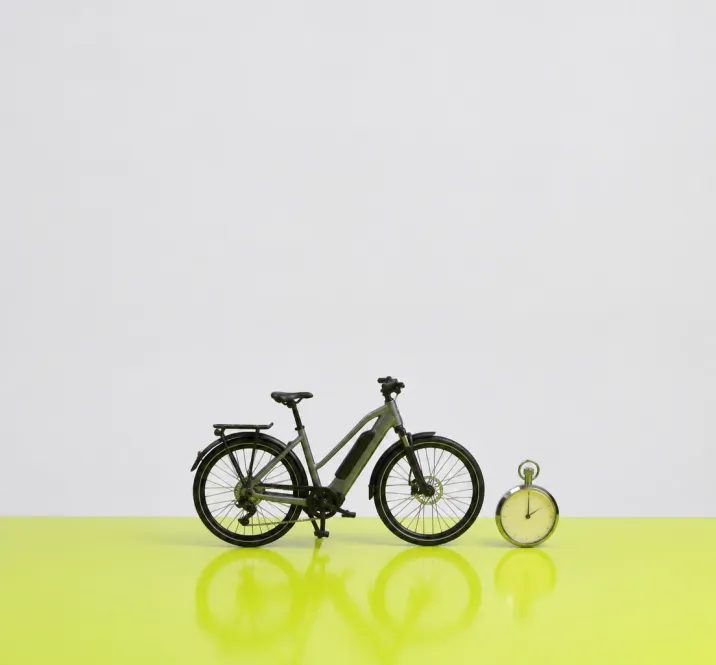
E-bike rental in Valencia costs €25–35 a day on a city e-bike, and four hours cost about €30. No licence is needed for a pedal-assist bike, and the battery is charged in the shop overnight, so the rental ends at closing time. Below: prices, the law, pickup points, documents and booking.
What four hours, a day or several days cost
E-bikes here are sold in a few simple blocks — up to four hours, a day until closing time and a one-day ticket booked online — and the choice between them matters more than the shop.
Market prices for a city e-bike
| Rental block | Price | Conditions |
|---|---|---|
| Up to 4 hours | €30 | Walk-in or booked, at the shop by the Turia garden |
| All day until closing time | €35 | The bike stays in the shop overnight for charging |
| One day, booked online | €25 | Sold as a 24-hour ticket; booking ahead is compulsory |
| One day with the city tourist card | €22.50 | 10% off the online day, one card per rider |
The spread between the cheapest and the dearest day is €10, and it comes mostly from how you book rather than from a different bike. The €35 rate is the walk-in price at a shop on the edge of the Turia garden, the €25 rate is a day booked online in advance with a network of three rental points, and the tourist card takes another 10% off the online price. In both cases you get the same thing: a city e-bike with pedal assistance, a lock and a map. If your date is fixed, the online day is the better buy by €10; if you want to decide on the morning, the walk-in rate keeps you free at a cost of one more coffee and lunch.
Four hours or the whole day
Four hours cost €30 and the whole day €35, so the remaining hours cost only €5 more. That gap is far smaller than on an ordinary city bike, where the same shop asks €10 for four hours and €15 for 24 hours. In practice the four-hour block suits one fixed plan: a ride along the Turia garden to the City of Arts and Sciences and back, or a morning on the seafront before a train. Anything longer — a beach afternoon, a ride out of town, a lunch stop you may stretch — tips the balance to the longer rate. Remember that it ends when the shop closes, not 24 hours after pickup, so a bike collected at 15:00 gives you a few hours, not a full day. Take the bike early, and the extra €5 buys most of the daylight in the saddle.
Several days without a multi-day rate
No shop on the market quotes a multi-day e-bike price, so a longer rental is simply the day rate multiplied by the number of days.
| Days | At €25 a day | At €35 a day | City bike, same days |
|---|---|---|---|
| 1 | €25 | €35 | €15 |
| 2 | €50 | €70 | €24 |
| 3 | €75 | €105 | €36 |
| 5 | €125 | €175 | €60 |
| 7 | €175 | €245 | €80 (week package) |
The city bike column uses €15 for one day, €12 a day from the second to the sixth day and the €80 week package of the same shop. Over a week the gap grows to between €95 and €165, which is where a mixed plan makes sense: a city bike for the flat trips in town and an e-bike only for the long ride out.
Against a city bike and a 125 cc scooter
An e-bike costs roughly three times a city bike for four hours (€30 against €10) and between 2.3 and 2.5 times for a day (€35 against €15 walk-in, €25 against €10 online). Valencia is flat, so the motor buys comfort rather than access: you arrive cooler, you cover more ground, and a headwind on the seafront stops mattering. Anyone weighing electric bike rental in Valencia against a scooter should look at the licence first. Scooters on the local market start from €15 a day, cheaper than any e-bike, but even a 125 cc model needs a car licence (category B or a motorcycle category), a minimum age of 21 and two years of driving experience. The e-bike asks for none of that. For a rider without a suitable licence, or under 21, the e-bike is the only motorised option on two wheels; for a licensed adult, the scooter is cheaper and faster.
Which e-bike you get and what the law says
The rental e-bike here is a single type — a city bike with an electric motor that helps while you pedal — and that type is what keeps it legally a bicycle.
The city e-bike on the market
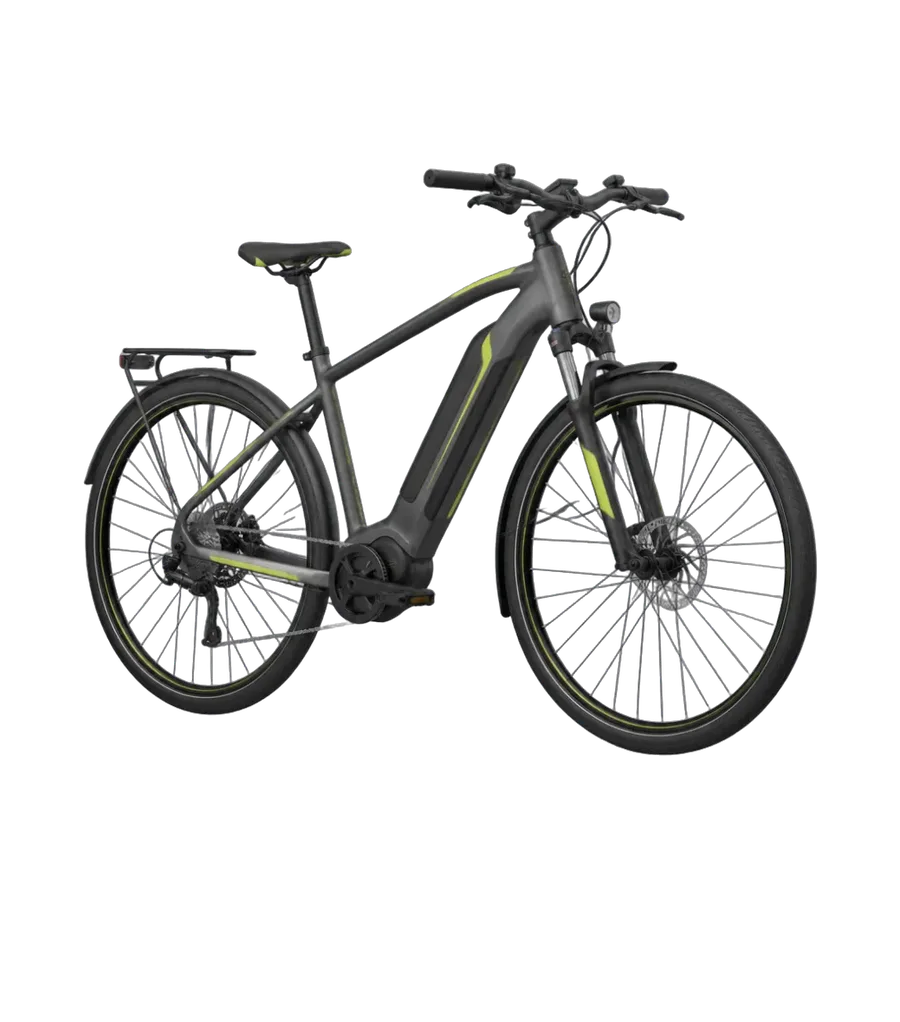
Every rental e-bike on offer is a city model for one rider, and shops do not name the brand or model on their price boards. A city e-bike usually means an upright riding position, gears and a battery on the frame or the rack. Mountain, cargo and child-seat e-bikes do not appear on the price boards, so plan for one adult per bike and ask in advance if you need something else. The motor works only while you turn the pedals and fades out as you approach the legal assist limit, which means you still ride a bicycle — just one that removes the effort of starting from traffic lights and riding into the sea breeze. Before you leave the counter, ask the staff to show you the assist levels on the display and how to switch the system off, and adjust the saddle height so that your leg is almost straight at the bottom of the stroke.
Where an e-bike ends and a moped begins
The legal line is simple: a pedal-assist bike with a motor of up to 250 W that stops helping at 25 km/h counts as a bicycle under EU and Spanish rules. It needs no licence, no registration and no number plate, and it rides on cycle lanes like any other bike. Anything beyond that — a throttle that moves the bike without pedalling, a stronger motor or assistance above 25 km/h — turns it into a moped, which needs a licence, insurance and a helmet. Rental e-bikes in the city are the first kind, and that is why shops hand them over against an ID rather than a driving licence. Stand-up electric scooters are a different class of vehicle with their own rules and are not part of this section. If a shop offers you something with a twist-grip throttle, ask what category it belongs to before you ride it.
Who an e-bike suits
- Long rides out of town: the motor makes a ride to the lagoon south of the city and back realistic for a casual rider.
- Hot afternoons: you arrive at a museum or a restaurant without being soaked, which matters in a warm city all year round.
- Couples of unequal fitness: an e-bike lets the less trained rider keep pace without a tandem.
- Riders without a motorcycle licence: no licence is needed, unlike any scooter.
- Short loops in the centre: a city bike at a third of the price does the same job on flat streets and in the Turia garden.
Battery, charging and the closing-time rule
The battery decides more about an e-bike rental here than the motor does, because the shops charge it themselves and build the rental day around that.
Why the bike sleeps in the shop
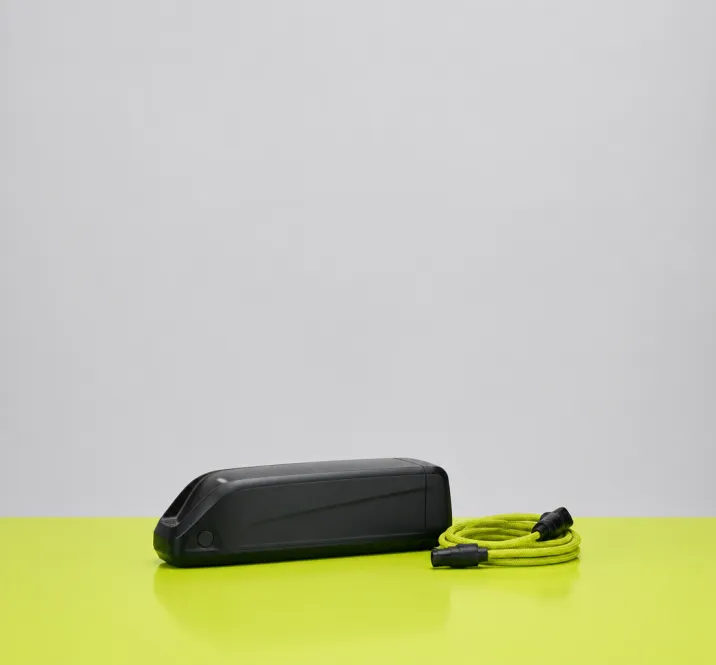
Rental e-bikes stay in the shop overnight for the whole rental period, so that the battery can be charged properly. That single rule has three consequences. First, the day rate runs until closing time, not for 24 hours: return the bike before the shop shuts, even on a multi-day rental. Second, you cannot keep the e-bike at your hotel or flat, so a sunset ride followed by an early start the next morning means returning the bike in the evening and collecting it again after opening. Third, the bike you take each morning should leave with a full battery, which removes the guesswork about charging on a long outing. Plan a multi-day e-bike rental as a series of shop-to-shop days, and choose a rental point close to where you sleep, because you will visit it twice a day.
Planning a day around opening hours
Some rental points in the city close at midday. One network opens from 09:30 to 14:00 and again from 17:00 to 20:15, which shapes an e-bike rental more than the price does. A bike collected at 09:30 can be out until the evening return window, but returning it between 14:00 and 17:00 is not possible, and an afternoon start has to wait until 17:00. With the evening window closing at 20:15, an afternoon rental lasts barely three hours, which is where the four-hour block makes more sense than a day. Shops that stay open through the afternoon are easier for a late start. Whatever the shop, ask for its exact closing time when you collect the bike and set a phone alarm an hour earlier — a late return on an e-bike can cost you a second day.
The 24-hour online ticket
The one-day e-bike ticket sold online is described as valid for 24 hours, while e-bikes elsewhere on the market must be back in the shop by closing time. The two do not have to contradict each other, but they can. A 24-hour ticket used on an e-bike may still require the bike to spend the night in the shop for charging, with collection again the next morning. Before you rely on keeping the bike overnight, ask at the counter where the e-bike sleeps and when it must be back, and note the answer on your contract. If the bike has to return in the evening, a 24-hour ticket simply becomes a day ticket at €25 — still the cheapest e-bike rate on the market. It does not become a reason to plan a late-night ride home.
Managing the battery on a long ride
Shops do not state a range for their city e-bikes, so ask how far the battery usually lasts before you plan a ride out of town. The figure depends on the assist level, the rider's weight and the wind more than on distance, and on a flat route the battery is rarely the limit for a ride inside the city. On a longer ride, use the lowest assist level on the flat and keep the higher levels for headwinds and the ride home. A simple rule works: turn back once the display has used half of the charge you started with. An e-bike with a flat battery is still a bicycle, but a heavy one, and pedalling it the last kilometres back into a sea breeze is the scenario every rider wants to avoid. Keep the shop's phone number saved before you set off.
Where to pick up and where the motor earns its fee
Rental points cluster where visitors already are — at the edge of the Turia garden, inside the old town and on the long avenue to the port — and each start suits a different ride.
Pickup points
| Area | Street | Best for |
|---|---|---|
| Next to the Turia garden | Passeig de la Petxina | Straight into the garden towards the City of Arts and Sciences |
| Historic centre | Calle Sangre, Calle Mar | Hotels in the old town, morning starts |
| Towards the port | Avenida del Puerto | The marina, the beaches and the coast road |
The shop on Passeig de la Petxina sits at the edge of the former riverbed, so you can roll from the counter into the garden in a couple of minutes. The old-town points on Calle Sangre and Calle Mar are inside the historic centre, where narrow streets mean walking the bike for the first few minutes. The rental point on Avenida del Puerto starts you on the port side of the city, the natural choice for the beach. Because the e-bike sleeps in the shop, pick the point nearest to your accommodation rather than the one nearest to the sights.
The lagoon and the coast
The ride the motor is made for leads out of town: south to the Albufera, the freshwater lagoon and rice fields beyond the city, or along the coast past the beaches. These are the rides where a city bike starts to feel long and an e-bike keeps the outing relaxed. Two practical limits apply. The optional assistance service offered by one shop covers the city of Valencia only, with the Albufera area excluded, so a puncture at the lagoon is your problem to solve. And a puncture repair kit is given on request when you tell the shop you are leaving town — ask for it, and learn to use it before you need it. Pack water and sun protection, start in the morning, and plan to be back well before closing time, since the bike has to be in the shop that evening.
City rules that apply to e-bikes too
A pedal-assist e-bike follows the same city rules as any bicycle. Ride on cycle lanes where they exist and on the road with traffic where they do not. In the Turia garden, cyclists may use only the asphalt bike lane, not the runners' track or the pedestrian paths. Pavements are off-limits unless a cycle lane is built into them, and then the limit is 15 km/h; in pedestrian streets you may ride only where no sign forbids it, at 10 km/h or less and giving people on foot absolute priority. A helmet is compulsory for riders under 16 in the city and for everyone on interurban roads — which usually includes the ride out to the lagoon. At night you need lights front and rear, and headphones or a phone in hand are prohibited. Lock the bike to a rack, never to a tree or a lamppost.
Documents, deposit and what comes with the bike
Renting an e-bike needs no licence of any kind; the shop wants proof of identity, sometimes a deposit, and a few minutes for a short contract.
What to bring
Bring a valid ID card or passport, and expect practice to differ between shops. At one, e-bike hire works with a short contract and a photo of your ID or passport taken as security, with no cash deposit at all. At another, the shop asks for a €50 deposit as well as a valid ID, whether you booked online or not. Neither asks for a driving licence, because a pedal-assist e-bike is legally a bicycle. If you rent for children under 16, remember that a city e-bike is built for one adult, and any rider under 16 must wear a helmet in the city; check whether the shop has helmets in the right size. Keep the contract or the e-ticket on your phone until the bike is back — it is your proof of the return time and of any damage noted at pickup.
What is included and what costs extra
- Lock: included with every bike at both kinds of shop.
- Light: included at the three-point network; ask elsewhere, because you need one after dark.
- Map: an updated map of the cycle lanes, often with route suggestions.
- Repair kit: given on request when you plan a ride out of town.
- Paid extras: helmets, baby seats, tools and repair kits at some shops, priced at the counter.
Helmets are the extra most visitors forget. Adults may ride without one in the city, but the rule changes on interurban roads, so a ride to the lagoon needs a helmet for everyone. Ask for helmets when you book rather than at the counter on a busy morning.
Punctures and breakdowns
Do not expect a roadside rescue as standard. One shop says plainly that it does not come out to fix a puncture: you bring the bike back and swap it for another at no cost. On an e-bike that is harder than on a city bike, because a heavy bike with a flat tyre is slow to push. The same shop sells an optional assistance service that sends someone to repair the puncture or replace the bike — but only within the city, with the Albufera area excluded. Inside the centre and along the Turia garden, walking a flat tyre back is rarely a long trip. For a ride out of town, take the repair kit, check the tyres before you leave, keep your phone charged and save the shop's number. If the motor or display stops working, call the shop before you try anything yourself.
Booking, date changes and discounts
Booking rules differ more than prices do, and they decide whether a change of plan costs you nothing or the full day.
Booking ahead and arriving early
At the network of three rental points, advance booking is compulsory: you buy the ticket online, choose the date and the pickup point, and show the e-ticket on your phone. Shops hold only a few e-bikes, so on a busy weekend booking is the only way to be sure of one. The shop by the Turia garden also takes walk-ins, but asks you to arrive about 15 minutes before your booking time to fill in the contract and adjust the bike. Build those minutes into a tight morning — a late start shortens a rental that ends at closing time anyway. If several riders travel together, book all bikes at once and ask for one helmet per child under 16 at the same time.
Refunds and date changes
Online e-bike tickets cannot be cancelled or refunded. What you can do is change the date, by writing to customer service at least 48 hours in advance. In practice that protects you against a change of travel plans but not against bad weather on the day itself. If the forecast is uncertain, compare the two ways of buying: the online day at €25 commits you in advance, while the walk-in rate at €35 commits you to nothing until you are at the counter. The €10 difference is, in effect, the price of flexibility. For a short stay with one fixed free slot, book online; for a longer stay where you will pick the sunniest morning, walk in and pay on the day.
The tourist card discount
Holders of the city tourist card get 10% off the online e-bike ticket, which brings the day from €25 down to €22.50. The discount is personal and non-transferable, like the card itself: if several people ride, each needs their own card for each discounted ticket. The final price with the discount appears in the basket before you pay. On its own, a saving of €2.50 does not justify buying the card for a single ride. It is worth claiming if you already hold the card for museums and transport, and it adds up when the whole group rides on several days.
Key points before you book
- Price: €25–35 for a day on a city e-bike and about €30 for up to four hours; there is no multi-day rate, so a week costs €175–245.
- Licence: none; a pedal-assist bike with assistance up to 25 km/h is legally a bicycle, and you need only an ID or passport, sometimes with a €50 deposit.
- Charging: the e-bike sleeps in the shop, so the day ends at closing time; check the midday break and the evening return window.
- Rides: the Turia garden on the asphalt lane only, no pavements; the motor pays off on rides to the lagoon and along the coast, where roadside assistance does not reach.
- Booking: advance booking is compulsory at some points; online tickets are non-refundable, the date can change with 48 hours' notice, and the tourist card takes 10% off.