










Bass Fishing Trips near Orlando: Rates, Lakes and What the Price Covers
A fishing boat charter in Orlando starts from $200 for a short guided trip, and a private half day of 4 hours averages $367 across the lakes south of the city. Below: what the rate covers, how the price per angler changes with group size, which lakes the guides fish, the boats and tackle on board, and what you still pay for on top — the license and live bait.
What a guided bass trip includes and how it is priced
Freshwater fishing around Orlando is sold almost entirely as a guided trip: you book a guide together with his boat for a fixed number of hours, and the guide runs the boat, finds the fish and handles the tackle.
You book the guide and the whole boat
A charter here is private — the boat goes out with your group only, not with strangers who bought seats. The working modes the market offers are two: with a captain at the helm and by the hour. You do not get the keys and drive off yourself; the person at the wheel is the guide, and a professional bass guide on these lakes typically holds a U.S. Coast Guard Master Captain license. The Rent-Trip page for fishing charters in Orlando has no model cards, because what you choose is a trip length and a guide rather than a particular boat; the price table at the top of the page shows the range the market charges.
A price per trip, set by the number of hours
The unit is the trip, and its length decides the price. Half day means 4 hours, three-quarter day means 6 hours and full day means 8 hours. One guide working out of St. Cloud charges $350 for 4 hours, $425 for 6 hours and $500 for 8 hours. Across the guided trips offered on Lake Tohopekaliga, the average private 4-hour trip costs $367 and the average 8-hour trip costs $516, while the cheapest trips start from $200. Shorter trips exist as well: 2-hour trips average about $243 and 3-hour trips about $271. A quoted price normally covers one or two anglers; every person beyond that is added on top, which is why the same trip can cost very different amounts for a couple and for a family of four.
What one typical rate sheet includes
Rate sheets differ, so it pays to read what sits inside the figure. One St. Cloud guide's rate includes:
- Captain and guide: a U.S. Coast Guard Master Captain licensed, professional bass guide.
- Boat and fuel: a late-model bass boat and the gas to run it.
- Gear: rods, reels, tackle and lures.
- On board: drinks and snacks, rain gear and sunscreen.
The same sheet states plainly what is not included: live bait, the fishing license and lunch. These three items are the usual gap between the base price and what the day costs you, and section six explains each of them.
Rates by trip length, from 2 to 8 hours
The longer the trip, the lower the price of each hour — and on these lakes the difference is large enough to change which trip is the better buy.
Market averages and one guide's rates side by side
| Trip length | Average private trip | Per hour | One St. Cloud guide, 1–2 anglers | Per hour |
|---|---|---|---|---|
| 2 hours | About $243 | About $122 | — | — |
| 3 hours | About $271 | About $90 | — | — |
| 4 hours (half day) | $367 | About $92 | $350 | $87.50 |
| 6 hours (three-quarter day) | About $460 | About $77 | $425 | About $71 |
| 8 hours (full day) | $516 | $64.50 | $500 | $62.50 |
Why the full day is the cheapest hour on the water
The hourly price drops by about half between the shortest and the longest trip: roughly $122 an hour on a 2-hour trip against $64.50 on an 8-hour one. The reason is simple — the guide's fixed costs for the day, from trailering and launching the boat to fuel for the run to the first spot, are the same whether you fish two hours or eight. Moving from a half day to a full day adds 4 hours for only $149 on the market averages ($367 to $516), or $150 with the St. Cloud guide ($350 to $500). That is about $37 an extra hour, well under half of what the first four hours cost. In my experience, if your plans allow a full day, it is the better value per hour by a wide margin.
Extra hours and the $200 starting price
A trip can usually be stretched. The St. Cloud guide charges $50 for each extra hour, so a 5-hour outing costs $400 for one or two anglers — still cheaper per hour than the 4-hour rate. At the other end, the $200 starting price is the lowest entry point among the guided trips on Lake Toho, not the cost of a typical half day; the more expensive guides start from $400 and more. Read a starting price as the cheapest trip a guide runs, and compare like with like: the same number of hours and the same number of anglers.
Hourly boat-with-captain offers
Some boats are offered with a captain at an hourly rate instead of a trip price. A 2025 Ranger Z520R bass boat with a captain on Big Lake Toho, leaving from St. Cloud, starts at $67 an hour. Four hours at that rate come to $268 and eight hours to $536, before any minimum the owner may set. Whether such an offer includes rods, lures and a guide who actively finds fish, or only a captain who drives the boat, is the question to ask before setting it against a guide's trip price.
Group size and the price per angler
Because the price covers one or two people and each extra person is charged separately, the cost per angler moves with the size of your group.
Price per angler on one guide's rates
| Anglers | Half day, 4 h | Per angler | Full day, 8 h | Per angler |
|---|---|---|---|---|
| 1 | $350 | $350 | $500 | $500 |
| 2 | $350 | $175 | $500 | $250 |
| 3 | $450 | $150 | $600 | $200 |
Two anglers is the sweet spot
On a guide who charges $100 for each extra person, the second angler costs nothing and the third costs $100. That makes a pair the cheapest per head on the half day relative to the price of the boat: $175 each instead of $350 for a solo angler. A third person lowers the per-head figure further, to $150 on the half day and $200 on the full day, but that third angler shares the deck with two others. A solo angler pays the full trip price, so for one person the shorter trips at the bottom of the range make the most sense.
How many people fit on a bass boat
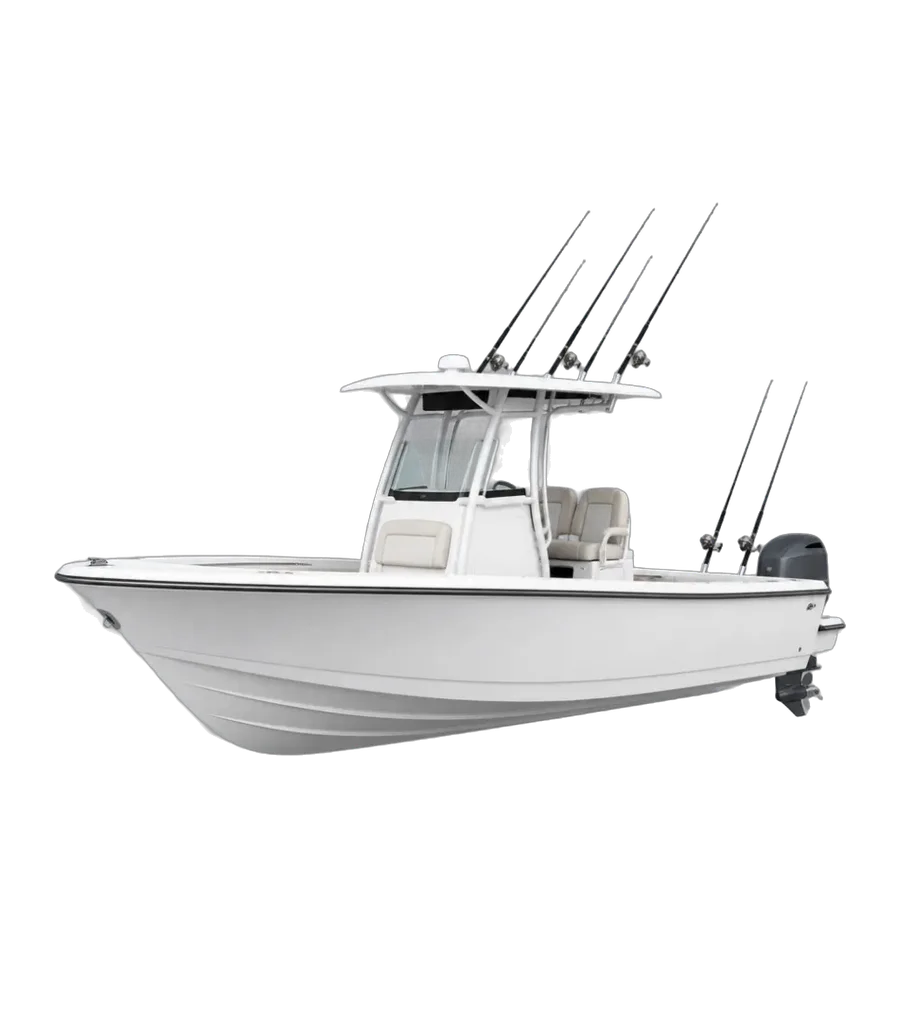
The boats that fish these lakes run from 17 to 24 feet and take between 3 and 6 people per charter. A typical bass boat — the Ranger Z520R is a good example — seats four, which in practice means the guide plus three anglers. Bass fishing is done by casting from the front and rear decks, and each extra angler means less room to cast. For a family with children who want to try fishing rather than fish hard all day, it is worth asking for a larger boat, or splitting into two boats, rather than squeezing everyone onto one deck.
Children and first-timers
A guided trip suits beginners well, since the guide rigs the rods, picks the lure and shows how to cast and set the hook. Anglers under 16 do not need the state freshwater license, so a family trip may need fewer licenses than there are people on board. Tell the guide the ages and experience of the group when you book: a half day with frequent bites on smaller fish is often a better plan for children than a full day spent chasing a single trophy bass.
Lake Toho, the Kissimmee Chain and the Butler Chain
Most guided trips leave from the lakes south and southwest of Orlando, and the name that comes up first is Lake Tohopekaliga.
Lake Tohopekaliga, near Kissimmee
Lake Tohopekaliga, known locally as Lake Toho, covers more than 18,800 acres near Kissimmee and is described as the number one big bass lake in the state. Its reputation rests on results like the 45-pound, 2-ounce five-bass limit weighed in during a Bassmaster tournament in 2004. Thirteen guided charters run trips on Lake Toho itself, and many more are based in the two nearest towns: around 50 charter offers are based in Kissimmee and 62 in St. Cloud. For a visitor staying in the theme-park area, this is the closest serious bass water.
St. Cloud and Big Lake Toho
St. Cloud, on the eastern side of the chain, is a working base for guides: the hourly Ranger Z520R mentioned above leaves from St. Cloud for Big Lake Toho, and the guide whose rates are quoted in this article is based on Kissimmee Park Road in St. Cloud. When you compare two trips, check the meeting point — a guide based in St. Cloud usually expects you at a ramp in St. Cloud, and the drive from your hotel is part of your morning.
The Kissimmee Chain of Lakes
Lake Toho is part of the Kissimmee Chain of Lakes, a string of connected lakes that guides fish depending on the season, the water level and where the fish are holding that week. A guide may start on Lake Toho and move to another lake of the chain if the bite is slow. If you have a lake in mind, say so when booking; otherwise leave the choice to the guide, who knows where the fish are biting.
The Butler Chain of Lakes
The Butler Chain of Lakes, west of the theme parks, is the other name on guides' lists. It is a separate system from the Kissimmee Chain, and some guides fish both, as well as other Central Florida lakes. The choice between them is usually made by the guide based on conditions, but distance from where you are staying is a fair reason to prefer one over the other — a trip that starts close to your hotel means less time in the car before sunrise.
Boats, tackle, techniques and the fish you can catch
The boat, the gear and the method all follow from one target species: the largemouth bass, though it is not the only fish in these lakes.
Bass boats from 17 to 24 feet
The standard boat is a bass boat: low, fast, with open casting decks at the bow and stern and a trolling motor for quiet positioning. Sizes on these lakes range from 17 to 24 feet; a typical bass boat is 17 to 22 feet. The 2025 Ranger Z520R is a representative modern model, seating four. A late-model boat matters less for comfort than for reach — a fast hull lets the guide run to a distant spot and still give you most of the trip with a line in the water.
What bites in October
| Species | October outlook |
|---|---|
| Largemouth bass | Peak |
| Crappie | Good |
| Catfish | Good |
| Sunfish | Fair |
Largemouth bass is at its peak in October, with crappie and catfish rated good and sunfish fair. Alligator gar is also among the fish guides target on Lake Toho. If a member of your group wants steady action rather than one big bass, crappie and sunfish are the species to mention when booking.
Techniques the guides use
Guides on Lake Toho work with a wide range of methods, and the one you get depends on the season and the fish. The list includes:
- Light and heavy tackle: light gear for crappie and sunfish, heavy gear for big bass in thick vegetation.
- Spinning and fly fishing: spinning rods for beginners, fly tackle for anglers who ask for it.
- Trolling and drift fishing: covering water from a moving boat.
- Bottom fishing and jigging: working baits close to the bottom.
- Popping: surface lures that splash on top.
Artificial lures or live bait
Rods, reels, tackle and lures are part of a typical guide's rate, so you can fish artificial lures without bringing anything. Live bait is a different matter: on the rate sheet quoted in this article, live bait is not included and is paid for separately. Ask the guide whether he plans to fish live bait on your trip and what it will add, so the bait bill does not come as a surprise at the ramp.
License, live bait and the costs outside the rate
Three costs sit outside the trip price on the typical rate sheet — the license, live bait and lunch — and a fourth appears when your group grows.
The Florida freshwater fishing license
Anyone over 16 years old needs a Florida freshwater fishing license to fish from the boat. For visitors, a 3-day non-resident license costs $17, and it can be bought online or at retail locations. The license is not included in the guide's rate, so each adult angler buys his own before the trip. Buy the license in advance: on the morning of the trip there is rarely time to stop at a shop before meeting the guide at first light.
Live bait and lunch
Live bait is not included on the quoted rate sheet. Lunch is not included either, while drinks and snacks are. On a half day this rarely matters; on a full day, pack lunch or agree with the guide on a stop. Rain gear and sunscreen come with the boat on the sheet quoted here, but bringing your own sunscreen and a hat is still sensible on an open bass boat.
How the extras change a half-day total
| Item | Two adult anglers | Three adult anglers |
|---|---|---|
| Half day, 4 hours | $350 | $350 |
| Extra person | — | $100 |
| 3-day non-resident licenses | $34 | $51 |
| Total before live bait and lunch | $384 | $501 |
For two adult anglers, the licenses add $34 to a $350 half day, so the trip comes to $384 before live bait and lunch. For three adults the total is $501: the extra person adds $100 and the third license $17. Children under 16 add no license cost.
Hours of operation and early starts
Guides work every day of the week; one St. Cloud guide runs trips from 6 a.m. to 9 p.m. Bass trips commonly start early, so the meeting time and the place matter as much as the price. Before you book, confirm the start time, the ramp or address where you meet, and how long the drive is from where you are staying.
Key points before you book
Five figures to keep in mind
- Half day: a private 4-hour trip averages $367; one St. Cloud guide charges $350 for one or two anglers.
- Full day: an 8-hour trip averages $516, or $500 with the same guide — about $64.50 an hour against about $92 on the half day.
- Extra angler: $100 for each person beyond two on the quoted rate sheet; extra hours $50 each.
- License: required for anglers over 16; the 3-day non-resident license costs $17 and is not in the trip price.
- Lake: Lake Toho covers more than 18,800 acres near Kissimmee and is the main bass water south of Orlando.
Questions to settle in the request
- Hours and date: give the trip length — 4, 6 or 8 hours — and the date, so the quote is one figure, not a range.
- Anglers: state how many people fish and how many are under 16, since extra persons and licenses change the total.
- Inclusions: ask whether rods, lures, fuel, drinks and live bait are in the price.
- Meeting point: ask which lake and which ramp the trip starts from.
- Target fish: say whether you want a trophy bass or steady action on crappie and sunfish.