















Commercial car rental in France
Commercial car rental in France means six vans in our fleet, from €47 a day, with the car delivered to you and the booking agreed with a manager. A week of moves between Paris venues or order runs across Île-de-France starts with the Volkswagen Caddy Cargo, while the Renault Master, Ford Transit and Mercedes-Benz Vito cover the jobs that need three seats and a bigger body.
What commercial car rental in France looks like with Rent-Trip
Commercial car rental in France with Rent-Trip is self-drive: we bring the van to you, you drive it yourself, and the booking is agreed with a manager before the keys change hands. Six panel vans sit on this page, from €47 to €99 per day.
How self-drive commercial car rental in France works
Rent-Trip delivers the van to you and you drive it yourself — commercial car rental in France here is self-drive, not chauffeur-driven. The fleet is built around cargo work: six Panel Vans, all diesel, with 2 or 3 seats, so a two-person crew and a load travel in the same vehicle. Nothing about the hand-over is improvised — the delivery point and the delivery time are agreed when you book, and the same conversation settles the rental period. Because the van arrives where you already are, you never lose half a working day collecting it from a depot on the far side of the city. In our Paris work, the two-seat Volkswagen Caddy Cargo and Ford Transit Connect go out for short shop runs, while the three-seat Renault Master, Ford Transit, Mercedes-Benz Vito and Iveco Daily 20 m3 leave for multi-stop deliveries. Book the delivery window before you load the van, not after — a slot agreed in advance is what keeps a morning route on schedule.
How the booking is agreed with a manager
Every booking is agreed with a manager, who confirms the van, the dates and the delivery point before the rental starts. The manager is the single point of contact from the first message to the return of the keys, and the terms of the rental are set out in the rental agreement rather than quoted over the phone.
- Van and dates: the manager confirms which of the six models is free for your period, from the Volkswagen Caddy Cargo at €47 per day to the Iveco Daily 20 m3 at €99 per day.
- Delivery point and time: the address and the hour are fixed when you book, so the van meets you where the load is.
- Rental agreement: the deposit, the insurance excess, any delivery fee and any discount are set out in the rental agreement, not named in advance.
- Driver and licence: the licence rules for France are checked against your documents before the rental starts — the manager tells you what the agreement requires.
- Return: where and when the van comes back is agreed in the same conversation, including a one-way return to another point.
What the service is not
What we sell on this page is a diesel panel van, delivered, with the driver's seat left to you; chauffeur hours, guided routes and airport transfers belong to other pages. That distinction matters for anyone moving stock, tools or furniture across France: the vehicle is yours for the whole rental period, and the mileage you cover is your own arrangement under the rental agreement. If your load needs a crew of three and rear-wheel traction, the Mercedes-Benz Vito at €89 per day pairs 163 hp with an automatic gearbox and rear-wheel drive. If it is a single pallet and a tight courtyard, the Ford Transit Connect at €55 per day does the same job with 1.5 L and 100 hp. Tell the manager the load first — the model follows from it.
Commercial van rental in France and the six models we deliver
Commercial van rental in France with Rent-Trip runs on six panel vans, all diesel, with 2 or 3 seats, from €47 to €99 per day. Every one of them is a closed-body van, so your load stays out of sight and out of the weather.
The six commercial vans in our French fleet
| Model | Seats | Engine | Drive | Transmission | Price per day |
|---|---|---|---|---|---|
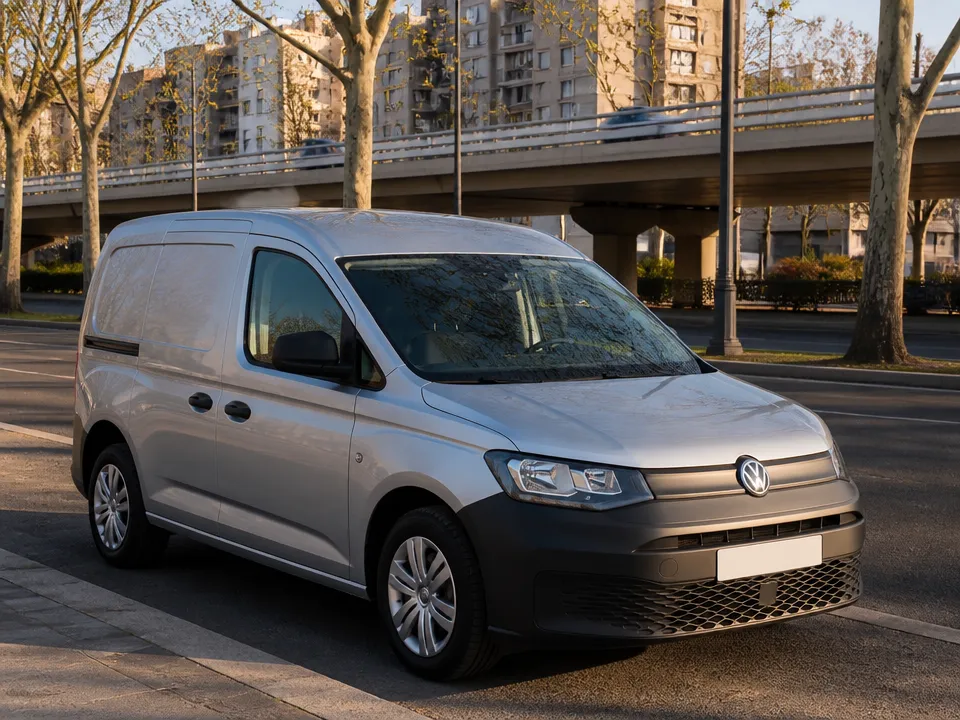
| Volkswagen Caddy Cargo | 2 | 2.0 L, 102 hp | Front-wheel | Manual | €47 |
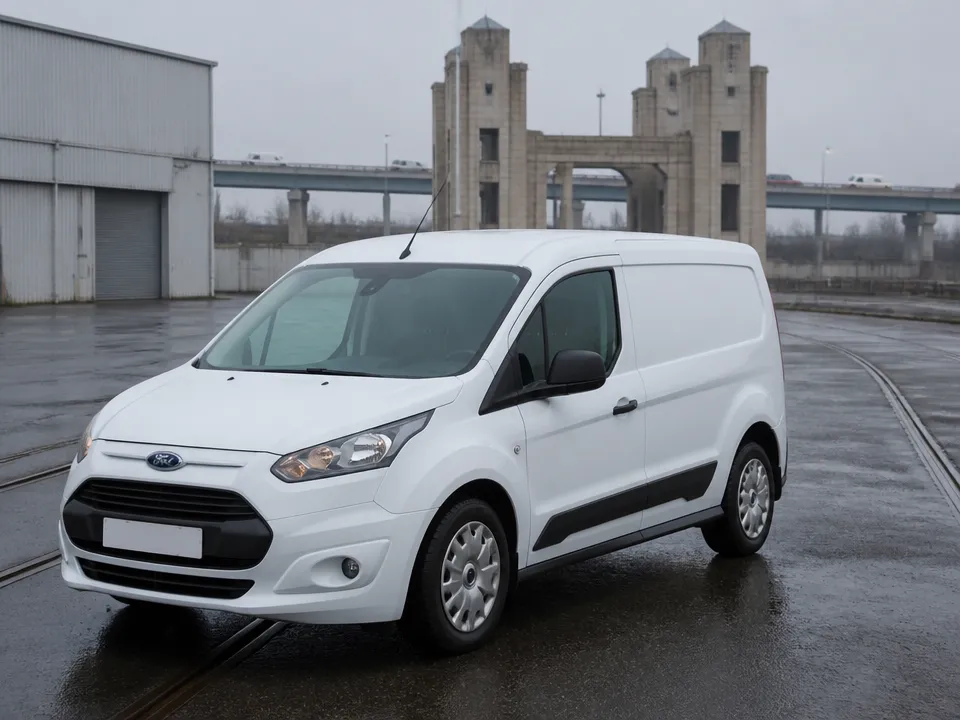
| Ford Transit Connect | 2 | 1.5 L, 100 hp | Front-wheel | Manual | €55 |
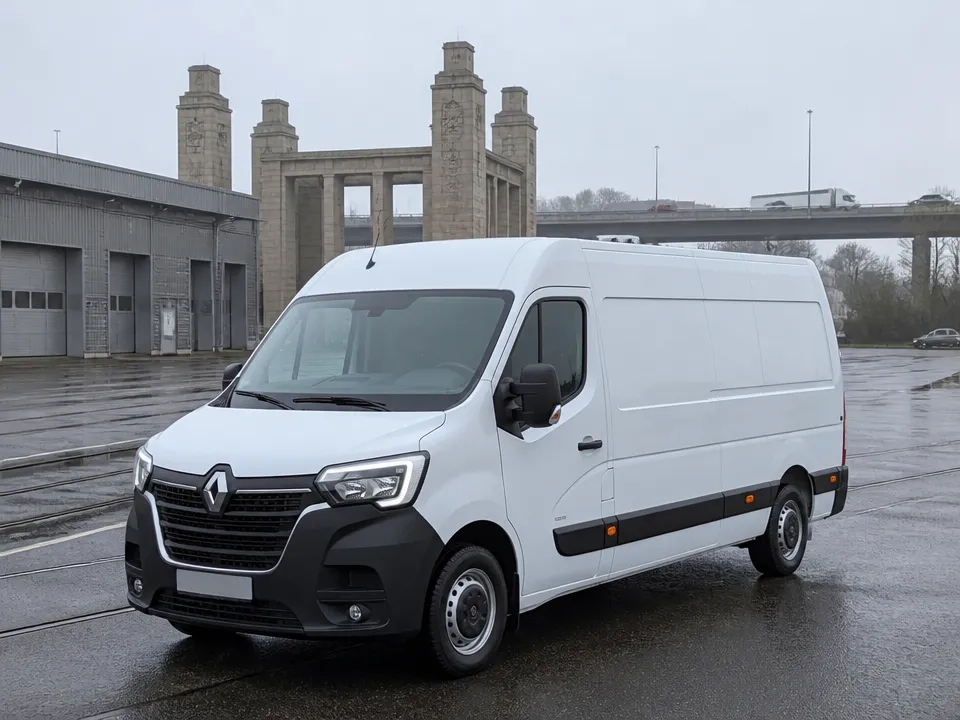
| Renault Master | 3 | 2.3 L, 150 hp | Front-wheel | Manual | €75 |
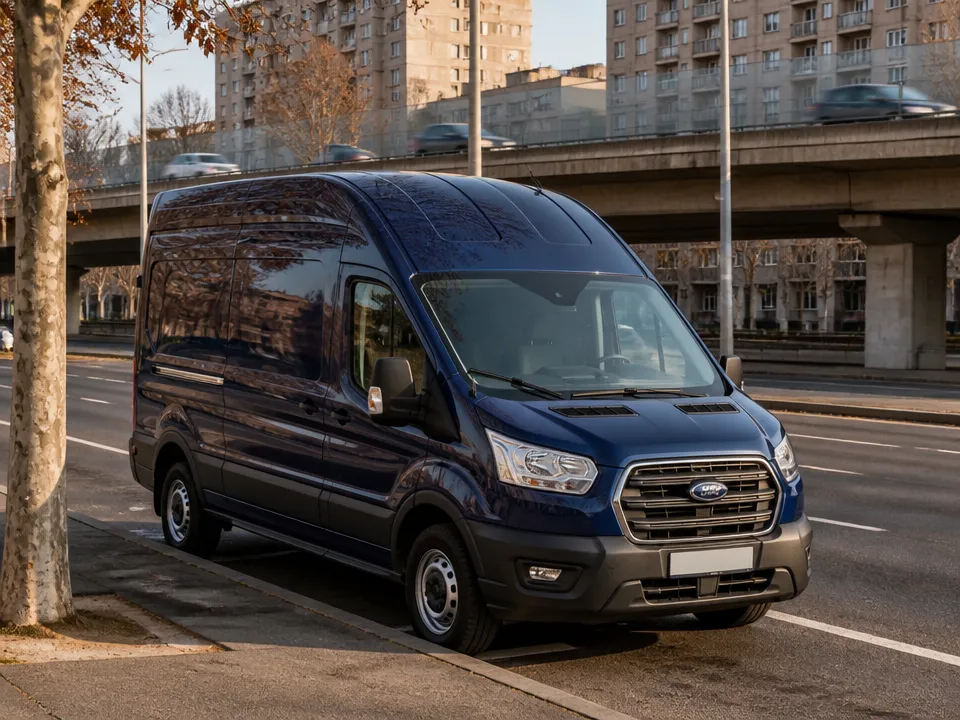
| Ford Transit | 3 | 2.0 L, 130 hp | Rear-wheel | Manual | €79 |
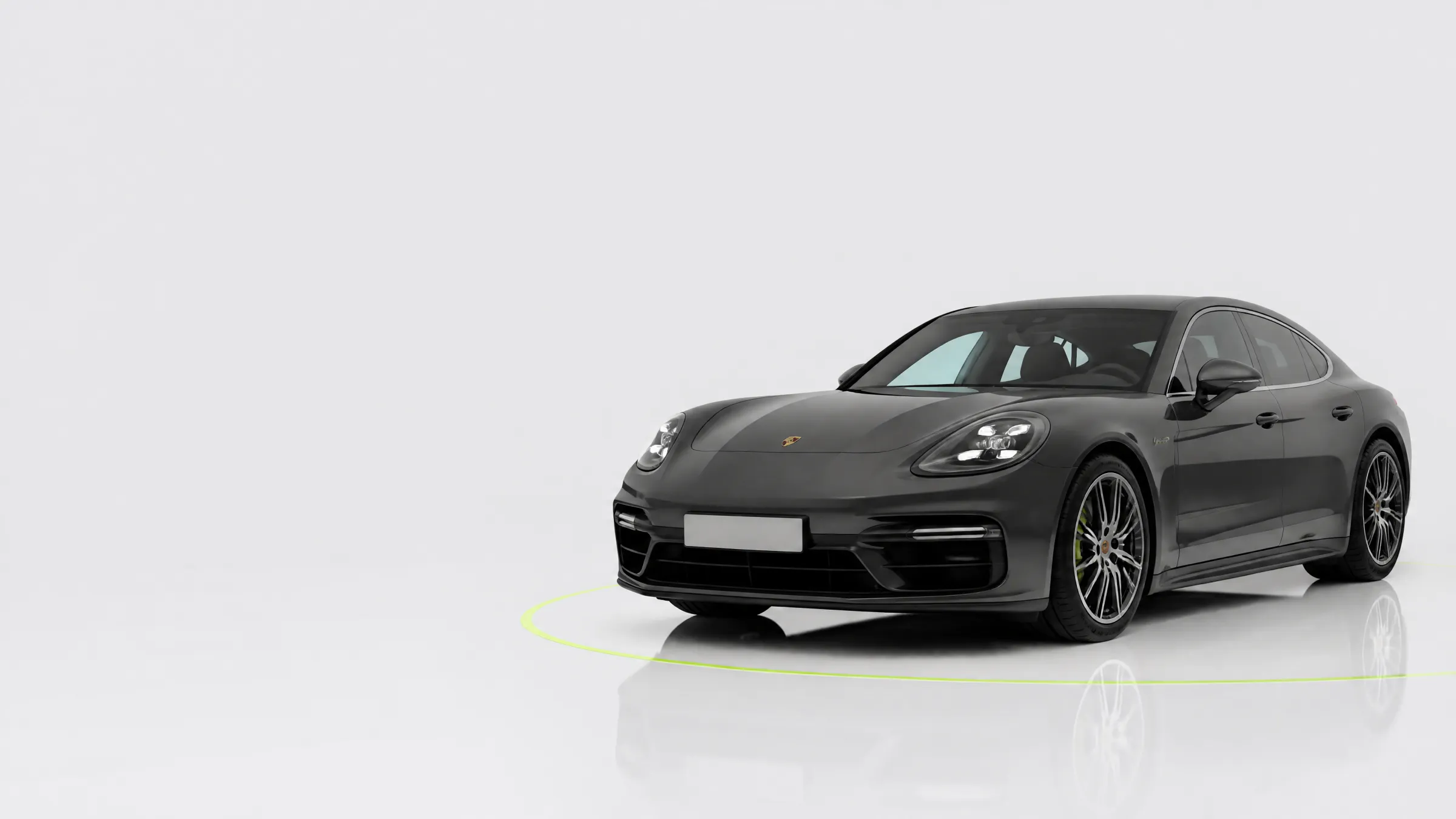
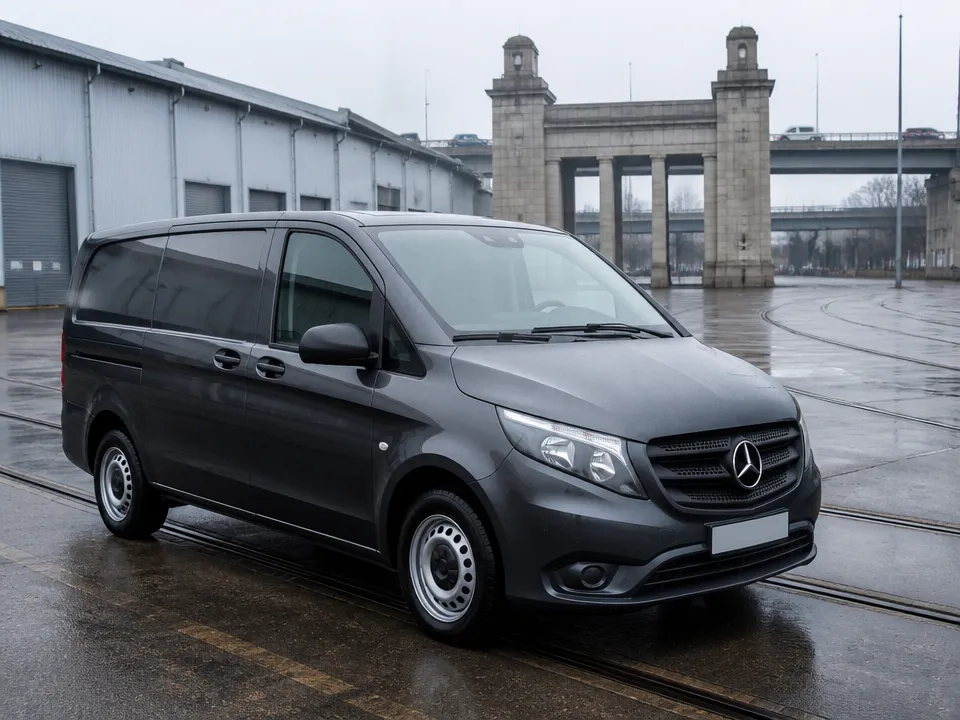
| Mercedes-Benz Vito | 3 | 2.0 L, 163 hp | Rear-wheel | Automatic | €89 |
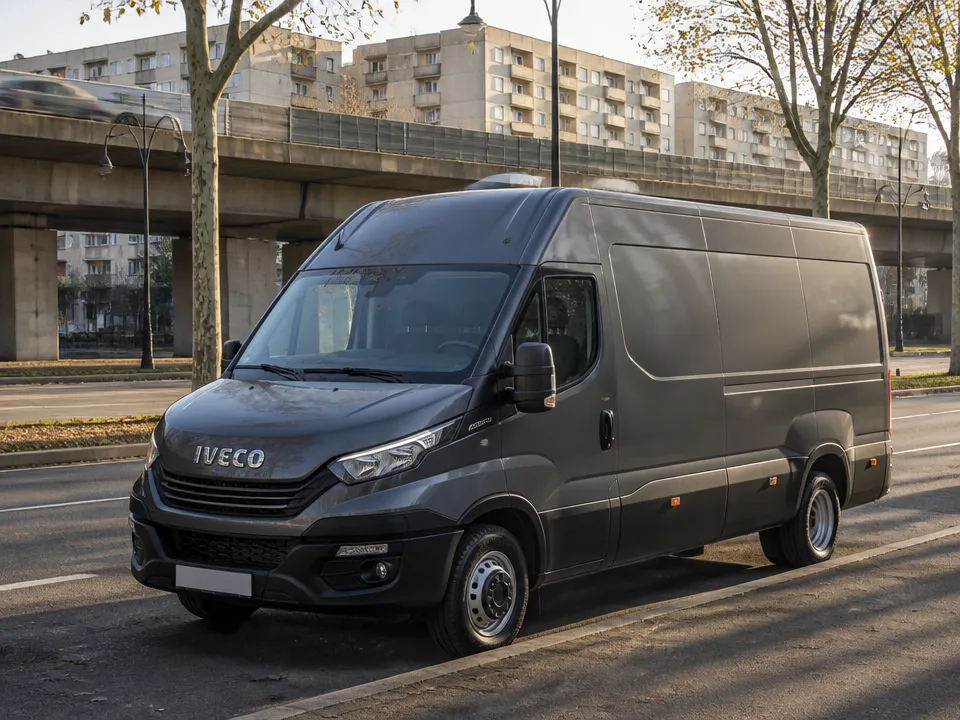
| Iveco Daily 20 m3 | 3 | 2.3 L, 140 hp | Rear-wheel | Manual | €99 |
Which van size fits your load
- Renault Master: three seats and a 2.3 L, 150 hp engine — the middle of the range for mixed cargo and crew.
- Ford Transit and Mercedes-Benz Vito: rear-wheel drive and three seats; the Vito is the only automatic in the class.
- Iveco Daily 20 m3: the largest body we deliver, 3 seats and a 2.3 L, 140 hp engine for full loads.
- What to check first: count your pallets and passengers before choosing — a two-seat van cannot take a second pair of hands.
Engine, power and drivetrain across the range
Engines in our commercial car rental in France start at 1.5 L and 100 hp in the Ford Transit Connect and reach 2.3 L and 150 hp in the Renault Master. The Mercedes-Benz Vito is the most powerful of the six at 163 hp, and it is the only one paired with an automatic gearbox — the other five are manual. Drivetrain splits the fleet in two: the Caddy Cargo, Transit Connect and Master are front-wheel drive, while the Ford Transit, Vito and Iveco Daily 20 m3 send power to the rear wheels. That rear-wheel layout carries weight better on the long motorway runs out of Paris toward Reims and Champagne or the Loire Valley châteaux. In our practice, the Iveco Daily 20 m3 and the Renault Master are the two that get booked first for house moves and market work. If your route includes a loaded return leg, pick rear-wheel drive and check the total weight before you confirm.
What the six vans have in common
- Fuel: all six run on diesel only — no petrol or hybrid option on this page.
- Body type: every model is a Panel Van with a closed cargo area and no rear side windows.
- Seats: two in the compact pair, three in the larger four, so a driver plus one or two helpers.
- Gearbox: manual across the range except the Mercedes-Benz Vito.
- Price band: €47 to €99 per day, the spread tracking body size and seat count rather than gearbox.
How much does commercial car rental in France cost per day or week
Commercial van hire with Rent-Trip is priced from €47 to €99 per day, with weekly bookings from €282 and monthly bookings from €987. The rate depends on which of the six vans you choose, not on how long you keep it.
Daily rates for commercial van hire
Daily rates start at €47 for the Volkswagen Caddy Cargo and reach €99 for the Iveco Daily 20 m3, with the Ford Transit Connect at €55, the Renault Master at €75, the Ford Transit at €79 and the Mercedes-Benz Vito at €89. What moves the figure is body volume and seat count rather than the gearbox: the two-seat Caddy Cargo and Transit Connect sit at the bottom of the range, while the three-seat Renault Master, Ford Transit, Mercedes-Benz Vito and Iveco Daily 20 m3 sit above them, and the only automatic in the class — the Vito at €89 — is not the most expensive van we run. In our experience, a one-day booking is usually a single run with a full load in one direction. If your job needs the van for two days or more, ask the manager to price it as a longer booking instead of stacking two daily rates.
Weekly and monthly commercial van hire
A week of commercial van hire is charged as six daily rates and a month as twenty-one, so the weekly figure starts at €282 and the monthly figure at €987 on the cheapest van in the fleet. Longer bookings are agreed with a manager in the same way as any other, and the delivery point and time are confirmed before the hire starts. For a removal, a trade fair or a shop refit, a monthly booking is normally the practical choice: the van stays with you, and you avoid arranging a fresh hand-over every few days. In our practice, customers who book by the week for a renovation project on the outskirts of Paris usually keep the same vehicle for the whole job.
What sits inside the agreed price
| Booking length | How it is calculated | Starting figure |
|---|---|---|
| One day | Flat daily rate | €47 |
| One week | Daily rate × 6 | €282 |
| One month | Daily rate × 21 | €987 |
The deposit, the insurance excess, any delivery fee and any discount are not quoted here — they are set out in the rental agreement for your booking. That is also where the fuel policy and the mileage terms appear, so read those lines before you confirm the dates.
Documents and licence rules for commercial car rental in France
Rent-Trip rents commercial vans to drivers who hold a licence issued more than a year ago. Digital licences are not accepted at hand-over — you need the physical document in hand. Everything below is the French rule, not a company preference: the same conditions apply whether you collect a van in Paris or drive it down to the Loire Valley.
Who may drive under French licence rules
- EU/EEA licences: valid here with no time limit and no exchange required, as long as the licence itself is still valid.
- Non-EU/EEA licences, visitor: you may drive on your national licence. If it is not written in Latin characters, carry an official translation or an International Driving Permit (IDP) alongside it.
- Non-EU/EEA licences, resident: driving is allowed for 1 year from the entry date shown on your visa. If you settle in the country, the licence must be exchanged.
- IDP validity: an International Driving Permit is accepted for hire only if it was issued no more than 3 years ago.
- IDP is not a licence: it is a translation only and must be presented together with your national licence, never on its own.
- Minimum age, young-driver surcharge, card and passport: no single national norm exists here — each company sets its own condition, and ours is agreed when booking.
Documents we check against the rental agreement
The deposit amount and the excess are set out in the rental agreement rather than quoted to you in advance. The same document also sets out the delivery fee and any discount that applies to your dates.
A commercial van adds one more layer, because the vehicle is registered as a panel van and carries load. If your licence was issued in a country outside the EU/EEA and is not in Latin script, sort the translation or IDP before you book — an incomplete document set on the day of delivery means the van cannot be handed over. Sort it early: getting an IDP takes longer than most people expect.
Insurance and protection in commercial car rental in France
Every commercial van hire carries third-party liability by law, and our vehicles are no exception. What changes between bookings is how much of the damage bill stays with you: the excess, and the protection level you choose when the agreement is drawn up.
What the law puts in every booking
- Responsabilité civile: compulsory third-party cover, included automatically, paying for injury and property damage you cause to others within the country's legal limits.
- Your own injuries: not covered by this policy — it protects the people you hit, not the driver.
- CDW / collision damage protection: part of the standard package, capping your liability at the excess and covering repair plus the van's time off the road.
- TW / theft protection: also standard here, covering theft, attempted theft and vandalism in a car park, again up to the excess.
- Franchise (excess): the fixed amount you pay yourself after damage or theft; it is not reducible by negotiation and depends on the protection level you pick.
- Rachat de franchise: the paid option that lowers the excess at Medium level, or removes it or cuts it substantially at Premium.
What the basic package does not cover
Tyres damaged by abnormal use, glass unless it broke in a collision, the sunroof and panoramic roof, the underside of the van, misfuelling and the engine damage that follows, lost or stolen keys, and damage caused by carelessness or on purpose all stay outside the standard protection. Paying with a Visa Premier or Gold Mastercard often covers the CDW and TW excess when the cardholder is the main driver on the agreement — worth checking with your bank before you collect. In our experience, a crew loading a panel van at a kerb scrapes the rear door more often than anything else, and that is exactly the kind of damage the excess is built for.
Excess figures and where they live
The exact excess, the deposit and the cost of a protection upgrade are not quoted here — they are set out in the rental agreement for your specific booking, and a manager confirms them with you before the hire starts. The same applies to the deposit taken as caution: it is blocked on the card for the period and released when the keys come back. For commercial work, decide on the protection level before the van is delivered rather than at hand-over, because the level you agree is the level that applies for the whole hire.
Paris 8th, 9th and 11th arrondissements are where most of our commercial hand-overs happen, and street parking there is tight enough that a scuffed bumper is a realistic risk rather than a theoretical one.
Commercial car rental in France for driving a van with ZFE tolls parking
None of them are extras you can settle later.
The ZFE de la Métropole du Grand Paris and what it means for a diesel van
The ZFE de la Métropole du Grand Paris (Zone à Faibles Émissions) bans Crit'Air 5, Crit'Air 4, Crit'Air 3 and «Non classé» vehicles inside the A86 motorway, which itself is excluded, and the perimeter takes in the boulevard périphérique, the Bois de Boulogne and the Bois de Vincennes. The document that proves your class is a Crit'Air sticker on the windscreen; without it, entering the zone is formally prohibited. Crit'Air 3 has been restricted since 1 January 2025, and our six vans are diesel, so check the class of the exact model you book before you plan a route through the perimeter. Ask us for the Crit'Air class at booking — a van ordered for a delivery into the zone and refused at the boundary costs you the whole day.
Tolls around the capital and the A86 duplex
A badge Liber-t transponder or the télépéage lane keeps a loaded van moving instead of queueing at the barrier; on the A13 and A14 the péage en flux libre has no barrier at all and payment falls due within 72 hours.
Parking a commercial van in Paris
- Zone 1 on-street parking: districts 1–11 charge a progressive visitor rate — 1 hour 6 €, 2 hours 12 €, 3 hours 24 €, 4 hours 39 €, 5 hours 57 €, 6 hours 75 € — split into 15-minute steps.
- Six-hour ceiling: a light vehicle may stay a maximum of 6 hours in a row in one place, so a full working day on the street is not possible.
- Horodateur or app: pay at the machine or through an app, and keep the receipt visible.
- Forfait post-stationnement: an unpaid stay is not a driving fine but a charge of 75 € or 50 € for light vehicles in Paris, issued after the fact.
- Loading bays: a panel van fits a standard bay, but the 6-hour ceiling still applies to the space.
Two of our three-seat vans — the Renault Master and the Iveco Daily 20 m3 — are the ones customers usually take for a multi-drop day, and the rear-wheel drive on the Iveco Daily 20 m3 holds a full load steadier through the tunnel gradients.
Booking commercial car rental in France and one-way returns
Reserving a commercial vehicle with Rent-Trip is agreed with a manager: you send the dates, the delivery point and the van you want, and the manager confirms the booking before the hire starts.
What we need before the van is delivered
- Dates and times: the exact day and hour you want the van handed over and the hour you will give it back, so the manager can hold the vehicle for you.
- Delivery point: the address where the van should arrive; the manager confirms the point and the time when the booking is agreed.
- Van and class: which of the six commercial models you need — the two-seat Volkswagen Caddy Cargo and Ford Transit Connect, or the three-seat Renault Master, Ford Transit, Mercedes-Benz Vito and Iveco Daily 20 m3.
- Driver's licence: held for more than 1 year, and presented as the physical document — digital licences are not accepted for hire in France. A licence issued outside the EU/EEA in a non-Latin script needs an official translation or an International Driving Permit, which is shown together with the national licence and must be no older than 3 years.
- Payment and deposit: the deposit, the excess, any delivery fee and any discount are set out in the rental agreement, not quoted in advance.
One-way returns
One-way rental — location aller simple — is agreed with the manager at booking, not chosen at the counter: tell us the return city when you reserve, and the manager confirms whether the route is available for your dates. The van itself is the same six-model commercial fleet, so a one-way booking does not change the vehicle, only the drop-off point. In our practice the awkward cases are the ones where the return address is fixed late, because the manager has to re-check availability for that day; if you already know you will finish the job in another city, say so in the first message and the booking is agreed in one pass instead of three.
What happens after you book
The rental agreement is where the conditions live: the deposit, the excess, the delivery fee and any discount are written there, and the manager goes through them with you when the booking is agreed. Fuel policy on our vans follows plein-plein — you take the van with a full tank and bring it back full. Mileage, the additional-driver option and the return time are all confirmed in the same agreement. If a detail matters to your job — a tight delivery window in Paris, a weekend return, a longer monthly booking — raise it before the booking is agreed, because that is the moment the manager can still move the van and the dates around.