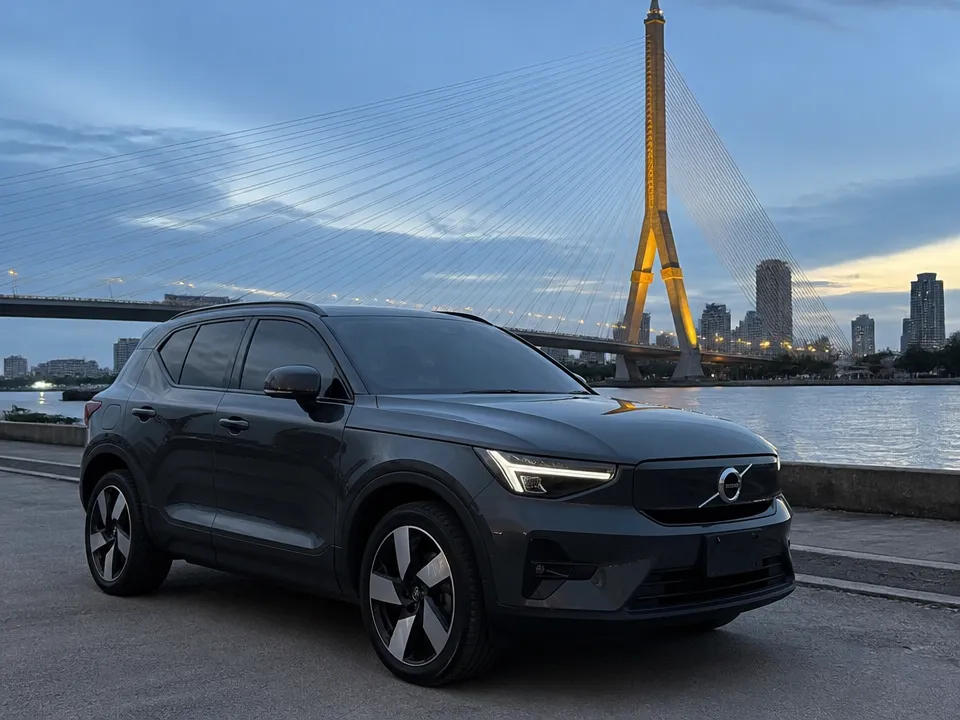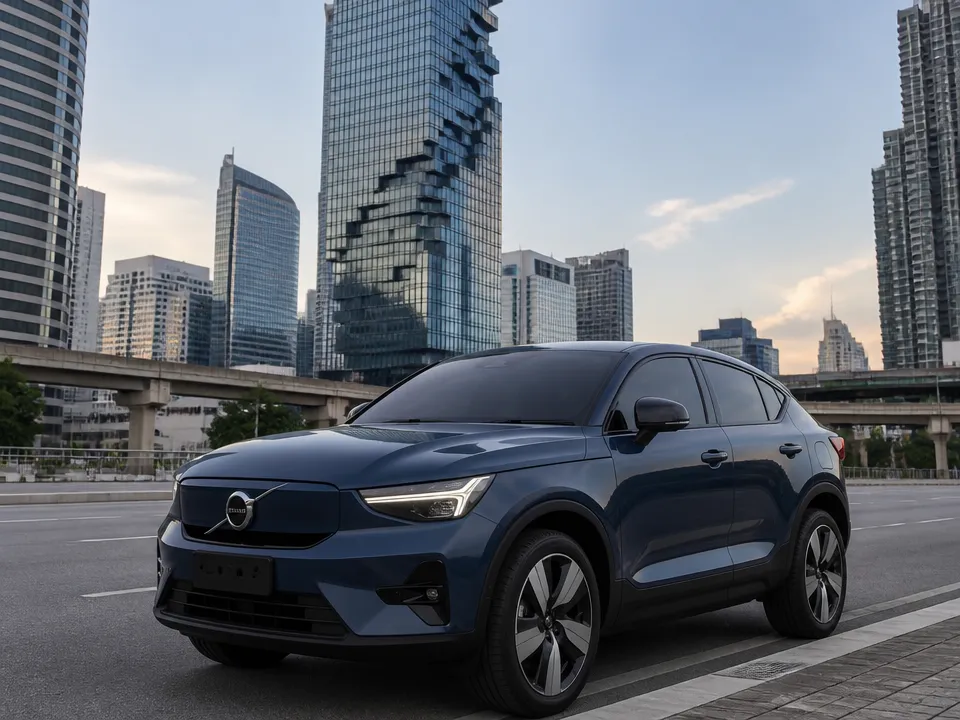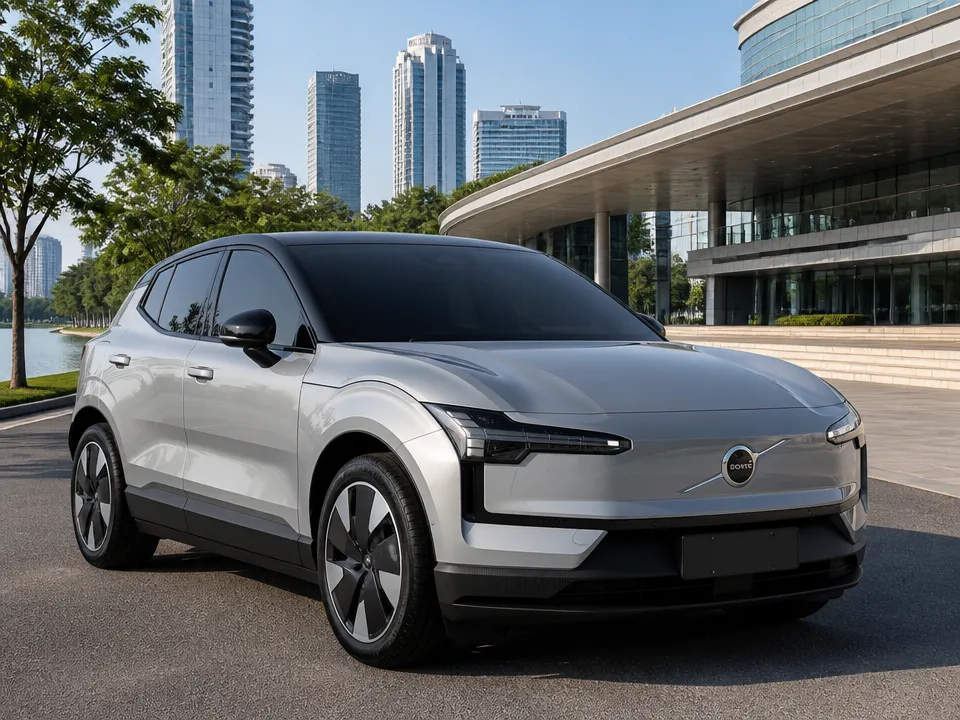
Volvo EX30, Electric
★4.8· 21Automatic—272 hpRear-wheel5 seats
฿4,700per day
Book nowVAT included




VAT included
VAT included
VAT included
No cars match the selected filters. Remove some of the conditions.


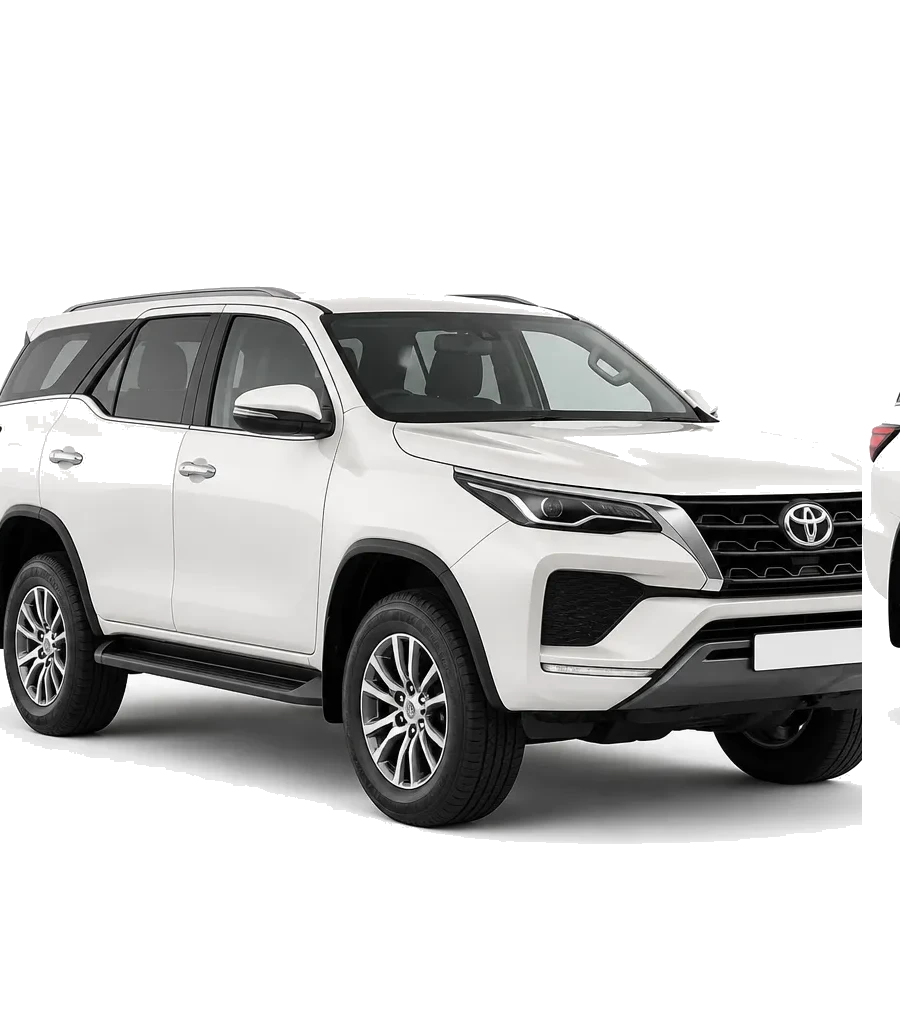
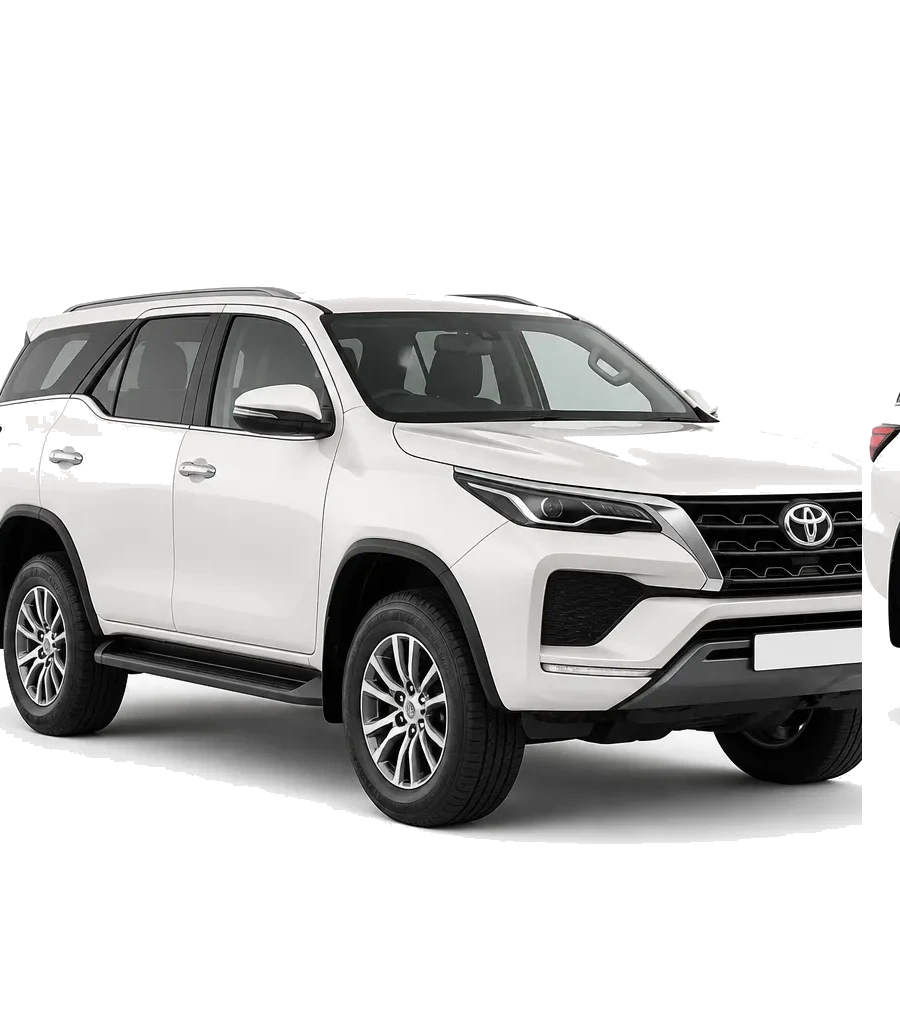

This page lists 3 cars, all Volvo and all in the Electric class. Each is ฿4700 per day.
Every car on this page is a Crossover with an Automatic transmission and 5 seats. The cars listed are the Volvo C40 Recharge, Volvo EX30 and Volvo XC40 Recharge, each at ฿4700 per day.
In Bangkok and across Thailand traffic drives on the left and the steering wheel is on the right. Drivers from ASEAN countries may drive on their national licences without an IDP.
Three electric Volvo crossovers sit in our Bangkok fleet — the 272 hp EX30 and the 408 hp C40 Recharge and XC40 Recharge, all five-seaters, all automatic, all at ฿4,700 per day. We deliver the car to any address in Bangkok and to Suvarnabhumi Airport (BKK) and Don Mueang Airport (DMK), with the address, date and time agreed with a manager before the booking is fixed.
Volvo car rental from Rent-Trip comes down to three electric crossovers: the C40 Recharge, the EX30 and the XC40 Recharge. All three seat five, all three run an automatic transmission, and every one of them is priced at ฿4,700 per day.
Our Volvo line-up runs on three cars — the C40 Recharge, the EX30 and the XC40 Recharge — every one electric, every one with five seats and an automatic gearbox, each at ฿4,700 per day.
| Model | Body | Seats | Drivetrain | Power | Price per day |
|---|---|---|---|---|---|
| Volvo C40 Recharge | Crossover | 5 | All-wheel | 408 hp | ฿4,700 |
| Volvo EX30 | Crossover | 5 | Rear-wheel | 272 hp | ฿4,700 |
| Volvo XC40 Recharge | Crossover | 5 | All-wheel | 408 hp | ฿4,700 |
Weekly and monthly bookings are calculated from the daily figure, and the exact deposit, excess and any delivery fee are written into the rental agreement.
Volvo car rental in Bangkok starts at ฿4,700 per day for any of the three cars, ฿28,200 per week and ฿98,700 per month. The C40 Recharge, the EX30 and the XC40 Recharge all sit in that single band — there is no cheaper model and no premium tier to step up to. Weekly is daily × 6 and monthly is daily × 21, so the longer you book the lower the per-day figure works out; those multipliers are the only discount statement we make. VAT 7% is already included in the prices shown, so the figure you see on this page is the figure the agreement carries.
| Booking length | Calculation | Total |
|---|---|---|
| 1 day | daily rate | ฿4,700 |
| 3 days | 3 × daily | ฿14,100 |
| 1 week | daily × 6 | ฿28,200 |
| 1 month | daily × 21 | ฿98,700 |
The table shows why we steer longer stays towards the weekly and monthly figures rather than stacking day rates: a month booked day by day would cost far more than ฿98,700, and the gap widens with every extra week. Ask for the agreement before you confirm dates — the numbers that actually move your total are the ones written there, not the headline rate.
Three documents decide whether the keys change hands: a passport, a driving licence and, for most foreign visitors, an International Driving Permit. A bank card in the main driver's name covers the security hold. Everything else is settled when you book.
A foreign visitor needs a home driving licence plus an International Driving Permit issued under the 1949 Geneva Convention; citizens of ASEAN countries may drive on their national licence alone.
Since 30 December 2025 a car rental agreement in Thailand is a contract controlled by the OCPB: it is written in Thai, and every fee and penalty is disclosed inside it. Ask to read it before you confirm dates — the figures that move your total are the ones written there, not the headline rate. If a condition matters to you, raise it while the booking is still being agreed with a manager.
All three Volvos on this page are fully electric, so the charging routine matters more than the model badge. What you do after hand-over depends on where you park and how far you plan to drive.
Plan charging around stops you were making anyway rather than a dedicated detour, and ask the manager when you book how the car is charged and which connector it uses.
If you plan to leave town, charge to full the night before rather than relying on finding a point on the way.
Thailand drives on the left and every car here is right-hand drive, so the first ten minutes behind the wheel of a Volvo feel mirrored rather than difficult. The three cars we hand over — C40 Recharge, EX30 and XC40 Recharge — are all automatic, which removes the gearstick from the equation entirely and leaves you only the lane position to relearn.
Thai law keeps traffic on the left, and every registered car in the country is right-hand drive, including all three Volvos in our fleet. Junctions are where it bites — a left turn is the short, easy one, a right turn crosses the oncoming lane. Speed limits run at 80 km/h in built-up areas, 90 km/h outside them, 110 km/h on expressways and 120 km/h on the motorways.
The Low Emission Zone that the city applies in PM2.5 episodes covers vehicles with six or more wheels only — trucks and buses — so a passenger car is outside it, and an EV sits in the exempt list besides. Charge planning is covered in the section above; traffic planning is the part you do yourself.
We deliver the car to any address in the city, and we also deliver to Suvarnabhumi Airport (BKK) and Don Mueang Airport (DMK).
Give the manager a phone number the driver can reach on the day.
If the car is going to a hotel, tell us the tower name and the lobby, not just the street.
A Volvo from our fleet is a quiet way to leave the city for a day: three electric crossovers, 5 seats and automatic, from ฿4,700 per day, delivered to your address before you set off. The routes below start from the city.
Motorway 7 runs from the capital to Pattaya and on to Map Ta Phut, 149.3 km end to end, with the Pattaya exit at 125.865 km. There are nine payment points; for a four-wheel car entering at Lat Krabang the toll is ฿25 to Bang Bo, ฿100 to Pong and ฿105 to Pattaya, and the whole run works out at roughly ฿105–130. Pay cash, or with an M-PASS or Easy Pass tag — the two are interchangeable, but one car carries one tag. The motorway passes Suvarnabhumi, which makes it the natural first leg if you collect the car near the airport. Check the tag situation when you pick the car up: it is worth knowing who settles an M-Flow camera bill.
Plan a top-up on the longer loops. Charge the car before you come back rather than after: arriving with a low battery means a stop in traffic you did not need. If a route runs past your agreed return time, tell the manager when you book rather than on the day, and the timing stays in the rental agreement.
Ask which of the three cars is free for your dates — C40 Recharge and XC40 Recharge run all-wheel drive at 408 hp, EX30 is the 272 hp rear-wheel car, and availability decides more than preference does. Ask where the charging cable lives and whether the car comes with a full charge, since that shapes your first hour on the road. Ask what the agreement says about the insurance excess and about traffic-camera fines, which are issued to the car owner and re-invoiced to the renter.
Since 30 December 2025 a car rental agreement in Thailand is a contract controlled by the OCPB, written in Thai, with all fees and penalties disclosed in it. Read it before you confirm dates — the figures that move your total are the ones written there, not the headline rate. If you hold an ASEAN licence you drive on it without an International Driving Permit; everyone else carries both documents, because the police fine for driving without a permit runs ฿500–1,000 and an insurer may refuse a claim.