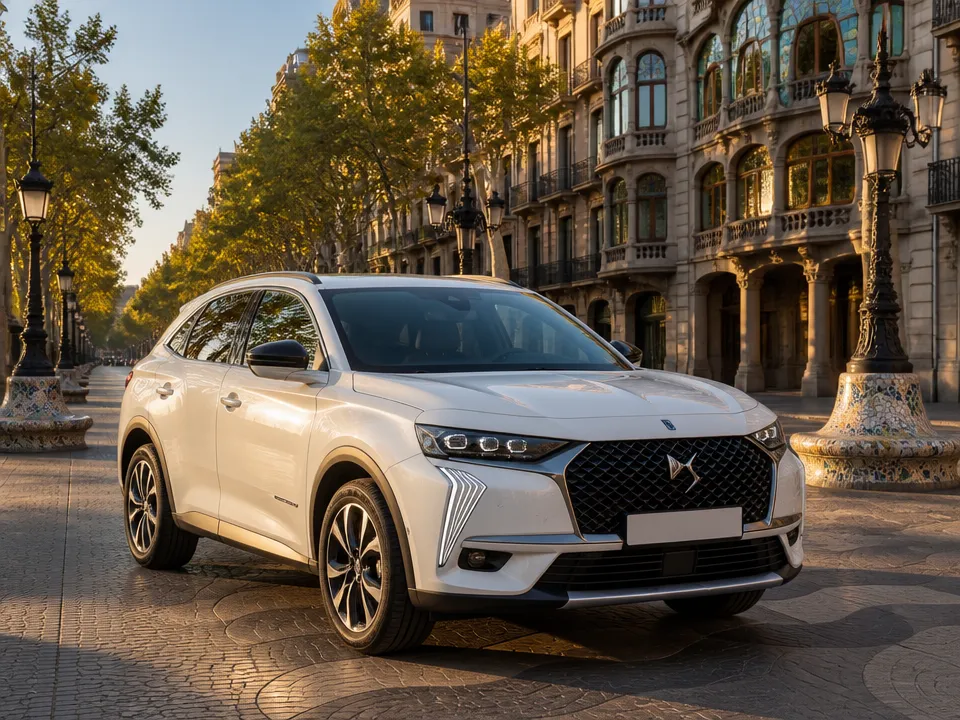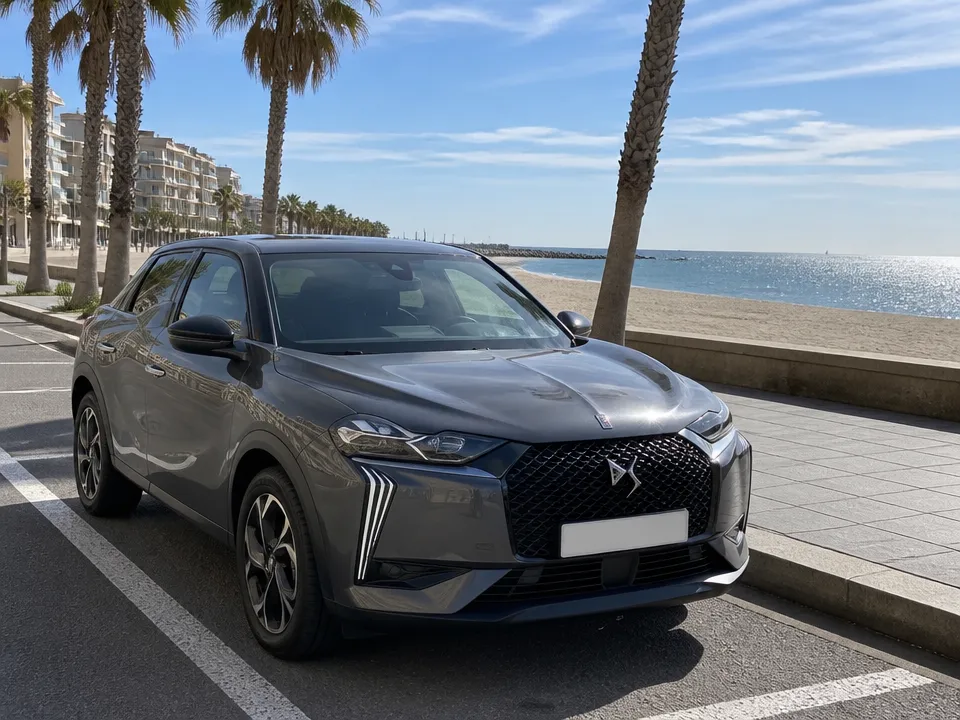
DS DS 3
★4.6· 58Manual1.2 L100 hpFront-wheel5 seats
€28per day
Book now








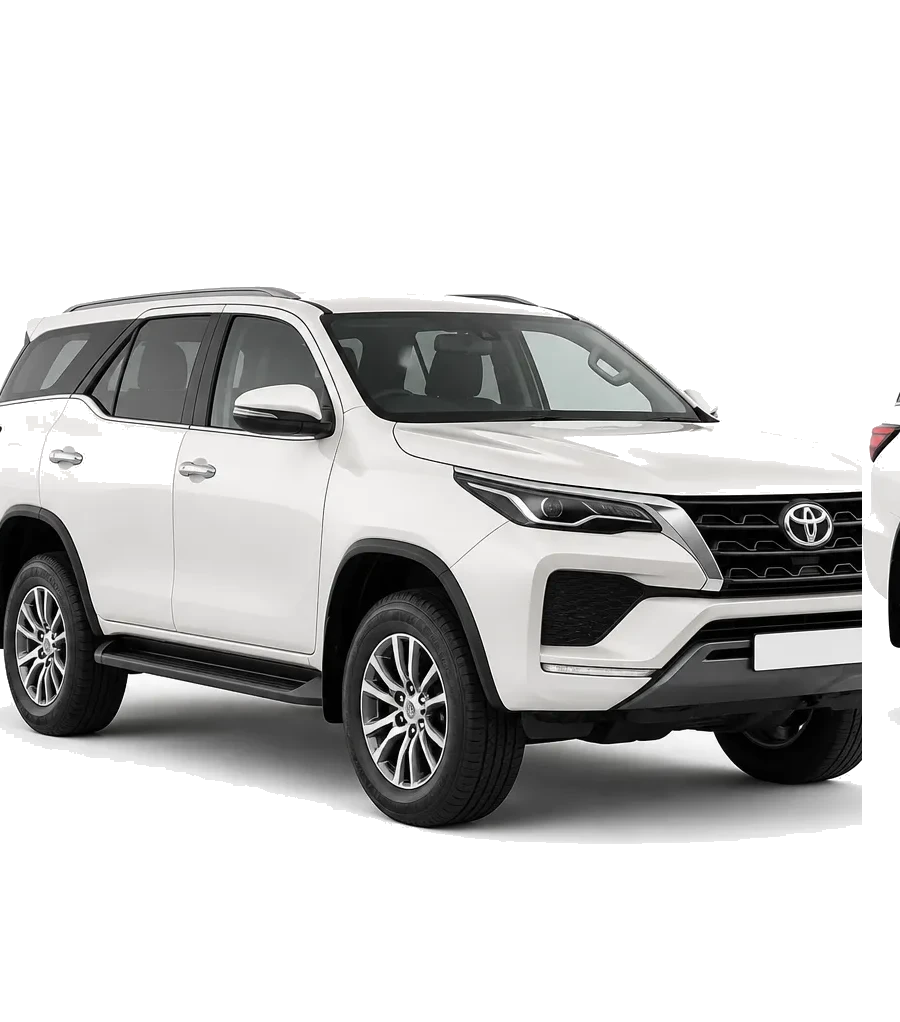

If you need DS car rental in Barcelona, we deliver the car to you — the airport, the station or your address in the city — and every booking is agreed with a manager. Two DS models are on this page: the DS DS 3 from €28 per day and the DS DS 7 from €62 per day, with weekly bookings from €168 and monthly from €588. Both are five-seaters, and the whole fleet behind them runs to 754 cars.
Two DS models are available through Rent-Trip in Barcelona: the DS 3 in Economy class and the DS 7 in Premium class. Both seat five and both are front-wheel drive, so the real choice comes down to class, fuel and gearbox rather than size.
Rent-Trip keeps two DS cars available for rent in Barcelona — the DS 3 in Economy class and the DS 7 in Premium class, both five-seaters with front-wheel drive. The DS 3 is a petrol crossover with a manual gearbox and a 1.2 L engine producing 100 hp. The DS 7 is a hybrid SUV with an automatic gearbox, the same 1.2 L displacement and 130 hp. Neither car is a large vehicle: at five seats each, they suit a couple, a small family or two colleagues travelling with cabin bags. Both run on the same engine block, which is why the DS 7's extra 30 hp comes from its hybrid system rather than from a bigger unit. In our experience, the DS 3 is the one people book when the trip is mostly city driving, and the DS 7 when the itinerary includes longer motorway runs.
The shared 1.2 L displacement is worth remembering when you compare the two: the DS 7's extra power is electrical assistance on top of the same small block, so the hybrid advantage is felt in traffic and on gradients rather than in outright motorway speed.
Both DS cars in our fleet on this page are five-seaters with front-wheel drive and a 1.2 L engine, so passenger capacity and drive layout will not decide anything for you. The table below shows where the two actually part ways.
| Model | Class | Body | Fuel | Gearbox | Power | Seats | Drive | Price |
|---|---|---|---|---|---|---|---|---|
| DS DS 3 | Economy | Crossover | Petrol | Manual | 100 hp | 5 | Front-wheel | €28/day |
| DS DS 7 | Premium | SUV | Hybrid | Automatic | 130 hp | 5 | Front-wheel | €62/day |
The DS 7's hybrid drivetrain and automatic gearbox make it the more relaxed of the two in stop-start traffic, where the DS 3's manual asks for constant work on the clutch. That difference shows up most on the Rondes — the B-10 and B-20 ring roads, capped at 80 km/h inside the built-up area — and again on the climb out towards the Vallès, where the automatic holds a steady gear instead of hunting. On the tolled C-16 exit through the Túnels de Vallvidrera, a car with a manual is simply more tiring over an hour than over ten minutes. If your days here are mostly short hops between the centre and L'Eixample, the DS 3's 100 hp petrol engine is enough and its manual box costs you nothing. I would still pick the hybrid for anything longer than a day trip.
Both models carry the same 5-seat, 1.2 L, front-wheel-drive formula, so the real fork in the road is petrol with a manual or hybrid with an automatic — and that choice is worth making before you book, not at hand-over.
Rates for DS car rental start at €28 per day for the DS 3 and €62 per day for the DS 7, and both figures come straight from our own price list rather than from a marketplace mark-up. Longer bookings are counted differently — weekly at daily × 6, monthly at daily × 21 — so the effective cost per day drops the longer you keep the car.
The DS 3 is the cheapest way into DS car rental in Barcelona at €28 per day, and it stays the cheapest across every booking length: the DS 7 costs more than twice as much per day, and that gap holds whether you book one day or a month. In our experience, travellers who plan a single airport run plus two or three city days take the DS 3 and put the difference into parking and tolls; those heading for Montserrat, Sitges or the Penedès wine country for a week tend to move up to the DS 7 for the automatic gearbox and the hybrid drivetrain. Both rates are quoted in euro, the currency you will actually pay in, and neither depends on how far ahead you book. A weekly booking of the DS 3 at €168 works out at €28 per day once you spread it across seven days of driving, which is the same daily figure you would pay for a single day. Ask the manager to price your exact dates before you commit.
You book a DS, a manager confirms the details with you, and the car is brought to the place you have agreed. That single arrangement shapes everything about how a DS rental in Barcelona starts and ends.
The car is delivered to you with a full tank under the lleno a lleno policy, and you return it full — refuelling within 25 km of the agreed return point, with a fuel receipt if you have driven less than 100 km. Before you drive off, walk around the DS with the person delivering it and get every scratch and dent written into the agreement or the inspection sheet: both sides sign it and you keep a copy. Without that record, damage found later can be charged to you. The same document carries the terms of the rental agreement, so read it before the keys change hands rather than after.
Return works the same way in reverse: you hand the car back at the agreed point and time, and the fuel level and bodywork are checked against the sheet you signed at the start. If the model you booked is not available, you are entitled to another car of the same class at no extra cost — or a higher class without paying more — and if you are given a lower class, the price should come down. If the car does not match what the agreement promised, the booking can be cancelled and the prepayment returned. In our experience the hand-over takes fifteen minutes when the paperwork is settled in advance, and considerably longer when it is not.
The Zona de Bajas Emisiones Rondas de Barcelona covers more than 95 km²: the whole municipality of Barcelona except the Zona Franca industrial estate and the Vallvidrera – el Tibidabo i les Planes neighbourhood, plus L'Hospitalet de Llobregat, Sant Adrià de Besòs and parts of Esplugues de Llobregat and Cornellà de Llobregat. It runs on working days, Monday to Friday.
Every car needs a DGT environmental badge — the distintivo ambiental — on the windscreen to enter legally. Two of them open the low-emission zone: 0 emisiones (blue) and ECO (blue-green). Our DS 7 is a hybrid, which puts it in the ECO category; the DS 3 is a petrol car, so its badge depends on the emission standard it was homologated to. Foreign-registered cars are not exempt: they must be pre-registered in the Registre metropolità de vehicles estrangers i altres vehicles autoritzats a les zones de baixes emissions before entering. Registration is not the same as a badge, and a car from our fleet does not need it — but a visitor driving their own foreign-plated vehicle does.
Practical notes for a DS trip: the two cars on this page are the DS 3, an Economy crossover with a 1.2 L petrol engine and a manual gearbox, and the DS 7, a Premium SUV with a 1.2 L hybrid engine and an automatic gearbox — both with five seats and front-wheel drive, from €28 and €62 per day respectively. In our experience the badge question comes up most with guests who plan to drive into the city centre on a weekday morning — the car is fine, but the route and the parking slot are worth agreeing before you set off. On weekends, residential parking zones relax, which makes a Saturday or Sunday arrival noticeably easier.
Driving in Spain runs on the right, and every DS we hand over is left-hand drive, so the wheel is on the side you already expect. What you carry in your pocket matters more than the car itself: the licence you hold decides whether you need anything extra, and that is agreed when booking.
| Road | Limit |
|---|---|
| Autopista / autovía | 120 km/h |
| Ordinary out-of-town road | 90 km/h, up to 100 km/h where the road owner raises it |
| City street, single carriageway platform shared with the pavement | 20 km/h |
| City street, one lane each way | 30 km/h, up to 50 km/h by sign |
| City street, two or more lanes each way | 50 km/h |
| Rondes B-10 and B-20 inside the city | 80 km/h |
Speeding is fined on the DGT scale by limit and by how far over you were: 100 EUR (grave, no points), 300 EUR with 2 points, 400 EUR with 4, 500 EUR with 6, and 600 EUR (muy grave, 6 points) — a range of 100–600 EUR and 2–6 points. Going more than 60 km/h over the limit in town, or more than 80 km/h outside it, stops being an administrative fine and becomes a criminal offence. Alcohol runs on 0.25 mg/l of breath, tightened to 0.15 mg/l for drivers in their first two years and for professional drivers, and anything above 0.60 mg/l is a crime. Holding a phone while driving costs 200 EUR and 6 points off your licence; seatbelts, helmets and child seats are 200 EUR with 4 points, and child restraints are compulsory for children under 135 cm tall. Fines are graded leve (up to 100 EUR, no points), grave (200 EUR) and muy grave (500 EUR, always with points), and paying within 20 calendar days halves the amount.
Parking in the regulated blue zones is metered: AREA Blava A costs €2.5 per hour and AREA Blava B €2.25 per hour, and resident zones apply at weekends. The low-emission zone of the metropolitan area covers more than 95 km², and the sticker that grants access is the one enforcement reads first — 0 emisiones (blue) or ECO (blue-green), fixed to the windscreen. Cars on foreign plates are not waved through: they must be pre-registered in the Registre metropolità de vehicles estrangers i altres vehicles autoritzats a les zones de baixes emissions before entering, and in our practice that registration is the step travellers forget until the morning of the drive.
A DS is a road-trip car, and the day trips we get asked about most are the ones where the drive is part of the day: the mountain, the coast, the wine country.
The DS 3 is the pick when the route is short and the parking is tight — Sitges, Montserrat or a loop through the Penedès wine country all fit inside a day with the 100 hp petrol engine and manual gearbox. Montserrat is the one that rewards the manual: the climb up to the monastery is a steady second- and third-gear pull, and the C-16 approach is where the car feels light. Sitges is a short run down the coast on the autopista, then narrow streets near the church where a 4.2-metre crossover slots into a blue bay without a second attempt. If your day ends with dinner on the seafront, the DS 3 is the easier car to leave parked overnight.
The DS 7 is the car for the longer days — Girona, Tarragona and PortAventura, or the run north towards the Costa Brava — where the hybrid drivetrain and automatic gearbox do the work on the fast roads. Both DS models are front-wheel drive with a 1.2 L engine, so the difference on a motorway day is comfort rather than pace: the DS 7's 130 hp and automatic keep a two-hour drive relaxed in a way the manual does not. Tolling is the same in either car — the C-16, Túnels de Vallvidrera exit towards Sant Cugat and the Vallès is charged at €4.7 for a passenger car, and how the fare is settled is set out in the rental agreement. For a full day out, leave early and plan the return outside the busiest hours.
Whichever route you take, the fuel policy is agreed when booking, and the car is handed over with the paperwork set out in the rental agreement.
This page lists 2 cars: the DS DS 3 at €28 per day and the DS DS 7 at €62 per day. Both are DS models with 5 seats.
EU or EEA licences, including Iceland, Liechtenstein and Norway, are fully valid in Spain while they have not expired. Nothing additional is needed, and an international driving permit is not required.
The ZBE Rondes de Barcelona applies on working days, Monday to Friday, from 07:00 to 20:00. On Saturdays, Sundays and public holidays the restriction does not apply. Vehicles without a DGT environmental badge are prohibited.