Volvo XC60, Premium
★4.7· 14Automatic2.0 L247 hpAll-wheel5 seats
C$ 64per day
Book now




No cars match the selected filters. Remove some of the conditions.






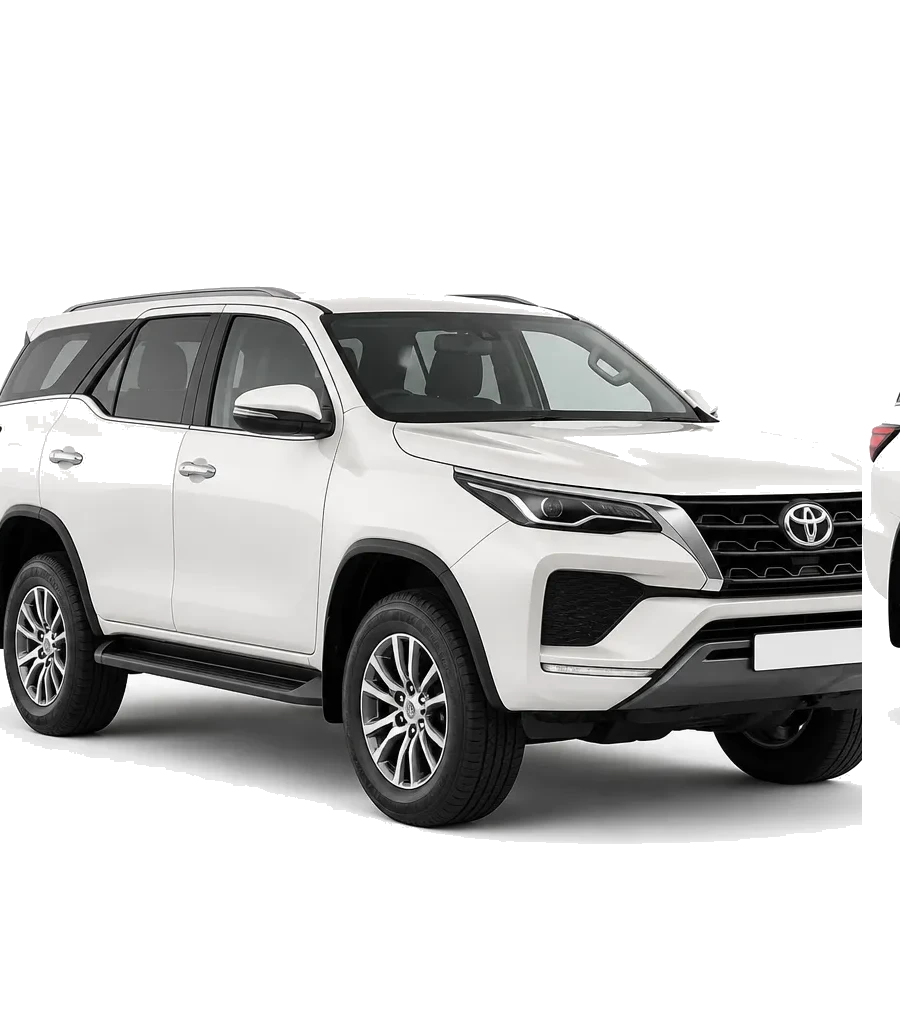

This page lists 1 car, the Volvo XC60, at C$ 64 per day. Daily prices on this page run from C$ 64 to C$ 64.
The Volvo XC60 is a Premium class SUV with 5 seats and automatic transmission. It is the one car listed on this Volvo page for Toronto.
Under Ontario rules, a visitor staying less than 3 months may drive on a valid licence from their own province, state or country. Visitors from another country staying more than 3 months need an IDP from their own country, which cannot be obtained in Canada.
From C$ 64 per day, Volvo car rental in Toronto puts one premium SUV in your hands: the Volvo XC60, five seats, petrol, automatic, all-wheel drive. We deliver it to any address in Toronto, including Pearson, Billy Bishop and Hamilton airports, and the address, date and time are agreed with a manager before the booking is fixed.
Our fleet is built around one car, not a menu of them: the Volvo XC60, a Premium-class SUV with five seats, a petrol engine and an automatic gearbox. That single choice shapes everything below — the specification you read is the specification you drive.
The service runs on a single Premium-class model, the Volvo XC60 — an SUV with 5 seats, petrol, automatic and all-wheel drive. Rent-Trip keeps the page to one car on purpose: when the fleet is a single model, the boot volume, the seating position and the footprint in a parking bay are the same on every booking, so you can plan a ski bag or a child seat around a known quantity rather than a class promise. The XC60 sits in the Premium bracket on our list, which is the only class this page carries. In our practice, travellers who book the same model twice stop asking about dimensions altogether — they already know how the tailgate clears a low garage door. Ask for the XC60 by name and you get the XC60.
| Parameter | Value |
|---|---|
| Class | Premium |
| Body | SUV |
| Seats | 5 |
| Fuel | Petrol |
| Gearbox | Automatic |
| Drivetrain | All-wheel |
| Engine | 2.0 L |
| Power | 247 hp |
All-wheel drive in the XC60 earns its place away from the highway: on the sloped, unplowed approach lanes and outdoor lots around the city it puts power to the wheels that still have grip, which a front-wheel-drive crossover cannot do. Ontario does not require winter tyres, so the drivetrain is what you actually feel on a January morning — worth checking before you fix a date if your trip runs through the cold months.
One rate, three ways to count it: the same XC60 costs C$ 64 for a day, C$ 384 for a week and C$ 1,344 for a month. Longer bookings do not change the daily rate — they change how many days you pay for.
| Class | Model | Per day | Per week | Per month |
|---|---|---|---|---|
| Premium | Volvo XC60 | C$ 64 | C$ 384 | C$ 1,344 |
A week is counted as six days and a month as twenty-one, which is where the C$ 384 and C$ 1,344 come from. The XC60 is the only car on this page, so the Premium line is the whole price list: there is no cheaper class to step down to and no more expensive one to step up to. What changes with the length of the booking is the number of charged days, not the rate behind them — a fortnight is priced as two weeks, not as fourteen separate days. In our experience the weekly figure is the one people misread, so check which unit the quote is built on before you compare two options.
The deposit, the insurance excess and any delivery fee are set out in the rental agreement, and a manager confirms them before the booking is fixed. We do not print a figure for them on this page, because the amount follows the terms of the specific booking rather than a single number that would hold for every driver and every date. Ask for all three at once — the deposit, the excess and the delivery charge — so the total you are committing to is clear before you confirm. The same applies to any discount: it is written into the agreement, not promised in a headline.
The XC60 runs on petrol, so a long loop out of town is worth budgeting for separately from the rental. A weekend to Niagara Falls is priced by the day and a week around Algonquin Park at the weekly rate; the monthly rate earns its keep only on a month: twenty-one charged days cover a whole month of driving, while three weeks cost eighteen. Fill the tank before you hand the car back — we work full-to-full, and the missing fuel plus a refuelling service fee are charged as set out in the rental agreement. If your plans run past a month, ask the manager to price the extra days against the monthly unit rather than the daily one — on a long booking that is usually the cheaper way to extend.
The car comes to you. The XC60 is not collected from a lot on the edge of town — the delivery address, the date and the time are agreed with a manager before the booking is fixed.
Rent-Trip delivers the XC60 to any address in the city, including Union Station, Downtown Toronto, Mississauga, North York, Scarborough and Vaughan. That covers a lot of ground, and the XC60 is a Premium SUV with five seats, a 2.0 L petrol engine and an automatic gearbox, so it suits a family week as readily as a single business trip. If your plans shift, the address, the date and the time are re-agreed with the manager before the booking is fixed — not negotiated on the morning of hand-over, when the car is already loaded and on its way. In our experience the address is the detail people confirm last and change first, so it pays to settle it early.
The car can be handed over at Toronto Pearson International Airport (YYZ), Billy Bishop Toronto City Airport (YTZ) and John C. Munro Hamilton International Airport (YHM). The three are very different in scale. Pearson handles 47,300,000 passengers a year and sits 36.0 km from the city by road, about 38 minutes without traffic. Billy Bishop handled 1,700,000 passengers and is only 6.0 km out — roughly 12 minutes. Hamilton, 86.7 km and about 73 minutes away, handled 329,595. At a terminal that size, meeting a car takes coordination, so name the terminal and the hour when you book rather than after you land. Landside pick-up points at Pearson are the part of the trip travellers most often underestimate.
One practical note from our own bookings: winter tyres are not compulsory in Ontario, but they are compulsory in Quebec from 1 December to 15 March for cars registered there, with fines of C$200–300 — a rule that does not apply to cars on plates from other provinces. If a border crossing into the US is part of the plan, most cars rented in Canada can go, but only with permission from the specific rental point, and without written permission the trip breaches both the agreement and the insurance. Ask the manager when you book, not at the bridge.
Ontario sets the licence rules, the rental agreement sets the rest. Here is what a visiting driver needs in hand, and what a manager confirms before the booking is fixed.
For Volvo car rental in Toronto, the Ontario rule is the one that applies: a visitor staying less than 3 months drives on a valid licence from their own province, state or country. Anyone visiting from another country for more than 3 months needs an International Driver's Permit (IDP) issued in their own country — it cannot be obtained in Canada. The legal minimum age to drive is 16, and the minimum age for our cars, the young-driver surcharge and the cards we accept are agreed when booking. Bring the licence you will actually drive on: an IDP is a translation of it, not a replacement.
Ontario requires every driver to carry insurance for the car and to keep the original or an exact copy of the ownership permit in the vehicle. Both travel with the Volvo XC60 — the ownership permit stays in the glovebox, and the insurance side is set out in the rental agreement you receive with the keys. Read the excess line before you drive off rather than after: it is the one number that decides what a kerb scrape costs you. The deposit, the insurance excess and any delivery fee are agreed when booking and written into that agreement.
Ontario treats alcohol behind the wheel as a criminal matter from 0.08 (80 mg per 100 ml of blood). The 0.05–0.079 «warn range» brings an immediate 7-day licence suspension, an 8-hour course and a C$250 fine for a first offence; drivers 21 and under, and holders of G1 or G2 licences, must show zero. Speed limits are posted per section: 110 km/h now applies on selected stretches of provincial highway rather than the old 100 km/h, so follow the signs rather than the habit. In our experience most surprises on a first Toronto drive come from reading the signs late, not from driving fast.
The XC60 leaves Rent-Trip with a full tank and comes back with a full tank. That is the whole fuel rule, and it is the only option we offer — there is no pre-paid tank and no full-to-empty arrangement on the site. What the car burns is what you replace, and the tank holds petrol, not diesel, so a fill before return is easy to budget for. A 2.0 L engine with 247 hp in a 5-seat SUV is not a heavy drinker on the highway, but city stop-start traffic between Downtown and North York moves the average more than most drivers expect.
The deposit, the insurance excess, any delivery fee and any charge for missing fuel all sit in the rental agreement rather than on this page, because the numbers depend on the booking you agree with a manager. The fuel question is the one that comes up at hand-over, and the answer is always the same: a full tank at pick-up, a full tank at return, and the rest set out in the rental agreement.
Give it back at the address, date and time agreed when the booking was fixed — the same place it was delivered to, unless a manager has confirmed something different. Hand-over at an airport works the same way: the point and the hour are settled in advance, not improvised on the day. If your plans move, say so before the booking is fixed rather than on the morning of the return; the address and the time are the two things that can be changed, and changing them late is what turns a smooth return into a rushed one. The car should come back as clean as it left, with the fuel receipt in the glovebox and nothing left in the boot.
One more thing worth knowing before you plan a long run: the XC60 is an all-wheel-drive SUV, its tyre setup is agreed when booking, and in Ontario winter tyres are not mandatory — but if a route takes you into Quebec between 1 December and 15 March, cars registered there must run them, with a fine of C$200–300 for those that do not. A car on Ontario plates is outside that rule, so a winter trip east needs a look at the calendar rather than a change of tyres.
An XC60 handed over in the city is a sensible base for a weekend outside it: 5 seats, a 2.0 L petrol engine with 247 hp, automatic and all-wheel drive, at C$ 64 a day. The car is delivered to your address, the tank comes full, and the route is yours to plan.
All-wheel drive earns its keep not on the highway but on the last few hundred metres — a gravel approach to a cottage, an unploughed parking area, a steep laneway after rain. The 247 hp and the automatic gearbox keep a loaded car relaxed on the 400-series highways, and the SUV body swallows four people plus luggage without a roof box. On fuel, budget around C$ 1.75 a litre for regular, the October 2026 figure for the city — a long loop out of town is where the tank, not the daily rate, becomes the bigger line. Fill up before you leave the built-up area: stations thin out fast once you are past the suburbs, and the car must come back full.
Highway 407 ETR is the toll road to know: it has no cash booths, and for passenger cars the 2026 rate runs from 49.93¢ to 119.21¢ a kilometre depending on the zone and the time you enter, plus a C$ 1 trip toll charge; without a transponder there is a camera charge of C$ 5.30 per trip and a C$ 5 monthly account fee. Who covers tolls, charges and penalty notices on a rental car is agreed when booking — settle it before you set off, not after the invoice arrives. Crossing into the United States is possible with most cars rented in Canada, but only with permission from the rental location, and driving over without written approval breaks both the agreement and the insurance; carry your passport at the border. Winter tyres are not compulsory in Ontario, though Quebec requires them from 1 December to 15 March for Quebec-registered vehicles, rental cars included, with fines of C$ 200–300 — a car on Ontario plates is outside that rule. Sort the border permission and the toll question when you book, and the drive itself stays simple.
Two costs surprise first-time drivers here more often than the daily rate: the toll highway and the winter tyre question. Neither is hidden, but both are worth settling before you drive off, because one is charged by camera and the other is a legal question that changes at the provincial border.
Highway 407 ETR is the tolled highway across the north of the Greater Toronto Area, and the charge is read electronically as you pass. For passenger cars the rate runs from 49.93¢ to 119.21¢ per kilometre, depending on the zone and the time you enter, plus a C$1 trip toll charge. Without a transponder the camera charge is C$5.30 per trip and C$5 a month as an account fee. That is a wide spread for the same road, and it is why drivers who can shift a trip outside the peak band pay noticeably less for the identical distance.
How tolls, road charges and any penalty notices are handled on our cars is agreed when booking — it is not a fixed rule we state here. Ask the manager about it at the same time as the delivery address, so the answer arrives before the vehicle does.
Winter tyres are not compulsory in Ontario, so a car hired here runs on whatever the fleet has fitted and no seasonal swap is required by law. Quebec is different: winter tyres are mandatory there from 1 December to 15 March for vehicles registered in Quebec, hired cars included, with a fine of C$200–300. Vehicles carrying plates from other provinces are not covered by that rule. In practice, an Ontario-registered car crossing into Quebec in January sits outside the requirement — but a driver who plans to spend most of the winter in Quebec should raise it when booking rather than assume.
Most cars hired in Canada can be taken into the United States, but only with permission from the specific rental point, and some classes — exotics, large vans — are restricted. Driving across without written permission breaks both the agreement and the insurance, and a passport is needed at the border. On my side, I would not leave that conversation to the morning of departure: it is a booking-time question, and the answer decides whether the trip is possible at all.
We deliver to your address in Toronto, so these are conversations, not counter queues. Settle them with the manager and the rest of the drive is just the drive.