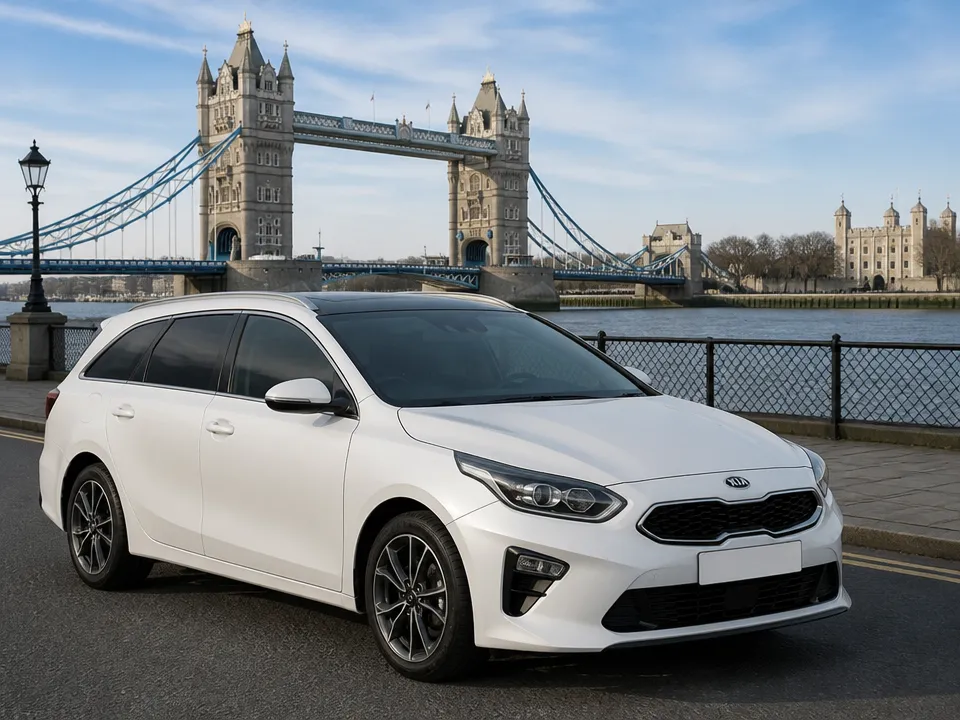
Kia Ceed Sportswagon, Comfort
★4.8· 67Manual1.0 L118 hpFront-wheel5 seats
£31per day
Book now




No cars match the selected filters. Remove some of the conditions.






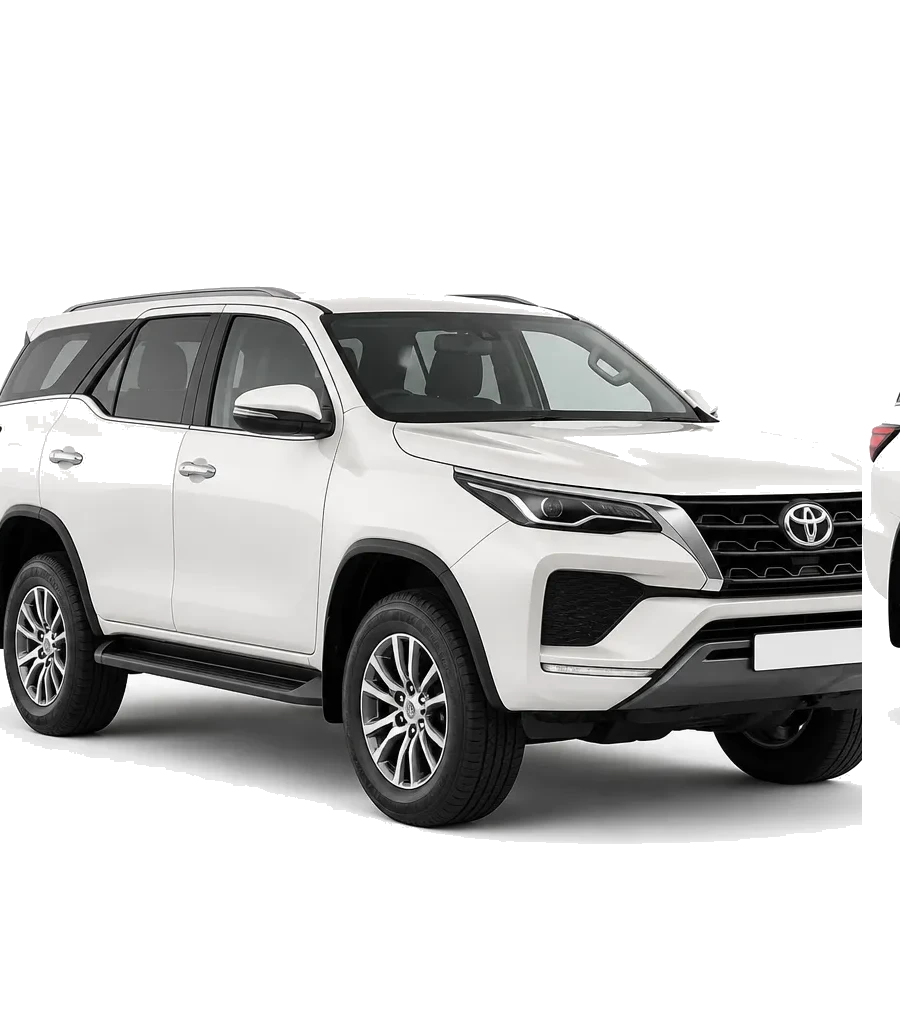
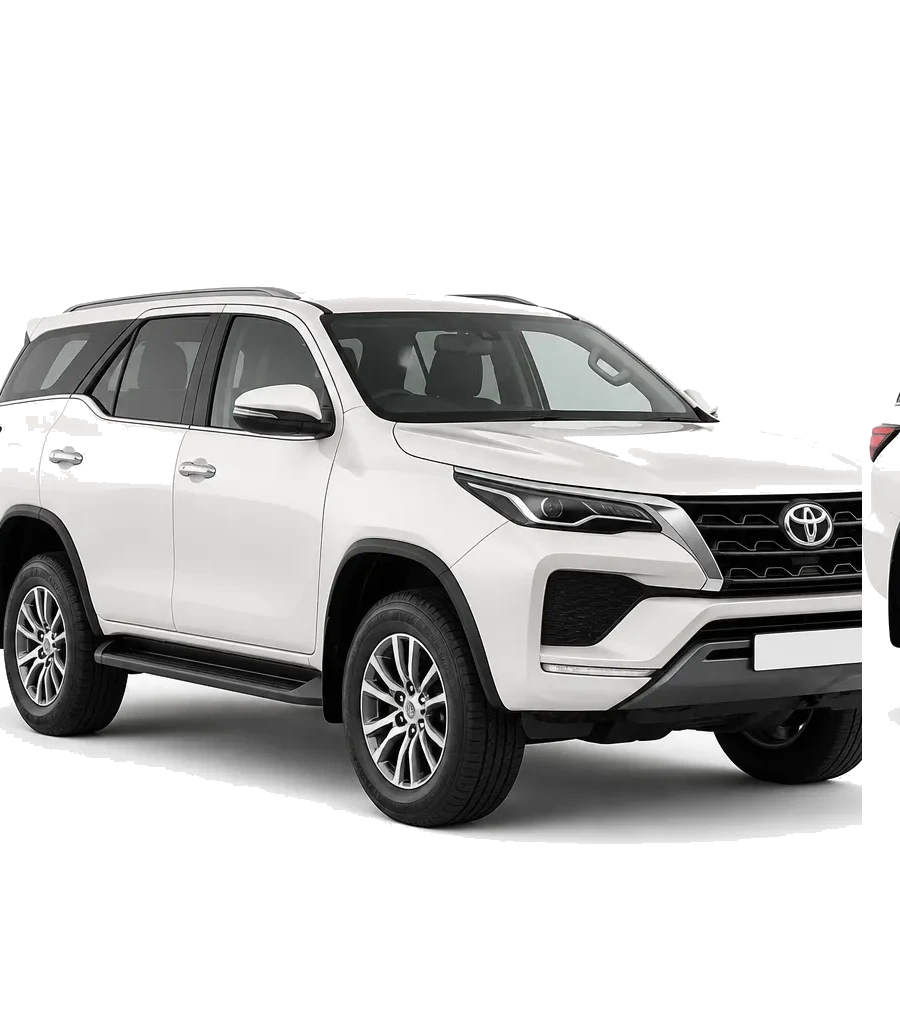

This page lists 4 cars, all estate body type. Daily prices on this page run from £31 to £36.
The Kia Ceed Sportswagon is £31 per day. The Toyota Corolla Touring Sports and the Volkswagen Passat Variant are £36 per day.
The London Congestion Charge is £18 per day if paid on the day of travel or in advance, or £21 if paid by midnight on the third day after. It applies 07:00–18:00 Monday to Friday and 12:00–18:00 at weekends and on bank holidays.
Our fleet of station wagons in London runs to 4 cars, with estate car hire in London starting from £31 a day. We deliver the car to any address in London and to all six London airports, and the delivery address, date and time are agreed with a manager before the booking is fixed.
In British English an estate is a station wagon: same body, same long roof, same load bay behind the rear seats. Our station wagon hire runs on four estate cars in two classes, and every one of them seats five.
| Model | Class | Fuel | Gearbox | Seats | Engine | Power | From per day |
|---|---|---|---|---|---|---|---|
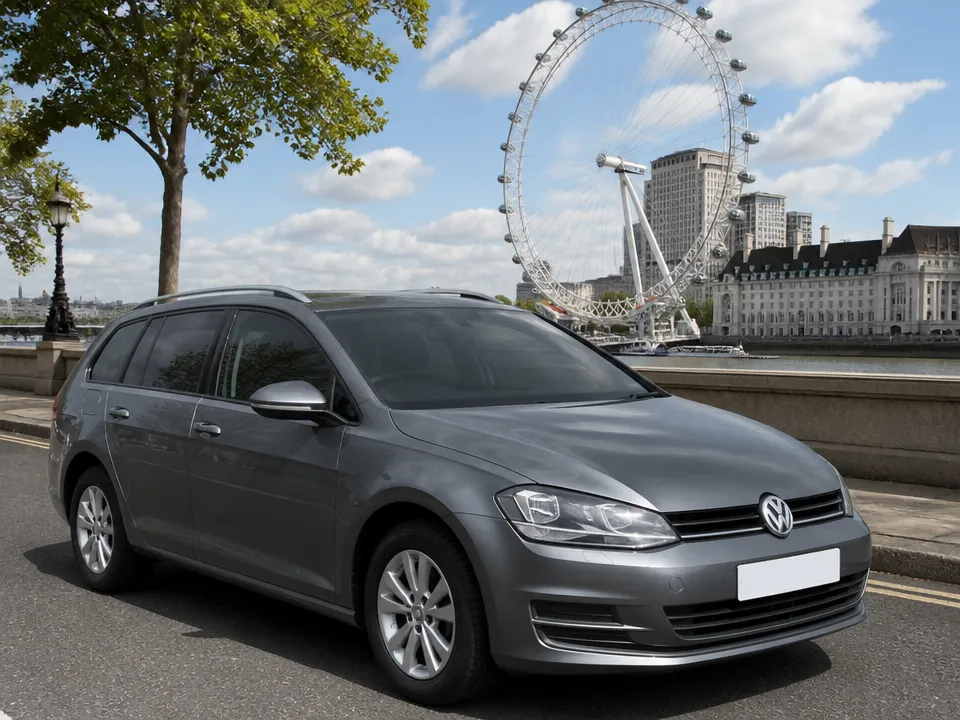
| Volkswagen Golf Estate | Comfort | Petrol | Manual | 5 | 1.5 L | 130 hp | £31 |
| Kia Ceed Sportswagon | Comfort | Petrol | Manual | 5 | 1.0 L | 118 hp | £31 |
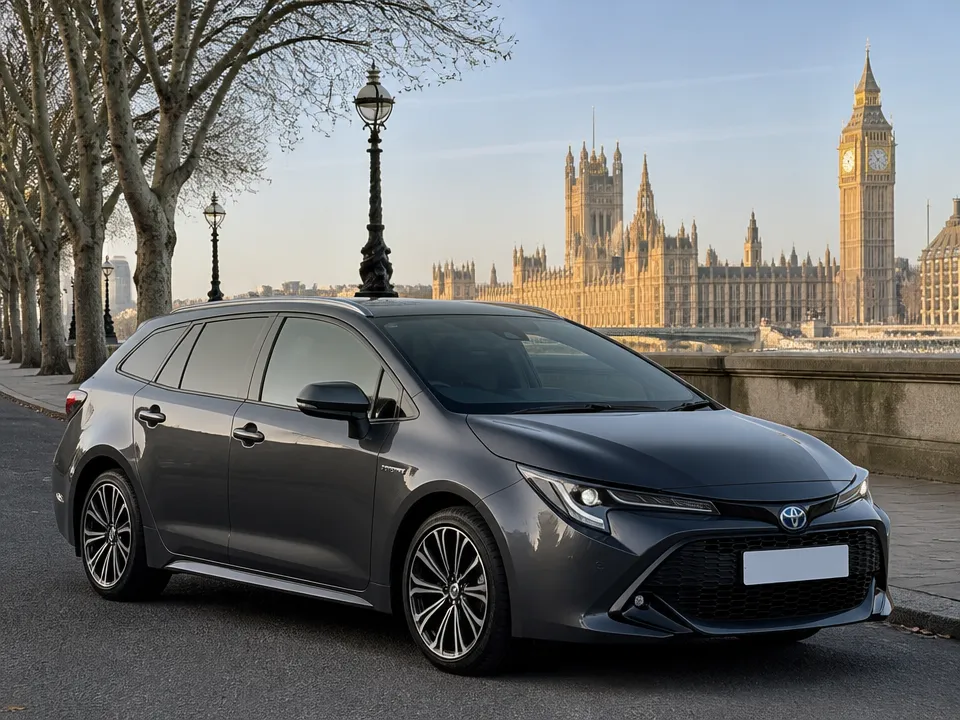
| Toyota Corolla Touring Sports | Comfort | Hybrid | Automatic | 5 | 1.8 L | 122 hp | £36 |
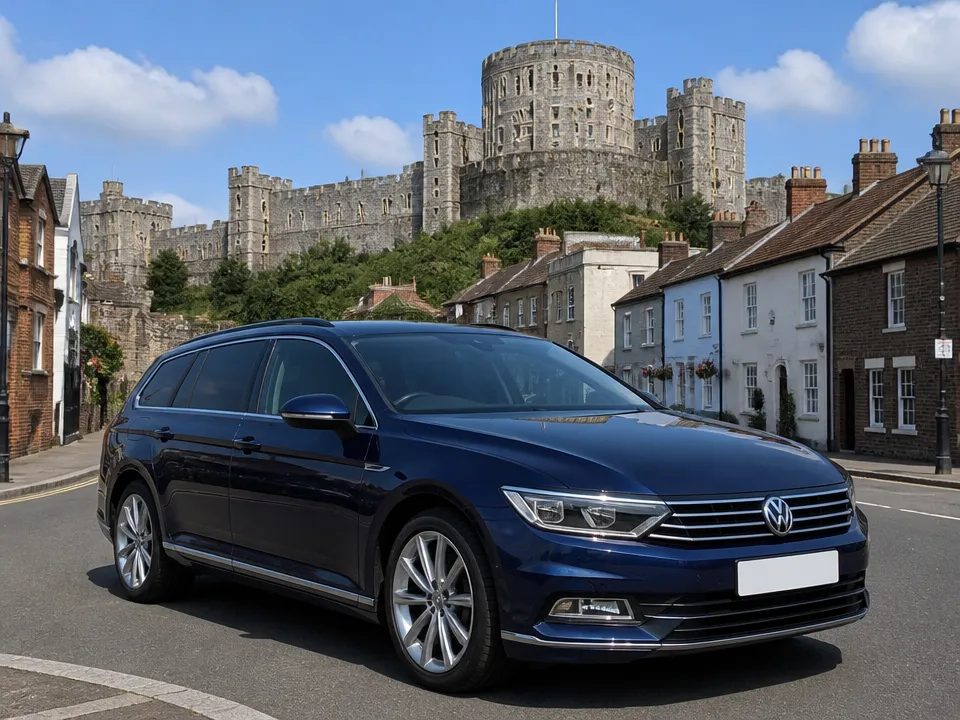
| Volkswagen Passat Variant | Sedan | Petrol | Automatic | 5 | 1.5 L | 150 hp | £36 |
Yes — all four estates seat five, and the estate body is what separates them from a saloon of the same length: the roof runs flat to the tailgate instead of dropping into a boot, so the load bay grows upward rather than backward. The Volkswagen Golf Estate is the shortest and lightest of the four at 130 hp from a 1.5 L petrol engine, while the Kia Ceed Sportswagon trades 12 hp for a smaller 1.0 L unit. Both are manual and front-wheel drive. The Passat Variant is the roomiest body of the set and the only one listed in Sedan class, with a 1.5 L petrol engine, 150 hp and an automatic gearbox. In our experience the limit on a family trip is luggage, not passengers — measure the pram or the golf bags against the boot before you pick, because a fifth seat does not automatically mean five suitcases.
Two of the four come with a manual gearbox and two with an automatic, so the choice usually settles on who is driving. The Toyota Corolla Touring Sports is the only hybrid here and one of the two automatics, with a 1.8 L engine and 122 hp. The other automatic is the Passat Variant. On the petrol side, the Golf Estate and the Ceed Sportswagon are both manual, front-wheel drive and five-seat, which keeps them simple to handle on a first drive in Britain. If your trip is mostly motorway miles out to Oxford or Bath, a manual petrol estate does the job without fuss; if it is stop-start through the centre, the hybrid recovers energy every time you lift off, and that is where it earns its place. Either way, the car arrives clean and with a full tank, and it goes back full — that is the fuel policy on every booking we take. Tell us which gearbox you need when you book, and we match it to the model available for your dates.
Rates for station wagon car rental in London start at £31 a day and stop at £36, and every longer booking is built from that daily figure rather than from a separate tariff. Station wagon car rental in London is priced the same way for every model in the fleet. Weekly hire is the daily rate × 6, monthly hire is the daily rate × 21, so the band is £186 to £216 a week and £651 to £756 a month.
| Class | Cars | From per day | Weekly from | Monthly from |
|---|---|---|---|---|
| Comfort | 3 | £31 | £186 | £651 |
| Sedan | 1 | £36 | £216 | £756 |
Comfort starts at £31 a day across three cars, Sedan at £36 with one car, and the £31 figure belongs to the Kia Ceed Sportswagon and the Volkswagen Golf Estate — the manual petrol models. Those are the cheapest cars on the page, and the saving sits in the gearbox and the engine rather than in the body: each is a full five-seat estate with the same boot layout as the others. At the other end, £36 buys either the Toyota Corolla Touring Sports with its 1.8 L hybrid and automatic, or the Volkswagen Passat Variant with a 1.5 L petrol and automatic. In our experience, most people who ask for a wagon for a week locally end up choosing between those two, and the deciding factor is usually the gearbox, not the badge.
Weekly hire is priced at the daily rate × 6 and monthly at the daily rate × 21, so a Comfort estate at £31 a day comes to £186 for a week and £651 for a month, while the £36 cars run to £216 and £756 on the same multipliers. The arithmetic is the same for every model in the fleet — we do not run a separate long-hire tariff, and the multipliers are the only difference between a short and a long booking. The deposit, the insurance excess, delivery fees and any discount are set out in the rental agreement, and the minimum rental age and the young-driver surcharge are agreed when booking. Read that document before the dates are fixed: the daily rate is the visible part of the cost, and the rest is settled in writing rather than on the page.
One thing worth planning for — the charges that are not ours. The Congestion Charge is £18 daily when paid on the day of travel or in advance, and £21 if paid by midnight on the third day after the trip; it runs 07:00–18:00 Monday to Friday and 12:00–18:00 on Saturdays, Sundays and bank holidays, inside the Inner Ring Road. The ULEZ charge is £12.50 a day for non-compliant vehicles, 24 hours a day, seven days a week, apart from 25 December, across all 32 boroughs. Who pays road charges, tolls and penalty notices on a rental car is agreed when booking, so raise it with the manager at the same time as the delivery address.
The fleet splits evenly by gearbox — two automatics and two manuals — but not by fuel: three of the four estates run on petrol and only one is a hybrid. Which pairing suits you depends less on preference than on where the car will spend its miles.
The Toyota Corolla Touring Sports is the only hybrid and one of two automatics, at £36 a day. Its 1.8 L petrol-electric unit produces 122 hp and drives the front wheels through an automatic box, which puts it at the top of the page alongside the Volkswagen Passat Variant — also £36, also automatic, but a 1.5 L petrol with 150 hp. The Passat is the quicker of the two on paper and the roomier in the back; the Corolla answers a different question. In our experience the hybrid earns its keep in stop-start traffic — the M25 crawl, the South Circular at five in the afternoon — where the petrol engine cuts out and the electric motor takes the low-speed work. On a steady motorway run to the coast the advantage narrows to very little. Match the car to the trip, not to the label.
The full-to-full rule is where the airport forecourt catches people out: filling up at a motorway services a few miles from the terminal costs noticeably more per litre than a supermarket station in the suburbs. Refuel before you turn off the main road and the last ten minutes of the return cost you nothing extra.
The two manual estates — the Volkswagen Golf Estate and the Kia Ceed Sportswagon, both at £31 a day — are the cheaper half of the fleet, and the two share the lowest price on the page. Both are 1.5 L and 1.0 L petrol respectively, front-wheel drive, five seats. Whether a manual suits you here is a fair question: the Congestion Charge zone runs 07:00–18:00 Monday to Friday and 12:00–18:00 at weekends and on bank holidays, and the traffic inside it is exactly the kind that wears out a clutch foot. If your days are mostly short central hops, the automatic is the kinder choice; if you are heading out to the Cotswolds or down to Brighton for a long weekend, the manual costs less and the gearbox stops mattering within twenty minutes of leaving the city. Both are agreed when you book, along with the delivery address, date and time.
Station wagon car rental with Rent-Trip works the other way round from a counter: the car is brought to the address you give us, and the delivery address, date and time are agreed with a manager before the booking is fixed.
Delivery outside these places is arranged case by case and is not promised on the site — ask before you book rather than after.
The delivery address, the date and the time are agreed with a manager before the booking is fixed, and that conversation is where the practical details belong. Pin the exact postcode and a time window early: a Mayfair hotel entrance and a residential street off the Edgware Road take very different amounts of time to reach, and the map rarely shows the difference. If your train arrives at Paddington or your flight lands at Heathrow, tell the manager the arrival time rather than the departure time — a car waiting at the wrong hour is a car you cannot use. The deposit, the insurance excess and any delivery fee are set out in the rental agreement, so read that document before the dates are locked in. In our experience the bookings that go smoothly are the ones where the postcode was checked twice.
The car comes clean and with a full tank, and it must go back with a full tank — that full-to-full rule is the only fuel option we offer, with any missing fuel and a refuelling service fee charged as set out in the rental agreement. All four estates seat five: the Volkswagen Golf Estate at £31 a day, the Kia Ceed Sportswagon at £31, and the Toyota Corolla Touring Sports and Volkswagen Passat Variant at £36 each. Traffic here keeps left and every car is right-hand drive, so the first mile from your door is the one to take slowly.
Every car we hand over is right-hand drive, because traffic in United Kingdom keeps left. If you have only ever driven on the right, the first twenty minutes are the learning curve, not the whole trip: the gear lever sits in your left hand, the mirror angles change, and the lane you want at a junction is the near one, not the far one.
The drink-drive limit in England, Wales and Northern Ireland is 80 mg per 100 ml of blood, 35 µg per 100 ml of breath or 107 mg per 100 ml of urine; Scotland runs 50, 22 and 67 on the same measures. Seat belts are compulsory where fitted, and a child needs a child seat until they reach 135 cm or turn 12, whichever comes first, with a fine up to £500 for getting it wrong. On a first drive the motorway is often the easier part — steady 70 mph, no oncoming traffic — while the tight residential streets of the inner city, with parked vans narrowing both sides, are where mirrors and the near-side kerb take the punishment.
The centre sits inside the Congestion Charge zone, bounded by the Inner Ring Road, and the charge is £18 a day paid on the day or in advance, or £21 if paid by midnight on the third day after the trip. It runs 07:00–18:00 Monday to Friday and 12:00–18:00 at weekends and on bank holidays, and is not charged from 25 December to the New Year bank holiday inclusive. The ULEZ, which covers all 32 boroughs, applies around the clock every day except 25 December at £12.50 a day for vehicles that do not meet the standards. Who pays road charges, tolls and penalty notices on a hired car is agreed when booking — settle it with the manager before the dates are fixed, not after a PCN arrives in the post.
Our estate cars take the same treatment as any other vehicle here: the body is longer than a hatchback's, the rear window sits further back, and reversing into a bay on a narrow street rewards using the mirrors rather than the screen.
The paperwork for station wagon car rental in London rests on one rule that matters more than the rest: a full, valid driving licence. Under gov.uk rules a visitor may drive on their full foreign licence for 12 months from the last date they entered Great Britain, and that covers England, Wales and Scotland alike. We do not publish an age limit, an IDP requirement or a young-driver surcharge on this page, because those are settled with a manager when the booking is agreed rather than fixed in advance.
What the licence has to be is worth spelling out, since a provisional or expired document does not start the 12-month clock.
The rest of the agreement — the deposit, the insurance excess, the delivery fee and any discount — is set out in the rental agreement, and we do not quote those figures in advance. Our fleet of four estates is delivered to any address in the capital and to Heathrow, Gatwick, Stansted, Luton, London City and Southend, and the delivery address, date and time are agreed with a manager before the booking is fixed. Ask about the deposit and the excess at that point, not at the kerb: the numbers sit in the agreement you sign, and a five-seat estate with a full boot is a poor place to discover a term you did not expect.
Two details catch visitors out more often than the licence itself. The first is the return date on a foreign licence — a licence that expires mid-hire no longer lets you drive from that day, so check the expiry before you book. The second is the delivery address itself: give the exact one when the booking is agreed, because the delivery is planned around the address you supply. Neither point is a formality: a mismatch is the sort of thing that turns a smooth hand-over into an hour of phone calls.
An estate earns its keep on the kind of trip that leaves the city: four people, a weekend's luggage and a boot that still closes. From London the classic runs are Oxford, Cambridge, Stonehenge, The Cotswolds, Bath, Brighton, Windsor and Canterbury, with Cardiff & Wales and Edinburgh further out — and a cross-Channel run via Eurotunnel if you are feeling ambitious.
Distances decide the car. Windsor and Brighton sit close enough for a morning start and an evening return; The Cotswolds and Bath reward a full day; Oxford, Cambridge and Stonehenge sit comfortably in between. For the longer runs, the diesel and petrol price you pay at the pump matters more than the daily rate: petrol was £1.75 a litre and diesel £1.99 on 19.10.2026, so a hybrid that sips fuel in traffic pays off differently on a steady motorway cruise. Our own view is that the Toyota Corolla Touring Sports, the one hybrid on the page, suits a stop-start city exit and a rolling A-road day better than a pure petrol car of the same size.
Two charges catch people out on these routes. The Dartford Crossing (Dart Charge) on the M25 costs £3.50 per crossing for a car (class B), or £2.80 with a pre-pay account, and it usually applies from 6:00 to 22:00 every day including weekends and holidays. The ULEZ charge of £12.50 daily runs 24 hours, seven days a week, except 25 December, and covers all 32 boroughs — the M25 itself is outside it. Whether road charges and tolls fall to you is agreed when booking, so settle it with the manager before the dates are fixed.
For anything beyond these routes, ask before you book: delivery outside our usual area is arranged case by case and is not promised on the site.