

















Commercial car rental in United Kingdom
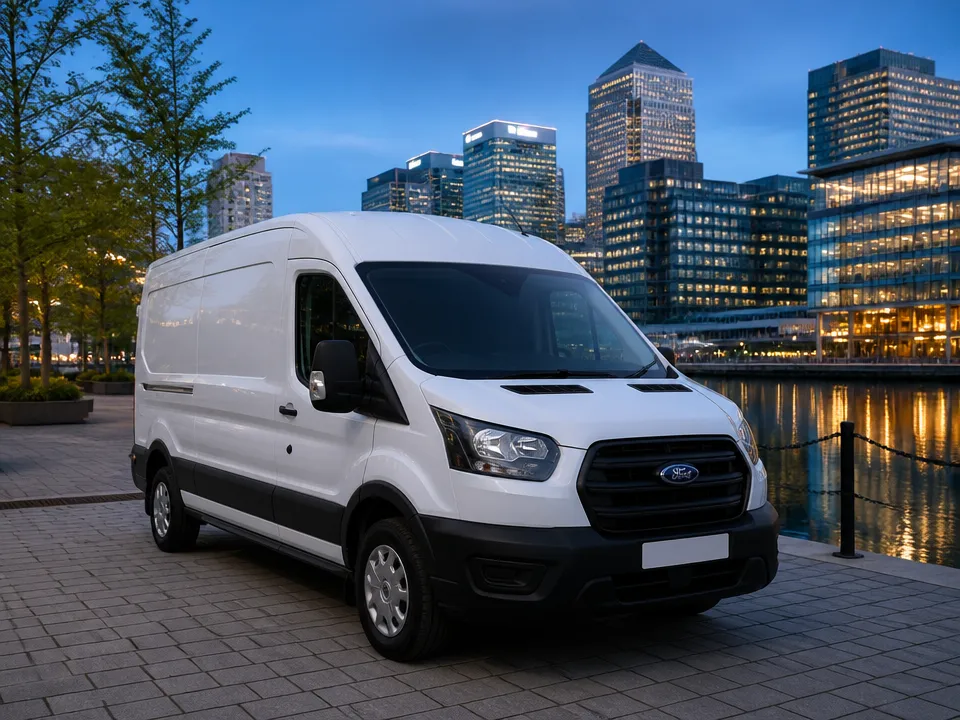
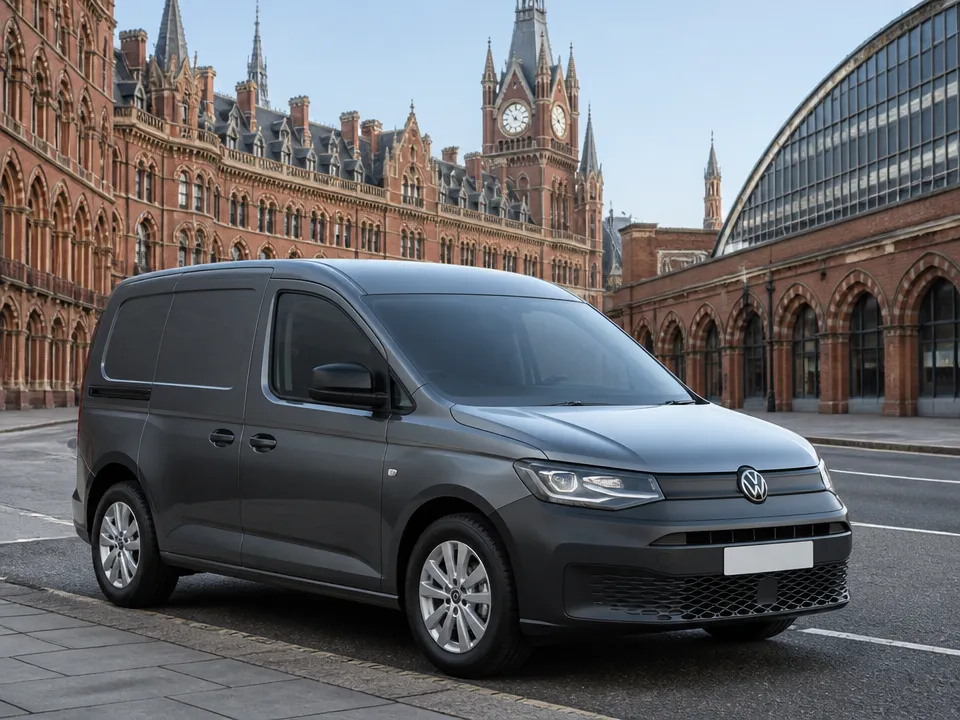
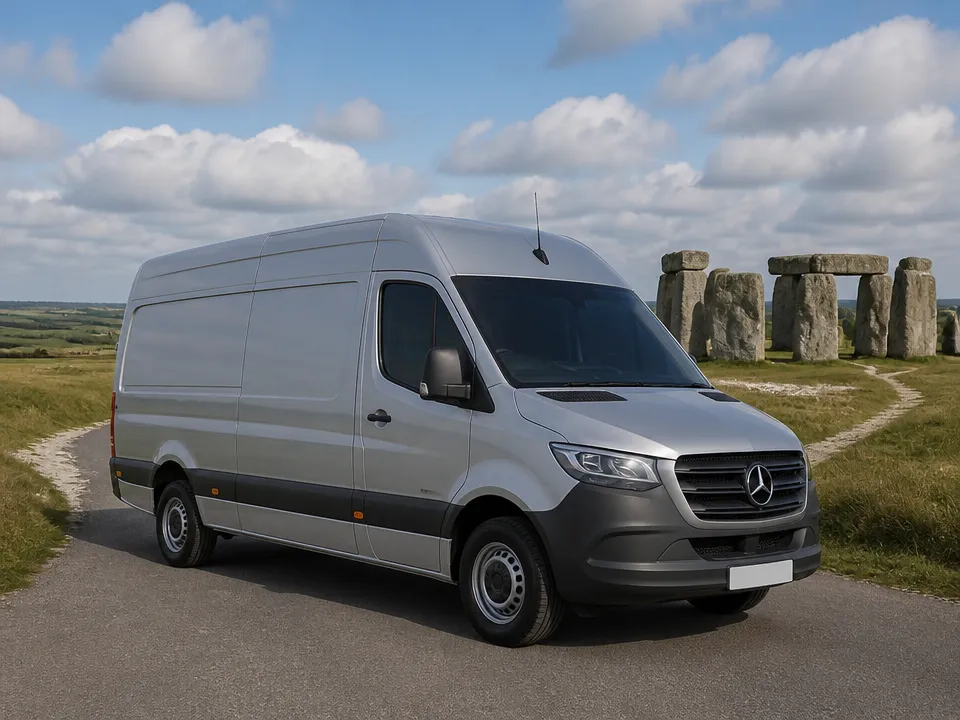
From £47 per day, commercial car rental in United Kingdom gives you a choice of 3 diesel panel vans — the Ford Transit Cargo, Volkswagen Caddy and Mercedes-Benz Sprinter Cargo — each with a manual gearbox and delivered to your address in London, including London Heathrow, Gatwick, Stansted, Luton and Southend airports.
Commercial car rental in United Kingdom van models and sizes
Commercial car rental in United Kingdom runs on three diesel manual panel vans, and the choice between them comes down to seats, load length and drive. Two are three-seaters built for cargo, one takes five people. We deliver whichever you pick to an address agreed with a manager when booking.
Three Panel Vans and What Each One Carries
| Model | Seats | Drive | Engine | From per day |
|---|---|---|---|---|
| Ford Transit Cargo | 3 | Front-wheel | 2.0 L, 130 hp | £47 |
| Volkswagen Caddy | 5 | Front-wheel | 2.0 L, 122 hp | £67 |
| Mercedes-Benz Sprinter Cargo | 3 | Rear-wheel | 2.0 L, 143 hp | £94 |
3-Seat or 5-Seat for Deliveries and House Moves
Two of the three vans seat three; the Caddy seats five. The Ford Transit Cargo and the Mercedes-Benz Sprinter Cargo give up the rear seats and take load length instead — that is the trade the panel-van layout makes. The Caddy keeps a passenger row and still carries cargo behind it. All three are Panel Van bodies on a 2.0 L diesel engine with a manual gearbox, so the difference you actually feel on the job is the second row and the drive axle. In our practice, the seat count decides the booking more often than the engine does.
A one-bed flat move fits the Transit, while a two-person delivery crew needs the Caddy so the second person rides in the cab rather than in the load bay. The Sprinter's rear-wheel drive and 143 hp suit a loaded motorway run; the Transit suits short urban drops where front-wheel drive and a shorter body are easier to place.
The Mercedes-Benz Sprinter Cargo is the only rear-wheel-drive van on this page, and the only one at 143 hp. Rear-wheel drive puts the driven wheels under the load, which is why it is the pick for a heavy motorway leg rather than a tight back-street drop. The two front-wheel-drive models steer and park more easily at low speed in built-up traffic.
Before you choose, measure the longest item you are carrying and count the people who must ride in the cab — the three-seat vans cannot take a second row, and no amount of load space replaces it. Rent-Trip supplies each van clean and with a full tank.
Daily, Weekly and Monthly Commercial Car Rental Rates
Our commercial car rental in United Kingdom is priced from a daily rate, and the longer the booking, the lower the figure each day works out at. Three vans sit on the page, so the spread between the cheapest and the dearest is wide enough to matter when you plan the job.
How a Week and a Month Are Priced
A week is priced from £282 and a month from £987 — daily rate times six and times twenty-one. The Ford Transit Cargo at £47 a day becomes £282 for a week and £987 for a month; the Volkswagen Caddy at £67 works out at £402 and £1,407; the Mercedes-Benz Sprinter Cargo at £94 comes to £564 and £1,974. Nothing else changes with the length of the booking: the same three diesel manual panel vans, the same full-to-full fuel rule, the same delivery to the address you agree with a manager.
In our practice, most commercial jobs are quoted at the weekly rate because a van is usually wanted for six days or more rather than one. Fix the length of the job before you pick the model — a month at the daily rate would cost far more than the monthly figure, and the per-day number is what actually decides which van you can afford.
The Cheapest and the Largest Van on the Page
- Ford Transit Cargo: £47 per day, the cheapest on the page, 3 seats, front-wheel drive, 2.0 L and 130 hp — the van for short urban drops and single-load runs.
- Volkswagen Caddy: £67 per day, the only 5-seat van here, so it carries a second passenger row as well as the load bay.
- Mercedes-Benz Sprinter Cargo: £94 per day, the most expensive, 143 hp with rear-wheel drive — the one for a loaded motorway run.
- Daily spread: £47 to £94 across Commercial, which is roughly double from the bottom of the range to the top.
- What the money buys: the two cheaper vans trade power and drive layout for a lower day rate; the Sprinter charges for both.
Rent-Trip prices all three from the daily figure, and the weekly and monthly numbers follow from it without a separate quote. Deposit, insurance excess and delivery fees are set out in the rental agreement and are agreed when booking — they are not folded into the day rate above. Book the van for the days the job actually runs: on a six-day delivery round the daily rate and the weekly figure come to the same sum, and from the seventh day the weekly figure is the cheaper one.
Commercial Car Rental Rates by Model
| Model | Seats | Drive | Engine | From per day | Week from | Month from |
|---|---|---|---|---|---|---|
| Ford Transit Cargo | 3 | Front-wheel | 2.0 L, 130 hp | £47 | £282 | £987 |
| Volkswagen Caddy | 5 | Front-wheel | 2.0 L, 122 hp | £67 | £402 | £1,407 |
| Mercedes-Benz Sprinter Cargo | 3 | Rear-wheel | 2.0 L, 143 hp | £94 | £564 | £1,974 |
Licence and documents for commercial car rental in United Kingdom
A commercial vehicle runs on the licence most drivers already hold. The three vans on this page sit under the 3.5-tonne line that separates a car-licence vehicle from a goods-vehicle licence, so no extra category is needed for a Ford Transit Cargo, a Volkswagen Caddy or a Mercedes-Benz Sprinter Cargo. What does change between drivers is paperwork, and that is where the booking conversation starts.
Driving on a Standard UK Licence
A standard UK car licence covers these panel vans, and no special category is required to drive a Transit. The dividing line is weight: vehicles up to 3.5 tonnes fall under ordinary car entitlement, and all three vans here stay below it. That is why a driver who has only ever run a hatchback can legally take a 2.0 L diesel van on a motorway job the same week. The practical consequence is worth knowing before you plan a crew: the licence question rarely blocks a booking, but the driver's age and driving history are agreed with a manager when booking, not fixed by this page.
Foreign Licences and the 12-Month Window
A full foreign licence is valid for 12 months from your last entry into Great Britain, covering England, Wales and Scotland alike. After that window the rules change, so a driver who has been in the country longer should raise it early rather than at the delivery address.
We do not publish an age floor, an IDP requirement or a deposit card rule on this page — those are agreed with a manager when booking, and the same conversation settles the delivery slot. In our practice, the drivers who hit trouble are the ones who mention a licence only on the day; a two-line message at booking removes the risk entirely.
Documents Worth Settling Before the Van Arrives
- Licence: a full, current licence — which documents to bring is agreed with a manager when booking.
- Driver details: age and driving history are agreed with a manager when booking — confirm them at that stage, not at hand-over.
- Entry date: for a foreign licence, know the date of your last entry into Great Britain, because the 12-month window runs from it.
- Booking terms: the deposit, the insurance excess and any delivery fee are set out in the rental agreement, so read that line before you choose between the three vans.
The paperwork side is short for most renters. The one thing that genuinely varies by model is the load space behind the bulkhead, and that is the number to check before you commit to the largest van on the page.
Delivery to Your Address and How a Commercial Car Rental Booking Is Fixed
Commercial vehicle hire with Rent-Trip runs on a simple arrangement: the van is brought to the address you agree, and the arrangement is fixed with a manager. The vehicle arrives where the work starts, so the day begins at the address you gave rather than anywhere else.
The Van Comes to the Address You Agree
We deliver to any address in London and to the six airports we cover — Heathrow (LHR), Gatwick (LGW), Stansted (STN), Luton (LTN), London City (LCY) and Southend (SEN). The delivery address, the date and the time are agreed with a manager before the booking is fixed. Anywhere outside those places is arranged case by case and is not promised on the site, so a job in a town we do not cover yet needs a conversation first.
In our practice the delivery slot is the part that decides everything else: a van due at a loading bay at 07:00 has to be booked around that hour, not around when you happen to be free. Fix the delivery time before you settle the job date, and the rest of the arrangement falls into place.
What the Rental Agreement Sets Out
- Deposit: the amount and how it is handled are set out in the rental agreement, not fixed by this page.
- Insurance excess: the figure is set out in the rental agreement — read that line before you choose between the Transit, the Caddy and the Sprinter.
- Delivery fee: what applies to your address and time is set out in the rental agreement.
- Fuel: the van comes clean with a full tank and goes back full — the missing fuel and a refuelling service fee are charged as the agreement states.
- Driver conditions: minimum age, licence requirements and the card used for the deposit are agreed when booking.
The three vans on this page are all diesel and all manual: the Ford Transit Cargo at £47 per day with 3 seats, the Volkswagen Caddy at £67 per day with 5 seats, and the Mercedes-Benz Sprinter Cargo at £94 per day with 3 seats. The excess is set out in the rental agreement, so the cheapest daily rate on the page is not automatically the cheapest week once the whole agreement is in front of you — ask for both numbers in the same conversation and pick the van against the job, not against the headline rate.
A commercial van is booked for a purpose — a house move, a delivery round, a run to a site — and the details of that purpose change what we send. A manager confirms the address, the date and the time, and the rental agreement then carries the deposit, the excess and the delivery fee. Keep the confirmation and the agreement together: when the job date shifts, that is the pair of documents the change is made against.
Fuel and gearbox tips for commercial car rental in United Kingdom
All three vans run on diesel and all three have a manual gearbox, so the fuel stop and the clutch are part of every commercial booking made through us. There is no automatic option on this page and no petrol variant — the choice is between 122 hp, 130 hp and 143 hp, not between fuels. Diesel at the pump is not cheap: 1.99 a litre against 1.75 for petrol on the last check, which is why a 2.0 L panel van deserves a fuel plan rather than a reflex stop.
Full-to-Full Fuel and the Manual Gearbox
Each of the three runs a 2.0 L unit with a manual box — the Ford Transit Cargo at 130 hp, the Volkswagen Caddy at 122 hp, the Mercedes-Benz Sprinter Cargo at 143 hp. We hand the van over with a full tank and expect it back full — full-to-full is the only fuel arrangement on the site, with no pre-paid tank and no full-to-empty alternative. Miss the refill and the missing fuel plus a refuelling service fee are charged as set out in the rental agreement. In our experience drivers who fill up on the last drive before the return avoid both the morning queue and the refuelling fee — and a manual gearbox is easier on fuel when you shift early rather than revving each gear out.
Driving on the Left in a Right-Hand-Drive Van
Traffic keeps left under Highway Code rule 160 and every hire van is right-hand drive, so the gear lever sits under your left hand — the first ten minutes feel strange to anyone arriving from a right-hand-traffic country. Roundabouts run clockwise and you give way to traffic approaching from the right (rule 185). Speed limits are the ones to watch in a tall van: 30 mph in built-up areas across England, Scotland and Northern Ireland, 60 mph on a single carriageway, 70 mph on a dual carriageway and on a motorway, and 30 mph by default on lit roads unless signs say otherwise. London carries plenty of 20 mph zones, so read the signs rather than the habit. The drink-drive limit is 80 mg per 100 ml of blood in England, Wales and Northern Ireland, tighter at 50 mg in Scotland. A phone in the hand costs £200 and 6 penalty points even at a red light; hands-free is allowed if the device blocks nothing.
What to Check Before the Van Leaves the Address
- Fuel level: confirm the tank reads full at hand-over — that reading is what the return is measured against.
- Gearbox feel: run through the gears once before the van leaves the delivery address, since a manual box is the one thing you cannot swap mid-job.
- Height and width: the Sprinter Cargo is the longest of the three, so check the loading bay and the car park barrier before you commit.
- Charge zone: the Congestion Charge runs 07:00–18:00 Monday to Friday and 12:00–18:00 at weekends and on bank holidays, at £18 a day paid on the day or in advance, £21 by midnight on the third day after. Who covers it is agreed when booking.
London Charges and Tolls in a Hire Van
A commercial van in United Kingdom can collect charges that have nothing to do with fuel: the Congestion Charge, the ULEZ and the Dartford Crossing all sit on ordinary working routes. How each of them is handled is agreed when booking.
Congestion Charge
- Charge: £18 a day if paid on the day of the trip or in advance; £21 if paid by midnight on the third day after the trip.
- Hours: 07:00–18:00 Monday to Friday, 12:00–18:00 on Saturday, Sunday and bank holidays.
- Zone: the streets inside the Inner Ring Road — Pentonville Rd, City Rd, Old St, Commercial St, Mansell St, Tower Bridge Rd, New Kent Rd, Elephant & Castle, Kennington Ln, Vauxhall Bridge Rd, Park Ln, Edgware Rd, Marylebone Rd, Euston Rd sit on or outside that boundary.
- Electric vans: the 100% Cleaner Vehicle Discount ended on 25.12.2025 — from 02.01.2026 electric cars on Auto Pay get 25% off (£13.50 instead of £18), electric vans and HGVs 50%, and nothing off without Auto Pay.
- Suspension: not charged from 25 December through to the New Year bank holiday inclusive.
- Penalty: a PCN is £180, reduced to £90 if paid within 14 days, and £270 after a charge certificate; you have 28 days to pay.
A route that clips the boundary once a day is the one to plan around: our advice is to check the exact streets against the TfL map before the job, because a single crossing inside the ring costs the full daily figure.
ULEZ, LEZ and the Dartford Crossing
The ULEZ runs 24 hours a day, seven days a week, except 25 December, and covers all 32 boroughs — over 1,500 km², with the M25 outside it. Non-compliant vehicles pay £12.50 a day: petrol cars and vans must meet Euro 4 (roughly 2006 onward), diesel Euro 6 (September 2016 onward), motorcycles Euro 3, and vans and minibuses up to 3.5 t pay too if they fall short. Heavy vehicles over 3.5 t and buses over 5 t fall under the LEZ instead, and small vans up to 1.205 t unladen are outside it. The ULEZ PCN is £180, £90 within 14 days, and the TfL vehicle checker confirms a registration by plate. Our three panel vans are diesel, so a pre-booking check of the plate against that checker is the cheapest five minutes of the job.
The Dartford Crossing (Dart Charge) on the M25 costs £3.50 per crossing for cars (class B) on a one-off or pay-as-you-go basis, or £2.80 prepaid, usually 06:00–22:00 every day including weekends and holidays, payable by midnight the following day. The PCN is £70, £35 if paid within 14 days, £105 if unpaid. Blackwall and Silvertown tunnels charge £4.20 at peak (northbound 06:00–10:00, southbound 16:00–19:00 on weekdays) and £1.55 off-peak with Auto Pay, effective 21 September 2026, with a £180 penalty, £90 within 14 days and at most one PCN a day. Who covers these sums on a hired van is agreed when booking — read that line before you set the delivery time.
Long Hire for Commercial Car Rental
Commercial car rental in United Kingdom rarely ends at six in the evening — a van works the length of a contract, and the booking should be shaped around that. We arrange long-term hire for trades, couriers and small fleets on the same three panel vans, with the length of the hire and the delivery address agreed with a manager before anything is fixed.
What a Month-Long Booking Looks Like
What changes on a long booking is the per-day figure, not the vehicle. A month is priced from £987, and a week from £282 — the daily rate times twenty-one and times six respectively. On the page the three vans run from £47 to £94 a day, so a firm that needs one vehicle for a full contract reads the monthly band first and the daily rate second. The Mercedes-Benz Sprinter Cargo at £94 per day carries the highest figure and the strongest load figures of the three: 143 hp, rear-wheel drive and a 2.0 L diesel. The Ford Transit Cargo at £47 a day sits at the other end, and for steady short urban drops the smaller outlay is the one that survives a long hire. In our experience the mistake on monthly work is choosing on the daily rate alone — the van that fits the route matters more than the one that reads cheapest on day one.
Support and the Terms Behind a Long Hire
- Fuel: every van leaves with a full tank and comes back full — full-to-full, with missing fuel and a refuelling service fee set out in the rental agreement.
- Deposit, insurance excess and delivery fees: all three are set out in the rental agreement, never quoted on this page.
- Delivery and collection: the address, date and time are agreed with a manager before the booking is fixed, and delivery outside the usual area is arranged case by case.
- Driver conditions: a full foreign licence is valid for 12 months from your last entry into Great Britain; age and any further conditions are agreed when booking.
- Charges on the road: Congestion Charge and ULEZ apply to vans as they do to cars, and who covers them is agreed when booking.
Keeping a Van Working Across the Country
Long hire usually means a vehicle that moves between jobs rather than sitting on one street, and the paperwork should be read with that in mind. The 3.5-tonne line is what keeps these three panel vans on a standard UK car licence, so a second driver and a change of route do not force a different category of vehicle.
We deliver to any address in London and to the six London airports; anything beyond that is arranged case by case and is not promised on the site. Fix the delivery slot before the contract start date — a van that arrives a day late costs more than the difference between two daily rates.