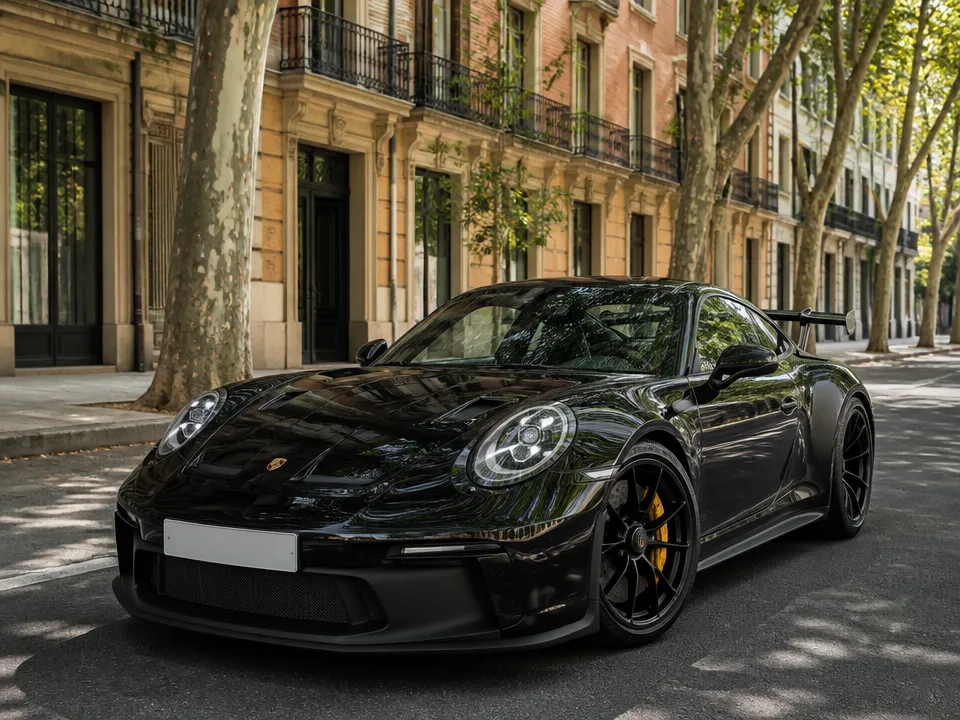
Porsche 911 GT3 (992)
★4.7· 10Automatic4.0 L510 hpRear-wheel2 seats
€896per day
Book now








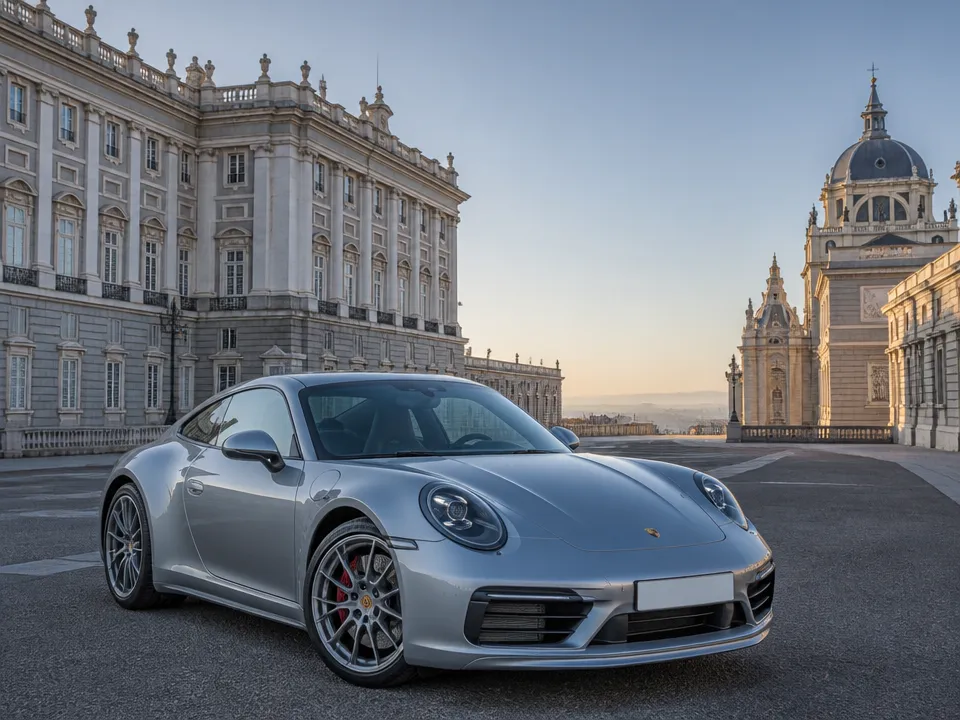

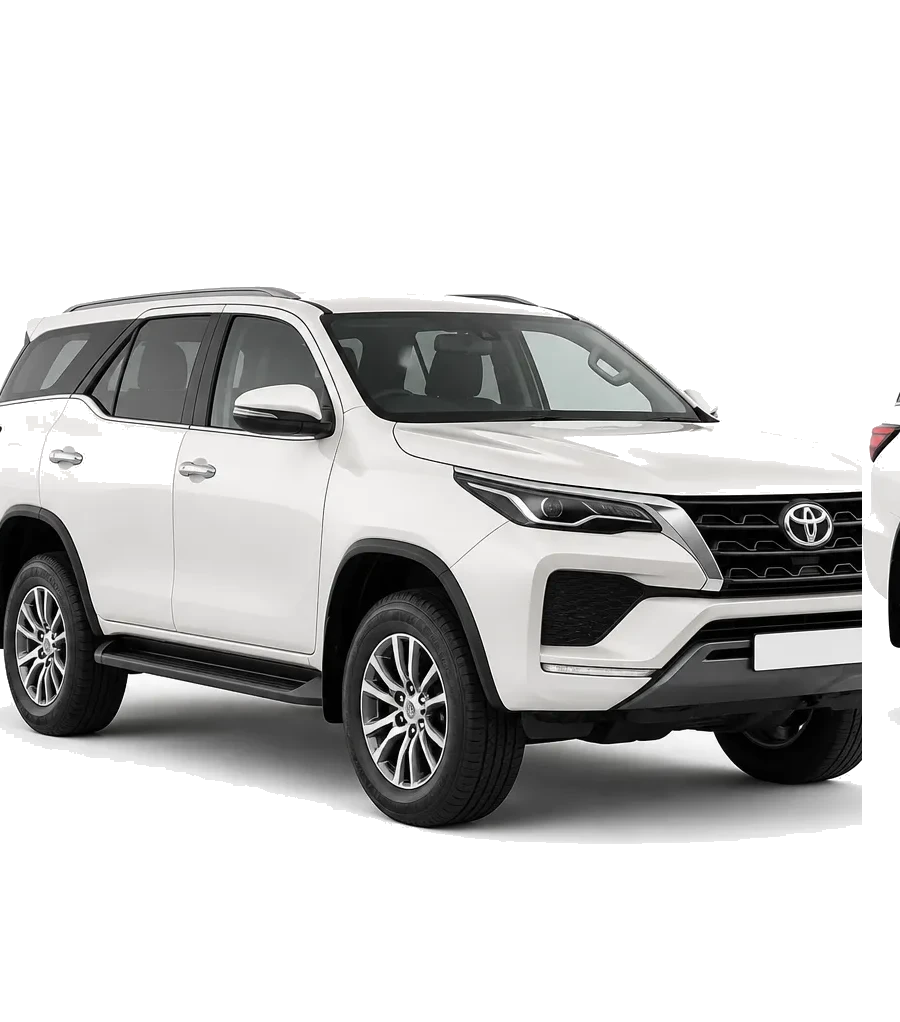

Porsche car rental in Madrid starts with two cars: the Porsche 911 Carrera 4S (992) at €832 per day and the Porsche 911 GT3 (992) at €896 per day. Both are delivered to you anywhere in Madrid — the car comes to your address, and the hand-over is agreed with a manager when you book.
This page carries two Porsche cars: the 911 Carrera 4S (992) in the Sports class and the 911 GT3 (992) in the Exotic class. Both are coupes with petrol engines and automatic transmission — the difference sits in drive, engine size, power, seats and price.
Rent-Trip keeps two Porsche 911 cars on this page — the Carrera 4S (992) in the Sports class and the GT3 (992) in the Exotic class. Both are coupes with a petrol engine and an automatic gearbox, so neither asks you to work a clutch in traffic. The Carrera 4S runs a 3.0 L unit with 450 hp through all-wheel drive and carries four seats. The GT3 takes the other road entirely: a 4.0 L engine, 510 hp, rear-wheel drive and two seats only. The GT3 is the track-focused one — sharper steering, a firmer ride and no rear bench — so it suits a driver who wants the more demanding car rather than the more usable one.
| Model | Class | Seats | Engine | Power | Drive | Price per day |
|---|---|---|---|---|---|---|
| Porsche 911 Carrera 4S (992) | Sports | 4 | 3.0 L | 450 hp | All-wheel | €832 |
| Porsche 911 GT3 (992) | Exotic | 2 | 4.0 L | 510 hp | Rear-wheel | €896 |
It is worth it when the car itself is the reason for the drive. The M-30 ring puts you on a proper road within minutes of the centre, the Sierra de Guadarrama climbs begin an hour north, and the run south to Toledo is a straightforward motorway cruise. On that kind of day the Carrera 4S earns its place — all-wheel drive settles the car on wet autumn and winter mornings, and four seats mean a passenger can come along. A Porsche is a poor choice for a pure city-errand day: 30 km/h limits across most central streets and SER zona azul parking turn 450 hp into dead weight. In our experience the two-seat GT3 sells to drivers who already know what rear-wheel drive does on a damp roundabout.
Prices on this page start at €832 per day, and longer bookings follow one fixed rule: a week is the daily rate × 6, a month is the daily rate × 21. Both cars are priced separately, so the two figures below are the only ones you need.
Daily rates on this page run from €832 for the Carrera 4S to €896 for the GT3. The Carrera 4S (992) is the four-seat car in the Sports class — 3.0 L, 450 hp, all-wheel drive — and it is the cheaper of the two by €64 a day. The GT3 (992) sits in the Exotic class at €896: 4.0 L, 510 hp, rear-wheel drive, and two seats instead of four. In our experience the €64 gap is the smallest part of the decision — the GT3 also removes the rear bench, which rules out a second passenger in the back on a longer run. If the trip is two people with luggage, the Carrera 4S usually wins on usability; if the drive itself is the point, the GT3 is the one people ask us for by name.
A week starts at €4,992 and a month at €17,472 — weekly is the daily rate × 6, monthly is the daily rate × 21. Those two starting figures come off the Carrera 4S at €832 a day; the GT3 scales up from €896 by the same multipliers. On a month-long booking the multiplier is identical for both cars, so the Exotic class carries its higher daily rate all the way through — €17,472 is the floor, not the ceiling, and the GT3 monthly figure sits above it. That is worth checking before you settle on a class: a four-week booking of the cheaper car can cost less than three weeks of the dearer one.
| Class | Cars | From per day | From per week | From per month |
|---|---|---|---|---|
| Sports | 1 | €832 | €4,992 | €17,472 |
| Exotic | 1 | €896 | €5,376 | €18,816 |
Class, not model, is what a booking is built around, so a class-level price is the figure to compare while you are still choosing between the two. The deposit, the excess and any delivery fee are set out in the rental agreement, and the final amount is agreed with a manager when you book.
Spain requires a valid driving licence for the category of car you are taking, and a passport or ID in the main driver's name. Everything else — the minimum rental age, the young-driver surcharge, which cards are accepted — is agreed when booking, because those conditions are set by the company and not by Spanish law.
A licence issued in an EU or EEA country — including Iceland, Liechtenstein and Norway — is fully valid in Spain for as long as it has not expired. Nothing extra is needed: no international driving permit, no translation, no registration with the DGT. The card itself is the document. For Porsche car rental in Madrid this is the simplest case, and a driver arriving from another member state can hand over the same licence they use at home. If you hold a licence from outside the EEA, read the next section before you book.
A third-country licence is valid for driving in Spain if it is in force and its holder meets the Spanish age requirement for the equivalent category. For residents, it stops being valid six months after they take up ordinary residence in Spain, after which it must be exchanged (canje). The DGT advises getting an international driving permit before the trip. A permit is a supplement only — it is shown together with your passport and your national licence, never on its own, and it is valid for one year.
You may drive in Spain from 18 for category B. Rental companies generally start at 21, some at 23, and usually ask for at least one year of holding the licence — that part is agreed when booking. Fines for traffic offences are the driver's, not the car's.
Every booking is agreed with a manager, and the delivery point and time are settled before the booking is confirmed. That is the whole shape of the service: you name the place and the time, we confirm what works, and the Porsche arrives where you are.
The agreement itself, the deposit and the insurance excess sit in the rental agreement — the figures are set out there when you book, not on this page. The same goes for any delivery fee. What we can say plainly is that a Porsche 911 Carrera 4S (992) and a 911 GT3 (992) are both low-slung coupés, and the GT3 with its 4.0 L engine and 510 hp is the less forgiving of the two on a narrow street or a steep ramp into an underground car park. In our practice, the hand-over is where that stops being abstract: you sit in the car, set the mirrors and the seat, and find out how much of the front wing you can actually see before you commit to traffic on Gran Vía.
Mornings between 08:00 and 10:00 and evenings from 18:00 are when the M-30 and the radial routes into the centre are at their worst, so a delivery booked inside those windows takes longer to complete than one at midday. If your first drive is out towards the Sierra de Guadarrama or down to Toledo, taking the car the evening before means leaving at first light instead of waiting on a hand-over. For a weekend booking, the delivery time is agreed when booking, so the hand-over fits around the traffic rather than adding to it.
Madrid is a city where the car you are driving matters less than where you are allowed to drive it. ZBE Madrid (Zona de Bajas Emisiones de Madrid) covers every urban street of the municipality — all 21 districts — so the environmental sticker on the windscreen decides your route before the engine does. Our cars are delivered to you, and every booking is agreed with a manager.
| Zone | Maximum stay | Charging hours |
|---|---|---|
| SER zona azul (blue) | 4 hours | Weekdays 09:00–21:00; Saturday 09:00–15:00 |
| SER zona verde (green) | 2 hours | Weekdays 09:00–21:00; Saturday 09:00–15:00 |
The two bays are not interchangeable: the green zone is reserved for residents first, so on a Salamanca or Centro street the blue bay is the realistic option for a hire car.
The M-30, M-40, M-45 and M-50 rings and the radial A-1 to A-6 autovías carry no toll, while the radial R-2, R-3 and R-4 are paid. Speed limits are the ones the signs state: 120 km/h on autopista and autovía, 90 km/h on a conventional road, and 30 km/h on a city street with one lane in each direction, with 20 km/h on single-platform streets and 50 km/h where there are two or more lanes each way. In our practice, the run out to the Sierra de Guadarrama is where the Carrera 4S and the GT3 make sense — the city grid does not. Fill the tank before you hand the car back: the fuel policy is agreed when booking, and Gasolina 95 E5 averages around €1.971 per litre across 231 filling stations in the sample.
The city sits in the middle of a plateau ringed by mountains, and the roads out of it are the reason the GT3 and the Carrera 4S exist on this page at all. Both cars are delivered to you, so the trip starts wherever you are, not at a counter.
The A-42 south to Toledo runs about 70 km of dual carriageway before the old city walls close in, and the A-6 northwest toward Segovia climbs through the Puerto de Guadarrama pass. Ávila, San Lorenzo de El Escorial, Aranjuez and Chinchón and Alcalá de Henares all sit within a day's return. The Carrera 4S is the easier of the two on these runs: all-wheel drive, 450 hp from a 3.0 L engine and four seats mean three passengers and a weekend bag fit without negotiation. The GT3 is the sharper tool — 510 hp, 4.0 L, rear-wheel drive — and it rewards a driver who already knows how to use it. On the climb to the pass, the difference between the two is not power, it is how much the front axle is working for you.
Bring the car back with the tank at the level agreed when booking, and leave time for the last stretch into the centre — the M-30 ring slows sharply through the evening peak. In our experience the trips that work best are the ones planned around the drive itself: leave early, take the pass road rather than the tunnel, and you get the Sierra de Guadarrama at its quietest before the afternoon traffic builds.
Every Porsche on this page is covered by the compulsory Spanish liability insurance that any road-legal car carries, and the rest — the excess, the deposit, the protection options — is set out in the agreement. Nothing about money in this section is a figure we can hand you in advance.
The franquicia is the sum you carry yourself if the car comes back damaged, and it is printed in the agreement whether or not you have bought the excess waiver. The deposit works differently — it is a preautorización on a credit card, held against possible damage and extras, and its size is confirmed to you before anything is signed. Both depend on the class of car and the level of protection you take, so neither has a single published figure. In our practice, drivers booking the GT3 ask about the excess first, before they ask about the daily rate — on a rear-wheel-drive 510 hp car that instinct is correct. Ask for both numbers when booking; a manager confirms them in writing.
Read the damage note from the hand-over before you drive off — any scratch recorded there is the one you will not be charged for later. If the booked model is not available, you are entitled to another car without extra cost, and to a lower price if the replacement sits a class below.
The agreement is handled with a manager as part of the booking, and the place of hand-over is agreed at the same time. Bring the original identity document of the main driver — everything else about inspection and signature follows the terms of the agreement, not a promise we can make here in advance. Our advice: settle the terms of the agreement before the car arrives, not at the kerb.
Two cars, two prices and one booking rule: the dates, the hand-over point and the cover are agreed with a manager before the car is confirmed. Nothing on this page is a promise until that conversation happens.
The rental agreement is where the numbers that matter live: the franquicia, the deposit, the fuel policy and the return terms. In Spain the mandatory third-party cover, Seguro Obligatorio de Responsabilidad Civil, is on every car legally on the road and comes with the booking by default — the legal minimums behind it are 70,000,000 EUR per incident for personal injury and 15,000,000 EUR for property damage, under Real Decreto Legislativo 8/2004, article 4.2, as amended by Ley 5/2025, in force since 26.07.2025. That is the floor, not the ceiling: what the agreement adds on top — CDW, theft protection, the buy-out of the excess — is what decides your exposure if the car comes back marked.
Ask which of the two cars suits your route, because the answer changes the trip. The 911 Carrera 4S (992) is all-wheel drive with four seats, and on a wet autumn morning on the M-30 or the climb towards the Sierra de Guadarrama that grip is the difference between a relaxed drive and a careful one. The 911 GT3 (992) is rear-wheel drive, 510 hp and two seats — sharper, louder, and honest about the fact that it has no room for a third person. If your plan includes a run out to Toledo or Segovia with someone in the back, that single detail settles the choice before price does.
This page lists 2 cars, the Porsche 911 Carrera 4S (992) and the Porsche 911 GT3 (992). Both are Coupes with Automatic transmission, in the Exotic and Sports classes, with 2 or 4 seats.
Daily prices on this page run from €832 to €896. The Porsche 911 Carrera 4S (992) is at €832 per day and the Porsche 911 GT3 (992) at €896 per day.
Third-country licences are valid for driving as a tourist. For residents, they are valid for no more than 6 months from obtaining permanent residence in Spain, after which an exchange (canje) is required. The DGT recommends getting an international driving permit before the trip.