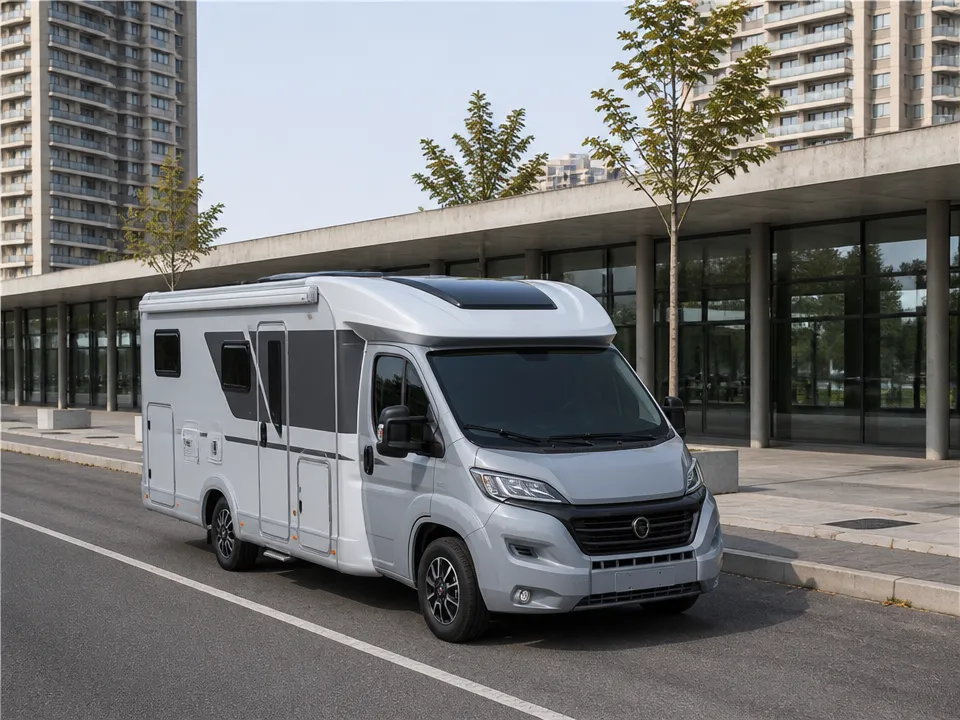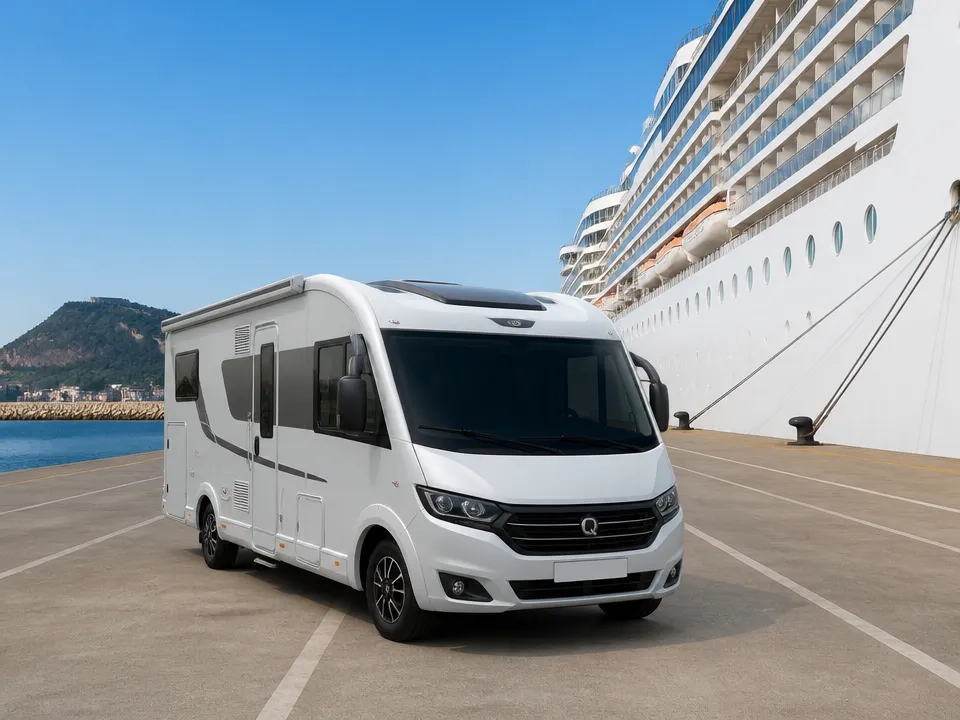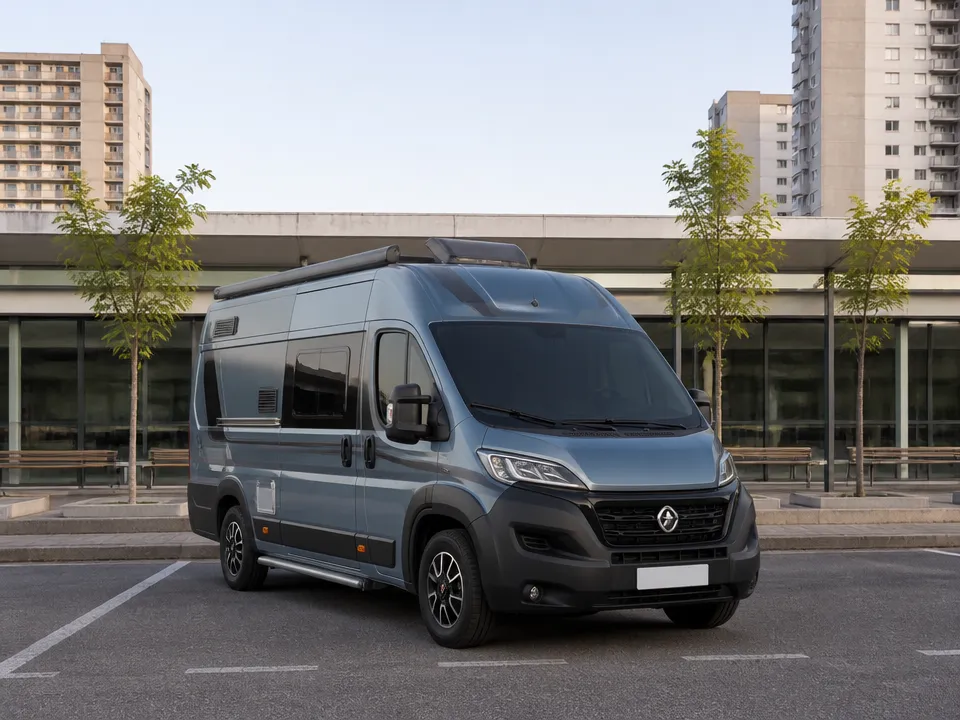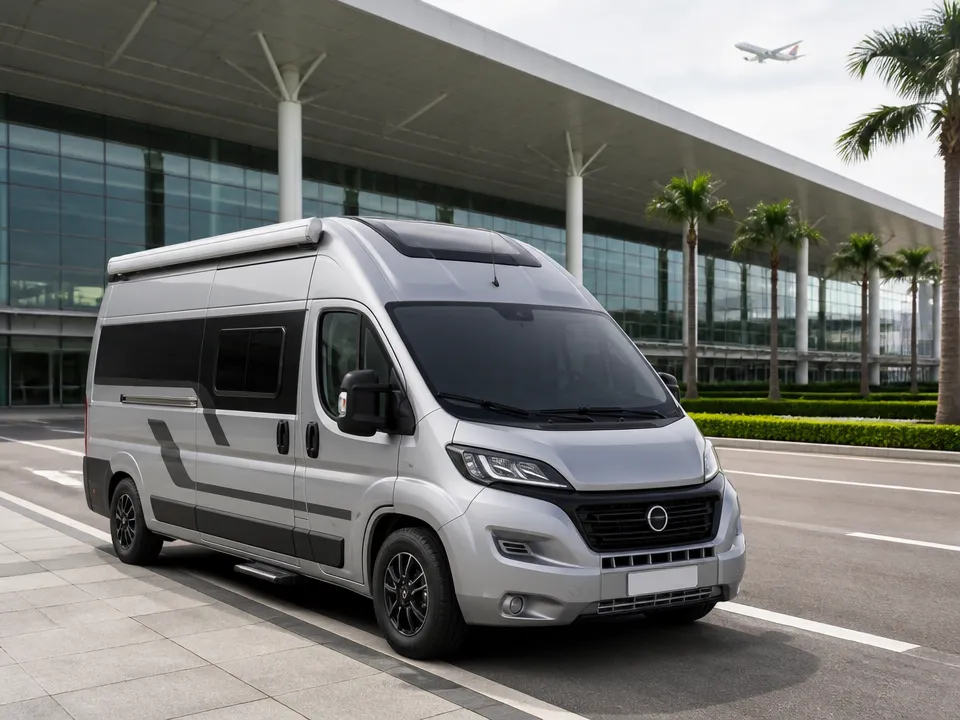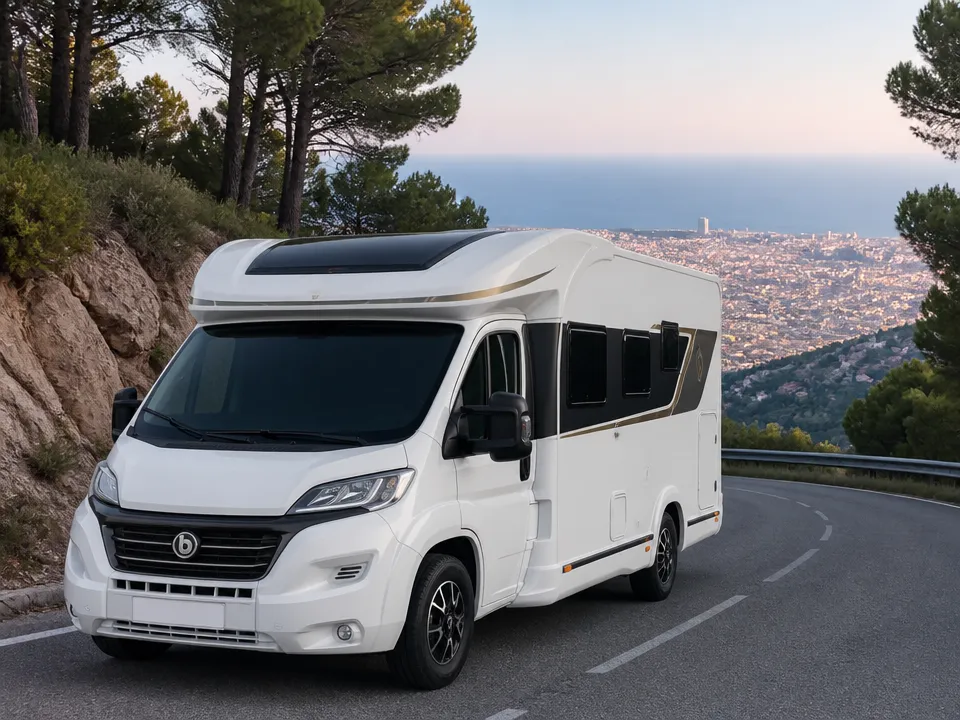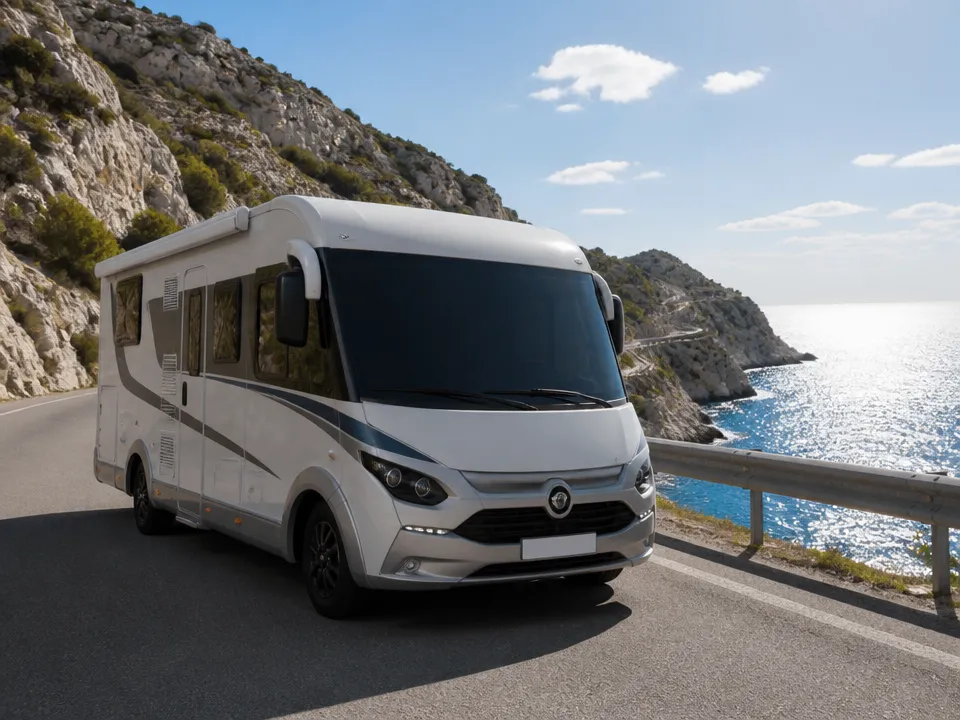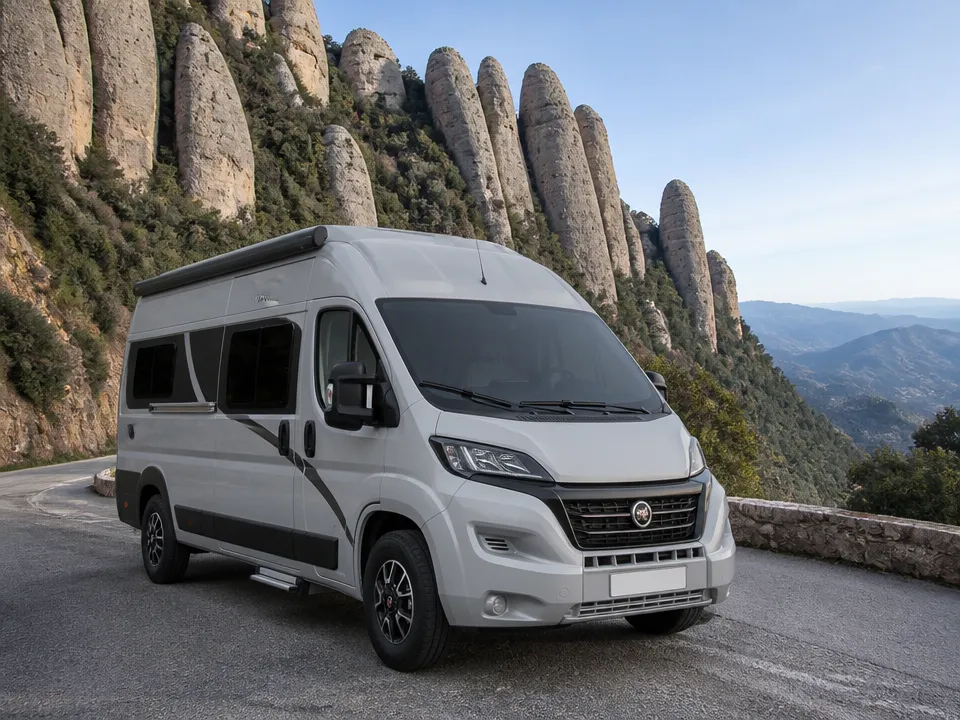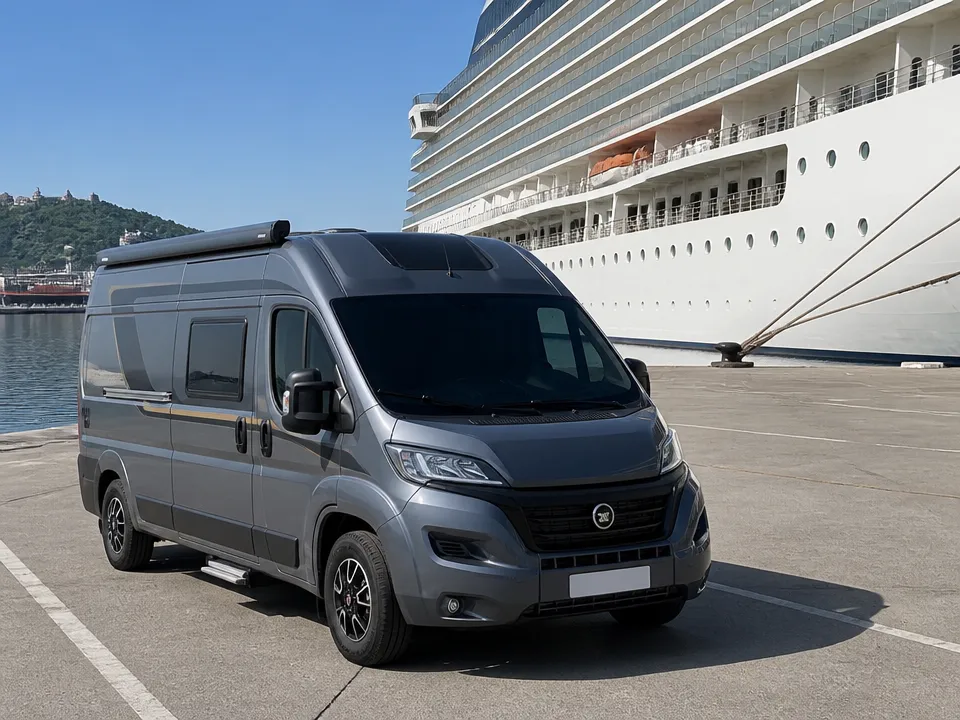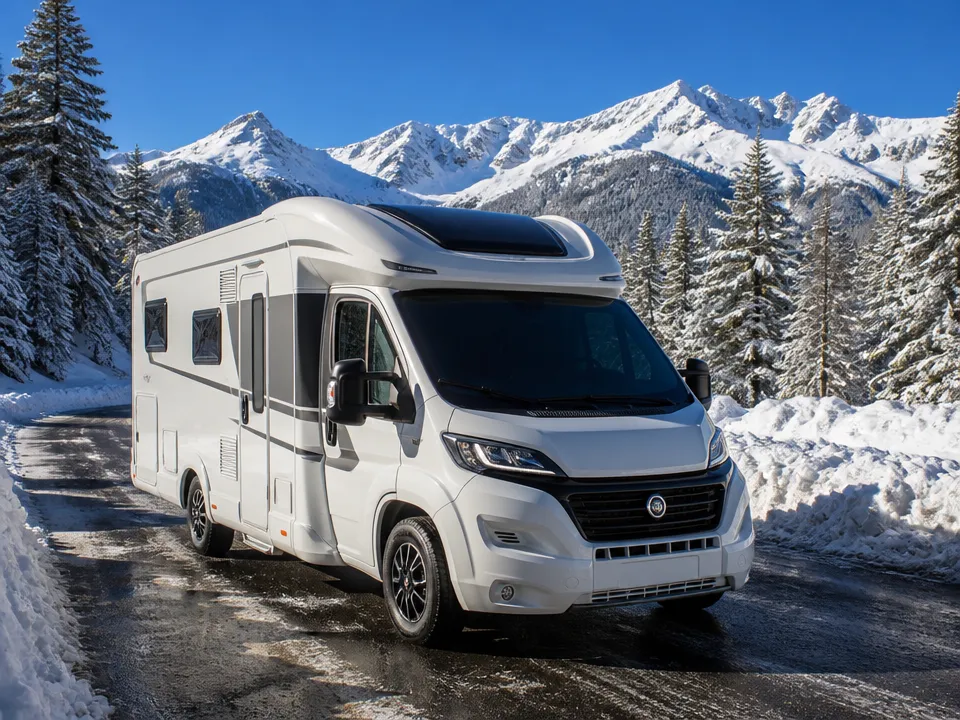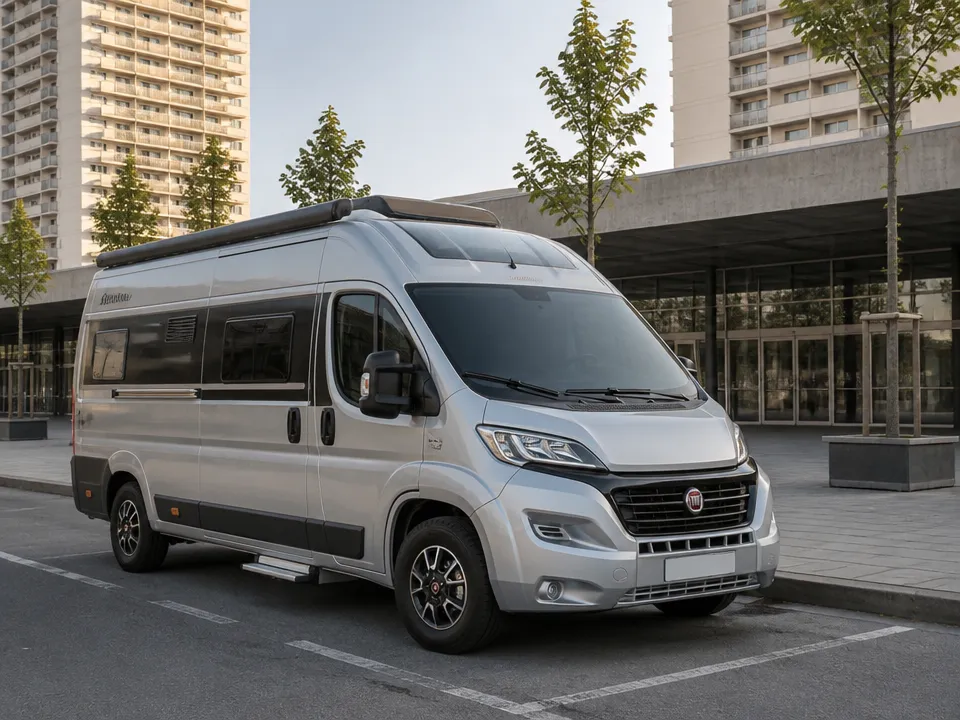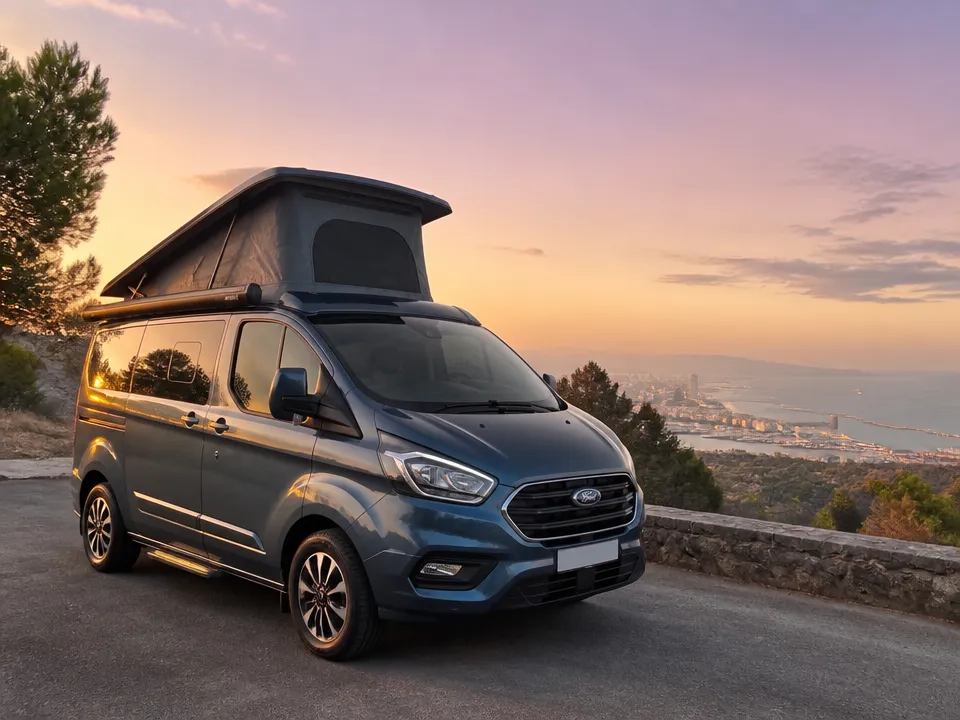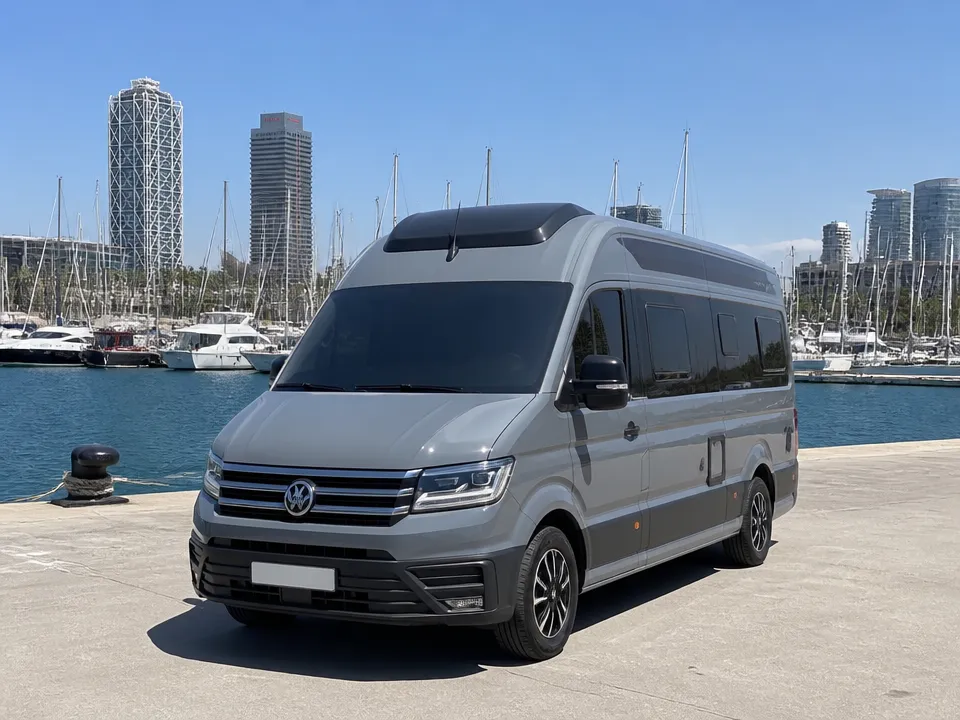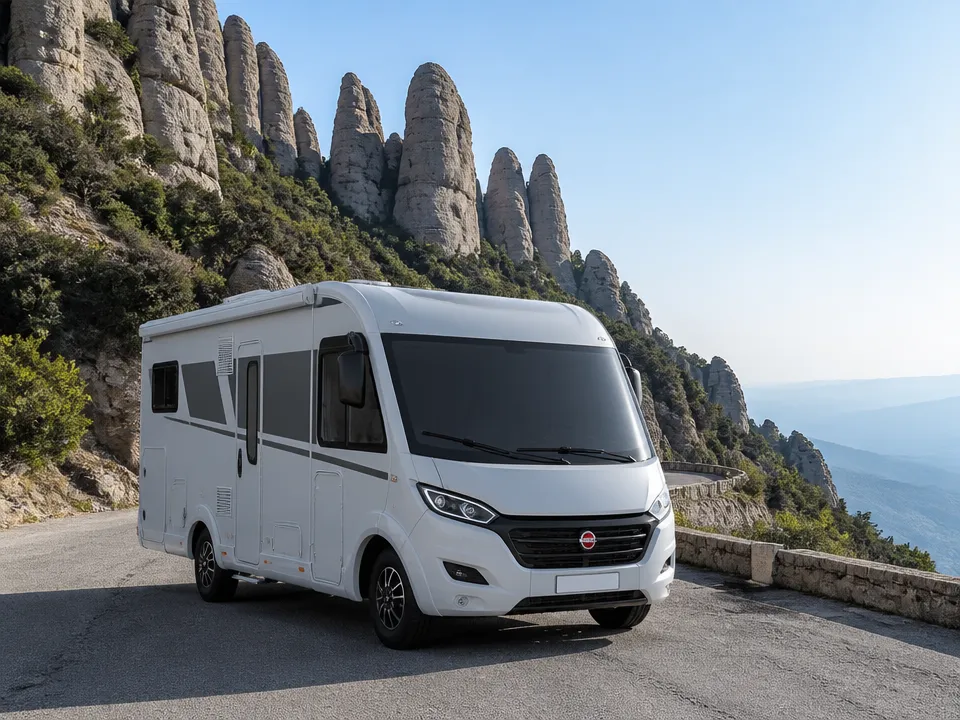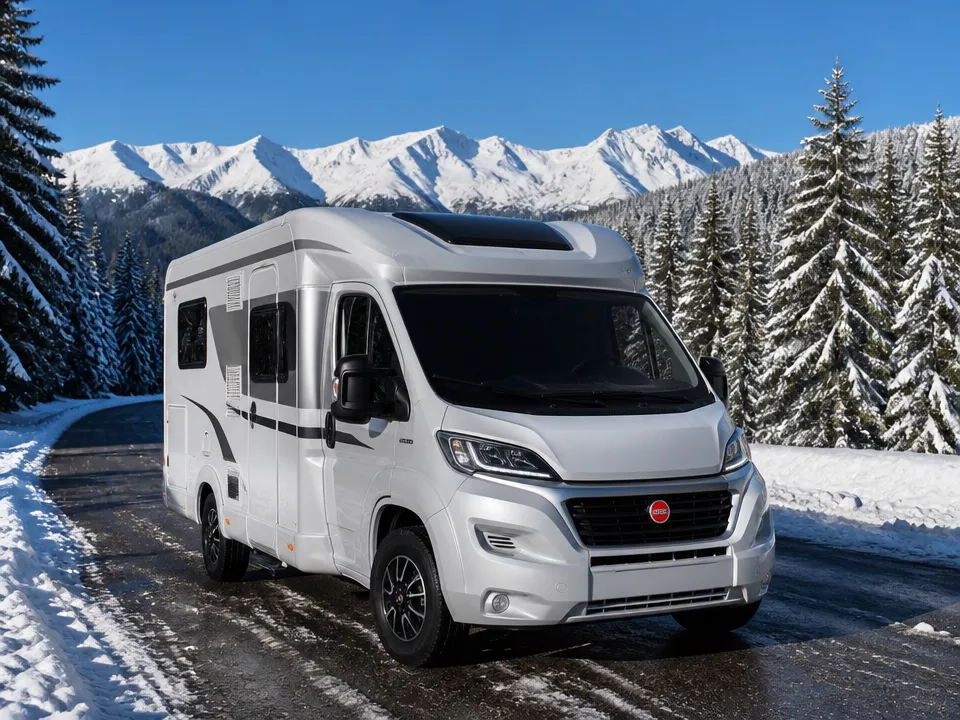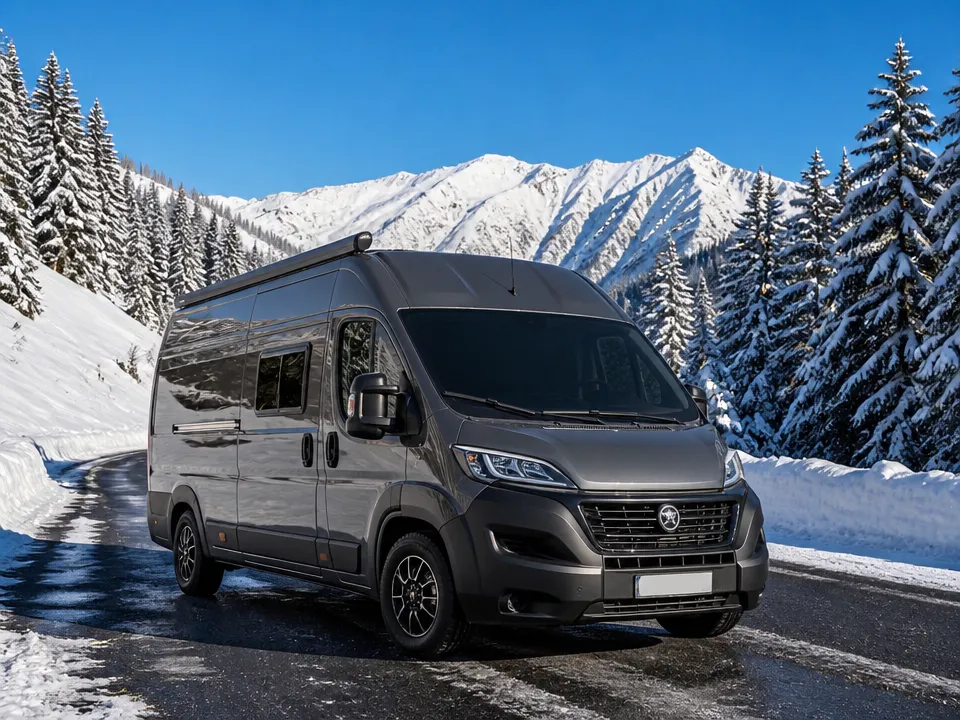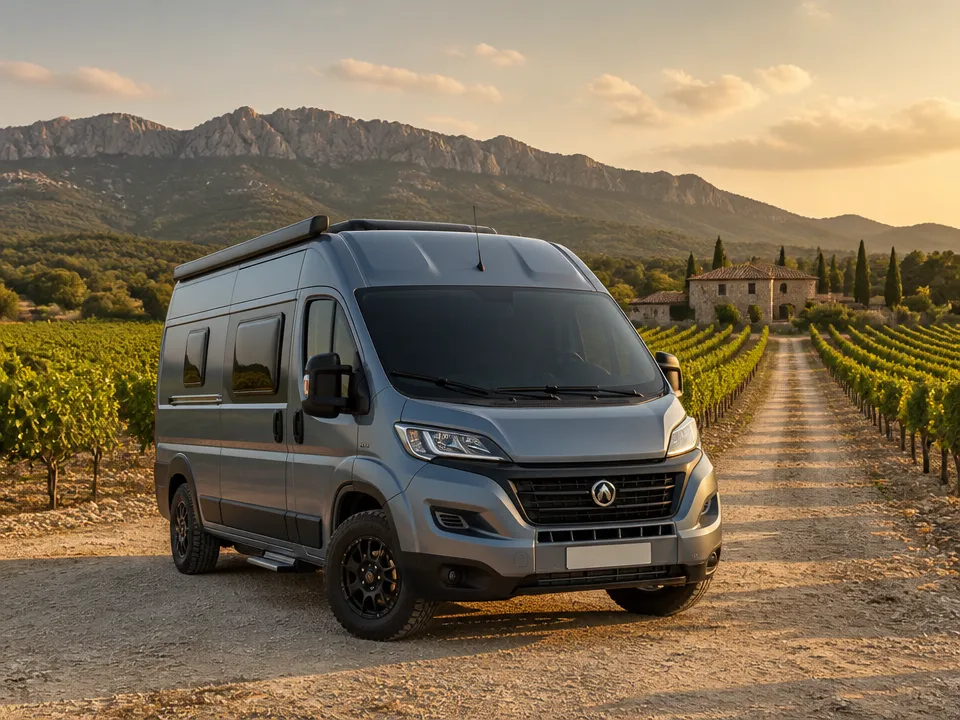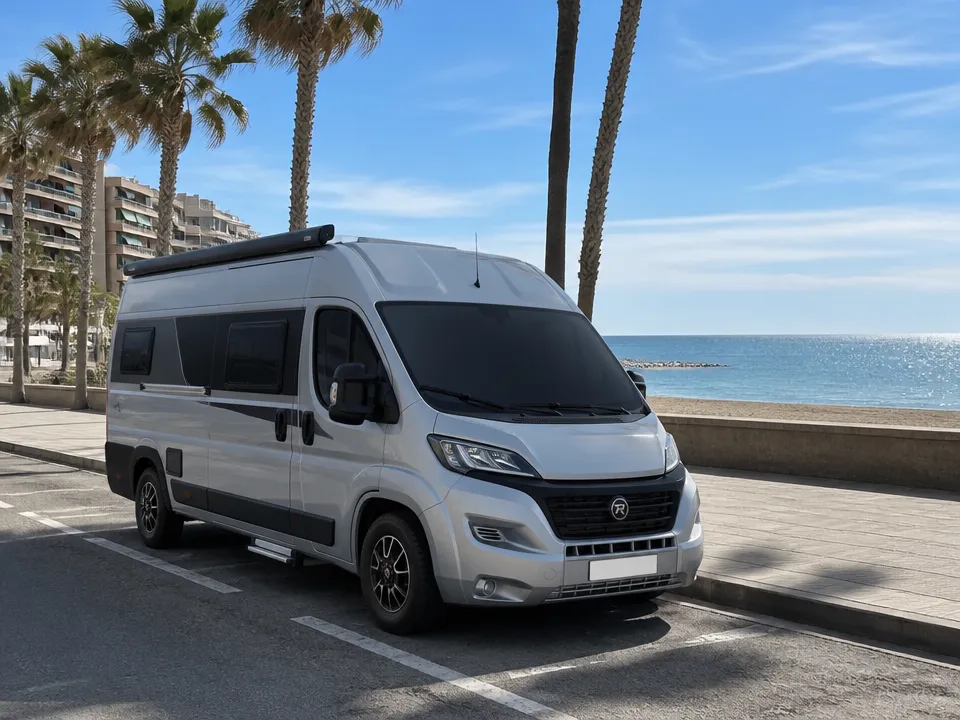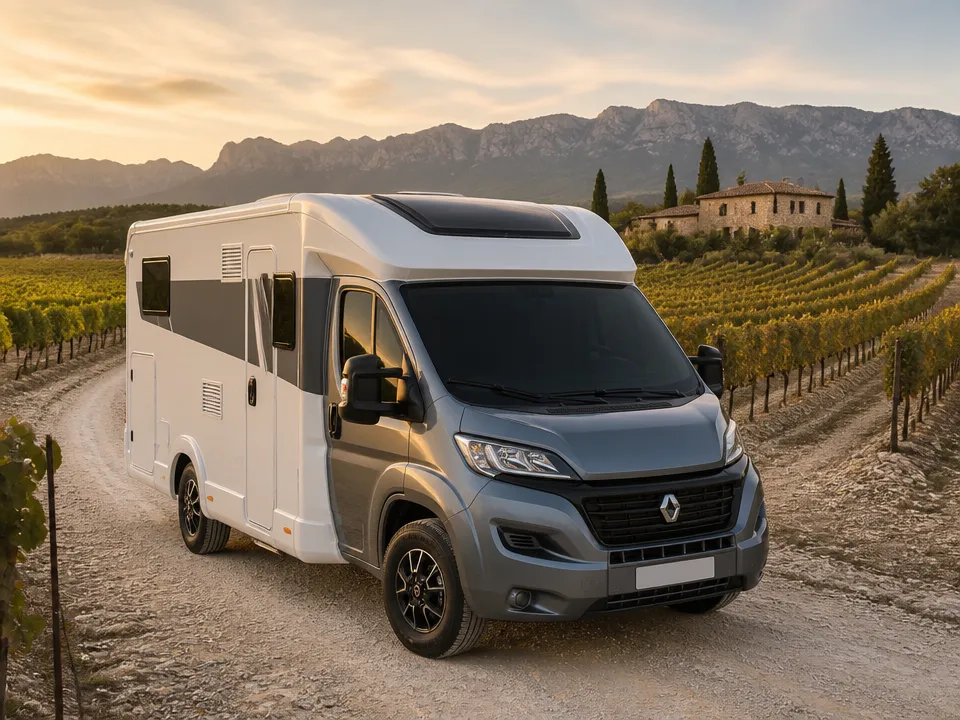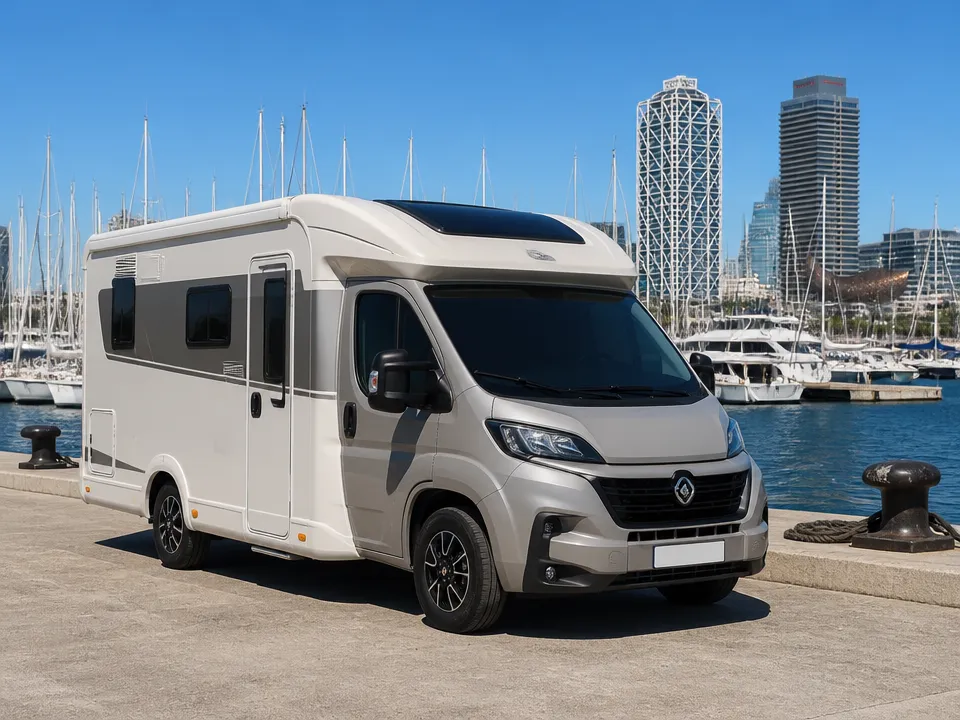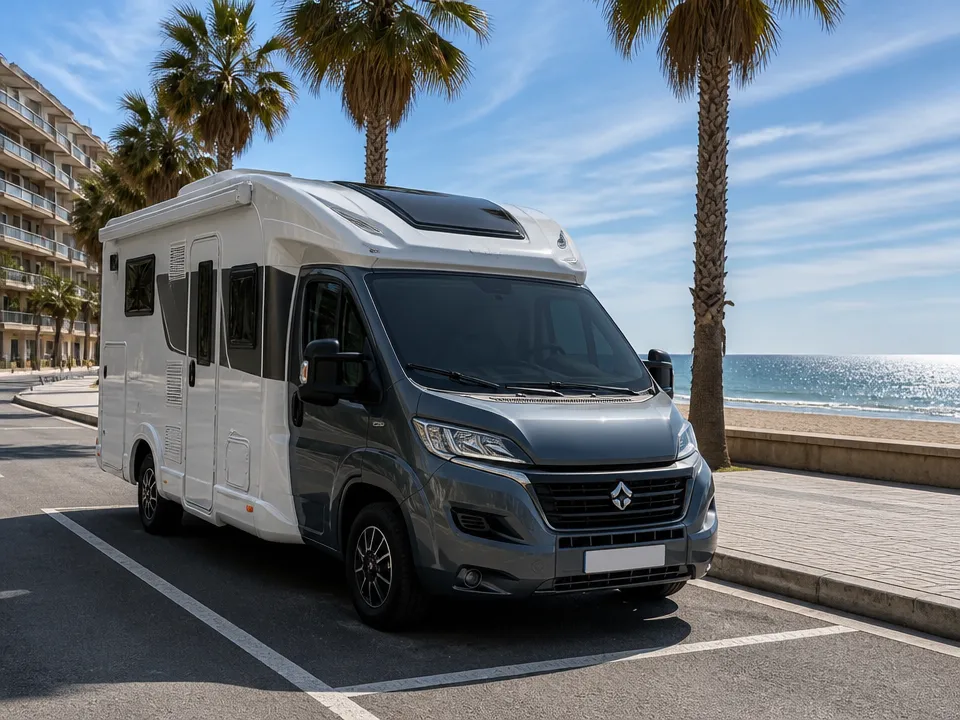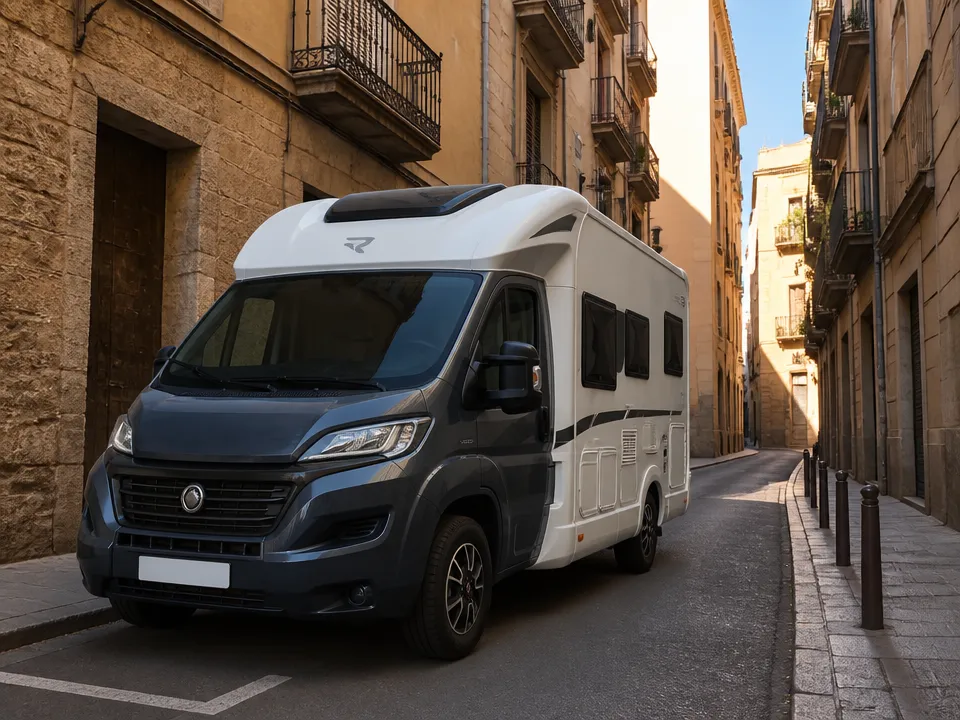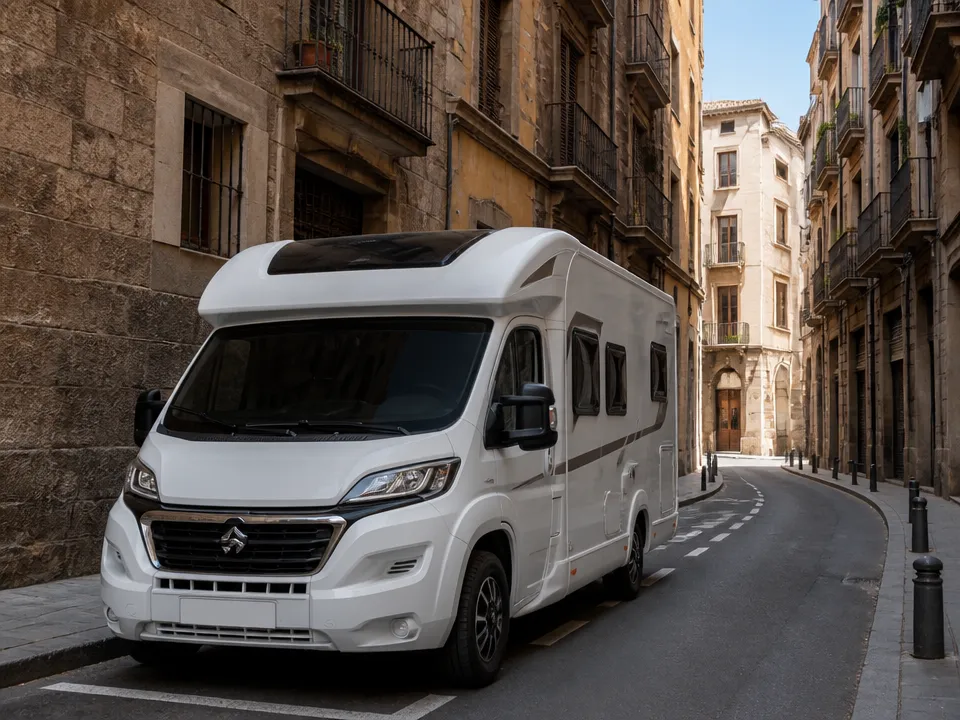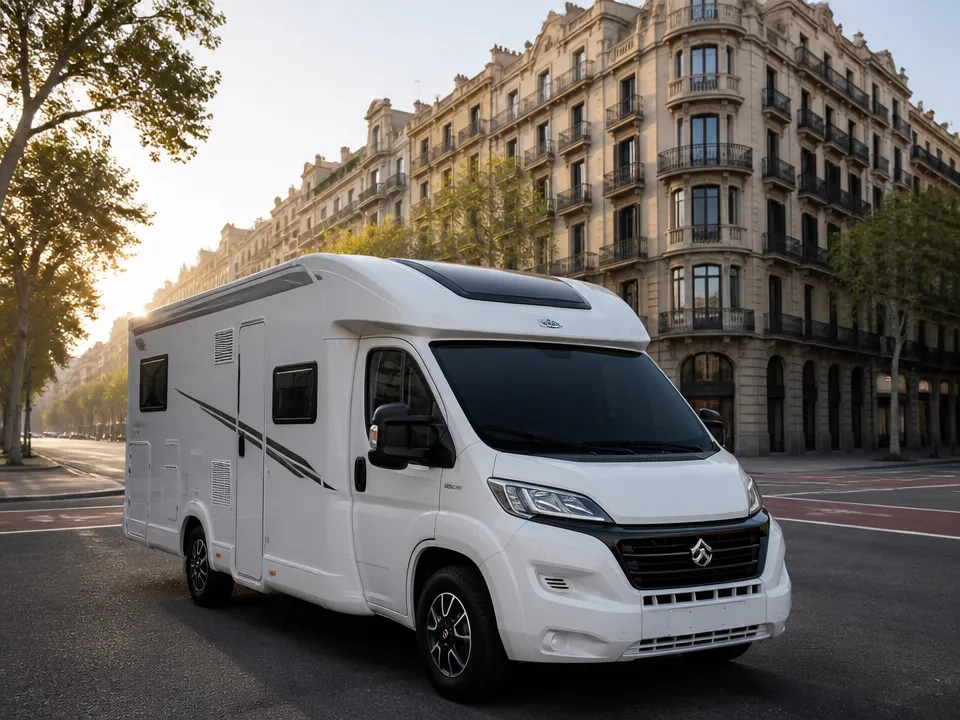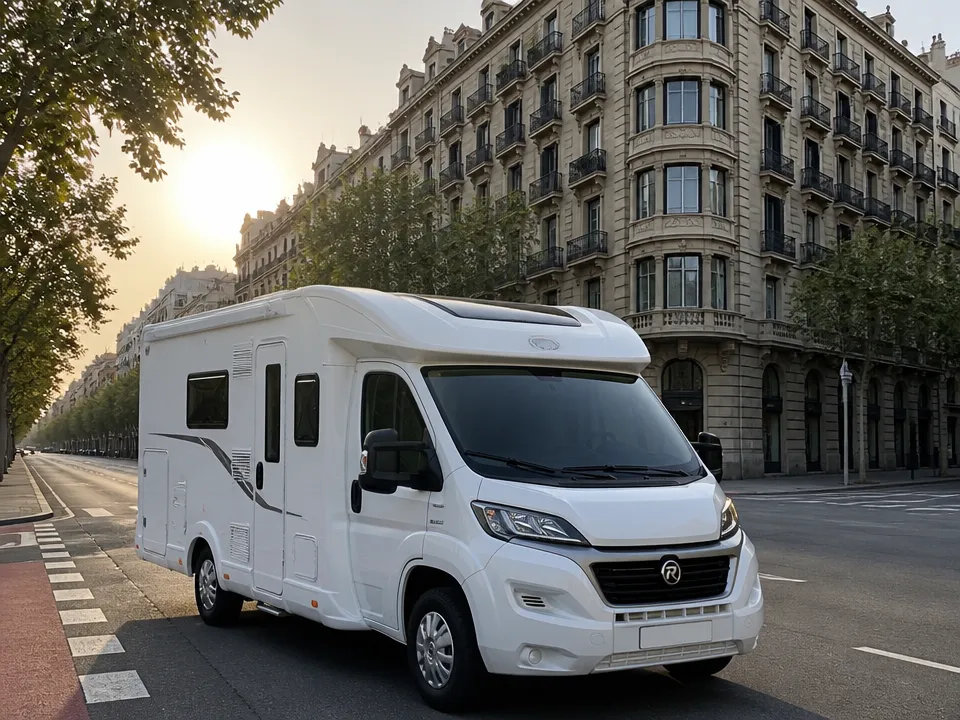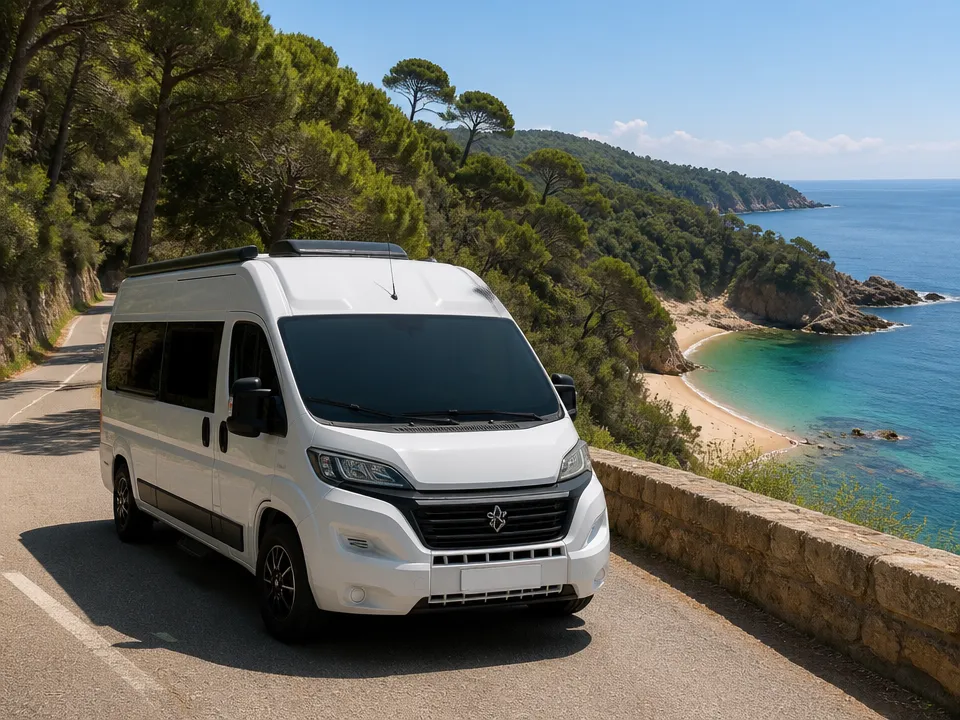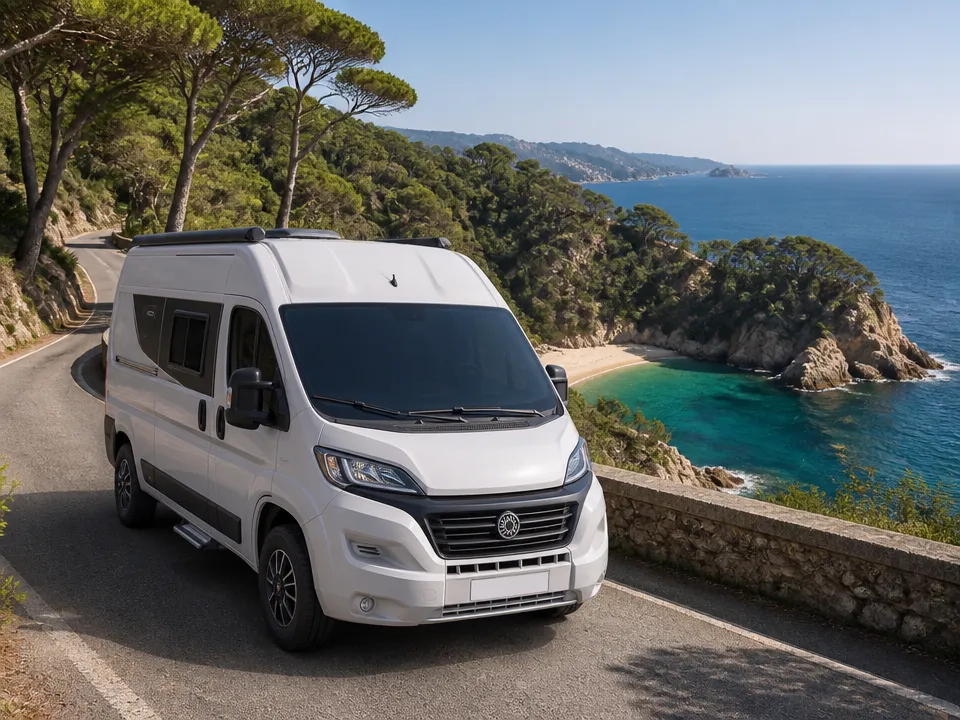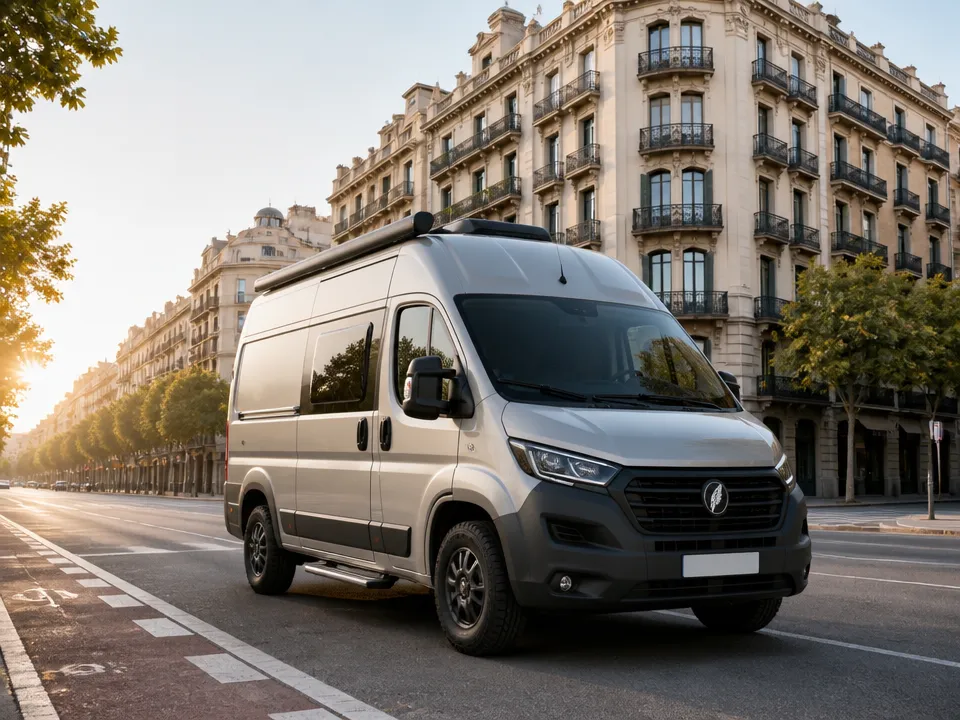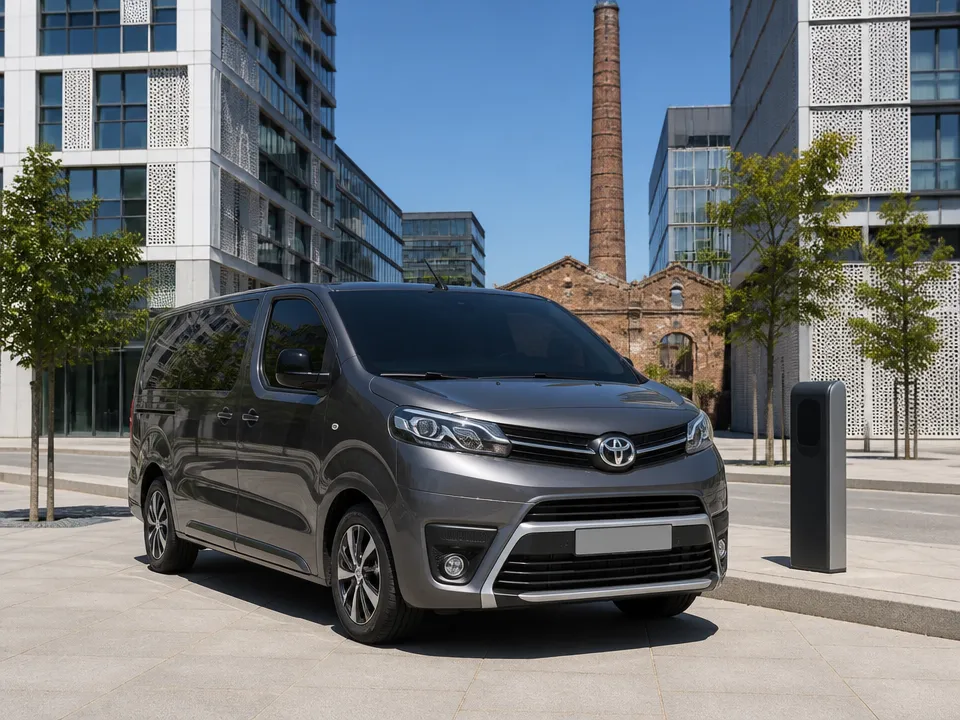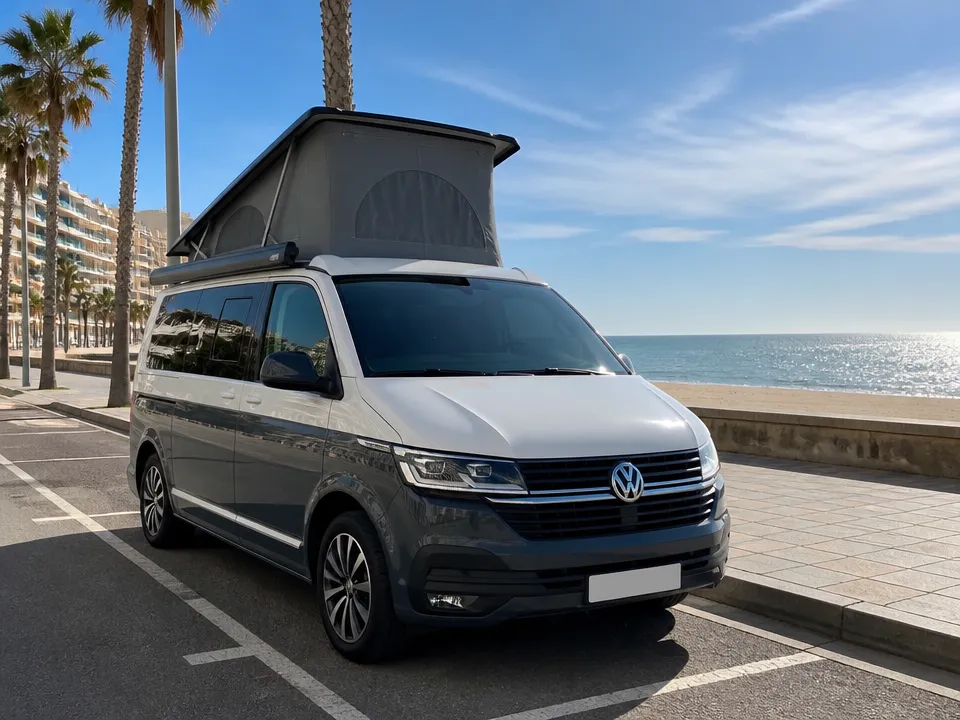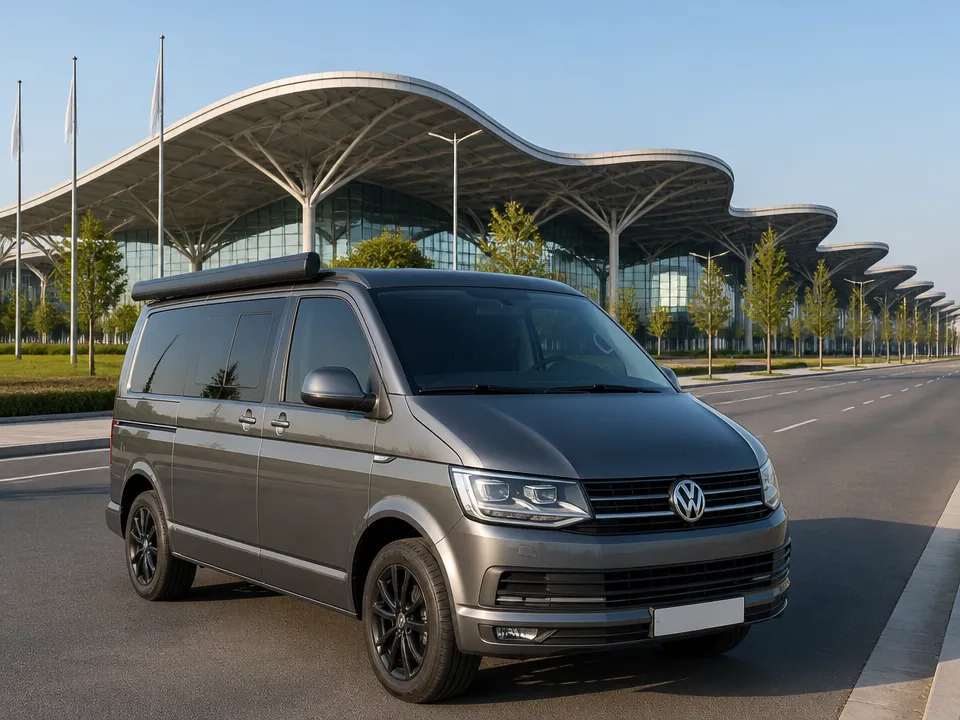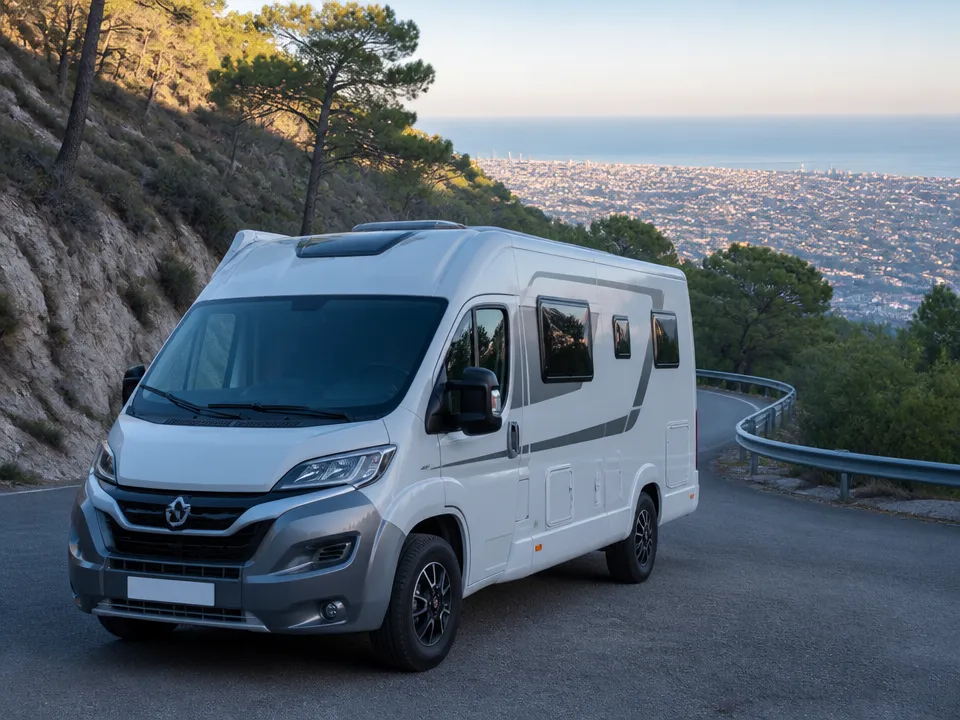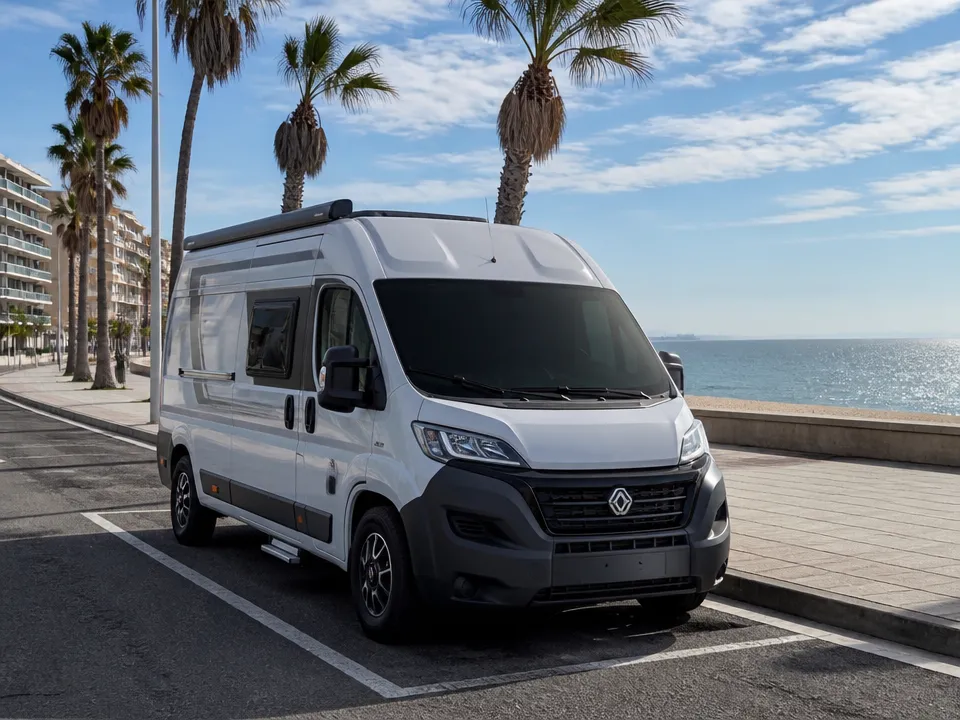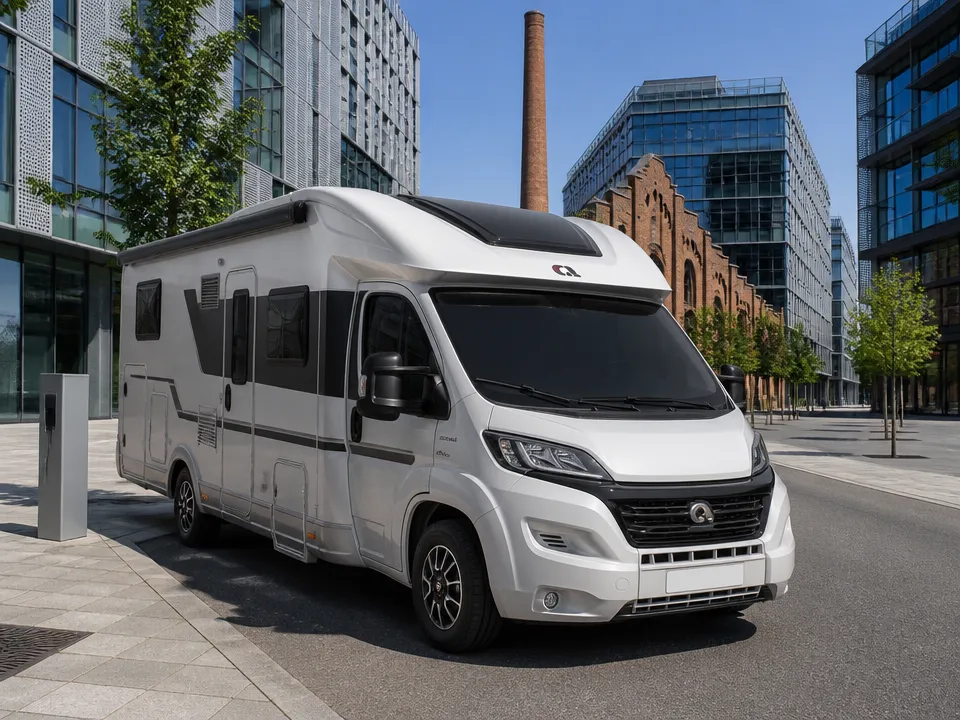
4 seatsYear 2010
€115per day
Book now






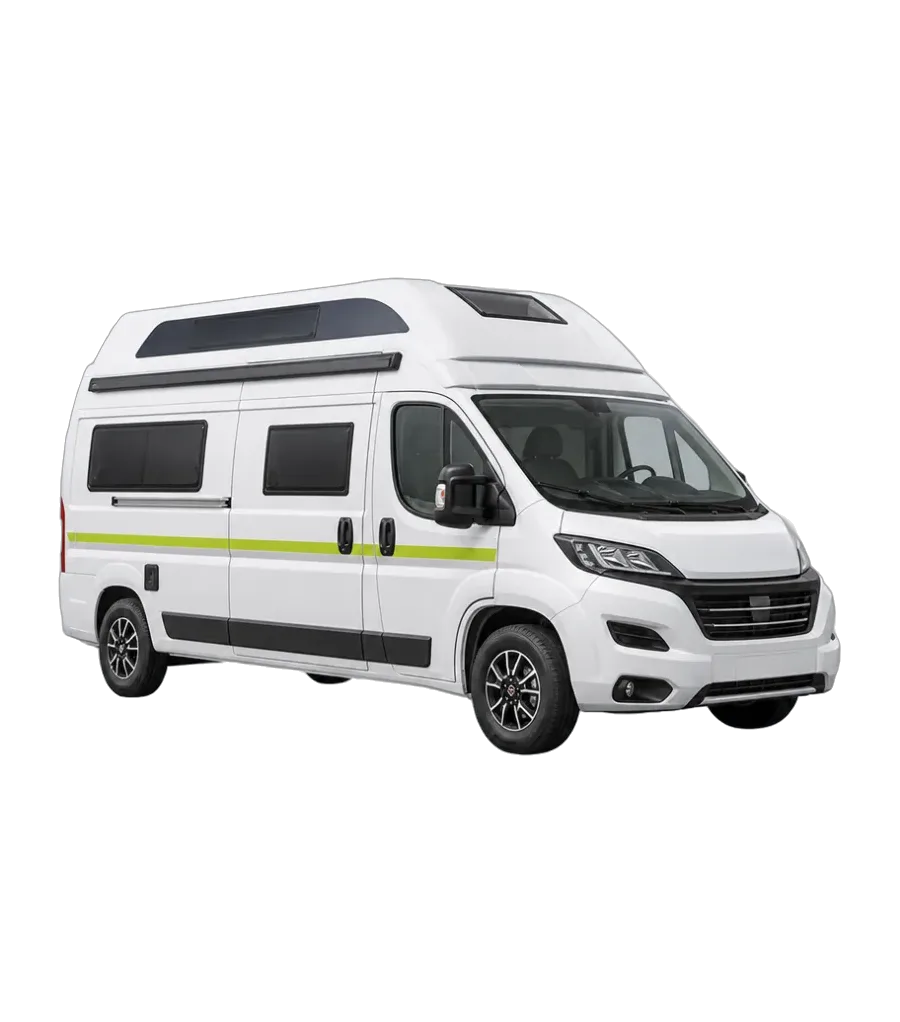

Campervan rental in Barcelona starts from €55 a day for a three-seat Mercedes-Benz Vito conversion and reaches €150 for a new 6.4-metre Adria Twin. Across 65 campervans and motorhomes the middle price is €90 a day. Below: the five layouts, what age, size and gearbox do to the rate, how many people each vehicle really sleeps, where the vans are based and how the summer moves prices.
A campervan here is a self-drive rental: you collect the vehicle, drive it yourself and return it at the end of the booking. There is no driver and no tour attached, and the price covers the vehicle for the days you book.
The Rent-Trip section on this page brings together 65 models, from small van conversions with a fold-out bed to seven-berth motorhomes with an over-cab sleeping area. They fall into three working modes on the market: self-drive, by the day, and by the week or month. In practice almost nobody takes a camper for a single day — the whole point is a road trip along the Costa Brava, into the Pyrenees or south towards Valencia — so the day rate is best read as a building block for a week.
The vehicles are not one fleet. Most belong to different owners spread across the city and the towns around it, which is why the same class can sit at very different prices and why the pick-up point matters as much as the model. Each model page shows its own price, seats and photos; the conditions of the rental — licence, deposit, mileage, what is included in the kitchen box — are set for each vehicle and confirmed with it, not with the category as a whole.
Prices on this page are quoted per day. A weekly booking is simply seven of those days unless the vehicle has its own weekly rate, and a monthly hire works the same way. Seven days on the cheapest conversion comes to €399 at €57 a day for a Volkswagen T6.1 California Beach; the same week on a middle-priced motorhome at €90 is €630; a week on the most expensive van at €150 is €1,050. Those three figures are a quick way to set a budget before looking at individual models.
Every figure here is a starting price without dates. It is the lowest daily rate seen for that model, and the rate for a given week in July or August can be noticeably higher — section six explains by how much. Treat the figure on a card as the lower edge of what the van costs, not as the quote you will get. In my experience as a fleet manager, the honest comparison is always total for your exact dates, with the same extras added on both sides.
The 65 models split into five layouts. They differ in how the living space is built onto the base vehicle, and that construction decides length, berths, driving feel and price far more than the badge on the bonnet.
| Layout | Models | Day rate from | Middle price |
|---|---|---|---|
| Campervan (van conversion, pop-top) | 14 | €55–€95 | €65.50 |
| Panel-van camper (high-roof van, built-in interior) | 16 | €65–€150 | €100 |
| Semi-integrated motorhome | 20 | €71–€139 | €90 |
| Alcove motorhome (bed over the cab) | 13 | €80–€130 | €97 |
| Integrated motorhome (A-class) | 2 | €90 and €120 | — |
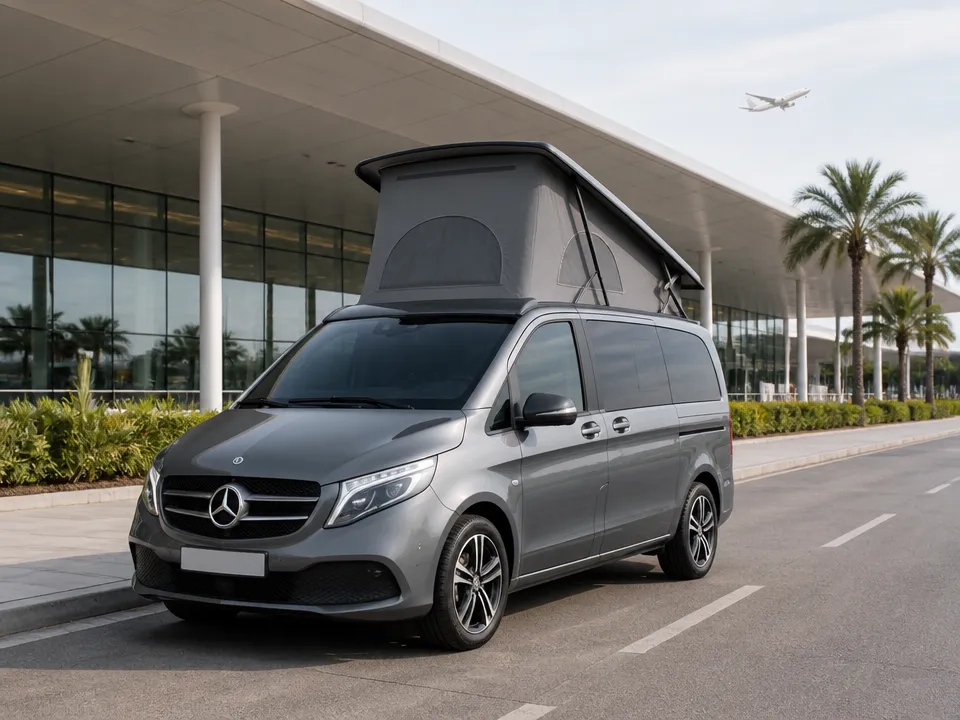
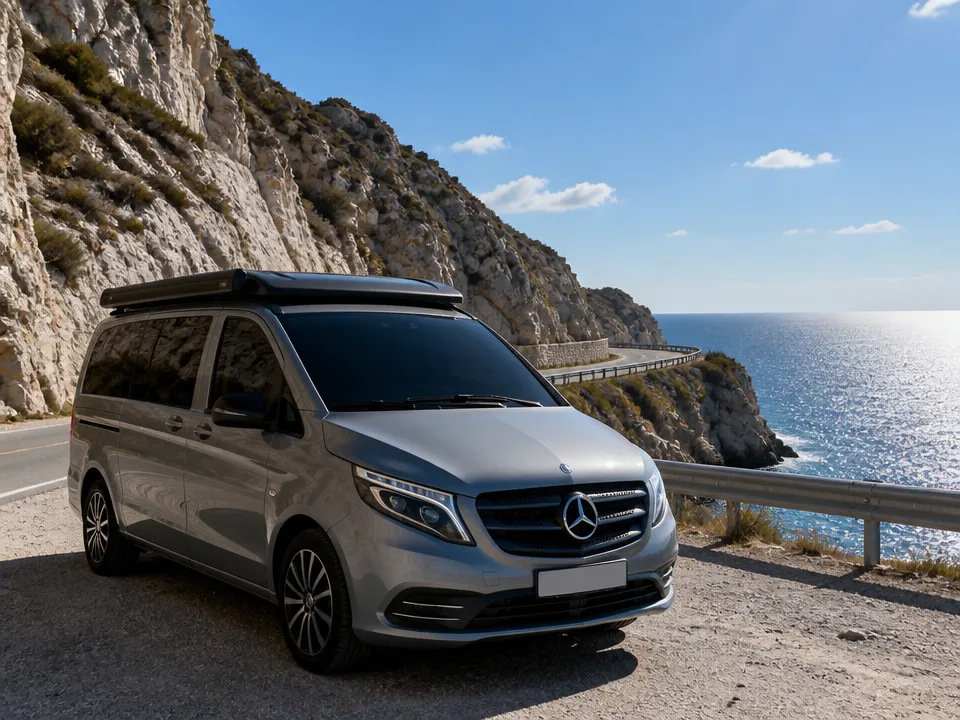
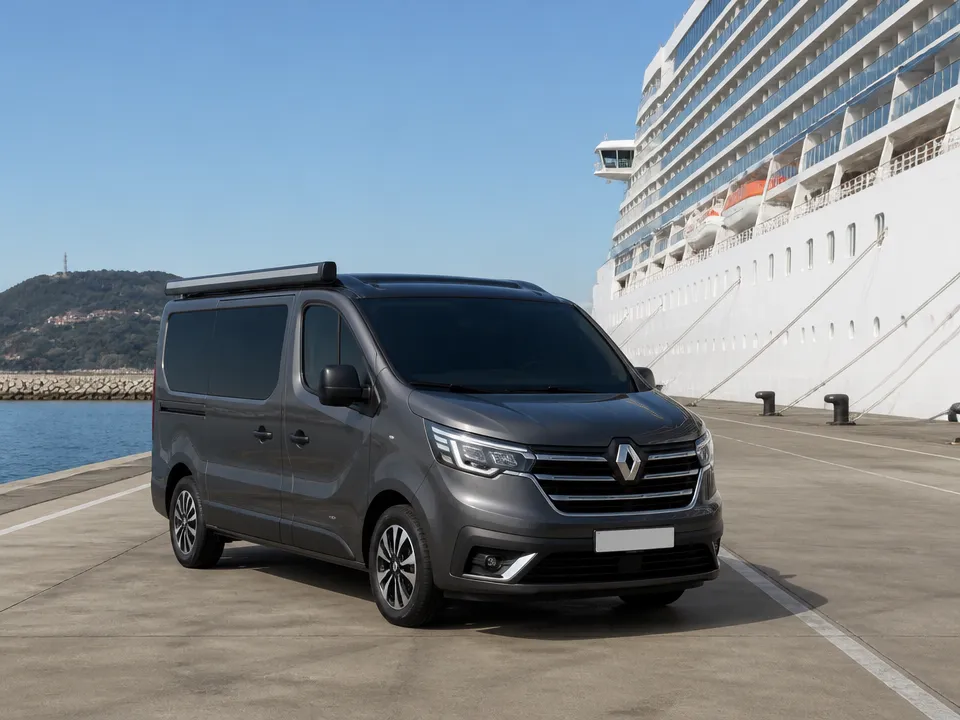
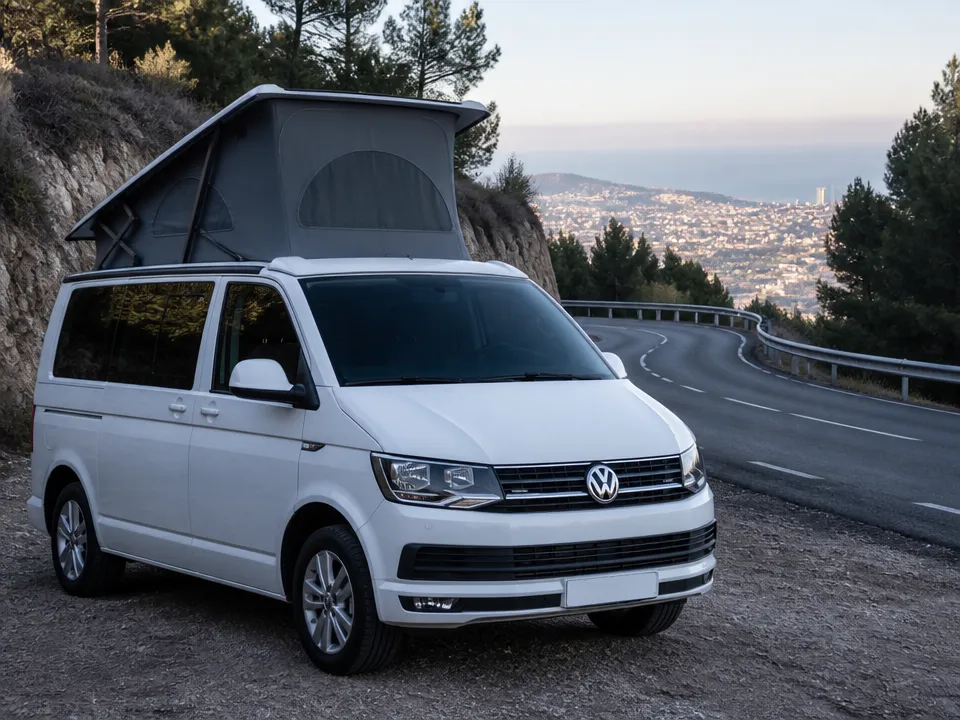
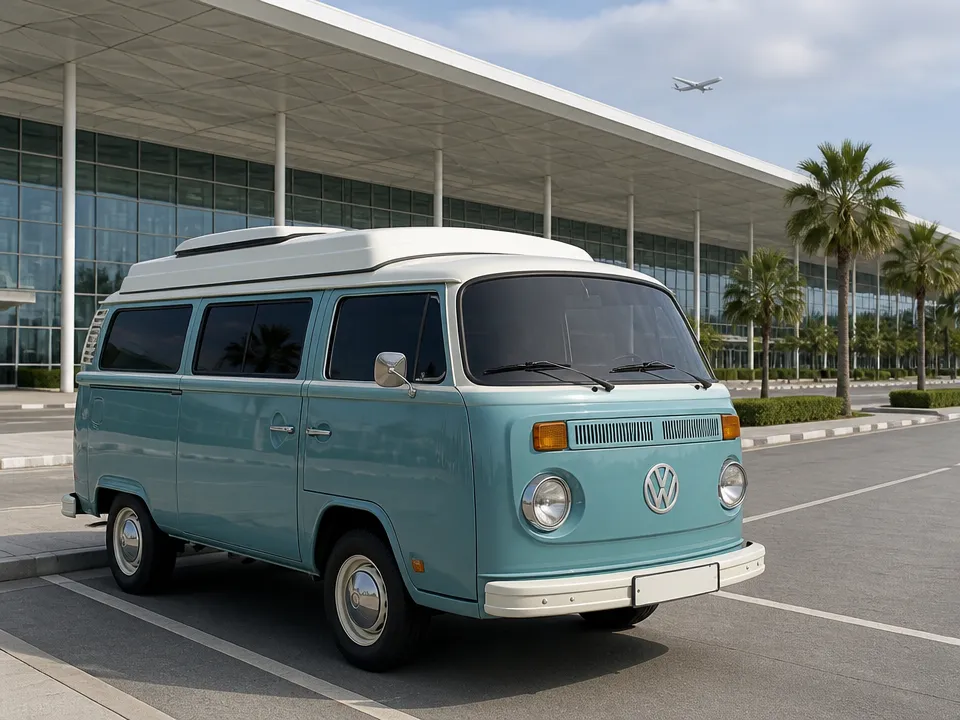
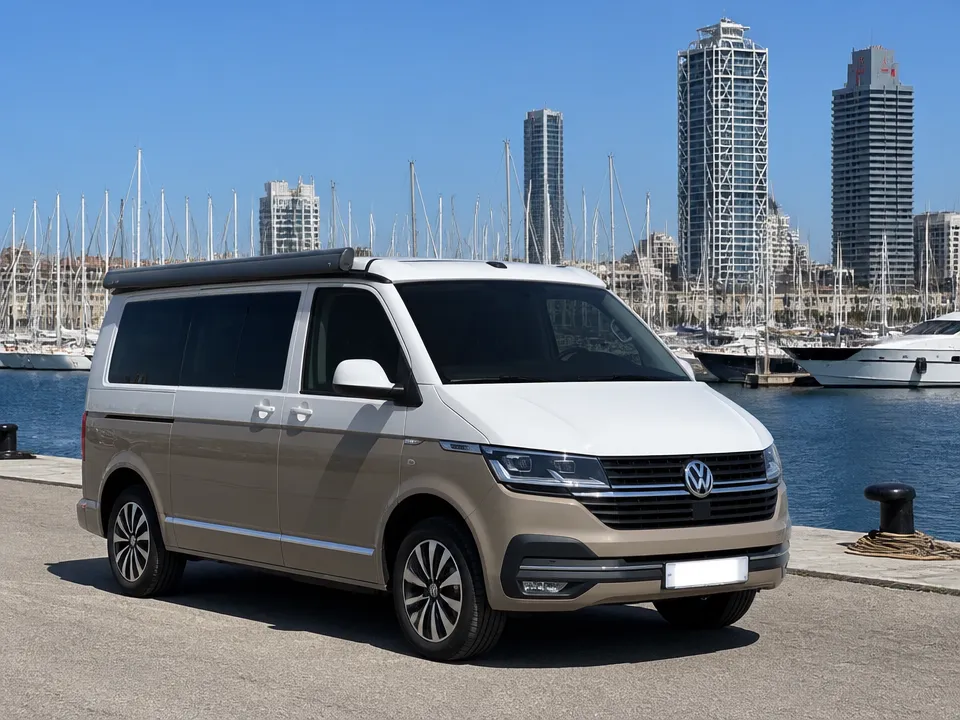
Fourteen models are classic campervans — a standard van with a bed, a small kitchen unit and often a lifting roof. This is where the lowest prices are: the Mercedes-Benz Vito at €55, the Toyota Proace Verso and Ford Transit Custom at €60, the Renault Trafic at €65. The best-known names sit here too. A VW California rental is the obvious choice for many visitors, and the class has the Volkswagen T6.1 California Beach from €57 and California Ocean from €61, alongside the Ford Nugget from €61, the Nugget Plus and the Mercedes-Benz Marco Polo, both from €66. The odd one out is a 1978 Volkswagen Kombi T2 Westfalia at €93 — a classic bought for the look, not the comfort.
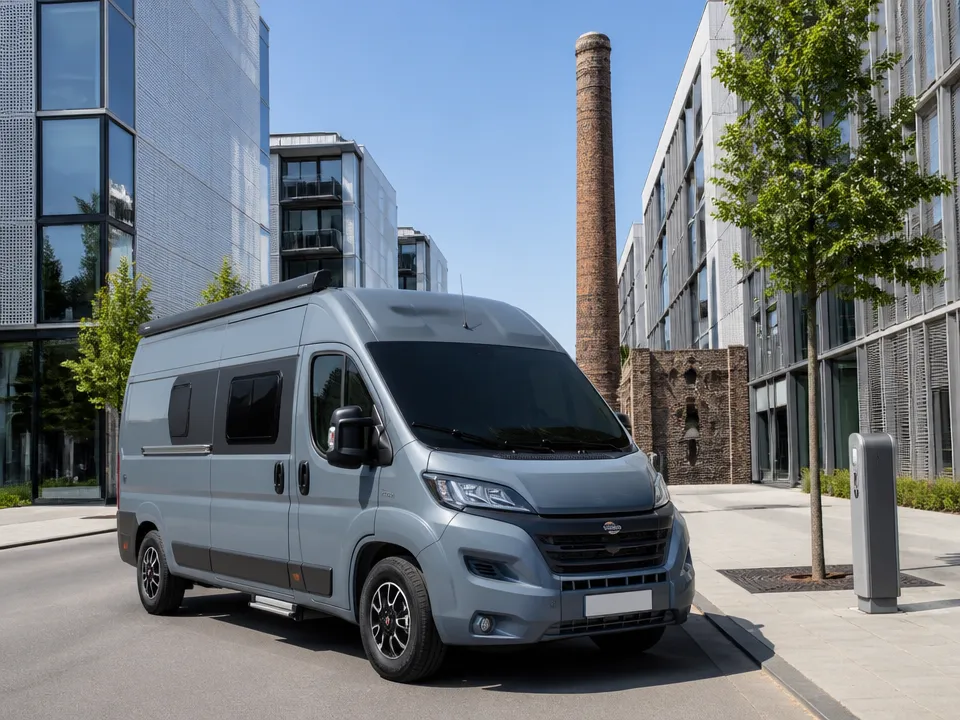
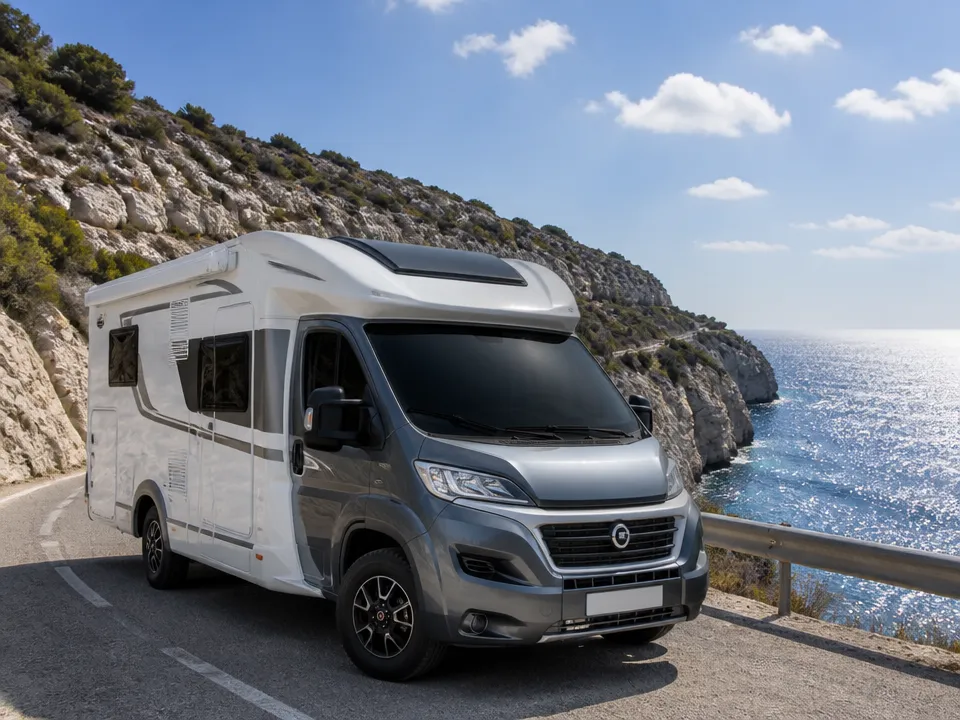
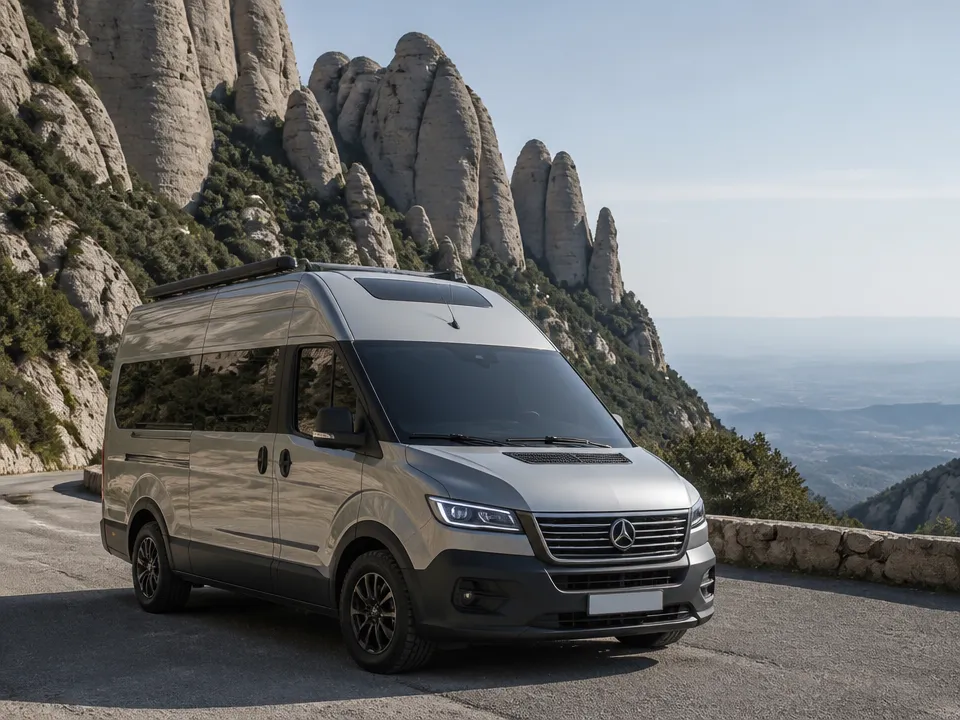
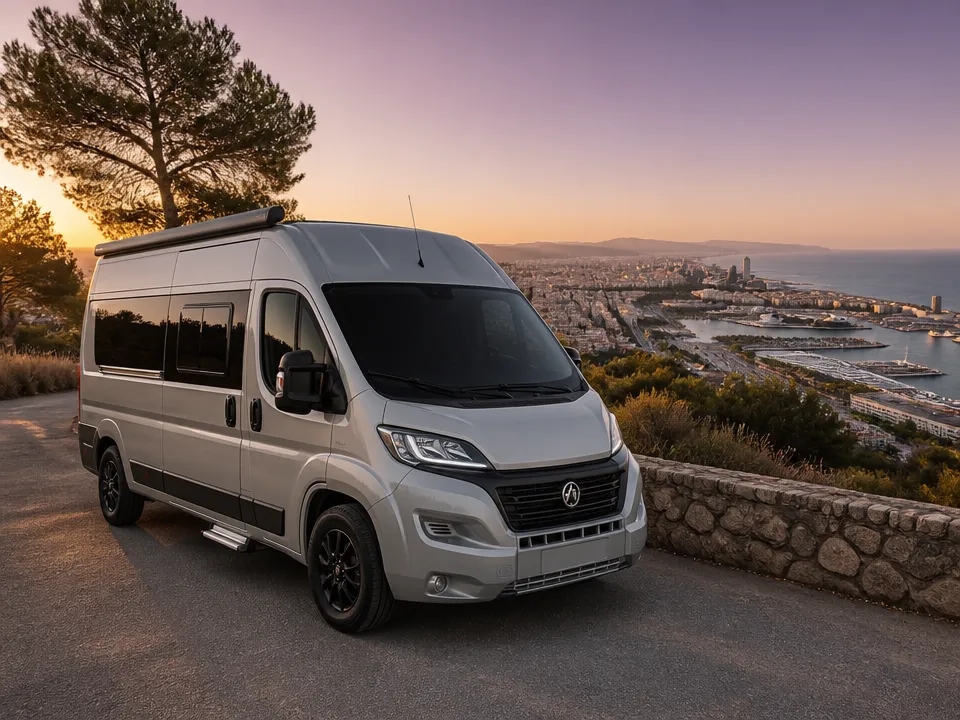
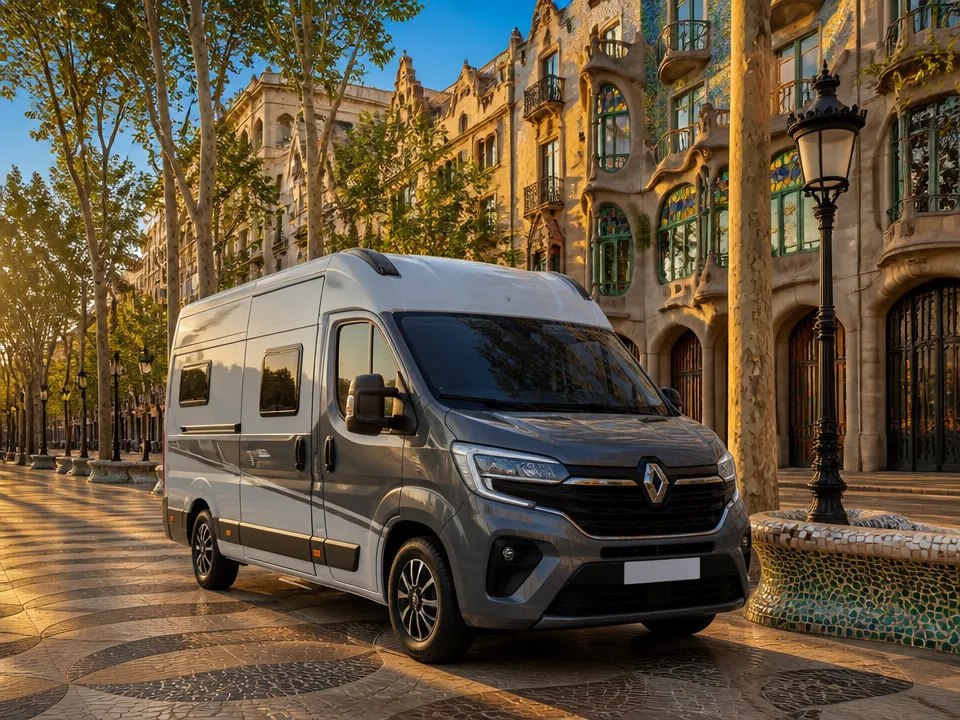
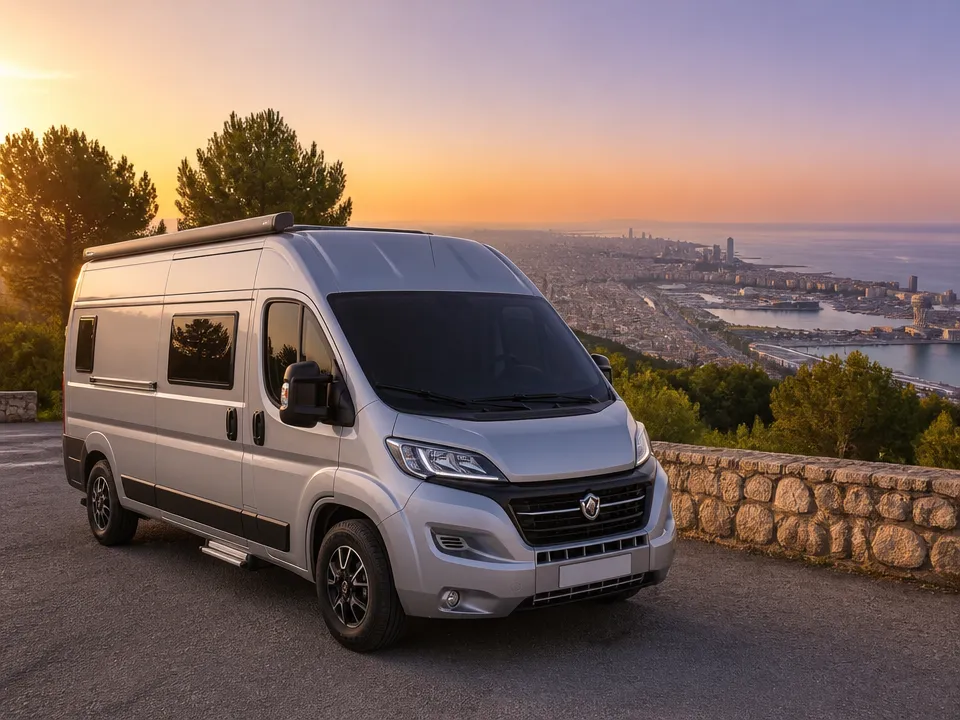
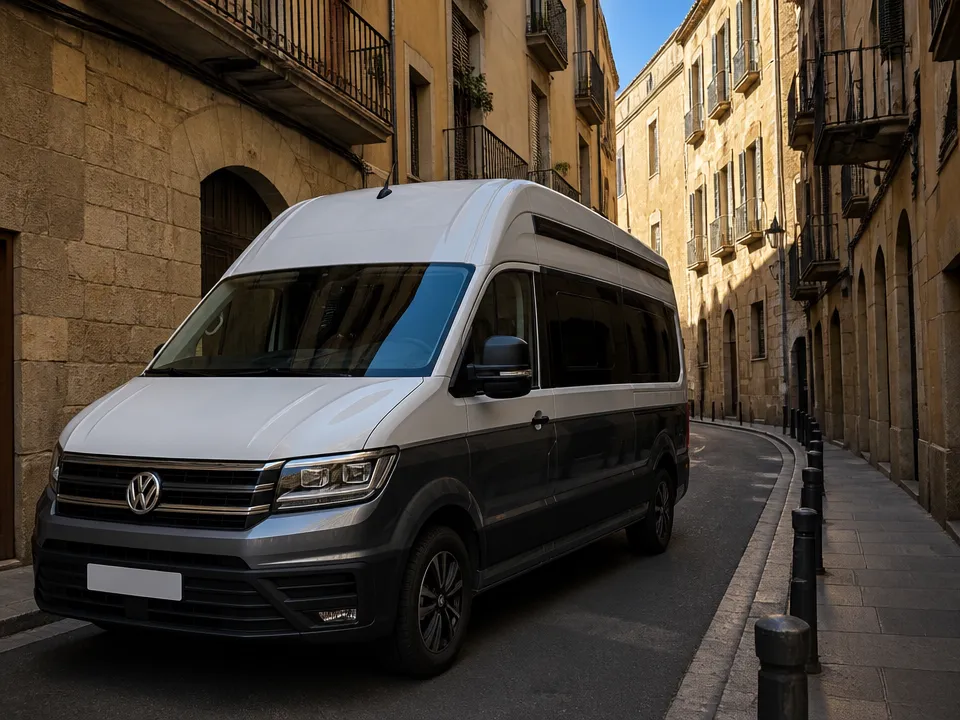
Sixteen models are high-roof panel vans fitted out inside, usually around six metres long. They keep a van's narrow body with a factory-style interior inside, and that pushes the middle price to €100. The range is wide, from the McLouis 3 Maxi S-Line at €65 and the Hymer Free at €70 up to the Adria Twin 640 SGX and Nomade Nation Neo at €150. The Randger R560 4x4 at €125 is the four-wheel-drive option, as the 4x4 in its name says.
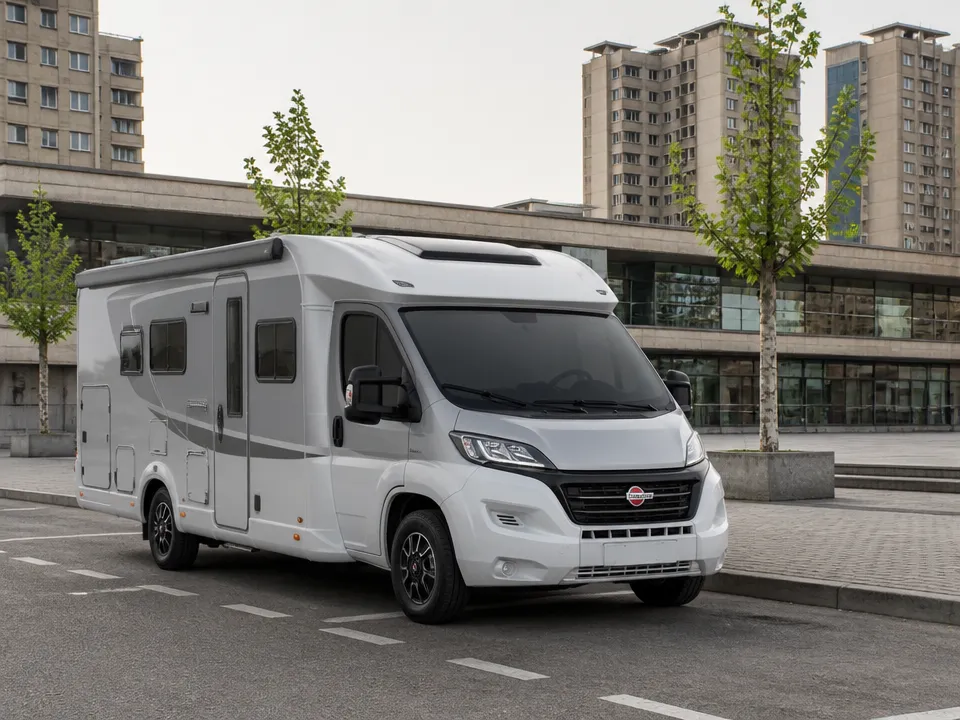
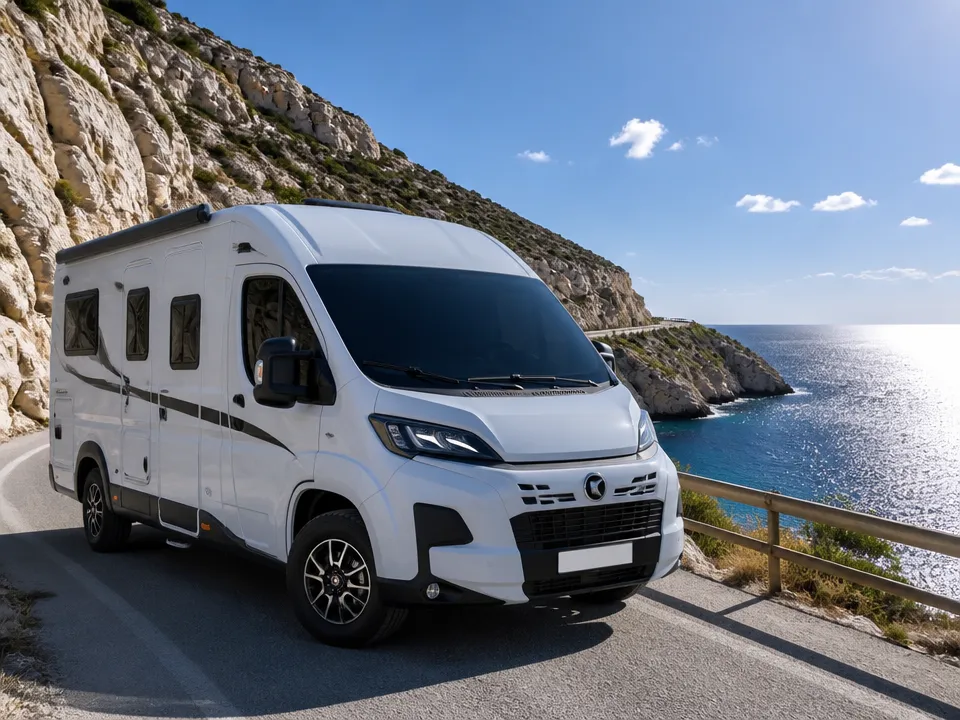
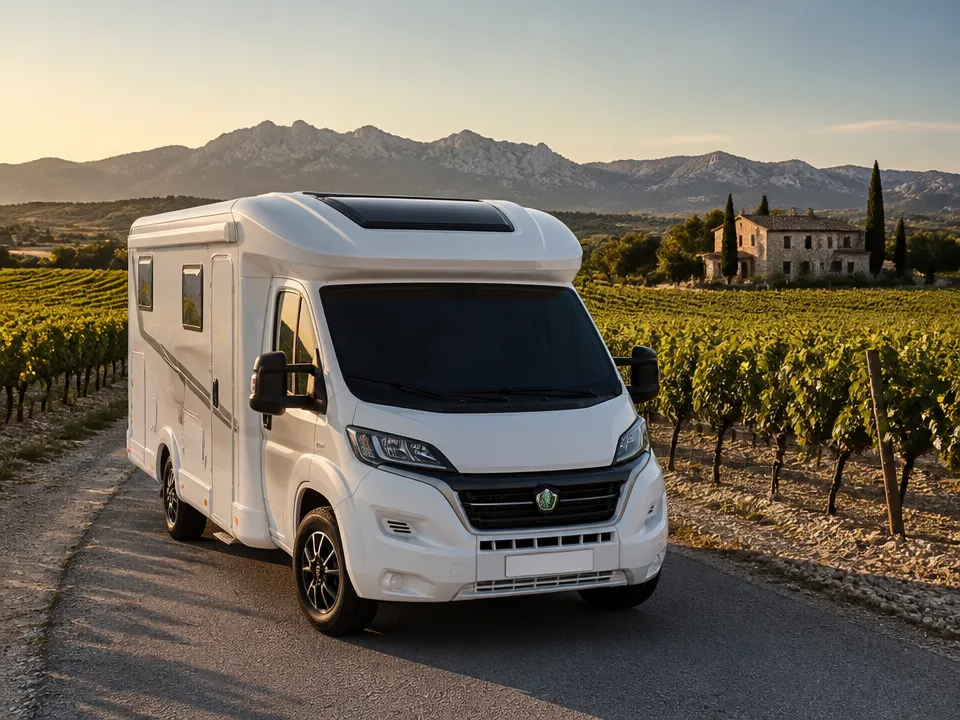
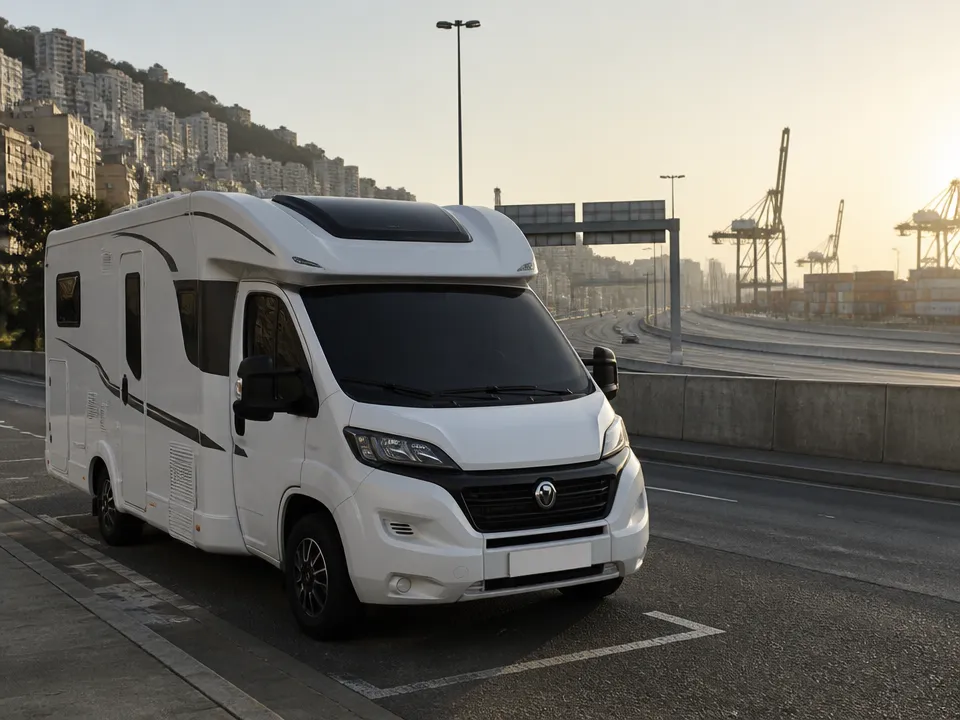
Motorhome rental in Barcelona is mostly these two shapes. Twenty semi-integrated motorhomes have a living box joined to the original cab, with a low profile over the windscreen; they start at €71 for the McLouis Lagan 210 and reach €139 for the Pilote P726FC Expression, with the middle at €90. Thirteen alcove motorhomes have the recognisable bed above the cab, which is how they fit six or seven berths into seven metres; they run from €80 for the CI Carioca 656 to €130 for the McLouis Glamys 320.
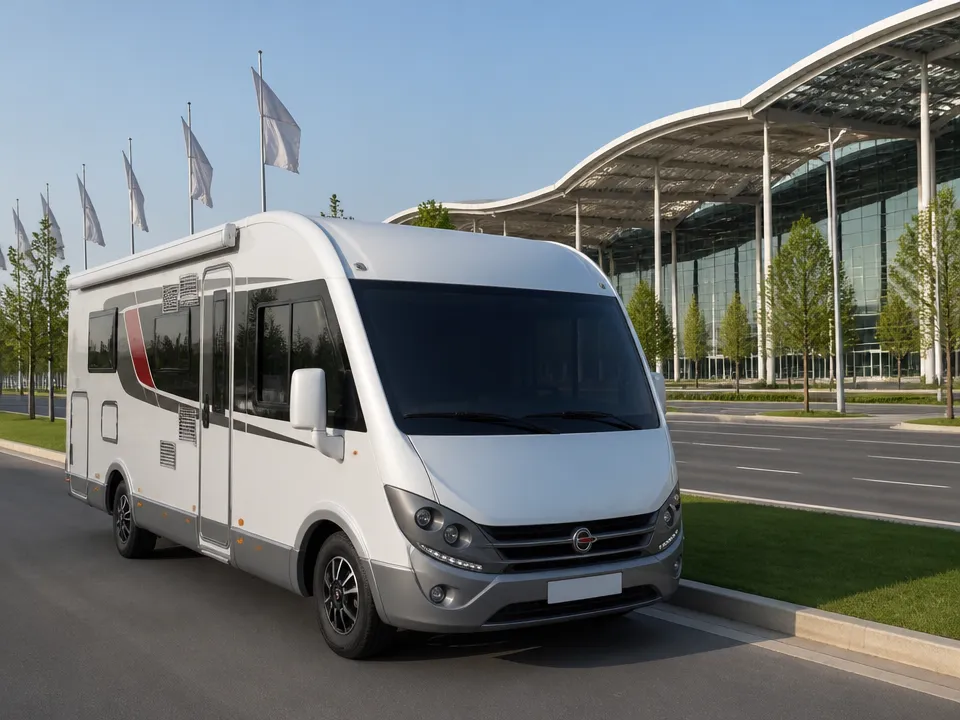
Only two integrated motorhomes are on offer, where the manufacturer builds the whole front including the cab. The Bürstner Aviano i675 from 2008 starts at €90 and the 7.5-metre Adria 700 SC from 2013 at €120. Both are older vehicles, which keeps the price close to the semi-integrated middle.
Across all 65 models the starting rate runs from €55 to €150 a day, and the middle is €90. Most of the choice sits between those two figures rather than at the bottom.
| Day rate | Models | What you typically get |
|---|---|---|
| €55–€70 | 12 | Van conversions and a few compact panel-van campers for two or three |
| €71–€99 | 28 | Most semi-integrated and alcove motorhomes, the VW California Comfortline and Grand California |
| €100–€150 | 25 | New panel-van campers, larger alcoves and the top semi-integrated models |
Only 12 models start at €70 or less, so a budget built around the cheapest card leaves little choice. Around €90 a day the options open up across every layout, and above €100 you are paying mostly for a newer build and better fit-out rather than more space.
Of the 60 models with a stated build year, 38 were built in 2022 or later, 10 between 2015 and 2021 and 12 before 2015. The middle price of the newest group is €99.50 a day. The group from 2015 to 2021 sits at €72.50, which makes it the best-value band in the selection. Vehicles built before 2015 have a middle price of €91.50 — higher than the mid-age group — because the older end includes large alcoves and A-class motorhomes that keep their value, and the 1978 Kombi. The pattern is clear in pairs: the 2007 McLouis Lagan 210 at €71 against the 2026 McLouis MC4 379 at €125, both semi-integrated and both around seven metres.
Two versions of the same model are not automatically priced alike. The Adria Twin 640 GX with an automatic gearbox starts at €140, while the 640 SGX with a manual starts at €150; the trim and equipment level matter as much as the transmission. The Rimor Hygge family shows the opposite: four semi-integrated versions all start at €85 and two alcove versions at €90, so within one range the layout, not the number on the side, sets the price.
A camper has two capacity figures — travel seats with belts and sleeping berths — and they often differ. Read both before choosing.
The Toyota Proace Verso is the clearest example: six belted seats but only two berths, at €60 a day. It moves a family of six to the beach but sleeps two. The reverse happens in alcove motorhomes: the Adria 680 SK and Adria Coral SP 660 have four travel seats and six berths, both from €115. For a road trip the lower of the two numbers is the one that counts.
| Berths | Models | Day rate from | Middle price |
|---|---|---|---|
| 2 | 6 | €60 | €77.50 |
| 3 | 8 | €55 | €96 |
| 4 | 26 | €60 | €89.50 |
| 5 | 8 | €72 | €100 |
| 6 | 9 | €90 | €97 |
| 7 | 3 | €90 | €95 |
The table covers the 60 models with stated berths. Four berths is the standard: 26 models sleep four, and it is the configuration with the widest price range. By seats across all 65 models, 34 take four travellers, 10 take five, 10 take six and 3 take seven.
Twelve models sleep six or more. For a larger group a big motorhome is cheaper per person than two vans: the Rimor Kilig 79 Plus, built in 2026 with seven seats, seven berths and an automatic gearbox, starts at €90 a day — about €12.90 per person per night when full. The Rimor Seal 9 and Rimor Kilig 50 also sleep seven and six from €95, and the Rimor Kilig 9 sleeps seven from €100. Remember that seven people in seven metres is tight, and a group that fills every berth will also fill every locker.
For two people the price per head works the other way. The Mercedes-Benz Vito at €55 for three is about €18.30 per person if all three seats are used, and the small conversions are easier to park and cheaper to run. A couple gains little from a four-berth motorhome other than space; the 2-berth Sunlight Cliff 600 at €100 or the Knaus Boxdrive 680 ME at €95 are panel-van layouts with two berths, built around a couple rather than a family.
Size and gearbox decide how relaxed the driving part of the trip feels, especially in the old streets of Catalan villages and on mountain roads.
The 59 models with a stated length run from 4.5 metres (the 1978 Kombi) to 7.5 metres (the Adria 700 SC), with the middle at 6.45 metres. Nine models are shorter than 5.5 metres; they are the van conversions, with a middle price of €70, and they fit an ordinary parking space. Twenty-one models measure between 5.5 and 6.5 metres, at a middle price of €100 — this is panel-van territory, where length is kept short on purpose and the price reflects fit-out. Twenty-nine models are 6.5 metres or longer and sit at €95 in the middle: big motorhomes are not the most expensive per day, but they need wider roads and dedicated parking.
The selection is overwhelmingly manual. Of the 60 models with a stated gearbox, 53 are manual and 7 are automatic. Automatics cost a little more in the middle — €99 a day against €93 for manuals — and the choice is narrow:
If you only drive automatic, filter for it first and plan dates around those seven vehicles, since a choice of seven leaves little room in busy weeks.
Most motorhomes are built on a Fiat base: 23 of the 51 models with a stated chassis, followed by Ford with 14, Renault with 6, Citroën with 5, Peugeot with 2 and MAN with 1. The licence, the minimum driver age, the deposit and the mileage allowance are set for each vehicle rather than for the category, so check them on the model you pick before comparing totals.
Camper hire in Barcelona is spread around the metropolitan area rather than gathered at one depot, and the date of the trip changes the price more than any other factor.
| Pick-up area | Models |
|---|---|
| Barcelona city | 16 |
| Sant Boi de Llobregat | 16 |
| El Prat de Llobregat | 7 |
| Viladecans | 6 |
| Sant Cugat del Vallès | 3 |
| Gavà, Sant Feliu de Llobregat, Montcada i Reixac, Parets del Vallès | 2 each |
| Other towns around the city | 1 each |
Two clusters stand out. The Llobregat side of the city — Sant Boi, El Prat, Viladecans and Gavà — holds 31 of the 65 models and sits close to the airport and the C-32 coast road south, which suits a trip towards Sitges, Tarragona or Valencia. The Vallès towns to the north — Sant Cugat, Montcada, Parets, Granollers, Sabadell — are better placed for the AP-7 towards the Costa Brava and France. The five Volkswagen, Ford and Mercedes-Benz campers all start from one pick-up point in Viladecans. Sixteen vehicles are collected inside the city itself, which is convenient on foot but means driving out through city traffic on day one.
The season is the biggest single price factor. In the low season daily rates on the market start at around €60 to €80, while in the summer months they run at roughly €90 to €150 a day. Put simply, the low-season ceiling of €80 is below the summer floor of €90, so the same van can move into a different price band in August. If your dates are flexible, check the same vehicle for two or three different weeks before settling: the gap between the seasons is larger than the gap between most models.
Before setting two offers side by side, line up the same four facts for each: the dates and number of days, the pick-up point, what is included (bedding, kitchen kit, camping chairs, mileage) and the deposit. A cheaper day rate collected in a distant town with a short mileage allowance is often the more expensive trip. Camper van hire in Barcelona rewards that comparison more than most rentals, because two vans of the same model can belong to two different owners with two different sets of conditions.
Starting rates for 65 campervans and motorhomes run from €55 a day for a Mercedes-Benz Vito conversion to €150 for the newest panel-van campers, with the middle at €90. Only 12 models start at €70 or less. These are prices without dates, so a quote for summer can be higher.
Usually, yes. Van conversions have a middle price of €65.50 a day, semi-integrated motorhomes €90 and alcove motorhomes €97. High-roof panel-van campers are the most expensive layout, with a middle of €100, because they are mostly new vehicles with a full interior.
Multiply the day rate by seven unless the vehicle has its own weekly price. A week on a Volkswagen T6.1 California Beach at €57 a day is €399, a week on a €90 motorhome is €630, and a week on a €150 van is €1,050.
Yes, and it is the biggest single factor. In the low season daily rates start at around €60 to €80, while in the summer months they run at roughly €90 to €150 a day.
Yes, but the choice is small: 7 of the 60 models with a stated gearbox are automatic. They start at €89 for the Volkswagen Grand California 600 and include three Rimor Kilig models from €90 to €100, the Carado CV 600 Pro from €99, the McLouis Glamys 320 from €130 and the Adria Twin 640 GX from €140.
Most models sleep four: 26 of the 60 with stated berths. Twelve sleep six or more, including the Rimor Kilig 79 Plus with seven seats and seven berths from €90 a day. Check berths as well as seats — the Toyota Proace Verso has six seats but sleeps two.
The vehicles are spread around the metropolitan area: 16 models in Barcelona city, 16 in Sant Boi de Llobregat, 7 in El Prat de Llobregat, 6 in Viladecans and the rest in towns such as Sant Cugat del Vallès, Gavà and Montcada i Reixac. The model page shows its pick-up area.
Yes. The Volkswagen T6.1 California Beach starts at €57 a day, the California Ocean at €61, the older California Comfortline at €86 and the larger Grand California 600 with an automatic gearbox at €89.
The licence, minimum driver age, deposit and mileage allowance are set for each vehicle, not for the whole category. Check them on the model you choose before comparing prices.