












Electric car rental in France
Our fleet of 18 electric cars is ready for self-drive hire across France, from €55 per day, with weekly bookings from €330 and monthly from €1,155. We deliver the car to you, and every booking is agreed with a manager.
What electric car rental in France with Rent-Trip includes
Rent-Trip runs 18 electric cars, all automatic and all delivered to you. Prices start at €55 a day. The booking is agreed with a manager, and Paris is our operating city here.
How self-drive electric car rental works with us
Rent-Trip delivers the car to you and agrees the booking with a manager. You tell us the dates, the city and the model you want; the manager confirms what is available and what it costs; the car then comes to the address you give. Self-drive means exactly that: the car is yours for the booking, with no driver supplied and no fixed collection point. In our experience the delivery slot matters more than the model for a first booking — a morning hand-over leaves the whole day for the road, while an evening one usually means the car sits until the next morning. The rental agreement sets out the deposit, the excess and the delivery fees, so read it before the car arrives.
Documents for electric car rental in France
- EU/EEA licence: valid in France with no time limit and no exchange needed, as long as it is current.
- Non-EU/EEA licence, visitor: you may drive on your national licence; if the script is not Latin, add an official translation or an International Driving Permit.
- IDP: it is only a translation and never replaces your licence — carry both together.
- Licence age: it must have been issued more than 1 year ago, and digital licences are not accepted.
- IDP validity: the permit must be no older than 3 years at the time of rental.
- Minimum age and young-driver fee: there is no single national rule — the condition is agreed when booking.
An IDP is only a translation — carry it together with your national licence, and it must be no older than 3 years.
Picking an electric car for rental in France and the full fleet
Eighteen electric cars make up our fleet in France, from the Renault Zoe at €55 a day to the Porsche Taycan at €249. Battery capacity runs from 42 kWh to 89 kWh, power from 118 hp to 408 hp, and every car is automatic and left-hand drive. Seats are 4 or 5 depending on the model.
Electric car rental in France by model and price
| Model | Body | Seats | Battery | Power | Price per day |
|---|---|---|---|---|---|
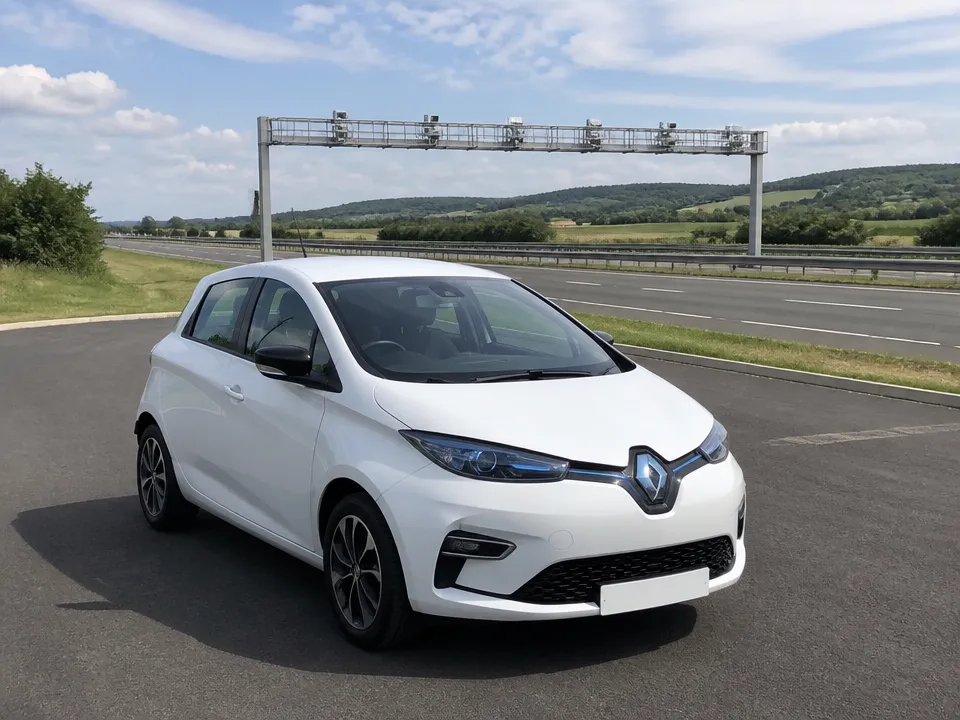
| Renault Zoe | Hatchback | 5 | 52 kWh | 136 hp | €55 |
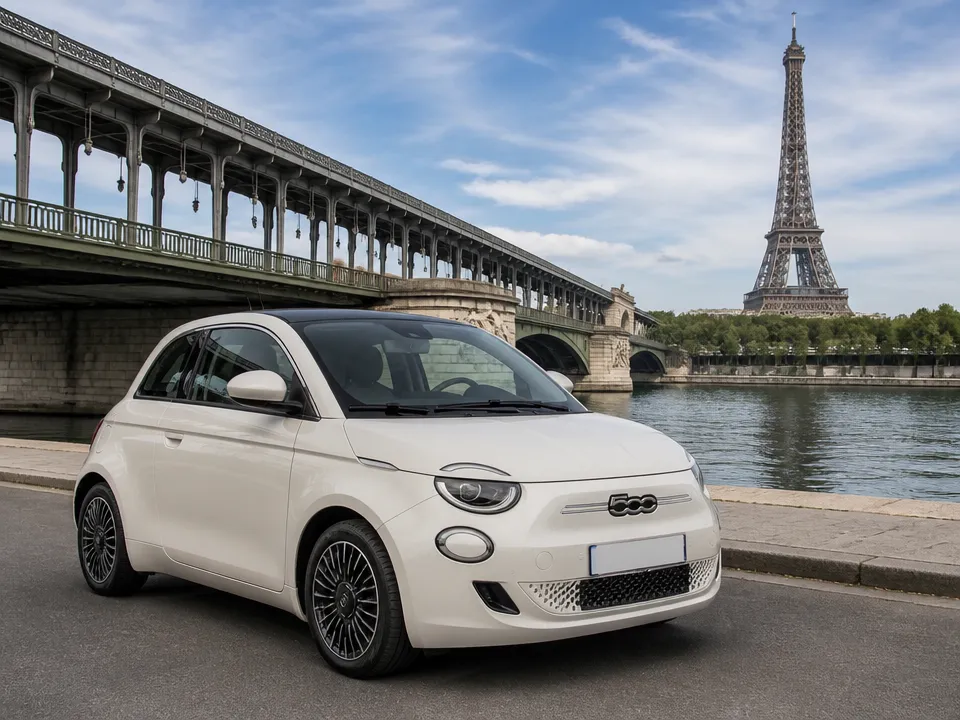
| Fiat 500e | Hatchback | 4 | 42 kWh | 118 hp | €59 |
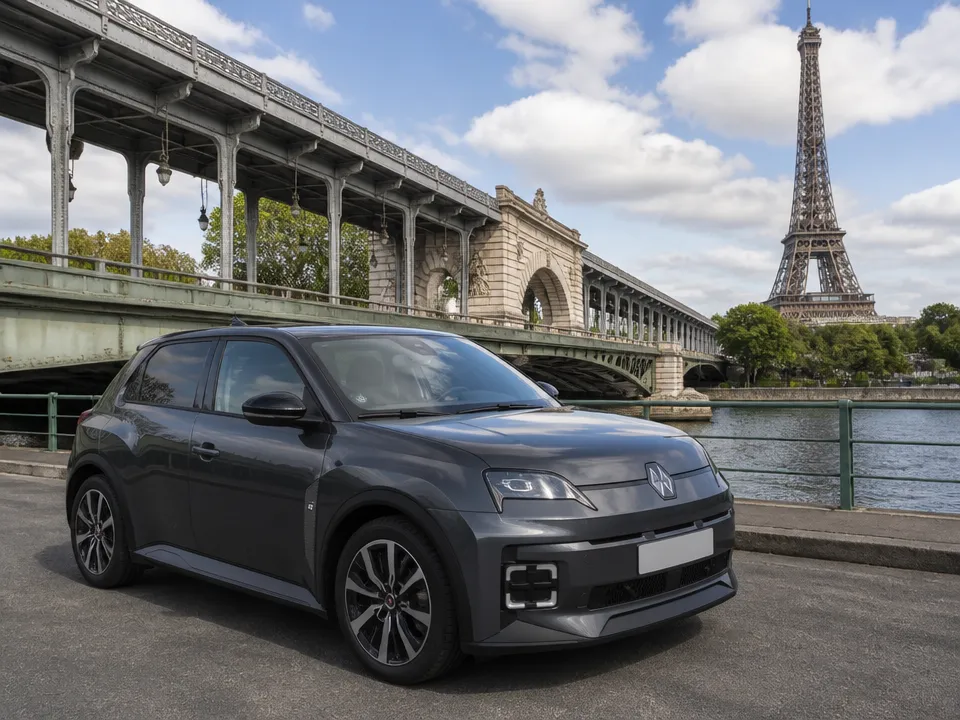
| Renault 5 E-Tech | Hatchback | 5 | 52 kWh | 150 hp | €69 |
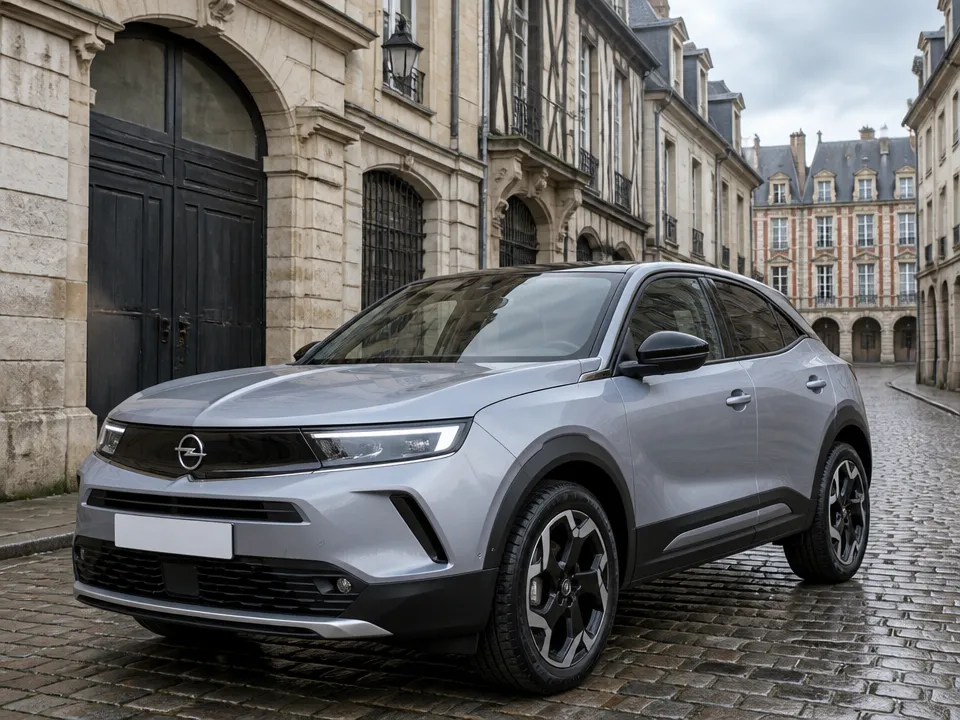
| Opel Mokka Electric | Crossover | 5 | 54 kWh | 156 hp | €75 |
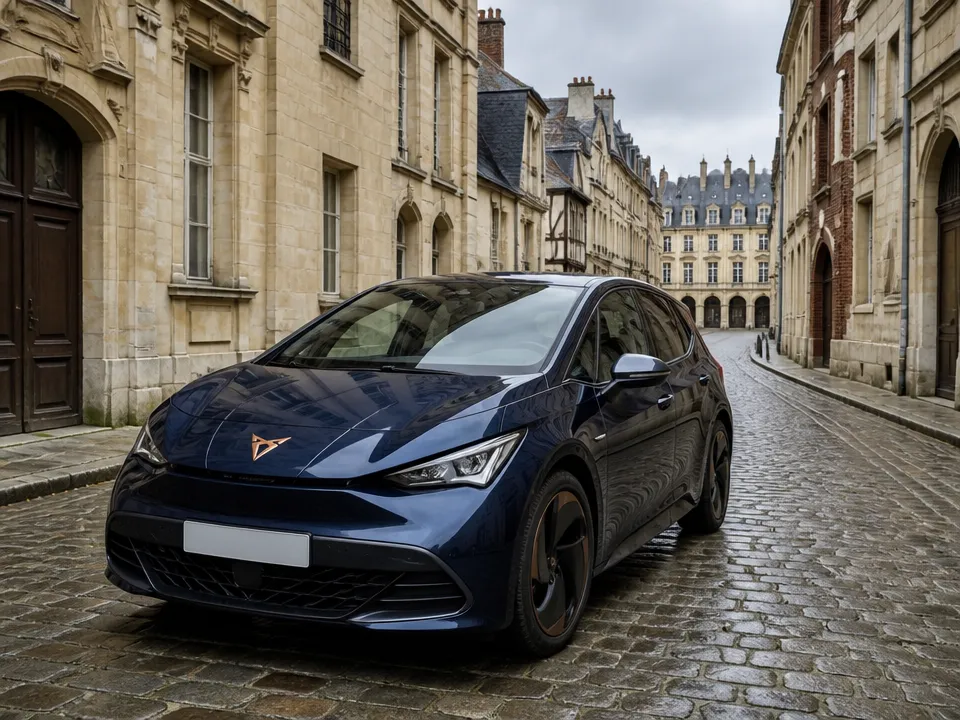
| Cupra Born | Hatchback | 5 | 58 kWh | 231 hp | €89 |
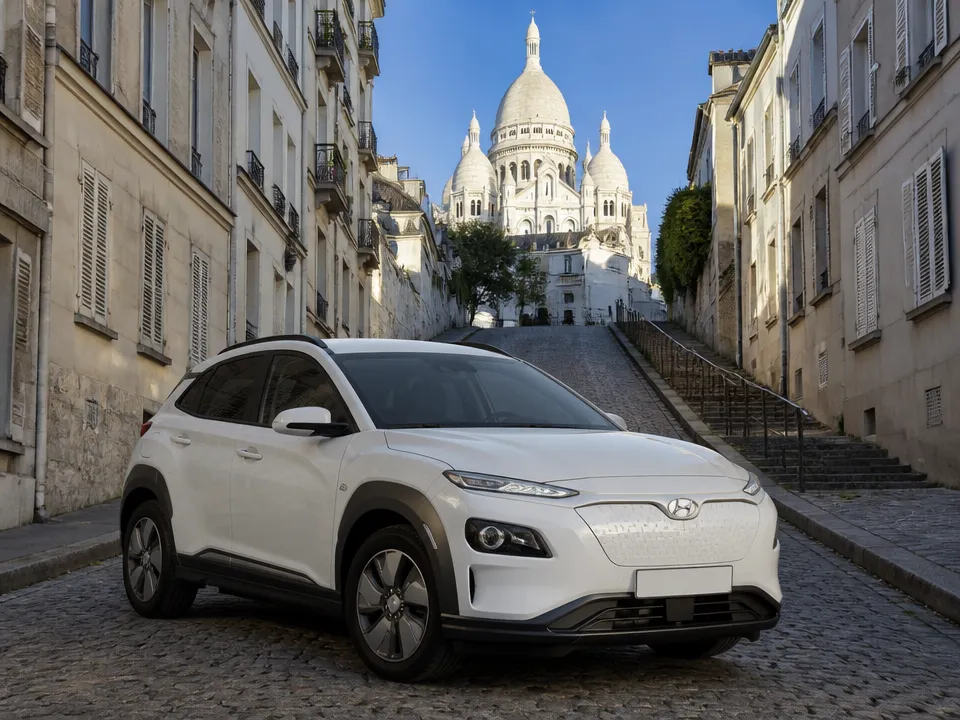
| Hyundai Kona Electric | Crossover | 5 | 65 kWh | 218 hp | €89 |
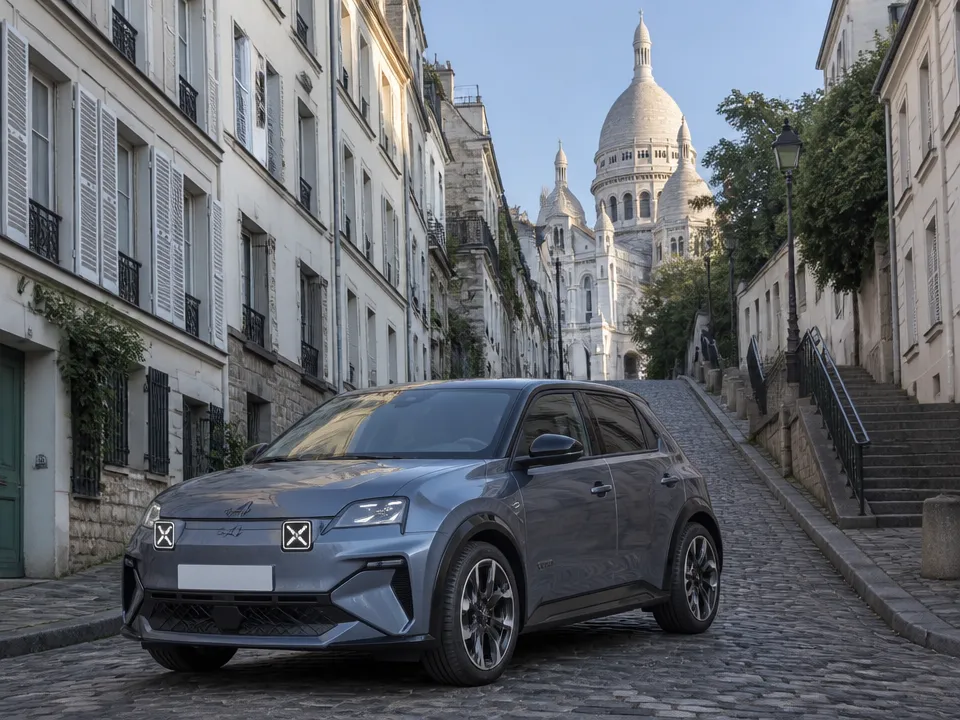
| Alpine A290 | Hatchback | 5 | 52 kWh | 220 hp | €95 |
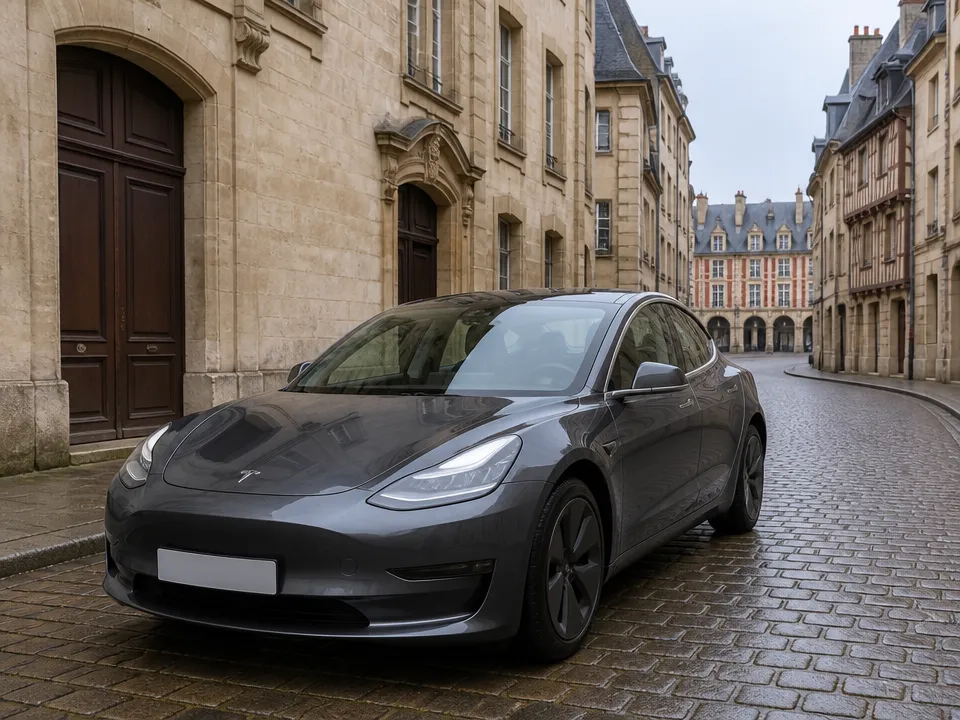
| Tesla Model 3 | Sedan | 5 | 60 kWh | 283 hp | €109 |
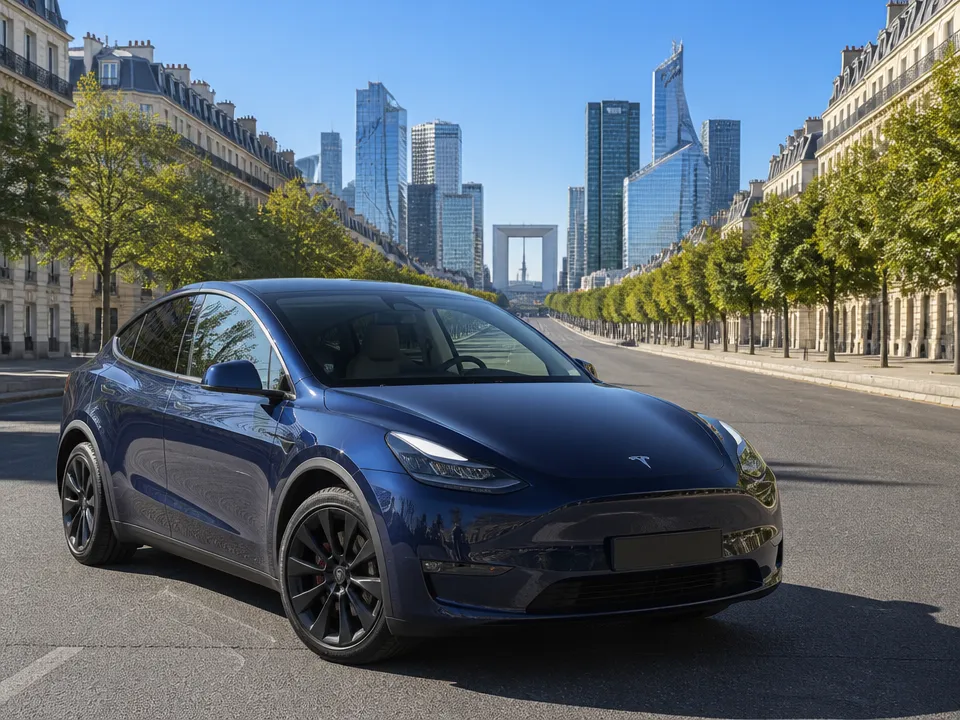
| Tesla Model Y | Crossover | 5 | 60 kWh | 299 hp | €125 |
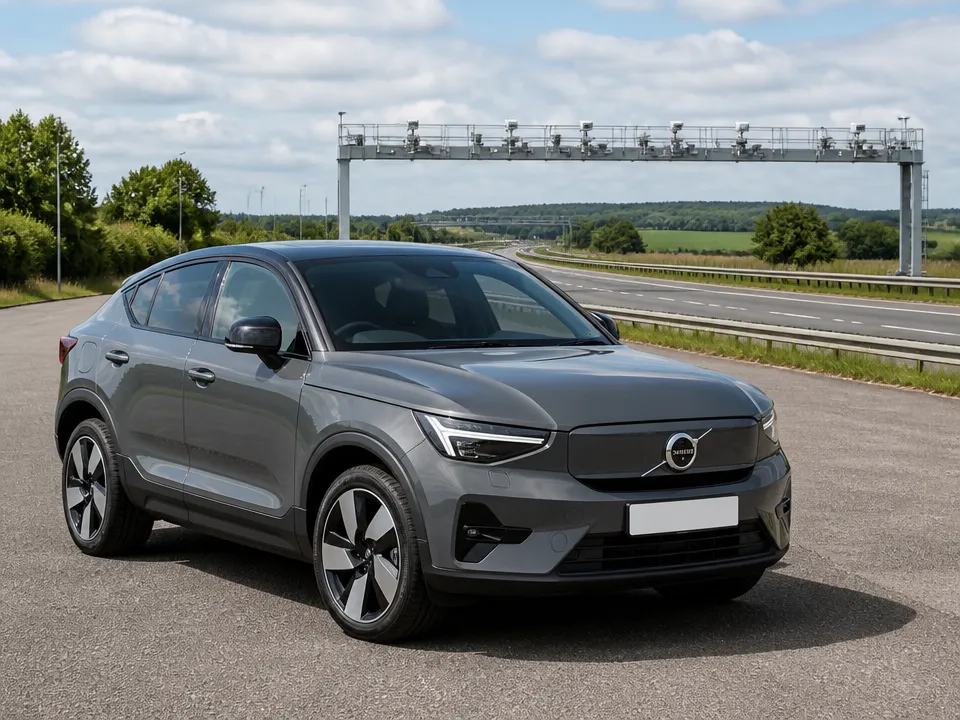
| Volvo C40 Recharge | Crossover | 5 | 82 kWh | 238 hp | €129 |
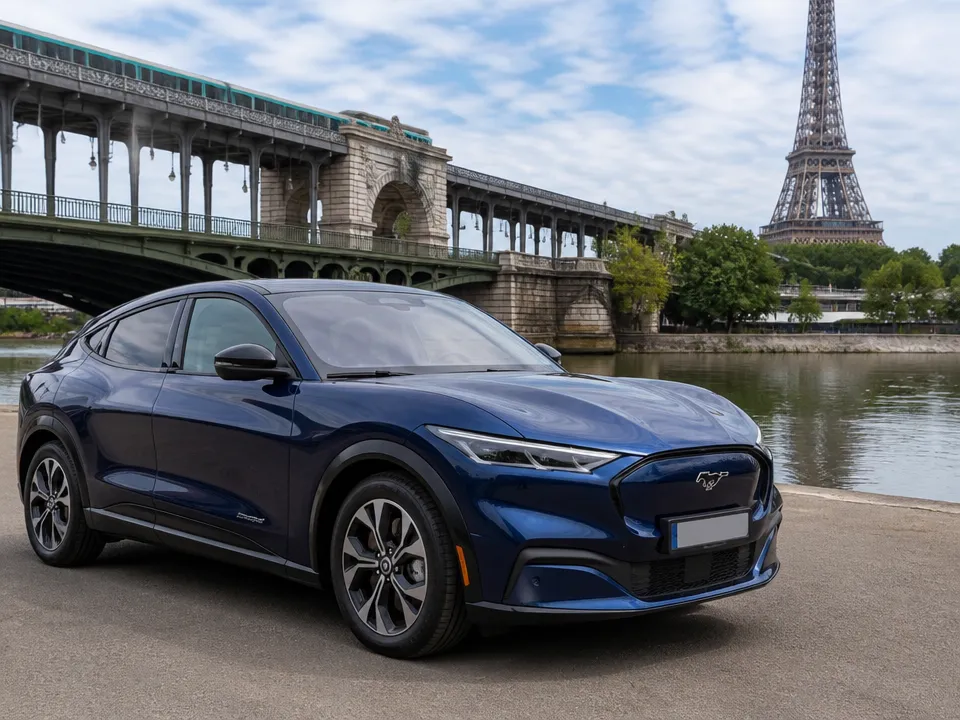
| Ford Mustang Mach-E | Crossover | 5 | 88 kWh | 294 hp | €139 |
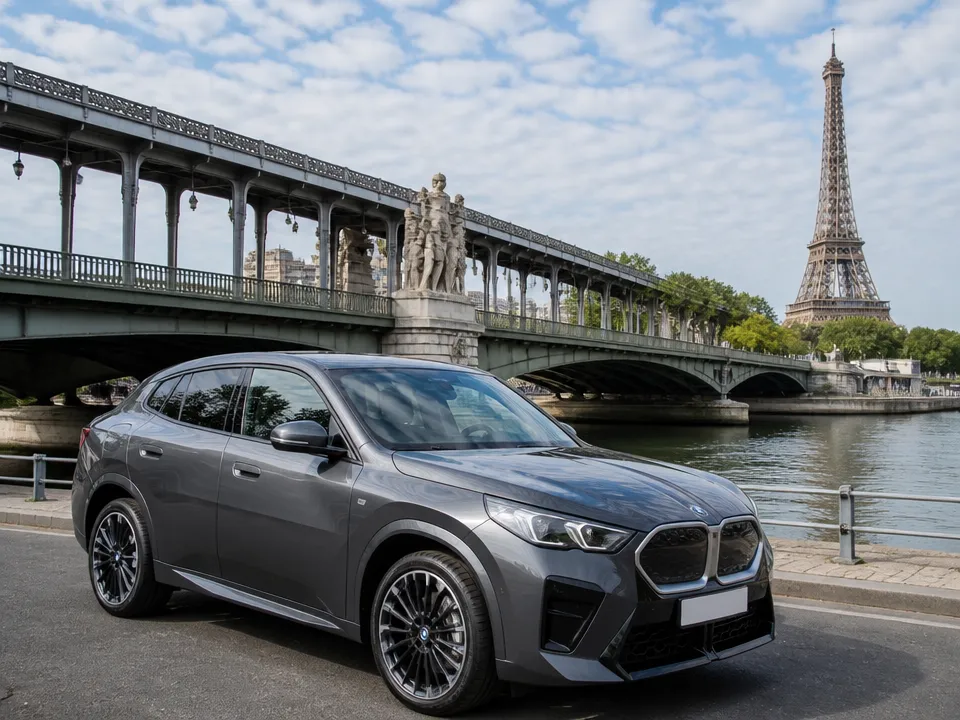
| BMW iX2 | Crossover | 5 | 65 kWh | 313 hp | €145 |
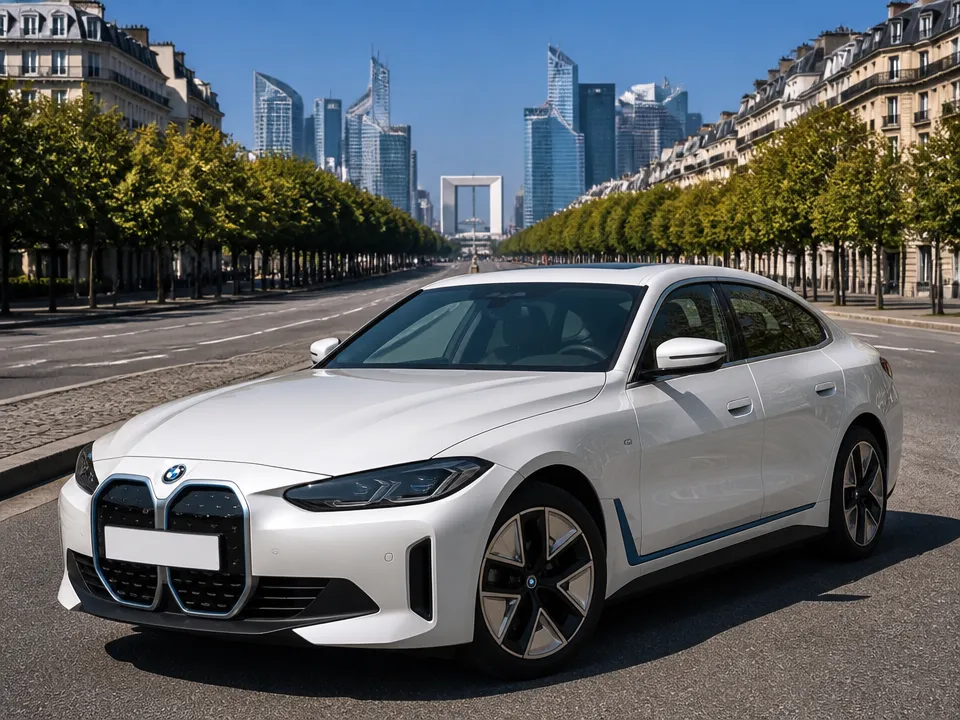
| BMW i4 | Sedan | 5 | 84 kWh | 340 hp | €159 |
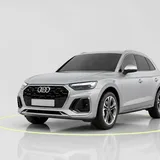
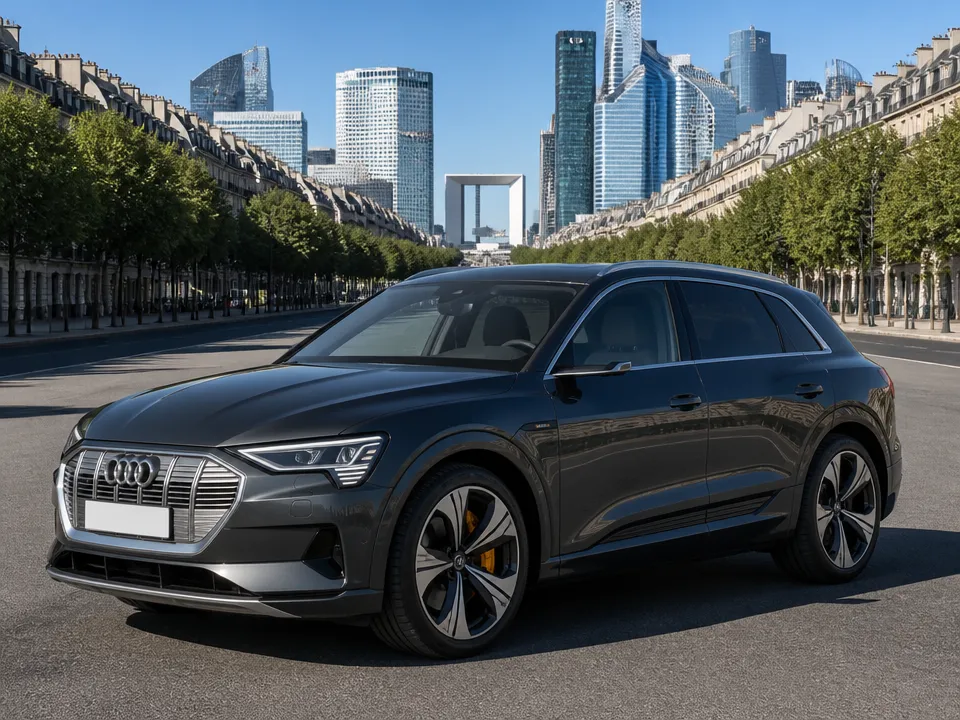
| Audi e-tron | SUV | 5 | 71 kWh | 313 hp | €179 |
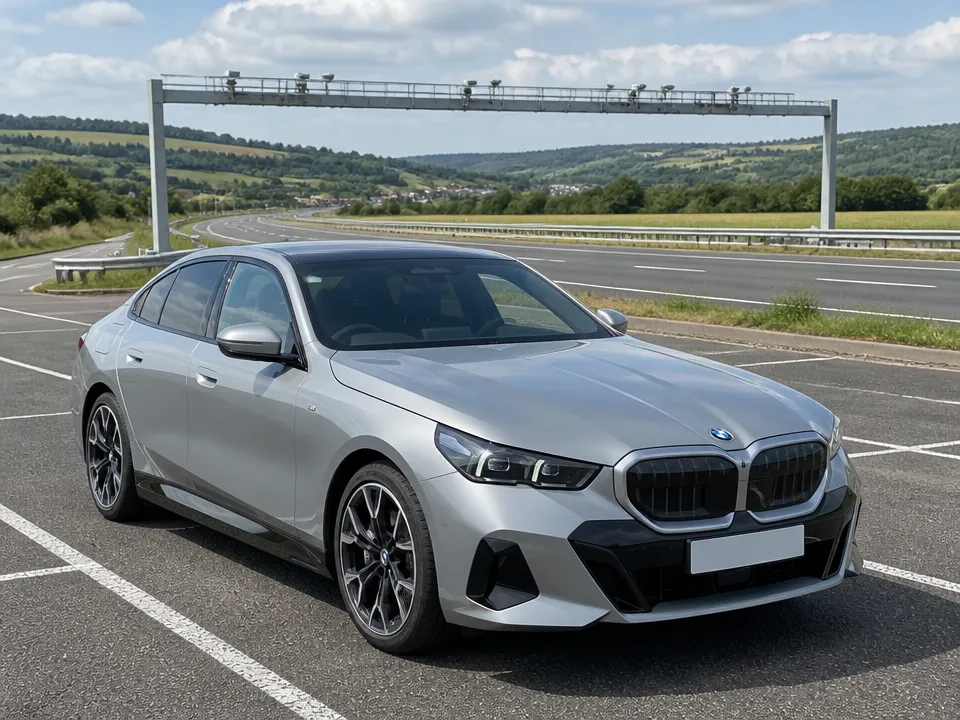
| BMW i5 | Sedan | 5 | 84 kWh | 340 hp | €199 |
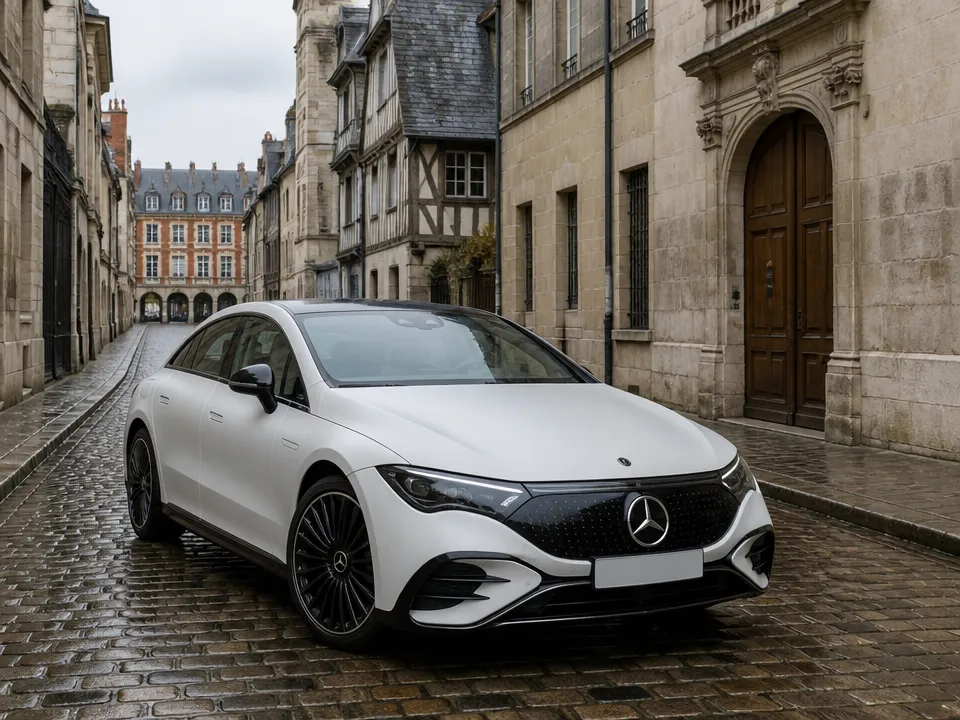
| Mercedes-Benz EQE | Sedan | 5 | 89 kWh | 292 hp | €215 |
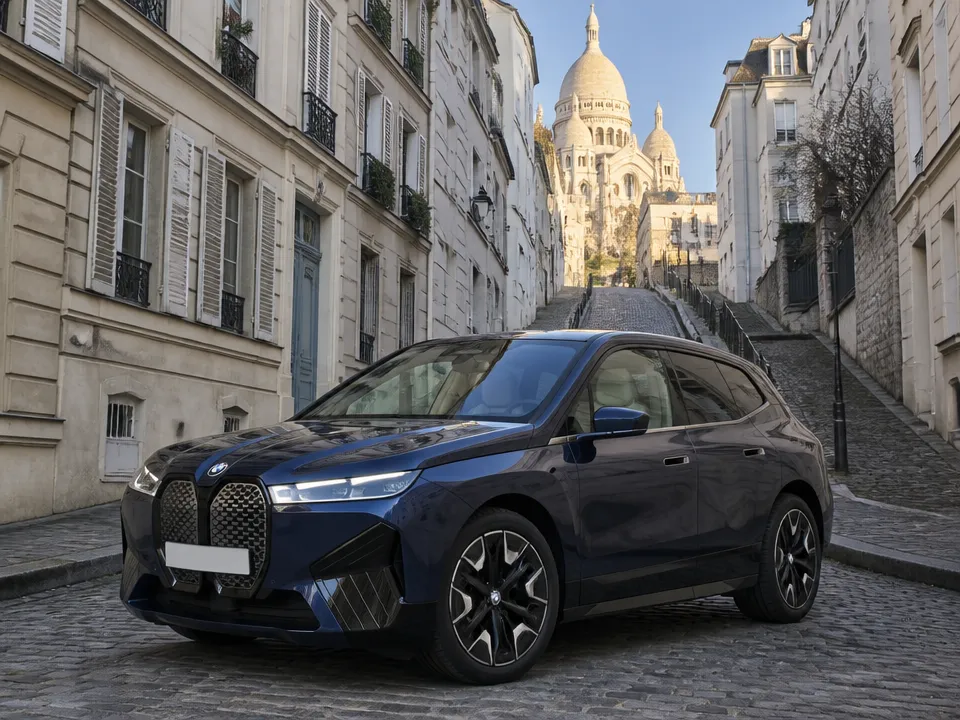
| BMW iX | SUV | 5 | 77 kWh | 326 hp | €235 |
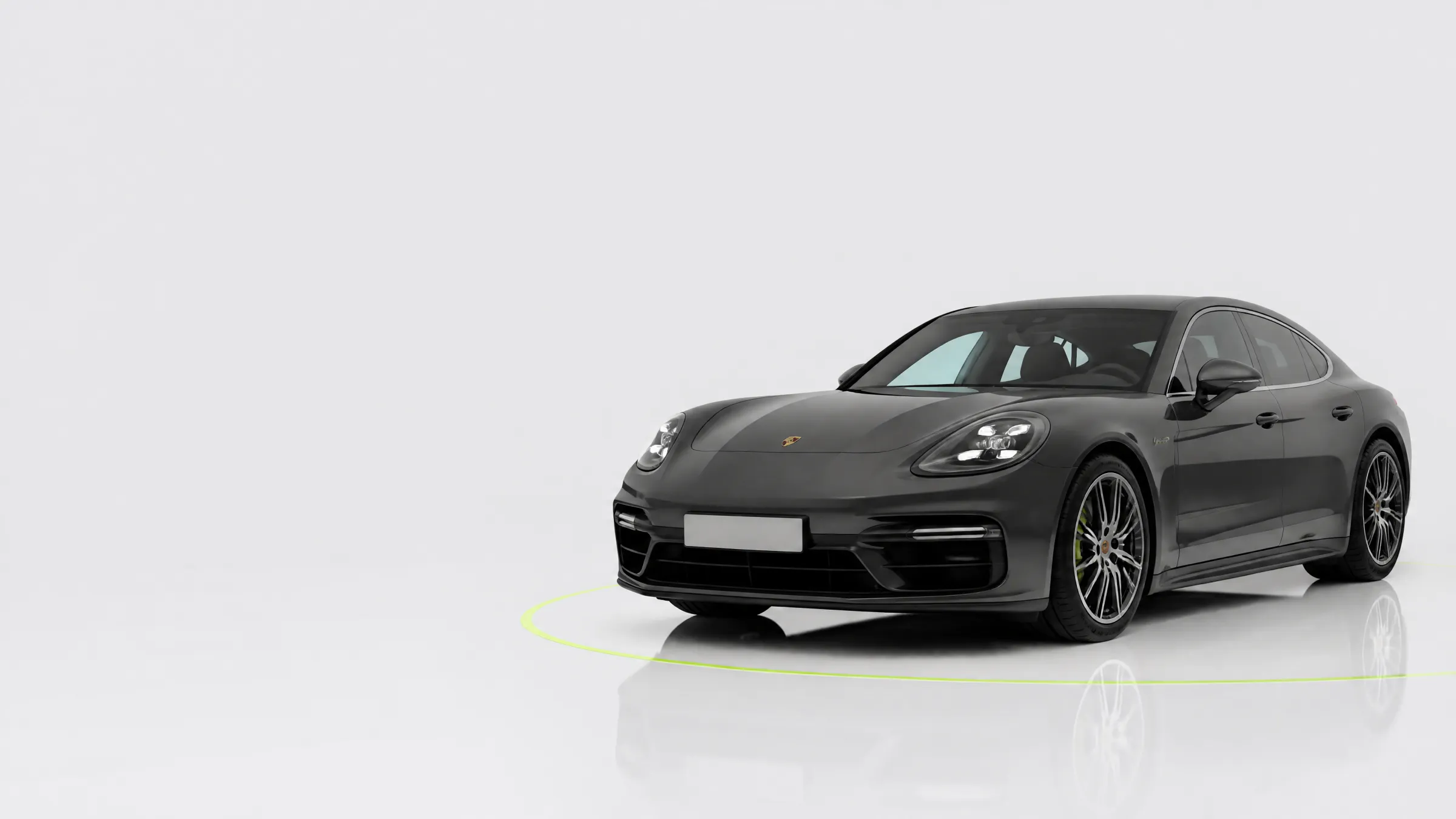
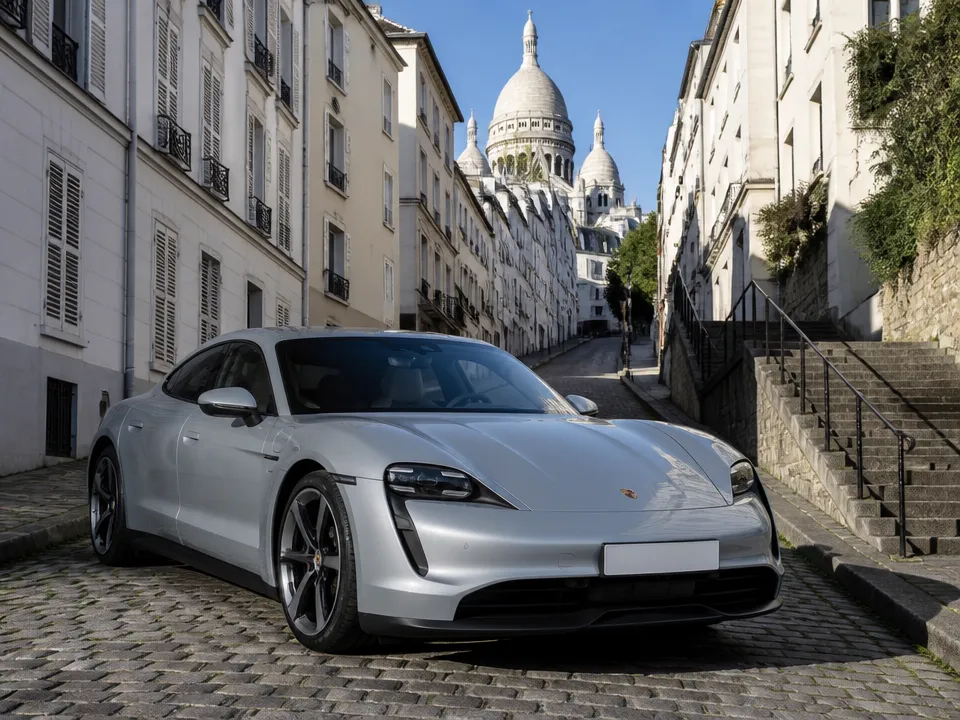
| Porsche Taycan | Sedan | 5 | 79 kWh | 408 hp | €249 |
Small electric cars for rental in France for city driving
- Renault Zoe: 52 kWh, 136 hp, 5 seats, front-wheel drive, €55 a day, the cheapest car on this page.
- Fiat 500e: 42 kWh, 118 hp, 4 seats, front-wheel drive, €59 a day, the only four-seater here.
- Renault 5 E-Tech: 52 kWh, 150 hp, 5 seats, front-wheel drive, €69 a day, a newer platform than the Zoe.
- Opel Mokka Electric: 54 kWh, 156 hp, 5 seats, front-wheel drive, €75 a day, a crossover body with a higher seating position.
Long-range electric car rental in France for trips
The Volvo C40 Recharge, Ford Mustang Mach-E, BMW i4 and Mercedes-Benz EQE carry 82–89 kWh batteries, which hold range better than the 42–60 kWh cars on a long motorway run. The BMW iX2, Audi e-tron and BMW iX add all-wheel drive, useful on wet mountain roads in the Alps or the Pyrenees. The Porsche Taycan tops the range at 408 hp and €249 a day. In our experience, the 60 kWh Tesla Model 3 and Model Y are the models most often booked for a first electric trip — the charging network is built around them, and the learning curve is shortest. If your route crosses a mountain department between 1 November and 31 March, check the winter-tyre rule before you choose a rear-wheel-drive car.
Rates for electric car rental in France and what it costs
Rates for electric car rental in France run from €55 to €249 a day, with weekly bookings from €330 and monthly from €1,155. The exact figure for your dates, the deposit, the insurance excess and any delivery fee are set out in the rental agreement we agree with you at booking.
Daily, weekly and monthly rates
Electric car rental in France starts at €55 a day, and the top of our range is the Porsche Taycan at €249. Weekly rates begin at €330 and monthly at €1,155. Weekly is charged as six days and monthly as twenty-one, so the longer the booking, the lower the daily cost works out. In our experience, a ten-day trip booked as one weekly block plus three days costs noticeably less than ten separate days at the daily rate — the manager will quote both when the booking is agreed. The Renault Zoe at €55 and the Fiat 500e at €59 sit at the bottom of the range; the BMW i5 at €199, the Mercedes-Benz EQE at €215, the BMW iX at €235 and the Porsche Taycan at €249 sit at the top.
What the rental agreement covers
- Deposit: the amount blocked for the duration of the rental is set out in the rental agreement, confirmed when the booking is agreed.
- Insurance excess: the fixed sum you carry yourself after damage or theft is set out in the rental agreement, not on this page.
- Delivery fees: the cost of bringing the car to you is set out in the rental agreement, agreed with the manager beforehand.
- Discounts: longer bookings and repeat rentals are priced in the rental agreement — ask the manager to confirm the figure when the booking is agreed.
- Minimum age and young-driver fee: there is no single state norm in France; the condition is agreed when booking.
- Mileage: the included allowance and the rate beyond it are set out in the rental agreement.
Read those lines before the car arrives rather than at hand-over — the deposit and the excess are set out in the rental agreement, and the agreement is the document that settles the final figures.
Charging an electric rental car in France
Every car in our electric fleet charges from a standard socket or a public charging point, and the connector type is confirmed when the booking is agreed with a manager. Charging points are common along the main routes and in towns, so planning a route around chargers is rarely a problem.
Charging an electric rental car: what to expect
Battery sizes in our electric fleet run from 42 kWh in the Fiat 500e to 89 kWh in the Mercedes-Benz EQE, and the driving range you get depends on the model you choose, the weather and how you drive. A 52 kWh Renault Zoe and a 52 kWh Renault 5 E-Tech sit at the smaller end, while the Volvo C40 Recharge, Ford Mustang Mach-E, BMW i4 and Mercedes-Benz EQE carry 82–89 kWh packs for longer days behind the wheel. All 18 cars are automatic, seat 4 or 5, and are delivered to you. Before you set off, agree with the manager how the battery is returned — the fuel and charging policy is set out in the rental agreement, not assumed.
Charging costs and payment on the road
- Home and hotel charging: a standard socket works for an overnight top-up, but it is the slowest option and adds only a modest number of kilometres.
- Public AC points: common in car parks and on streets, useful for a few hours while you are parked.
- DC fast charging: the quickest way to add range on a longer drive, typically found along motorways and at service areas.
- Payment: charging networks bill separately from your booking, and the rate depends on the operator and the speed of the point.
Low-emission zones and charging in Paris
The ZFE de la Métropole du Grand Paris (Zone à Faibles Émissions) covers the area inside the A86 motorway, including the boulevard périphérique and the Bois de Boulogne and Bois de Vincennes, and it bans Crit'Air 5, 4, 3 and "Non classé" vehicles. A battery-electric car carries the Crit'Air sticker that keeps it clear of those restrictions, which is one practical reason an electric car suits a city stay as well as a longer trip. The sticker itself is part of the car's paperwork, so check it is on the windscreen when the car is handed over.
Rules and documents for driving an electric rental car in France
Speed limits, licence rules and the Crit'Air sticker decide how an electric car behaves on the road here. An EU/EEA licence is valid with no exchange and no time limit while it stays valid; a non-EU licence works for tourists, but outside the Latin alphabet it needs an official translation or an IDP. Our fleet is automatic only, so the manual-versus-automatic split that shapes local pricing does not apply to these 18 cars.
Speed limits for electric car rental in France
R413-5.
Documents and alcohol rules
- Licence held over 1 year: the minimum for rental; digital licences are not accepted.
- IDP: valid for rental if issued no more than 3 years ago — it translates your licence, it does not replace it.
- Passport and card: minimum age and any young-driver surcharge are agreed when booking.
- Child seats: required for children under 10 OR shorter than 135 cm — both conditions must be met before a seat is optional; the fine reaches 750 € (contravention 4th class).
Winter tyres are compulsory from 1 November to 31 March in around 34 mountain départements — the Alps, Pyrenees, Massif Central, Jura, Vosges and Corsica — under loi Montagne II, with a 135 € fine and the car immobilised; Paris and Île-de-France are outside that zone, so the rule bites only if you drive towards the Alps. Ask your manager which of these applies to your route before the car is delivered.
Low-emission zones and electric car rental in France
Electric car rental in France sidesteps the country's strictest air-quality rules, because a battery-electric car carries no exhaust emissions and therefore no restricted Crit'Air class. The ZFE de la Métropole du Grand Paris (Zone à Faibles Émissions) is the zone most travellers meet first: its perimeter runs inside the A86 motorway, the A86 itself excluded, and takes in the boulevard périphérique, the Bois de Boulogne and the Bois de Vincennes. Crit'Air 5, 4 and 3 vehicles and those marked «Non classé» are barred from it.
What the Crit'Air sticker means for an electric hire car
- Crit'Air vignette: the emissions sticker fixed to the windscreen; without it, entering an ZFE is formally prohibited.
- Restricted classes: Crit'Air 5, 4 and 3, plus «Non classé» — the classes the Paris zone turns away.
- Battery-electric cars: they produce no exhaust emissions, so no restricted class applies to them.
- Our fleet: all 18 cars are electric, automatic and delivered to you, so the sticker question does not hold up your booking.
- The paperwork: the deposit, excess and delivery fees are set out in the rental agreement, agreed with a manager.
The restrictions tighten over time rather than loosen: Crit'Air 3 has been barred from the Paris zone since 1 January 2025. That date matters if you plan to drive a diesel or older petrol car instead of an EV.
Where the zones actually sit
| Zone or rule | Perimeter | Classes barred |
|---|---|---|
| ZFE de la Métropole du Grand Paris | inside the A86, A86 excluded | Crit'Air 5, 4, 3, «Non classé» |
| Boulevard périphérique | included in the Paris zone | same classes |
| Bois de Boulogne and Bois de Vincennes | included in the Paris zone | same classes |
| Winter tyres, 1 November to 31 March | ~34 mountain departments, 4,000+ communes | not an emissions rule |
Two practical points follow from that table. First, the winter-tyre rule is a mountain-department requirement under loi Montagne II, with a 135 € fine and immobilisation of the car — it does not apply to Paris or the Île-de-France region, but it does apply the moment your trip heads for the Alps. Second, the Crit'Air classes above are the ones the Paris zone enforces; an electric car is outside that list entirely. In our experience the sticker is the single question travellers ask before an EV booking, and it is also the one that disappears once the car is electric.
Insurance and protection for electric car rental in France
Third-party liability is compulsory by law and comes with every booking automatically. It covers injury and property damage caused to other people within the country's legal limits, but it does not cover injuries to the driver. On top of that, the local market includes collision damage protection and theft protection in the base rate, each capped by an excess — franchise — whose amount is set out in the rental agreement and which the driver pays personally if the vehicle is damaged or stolen.
What the base protection covers
- Third-party liability: compulsory under French law and included automatically; covers injury and property damage to third parties within the country's legal limits, but never the driver's own injuries.
- Collision damage protection: limits your liability to the excess amount and covers repair of the car plus its downtime in the workshop.
- Theft protection: covers theft, attempted theft and vandalism in a car park, also within the excess.
- The excess (franchise): a fixed sum you pay yourself after damage or theft; it is non-waivable and depends on the protection level you choose.
What base protection leaves out
Tyres damaged through abnormal use, glass (unless it broke in a collision), the sunroof and panoramic roof, the underside of the car, misfuelling and the engine damage it causes, lost or stolen keys, and damage from negligence or intent all sit outside the base package. In our experience, the misfuelling exclusion catches people out most often — and on an electric car the equivalent mistake is plugging into the wrong charger type or forcing a connector, which is treated the same way.
A paid option, rachat de franchise, reduces the excess at the Medium level and removes it or cuts it substantially at Premium. Some Visa Premier and Gold Mastercard cards cover the collision and theft excess if the booking was paid with that card and the holder is the main driver on the agreement — worth checking with your bank before you travel. The exact excess figure and the level of protection you pick are set out in the rental agreement, so ask the manager to confirm them when the booking is agreed.
Practical conclusions on electric car rental in France
Electric car hire comes down to three numbers: 18 models, €55 to €249 a day, and weekly at six times the daily rate or monthly at twenty-one. Everything else — the car itself, the charging, the paperwork — is settled before you drive away, and the booking is agreed with a manager rather than picked off a screen.
What actually decides your trip is battery size, not badge. A 42 kWh Fiat 500e and a 52 kWh Renault Zoe are built for the boulevard périphérique and the run out to Versailles; the 82–89 kWh group — Volvo C40 Recharge, Ford Mustang Mach-E, BMW i4, Mercedes-Benz EQE — is what you want for the Loire Valley châteaux or the Normandy coast, where a single charge has to cover a long day. Book the smaller car, plan the stops; book the larger one, drive and stop when you feel like it.
A short list of things worth settling before the car arrives:
- Licence: EU/EEA licences work here unchanged; outside that, bring an IDP or an official translation, held over 1 year and no older than 3 years.
- Crit'Air sticker: the ZFE de la Métropole du Grand Paris bans Crit'Air 5, 4, 3 and «Non classé» inside the A86 — an electric car is clean enough, but the sticker still belongs on the windscreen.
- Parking: the terms are set out in the rental agreement and agreed when booking.
- Deposit, excess and delivery fees: set out in the rental agreement, confirmed when the booking is agreed.
- Winter tyres: not required in Paris or Île-de-France, but mandatory from 1 November to 31 March in roughly 34 mountain départements if the Alps are on your route.
Two habits make the difference in practice.
Pick the battery for the trip, not the price for the day.