












Convertibles car rental in Spain
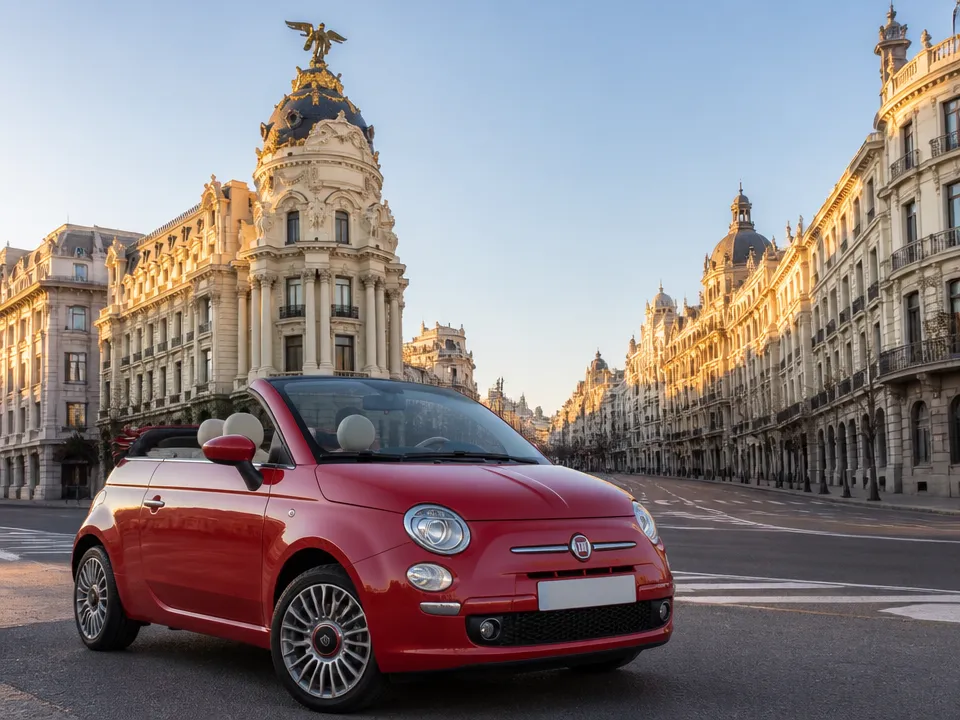
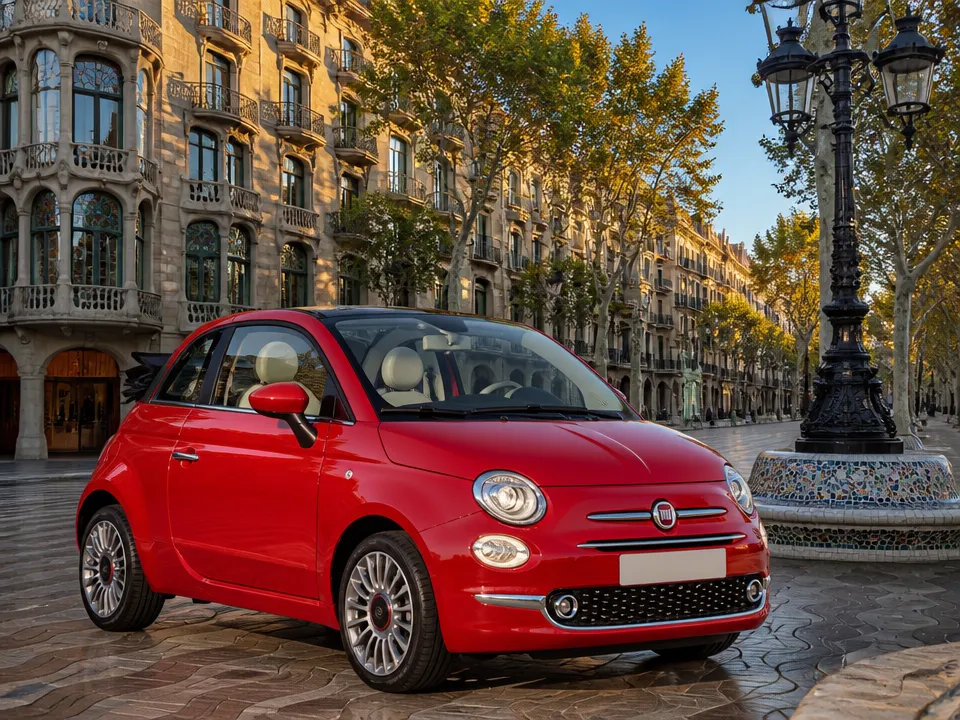
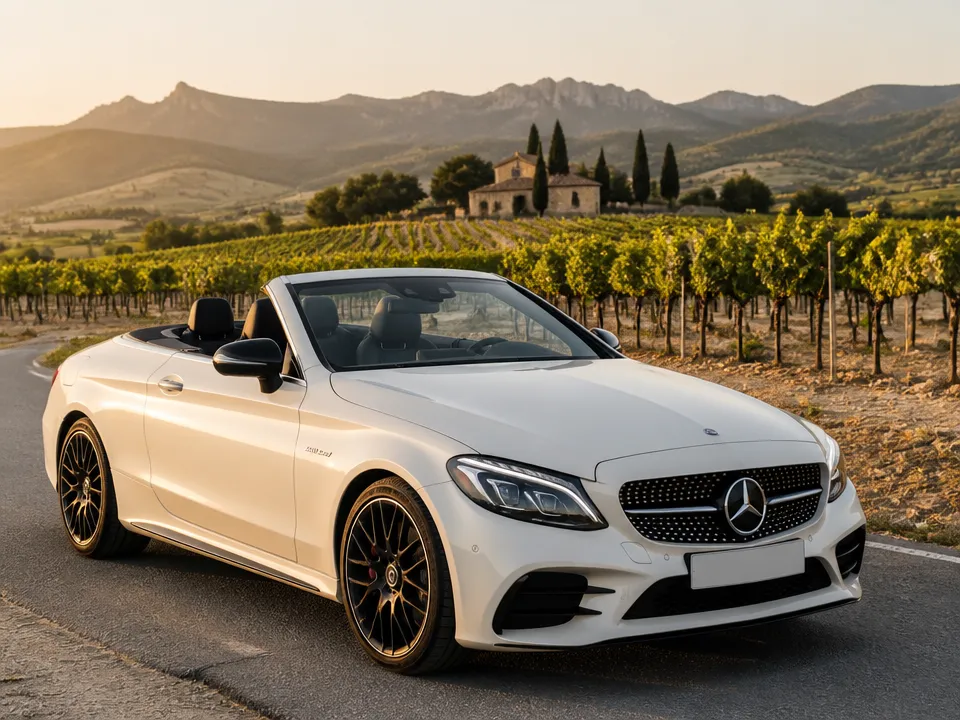
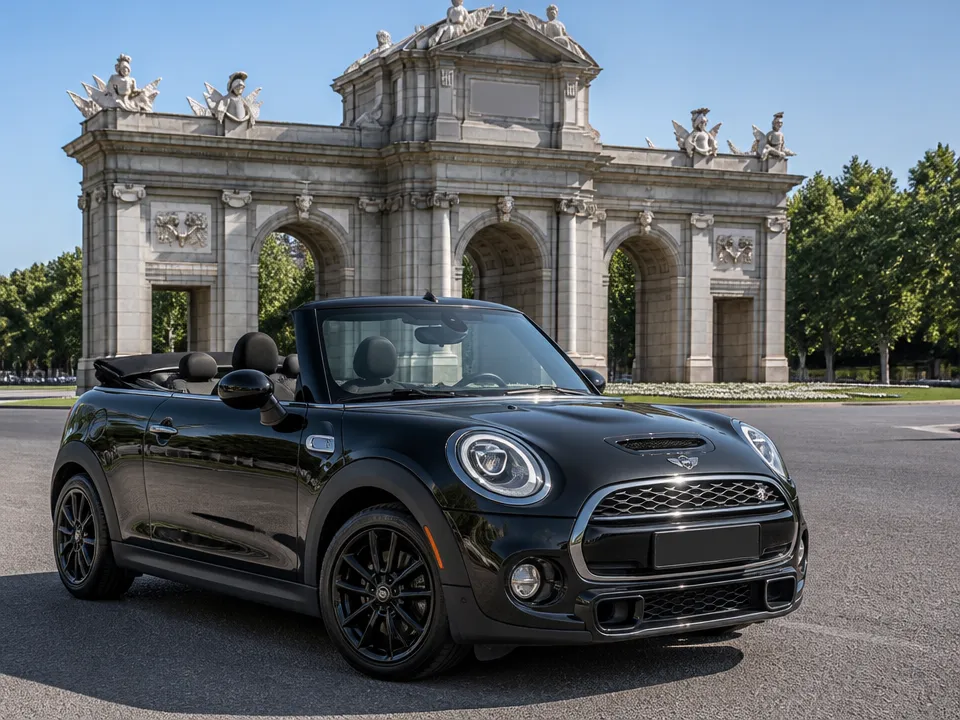
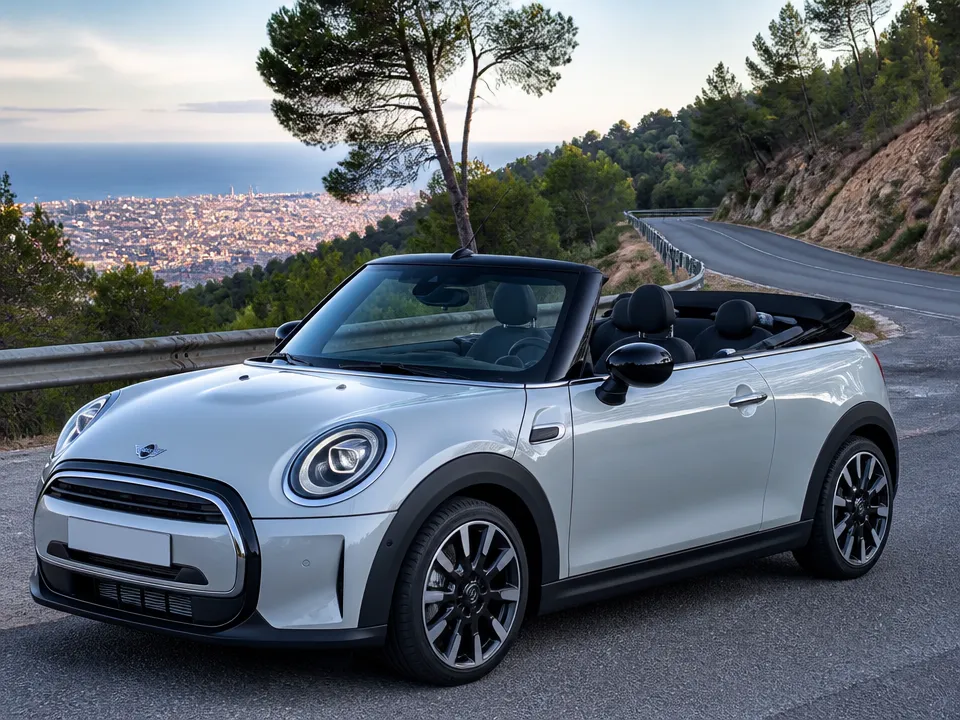
From €30 per day, Rent-Trip offers convertible car rental in Spain, with 14 open-top models in the fleet — from the Fiat 500C and Mini Cooper Convertible to the BMW 4 Series Convertible, Porsche 911 (992) Carrera S Cabriolet and Aston Martin DB11 Volante. We deliver the car to you in Madrid and Barcelona, and every booking is agreed with a manager.
Convertibles car rental in Spain and where the class is actually available
Convertibles car rental in Spain with Rent-Trip is a 14-car open-top class inside a 754-car fleet, priced from €30 to €1,310 a day. The car is delivered to the client, and the booking is agreed with a manager beforehand.
How many convertibles we keep and what the class includes
Our fleet holds 14 open-top cars, from a €30 Fiat 500C to a €1,310 Aston Martin DB11 Volante. Every car on this page is a soft-top convertible with a folding roof, and the class runs on petrol, with one hybrid exception — the €35 Fiat 500C. Gearboxes split between manual and automatic, and drivetrains cover front-wheel, rear-wheel and all-wheel drive. Power climbs from 70 hp in the Fiat to 550 hp in the Bentley Continental GTC, so the class is not one product but a ladder. The split that matters day to day is seats, not price: the class divides into 2-seat roadsters and 4-seat cabriolets, and that single line decides how much luggage actually travels with you. A cabriolet roof eats boot space when folded, so pack soft bags rather than hard cases.
Where the class is available and how the car reaches you
We operate in Madrid and Barcelona and deliver the car to the client, with the booking agreed with a manager. That means the model, the dates and the hand-over point are agreed when booking, not improvised later. Availability on this page is 14 cars, which is a small class by design — open-top models move fast in the Spanish season, so the earlier the dates are fixed with a manager, the wider the choice of the exact car. If the model you picked is not there, the alternative is agreed when booking rather than improvised. Delivery is part of the same agreed booking: you name the hand-over point, we bring the car, and the paperwork is settled in that same conversation. Timing is confirmed in that conversation too — a roadster collected at 9am and one collected at 6pm are the same booking, but a very different first day.
What the class includes at a glance
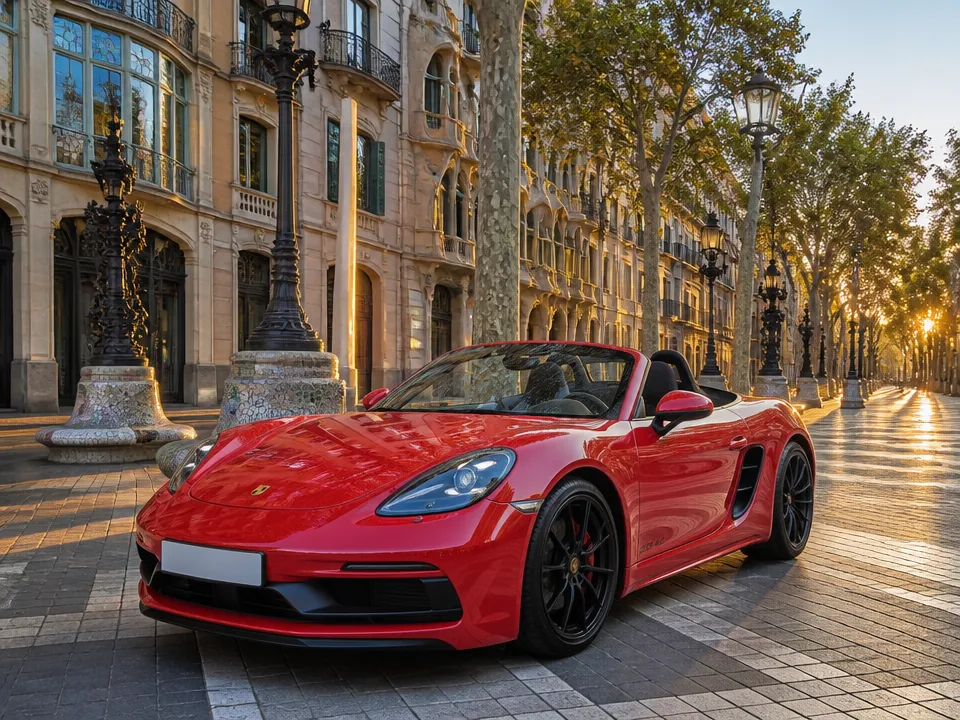
- 2-seat roadsters: one car, the Porsche 718 Boxster GTS 4.0 at €464 a day, 400 hp, rear-wheel drive, 4.0 L.
- 4-seat cabriolets: thirteen cars from €30 to €1,310 a day, everything from a 1.0 L Fiat 500C to a 6.0 L Bentley Continental GTC.
- Transmission: manual on the two Fiat 500C cars, automatic on the remaining twelve.
- Fuel: petrol on thirteen cars, hybrid on the €35 Fiat 500C.
- Roof type: soft-top on all fourteen — no hard-top or targa body in the class.
In our experience the Fiat 500C and the Mini Cooper Convertible are the two that get booked out first for short city breaks, because both fit streets and car parks that a Mustang or a 911 does not.
What convertibles car rental in Spain costs day by day and week by week
Our convertible prices run from €30 to €1,310 per day, with weekly rates from €180 and monthly rates from €630. Longer bookings are not a discount code — they are a fixed multiplier, and knowing it before you choose a model is what keeps a two-week trip affordable.
Daily, weekly and monthly rates
Daily figures sit between €30 and €1,310, weekly bookings start at €180 and monthly at €630. The arithmetic behind those numbers is simple and does not change by season: a week costs the daily rate multiplied by six, a month costs the daily rate multiplied by twenty-one. Rent-Trip applies the same multipliers to every model in the class, so the gap between a Fiat 500C at €30 a day and an Aston Martin DB11 Volante at €1,310 a day stays proportional however long you keep the car. What actually moves the total is the duration you pick, not the model you upgrade to. In our experience, travellers who book three days and then extend on the road pay noticeably more than those who settle the full length up front — the daily rate on an extension is quoted on its own, without the weekly or monthly logic applied. Work out the number of days first, then choose the car that fits the resulting budget.
Price table by model
| Model | Seats | Gearbox | Drive | € per day |
|---|---|---|---|---|
| Fiat 500C | 4 | Manual | Front-wheel | €30 |
| Fiat 500C Hybrid | 4 | Manual | Front-wheel | €35 |
| Mini Cooper Convertible | 4 | Automatic | Front-wheel | €45 |
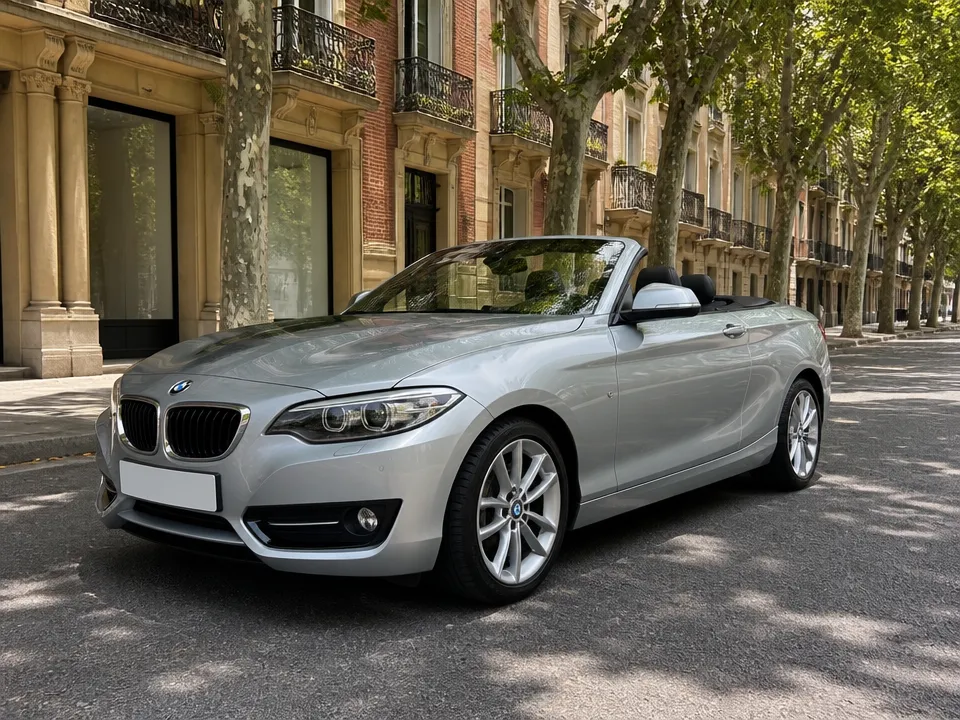
| BMW 2 Series Convertible | 4 | Automatic | Rear-wheel | €51 |
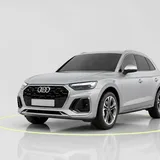
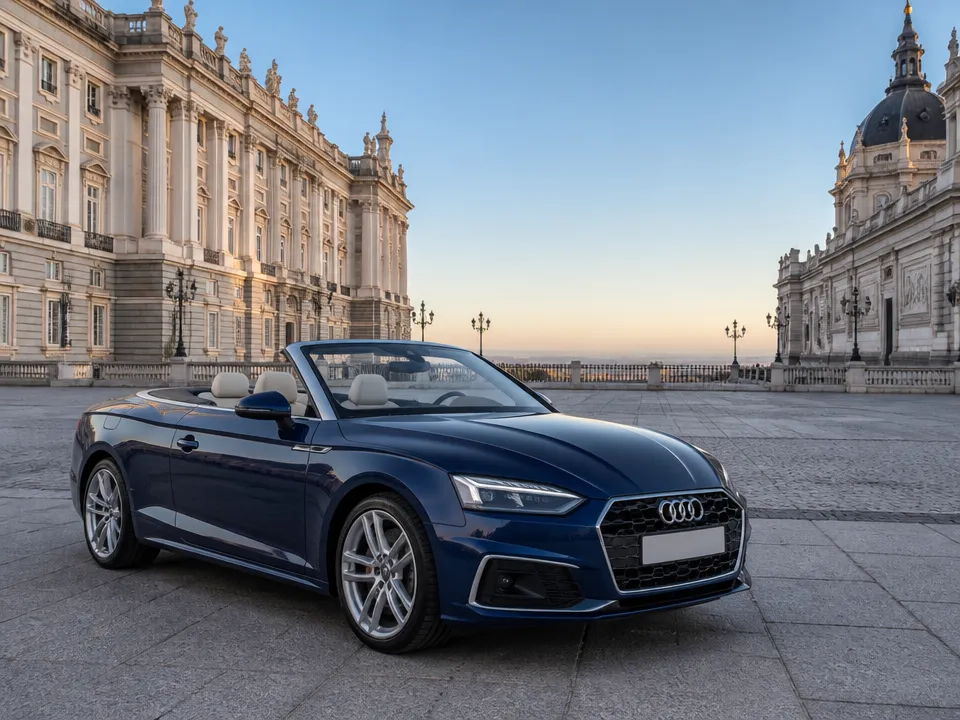
| Audi A5 Cabriolet | 4 | Automatic | Front-wheel | €62 |
| Mini Cooper Convertible | 4 | Automatic | Front-wheel | €95 |
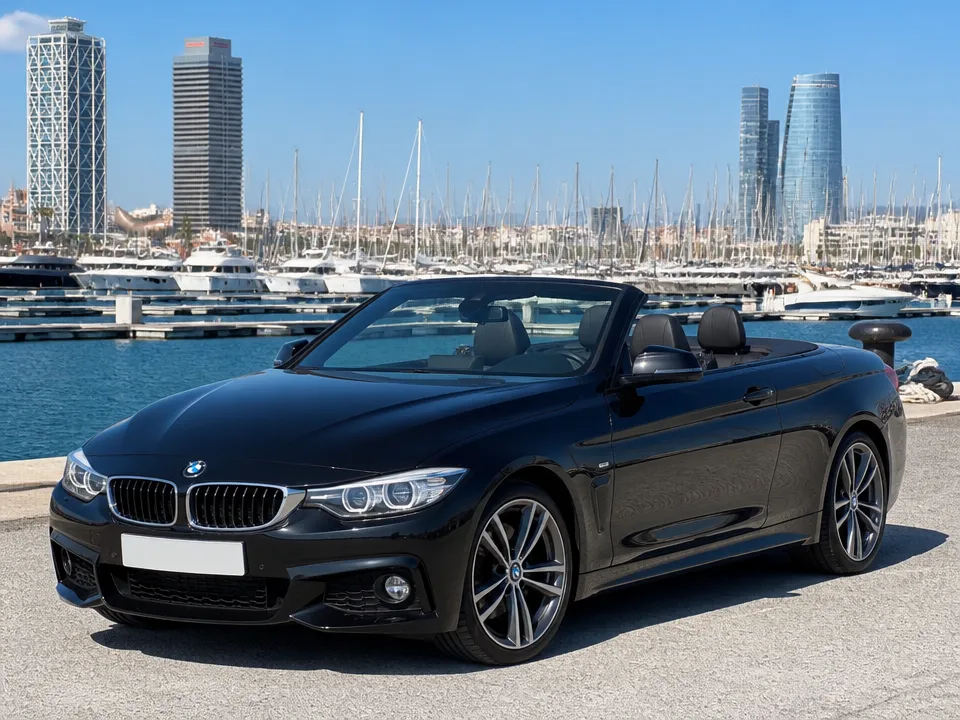
| BMW 4 Series Convertible | 4 | Automatic | Rear-wheel | €180 |
| Ford Mustang Convertible | 4 | Automatic | Rear-wheel | €336 |
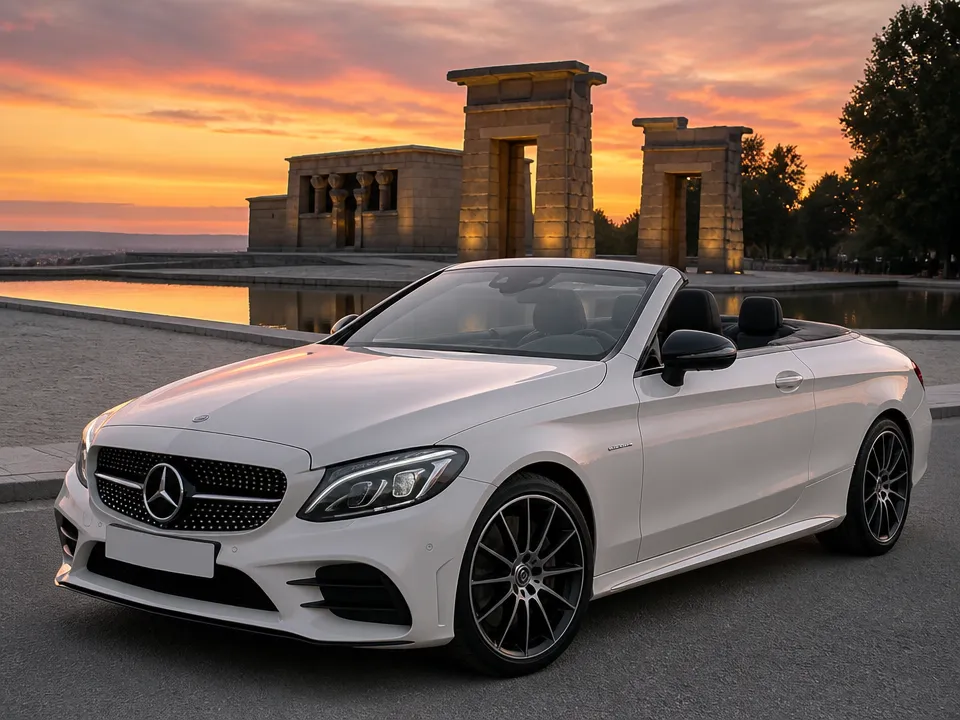
| Mercedes-Benz AMG C43 Cabriolet | 4 | Automatic | All-wheel | €400 |
| Mercedes-Benz C43 AMG Cabriolet | 4 | Automatic | AWD | €400 |
| Porsche 718 Boxster GTS 4.0 | 2 | Automatic | Rear-wheel | €464 |
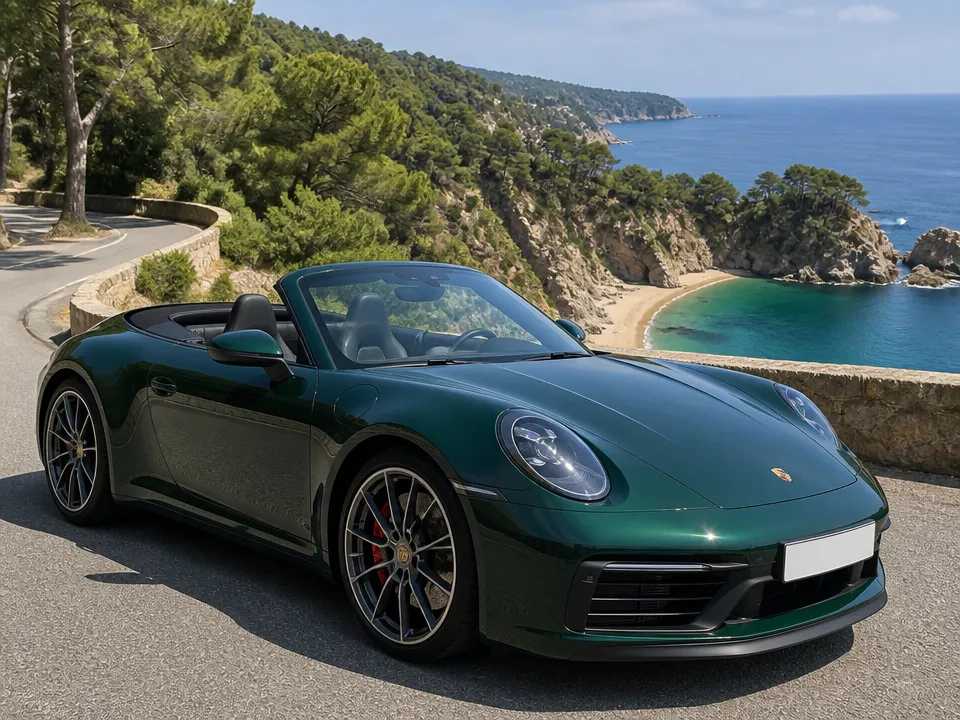
| Porsche 911 (992) Carrera S Cabriolet | 4 | Automatic | Rear-wheel | €576 |
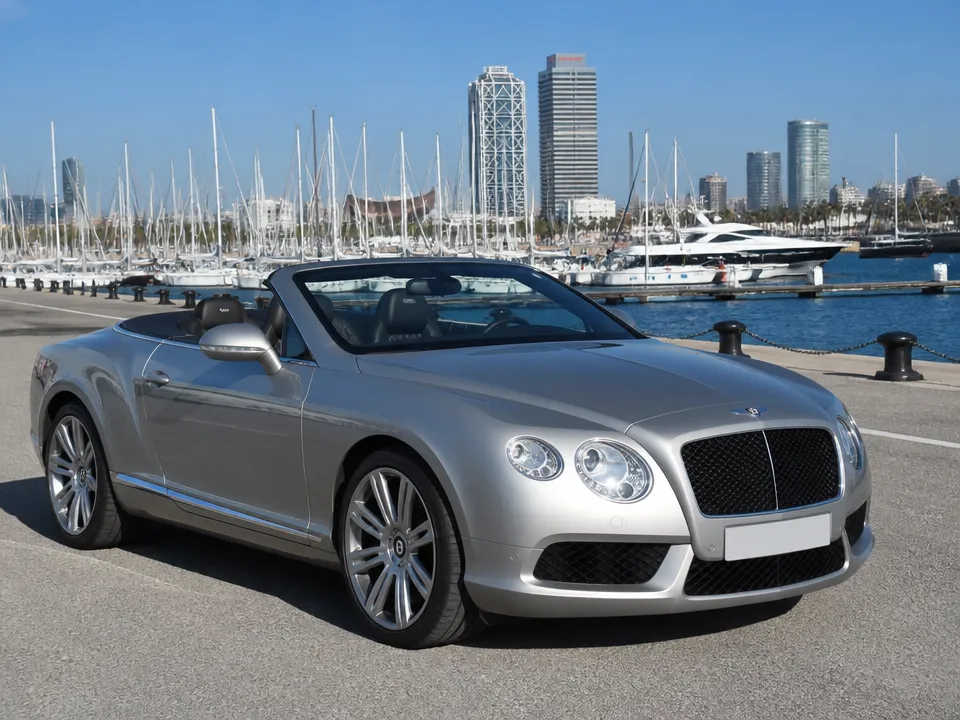
| Bentley Continental GTC | 4 | Automatic | AWD | €706 |
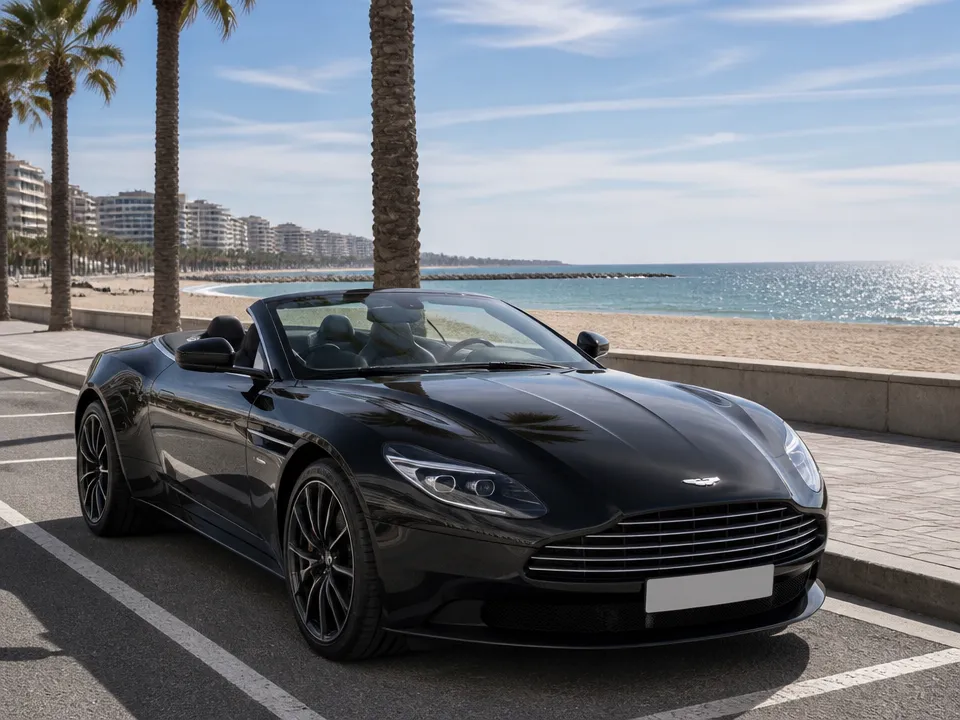
| Aston Martin DB11 Volante | 4 | Automatic | Rear-wheel | €1,310 |
Two entries sit at exactly €400 — the Mercedes-Benz AMG C43 Cabriolet and the Mercedes-Benz C43 AMG Cabriolet are the same car listed twice, so compare the drivetrain column rather than the badge before you pick. The two Mini Cooper Convertible rows differ by €50 a day for identical seats and gearbox, which makes the cheaper one the obvious choice unless the more expensive build is confirmed as available for your dates. Every rate in the table is the daily figure; apply the six-times and twenty-one-times multipliers to see what your actual trip costs.
Choosing between 2-seat roadsters and 4-seat cabriolets on a Spain rental
The split inside our convertible fleet is not about price — it is about seats. One car carries two people, thirteen carry four, and the difference decides what you can pack and how far the car stays comfortable.
2-seat roadsters in our convertible fleet
The Porsche 718 Boxster GTS 4.0 is the only two-seater we hold here, at €464 a day with a 4.0-litre flat-six, 400 hp and rear-wheel drive. Its mid-engine layout puts the mass behind the cabin, so the nose turns in faster than a front-engined cabriolet of the same power, and the fabric roof folds without eating the boot. On the other hand, there is no rear bench at all — the space behind the two seats is shallow and open to the cabin, which is where soft bags go and hard cases do not. A roadster suits two travellers on a coastal run, not a family with airport luggage. On the mountain roads inland from Barcelona, drivers who book the Boxster almost always book it alone or as a pair — rear-wheel drive and 400 hp reward a light car, and a third passenger would only slow the day down.
4-seat cabriolets from Fiat to Aston Martin
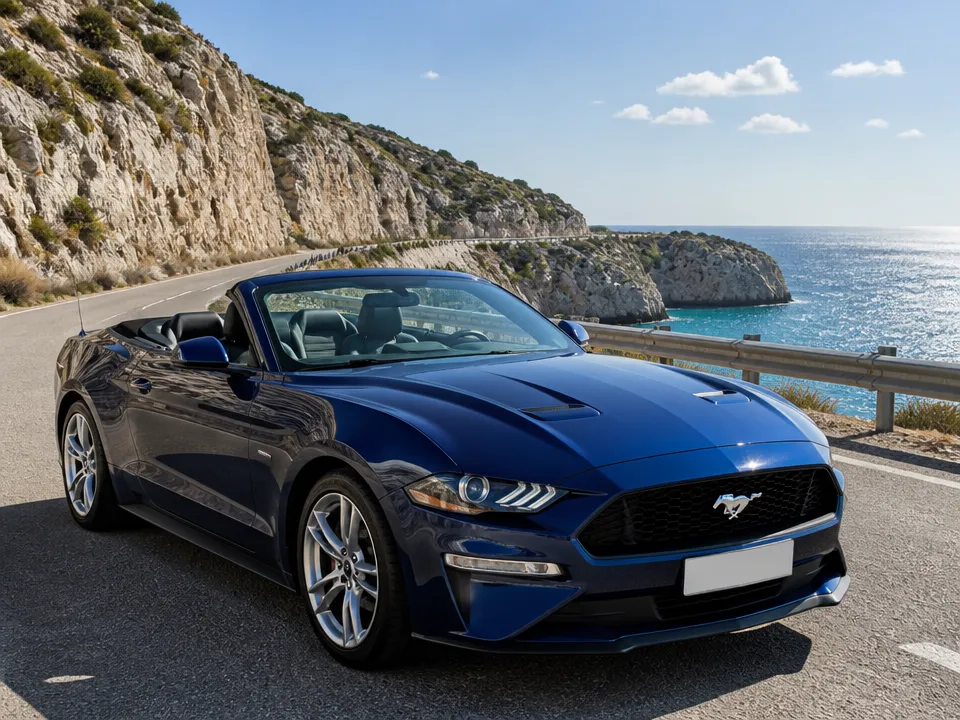
Thirteen of our fourteen convertibles seat four, from the €30 Fiat 500C to the €1,310 Aston Martin DB11 Volante, and that group covers everything between a 1.0-litre city car with a manual gearbox and a 4.0-litre V8 with rear-wheel drive. The middle of the range is where most bookings land: the BMW 2 Series Convertible at €51 and the Audi A5 Cabriolet at €62 both give four seats, automatic transmission and a boot that takes a weekend bag each. The Ford Mustang Convertible at €336 and the Porsche 911 (992) Carrera S Cabriolet at €576 add 450 hp apiece, while the Bentley Continental GTC at €706 pairs 550 hp with all-wheel drive.
- Rear bench: in every four-seat cabriolet we hire out, the back row is sized for two children or two adults on a short hop, not four adults with luggage.
- Roof down and boot space: folding the top usually costs part of the boot, so pack soft holdalls rather than rigid cases on a long tour.
- Gearbox: the two cheapest Fiat 500C cars are manual, everything from the Mini Cooper Convertible at €45 upward is automatic.
- Drive layout: front-wheel drive on the small cabriolets, rear-wheel drive on the BMW, Mustang, Porsche and Aston Martin, all-wheel drive on the Mercedes-Benz C43 AMG Cabriolet and the Bentley.
In our experience, the seat count matters less than the boot once the roof is folded — a four-seat cabriolet with the top down and two people aboard carries more than a two-seater with the same pair.
Road trip tips for convertibles car rental in Spain with boot, noise and heat
An open-top car changes a road trip twice over: the roof frees up space you would otherwise lose, and the wind at 120 km/h on an autopista decides how long you actually keep it down. Here is what our own convertible bookings run into on Spanish roads.
The boot in an open-top car: less than the badge promises
A convertible loses boot space to the folding roof mechanism, and the loss is not spread evenly across the class. The Fiat 500C and the Mini Cooper Convertible take a weekend bag each and little else, while the BMW 4 Series Convertible, the Mercedes-Benz AMG C43 Cabriolet and the Bentley Continental GTC swallow a full-size suitcase with the roof up. The catch is that the roof has to fold somewhere: on most models the mechanism eats into the same compartment, so a boot that looks generous with the top closed shrinks the moment you drop it. The Porsche 718 Boxster GTS 4.0 has no rear bench at all — two seats, one small front compartment and a rear one, and that is the whole car. Pack soft bags rather than hard cases; a rigid suitcase that fits the boot with the roof up may block the roof cycle entirely.
Wind, noise and the 120 km/h autopista limit
Roof down is comfortable up to roughly 80 km/h, and past that the buffeting starts to matter. Spain's autopistas and autovías run at 120 km/h for cars, and at that speed a cabriolet with the top down turns a three-hour drive into a tiring one — wind noise drowns conversation, and the airflow pulls at anything loose in the cabin. The practical answer is the one our regulars use: roof down on the carretera convencional at 90 km/h and through town, roof up for the motorway legs between cities. A wind deflector behind the front seats cuts the buffeting noticeably, and most cabriolets in the class are quieter with the side windows raised even when the roof is down. On a two-seat roadster there is no rear glass to break the airflow, so the effect is stronger.
Summer heat, parking and the soft top
- Parking in the shade: a dark soft top in direct sun heats the cabin faster than a metal roof, so an underground car park or a shaded street space is worth the extra walk.
- Seat belts and buckles: metal buckles left in the sun burn on contact — cover them or park nose-in to the sun where you can.
- Leaving valuables: an open or unlocked cabin is an invitation; with the roof down, keep bags in the boot, not on the rear bench.
- Roof cycle at low speed: most mechanisms need the car stationary or crawling, so drop the top before you leave the car park, not at the first traffic light.
- Air conditioning with the roof down: it still works, but point the vents at your legs rather than your face — the airflow over the cabin carries cool air away quickly.
Between Madrid and Barcelona, the drive is a long motorway run with a hot, dry middle section, and the roof-down stretches belong at the start and the end of the day rather than at two in the afternoon. The model, the dates and the hand-over point are agreed with a manager when booking, so tell us which route you have in mind and we will match the car to it.
Licence, documents and insurance behind convertibles car rental in Spain
Licence checks, insurance options and the paperwork that comes with an open-top car all work the same way for a convertible as for any other class. What changes is the car itself: a soft top, a low nose and a rear bench that folds into luggage space.
Which driving licences are valid for convertibles car rental in Spain
- EU and EEA licences: fully valid in Spain while they have not expired, with nothing extra to arrange before you travel.
- Non-EU licences: valid if the licence is current, the holder meets the Spanish age requirement for that category, and less than six months have passed since they took up ordinary residence in Spain.
- Licences not in Spanish: accepted either with an official sworn translation into Spanish, or if they were issued under the model of Annex 9 of the Geneva Convention or Annex 6 of the Vienna Convention.
- International Driving Permit: a supplementary document only — it is shown together with your passport and your national licence, never on its own, and it runs for one year.
- Passport or ID: the original document in the main driver's name, as rental companies require.
The DGT recommends getting an international permit before you travel. If your licence is printed in Cyrillic, Arabic or characters, that permit or a certified translation is what makes it readable at hand-over.
Insurance options that matter on an open-top car
The compulsory third-party cover, Seguro Obligatorio de Responsabilidad Civil, is part of every agreement by Spanish law and pays out even if the driver was not named in it — up to €70,000,000 per incident for personal injury and €15,000,000 for property. It covers harm to other people, not the car and not the driver. On top of that come the optional waivers: CDW removes your liability for damage to the car in a collision with another vehicle or an object, minus the excess; THW covers full or partial theft and vandalism damage, again minus the excess; SCDW and SPCDW buy down part or all of the CDW excess, STHW and SPTHW do the same for the theft excess, and WWI covers glass and tyres, which basic CDW usually excludes. None of the buy-downs work if CDW was not taken or if a CDW exclusion applies.
The excess itself — franquicia — is the amount you pay yourself when there is damage, and it is printed in the agreement whether or not you have bought it down. Concrete figures depend on the provider and the car class, and there is no single official standard, so treat the number in your agreement as the one that counts. In our practice the question we get most often on cabriolets is not about the excess at all — it is whether the roof mechanism is covered. Ask before you sign, and have the roof cycled once while you are still with the car.
What to check before the car leaves with you
Spanish consumer rules require every scratch and dent to be written into the agreement or the inspection sheet before you drive away, signed by both sides, with a copy kept by the renter — otherwise the damage is charged to you. The declared price must also include every mandatory charge you cannot drive without, such as compulsory third-party cover and the young-driver surcharge. If the model you booked is not available, you can ask for another car at no extra cost, even a class above; if you are given a lower class, the price should come down, and if the car does not match the contract — automatic gearbox, four doors — you may cancel and recover the prepayment.
Deposit, excess and any delivery fee are set out in the rental agreement, and the amount is confirmed before you sign. Minimum rental age, the young-driver surcharge, accepted cards and the fuel policy are agreed when booking, so settle them with the manager rather than assuming. In Madrid and Barcelona we hand the car over with the paperwork already matched to your licence, which is why we ask for a photo of it at booking stage.
Driving rules and tolls that shape convertible hire in Spain
Speed limits follow the road type, and an open-top car makes the difference between them feel sharper. On autopista and autovía the limit is 120 km/h for passenger cars; on a conventional country road it is 90 km/h, which the road owner may raise to 100 km/h. In town the ladder drops to 50 km/h on streets with two or more lanes in one direction, 30 km/h on a single lane each way, and 20 km/h on a single-platform street where carriageway and pavement sit at one level. Barcelona applies a general 80 km/h limit on the Rondes B-10 and B-20 inside the city unless signs say otherwise. In our experience, roof-down motorway cruising is where the wind noise becomes the real speedometer: you hear 120 km/h long before you read it.
What the Spanish traffic rules mean for an open-top car
- Alcohol: the general limit is 0,25 mg/l of breath, and 0,15 mg/l for drivers in their first two years and for professional drivers; anything above 0,60 mg/l is a criminal offence, not a fine.
- Phone in hand: 200 EUR and 3–6 points, and holding the device costs 6 points.
- Seat belts and child seats: 200 EUR and 4 points; child restraint systems (SRI) are compulsory for children up to 135 cm tall, and from 135 cm a standard belt is allowed.
- Red lights and STOP signs: 200 EUR and 4 points.
- Speeding: the DGT table runs from 100 EUR with no points to 600 EUR with 6 points, and more than 60 km/h over the limit in town or 80 km/h outside it becomes a criminal offence.
Fines are graded leve (up to 100 EUR, no points), grave (200 EUR, sometimes with points) and muy grave (500 EUR and always points), with a 50% reduction if you pay within 20 calendar days.
Tolls and the convertible question
The country's toll roads are the peaje network, and a cabriolet pays the same tariff as any other passenger car of its size — the roof has nothing to do with it. What matters more is the wind at motorway speed: a soft top at 120 km/h is loud enough that most of our clients drop to the country roads for the scenic legs and keep the autopista for the transfers. Winter tyres are not a seasonal requirement here: restrictions appear only where snow falls, sign by sign, on specific mountain roads, so a summer trip on the coast never touches the question. If your route crosses a toll section, the payment method and any transponder arrangement are agreed when booking.
Booking convertibles car rental in Spain with delivery to you
Booking starts with the model, not the counter. We agree the dates, the hand-over point and the car itself with a manager, then bring the convertible to you — in Madrid, Barcelona or wherever your trip begins. Nothing is confirmed until a person has answered you.
What we need from you before the car is confirmed
- Model and class: name the convertible you want — a Fiat 500C at €30 a day or a Porsche 911 (992) Carrera S Cabriolet at €576 — and we check it against the 14 open-top cars in our Spanish fleet.
- Dates and duration: tell us the pick-up and return days, because weekly runs from €180 and monthly from €630, calculated as daily × 6 and daily × 21.
- Hand-over point and time: the address where you want the car delivered and the hour you need it, both settled with the manager before you pay.
- Driver details: the main driver's licence and identity document, so the agreement is drawn up in the right name.
- Card for the deposit: a credit card in the main driver's name is what companies here ask for; the deposit itself is set out in the rental agreement.
How the booking and delivery work
You send us the model, the dates and the delivery address; a manager replies with availability, the total for your duration and the hand-over time, and only then does the booking become firm. Because the car comes to you, the convertible arrives where you are staying, whether you have chosen a 2-seat Porsche 718 Boxster GTS 4.0 or a 4-seat BMW 4 Series Convertible. The paperwork, the deposit and the fuel policy are all set out in the rental agreement, which you see before anything is signed. If the exact model you asked for is not free on your dates, we say so at that point rather than after payment.
Why we confirm everything with a person
A convertible is not a car you pick off a rank — the 2-seat Porsche 718 Boxster GTS 4.0 and the 4-seat Aston Martin DB11 Volante suit completely different trips, and the boot decides more than the badge. In our practice, the bookings that go wrong are the ones where the model, the dates and the hand-over point were never said out loud. So we ask for all three in writing, and we answer in the same thread. Rain in the forecast does not cancel an open-top hire, but it does change which car we would put you in — mention your route when you book, and we will tell you which convertible we would take.