





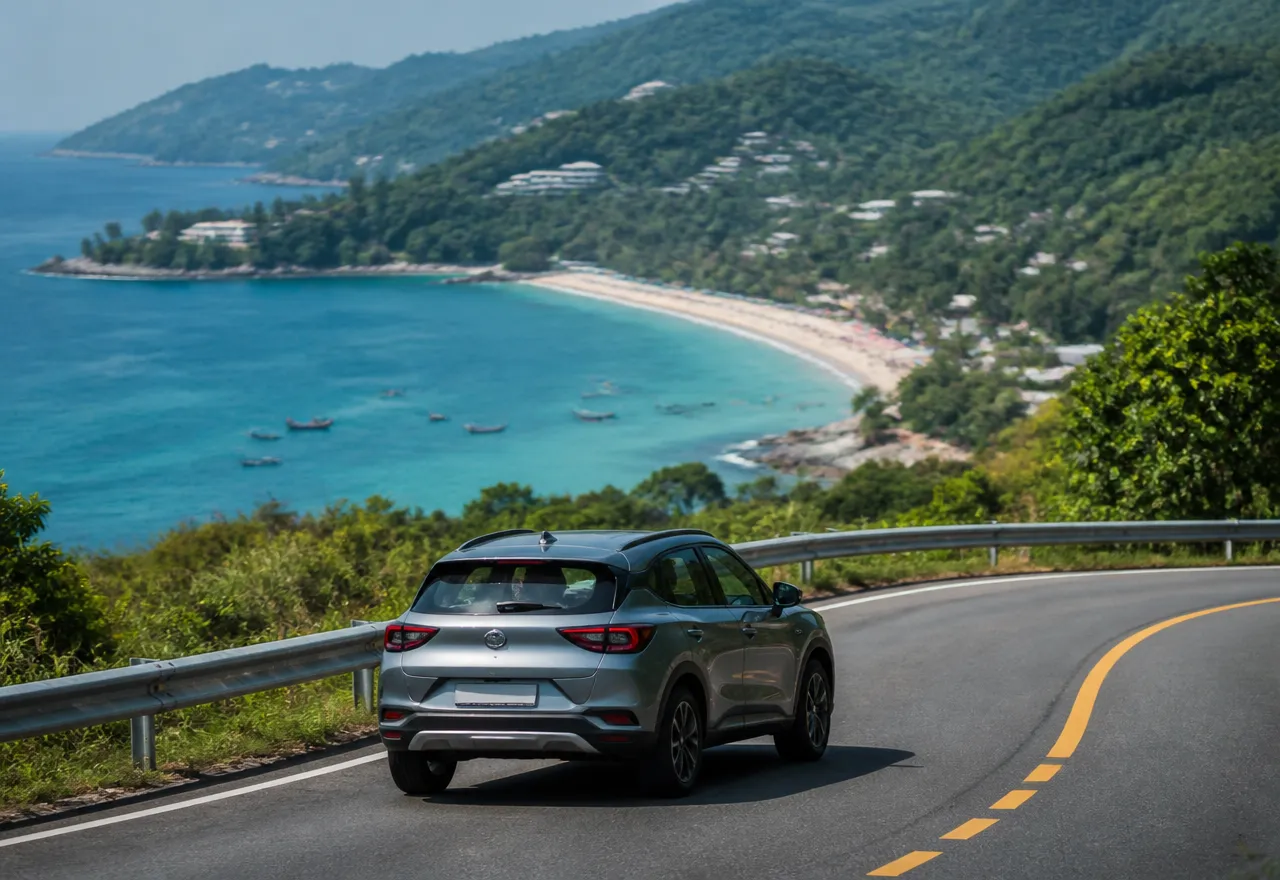


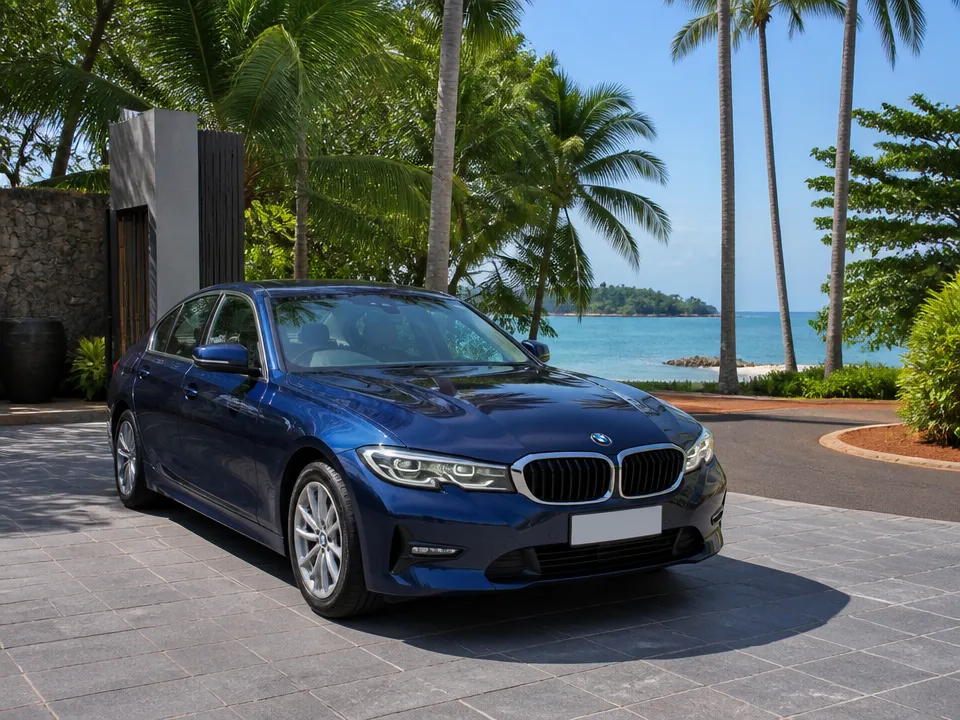
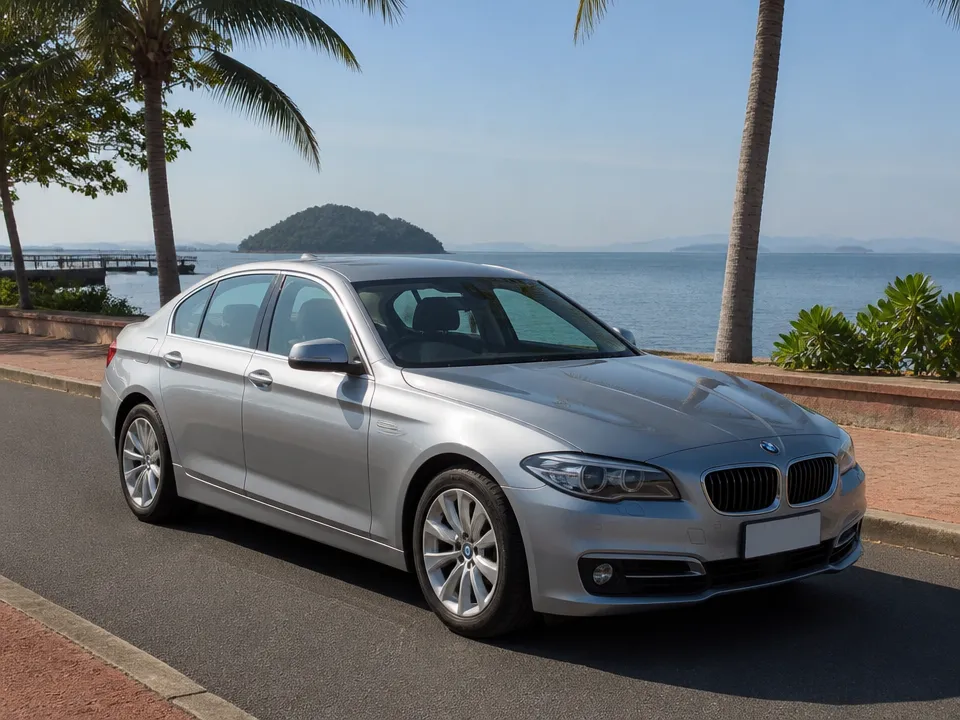
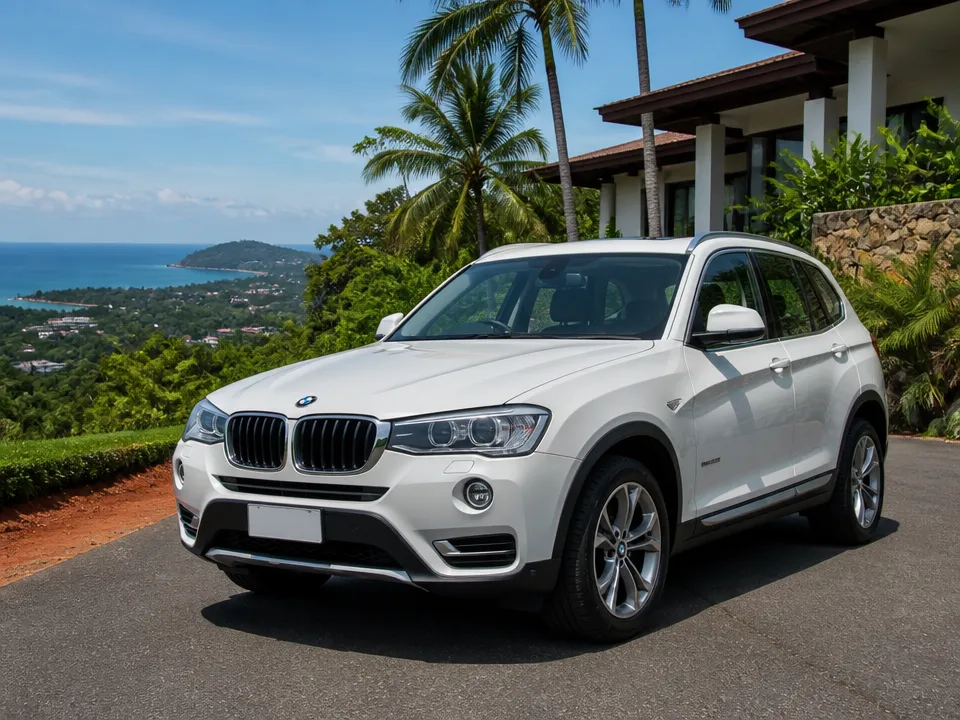





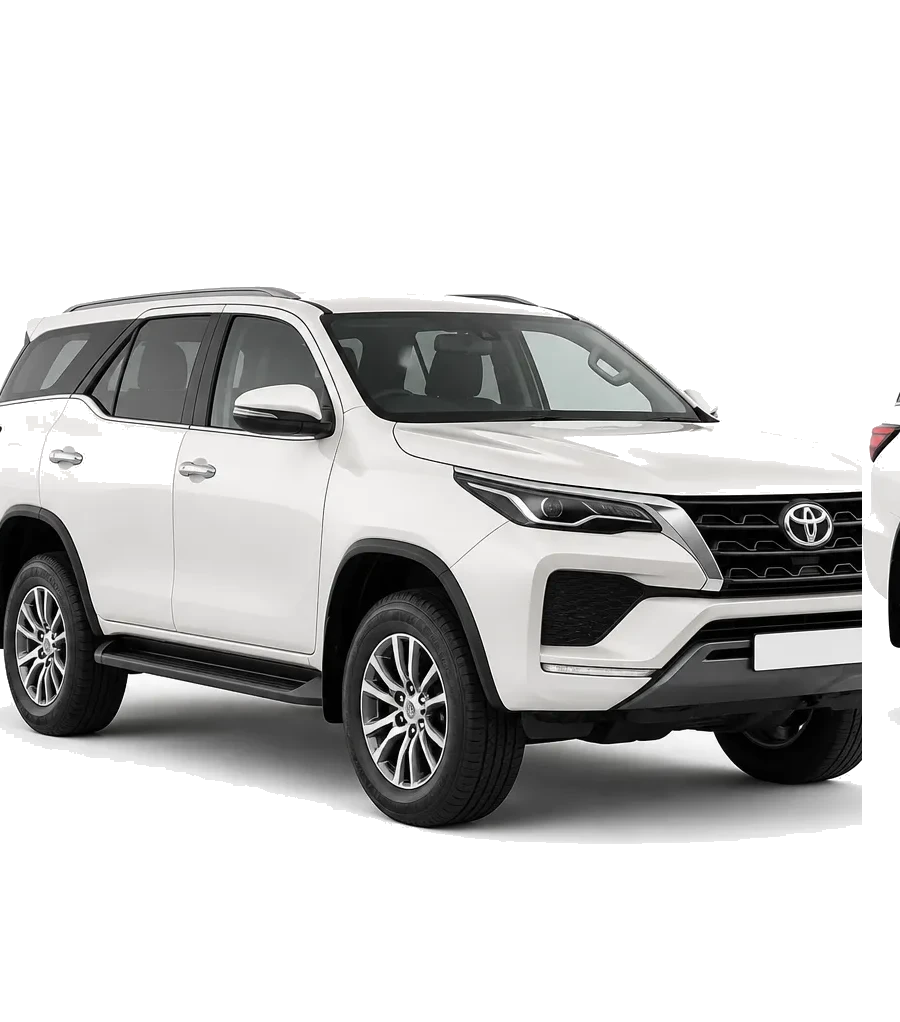

Premium car rental in Thailand
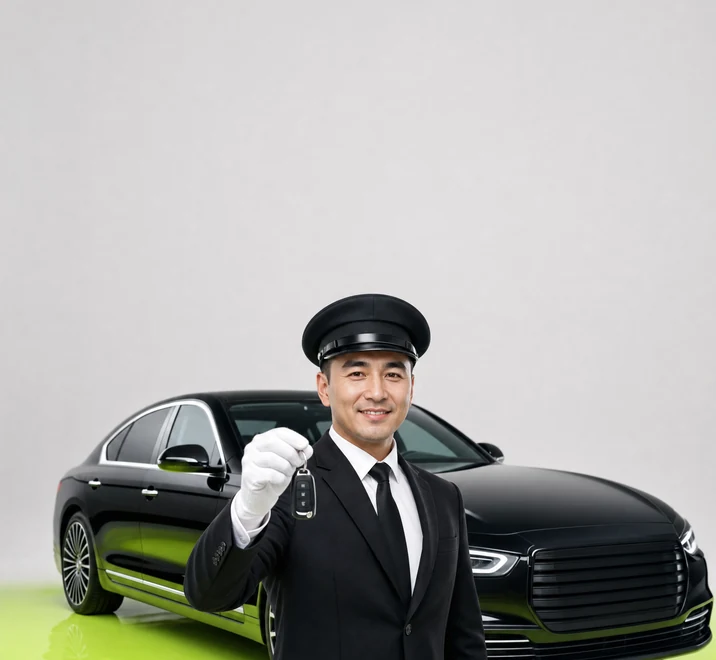
Eight premium cars, from ฿3,500 a day — that is what Rent-Trip puts on the road for premium car rental in Thailand. BMW, Mercedes-Benz, Volvo and Lexus, all automatic, all five seats, delivered to your hotel, villa or Phuket International Airport as part of the booking. You agree the details with a manager, and the car arrives clean with a full tank.
What premium car rental in Thailand includes with our fleet
Premium car rental in Thailand means a defined, small fleet rather than a vague category. With Rent-Trip it is eight cars from four German and Japanese badges, all five-seaters with automatic gearboxes, priced from ฿3,500 per day. Every booking is agreed with a manager before the keys change hands.
The eight models in our premium fleet
- BMW 320d: premium sedan, 2.0 L diesel, 190 hp, rear-wheel drive, ฿3,500 per day.
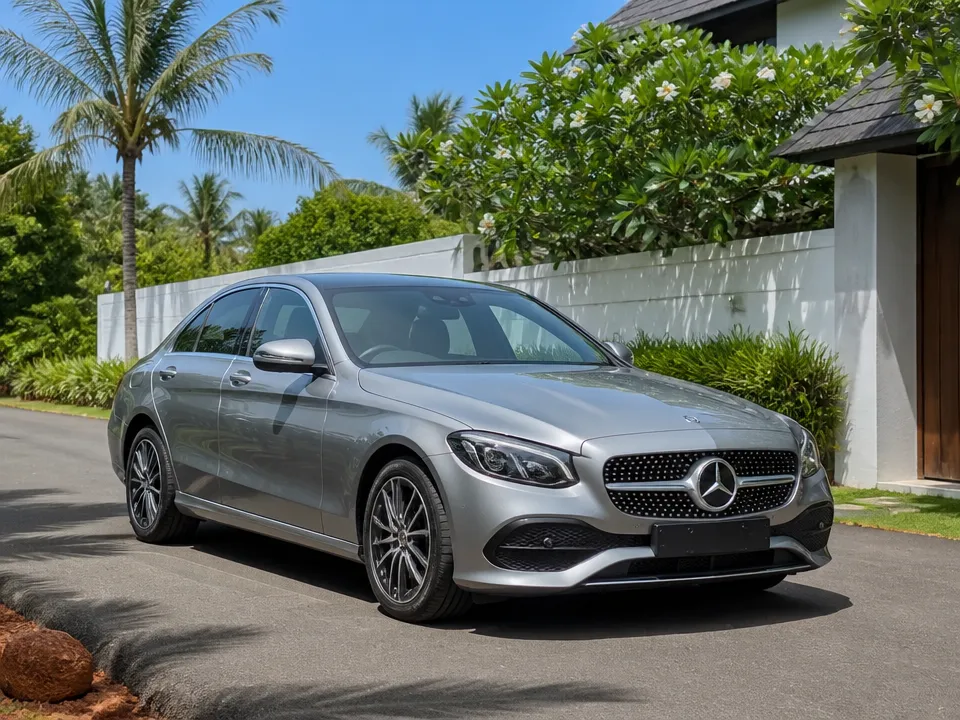
- Mercedes-Benz C 220 d: premium sedan, 2.0 L diesel, 200 hp, rear-wheel drive, ฿3,800 per day.
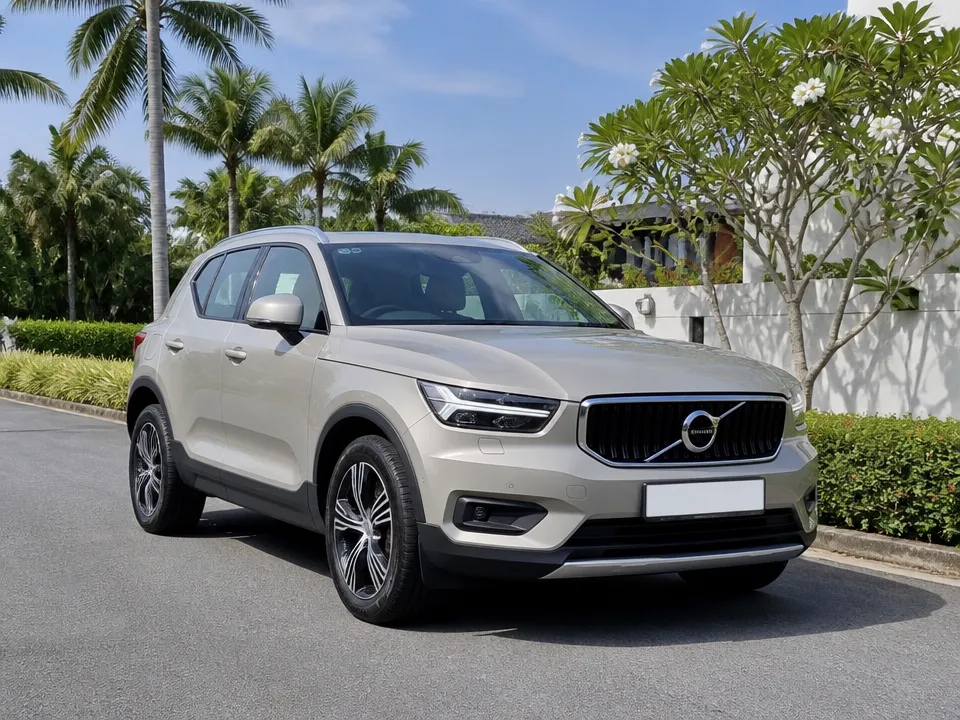
- Volvo XC40: premium SUV, 1.5 L hybrid, 262 hp, front-wheel drive, ฿4,000 per day.
- BMW X3: premium SUV, 2.0 L petrol, 252 hp, all-wheel drive, ฿4,500 per day.
- BMW 520d: premium sedan, 2.0 L diesel, 197 hp, rear-wheel drive, ฿4,800 per day.
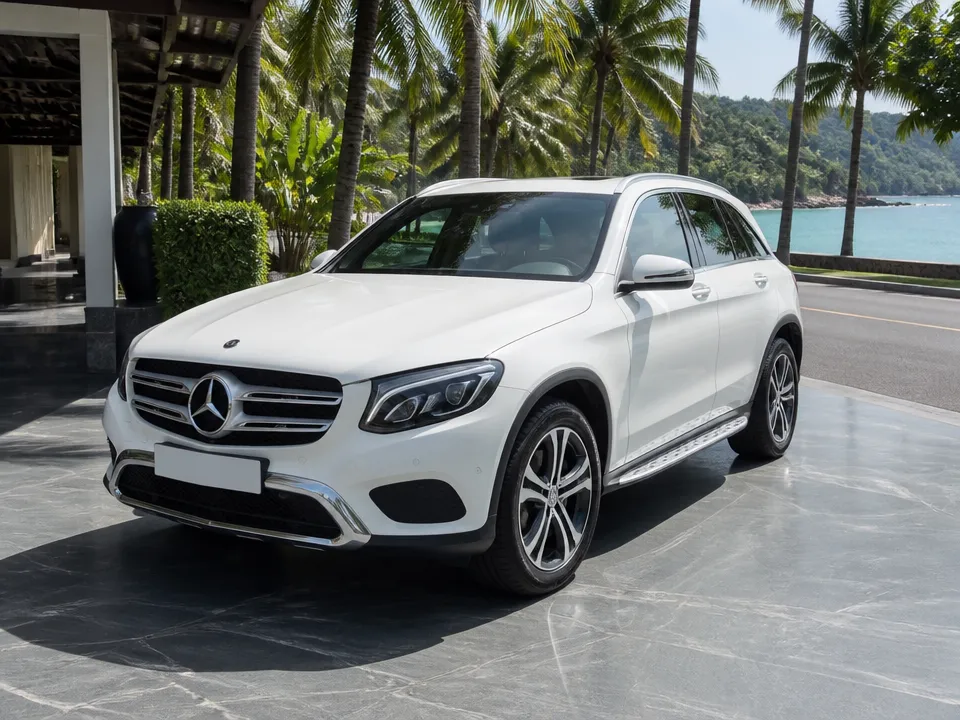
- Mercedes-Benz GLC 220 d: premium SUV, 2.0 L diesel, 197 hp, all-wheel drive, ฿4,800 per day.
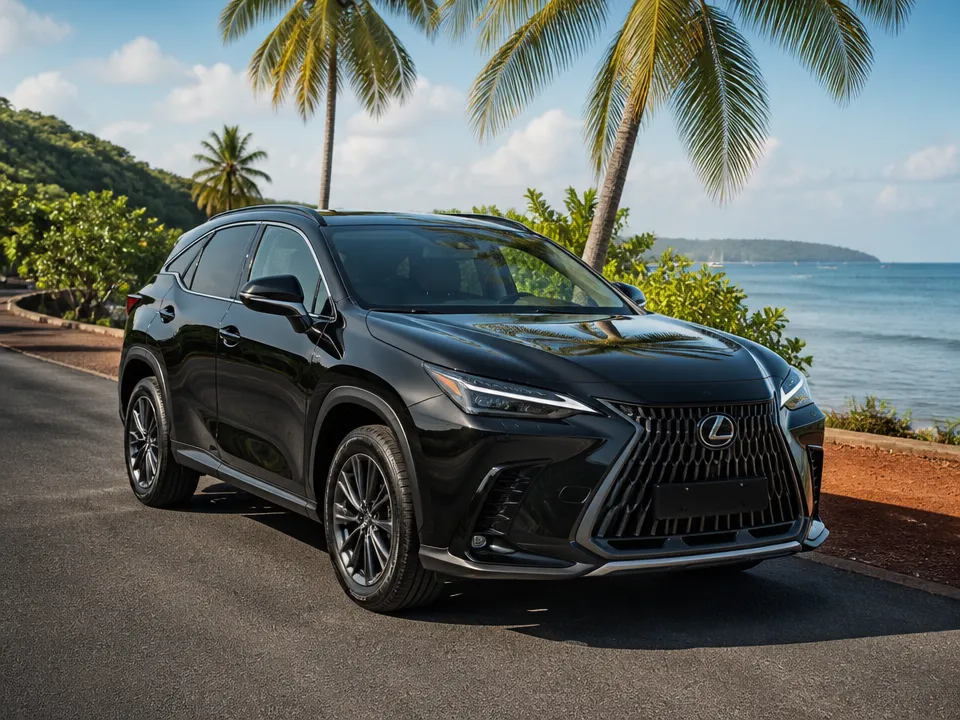
- Lexus NX 350h: premium SUV, 2.5 L hybrid, 244 hp, all-wheel drive, ฿5,000 per day.
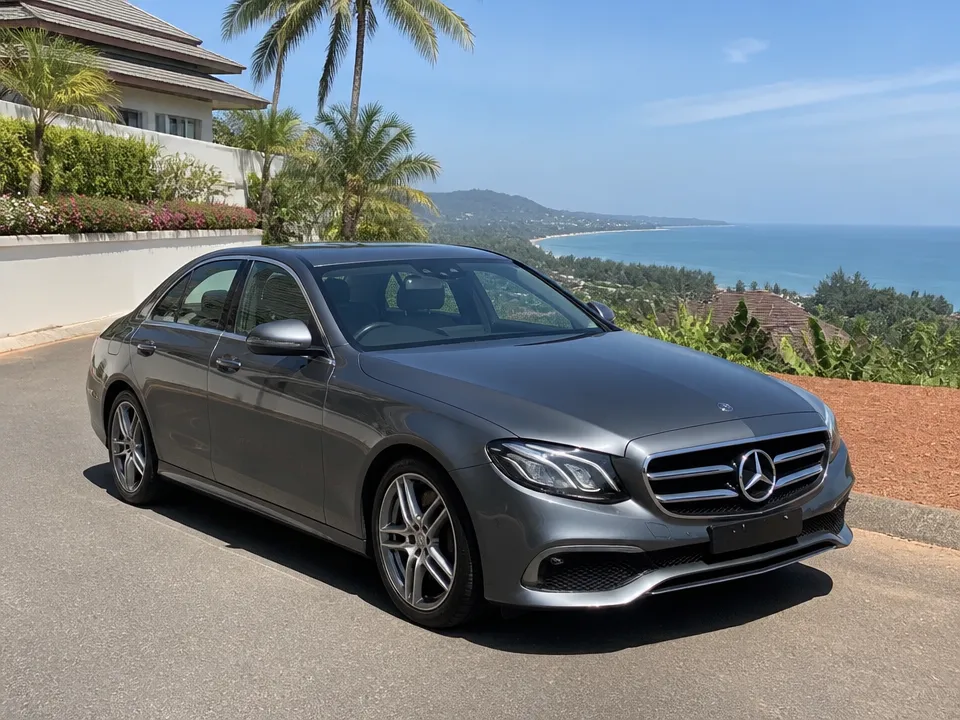
- Mercedes-Benz E 220 d: premium sedan, 2.0 L diesel, 197 hp, rear-wheel drive, ฿5,500 per day.
The real choice here is body type and drivetrain, not the badge on the bonnet.
What every car in the premium fleet shares
Every car in our premium fleet has five seats and an automatic transmission, so no model on this page needs a manual licence or a different seating plan. Boot space differs between the sedans and the SUVs, and the exact luggage arrangement for your booking is agreed when booking. All eight run on diesel, hybrid or petrol — never electric — which matters because filling stations across the island are plentiful and no charging stop has to be planned into a day.
Fuel splits three ways, and on the steep descents of Patong Hill or the Kata–Sai Yuan road the hybrid XC40 and NX 350h recover energy on the way down, while the diesel models carry their torque low in the rev range. If your itinerary mixes beach roads with a run north, pick by drivetrain first and trim second.
Mileage on the island is unlimited, so a loop between beaches costs the same as a single run to the supermarket. What the security hold comes to, and how it is taken, is set out in the rental agreement — we confirm the details when you book.
The eight models in our premium car rental fleet
Our premium fleet is eight specific cars, not an abstract category. Four are sedans and four are SUVs, all five-seaters with automatic gearboxes, and every one of them is delivered to you with a full tank.
| Model | Body | Fuel | Drive | ฿ per day |
|---|---|---|---|---|
| BMW 320d | Sedan | Diesel | Rear-wheel | ฿3,500 |
| Mercedes-Benz C 220 d | Sedan | Diesel | Rear-wheel | ฿3,800 |
| Volvo XC40 | SUV | Hybrid | Front-wheel | ฿4,000 |
| BMW X3 | SUV | Petrol | All-wheel | ฿4,500 |
| BMW 520d | Sedan | Diesel | Rear-wheel | ฿4,800 |
| Mercedes-Benz GLC 220 d | SUV | Diesel | All-wheel | ฿4,800 |
| Lexus NX 350h | SUV | Hybrid | All-wheel | ฿5,000 |
| Mercedes-Benz E 220 d | Sedan | Diesel | Rear-wheel | ฿5,500 |
The spread from ฿3,500 to ฿5,500 is not a badge tax. The BMW 320d and the Mercedes-Benz C 220 d sit at the bottom with 190 hp and 200 hp respectively, both 2.0-litre diesels driving the rear wheels. Move up and you buy either output or traction: the Volvo XC40 pairs a 1.5-litre hybrid with 262 hp through the front wheels, the BMW X3 puts 252 hp of petrol through all four, and the Lexus NX 350h combines a 2.5-litre hybrid with all-wheel drive. The BMW 520d, Mercedes-Benz GLC 220 d and Mercedes-Benz E 220 d all share the same 197 hp diesel, so the difference between them is body shape and drivetrain rather than engine.
For most trips on the island the deciding factor is where you park and how steep the road home is. A 5-seat sedan handles Patong Hill and the Kata–Sai Yuan climb without drama, but an all-wheel-drive SUV gives noticeably more grip on wet asphalt. If you are travelling with four passengers and luggage, the SUVs give you more room for the cases — that is the practical reason our X3, GLC and NX get booked first in the high season.
Booking is agreed with a manager, who confirms the exact model and the rental terms before you sign.
What every premium car rental in Thailand car shares
Every car in our premium fleet has 5 seats and an automatic gearbox — the two things that hold true whether you take the cheapest sedan or the dearest one. Beyond that, the eight models split three ways on fuel and two ways on drivetrain, and those differences matter more than the badge on the bonnet.
Seats: all 8 cars are 5-seaters, so a family of four plus luggage fits in any model without upgrading.
Gearbox: every car is automatic, so no manual driving experience is needed and hill starts on steep island roads are handled by the car.
Fuel: five diesel models, two hybrid models and one petrol model sit in the fleet, which changes your refuelling routine rather than your route.
Drivetrain: four cars drive the rear wheels, three drive all four and one drives the front wheels, so wet-season grip is a choice you make at booking, not a fixed feature.
Body type: four sedans and four SUVs share the fleet evenly — the same engine class in two very different shapes.
Class: all 8 cars sit in Premium, and daily rates run from ฿3,500 to ฿5,500 across the range.
The practical consequence of that split is simple. On the flat runs to the beach areas, an all-wheel-drive SUV buys you wet-road confidence in the rainy season, while a rear-wheel-drive sedan is lighter on fuel and easier to park in tight beach streets. Fuel choice also decides how often you stop: a hybrid recovers energy in stop-start traffic, a diesel stretches further between fills on the long mainland trips, and a petrol SUV is the simplest to refuel anywhere. Whichever you pick, mileage on the island is unlimited and the car arrives clean with a full tank.
Premium car rental in Thailand prices by model and rental length
Rates for premium car rental with us run from ฿3,500 to ฿5,500 per day, with VAT 7% already inside the figure. Longer bookings drop the daily cost: a week is charged as six days and a month as twenty-one, so the same car costs less per day the longer you keep it.
Daily rates by model
| Model | Body | Fuel | Drive | ฿ per day |
|---|---|---|---|---|
| Volvo XC40 | SUV | Hybrid | Front-wheel | ฿4,000 |
| BMW X3 | SUV | Petrol | All-wheel | ฿4,500 |
| BMW 520d | Sedan | Diesel | Rear-wheel | ฿4,800 |
Weekly and monthly rates
Weekly figures start at ฿21,000 and monthly ones at ฿73,500, VAT 7% included. The multipliers are fixed: seven days are billed as six, twenty-one days as a month — there is no separate long-stay tariff to negotiate.
One detail we always flag at booking: the weekly and monthly figures are per car, not per driver, and any further conditions are set out in the rental agreement. If your trip runs from the dry season into the rainy one, a monthly rate can work out cheaper than two separate weekly bookings — ask the manager to price both before you commit. The ฿1,000 gap between the BMW 320d and the Mercedes-Benz E 220 d buys engine output and trim, not seats: all eight cars carry five people.
- Daily rate: ฿3,500–฿5,500 depending on model, VAT included.
- Weekly rate: from ฿21,000 — charged as six days, not seven.
- Monthly rate: from ฿73,500 — charged as twenty-one days.
- Mileage: unlimited across the island on every booking.
- Payment and hold: set out in the rental agreement when you book.
Daily rates for premium car rental in Thailand by model
Premium car rental with Rent-Trip in Thailand runs from ฿3,500 to ฿5,500 a day, and the eight cars in that band cover sedans and SUVs across diesel, hybrid and petrol.
Which premium model costs what per day
| Model | Body | Fuel | Drive | ฿ per day |
|---|---|---|---|---|
| Volvo XC40 | SUV | Hybrid | Front-wheel | ฿4,000 |
| BMW X3 | SUV | Petrol | All-wheel | ฿4,500 |
| BMW 520d | Sedan | Diesel | Rear-wheel | ฿4,800 |
What pushes a rate up or down
- Height of the body: a car that sits high asks more than one that sits low — the Volvo XC40 is ฿500 a day above the BMW 320d, and the BMW X3 is ฿1,000 above it.
- Power under the bonnet: the Mercedes-Benz E 220 d at ฿5,500 carries 197 hp and the roomiest cabin of the eight, which is why it tops the range.
- Which wheels are driven: all-wheel drive comes on the BMW X3, the GLC 220 d and the Lexus NX 350h — the three to take if your route runs over wet asphalt.
- What burns in the tank: diesel covers five cars, hybrid two, petrol one, and a full tank on the hybrid Lexus NX 350h carries you further between stops.
VAT 7% already sits inside every figure above, so the rate you read is the rate you pay. The ฿1,000 step from the BMW 320d up to the Mercedes-Benz E 220 d buys power and trim rather than room — all eight seat five and come with an automatic gearbox. In our experience, travellers who take the cheapest car on the list and then spend a week on the island's steep roads tell us afterwards they would have paid the extra ฿500 a day; the BMW X3 and the GLC 220 d are the two we hand over most often for that very reason. Longer bookings move the arithmetic further — weekly and monthly rates are charged at six and twenty-one days respectively.
Weekly and monthly rates for premium car rental in Thailand
The daily rate is the number most travellers see first, but it is rarely the number they end up paying. Stay a week and the per-day cost drops; stay a month and it drops further still. Premium car hire with Rent-Trip is priced on that principle, and the multipliers are simple: a week is charged as six days, a month as twenty-one.
Weekly and monthly rates for premium car rental in Thailand
| Model | Body | ฿ per day | ฿ per week | ฿ per month |
|---|---|---|---|---|
| BMW 320d | Sedan | ฿3,500 | ฿21,000 | ฿73,500 |
| Mercedes-Benz C 220 d | Sedan | ฿3,800 | ฿22,800 | ฿79,800 |
| Volvo XC40 | SUV | ฿4,000 | ฿24,000 | ฿84,000 |
| BMW X3 | SUV | ฿4,500 | ฿27,000 | ฿94,500 |
| BMW 520d | Sedan | ฿4,800 | ฿28,800 | ฿100,800 |
| Mercedes-Benz GLC 220 d | SUV | ฿4,800 | ฿28,800 | ฿100,800 |
| Lexus NX 350h | SUV | ฿5,000 | ฿30,000 | ฿105,000 |
| Mercedes-Benz E 220 d | Sedan | ฿5,500 | ฿33,000 | ฿115,500 |
Weekly rates start at ฿21,000 and monthly rates at ฿73,500, with VAT 7% already inside those figures. Because a week is billed as six days, the seventh day on the road costs nothing extra — a detail worth checking against any quote you compare, since not every operator prices a week the same way. Mileage on the island is unlimited, so island hopping between beaches and viewpoints never adds to the bill.
The arithmetic is worth doing before you choose a length. A week in the BMW 320d is charged as six days at ฿3,500, which comes to ฿21,000 — one day of the seven at no extra cost. Stretch that to a month and the same car is billed as twenty-one days, giving ฿73,500, which works out at ฿2,450 per day. The Volvo XC40 follows the same multipliers: ฿24,000 for the week and ฿84,000 for the month, a hybrid SUV with 262 hp and front-wheel drive for less per day than the entry sedan costs on a short booking.
- Weekly booking: charged as six days, so a seven-day trip includes one day at no extra cost.
- Monthly booking: charged as twenty-one days, which suits longer stays and slow travel around the south.
- VAT 7%: already included in every figure shown, so the rate you see is the rate you pay.
- Unlimited island mileage: no per-kilometre cap while you stay on the island.
- Security hold: taken on a bank card in the main driver's name, with the amount set out in the rental agreement.
Longer bookings also change what the car is for. In our experience, guests who book monthly tend to keep the same car and simply extend it, rather than swapping models mid-stay.
Documents and licence rules for premium car rental in Thailand
Paperwork is the part of premium car rental in Thailand that catches people out, so here is what we ask for at handover and what Thai law asks of you on the road.
What you need as a foreign visitor
- Passport: the original, matching the name on the booking and on the bank card used for the security hold.
- Home driving licence: your national licence, valid and carried as the original document — a photo on your phone is not accepted.
- International Driving Permit: required under the 1949 Geneva Convention, alongside your home licence, not instead of it.
- Bank card: in the main driver's name; the hold amount is set out in the rental agreement.
- ASEAN nationals: may drive on a national licence from an ASEAN member state without the permit.
Driving without the permit carries a police fine of ฿500–1,000, and an insurer may refuse a claim after an accident — which is the expensive version of a cheap document. We check all four items before the keys change hands, and it takes about ten minutes.
Age and card conditions
The minimum driver age is 21, and conditions for drivers under 25 and for premium classes are set out in the rental agreement. The security hold is taken on a bank card in the main driver's name; the amount and the release timing sit in the same agreement, so read the Thai contract before you sign it. Since 30 December 2025 a car rental agreement is controlled by the OCPB: it is written in Thai, and every fee and penalty is disclosed in it. If anything in the document is unclear, ask the manager at handover — we would rather explain a clause twice than have a renter discover it at the airport on the way home.
What catches renters out on the road
- Traffic keeps to the left: every car in the country is right-hand drive, and lane discipline at junctions is the first thing to relearn.
- Camera fines: issued to the car owner and re-invoiced to the renter; the terms are set out in the rental agreement.
- Hills: the steep coastal roads are a test for the brakes — use a low gear on the descent rather than riding them.
- Parking: charges on the beach streets of the resort areas are set out in the rental agreement; shopping centres are free with a purchase.
- Booking dates: the busiest periods for premium car rental in Thailand are agreed when booking, so reserve the model you want early.
None of this is exotic once you have driven a day here. It is simply different — and the permit, the licence and the passport are what the police will ask for if you are stopped.
What you need for premium car rental in Thailand as a foreign visitor
A foreign visitor collecting a premium car here needs three documents: a passport, a home driving licence and an International Driving Permit issued under the 1949 Geneva Convention. Thai law treats the permit as the translation of your licence, not a replacement for it, so both travel together. Section 42 bis of the Motor Vehicle Act is the clause police cite at roadside checks, and it applies to every driver of the car, not only the person who signed the agreement. Citizens of ASEAN countries may drive on their national licence and skip the permit entirely.
- Home driving licence: the physical card, valid and not expired; a photo on your phone is not accepted.
- International Driving Permit: issued in your home country before departure, valid alongside the national licence, never on its own.
- No permit, no cover: driving without one carries a ฿500–1,000 police fine, and an insurer may refuse a claim after an accident.
The minimum driver age is 21. Conditions for drivers under 25 and for premium classes are set out in the rental agreement, so read that clause before you sign rather than at the counter. In our experience the paperwork takes ten minutes when the documents are ready and considerably longer when they are not — we ask renters to send scans to the manager before the car leaves, because a missing permit is the one problem that cannot be solved on the day.
Traffic keeps to the left and every car in our fleet is right-hand drive, which is the part most visitors underestimate on the first afternoon. Rental is available from one day, mileage on the island is unlimited, and the car is handed over clean with a full tank. Delivery across the island and to Phuket Airport is free. Everything else — the meeting point, the time and the handover — is agreed with the manager when booking.