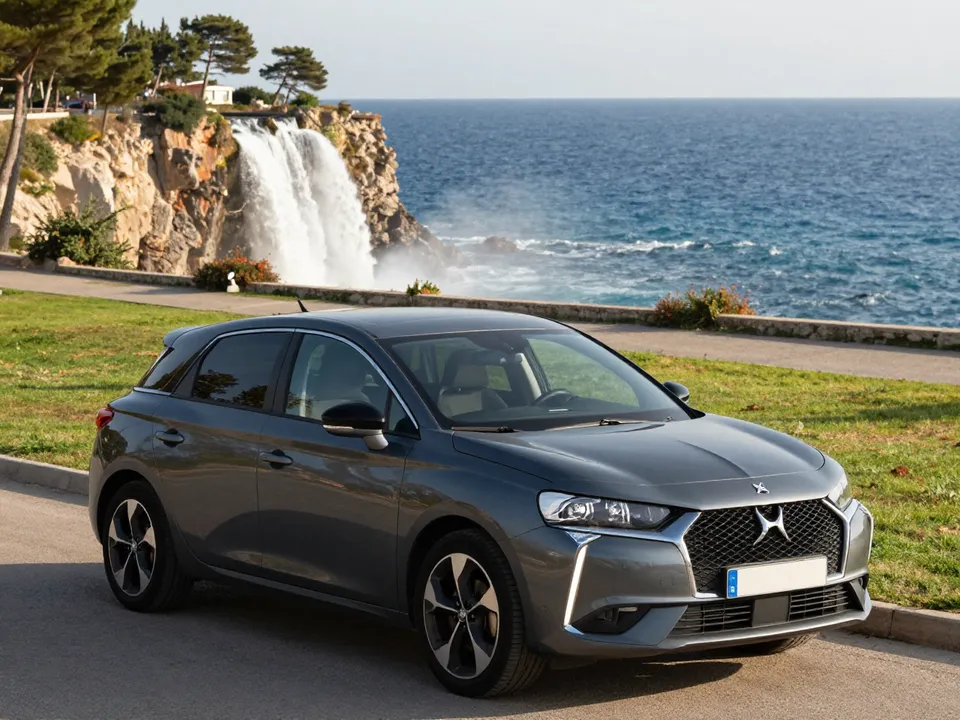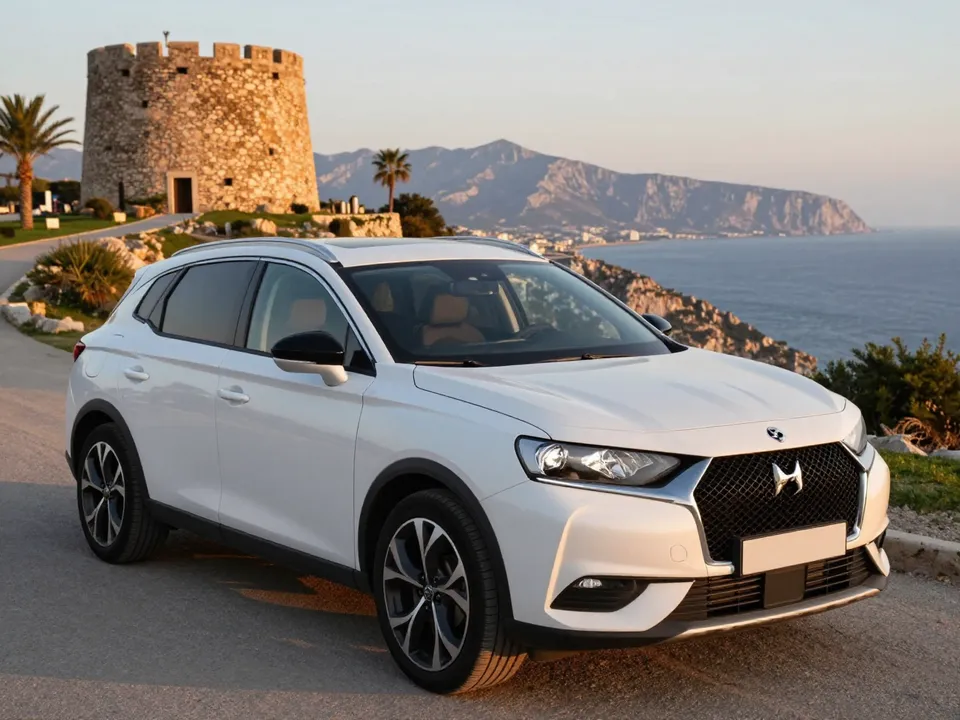
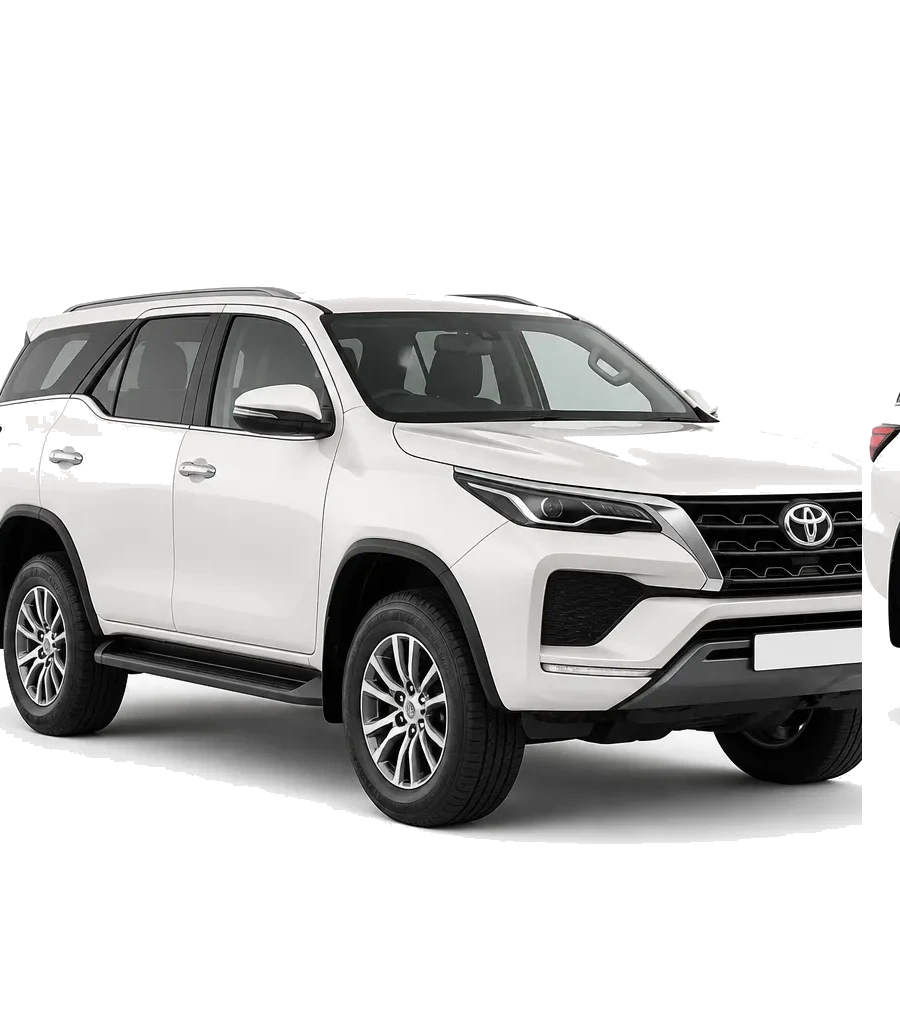
DS 7, Premium
★5.0· 19Automatic1.2 L130 hpFront-wheel5 seats
₺4,162per day
Book nowVAT included




VAT included
VAT included
No cars match the selected filters. Remove some of the conditions.







This page lists 2 cars, both in the Premium class, with automatic transmission, five seats and hatchback or SUV body types.
Daily prices on this page run from ₺3201 to ₺4162. DS 4 is at ₺3201 per day and DS 7 at ₺4162 per day.
Petrol (V/Max Kurşunsuz 95, Petrol Ofisi) was ₺78.6 per litre in Antalya on 30.10.2026, at one price for all districts of the province. Diesel was ₺99.3 per litre on the same date.
Two DS models, one clear choice: the DS 4 at ₺3,201 a day or the DS 7 at ₺4,162 — a hatchback and an SUV, both Premium, both 5-seat petrol automatics. DS car rental in Antalya with Rent-Trip means two cars delivered to any address in the city or to Antalya Airport (AYT) and Gazipaşa-Alanya Airport (GZP), with the delivery address, date and time agreed with a manager before the booking is fixed.
We have no desk and no counter: the car comes to you, and the delivery address, date and time are agreed with a manager before the booking is fixed. That applies to every DS model on this page — two Premium vehicles, both brought to where you are staying.
We deliver to any address in the city and to Antalya Airport (AYT) and Gazipaşa-Alanya Airport (GZP). In practice that covers the old town inside Kaleiçi, the beach districts of Lara and Konyaaltı, the bus station, and the resort towns of Belek, Kemer and Side, all of which sit inside the delivery area. Rent-Trip brings the DS 4 or the DS 7 to the door of your hotel, apartment or villa rather than parking it at a lot you have to reach first. Delivery outside these places is arranged case by case and is not promised on the site — agree it with the manager before the booking is fixed, not after the dates are locked in.
In our experience the fuel rule is the one that catches people out, usually on a 06:00 flight when the nearest station is closed — fill up the evening before, keep the receipt, and the hand-back takes minutes.
Get the address and the hour in writing at booking — a delivery slot agreed only by phone is the single most common reason a hand-over slips.
Our Antalya fleet on this page is a single class — Premium — and it holds two cars. Both are five-seat petrol automatics with front-wheel drive, so the choice comes down to body shape and budget rather than to engine or gearbox.
| Model | Body | Seats | Fuel | Gearbox | Drive | Engine | Daily rate |
|---|---|---|---|---|---|---|---|
| DS 4 | Hatchback | 5 | Petrol | Automatic | Front-wheel | 1.2 L, 130 hp | ₺3,201 |
| DS 7 | SUV | 5 | Petrol | Automatic | Front-wheel | 1.2 L, 130 hp | ₺4,162 |
Both seat five; the DS 7 is the SUV body, the DS 4 the hatchback. The DS 4 is the cheaper car on this page, the DS 7 the more expensive. With five aboard and luggage, the SUV body gives the easier load bay — check the boot with your own cases before you choose.
Both models run a 1.2 L 130 hp petrol engine with an automatic gearbox and front-wheel drive, and on this page that is the only drivetrain we offer in the Premium class. The DS 4 and DS 7 share the same unit, so the climbs out of Kaleiçi towards the upper streets of Konyaaltı feel much the same in either car. What changes is weight and shape: the taller SUV body carries more metal and glass, and a full load of five plus luggage shows up first on a long drag such as the road towards Kemer or the ascent to Termessos. Both automatics take the climbs at an easy pace with a full load. On steep descents, take it slowly. Fuel is petrol, budgeted at the pump price.
Premium is the only class on this page, and it is two cars rather than a long list — which makes the decision quick. The DS 4 hatchback suits a couple or a small family who want a compact body for the old-town lanes around Kaleiçi and easy parking near Lara. The DS 7 SUV suits five people with luggage, longer runs to Side or Belek, and anyone who prefers a higher seating position. Both are automatic and petrol, both seat five, and both are front-wheel drive, so nothing in the driving experience separates them except size. If you are unsure which one fits your trip, tell the manager the number of passengers and cases when you book — the boot is the one thing a spec sheet cannot settle for you.
Our page runs from the DS 4 to the DS 7 — that is the whole price range of the Premium class here. Longer bookings are not quoted as a flat sum: a week is charged at six daily rates and a month at twenty-one, so the per-day figure falls the longer you keep the car.
A week is charged at six daily rates and a month at twenty-one, so the per-day figure falls the longer you keep the car. The same multipliers apply to the DS 7, so the SUV stays proportionally above the hatchback at every length of booking. We calculate the total on the daily rate of the model you pick, not on an average across the class. In our practice, a seven-day booking is charged at six daily rates, so price the full week if you expect to keep the car that long — the daily rate is the most expensive way to buy the same car. Work out your total on the model you actually want before you settle on a number of days.
The deposit sits behind that hold rather than being a separate charge we can list here, and the rental agreement is where its size and the conditions around it are written. Read that document when it reaches you, not at the kerb with the engine running — a hold you have not planned for is the one thing that delays a hand-over.
Rent-Trip quotes the daily rate of the model, applies the multiplier for the length of the booking, and shows the total before anything is confirmed. If your plans are still moving, tell the manager the longest likely length of the booking when you agree it: how an extension is priced is agreed with the manager.
The paperwork here is short: a passport, an entry stamp, your home driving licence and, where the licence is not in Latin script, an International Driving Permit. We check nothing at a counter because there is no counter — the car comes to the address you give us, and the documents are agreed with a manager before the booking is fixed.
The six-month rule is the one travellers miss. Under the Turkish highway code a foreign licence may be used for at most six months from the date of entry, after which it must be exchanged for a Turkish one at any nüfus müdürlüğü. The clock runs from the day you entered the country, not from the day you collect the car — a driver three weeks into a long stay has roughly five months of driving left on the licence he arrived with, and no amount of booking paperwork changes that.
Age and driving-experience requirements rise with the class of car, so the two Premium models on this page sit at the stricter end of the scale rather than the looser one. Confirm your year of birth and the date on your licence with the manager at booking: the threshold is applied to the class you choose, and the Premium class is where it bites. A driver who qualifies for an economy car is not automatically cleared for a DS 7, and the check is easier to settle in the booking conversation than on the morning of delivery. Bring the same passport and licence you named at booking — the details on the agreement are taken from them.
Two documents do the heavy lifting on this page: the passport with its entry stamp and the licence you actually drive on at home. Everything else — the IDP question, the age threshold, the experience count — is settled with the manager when the booking is agreed, which is also where any condition not written here is set out in the rental agreement.
Two things decide how much of the road is really covered: the compulsory Turkish third-party policy that comes with every registered car, and the HGS tag that handles bridges and motorway gates. Neither is an optional extra you buy from us — both are part of how the car is registered and how it moves through the country.
Every DS car rental in Antalya from Rent-Trip carries the compulsory third-party cover required by law in Turkey. Article 91 of law 2918 obliges whoever operates a vehicle to hold zorunlu mali sorumluluk sigortası, and a car found without a valid policy is removed from traffic altogether — so the cover is not something we can leave out of the paperwork. Our Turkey line lists compulsory insurance as included, and both the DS 4 and the DS 7 are registered and insured the same way as any other car in the country. What the package covers beyond that compulsory policy is set out in the rental agreement — read that clause before you drive off, because the compulsory policy answers for damage you cause to others, not for the car itself. In our practice, the questions we get at delivery are almost always about the second part, not the first.
HGS is the KGM electronic tag that pays motorway gates and bridges, and it is required wherever those exist. Around Antalya there is a simpler picture: the province has no otoyol at all — the KGM inventory of completed motorways by province carries no line for Antalya in any year, with the nearest completed stretches in Denizli and Aydın provinces. The Antalya–Alanya Otoyolu, 122 km between Serik and Konaklı, is under construction at roughly 30% completion as of August 2026, and whether it will be tolled has not been announced. If you do cross a gated section elsewhere, the HGS rules are strict and generous at once: top up the balance or open HGS on the plate within 15 days of an insufficient-balance crossing and no penalty applies; after that the crossing fee carries an administrative fine of four times the fee, reduced to one times if paid between day 15 and day 45. Who pays tolls and penalty notices is agreed when booking.
A DS car rental in Antalya is the simplest way to reach the coast road and the old-town lanes, and both models are set up for exactly that. Traffic in Turkey keeps to the right and every car on this page is left-hand drive, so a driver from a left-hand-traffic country needs a few kilometres to adapt. The DS 4 and DS 7 are both 1.2 L petrol automatics with front-wheel drive, which is the easy combination for the coast road and the old-town lanes.
HGS is the KGM electronic tag for motorway gates and bridges, and the first-class tariff applies to ordinary cars with an axle spacing under 3.20 m. No tolled otoyol runs through the province — the KGM inventory of completed motorways lists Denizli and Aydın as the nearest provinces with otoyol, and Antalya (TR611) appears in no year. A 122 km stretch between Serik and Konaklı is being built and stood at roughly 30 % as of August 2026; whether drivers will pay to use it has not been announced. If you do pass a gated section elsewhere, top up the HGS balance or register the plate within 15 days and the penalty is not applied; after that a fine of four times the fee is added, or one times the fee if settled between day 15 and day 45. Who pays tolls and penalty notices on a rental car is agreed when booking.
Petrol, diesel and LPG prices at Petrol Ofisi stations move in jumps, so budget for a swing between fill-ups rather than a fixed figure. A private car (hususi otomobil) allows a driver up to 0.50 promille; above that a fine applies and the licence is withdrawn for six months, rising to 50,000 TL and two years on a repeat within five years. Holding a phone while moving carries a fine and a 30-day withdrawal from the third offence in a year. In our experience the coast road is where visitors collect speed tickets, not the city centre — limits change at the entrance to towns, so follow the signs at the roadside.
The roads out of the city are the reason many people book a car here at all. Within a few hours of the city you can be at a Roman theatre, a canyon with a river running through it, or a hillside city that was already old when the Seljuks arrived. Both DS models handle those runs comfortably: five seats, petrol, automatic, front-wheel drive, and a 1.2 L 130 hp engine that is fine on the climbs as long as you let the gearbox work.
Petrol in the province was around 79 TL a litre at the end of October 2026, so a return run to Aspendos and back costs little more than a tank top-up. Filling up is straightforward on the D400 and the inland roads, but plan a fuel stop before longer inland runs. Remember the full-to-full rule: the car leaves clean with a full tank and comes back the same way, and any missing fuel plus the refuelling service fee is charged as set out in the rental agreement.
There are no toll motorways around the city in 2026, so the HGS tag matters only if you cross a bridge or reach a gated motorway further afield. Who pays tolls and any penalty notices is agreed when booking — settle it before you leave rather than after.
In our experience the descents catch people out more than the climbs. Long downhill sections inland heat the brakes quickly, so take them at an easy pace. Winter tyres are compulsory from 15 November to 15 April for vehicles used in intercity passenger and goods transport, including foreign-registered ones; a private car is not named in that list, and the Antalya valilik decides whether to apply the rule within the province. Check the current position before a winter trip inland.