









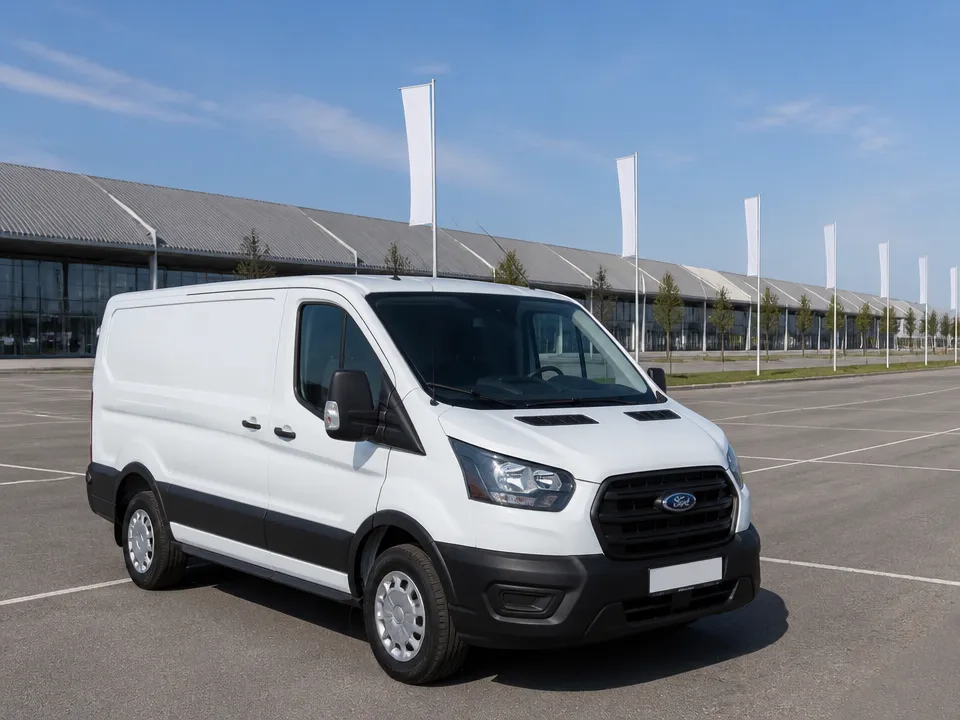
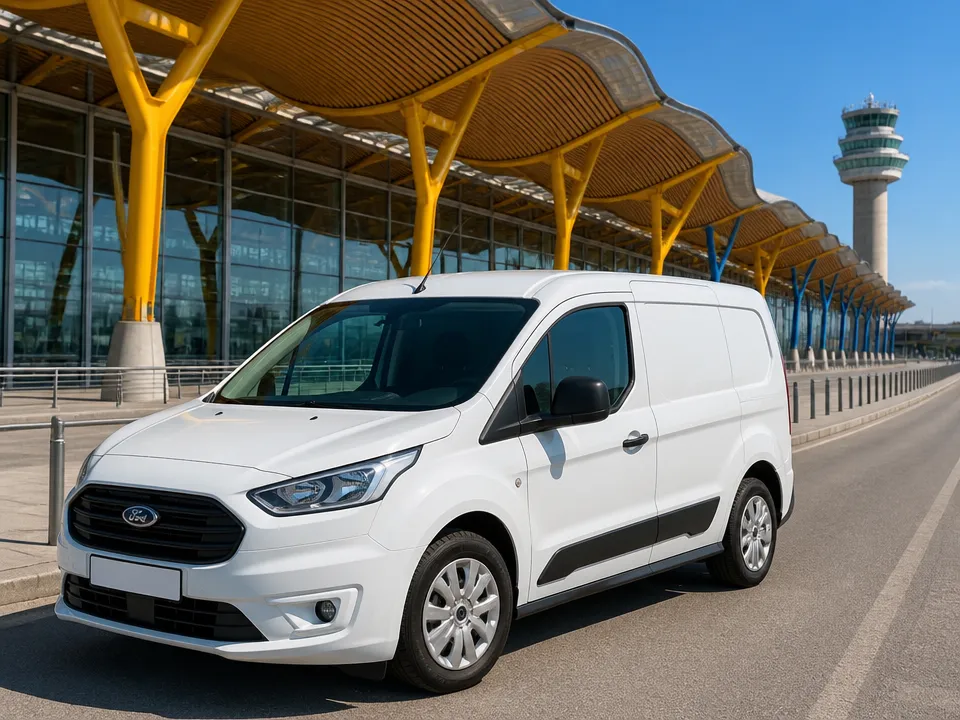

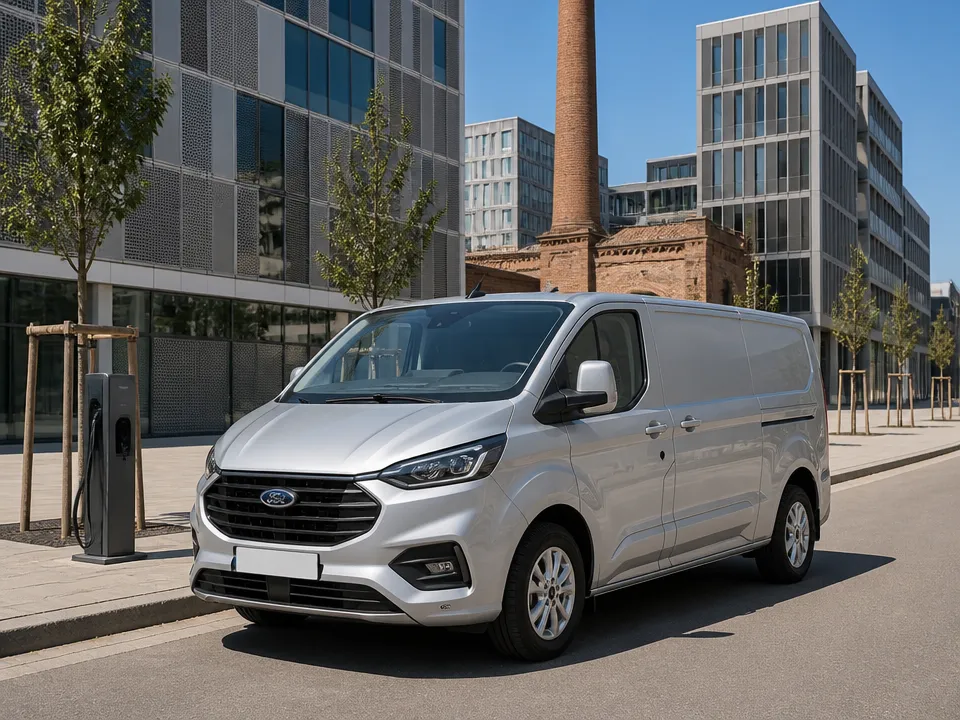
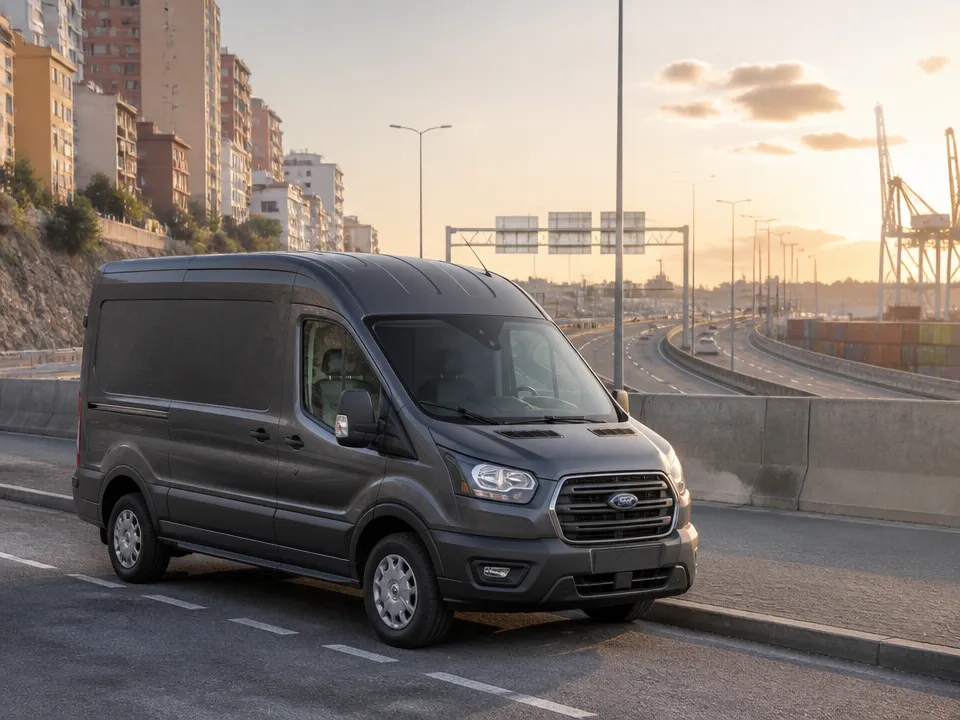







Commercial car rental in Spain
Looking for commercial car rental in Spain? Rent-Trip offers 10 commercial vehicles — from the Ford Transit Connect at €56 per day to the Ford Transit H2 350 L3 at €138 per day — with weekly rates from €336 and monthly rates from €1,176. We deliver the car to you in Madrid or Barcelona, and the booking is agreed with a manager.
What commercial car rental in Spain gives you that a car does not
A commercial vehicle is not a bigger passenger car — it is a different kind of machine, chosen for what it carries and how many people ride along. Our commercial class on this page is 10 diesel vans from €56 a day.
Panel van or van — which body type fits your job
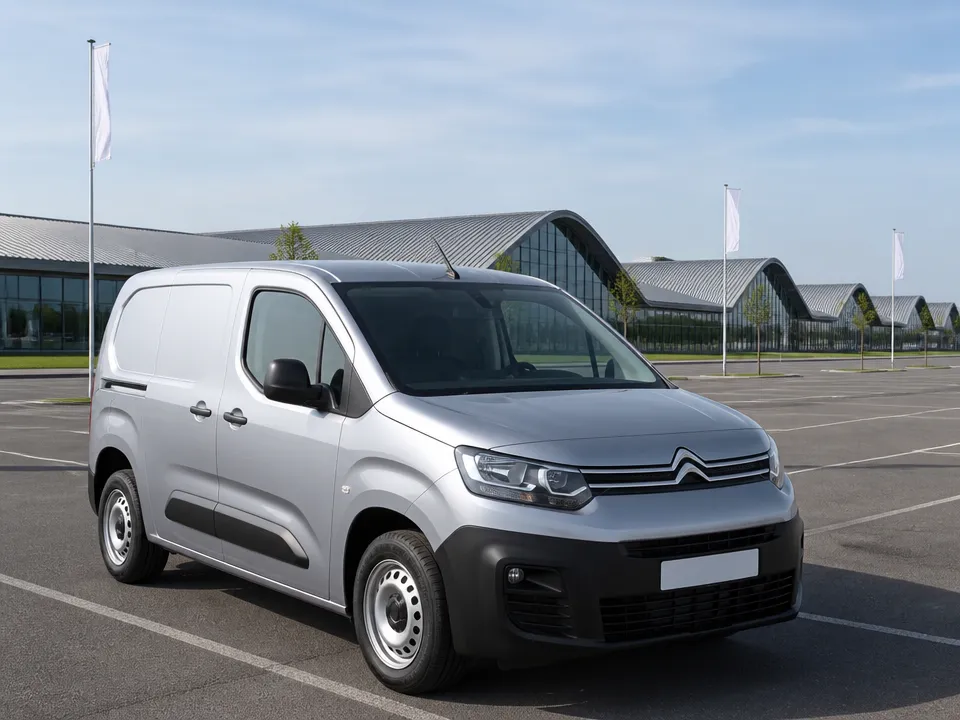
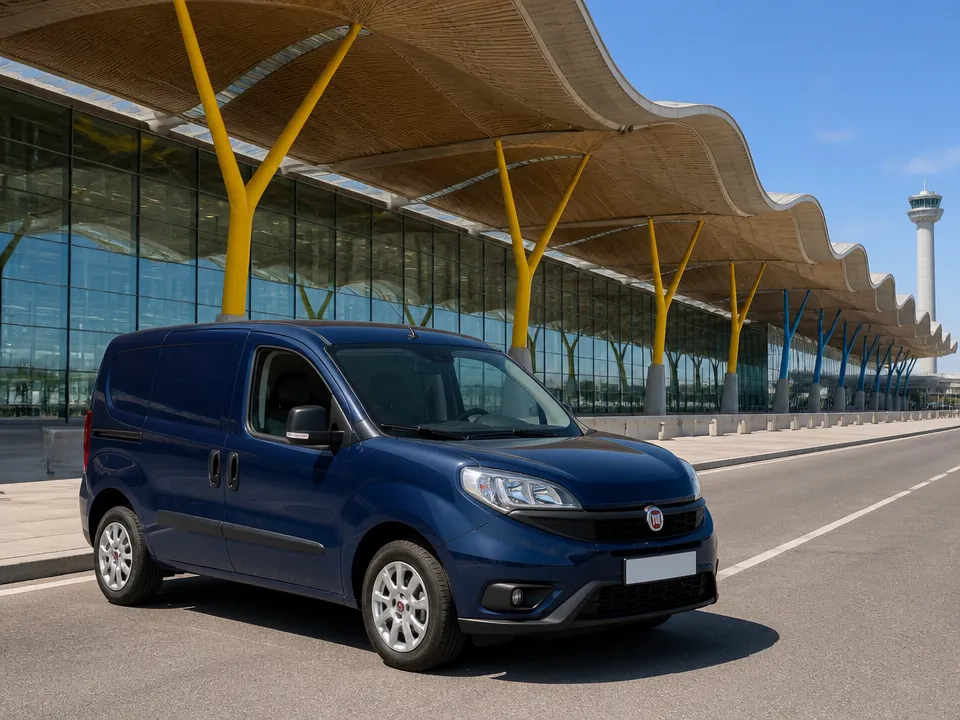
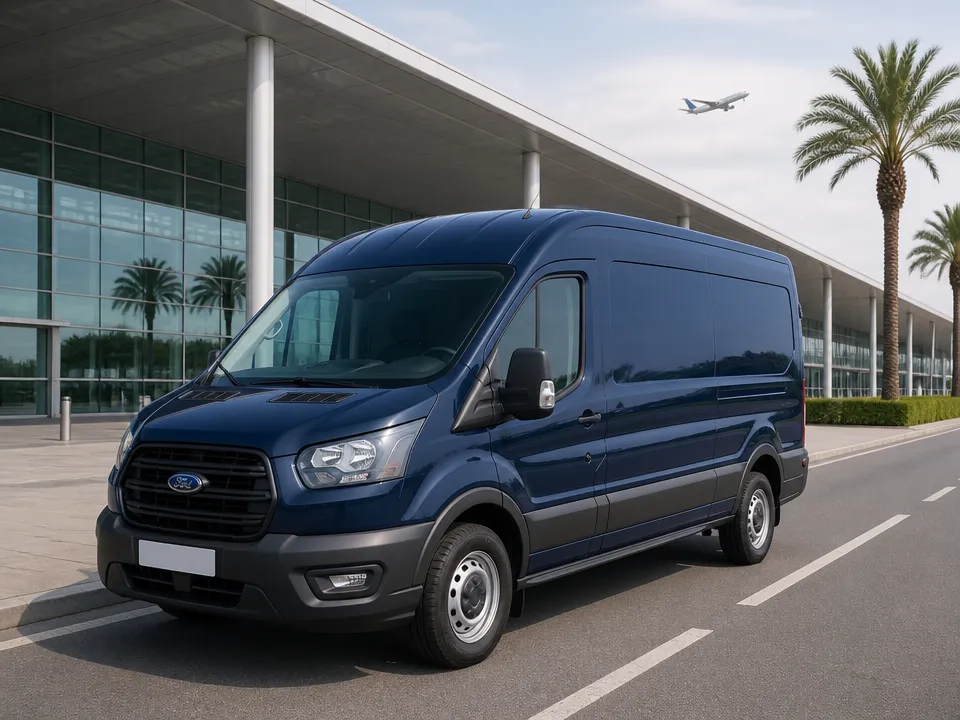
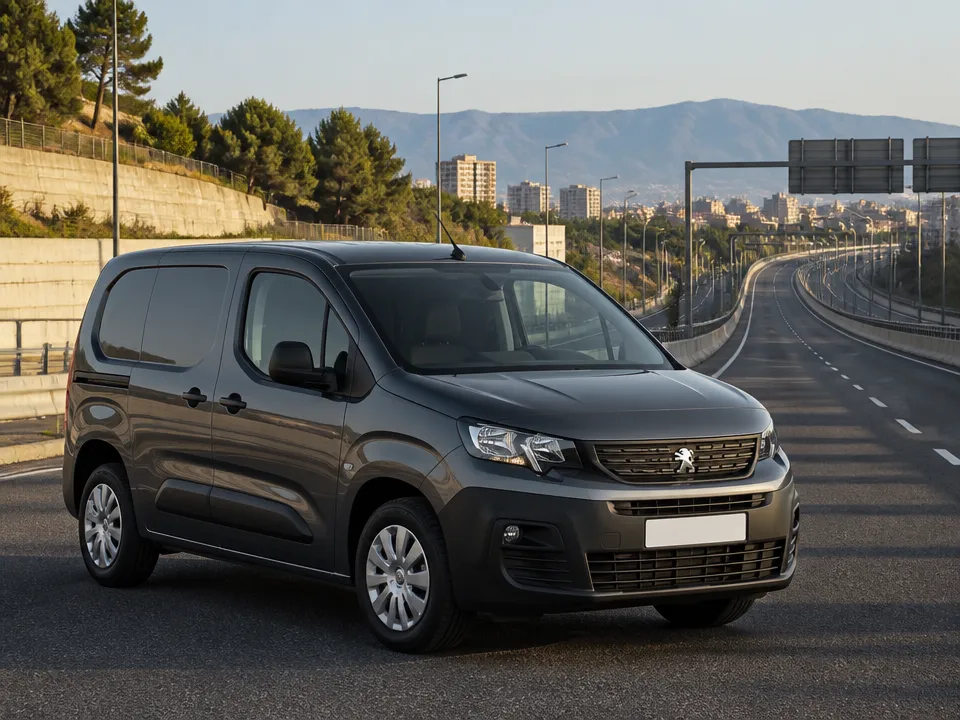
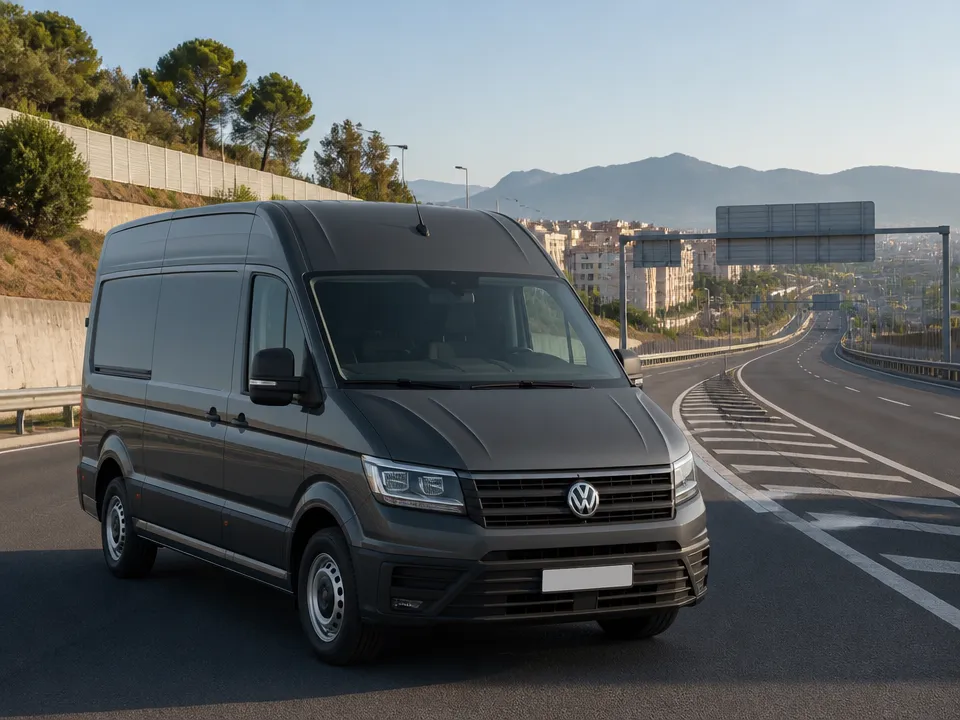
Our commercial class covers two body types — panel vans with 5 seats and vans with 2 or 3 seats — and the choice follows the load, not the price. All ten run on diesel with a manual gearbox, front-wheel drive on the smaller units and rear-wheel drive on the Ford Transit, Ford Transit H2 350 L2 and Ford Transit H2 350 L3. The five-seat panel vans — Ford Transit Connect, Citroen Berlingo, Peugeot Partner and Fiat Doblo — keep the full cabin and still give a separate cargo bay behind it. The two- and three-seat vans trade passenger space for cargo length: the Ford Transit Connect with 2 seats at €84 a day, the Ford Transit, Volkswagen Crafter and Ford Transit Custom with 3 seats from €90 to €104. A one-bedroom move usually fits a panel van; a van with 3 seats leaves more cargo length for the same footprint.
What a commercial vehicle carries that a passenger car cannot
A commercial van separates cargo from the cabin, so tools, stock or furniture travel secured and the driver is not sharing space with the load.
- Payload: the weight a van may legally carry on top of its own mass — a passenger car has no figure of this kind in its papers.
- Volume: the cubic metres behind the bulkhead, which decide whether a sofa goes in whole or comes apart.
- Seats: 2, 3 or 5, and every seat you take is cargo length you give up.
- Load security: lashing points and a flat floor in the cargo bay, not a folded rear bench.
- Diesel and manual: all ten vans in this class use gasóleo A and a manual gearbox, which is what Spanish rental work runs on.
Payload and volume, not engine size, decide whether a job needs one trip or two — check both before choosing.
The commercial fleet we rent out in Spain and what each van costs
Our commercial car rental in Spain runs on 10 diesel vans and panel vans, priced from €56 to €138 per day. Every one of them is manual, front- or rear-wheel drive, and delivered to you — the model, the body and the daily rate are set out in the table below.
Every model in our commercial car rental in Spain, side by side
| Model | Body | Seats | Engine | Drive | € per day |
|---|---|---|---|---|---|
| Ford Transit Connect | Panel Van | 5 | 1.5 L, 100 hp | Front-wheel | €56 |
| Citroen Berlingo | Panel Van | 5 | 1.5 L, 100 hp | Front-wheel | €64 |
| Peugeot Partner | Panel Van | 5 | 1.5 L, 100 hp | Front-wheel | €70 |
| Fiat Doblo | Panel Van | 5 | 1.5 L, 100 hp | Front-wheel | €74 |
| Ford Transit Connect | Van | 2 | 1.5 L, 100 hp | Front-wheel | €84 |
| Ford Transit | Panel Van | 3 | 2.0 L, 130 hp | Rear-wheel | €90 |
| Volkswagen Crafter | Panel Van | 3 | 2.0 L, 140 hp | Front-wheel | €100 |
| Ford Transit Custom | Van | 3 | 2.0 L, 136 hp | Front-wheel | €104 |
| Ford Transit H2 350 L2 | Van | 3 | 2.0 L, 130 hp | Rear-wheel | €125 |
| Ford Transit H2 350 L3 | Van | 3 | 2.0 L, 130 hp | Rear-wheel | €138 |
The step from €84 to €90 buys a 2.0 L engine and rear-wheel drive instead of a 1.5 L front-wheel unit — on a loaded motorway climb out of Madrid or Barcelona that is the difference you feel behind the wheel, not on the invoice.
What a week or a month of commercial car rental in Spain costs
Weekly commercial car rental in Spain starts at €336 and monthly at €1,176. The weekly figure is the daily rate multiplied by 6, the monthly figure is the daily rate multiplied by 21 — so a long booking is priced straight off the daily rate of the model you choose, and the cheapest van also gives the cheapest month.
In our practice, the question that decides the booking is rarely the engine. It is whether the job needs the cargo length of a panel van or the extra seats of a van.
Which van suits a one-bedroom move
- Ford Transit Connect at €56 a day: the cheapest way into a panel van, 5 seats, 1.5 L diesel — enough for a one-bedroom flat if you pack tight and stack high.
- Citroen Berlingo at €64 or Peugeot Partner at €70: same 5-seat panel-van layout, a little more room to work with at the loading end.
- Fiat Doblo at €74: the largest of the five-seat panel vans on this page, and the one we would pick for a move with a washing machine in it.
- Ford Transit at €90: 3 seats and a 2.0 L engine — take it when the load is heavy rather than bulky, and passengers are not part of the plan.
Book the smallest van that fits the load and use the seats for passengers; a bigger van costs more per day and is harder to park at the loading end.
Documents and licence rules for commercial car rental in Spain
Before you drive away in a van, three documents have to line up: the licence, the identity document and the card. The rules below are the Spanish ones — they apply whether you collect in Madrid or in Barcelona.
Which licence lets you drive a commercial van here
A European Union or European Economic Area licence — including Iceland, Liechtenstein and Norway — is fully valid for as long as it has not expired, and no international permit is needed alongside it. A third-country licence works too, on three conditions: it is still in force, you are old enough for the equivalent category, and no more than six months have passed since you took up ordinary residence here. Driving starts at 18 for category B, and a commercial van sits inside that category — no separate van licence exists. The DGT advises third-country drivers to get an international driving permit before the trip; the permit itself is only an addition, shown together with your passport and your national licence, and it runs for one year. If your licence is not in Spanish, it is valid either with an official certified translation or when it was issued on the Appendix 9 model of the Geneva Convention or Appendix 6 of the Vienna Convention.
What we check when you book the van
- Licence in force: the original document, unexpired, in the name of the main driver.
- Identity document: the original in the main driver's name — a rental-company requirement rather than a DGT rule.
- Credit card: held for the deposit in the main driver's name; debit cards are not accepted everywhere, and this is the rental company's condition, not a matter of law.
- Age and driving experience: the minimum rental age, the young-driver surcharge and the required experience are agreed when booking.
- The agreement itself: the deposit, the excess and any delivery fee are set out in the rental agreement.
The international permit trips up more drivers than anything else, in our experience: it is grey, 16 pages, printed in Spanish, German, English, French, Italian, Portuguese, Arabic and Russian — and it means nothing on its own. Bring both booklets to the hand-over, not just the permit.
Insurance and excess in commercial car rental in Spain
Third-party liability cover is included in every hire by Spanish law — you do not choose it and you cannot decline it. What you do choose is how much of the damage to the van itself you carry.
What is always included
| Cover | What it pays for | Limit |
|---|---|---|
| Seguro Obligatorio de Responsabilidad Civil | Harm to other people | €70,000,000 per incident |
| Seguro Obligatorio de Responsabilidad Civil | Damage to other people's property | €15,000,000 per incident |
The mandatory policy follows the vehicle, not the driver: it applies even when the person at the wheel was not named on the agreement. It covers third parties only — never the van and never the driver. The figures come from Real Decreto Legislativo 8/2004, article 4.2, as amended by Ley 5/2025, and have applied since 26 July 2025.
The optional covers and the excess
- CDW (Collision Damage Waiver): reduces your liability for collision damage to the van, but you still pay the excess — the franquicia printed in your agreement.
- THW (Theft Protection): covers full or partial theft and vandalism, again minus the excess.
- SCDW and SPCDW: partial and full buy-out of the excess left by CDW. Neither works if CDW was not taken or if a CDW exclusion applies.
- STHW and SPTHW: the same partial and full buy-out, applied to the theft excess.
- WWI (Glass and Tyres Protection): a separate option, because glass and tyres usually sit outside basic CDW.
In our practice the excess is the line clients read last and ask about first at hand-over. It is set out in the agreement, and we go through it with you when booking so nothing on that page is a surprise.
What Spanish consumer rules give you
The declared price has to include every mandatory charge you cannot drive without — the compulsory liability cover among them. At hand-over, all scratches and dents must be written into the agreement or the inspection sheet before you drive off, signed by both sides, with a copy kept by the renter; otherwise the damage comes back to you. If the model you booked is not available, you may ask for another van at no extra cost, even a class above, and if you are given a lower class the price must come down. If the vehicle does not match the agreed conditions, the booking can be cancelled and the prepayment returned.
Driving rules and low-emission zones for commercial car rental in Spain
Speed limits and environmental badges are the two things that catch commercial drivers out on Spanish roads. The limits are national, the badge rules are municipal, and a van that is legal in one city centre may be barred from the next.
Speed limits that apply to a commercial van
A commercial van under 3,500 kg follows the same national limits as a passenger car: 120 km/h on autopista and autovía, 90 km/h on a conventional rural road, and 30 km/h in town on a street with one lane in each direction. Municipalities can raise the urban limit to 50 km/h on signed multi-lane streets, and streets built on a single shared platform are capped at 20 km/h. Speeding fines run from €100 with no points up to €600 with six points, and a 50% discount applies if the fine is paid within 20 calendar days. On a loaded van, the practical limit is lower than the legal one — braking distance on a downhill autopista exit grows noticeably once the cargo bay is full.
Alcohol, phones and the rules that cost the most
- Alcohol: the general limit is 0,25 mg/l of breath, dropping to 0,15 mg/l for drivers in their first two years and for professional drivers; fines run €500–€1,000 with 4–6 points.
- Phone in hand: €200 and 6 points if the device is held while driving, which is the single most common penalty for delivery work.
- Seat belts and child seats: €200 and 4 points; child restraints are required for anyone measuring up to 135 cm.
- Fines for very serious offences: €500 and points in every case, with red-light and STOP violations at €200 and 4 points.
Low-emission zones and the DGT badge
Low-emission zones — Zona de Bajas Emisiones — are set by each municipality, and access depends on the DGT environmental badge (distintivo ambiental) displayed on the windscreen. Madrid and Barcelona both operate a zone of this kind, and the badge class of a diesel van decides whether it may enter at all. On our commercial fleet the badge class is confirmed with the manager when the booking is agreed, because it varies by model and by registration. If your route runs through a city centre, ask about the badge before you commit to a van — a cheaper model without the right class can end up costing a day of re-routing.
Long-term commercial car rental in Spain and how the price works
A longer booking changes the arithmetic, not the van. The multipliers we use are fixed and published: weekly hire is the daily rate × 6, monthly is the daily rate × 21. Nothing else moves.
What a week and a month actually cost
- Weekly: daily rate × 6, so the cheapest van in our fleet starts at €336 and the largest at €828.
- Monthly: daily rate × 21, from €1,176 for the Ford Transit Connect up to €2,898 for the Ford Transit H2 350 L3.
- Panelled 5-seaters: the Ford Transit Connect, Citroen Berlingo, Peugeot Partner and Fiat Doblo run €56–€74 a day, which is €336–€444 a week.
- Larger vans: the Ford Transit, Volkswagen Crafter, Ford Transit Custom and the two H2 350 units sit at €90–€138 a day.
- Deposit, excess and any delivery fee: set out in the rental agreement, agreed when booking.
Why the rate scales from the daily price
The multiplier applies to the model you choose, so the cheapest van also gives the cheapest month — €56 becomes €1,176, while €138 becomes €2,898. That spread is why the choice of body matters more than the length of the hire: moving from a 1.5 L panel van to a 2.0 L rear-wheel-drive unit adds €34 a day, or €714 across a 21-day month. In our experience, most long hires settle on one of the mid-range units — enough cargo length for regular stock runs, still parkable in a city centre — rather than the largest van on the page.
What long hire is normally used for
Six or twenty-one days of continuous use suits a fit-out, a market stall, a house move or a delivery round that outlasts a single weekend. A commercial vehicle separates the load from the cabin, so tools and stock travel secured and the driver is not sharing space with them. It is worth matching the body to the job before fixing the dates: a 5-seat panel van covers a one-bedroom move at €56–€74 a day, while a 3-seat van leaves more cargo length for the same footprint and earns its extra cost on bulky loads. If the job runs past the booked window, extend it with the manager rather than returning the van and starting a new hire — the rates are agreed when booking.
Booking commercial car rental in Spain with a manager
Booking commercial car rental in Spain runs through a manager, not a checkout button: you send the dates, the load and the city, and we confirm the van, the price and the delivery window in writing before anything is fixed.
What we need from you to hold the right van
- Dates and duration: the pick-up day, the return day and roughly how many hours a day the van will be on the road.
- Body type and seats: a panel van with 5 seats for a move, or a van with 3 seats when the cargo needs the full length.
- Load and volume: what travels — furniture, tools, stock, boxes — and whether one trip covers it or two.
- City and address: Madrid and Barcelona are the cities we operate in on this page; the exact hand-over point is agreed with the manager.
- Licence details: the country that issued your licence and whether you hold a Permiso Internacional de Conducción.
- A card in the main driver's name: the deposit is a preauthorisation on a credit card, and the amount is set out in the rental agreement.
How the booking is agreed
We answer with the model that matches your load, its daily price and the total for the period — the weekly rate is the daily rate × 6 and the monthly rate is the daily rate × 21, so a Ford Transit Connect at €56 a day comes to €336 for a week and €1,176 for a month. The manager also confirms the delivery slot and the fuel policy, which on this page is full-to-full: the van arrives with a full tank and comes back full. If you need the van early in the morning, say so when you book — the delivery window is the part of the arrangement that is hardest to move later. The minimum age, the young-driver surcharge, the cards we accept, the deposit and any delivery fee are agreed when booking and printed in the agreement, so ask before you commit rather than at hand-over. Extra drivers are worth naming at this stage too; only drivers written into the agreement may take the wheel.
Changing or extending a booking
Extending a live booking is a message to the same manager, not a new order — the van stays with you and the rate for the extra days follows the same daily price of the model you already have. Changing the model mid-booking is possible when the fleet has a free unit, and the price moves to the daily rate of the new van. Cancelling before the delivery window is agreed costs nothing beyond what the agreement sets out.
What to check on a commercial car rental in Spain before you drive away
A commercial van drives differently loaded than empty, and the hand-over is where most disputes are born. The Spanish consumer authority is clear on one point: any scratch or dent must be written into the agreement or the inspection sheet before you leave, both sides sign it, and you keep a copy. Miss that step and the damage comes back to you.
The van itself is worth ten minutes of your own eyes, not the manager's. On our commercial fleet the whole class is diesel and manual, so check the clutch bite and listen for injector knock at idle — a loaded 2.0 L Transit pulling away on a ramp is where a tired clutch shows first.
- Fuel level: the tank should match what the agreement states, and local practice is full-to-full, so photograph the gauge before you move.
- Cargo area: open the rear doors and the side door, check the floor for previous damage and confirm the load restraint points are there.
- Tyres: commercial vans carry weight, so look at the sidewalls for bulges and check the tread on the rear pair, which takes the load.
- Lights and mirrors: the long mirrors on a Crafter or a Transit H2 350 L3 are the first thing to catch a gatepost.
- Documents: the agreement, the inspection sheet and the insurance papers stay in the cab, not in your bag.
Two things about the vehicle class catch people out. Panel vans with five seats carry passengers and cargo in one volume, while the two- and three-seat vans give you a longer cargo floor for the same footprint — so check the seat count against your actual job before you sign anything. And the environmental sticker, the distintivo ambiental, decides whether you can enter a low-emission zone at all; if the windscreen has no sticker, ask how the zone rules apply to your route before you plan a delivery into the centre.
Everything about the deposit, the excess and the fuel terms is set out in the agreement, so read those lines at hand-over rather than after. If the van you booked is not the one in front of you, you are entitled to a comparable replacement at no extra cost — in our experience it is far easier to settle that at the kerb than by email a week later.