



C$ 125per day
Book now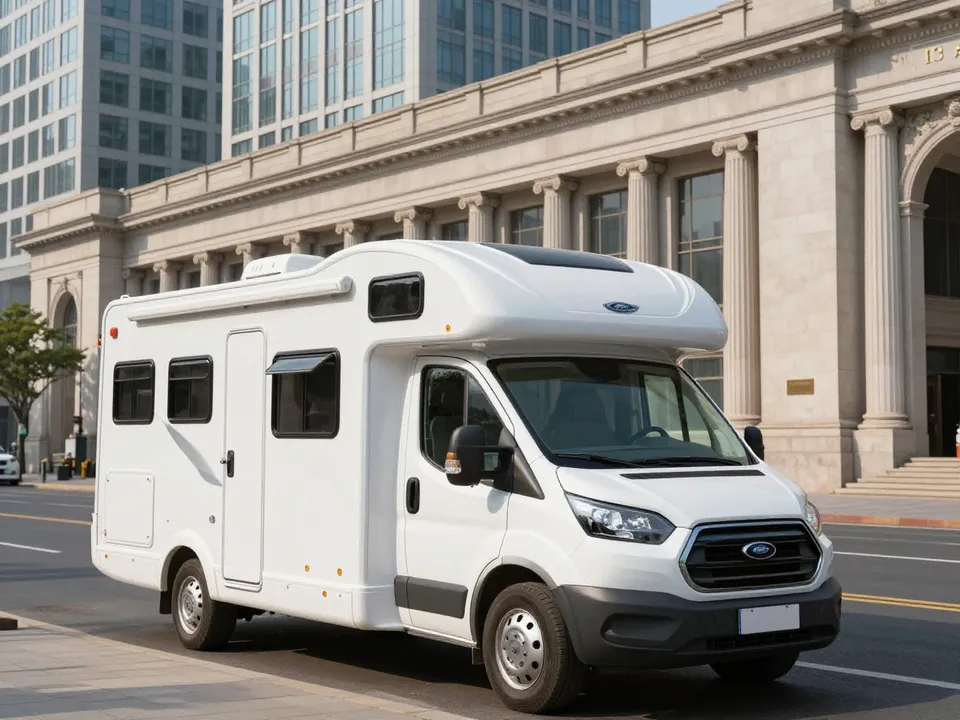






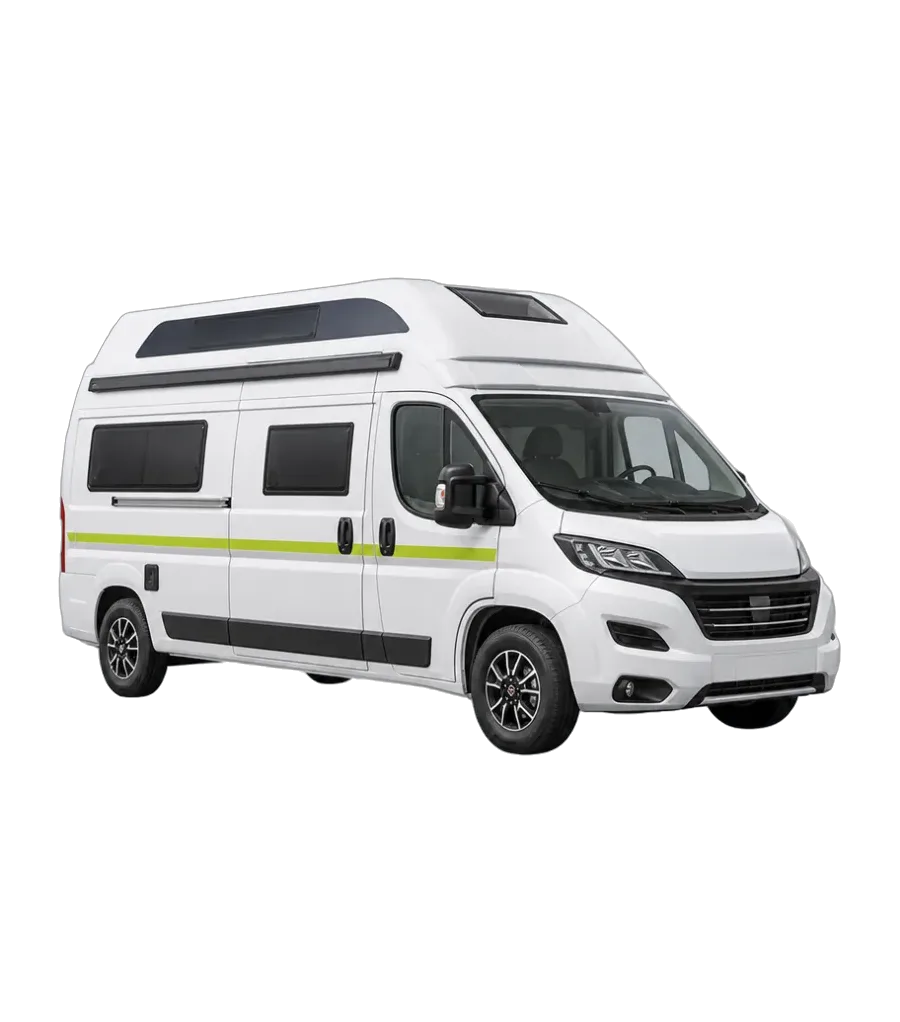

Campervan Rental from Toronto: Daily Prices, Licence, Parks and Routes
Campervan & motorhome rental in Toronto on this page means three vehicles for 5 to 7 people, each priced by the day, from C$125 for the Ford EZ Truck Camper. Below are the two vehicle types, the cost of a week, the licence a motor home needs in Ontario, provincial park campsites and drive times from Toronto.
Three campervans: two Class C motorhomes and a truck camper
This page offers three vehicles of two types for 5 to 7 people, each priced by the day: two Class C motorhomes and one truck camper.
The three vehicles side by side
| Campervan | Type | Length | Seats | Sleeps |
|---|---|---|---|---|
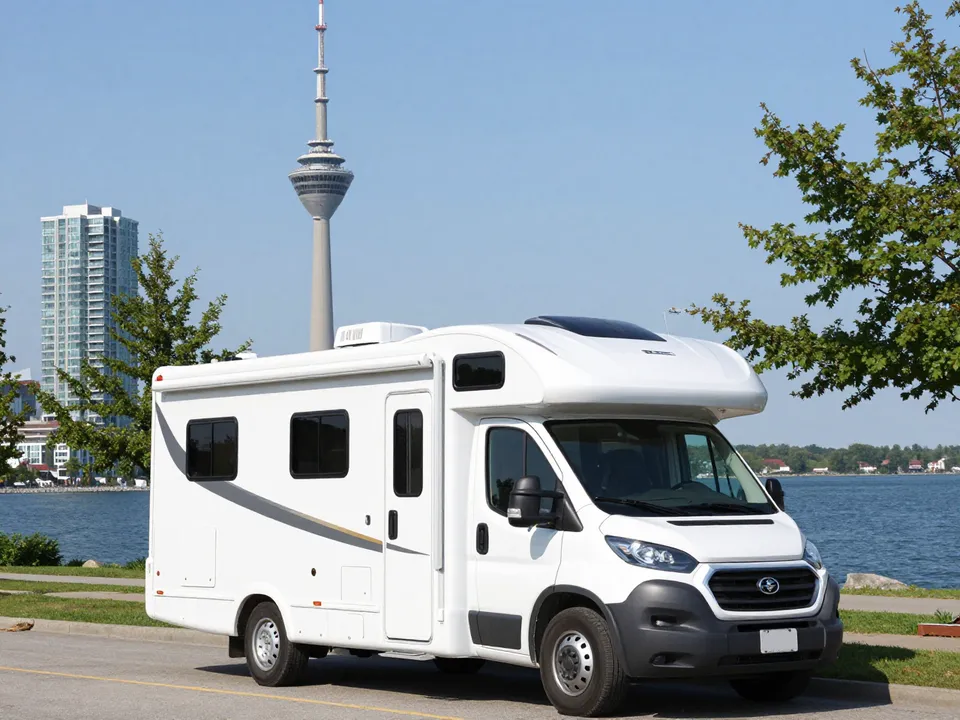
| Forest River Sunseeker | Class C motorhome | 29 ft | 6 | 6 |
| Ford Majestic | Class C motorhome | 25 ft | 7 | 5 |
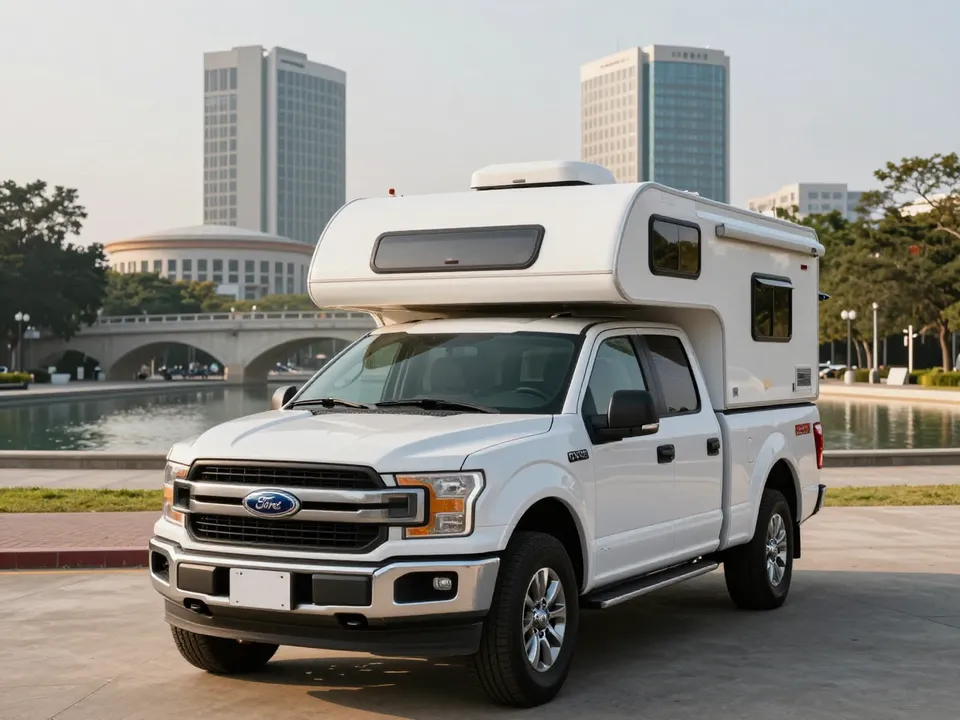
| Ford EZ Truck Camper | Truck camper | Ask the manager | 5 | 2 |
What a Class C motorhome is
A Class C motorhome is typically built on a cutaway van chassis with a bunk over the cab area. The Forest River Sunseeker and the Ford Majestic both belong to this class. A recreational vehicle is a motor vehicle that includes living quarters designed for accommodation, and the ones that can be driven are called motorhomes. Two other classes frame Class C: a Class A motorhome is typically built on a heavy-duty bus chassis or a proprietary motorhome chassis, while a Class B is typically a van with an elevated roofline. Neither of those two classes is offered here. In practice the Class C layout puts a cab much like a large van's at the front, the living area behind the front seats and a sleeping space above the driver — so decide early who takes the bunk over the cab, because climbing up to it is easier for some travellers than for others.
What a truck camper is
A truck camper is carried in the bed area of a pickup truck, and the Ford EZ Truck Camper on this page is one of them. The Ford EZ Truck Camper seats 5 and sleeps 2. The pickup does the driving and the living unit rides on its bed, so the whole vehicle is taller than the truck alone and handles like a loaded pickup rather than a van. Its overall height and length are not given here, so ask the manager for both before you plan the route. For a couple, this is the most compact way to sleep on board. My advice for the first hour: drive a few quiet streets before the highway, check the mirrors and watch the height at fuel station canopies and car park entrances.
Seats and beds are not the same number
The Ford Majestic, a 25 ft Class C motorhome, seats 7 and sleeps 5. The Forest River Sunseeker, a 29 ft Class C motorhome, seats 6 and sleeps 6. The Ford EZ Truck Camper seats 5 and sleeps 2. For a group of seven, the Ford Majestic carries everyone on the road, but two people need beds somewhere else at night. For a family of six who want to sleep on board, the Forest River Sunseeker matches the numbers. Before you settle on campervan rental in Toronto, count the beds first and the seats second, and send both numbers with your dates when you ask the manager for a quote — it saves a round of questions about who sleeps where.
How to choose between them
- Two people: the Ford EZ Truck Camper sleeps 2, and its living unit stays on the pickup bed while you drive to the campsite.
- Six people sleeping on board: the Forest River Sunseeker sleeps 6, the largest number of beds among the three vehicles.
- Seven people on the road: the Ford Majestic seats 7, so the whole group travels together in one vehicle.
- Narrow roads and tight sites: the 25 ft Ford Majestic is 4 feet shorter than the 29 ft Forest River Sunseeker, which helps on cottage roads.
Daily prices and the cost of a week
Each price on this page is a starting price for one day. For a trip of several days, the total for your dates is the figure to compare between the three vehicles.
Starting price of each campervan
The Ford EZ Truck Camper is a truck camper for 5 people from C$125 per day. The Ford Majestic is a Class C motorhome for 7 people from C$195 per day. The Forest River Sunseeker is a Class C motorhome for 6 people from C$275 per day. Shared by 7 people, the Ford Majestic, a Class C motorhome, comes to about C$28 per person per day. Per-person cost is a useful second check for a large group, since the daily price is shared by everyone who travels and a fuller vehicle spreads it further.
Seven and fourteen days at the daily rate
| Campervan | Type | From, per day | 7 days | 14 days |
|---|---|---|---|---|
| Forest River Sunseeker | Class C motorhome | C$275 | C$1,925 | C$3,850 |
| Ford Majestic | Class C motorhome | C$195 | C$1,365 | C$2,730 |
| Ford EZ Truck Camper | Truck camper | C$125 | C$875 | C$1,750 |
The gap over a week
Over seven days at the daily rate, the gap between the Ford EZ Truck Camper and the Forest River Sunseeker is C$1,050. Between the Ford Majestic and the Forest River Sunseeker the gap over the same seven days is C$560. What does that money buy? Mostly beds: the Forest River Sunseeker sleeps 6, the Ford Majestic sleeps 5 and the Ford EZ Truck Camper sleeps 2. In campervan rental in Toronto the right comparison is therefore not the daily figure alone but the daily figure next to the number of people who sleep on board. A group that needs six beds pays the difference for those beds; a couple who pick the largest motorhome pays it for space they will not use.
What the daily price does not show
- Campsites: Ontario Parks campsites are reserved with the park system itself, up to five months before the arrival date.
- Fuel: around 21 October 2026, regular petrol in Toronto cost about C$1.76 a litre, so fuel is a real line in the budget.
- Tolls: the 407 ETR adds a C$1 trip toll charge, and C$5.30 per trip as a camera charge without a transponder.
- The total for your dates: the manager confirms the vehicle and the final figure for your exact dates before the booking is agreed.
Which licence a motor home needs in Ontario
In Ontario the type of licence you need to drive a motor home depends on how much the vehicle weighs, not on its length, its class or the name of the model.
Weight bands and licence classes
| Motor home weight | Licence that covers it |
|---|---|
| Up to 11,000 kilograms | Full Class E, F or G, or G2 |
| Up to 14,000 kilograms | Full Class E, F or G with an RV endorsement |
| Any weight | Full Class A, B, C or D, or Class D with RV restriction |
| Any weight, with air brakes | An air brake endorsement as well |
The RV endorsement and the learning module
You must complete the Recreational Vehicle Learning Module before you get an RV endorsement or a Class D licence with an RV restriction. To keep the RV endorsement, you must complete the learning module every time you renew your licence. A Class D licence with an RV restriction lets you drive any recreational vehicle or motor home, and its road test is taken in a motor home weighing more than 14,000 kilograms (31,000 pounds). For most travellers looking at RV rental in Toronto, these endorsements are background rather than a plan: they matter to Ontario drivers who already hold them. The practical question is simpler — ask for the weight of the campervan you choose and find its line in the table above before you agree the dates.
Driving on a licence from abroad
If you are visiting Ontario for less than 3 months, you can use a valid driver's licence from your own province, state or country. If you will be visiting from another country for more than 3 months, you will need an International Driver's Permit from your own country, and it cannot be obtained in Canada. Bring the licence you will drive on, check the dates of your stay against the 3-month rule, and if a permit is needed, get it at home before the flight rather than looking for one in Toronto.
Questions to ask about weight and brakes
- Weight: ask for the weight of the chosen campervan, because the Ontario licence rule follows weight, not length or class.
- Air brakes: to drive a motor home with air brakes, you must get an air brake endorsement, so ask whether the vehicle has them.
- Truck camper: for the Ford EZ Truck Camper, ask for the weight of the pickup with the living unit loaded on its bed.
Ontario roads: speed limits, the 407 ETR, seat belts and fuel
A campervan on Ontario roads follows the same signs as a car, but a few rules weigh more for a large vehicle that carries a whole group and its luggage.
Speed limits on provincial highways
Ontario has raised speed limits from 100 km/h to 110 km/h on carefully selected sections of provincial highways, mostly on the 400-series. Everywhere else, the posted signs set the limit. The 110 km/h figure is a limit, not a target for a tall vehicle: a motorhome or a truck camper feels side winds on open stretches and needs a longer gap to the vehicle ahead. On a long day north of the city I keep to the right lane, let faster traffic pass and treat the signs, not memory, as the rule for each new section.
The 407 ETR toll highway
The 407 ETR is an electronic toll highway with no toll booths: cameras read the number plate. In 2026 a light vehicle pays a rate per kilometre that depends on the zone and the time of entry, plus a C$1 trip toll charge. Without a transponder, a camera charge of C$5.30 per trip and an account fee of C$5 a month are added. The bill goes to the owner of the vehicle, and rental companies set their own fees for passing it on — these are not controlled by 407 ETR. Before you set off, ask the manager how 407 ETR charges are handled for your campervan, or plan a route that stays off the toll highway.
Seat belts and children
In Ontario the driver must make sure that every person in the vehicle has their own working seatbelt. Passengers under the age of 16 must wear their seatbelts properly, and children must be secured in an appropriate child car seat or booster seat. The fines are between C$200 and C$1,000. In a motorhome it is tempting to sit at the table in the living area while the vehicle moves, but the rule asks for a working seatbelt for every person on board. Ask how many belted seats the campervan has, plan the group to that number, and bring a child car seat or booster seat that fits each child.
Fuel and winter tyres
Around 21 October 2026, regular petrol in Toronto cost about C$1.76 a litre. Winter tyres are not compulsory in Ontario. In Quebec, winter tyres are compulsory from December 1 to March 15 for vehicles registered in Quebec, and a vehicle registered in another province is not covered by that rule. For a trip to Montreal or Quebec City in the cold months, ask which tyres the campervan has, and refuel before the long legs north of the city rather than counting on the next station.
Routes from Toronto and drive times
The distances and times below are measured by road from central Toronto, at Yonge and Bloor, without traffic. A campervan needs more time: stops, campsite check-in and a slower pace add up.
Distance and time to ten destinations
| Destination | Road distance | Without traffic |
|---|---|---|
| Niagara-on-the-Lake | 130.1 km | 107 min |
| Niagara Falls | 134.0 km | 107 min |
| Blue Mountain | 156.7 km | 142 min |
| Muskoka (Gravenhurst) | 166.1 km | 134 min |
| Prince Edward County (Picton) | 211.3 km | 168 min |
| Thousand Islands (Gananoque) | 286.3 km | 203 min |
| Algonquin Park | 306.2 km | 258 min |
| Ottawa | 448.7 km | 316 min |
| Montreal | 547.4 km | 392 min |
| Quebec City | 802.6 km | 587 min |
North to Muskoka and cottage country
Highway 400 serves as the primary route from Toronto to southern Georgian Bay and Muskoka, areas collectively known as cottage country. Muskoka (Gravenhurst) is 166.1 km by road, 134 minutes without traffic, and Blue Mountain is 156.7 km, 142 minutes. On the outskirts of Barrie the through route continues as the start of Highway 11. A weekend of motorhome rental in Toronto fits either destination well: both are under two and a half hours of driving without traffic, which leaves time to learn the vehicle on the way. Leave the city early on a Friday if you can, and plan to arrive at the campsite in daylight.
To Algonquin Park on Highway 60
Algonquin Park is 306.2 km by road from central Toronto, 258 minutes without traffic. Highway 60 runs through the south end of the park, and there are over 1,200 campsites in eight designated campgrounds along Highway 60. Over 2,400 lakes and 1,200 kilometres of streams and rivers are located within the park, the oldest provincial park in Canada. Between July 1 and the Saturday of the Labour Day long weekend, a stay on one campsite at Algonquin is limited to seven nights. For a campervan rental Toronto to Algonquin trip, leave the city in the morning: a little over four hours of driving plus a stop brings you to Highway 60 around the time campsite check-in opens at 2:00 pm.
East along Lake Ontario
Prince Edward County (Picton) is 211.3 km by road, 168 minutes without traffic. Sandbanks Provincial Park is located on Lake Ontario in Prince Edward County near Picton, and it contains the largest bay-mouth barrier dune formation in the world. Like Algonquin, Sandbanks limits a summer stay on one campsite to seven nights between July 1 and the Saturday of the Labour Day long weekend. The Thousand Islands (Gananoque) are 286.3 km away, 203 minutes; Ottawa is 448.7 km, 316 minutes; Montreal is 547.4 km, 392 minutes. Quebec City is 802.6 km, 587 minutes without traffic — close to ten hours at the wheel, so in a campervan it is two days, with a night on the way.
Starting from Pearson and crossing to the USA
- Toronto Pearson: the airport is 36.0 km by road from central Toronto, 38 minutes without traffic.
- The first night: after a long flight, sleep in the city and start the drive next morning, so the first campsite is reached in daylight.
- The USA: most vehicles rented in Canada can be taken to the USA with the permission of the rental location, given before the trip.
- Written permission: crossing without written permission breaks the agreement, and a passport is needed at the border, so raise the plan with the manager first.
Camping in Ontario's provincial parks
Ontario Parks has over 19,000 car camping sites, and its campgrounds cover what a campervan trip needs on the way: power, water and a place to empty the tanks.
Electric sites and the extension cord
Over 3,000 campsites in Ontario Parks offer electrical service, at 15 and 30 amp. Ontario Parks advises bringing at least 100 ft of extension cord. Cellphone service is still intermittent at some parks, so a site can have power and still no signal. Ask which supply the campervan takes before you reserve, choose an electrical site to match, and download maps and the reservation confirmation while you are still in the city — on a lake road with no signal, a saved map is the one that works.
Reserving a site by vehicle length
| Campervan | Length | Ontario Parks site size to reserve |
|---|---|---|
| Forest River Sunseeker | 29 ft | Up to 32 feet |
| Ford Majestic | 25 ft | Up to 25 feet |
| Ford EZ Truck Camper | Ask the manager | Match the size the manager gives |
Water, waste and comfort stations
- Dumping and water: trailer dumping and water filling stations are found in most camping parks, so plan a stop every few days.
- Comfort stations: parks have comfort stations with hot and cold running water, flush toilets and individual shower facilities.
- Showers and laundry: showers are not coin-operated, while washers and dryers are, and some parks have laundromats.
- Long vehicles: a few parks cannot accommodate trailers of more than 32 feet, so check the park before you route a long motorhome there.
Booking rules that shape a trip
Ontario Parks accepts reservations up to five months in advance of the arrival date — you can book on January 15 for an arrival on June 15 — and up to 9:00 pm on the day of arrival. Check-in time is after 2:00 pm and check-out time is before 2:00 pm. No more than six people can occupy a campsite unless they are a single family of parents and their children. Parking for one vehicle is included with the campsite permit, and additional vehicle permits must be purchased for all other vehicles. A group of seven in the Ford Majestic that is not one family therefore needs a second site. Book the campervan and the campsites for the same dates.
Spring, fall and winter camping
Ontario Parks calls spring and fall outstanding times to explore nature and camp in an RV, and provincial parks like MacGregor Point and Algonquin (Mew Lake) cater to winter campers. Between July 1 and the Saturday of the Labour Day long weekend, a stay on one campsite is limited to seven nights at Algonquin, Sandbanks and three other parks and to fourteen nights at many others; at the remaining parks and during the off-season, the maximum is twenty-three consecutive nights between July 1 and the Saturday of the Labour Day long weekend. Is a summer trip still worth it? Yes, but campervan rental in Toronto outside July and August gives more room to stay longer in one place. For a slow trip with a base in one park, autumn is the season I would choose.
Key points before you book
Here is the short version of the page: the three vehicles, the cost of a trip, the licence and the campsite rules that shape a campervan holiday from Toronto.
The vehicles and the cost
- Ford EZ Truck Camper: a truck camper for 5 people from C$125 per day; seven days at this rate come to C$875.
- Ford Majestic: a Class C motorhome for 7 people from C$195 per day; seven days at this rate come to C$1,365.
- Forest River Sunseeker: a Class C motorhome for 6 people from C$275 per day; seven days come to C$1,925.
- Beds: the Forest River Sunseeker sleeps 6, the Ford Majestic 5 and the Ford EZ Truck Camper 2 — count beds before seats.
Licence, roads and campsites
- Licence: a full Class G licence covers a motor home up to 11,000 kilograms; air brakes need an air brake endorsement.
- Tolls and belts: the 407 ETR adds a C$1 trip toll charge, and every person needs their own working seatbelt.
- Campsites: reserve by vehicle length, up to five months ahead, with no more than six people on one site.
- The trip: send the dates, the number of people and the route, and the manager will confirm the vehicle, its weight and the total.